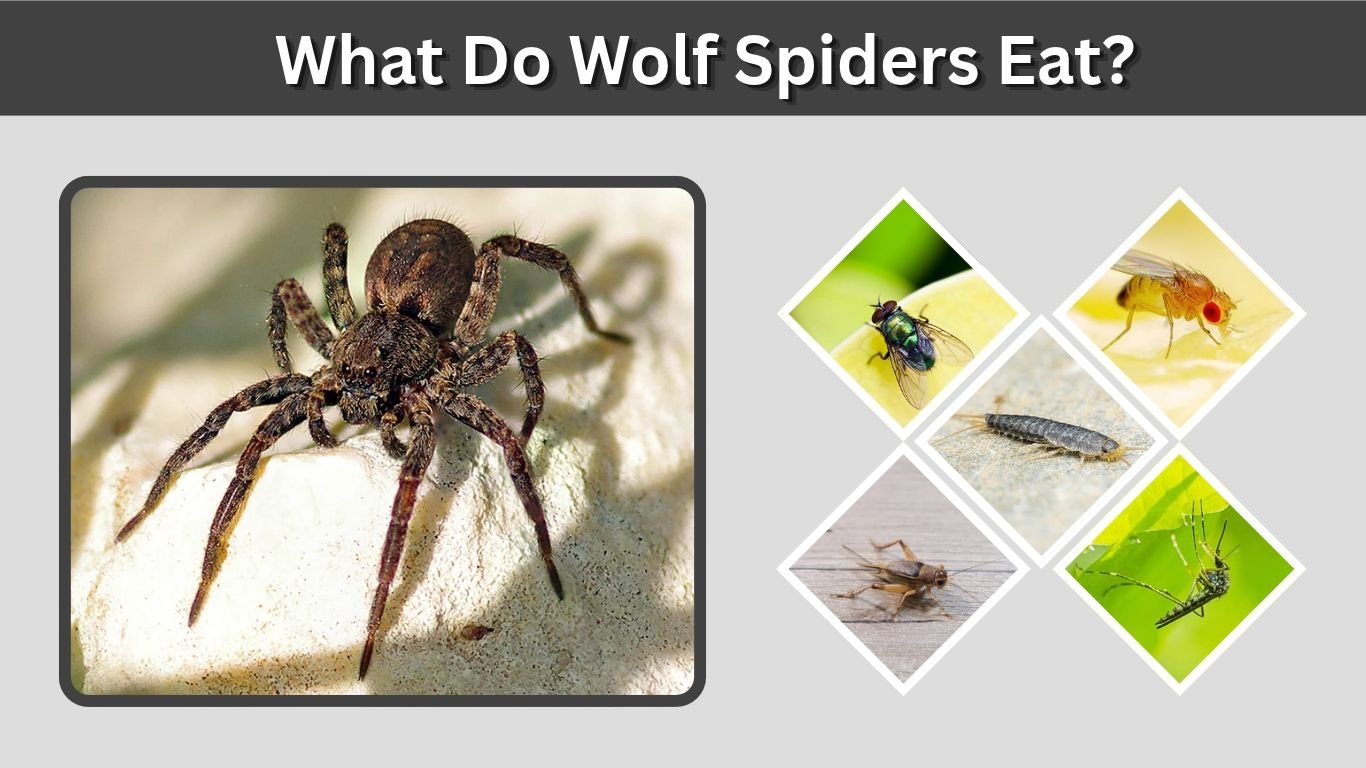
Wolf spiders are active hunters that feed on insects and other small arthropods. Unlike web-building spiders, they do not depend on webs to catch their meals. Instead, they chase, ambush, and capture prey using their strong legs and sharp fangs. Their diet includes crickets, ants, beetles, flies, grasshoppers, and sometimes other spiders. Wolf spiders found inside homes may also hunt common household insects. Understanding what wolf spiders eat helps explain their hunting behavior, feeding habits, and role in controlling insect populations.
What Do Wolf Spiders Eat?
Wolf spiders are carnivorous predators that primarily eat insects and other small invertebrates. They hunt on the ground, searching for movement and using their excellent eyesight and speed to catch prey. Their diet changes depending on their size, species, habitat, and the availability of food.
Unlike many spiders that build webs, wolf spiders actively search for meals. They use their powerful legs to chase insects before grabbing them with their fangs. They then inject digestive fluids into their prey and consume the liquefied nutrients.
Common Foods Wolf Spiders Eat
Wolf spiders consume a variety of small insects and arthropods, including:
- Crickets: Crickets are common prey because they provide a good source of protein and other nutrients.
- Grasshoppers: Larger wolf spiders can capture small grasshoppers when they encounter them.
- Ants: Some wolf spiders hunt individual ants, although certain ants can defend themselves with bites and chemical sprays.
- Beetles: Small beetles are another potential food source, depending on their size and protective defenses.
- Flies: Houseflies, fruit flies, and other small flying insects can become prey.
- Moths: Wolf spiders may capture moths when they rest or move close to the ground.
- Cockroaches: Smaller cockroaches and young nymphs can be hunted by larger wolf spiders.
- Other spiders: Wolf spiders sometimes prey on smaller spiders when they encounter them.
- Termites: Individual termites can also become prey, particularly when they are exposed outside their colonies.
Wolf spiders generally target prey they can overpower. They do not need to eat every type of insect they encounter.
What Do Wolf Spiders Eat in Your House?
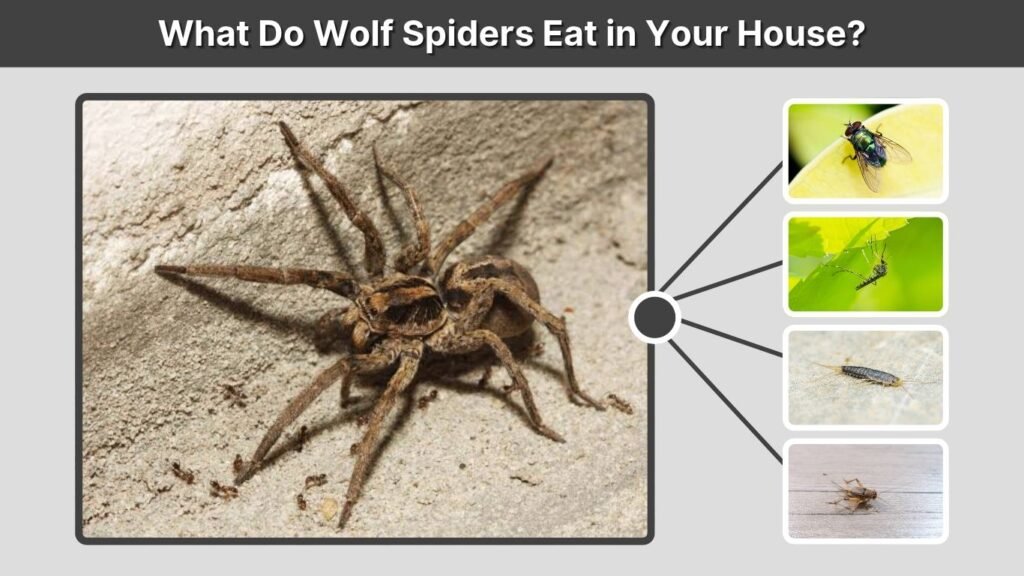
Wolf spiders that enter homes usually hunt the small insects and arthropods already living inside. They do not need to build webs to find food because they actively move around floors, walls, storage areas, and other locations where insects are present.
Their household diet depends on which insects are available. Basements, garages, bathrooms, and storage rooms may provide suitable hunting opportunities because these areas sometimes attract small insects.
Common Household Prey
Wolf spiders may eat several types of household pests:
- Houseflies: Flies resting on floors or low surfaces can become easy targets.
- Mosquitoes: Ground-level mosquitoes and other small insects may be captured.
- Small cockroaches: Young cockroaches can provide food for larger wolf spiders.
- Silverfish: These fast-moving household insects may become prey when encountered.
- Crickets: Small crickets frequently found in basements and garages can attract wolf spiders.
- Moths: Resting moths may be captured when they come within reach.
- Small ants: Individual ants can be hunted when they move away from their colonies.
Although wolf spiders can help reduce certain household insect populations, they are not a reliable replacement for proper pest control. Their presence may also indicate that other insects are available inside the home.
What Do Baby Wolf Spiders Eat?
Baby wolf spiders, commonly called spiderlings, have different feeding needs from adults. After hatching, they initially depend on the protection and mobility provided by their mother. Female wolf spiders are unusual because they carry their egg sacs and later transport their spiderlings on their backs.
Once the young spiders become independent, they begin hunting tiny insects and other suitable prey. Their small bodies limit the size of the animals they can capture.
Common Food for Baby Wolf Spiders
Young wolf spiders may feed on:
- Springtails and other tiny soil arthropods.
- Fruit flies and small flies.
- Aphids found on plants.
- Small mites and other tiny invertebrates.
- Very small insects they can overpower.
As spiderlings grow, they gradually become capable of capturing larger prey. Their feeding habits eventually become similar to those of adult wolf spiders.
Do Wolf Spiders Eat Other Spiders?

Yes, wolf spiders sometimes eat other spiders. Although insects make up most of their diet, they are opportunistic predators and may attack smaller spiders when they encounter them.
Cannibalism can also occur among wolf spiders, particularly when food is limited or individuals come into close contact. Larger individuals may overpower smaller ones.
Do Wolf Spiders Eat Brown Recluse Spiders?
Wolf spiders may occasionally prey on other spider species, but brown recluse spiders are not a regular or dependable food source. Whether one spider captures another depends on their size, behavior, and the circumstances of the encounter.
You should not rely on wolf spiders to control brown recluse populations. If you suspect brown recluse spiders are living inside your home, use appropriate identification and pest-management methods.
Do Wolf Spiders Eat Black Widows?
Wolf spiders are capable of attacking other spiders, but black widows are not a typical part of their diet. Black widows have venom and defensive behavior that can make encounters dangerous for potential predators.
Both species generally hunt independently, and their interactions depend on their environment and individual circumstances.
What Do Wolf Spiders Eat and Drink?
Wolf spiders obtain most of their nutrition from insects and other small animals. However, they also need water to maintain normal body functions. They can obtain moisture from their prey and may drink droplets from wet surfaces or their surroundings.
Unlike some insects, wolf spiders do not depend on regular meals every day. They can survive periods without food by using stored energy, although their nutritional requirements vary with age, size, and activity.
Their water needs also depend on temperature and humidity. Dry environments can increase the risk of dehydration, while suitable moisture helps them maintain their normal physiological functions.
What Do Pet Wolf Spiders Eat?
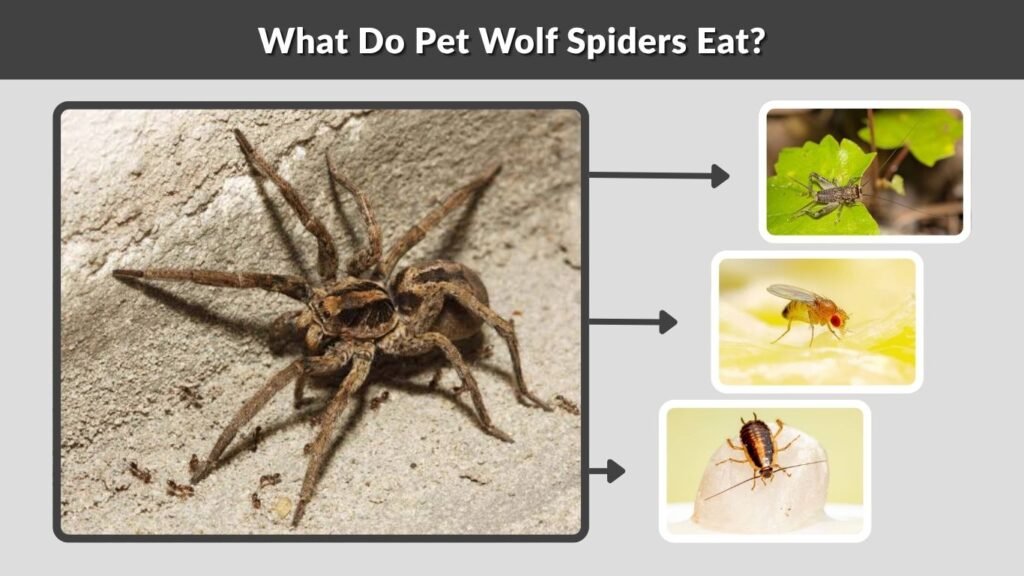
Wolf spiders kept in captivity generally eat live insects similar to those they hunt in the wild. Their food should be appropriately sized so they can capture and consume it without unnecessary difficulty.
Suitable Foods for Pet Wolf Spiders
Common feeder insects include:
- Small crickets.
- Flightless fruit flies for spiderlings.
- Small feeder roaches.
- Appropriately sized mealworms.
- Small flies.
Adult wolf spiders can usually handle larger prey than young individuals. Feeding frequency depends on the spider’s size, age, recent meals, and body condition. Avoid offering prey that is significantly larger than the spider.
Provide a suitable shallow water source and maintain appropriate humidity for the species. Remove uneaten live insects if they could injure or disturb the spider, particularly during molting.
Avoid collecting insects from areas treated with pesticides because chemical residues can harm captive spiders.
Do Wolf Spiders Eat During Winter?
Wolf spiders may continue feeding during winter when environmental conditions allow them to remain active. However, their activity and feeding frequency can decrease when temperatures become colder.
Some species remain active in sheltered environments, while others spend more time hiding under rocks, leaves, logs, or soil. Their winter behavior depends on their species and local climate.
Indoor wolf spiders may continue hunting if homes provide suitable temperatures and available insects. They do not all follow the same winter feeding pattern.
FAQs
1. What is a wolf spider’s favorite food?
Wolf spiders commonly eat crickets, grasshoppers, beetles, flies, ants, and other small arthropods. They are opportunistic hunters, so their preferred prey depends on what is available in their environment and what they can successfully capture.
2. Do wolf spiders eat cockroaches?
Yes, larger wolf spiders can eat small cockroaches and young cockroach nymphs. They hunt by chasing or ambushing prey rather than using webs. However, they are not effective enough to eliminate a cockroach infestation.
3. Do wolf spiders eat ants?
Yes, wolf spiders sometimes eat individual ants. However, ants can defend themselves using their mandibles and chemical defenses. Wolf spiders generally choose prey they can capture and overpower without significant risk.
4. What do rabid wolf spiders eat?
The rabid wolf spider, scientifically known as Rabidosa rabida, is a hunting spider that feeds on insects and other small arthropods. Its common name does not mean that it carries rabies. Its prey can include crickets, flies, and other small insects.
5. How often do wolf spiders need to eat?
Wolf spiders do not need to eat every day. Feeding frequency depends on their age, size, activity, and previous meals. Adults may go several days or longer between successful hunts, while growing spiderlings generally need more frequent access to appropriately sized prey.
