
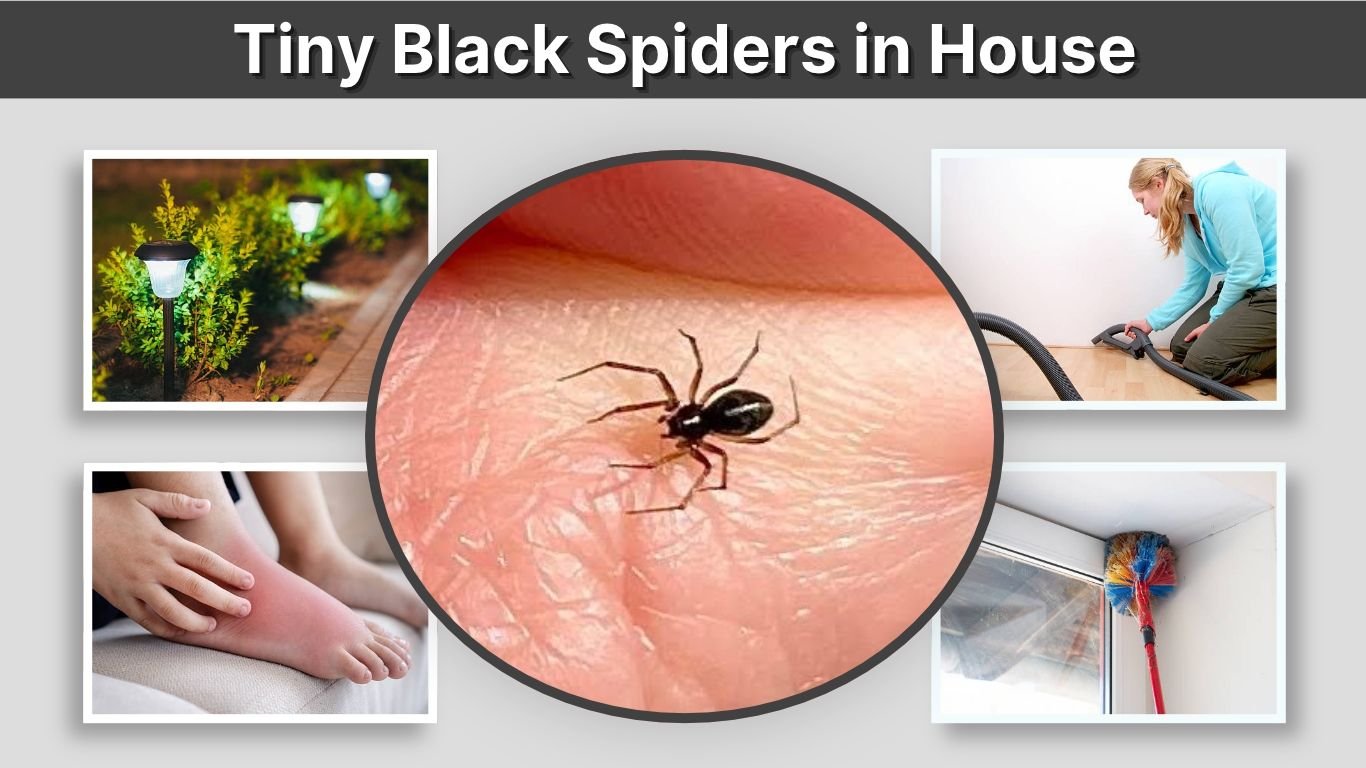
Finding tiny black spiders in your house can be surprising, especially when they appear around windows, walls, ceilings, or dark corners. These small spiders are often harmless and may even help control household insects. However, identifying them correctly is important because several species share similar dark coloring. Some are jumping spiders, while others belong to cobweb-building groups or are simply young spiderlings. Understanding what tiny black spiders look like, why they enter homes, and how to remove them safely can help you manage their presence without unnecessary pesticides.
What Are the Tiny Black Spiders in My House?
Tiny black spiders found indoors can belong to several different families. Their size, markings, movement, and web-building habits provide important clues for identification. Some actively hunt insects during the day, while others remain hidden in irregular webs. Color alone is not enough to determine the exact species.
1. Bold Jumping Spider (Phidippus audax)
<text color=”secondary” size=”sm”>A common dark-colored jumping spider found around North American homes.</text>
Bold jumping spiders have compact, hairy bodies and distinctive white, orange, or yellow spots on their abdomens. Adults typically measure approximately 6–19 mm in body length, depending on sex.
They have large forward-facing eyes and can jump quickly when hunting insects.
These spiders frequently appear on windowsills, sunny walls, and indoor surfaces. Although venomous, they are not considered medically dangerous to humans.
2. Zebra Jumping Spider (Salticus scenicus)
Zebra jumping spiders are small black-and-white spiders commonly found around buildings, including homes in the UK and parts of North America.
Their most recognizable feature is the striped pattern covering their bodies.
They actively hunt insects rather than constructing prey-catching webs. Their movement often consists of short, sudden jumps.
Zebra jumping spiders are generally harmless and may enter homes through open windows and doors.
3. Small Cobweb Spiders (Family Theridiidae)
Some small cobweb spiders have dark brown or nearly black bodies with rounded abdomens.
They often construct irregular webs beneath furniture, behind cabinets, and in quiet corners.
This family contains many species, including some widow spiders. Therefore, not every dark cobweb spider should automatically be considered harmless.
Identification requires examining body shape, markings, and geographic location.
4. Baby Spiders or Spiderlings
Sometimes, tiny black spiders appearing together are newly hatched spiderlings rather than a particular small-bodied species.
Spiderlings may emerge from an egg sac and spread across nearby walls or ceilings.
Their coloring and proportions can differ significantly from those of adults, making identification difficult.
Finding many extremely small spiders simultaneously may suggest that an egg sac recently hatched nearby.
Are Tiny Black Spiders in the House Dangerous?

Most tiny black spiders found indoors are not dangerous to humans. Many species possess venom to subdue insects, but their bites rarely cause serious medical complications. However, a spider’s dark color or small size does not guarantee that it is harmless. Proper identification is especially important in areas where medically significant spiders occur.
Do Tiny Black House Spiders Bite?
Most small household spiders prefer escaping rather than biting.
Bites may occur when a spider becomes trapped against the skin or is handled.
Possible symptoms include:
- Mild localized pain.
- Temporary redness.
- Minor swelling.
- Itching around the bite.
- Tenderness that gradually improves.
Seek medical attention if symptoms become severe, spread, or are accompanied by systemic illness.
Can Tiny Black Spiders Be Black Widows?
Some juvenile widow spiders can be relatively small, but their appearance may differ from adult females.
Adult female black widows generally have glossy dark bodies and a characteristic reddish hourglass marking underneath the abdomen, although markings vary.
Black widow bites can cause significant pain, muscle cramping, and other serious symptoms.
Never identify a suspected widow spider solely by its size or color.
Why Are There Tiny Black Spiders in My House?
Tiny black spiders enter or remain inside homes primarily because they find suitable shelter, insects, and favorable environmental conditions. Cracks, open windows, storage areas, and cluttered rooms can provide access or hiding places. Understanding the reasons behind their presence helps homeowners prevent repeated encounters.
Common Reasons Tiny Black Spiders Appear Indoors
- Food availability: Flies, mosquitoes, and other insects attract hunting spiders.
- Entry points: Small gaps around doors, windows, and foundations allow spiders inside.
- Shelter: Furniture, storage boxes, and wall crevices provide protected hiding spots.
- Breeding: Egg sacs may hatch indoors, producing numerous spiderlings.
- Seasonal movement: Some spiders wander indoors during mating periods or environmental changes.
- Suitable humidity: Certain species prefer damp basements or sheltered indoor spaces.
Why Do Tiny Black Spiders Appear Near Windows?
Windows attract some spiders because flying insects gather near natural and artificial light.
Jumping spiders also favor sunny locations where they can actively hunt.
Tiny black spiders appearing around windowsills may therefore be hunting spiders rather than permanent indoor residents.
Check damaged screens and gaps around window frames if spiders frequently enter through these areas.
Why Are There Lots of Tiny Black Spiders in My House?
Finding one or two spiders indoors is usually normal. However, discovering dozens of tiny black spiders within a short period may indicate a recently hatched egg sac or an indoor environment supporting multiple spiders. Examining where they appear can help identify the underlying cause.
Signs of Recently Hatched Spiderlings
A group of newly hatched spiderlings may appear as tiny moving dots.
You might notice several individuals clustered around ceilings, window frames, or wall corners.
These spiders gradually disperse as they search for shelter and food.
A single hatching event does not necessarily indicate an established spider infestation. However, repeated appearances may require closer inspection.
Can Tiny Black Spiders Multiply Indoors?
Yes, some spider species can reproduce inside buildings when conditions are suitable.
However, many outdoor species that accidentally enter homes cannot establish lasting indoor populations.
Spiders require adequate prey and appropriate hiding places to survive.
Reducing household insects and removing unused clutter can make indoor environments less suitable for them.
How to Get Rid of Tiny Black Spiders in House

Removing tiny black spiders usually does not require extensive chemical treatment. Regular cleaning, sealing entry points, and reducing insect populations are often effective. Since many spiders are beneficial predators, relocating individual spiders may be preferable when practical and safe.
Effective Ways to Remove Tiny Black Spiders
- Vacuum regularly: Clean corners, baseboards, furniture edges, and hidden spaces.
- Remove unwanted webs: Use a soft brush or vacuum attachment.
- Seal cracks: Close gaps around windows, doors, and foundations.
- Repair screens: Replace damaged window and door screens.
- Control household insects: Reduce the food sources that attract spiders.
- Reduce clutter: Organize storage boxes, clothing, and unused materials.
- Relocate individual spiders: Capture confidently identified harmless spiders using a container and paper.
Should You Use Spider Sprays?
Spider sprays are not always necessary for controlling small indoor spiders.
Chemical treatment may provide temporary results without addressing entry points, available prey, or hiding places.
University extension pest-management guidance generally recommends sanitation and exclusion before pesticides.
If an infestation persists, consult a qualified pest-management professional. Always follow pesticide label instructions.
Tiny Black Spiders in Houses in Illinois and the UK
The types of tiny black spiders found indoors vary by geographic location. Climate, native species, and housing conditions influence which spiders appear most frequently. Identifying local species is important because similar-looking spiders may have different behaviors and medical significance.
Tiny Black Spiders in Illinois Houses
Several jumping spider species occur in Illinois, including dark-colored Phidippus spiders.
Small cobweb spiders and other indoor species may also appear nearly black.
Jumping spiders typically move actively across walls and windows, while cobweb spiders remain near their webs.
The Illinois Department of Public Health provides identification information for common spiders encountered around homes.
Tiny Black Spiders in UK Houses
In the UK, zebra jumping spiders are recognizable small black-and-white spiders frequently encountered around windows and exterior walls.
Other small spiders may have dark gray or brown bodies that appear black under poor lighting.
Many UK household spiders are harmless, although accurate identification may require a clear photograph or expert examination.
How to Prevent Tiny Black Spiders From Returning

Long-term prevention focuses on reducing the conditions that attract spiders indoors. Maintaining clean storage spaces, sealing gaps, and controlling insects can significantly reduce encounters. These approaches are generally more sustainable than repeated pesticide applications.
Simple Spider Prevention Tips
- Check window screens and door seals regularly.
- Vacuum quiet corners and areas behind furniture.
- Avoid storing unnecessary cardboard boxes.
- Keep outdoor vegetation away from building walls.
- Reduce unnecessary outdoor lighting that attracts insects.
- Inspect firewood, plants, and stored items before bringing them inside.
- Monitor recurring spider activity near windows and baseboards.
FAQs
1. What are the little tiny black spiders in my house?
They may be jumping spiders, small cobweb spiders, or newly hatched spiderlings. Their movement, body markings, and web-building habits help distinguish them. Black jumping spiders often move quickly and have prominent eyes, while cobweb spiders usually remain near irregular webs.
2. Are tiny black jumping spiders dangerous?
Most tiny black jumping spiders are harmless to humans. Although they possess venom, they use it primarily to capture insects. Bites are uncommon and usually cause mild local symptoms. Avoid handling unidentified spiders because some dangerous species may look similar.
3. Why do I suddenly have tiny black spiders everywhere?
A sudden appearance of numerous tiny spiders may indicate that an egg sac recently hatched indoors. Spiderlings can disperse across walls, ceilings, and nearby furniture. An abundance of household insects may also support increased spider activity.
4. How do I permanently get rid of tiny black spiders?
Completely preventing every spider from entering a home is unrealistic. However, sealing entry points, removing clutter, vacuuming regularly, and controlling insects can reduce their numbers considerably. Persistent problems may require professional identification and targeted pest-management advice.
5. Do tiny black spiders in the house jump?
Some do. Jumping spiders belong to the family Salticidae and can leap between surfaces while hunting insects. Other tiny black spiders primarily crawl or remain in webs. Observing movement, eye arrangement, and body shape helps distinguish jumping spiders from other species.
