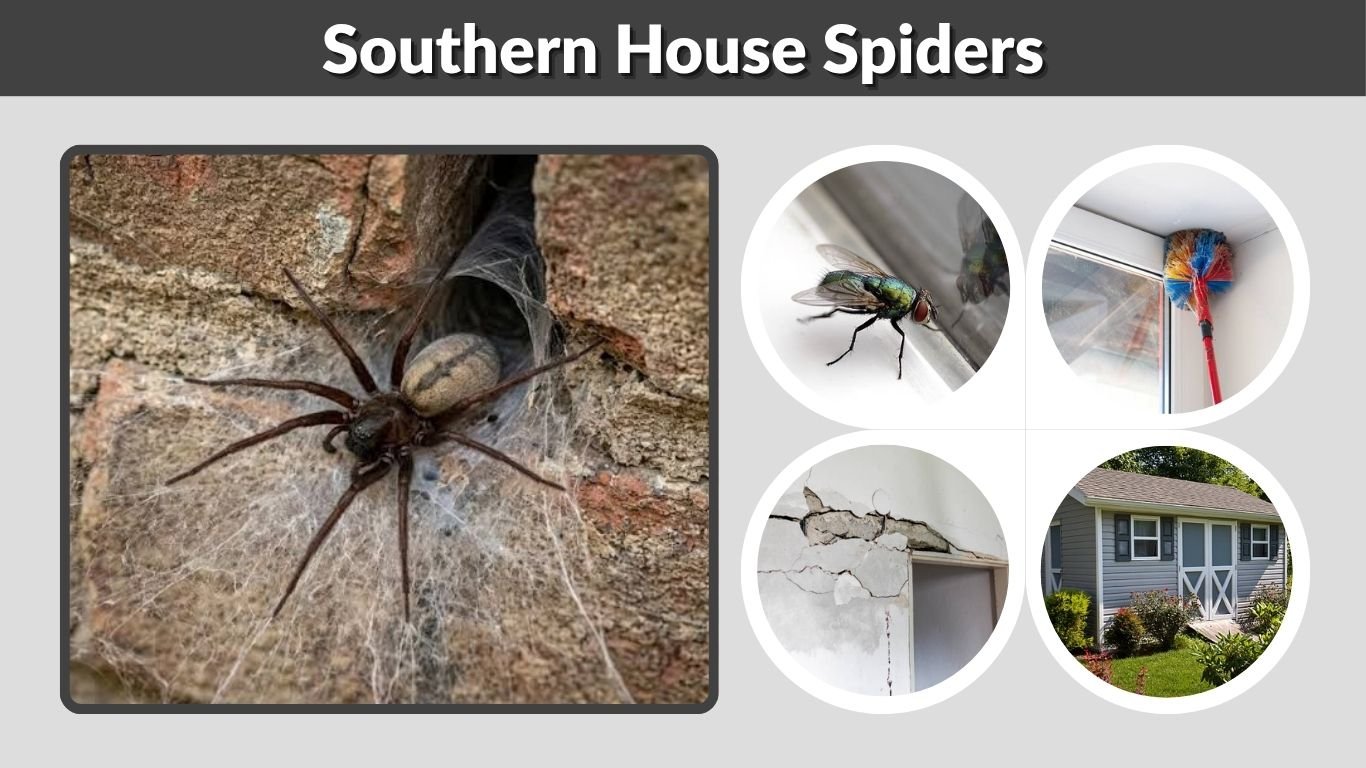
Southern house spiders are commonly found in warm regions of the United States, particularly around homes, garages, and sheltered outdoor structures. Their relatively large bodies and long legs can make them appear intimidating, especially when males resemble brown recluse spiders. However, southern house spiders are generally harmless and play an important role in controlling household insects. These spiders prefer dark crevices, build distinctive webs, and rarely bite unless threatened. Understanding their appearance, behavior, habitat, and potential risks can help homeowners identify them correctly and decide whether removal is necessary.
What Are Southern House Spiders?
The southern house spider (Kukulcania hibernalis) is a species of crevice-weaving spider belonging to the family Filistatidae. It is especially common in Florida and other southeastern states. These spiders frequently inhabit human structures, where they build irregular webs around sheltered openings. Although their appearance may cause concern, they are beneficial predators.
Southern House Spider Identification
- Scientific Name: Kukulcania hibernalis
- Common Name: Southern House Spider
- Family: Filistatidae
- Body Color: Dark gray or brown in females; tan or amber in males
- Female Body Length: Approximately 13–19 mm
- Male Body Length: Approximately 9–10 mm
- Legs: Eight, with males having especially long, slender legs
- Web Type: Irregular, flat web extending from a protected crevice
- Habitat: Buildings, window frames, walls, barns, and sheltered cracks
- Diet: Flies, cockroaches, beetles, and other insects
What Do Southern House Spiders Look Like?
Female southern house spiders have dark, velvety bodies with relatively thick legs and elongated abdomens. Their appearance sometimes resembles a small tarantula.
Males are noticeably different. They have lighter brown bodies, exceptionally long legs, and elongated pedipalps near their mouthparts.
These differences make male and female southern house spiders surprisingly easy to mistake for separate species.
Are Southern House Spiders Poisonous or Dangerous?

Southern house spiders are venomous, but their venom is not considered medically dangerous to humans. Like most spiders, they use venom to immobilize insect prey. Human bites are uncommon because southern house spiders generally retreat into sheltered spaces when disturbed.
Are Southern House Spiders Venomous?
Yes, both male and female southern house spiders possess venom.
However, venomous and poisonous have different meanings. Venom is injected through fangs, whereas poison generally causes harm when swallowed or absorbed.
Southern house spiders are not considered a major medical threat. Research involving verified bites from Kukulcania spiders found that reactions were generally mild and self-limiting.
Do Southern House Spiders Bite Humans?
Southern house spiders can bite if trapped against the skin, squeezed, or handled.
A bite may cause temporary pain, redness, itching, or swelling. Symptoms generally improve without serious complications.
If a spider bite causes significant pain, spreading inflammation, or unusual symptoms, medical evaluation is advisable.
Never assume an unidentified spider is harmless simply because it resembles a southern house spider.
Male vs. Female Southern House Spiders
Male and female southern house spiders display pronounced sexual dimorphism, meaning they differ considerably in appearance. Females are generally larger and darker, while males are smaller-bodied and lighter-colored with longer legs. Their behavior also differs, particularly when males begin searching for mates.
Male Southern House Spiders
Male southern house spiders are usually tan, amber, or light brown.
Their thin bodies, long legs, and elongated pedipalps give them a resemblance to brown recluse spiders.
Mature males often leave sheltered areas to search for females, making them more likely to appear wandering across floors or walls.
Female Southern House Spiders
Female southern house spiders have darker, stockier bodies with velvety surfaces.
They spend much of their lives inside web-lined crevices, emerging mainly to capture nearby insects.
Females may live considerably longer than males and can remain associated with the same sheltered location for years.
Where Do Southern House Spiders Live?

Southern house spiders prefer protected habitats where insects are abundant and disturbance is limited. They are well adapted to living around buildings and other human structures. Their characteristic webs extend outward from narrow openings, allowing them to capture insects while remaining close to shelter.
Common Southern House Spider Habitats
- Window frames and exterior wall cracks.
- Garages, sheds, and storage buildings.
- Wooden fences and old barns.
- Spaces beneath roof edges.
- Gaps between boards and building materials.
- Tree bark and natural crevices.
- Sheltered corners near outdoor lights.
Are Southern House Spiders Found in Southern California?
Southern house spiders have been recorded in California, but they are not the only crevice-weaving spiders found there.
Several other Kukulcania species occur in California and surrounding southwestern states. Therefore, not every similar-looking spider found in Southern California is Kukulcania hibernalis.
Common spiders around Southern California homes also include cellar spiders, common house spiders, and widow spiders.
Species identification requires attention to physical characteristics rather than geographic location alone.
What Do Southern House Spiders Eat?
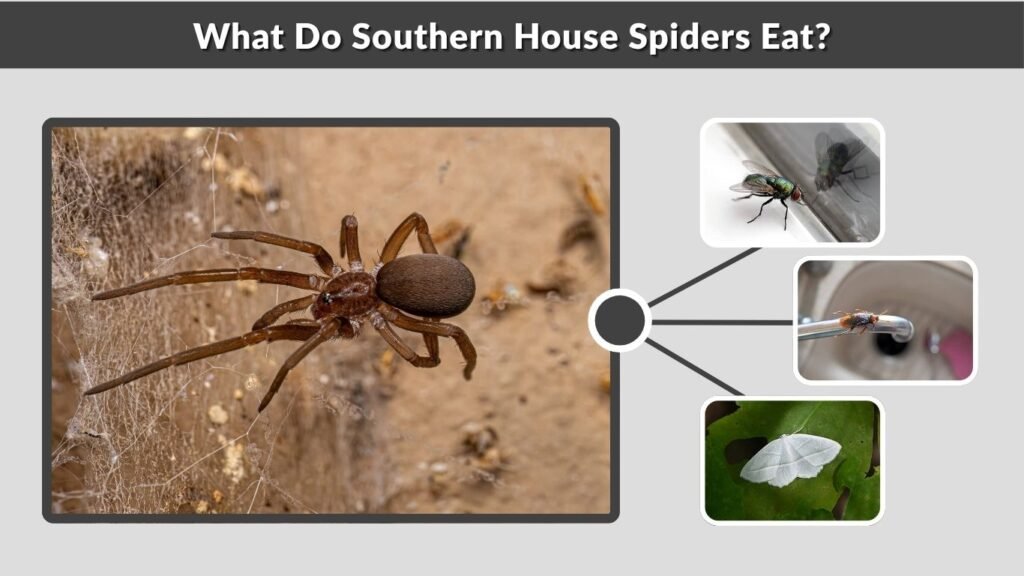
Southern house spiders are insect-eating predators that contribute to natural pest control. Their webs help them capture insects moving across walls, windows, and other structures. Rather than actively chasing prey over long distances, they usually remain near their retreats and respond to vibrations caused by approaching insects.
Common Prey of Southern House Spiders
Southern house spiders commonly consume:
- House flies and other flying insects.
- Cockroaches.
- Beetles.
- Moths.
- Other small arthropods.
They use their webs to detect nearby prey, then emerge from their retreats to capture it.
How Do Southern House Spiders Hunt?
Southern house spiders create webs containing specialized silk that helps entangle insects.
During daylight, they usually remain hidden inside their retreats. At night, they may move closer to the web entrance to detect prey.
Their feeding behavior makes them useful predators around homes, especially where insect populations are high.
How Long Do Southern House Spiders Live?
The lifespan of a southern house spider depends on its sex, environmental conditions, and access to food. Females can survive substantially longer than many familiar household spiders. Their protected web retreats and relatively sedentary lifestyle may help them remain in one location for extended periods.
Southern House Spider Lifespan
Female southern house spiders may live for up to eight years under favorable conditions.
Males generally have shorter adult lives, particularly after leaving their retreats to search for mates.
These spiders develop through repeated molts, gradually increasing in size before reaching maturity.
Southern House Spider Reproduction
Female southern house spiders produce egg sacs inside their sheltered retreats.
A female may lay approximately 200 eggs in a silk-covered cluster.
Newly hatched spiderlings eventually disperse and establish their own retreats in suitable cracks or sheltered spaces.
How to Get Rid of Southern House Spiders

Although southern house spiders are beneficial, homeowners may prefer removing them from bedrooms, doorways, or frequently used living areas. Controlling them does not always require chemical pesticides. Reducing available hiding places and insect prey can make a property less attractive to these spiders.
Effective Southern House Spider Removal Methods
- Remove unwanted webs: Use a vacuum or long-handled brush to clean accessible corners.
- Seal cracks: Close gaps around doors, windows, and exterior walls.
- Reduce insect populations: Control flies, cockroaches, and other household pests.
- Remove clutter: Organize garages, storage spaces, and unused materials.
- Inspect window screens: Repair damaged screens to limit spider entry.
- Relocate individual spiders: Use a container and stiff paper without handling them directly.
Should You Kill Southern House Spiders?
Southern house spiders generally do not need to be killed.
They naturally reduce insect populations and rarely cause problems when left undisturbed.
If a spider occupies an inconvenient location, careful relocation is often preferable to pesticide application.
However, avoid attempting to handle a spider that has not been reliably identified.
FAQs
1. Are southern house spiders poisonous?
Southern house spiders are venomous rather than poisonous. They use venom to capture insects, but their bites are not considered medically dangerous to humans. Most confirmed bites cause only mild, temporary symptoms. Nevertheless, unidentified spider bites should be evaluated when symptoms become severe.
2. Are southern house spiders aggressive?
Southern house spiders are generally shy and avoid human contact. Females usually remain hidden inside their web retreats, while males wander while searching for mates. They may bite when trapped or handled, but they do not actively pursue people.
3. Do southern house spiders jump?
Southern house spiders are not specialized jumping spiders. They primarily move by walking or running and rely on webs to capture prey. Although they can move quickly when disturbed, jumping is not a characteristic hunting behavior of this species.
4. Can southern house spiders survive extreme cold?
Southern house spiders are most commonly associated with warmer regions. They may survive cooler conditions when protected inside buildings or sheltered crevices. However, prolonged exposure to extreme freezing temperatures can threaten their survival, particularly without suitable shelter.
5. Are southern house spiders the same as brown recluse spiders?
No. Southern house spiders belong to the family Filistatidae, while brown recluse spiders belong to Sicariidae. Male southern house spiders have eight eyes and long pedipalps, whereas brown recluse spiders have six eyes. Their appearance can be similar, making careful identification important.
