
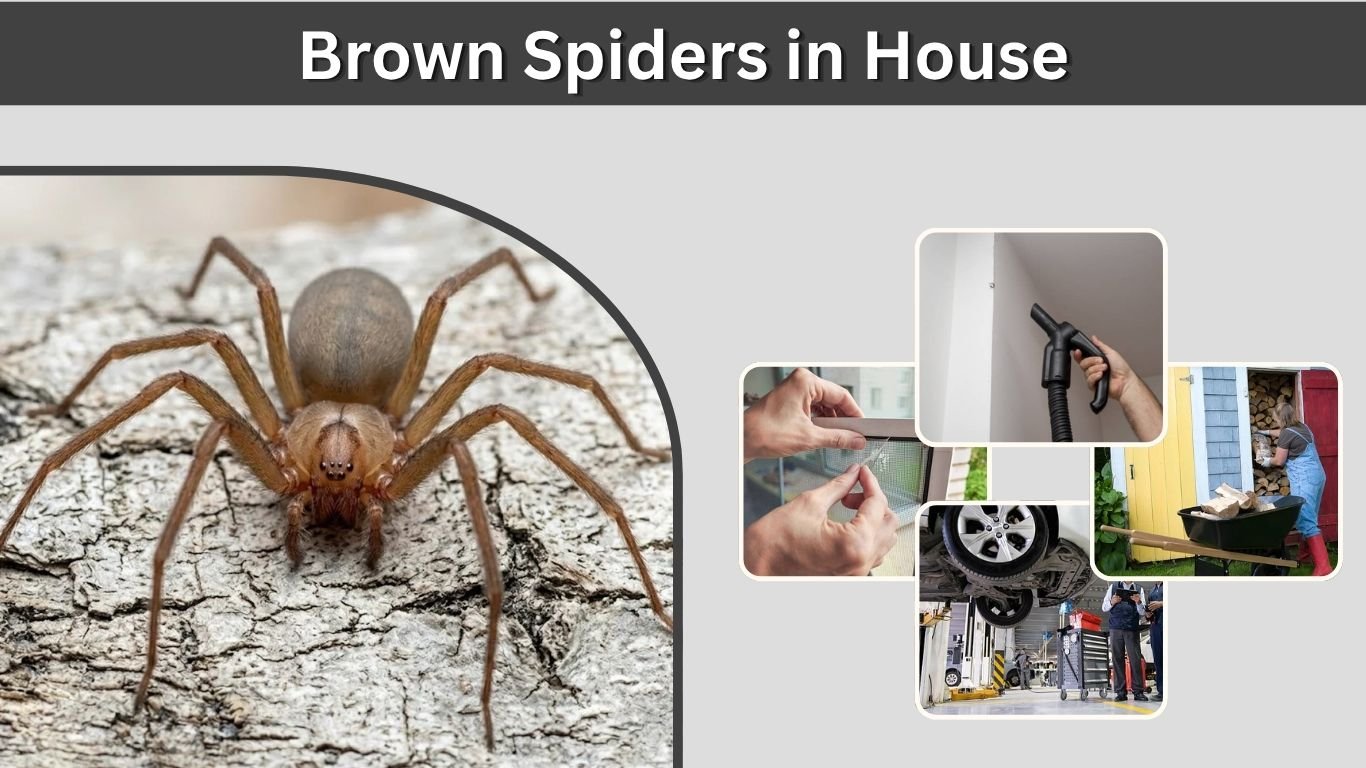
Finding brown spiders in your house can be unsettling, especially when you cannot identify the species. Some are tiny, light brown spiders hiding in corners, while others are large, dark brown spiders wandering across floors. Most household spiders are harmless and help control insects, but certain species, including brown recluse spiders, require extra caution. Their appearance, size, behavior, and location can provide useful identification clues. This guide explains the common types of brown house spiders, why they enter homes, whether they are dangerous, and how to remove them safely.
What Are the Common Brown Spiders Found in Houses?
Several spider species have brown bodies and commonly appear inside American homes. Some build webs in corners, while others actively hunt insects across floors and walls. Their colors range from light tan to reddish brown or nearly black. Identifying their body shape, markings, and behavior can help distinguish harmless house spiders from species requiring additional caution.
1. Common House Spiders
Common house spiders (Parasteatoda tepidariorum) have rounded abdomens with brown, tan, and darker markings. They build irregular cobwebs in corners, behind furniture, and near windows. These spiders generally remain near their webs and rarely bite humans unless handled or trapped against the skin.
2. Brown Recluse Spiders
Brown recluse spiders (Loxosceles reclusa) have tan to brown bodies, six eyes arranged in three pairs, and sometimes a violin-shaped marking on the cephalothorax. They prefer secluded, undisturbed areas. Their bites can occasionally cause serious tissue damage, making accurate identification important.
3. Wolf Spiders
Wolf spiders are usually brown or grayish brown with darker stripes or markings. They have robust bodies and relatively long legs. Unlike web-building spiders, they actively hunt insects. These spiders sometimes enter homes through gaps around doors and windows but are generally not medically dangerous.
4. Grass Spiders
Grass spiders are brown spiders with elongated bodies, striped markings, and prominent spinnerets. They construct funnel-shaped webs in grass, shrubs, and occasionally around building entrances. They may wander indoors accidentally, especially when searching for shelter or prey.
5. Woodlouse Spiders
Woodlouse spiders (Dysdera crocata) have reddish brown front bodies, pale abdomens, and prominent jaws. They often hide beneath objects in damp environments and feed primarily on woodlice. Although their bites may be painful, they are not generally considered medically significant.
How to Identify Brown Spiders in Your House

Identifying brown house spiders requires examining their size, body shape, markings, and behavior. Many species share similar colors, so appearance alone may not provide a reliable identification. Some spiders have rounded abdomens and build webs, while others have elongated bodies and actively hunt. Observing these characteristics can help narrow down the possibilities without touching the spider.
Brown Spider Identification Features
- Small brown spiders: Often common house spiders, juvenile spiders, or other small species.
- Tiny brown spiders: May be newly hatched spiderlings or naturally small adult spiders.
- Light brown spiders: May include yellow sac spiders, recluse spiders, or other pale species.
- Dark brown spiders: Can include wolf spiders, funnel weavers, and various house spiders.
- Reddish brown spiders: May include woodlouse spiders or other reddish species.
- Big brown spiders: Often wolf spiders, fishing spiders, or large funnel weavers, depending on the region.
Brown Recluse vs. Common Brown House Spiders
Brown recluse spiders have six eyes, while most spiders have eight. Their legs generally lack prominent spines, and their abdomens are usually plain rather than strongly patterned.
However, the violin-shaped marking alone is not reliable for identification. Several harmless spiders have similar markings. If you suspect a brown recluse, avoid handling it and seek identification from a qualified specialist.
Why Are There Brown Spiders in My House?

Brown spiders enter houses for food, shelter, and protection from unfavorable outdoor conditions. Some species naturally live indoors, while others wander inside accidentally. Their presence may increase when insects are abundant or when spiders search for mates. Understanding why they appear can help homeowners address the conditions that encourage them to remain.
Small Insects Attract Spiders
Spiders feed on flies, mosquitoes, moths, and other small insects. Homes with abundant insect activity may provide reliable hunting opportunities. Reducing indoor insect populations can make living spaces less attractive to spiders.
Hidden Areas Provide Shelter
Basements, closets, garages, storage boxes, and spaces behind furniture offer protected hiding places. Brown recluse spiders particularly favor quiet, undisturbed locations where they can remain concealed during the day.
Spiders Enter Through Small Openings
Cracks around windows, gaps beneath doors, damaged screens, and openings around utility pipes allow spiders to enter. Some are accidentally transported indoors with firewood, furniture, boxes, or other stored materials.
Are Brown Spiders in the House Dangerous?
Most brown spiders found inside homes are harmless to humans. They generally avoid contact and bite only when threatened or accidentally trapped against the skin. However, a few species require greater caution because their venom can cause medically significant symptoms. Brown recluse spiders are among the most important examples in parts of the United States.
Are Small Brown House Spiders Poisonous?
Most small brown house spiders possess venom used to capture prey, but their bites are generally not medically significant. They are venomous rather than poisonous. The majority cannot cause serious injury to healthy adults.
Are Brown Recluse Spiders Dangerous?
Brown recluse bites can sometimes cause painful skin lesions and tissue damage. Severe systemic reactions are uncommon but possible. Not every suspected spider bite is caused by a recluse, and many skin conditions are incorrectly attributed to these spiders.
Seek medical attention if a suspected bite causes worsening pain, skin breakdown, fever, or other concerning symptoms.
How to Get Rid of Brown Spiders in Your House

Removing brown spiders involves eliminating hiding places, reducing insect prey, and blocking entry points. Most household spider problems can be managed without widespread pesticide use. However, suspected brown recluse infestations require extra caution because these spiders may hide in clothing, shoes, and stored belongings. A combination of cleaning, exclusion, and monitoring provides effective long-term control.
Effective Brown Spider Removal Methods
- Vacuum regularly: Remove spiders, webs, and visible egg sacs from corners and hidden areas.
- Reduce clutter: Organize storage spaces and remove unnecessary cardboard boxes.
- Seal entry points: Repair window screens, door gaps, and cracks around foundations.
- Control indoor insects: Reduce flies, moths, and other potential spider prey.
- Inspect stored belongings: Check boxes, clothing, and shoes before handling them.
- Use professional assistance: Contact a qualified pest management professional for suspected brown recluse infestations.
How to Get Rid of Brown Recluse Spiders in the House
Brown recluse control requires careful inspection and targeted treatment. Avoid reaching into dark storage areas without protection. Wear gloves when moving stored items, shake out clothing and shoes, and reduce clutter.
Sticky monitoring traps placed safely along walls can help assess activity. Keep traps away from children and pets. Persistent infestations are best handled by trained pest management professionals.
How to Prevent Brown Spiders From Returning

Preventing brown spiders requires maintaining a clean, well-sealed home and reducing conditions that support insect activity. Spiders may occasionally enter even well-maintained houses, so complete elimination is unrealistic. However, consistent prevention can substantially reduce encounters. Focus on entry points, storage spaces, outdoor vegetation, and areas where insects commonly gather.
Brown Spider Prevention Tips
- Repair screens: Fix damaged window and door screens.
- Seal cracks: Close openings around foundations, pipes, and windows.
- Reduce outdoor clutter: Move firewood and unused materials away from exterior walls.
- Maintain landscaping: Trim vegetation touching the house.
- Organize storage: Use sealed containers instead of open cardboard boxes.
- Inspect regularly: Check basements, garages, and closets for spider activity.
FAQs
1. What are the tiny brown spiders in my house?
Tiny brown spiders may be young house spiders, juvenile wolf spiders, or other small species. Their identification depends on body shape, markings, and behavior. Some build webs, while others actively hunt insects. A clear photograph can help distinguish them from similar-looking species.
2. Are brown house spiders common in Pennsylvania?
Yes, several brown spider species occur in Pennsylvania, including common house spiders, wolf spiders, and funnel weavers. Brown recluse spiders are not native or commonly established throughout Pennsylvania, although isolated introductions can occur. Most brown spiders found in Pennsylvania homes are harmless.
3. What brown house spiders are common in Texas and Florida?
Texas and Florida have numerous brown spiders, including wolf spiders, house spiders, and funnel weavers. Brown recluse spiders occur naturally in parts of Texas but are not considered established throughout Florida. Spider identification should consider regional distribution alongside physical characteristics.
4. Where do brown recluse spiders hide in houses?
Brown recluse spiders commonly hide in quiet, undisturbed locations such as closets, basements, storage boxes, garages, and spaces behind furniture. They may also shelter inside shoes or folded clothing. Avoid reaching blindly into stored belongings in areas where these spiders are established.
5. How do I get rid of small brown spiders in my house?
Vacuum visible spiders and webs, reduce indoor insects, remove clutter, and seal gaps around doors and windows. Inspect storage spaces regularly to prevent repeated activity. If you suspect brown recluse spiders or notice a persistent infestation, contact a qualified pest management professional for identification and treatment.
