
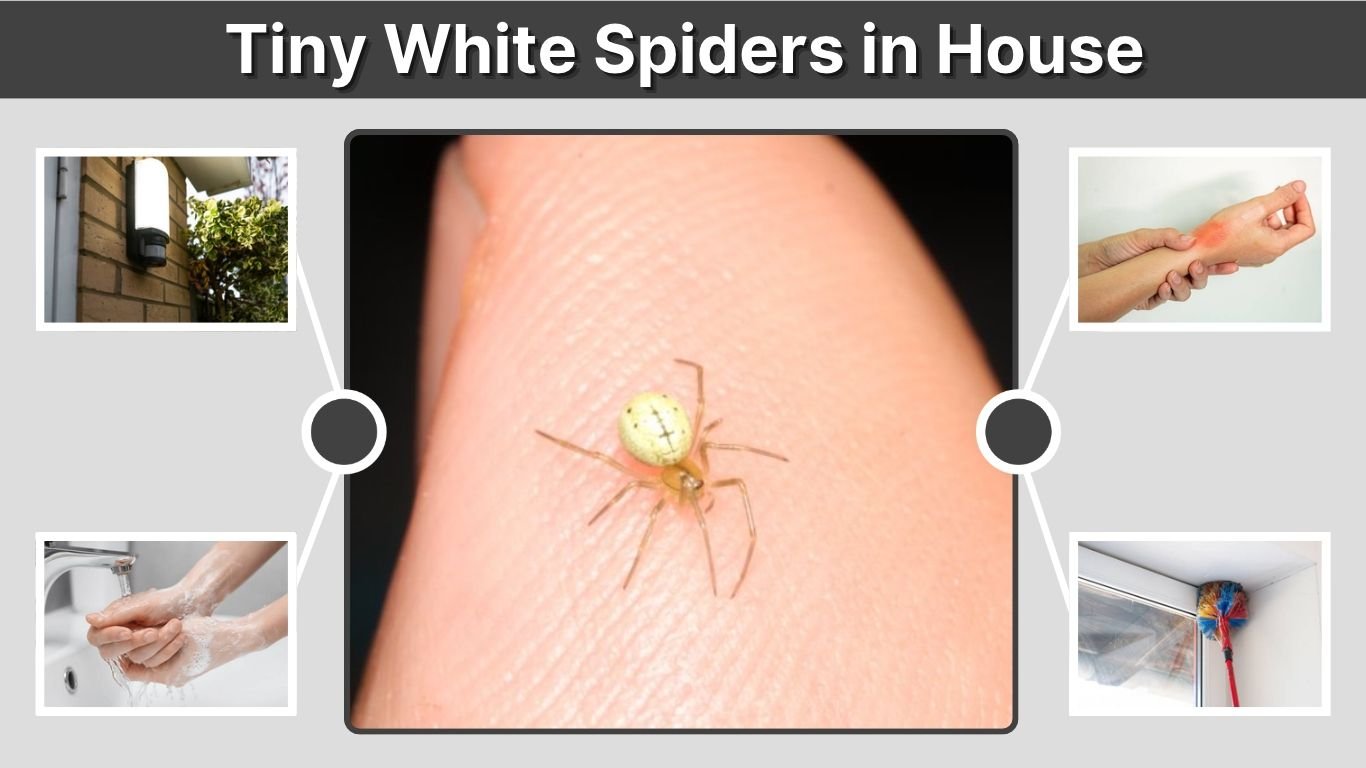
Finding tiny white spiders in your house can be surprising, especially when they appear on walls, ceilings, windows, or furniture. These small spiders may be newly hatched spiderlings, pale-colored house spiders, or other tiny arachnids that resemble spiders. Most are harmless and help control household insects, but some species can bite when disturbed. Understanding their appearance, behavior, and hiding places can help you identify them correctly. This guide explains why tiny white spiders appear indoors, whether they are dangerous, and how to remove them safely.
What Are Tiny White Spiders in the House?
Tiny white spiders are not one specific species. Several spiders have white, cream, pale yellow, or nearly transparent bodies. Some are naturally light-colored, while others appear whitish during their early development. Their size, body shape, and behavior can help distinguish them. Here are some possible types of tiny white spiders you may encounter indoors.
Tiny White Baby Spiders
Baby spiders, called spiderlings, often have small, pale, or translucent bodies. They may appear together when an egg sac hatches inside a home. These young spiders eventually spread out to find food and shelter. Their exact color and appearance depend on the species.
Yellow Sac Spiders
Yellow sac spiders have pale yellow, cream, or slightly greenish bodies that sometimes appear white. They have relatively long front legs and frequently wander across walls at night. Unlike typical web-building spiders, they actively hunt small insects and use silk retreats for resting.
White Crab Spiders
White crab spiders have broad bodies and front legs that extend sideways. They commonly live on flowers and vegetation, where they hunt visiting insects. Occasionally, they enter homes on flowers or plants. Their sideways movement is a useful identification feature.
Pale Cellar Spiders
Cellar spiders have small, pale bodies and extremely long, thin legs. They often live in basements, ceiling corners, and other undisturbed areas. Young cellar spiders may appear especially light-colored. They build loose, irregular webs to capture small insects.
How to Identify Tiny White Spiders in Your House

Identifying tiny white spiders requires examining more than their color. Different species can look similar, particularly when they are young. Body shape, leg length, movement, and location provide useful identification clues. Observing the spider without touching it is the safest approach. A clear photograph can help distinguish spiders from other small household creatures.
Important Identification Features
- Body color: White, cream, pale yellow, or translucent.
- Body size: Spiderlings may measure only a few millimeters.
- Leg shape: Cellar spiders have long legs, while crab spiders hold theirs sideways.
- Movement: Some spiders actively hunt, while others remain near webs.
- Location: Corners, windows, houseplants, and storage spaces are common places to investigate.
Tiny White Spiders vs. White Mites
Tiny white mites are sometimes mistaken for spiders. Mites generally have a more compact body without the clearly separated body sections typical of spiders.
Spider mites commonly gather on houseplants and may produce fine webbing. If white specks are moving across leaves, inspect the plants for mite damage rather than assuming they are baby spiders.
Why Are There Tiny White Spiders in My House?
Tiny white spiders enter homes for several reasons, including food availability, shelter, and accidental transportation. Sometimes, spiders already living indoors reproduce, leading to several spiderlings appearing together. Warm rooms, protected corners, and the presence of small insects may support spider activity. Understanding the underlying cause helps prevent repeated appearances without relying on unnecessary chemical treatments.
Spider Eggs Have Hatched
A sudden cluster of tiny white spiders may indicate that an egg sac has hatched. Spiderlings sometimes remain close together before dispersing. Check corners, furniture, and window frames for nearby egg sacs.
Food and Shelter Are Available
Homes containing flies, gnats, mosquitoes, and other small insects can attract hunting spiders. Undisturbed storage areas and ceiling corners also provide convenient hiding places.
Spiders Enter Through Openings
Small gaps around doors, windows, vents, and utility pipes can allow spiders indoors. Some arrive on potted plants, flowers, firewood, or stored belongings.
Are Tiny White Spiders in the House Dangerous?

Most tiny white spiders found indoors are not dangerous to humans. They generally avoid contact and prefer escaping when disturbed. However, certain species can bite when accidentally trapped against the skin. Because several spider species share similar pale coloring, it is important not to judge their potential danger from color alone.
Do Tiny White Spiders Bite?
Some tiny white spiders can bite, although bites are relatively uncommon. Yellow sac spiders may cause localized pain, redness, or swelling. Very small spiderlings are generally unlikely to cause significant injury. Most household spiders are not aggressive toward people.
What Happens If a Tiny White Spider Bites You?
A spider bite may cause temporary discomfort, mild swelling, or redness. Wash the area with soap and water and apply a cold compress. Seek medical attention for severe pain, worsening symptoms, or spreading redness. Difficulty breathing requires emergency medical care.
How to Get Rid of Tiny White Spiders in the House
Removing tiny white spiders usually requires basic household cleaning and prevention. When only a few spiders are present, chemical treatments are rarely necessary. The goal is to remove unwanted spiders, eliminate nearby egg sacs, and reduce available food sources. Combining these methods with sealing entry points can help prevent additional spiders from appearing indoors.
Effective Removal Methods
- Vacuum regularly: Remove spiders, webs, and visible egg sacs from corners and hidden spaces.
- Remove individual spiders: Capture occasional spiders using a container and relocate them outdoors.
- Control small insects: Reduce flies, gnats, and other potential prey.
- Clean hidden areas: Organize storage rooms, closets, and spaces behind furniture.
- Seal entry points: Close cracks and repair damaged screens around windows and doors.
Should You Use Spider Sprays?
Spider sprays are generally unnecessary for occasional sightings. Cleaning, exclusion, and insect control are usually better first steps. If spiders remain a persistent problem, identify the species before considering pesticides. Always follow product label instructions and avoid unnecessary indoor spraying.
How to Prevent Tiny White Spiders From Returning

Preventing tiny white spiders involves reducing indoor hiding places and limiting their access to your home. Regular maintenance can make rooms less attractive to spiders while reducing the insects they feed on. Although completely eliminating spiders is unrealistic, a few practical habits can noticeably reduce their numbers and prevent repeated sightings.
Simple Prevention Tips
- Repair window screens: Prevent spiders and small insects from entering.
- Reduce clutter: Keep closets, basements, and storage spaces organized.
- Inspect houseplants: Check leaves and containers before bringing plants indoors.
- Manage outdoor lighting: Reduce unnecessary lighting that attracts flying insects near entrances.
- Clean regularly: Remove webs and inspect quiet corners for egg sacs.
FAQs
1. Why do I suddenly have tiny white spiders in my house?
A sudden appearance may indicate that a spider egg sac recently hatched indoors. Baby spiders often spread out shortly after emerging. Alternatively, small spiders may have entered through gaps around doors or windows while searching for food and shelter.
2. Are tiny white baby spiders dangerous?
Most tiny white baby spiders are harmless to humans. Their small size makes significant bites unlikely, and they generally avoid people. However, color alone cannot establish a spider’s identity. Avoid handling unfamiliar spiders directly, especially if you cannot identify the species.
3. Can tiny white house spiders in Wisconsin bite?
Yes, some pale-colored spiders found in Wisconsin, including yellow sac spiders, can bite when disturbed. However, most household spiders are not aggressive. Identifying the spider requires examining its body shape, leg arrangement, and other physical characteristics rather than relying on its color.
4. Do tiny white spiders mean my house is dirty?
No, tiny white spiders can appear in clean homes as well. They may enter through small openings or arrive on plants and belongings. However, excessive clutter and large populations of indoor insects can provide conditions that encourage spiders to remain indoors.
5. How do I get rid of tiny white baby spiders quickly?
Vacuum visible spiderlings, webs, and nearby egg sacs. Empty the vacuum contents into a sealed bag and dispose of it outside. Inspect surrounding areas for additional egg sacs, reduce indoor insects, and seal entry points to help prevent more spiders from appearing.
