Black house spiders are commonly found around windows, doorways, and sheltered corners, particularly in Australia. Their dark bodies, strong legs, and messy webs can make them appear intimidating. Many homeowners wonder whether these spiders are poisonous and if their bites can harm humans or pets. Fortunately, black house spiders are generally not considered dangerous, although they possess venom and can deliver painful bites when threatened. Understanding their behavior, bite symptoms, and appearance can help you distinguish them from more dangerous spiders and handle encounters safely.
Are Black House Spiders Poisonous to Humans?
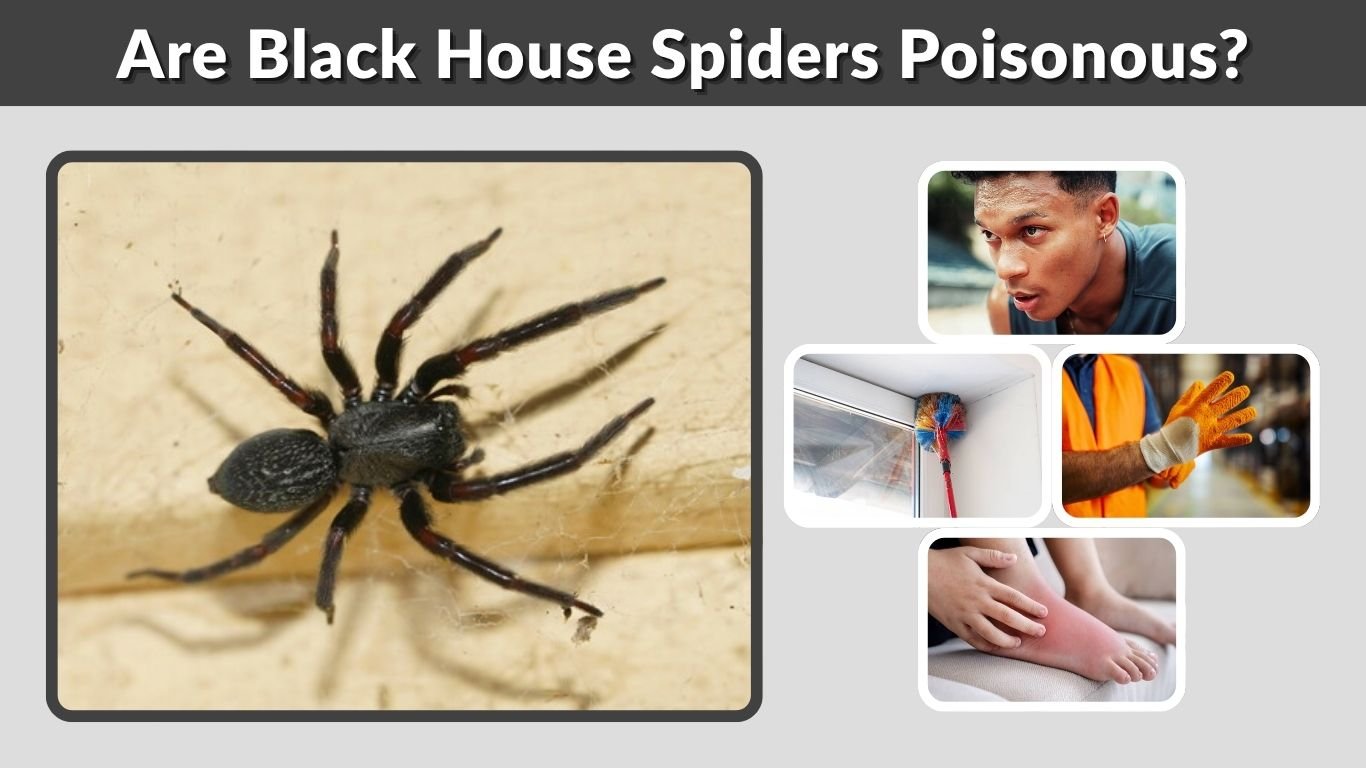
Black house spiders (Badumna insignis) are venomous but are not considered highly dangerous to humans. Their venom helps them capture insects and defend themselves against threats. Although their bites may cause pain and swelling, serious medical complications are uncommon. These spiders generally avoid confrontation and prefer remaining inside their webs.
Are Black House Spiders Poisonous or Venomous?
Technically, black house spiders are venomous rather than poisonous.
Venom is injected through specialized structures such as fangs, while poison generally causes harm when swallowed, inhaled, or absorbed through contact.
Black house spiders use their fangs to inject venom into insects. They can also bite people when accidentally trapped, squeezed, or handled.
However, their venom is not considered medically significant for most healthy people.
Can a Black House Spider Bite Kill You?
Black house spiders are not regarded as deadly spiders, and their bites are not known to cause fatal human envenomation.
Most confirmed bites result in localized pain, redness, or swelling. Occasionally, individuals experience nausea, sweating, dizziness, or vomiting.
Severe allergic reactions are possible with spider bites but are uncommon.
Because other dangerous species can resemble black house spiders, correctly identifying the spider is important.
How to Identify an Australian Black House Spider
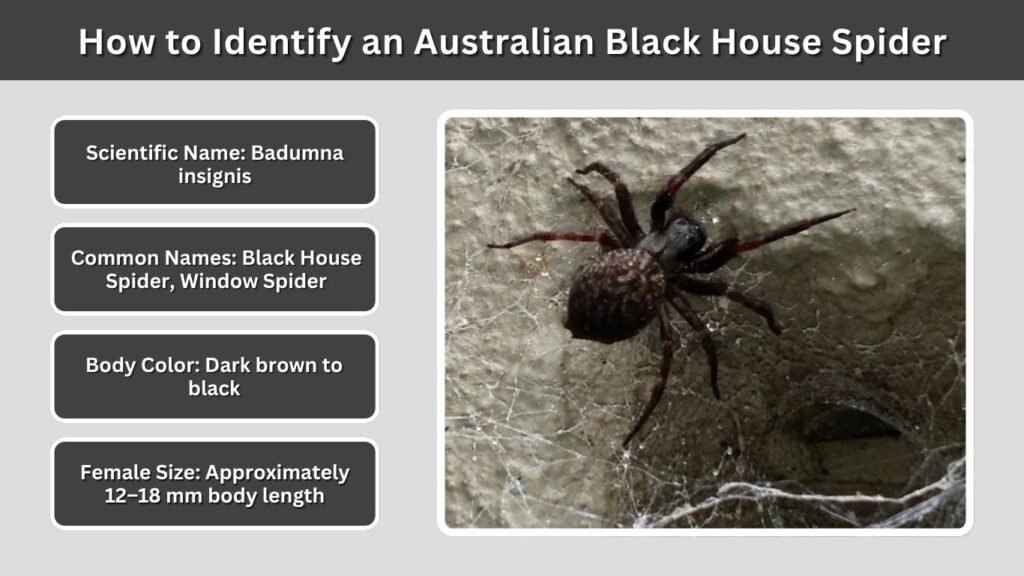
Australian black house spiders have distinctive physical characteristics and web-building habits. They belong to the family Desidae and are commonly called window spiders because they frequently build webs around window frames. Although they may resemble other dark-colored spiders, their hairy bodies and distinctive webs provide useful identification clues.
Black House Spider Identification
- Scientific Name: Badumna insignis
- Common Names: Black House Spider, Window Spider
- Family: Desidae
- Body Color: Dark brown to black
- Abdomen: Charcoal-gray with faint pale markings
- Female Size: Approximately 12–18 mm body length
- Male Size: Approximately 9–15 mm body length
- Legs: Dark, relatively thick, and hairy
- Web Type: Messy, lacy sheet with a funnel-like retreat
Female black house spiders are generally larger and remain near their webs, while mature males may wander in search of mates.
Where Do Black House Spiders Live?
Black house spiders are widely distributed across Australia, particularly in southern and eastern regions.
They commonly establish webs around window frames, doorways, brickwork, tree trunks, and sheltered crevices.
Their webs contain a tunnel-like retreat where they hide while waiting for insects. Unlike true Australian funnel-web spiders, black house spiders typically build exposed lacy webs on structures.
What Happens If a Black House Spider Bites You?
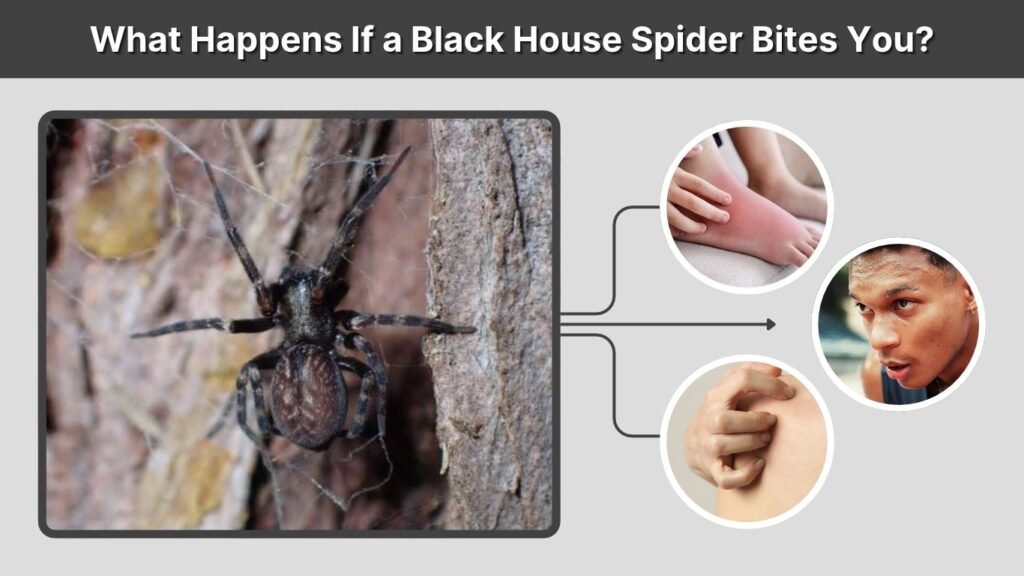
A black house spider bite may be painful, but most cases involve temporary localized symptoms. Bites are relatively uncommon because these spiders usually retreat when disturbed. However, accidentally pressing against a spider or placing a hand inside its hiding place can provoke a defensive bite.
Common Black House Spider Bite Symptoms
Symptoms may include:
- Sharp or immediate pain at the bite site.
- Localized redness and swelling.
- Tenderness around the affected area.
- Mild itching or irritation.
- Temporary discomfort during movement.
- Occasionally nausea, sweating, or dizziness.
Symptoms vary between individuals. Persistent pain or worsening inflammation should be assessed by a healthcare professional.
How to Treat a Black House Spider Bite
If the spider has been reliably identified as a black house spider, basic first aid is usually sufficient.
- Wash the affected area gently with soap and water.
- Apply a cold pack wrapped in a clean cloth.
- Keep the affected area comfortable and avoid scratching.
- Monitor swelling, redness, and pain.
- Seek medical advice if symptoms persist or worsen.
If you have been bitten by an unidentified large black spider in Australia, seek emergency assistance because funnel-web spider bites can be life-threatening. Do not assume that the spider was a harmless black house spider.
Are Black House Spiders Poisonous to Dogs?
Black house spiders possess venom, but there is limited species-specific veterinary evidence about their effects on dogs. They are not recognized as a major cause of serious spider envenomation in pets. Nevertheless, any suspected spider bite deserves attention because the spider’s identity may be uncertain.
Symptoms of Black House Spider Bites in Dogs
A dog bitten by a spider may experience:
- Localized swelling or redness.
- Pain when the affected area is touched.
- Excessive licking of the bite.
- Unusual sensitivity around the skin.
- Restlessness or discomfort.
- Occasionally vomiting or unusual weakness with more serious spider envenomation.
These symptoms are not specific to black house spiders and may result from other bites or medical conditions.
What Should You Do If Your Dog Gets Bitten?
If you suspect your dog has been bitten by a spider, contact your veterinarian for guidance.
Keep your dog calm and prevent excessive licking or scratching.
Do not administer human painkillers, antihistamines, or topical medications without veterinary advice.
If the spider was large and black but not positively identified, arrange a prompt veterinary assessment.
Are Black House Spiders Poisonous to Cats?

Cats sometimes encounter spiders while exploring corners, windowsills, and outdoor hiding places. Although black house spiders are not recognized as a major veterinary threat, their specific venom effects on cats have not been extensively studied. Caution is particularly important because more dangerous spiders may be mistaken for them.
Possible Symptoms of Spider Bites in Cats
A cat with a suspected spider bite may develop localized pain, swelling, or sensitivity.
Some cats may lick the affected area repeatedly or become reluctant to move normally.
Vomiting, weakness, difficulty walking, breathing problems, or collapse can indicate serious illness and require immediate veterinary attention.
How to Protect Cats From Black House Spiders
Prevent cats from playing with unidentified spiders, especially in garages, sheds, and outdoor storage areas.
Regularly inspect accessible hiding spots and carefully remove spiders when necessary.
If your cat is suspected of being bitten by a large black spider, contact a veterinarian promptly rather than assuming the species is harmless.
Black House Spider vs. Dangerous Black Spiders
Black house spiders are sometimes confused with more dangerous species because of their dark appearance. However, differences in body structure, markings, web construction, and habitat can help distinguish them. Identification should never rely on color alone, especially when evaluating a suspected spider bite.
Black House Spider vs. Funnel-Web Spider
Australian funnel-web spiders can deliver medically serious bites, whereas black house spiders are generally considered low-risk.
Black house spiders have relatively hairy, velvety bodies and often build messy lacy webs around windows or elevated structures.
Funnel-web spiders typically have a smoother, shinier appearance and often occupy burrows or sheltered ground-level habitats.
However, visual differences can be difficult to recognize, so avoid handling unidentified spiders.
Black House Spider vs. Black Widow Spider
Black widow spiders belong to the genus Latrodectus, making them different from Australian black house spiders.
Female black widows are commonly recognized by their glossy dark bodies and distinctive underside markings, although appearance varies by species.
Black widow venom can cause severe pain and systemic symptoms, while black house spider bites usually produce localized effects.
How to Prevent Black House Spiders Around Your Home

Black house spiders often settle in locations that provide shelter and a reliable supply of insects. They are generally beneficial predators, but homeowners may prefer keeping them away from frequently used indoor spaces. Simple maintenance and reducing access points can discourage unwanted encounters.
Effective Black House Spider Prevention Tips
- Remove unwanted webs from windows and door frames.
- Seal gaps around doors, walls, and window frames.
- Install properly fitted window screens.
- Reduce clutter in garages and storage areas.
- Wear gloves when handling stored materials.
- Reduce outdoor lighting that attracts flying insects where practical.
- Avoid reaching into dark crevices without checking first.
Should You Kill Black House Spiders?
Black house spiders help control insects such as flies, moths, and mosquitoes.
When they are located away from frequently used areas, leaving them undisturbed can benefit the local environment.
If removal is necessary, consider contacting a pest professional or using a safe relocation method without directly handling the spider.
FAQs
1. Are Australian black house spiders poisonous?
Australian black house spiders are venomous rather than poisonous. They can inject venom through their fangs, but their bites are generally not considered medically dangerous to humans. Most bites cause localized pain and swelling, although occasional additional symptoms can occur.
2. Are black house spiders aggressive toward humans?
Black house spiders are not naturally aggressive toward humans. They usually remain hidden inside their webs and retreat when disturbed. Bites generally occur when the spider is accidentally squeezed, trapped against the skin, or directly handled.
3. Are black house spiders dangerous to dogs and cats?
Black house spiders are not recognized as a major cause of severe poisoning in dogs and cats, but species-specific evidence is limited. Any suspected spider bite should be monitored carefully, and pets bitten by unidentified large black spiders need prompt veterinary assessment.
4. What is the difference between a black house spider and a black widow?
Black house spiders belong to the genus Badumna, while black widows belong to Latrodectus. Black house spiders commonly build lacy webs around windows, while black widows typically produce irregular tangled webs. Black widow bites carry a greater risk of serious systemic symptoms.
5. How long does a black house spider bite take to heal?
Mild black house spider bites often improve within a few days, although recovery varies with the severity of the reaction. Pain and swelling should gradually decrease. Seek medical advice if symptoms persist, worsen, or involve significant swelling, fever, or unusual illness.
