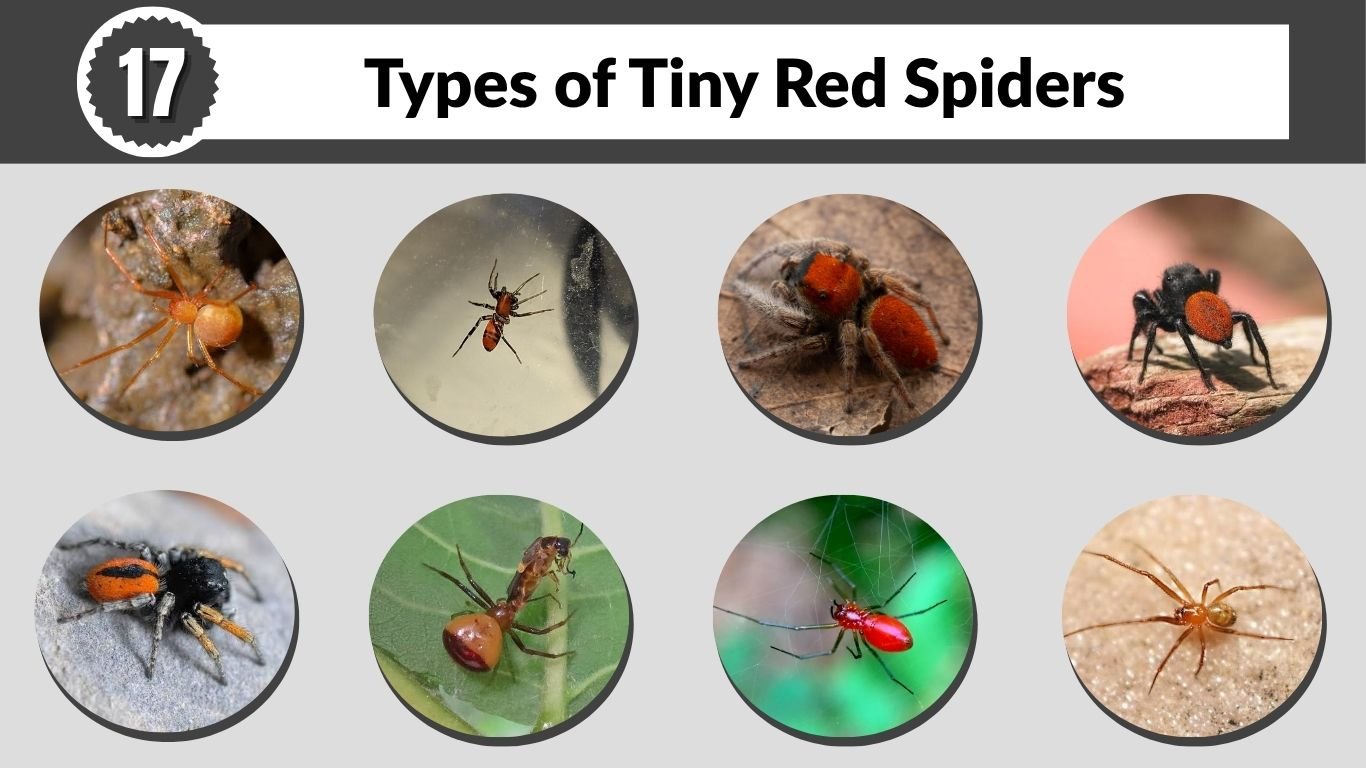
Tiny red spiders are fascinating arachnids found in gardens, forests, grasslands, and even inside homes. These small spiders display beautiful shades of red, orange, and reddish-brown, making them surprisingly colorful despite their size. Some species build delicate webs, while others actively hunt insects or imitate ants for protection. Although many tiny red spiders look similar, their body shapes, markings, and behaviors help distinguish them. In this guide, we’ll explore 17 types of tiny red spiders, including their identification features, habitats, and feeding habits.
1. Red House Spider
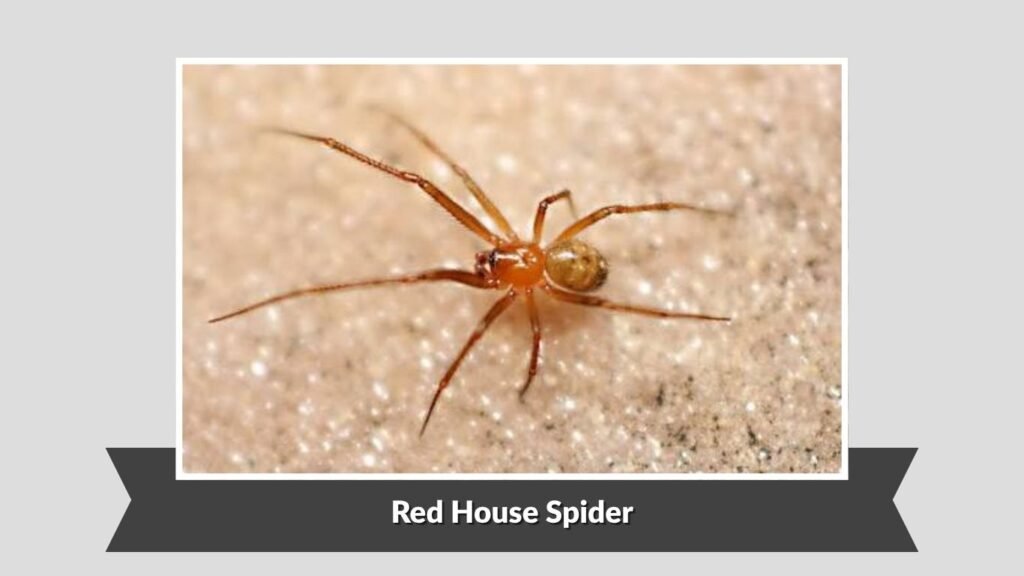
The Red House Spider (Nesticodes rufipes) is a small spider commonly found inside homes, garages, sheds, and other sheltered locations. Its reddish-brown body and slender legs make it one of the recognizable tiny red spiders. These spiders prefer quiet, undisturbed areas where they build irregular webs to capture small insects.
Identification
- Common Name: Red House Spider
- Scientific Name: Nesticodes rufipes
- Family: Theridiidae
- Body Size: Approximately 3–7 mm
- Body Color: Reddish-brown to dark red
- Leg Color: Reddish-orange to brown
- Body Shape: Small body with a rounded abdomen
- Web Type: Irregular, tangled cobweb
Habitat and Distribution
Red House Spiders are commonly found in tropical and subtropical regions, including areas of North America, Asia, and Africa. They frequently inhabit indoor spaces such as basements, storage rooms, window corners, and behind furniture.
These spiders prefer warm, sheltered environments where insects are available throughout the year.
Behavior and Diet
Red House Spiders build messy, three-dimensional webs and wait for insects to become trapped. Their diet includes flies, mosquitoes, ants, and other small arthropods.
They are generally shy and avoid human contact. Although they possess venom to immobilize prey, their bites are uncommon and are not generally considered medically significant to humans.
2. Black-Tailed Red Sheetweaver
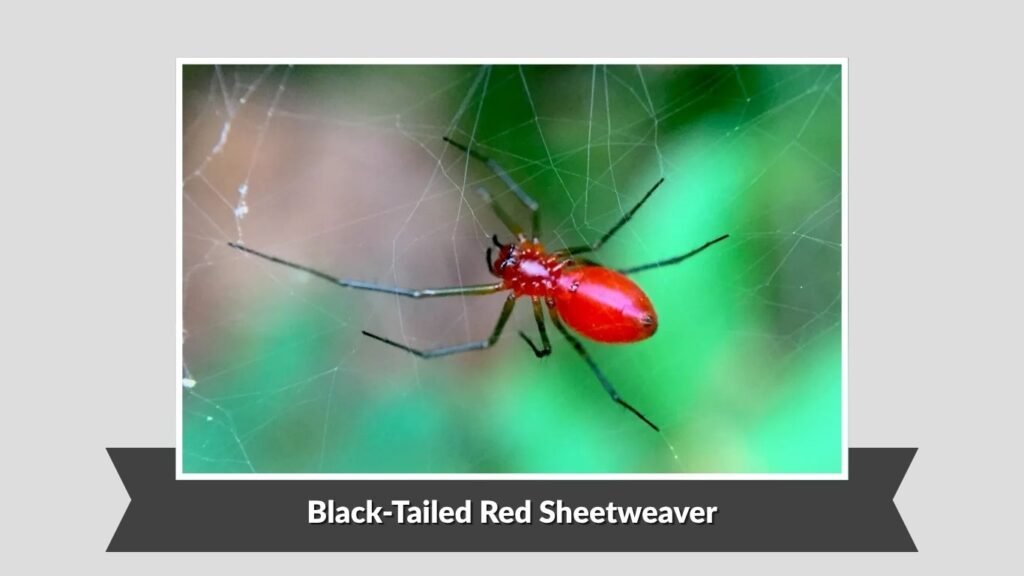
The Black-Tailed Red Sheetweaver (Florinda coccinea) is a tiny, brightly colored spider belonging to the family Linyphiidae. Its vivid red body and distinctive black tip make it one of the easiest small red spiders to recognize. It commonly lives in grassy environments, where it builds delicate sheet-shaped webs to capture insects.
Identification
- Common Name: Black-Tailed Red Sheetweaver
- Scientific Name: Florinda coccinea
- Family: Linyphiidae
- Body Size: Approximately 3–3.5 mm
- Body Color: Bright red to reddish-orange
- Leg Color: Reddish-brown with darker sections
- Distinctive Feature: Small black projection at the abdomen’s tip
- Web Type: Horizontal sheet-shaped web
Habitat and Distribution
Black-Tailed Red Sheetweavers occur throughout parts of the southeastern United States, Mexico, and the Caribbean. They prefer grassy fields, lawns, gardens, and agricultural areas.
Their webs are usually constructed close to the ground, between grass blades or other low-growing vegetation.
Behavior and Diet
These spiders create horizontal silk sheets with tangled threads positioned above them. When small flying insects collide with the upper threads, they may fall onto the sheet below.
The spider quickly approaches the trapped prey and immobilizes it using venom. Black-Tailed Red Sheetweavers primarily feed on tiny flies and other small insects and are not considered dangerous to humans.
3. Broad-Faced Sac Spider

The Broad-Faced Sac Spider (Neochelas tranquillus, formerly Trachelas tranquillus) is a small hunting spider recognized by its reddish-brown head region and pale abdomen. Unlike web-building spiders, it actively searches for insects and shelters inside silk retreats during the day. It is sometimes discovered indoors, especially during autumn.
Identification
- Common Name: Broad-Faced Sac Spider
- Scientific Name: Neochelas tranquillus
- Family: Trachelidae
- Body Size: Males 5–6 mm; females 7–10 mm
- Body Color: Reddish-brown cephalothorax with a pale abdomen
- Leg Color: Dark reddish-brown front legs with lighter rear legs
- Body Shape: Broad, hardened front body with an oval abdomen
- Web Type: Silk retreat rather than a prey-catching web
Habitat and Distribution
Broad-Faced Sac Spiders occur across eastern North America, including parts of the United States and southeastern Canada.
They inhabit leaf litter, gardens, woodland edges, and spaces beneath stones or loose bark. During cooler months, they may enter houses through small openings.
Behavior and Diet
These spiders are primarily nocturnal hunters that capture insects and other small arthropods. They may also scavenge dead insects.
During daylight hours, they remain hidden inside protective silk shelters. Their bites can be painful if they become trapped against human skin, but they are not generally considered medically dangerous.
4. Bull-Headed Sac Spider

The Bull-Headed Sac Spider is another common name for Neochelas tranquillus, the same species described above as the Broad-Faced Sac Spider. Its reddish-brown front body and pale abdomen give it a distinctive appearance. This spider is frequently found in sheltered outdoor environments and occasionally wanders into buildings.
Identification
- Common Name: Bull-Headed Sac Spider
- Scientific Name: Neochelas tranquillus
- Family: Trachelidae
- Body Size: Approximately 5–10 mm
- Body Color: Rust-red front body with cream-colored abdomen
- Leg Color: Reddish-brown to yellowish-brown
- Eye Count: Eight
- Web Type: Protective silk retreats
Habitat and Distribution
Bull-Headed Sac Spiders inhabit wooded areas, gardens, and residential environments across eastern North America.
They commonly shelter beneath rocks, loose tree bark, fallen leaves, and outdoor debris. They may also enter garages and houses when temperatures decrease.
Behavior and Diet
These spiders are active hunters that search for small insects and other arthropods, primarily at night. They do not construct large prey-catching webs but create silk retreats for resting and protection.
Although generally nonaggressive, they may bite when accidentally trapped against skin. Their bites can be painful but usually do not cause serious medical complications.
5. Black-Banded Crab Spider

The Black-Banded Crab Spider (Synema parvulum), also called the Black-Tail Crab Spider, is a tiny species belonging to the family Thomisidae. Its reddish-brown body and contrasting dark abdominal markings make it recognizable among small crab spiders. Like other members of its family, it has a crab-like stance and relies on ambush hunting.
Identification
- Common Name: Black-Banded Crab Spider
- Scientific Name: Synema parvulum
- Family: Thomisidae
- Body Size: Approximately 2.5–2.8 mm
- Body Color: Light brown to reddish-brown
- Leg Color: Brownish to pale yellow
- Abdomen: Broad with a dark marking near the rear
- Web Type: Does not build prey-catching webs
Habitat and Distribution
Black-Banded Crab Spiders occur in the United States and Mexico. They are especially associated with grassy environments, flowering plants, and shrubs.
Their small size and natural coloration allow them to remain relatively inconspicuous among leaves and vegetation.
Behavior and Diet
These spiders are ambush predators that wait patiently for insects to approach. Their front legs are adapted for grabbing prey quickly.
They feed on small insects encountered on flowers, leaves, and other vegetation.
Unlike web-building spiders, Black-Banded Crab Spiders rely on camouflage and sudden movements to capture food. They are not considered medically dangerous to humans.
6. Small Thief Spider

The Small Thief Spider (Famakytta miniacea, formerly Argyrodes miniaceus) is a tiny spider belonging to the family Theridiidae. This species is known for its reddish-orange coloration and unusual feeding behavior. Instead of always catching its own prey, it frequently lives in the webs of larger spiders and takes advantage of insects captured by the web’s owner.
Identification
- Common Name: Small Thief Spider
- Scientific Name: Famakytta miniacea
- Family: Theridiidae
- Body Size: Commonly around 3–5 mm
- Body Color: Orange-red to reddish-brown
- Leg Color: Brownish to dark with lighter sections
- Abdomen Shape: Distinctively raised or triangular
- Special Features: May have silvery abdominal markings
Habitat and Distribution
Small Thief Spiders occur across parts of Asia and Australia. They inhabit forests, gardens, and other environments where large orb-weaving spiders are abundant.
They are frequently found near the edges of webs constructed by larger spiders.
Behavior and Diet
Small Thief Spiders display a feeding strategy called kleptoparasitism, which involves obtaining food from another animal’s hunting efforts.
They may steal captured insects, consume small prey in a host spider’s web, or feed alongside the larger spider.
Their unusual behavior allows them to obtain food without constructing large capture webs of their own.
Note: Numbers 3 and 4 are two common names for the same species. For an article featuring 17 distinct types of tiny red spiders, one should eventually be replaced with a different species.
7. Rubens Orbweaver

The Rubens Orbweaver (Hypsosinga rubens) is a small spider known for its orange-red body and contrasting dark markings. This species belongs to the family Araneidae and builds delicate, circular webs to capture flying insects. Its compact body and reddish coloration make it an interesting example of tiny red spiders found in natural environments.
Identification
- Common Name: Rubens Orbweaver
- Scientific Name: Hypsosinga rubens
- Family: Araneidae
- Body Size: Only a few millimeters long
- Body Color: Orange to reddish-orange
- Leg Color: Orange with darker sections
- Abdomen: Oval-shaped with dark spots or markings
- Web Type: Small circular orb web
Habitat and Distribution
Rubens Orbweavers occur in North America, where they inhabit grassy fields, gardens, woodland edges, and other areas containing low vegetation.
They typically construct their webs between grass stems, small branches, and leaves. Their small size makes them difficult to notice without careful observation.
Behavior and Diet
Rubens Orbweavers primarily feed on small flying insects that become trapped in their circular webs.
They detect prey through vibrations transmitted along silk threads. Once an insect becomes trapped, the spider approaches and immobilizes it.
These spiders are generally harmless to humans and contribute to natural insect population control.
8. Red-Bellied Jumping Spider

The Red-Bellied Jumping Spider (Philaeus chrysops) is a colorful hunting spider belonging to the family Salticidae. Adult males are especially recognizable because of their bright reddish-orange abdomens and contrasting black markings. Unlike web-building spiders, this species uses excellent eyesight and powerful jumping abilities to capture insects.
Identification
- Common Name: Red-Bellied Jumping Spider
- Scientific Name: Philaeus chrysops
- Family: Salticidae
- Body Size: Approximately 5–12 mm
- Body Color: Males have a bright red or orange abdomen
- Leg Color: Dark with pale markings and reddish hairs
- Eyes: Eight eyes, including two large forward-facing eyes
- Web Type: Does not build prey-catching webs
Habitat and Distribution
Red-Bellied Jumping Spiders occur throughout parts of Europe, North Africa, and Asia. They are particularly common in warmer Mediterranean environments.
These spiders prefer sunny habitats containing rocks, walls, shrubs, and low vegetation.
They are frequently observed moving across exposed surfaces while searching for insects.
Behavior and Diet
Red-Bellied Jumping Spiders are active daytime hunters that rely on their sharp vision to detect prey.
They carefully approach insects before jumping forward to capture them. Their diet includes flies, small moths, and other arthropods.
Males also perform visual courtship displays involving leg movements and body vibrations.
9. Red-Backed Jumping Spider

The Red-Backed Jumping Spider (Phidippus johnsoni) is a distinctive North American spider recognized by its bright red abdomen and dark body. It belongs to the family Salticidae and is commonly found in gardens, woodlands, and rocky environments. Its colorful appearance and curious behavior make it one of the most recognizable red jumping spiders.
Identification
- Common Name: Red-Backed Jumping Spider
- Scientific Name: Phidippus johnsoni
- Family: Salticidae
- Body Size: Approximately 6–14 mm
- Body Color: Black body with a bright red abdomen
- Leg Color: Black with fine hairs
- Distinctive Feature: Females often have a black stripe on the red abdomen
- Web Type: Silk retreats rather than prey-catching webs
Habitat and Distribution
Red-Backed Jumping Spiders inhabit western North America, including parts of the United States, Canada, and Mexico.
They commonly occur in gardens, grasslands, forests, and rocky landscapes. These spiders frequently shelter beneath stones, bark, and vegetation.
Behavior and Diet
Red-Backed Jumping Spiders actively hunt insects during daylight hours.
Their excellent vision helps them identify prey, calculate jumping distances, and move accurately between surfaces.
They feed on flies, moths, small beetles, and other arthropods.
Although they possess venom for subduing prey, they are not considered medically dangerous to humans.
10. Cardinal Jumping Spider

The Cardinal Jumping Spider (Phidippus cardinalis) is a brightly colored species known for its striking red body and contrasting dark legs. This North American jumping spider belongs to the family Salticidae. Its reddish appearance may help it resemble certain velvet ants, which are insects that many predators avoid.
Identification
- Common Name: Cardinal Jumping Spider
- Scientific Name: Phidippus cardinalis
- Family: Salticidae
- Body Size: Approximately 7–13 mm
- Body Color: Bright red to reddish-orange
- Leg Color: Black to dark brown
- Body Shape: Compact and hairy
- Web Type: Does not construct prey-catching webs
Habitat and Distribution
Cardinal Jumping Spiders occur across parts of the eastern and central United States, particularly in warmer regions.
They inhabit open woodlands, grasslands, gardens, and shrub-covered areas.
These spiders are commonly observed on leaves, branches, and low vegetation where they search for insects.
Behavior and Diet
Cardinal Jumping Spiders are active visual predators that hunt during daylight hours.
They use their large forward-facing eyes to locate insects and carefully approach before making a sudden jump.
Their diet includes flies, moths, beetles, and other small arthropods.
They use silk primarily for safety lines, resting shelters, and egg protection rather than constructing prey-catching webs.
11. Whitman’s Jumping Spider

Whitman’s Jumping Spider (Phidippus whitmani) is a small, colorful species found in North America. Adult males display attractive reddish-orange coloration, while females are generally less brightly colored. This spider belongs to the family Salticidae and is recognized for its excellent eyesight, agile movements, and active hunting behavior.
Identification
- Common Name: Whitman’s Jumping Spider
- Scientific Name: Phidippus whitmani
- Family: Salticidae
- Body Size: Approximately 8–11 mm
- Body Color: Males reddish-orange; females often brownish
- Leg Color: Dark brown to black with fine hairs
- Distinctive Feature: Males have a dark facial region and reddish body hairs
- Web Type: Silk retreats rather than capture webs
Habitat and Distribution
Whitman’s Jumping Spiders occur throughout eastern North America, including parts of Canada and the United States.
They inhabit woodland edges, grassy environments, gardens, and areas with low-growing vegetation.
These spiders frequently explore leaves, tree trunks, and ground vegetation while searching for prey.
Behavior and Diet
Whitman’s Jumping Spiders actively pursue insects instead of waiting in webs.
Their large eyes provide excellent vision, helping them detect movement and judge distances before jumping.
They primarily feed on flies, small beetles, moths, and other arthropods.
These spiders are generally nonaggressive toward humans and play a useful role in controlling small insect populations.
Species details checked against North Carolina Parks, BugGuide, the World Spider Catalog, and arachnological identification references.
12. Apache Jumping Spider

The Apache Jumping Spider (Phidippus apacheanus) is a colorful jumping spider known for its bright reddish-orange body and contrasting black markings. It belongs to the family Salticidae and is commonly found in sunny, open environments. Its striking appearance resembles certain velvet ants, which may help discourage predators from attacking it.
Identification
- Common Name: Apache Jumping Spider
- Scientific Name: Phidippus apacheanus
- Family: Salticidae
- Body Size: Approximately 3–11 mm in many specimens
- Body Color: Bright orange-red with black markings
- Leg Color: Black with lighter sections
- Eye Count: Eight, including two large forward-facing eyes
- Web Type: Silk retreats rather than prey-catching webs
Habitat and Distribution
Apache Jumping Spiders are found mainly in the United States and Mexico, particularly in warmer, drier regions. They inhabit grasslands, deserts, prairies, and open woodland environments.
These spiders often rest on shrubs, rocks, cacti, and other vegetation. They prefer sunny locations where insects are abundant.
Behavior and Diet
Apache Jumping Spiders are active daytime hunters that rely on excellent eyesight to locate prey. They capture flies, moths, beetles, and other small arthropods.
They use silk for resting shelters, egg protection, and safety lines while jumping. Their venom helps immobilize prey, but they are not considered medically dangerous to humans.
13. Slender Ant-Mimic Jumping Spider

The Slender Ant-Mimic Jumping Spider (Synemosyna formica) is a tiny spider recognized by its elongated body and remarkable resemblance to an ant. Its reddish-brown and dark coloration helps it blend into environments where ants are common. This species uses both its appearance and movements to imitate ants, potentially protecting itself from predators.
Identification
- Common Name: Slender Ant-Mimic Jumping Spider
- Scientific Name: Synemosyna formica
- Family: Salticidae
- Body Size: Approximately 4–6 mm
- Body Color: Reddish-brown to dark brown or black
- Leg Color: Brownish with darker markings
- Body Shape: Long, narrow, and ant-like
- Distinctive Feature: Raises its front legs to resemble antennae
Habitat and Distribution
Slender Ant-Mimic Jumping Spiders occur in eastern North America, including parts of the United States and Canada.
They commonly inhabit grasslands, woodland edges, bushes, and tall vegetation. Their slender bodies make them difficult to distinguish from ants moving among leaves and stems.
Behavior and Diet
These spiders are active hunters that feed on small insects and other arthropods. Instead of constructing capture webs, they search for prey using their vision.
Their ant-mimicking behavior includes raising their front legs and moving in winding patterns resembling ant movement.
This resemblance may discourage predators that normally avoid aggressive or defensive ants.
14. Red Weaver Ant-Mimicking Spider

The Red Weaver Ant-Mimicking Spider (Myrmaplata plataleoides) is a fascinating jumping spider that closely resembles Asian weaver ants. Its reddish-orange coloration, narrow body, and unusual movements make it difficult to distinguish from real ants. This species belongs to the family Salticidae and is widely distributed across southern and southeastern Asia.
Identification
- Common Name: Red Weaver Ant-Mimicking Spider
- Scientific Name: Myrmaplata plataleoides
- Family: Salticidae
- Body Size: Females approximately 6–7 mm; males 9–12 mm including elongated mouthparts
- Body Color: Reddish-orange to orange-brown
- Leg Color: Orange to reddish-brown
- Body Shape: Slender, with constrictions resembling ant body segments
- Distinctive Feature: Males have unusually long chelicerae
Habitat and Distribution
Red Weaver Ant-Mimicking Spiders occur in India, Sri Lanka, China, and parts of Southeast Asia.
They inhabit gardens, forests, shrubs, and areas containing weaver ant colonies. They are frequently seen moving across leaves and small tree branches.
Behavior and Diet
These spiders actively hunt small insects rather than relying on prey-catching webs.
They resemble weaver ants by raising their front legs to imitate antennae and moving with ant-like walking patterns.
Their remarkable mimicry helps protect them from certain predators that avoid weaver ants. Unlike the ants they imitate, these spiders are generally timid toward humans.
15. Silvestri’s Cave Spider

Silvestri’s Cave Spider (Typhlonesticus silvestrii) is a small, cave-associated spider belonging to the family Nesticidae. Unlike brightly colored red spiders, this species is generally pale yellowish, making it a less suitable example of a tiny red spider. It inhabits dark, damp environments and constructs delicate cobwebs to capture small invertebrates.
Identification
- Common Name: Silvestri’s Cave Spider
- Scientific Name: Typhlonesticus silvestrii
- Family: Nesticidae
- Body Size: Approximately 3–4 mm
- Body Color: Pale yellowish to light brown
- Leg Color: Pale yellow to light brown
- Body Shape: Small body with relatively slender legs
- Web Type: Irregular cobweb with vertical sticky threads
Habitat and Distribution
Silvestri’s Cave Spiders occur in western North America, including California, Oregon, and parts of Canada.
They inhabit caves, damp rock crevices, and sheltered areas beneath logs and stones. These locations provide the stable humidity and protection they require.
Behavior and Diet
Silvestri’s Cave Spiders build irregular webs to capture tiny insects and other small invertebrates.
They generally remain sheltered in dark, humid environments, where they detect trapped prey through vibrations in their silk.
These spiders are not known to pose a significant danger to humans. Their small size and hidden habitat make encounters relatively uncommon.
16. Big-Eyed Thick-Jawed Spider
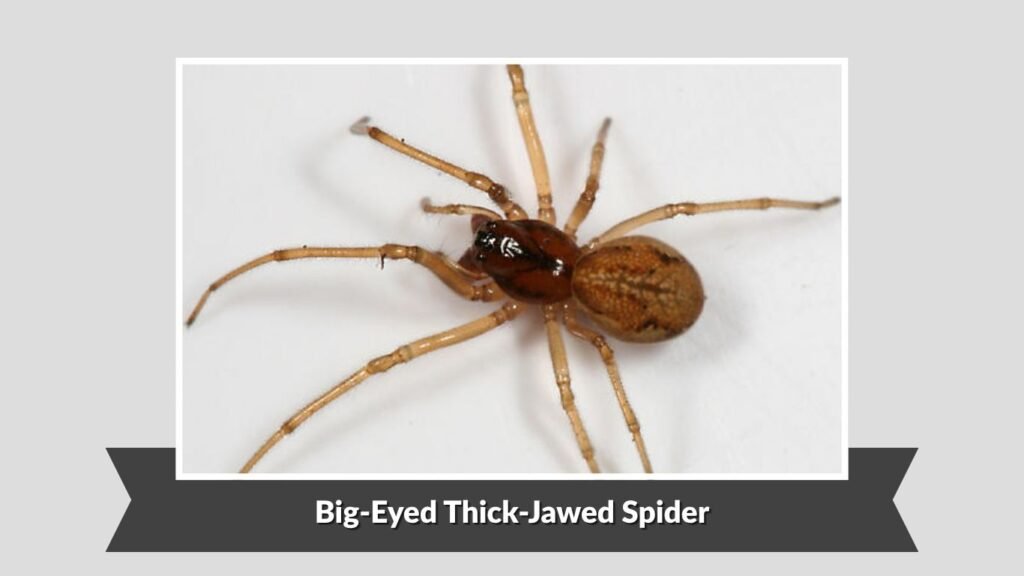
The Big-Eyed Thick-Jawed Spider (Pachygnatha autumnalis) is a small spider recognized by its orange-brown coloration, distinctive eye arrangement, and relatively large jaws. It belongs to the family Tetragnathidae and is primarily found in North America. Unlike many orb-weaving spiders, adults actively hunt small insects instead of building webs to capture prey.
Identification
- Common Name: Big-Eyed Thick-Jawed Spider
- Scientific Name: Pachygnatha autumnalis
- Family: Tetragnathidae
- Body Size: Small, generally a few millimeters long
- Body Color: Orange-brown with darker markings
- Leg Color: Light brown to reddish-brown
- Abdomen: Rounded to oval with variable markings
- Distinctive Feature: Enlarged posterior median eyes
Habitat and Distribution
Big-Eyed Thick-Jawed Spiders occur mainly in the eastern United States and parts of Cuba. They prefer moist environments, including woodlands, grasslands, and areas containing fallen leaves.
These spiders are often found near the ground, hiding among leaf litter, grasses, and low-growing vegetation.
Behavior and Diet
Adult Big-Eyed Thick-Jawed Spiders actively search for small insects and other arthropods. Unlike their juveniles, which may build small webs, adults primarily hunt on the ground.
Their diet includes tiny flies, soft-bodied insects, and other small invertebrates. They are not considered medically dangerous to humans.
17. Prairie Ant-Mimic Sac Spider
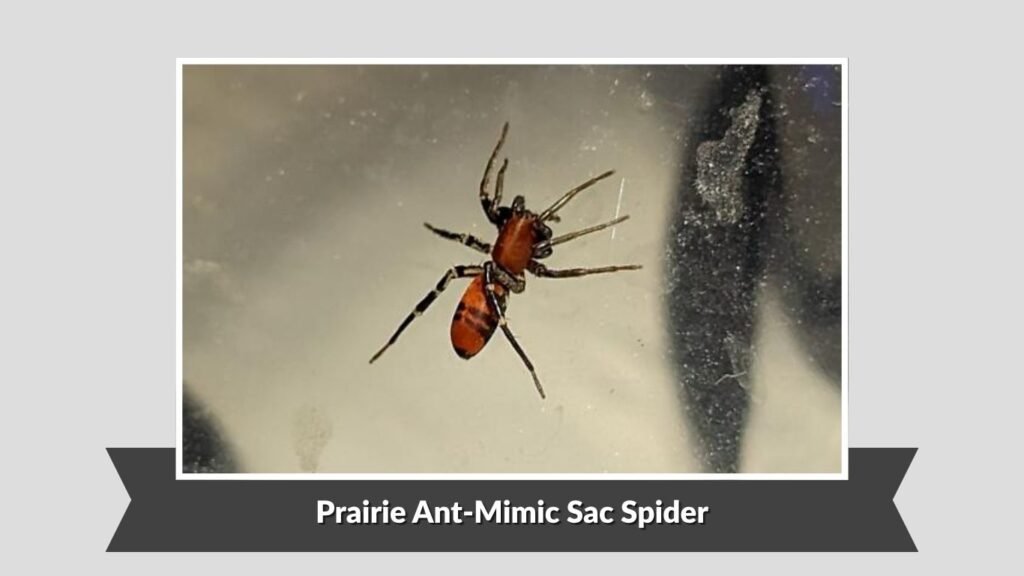
The Prairie Ant-Mimic Sac Spider (Castianeira alteranda) is a small, slender spider known for its reddish-orange and black coloration. It belongs to the family Corinnidae and closely resembles an ant in both appearance and movement. Its narrow body and contrasting abdominal markings make it an interesting example of a small reddish spider.
Identification
- Common Name: Prairie Ant-Mimic Sac Spider
- Scientific Name: Castianeira alteranda
- Family: Corinnidae
- Body Size: Approximately 5–10 mm
- Body Color: Reddish-brown, orange, or dark brown
- Leg Color: Brown, orange, or dark with pale markings
- Abdomen: Elongated with black bands or stripes
- Distinctive Feature: Ant-like body shape and movement
Habitat and Distribution
Prairie Ant-Mimic Sac Spiders occur in Canada and the United States, particularly in western grassland and prairie environments.
They prefer open fields, grasslands, shrublands, and areas containing dry vegetation. These spiders frequently move through leaf litter, beneath stones, and along the ground while searching for prey.
Behavior and Diet
Prairie Ant-Mimic Sac Spiders are active hunters that capture small insects and other arthropods.
Unlike orb-weaving spiders, they do not construct large prey-catching webs. Instead, they move rapidly across the ground to locate food.
Their ant-like movements and body markings may help discourage predators. They are generally not aggressive toward humans and are not considered medically dangerous.
FAQs
1. What Are the Most Common Types of Tiny Red Spiders?
Some small reddish spiders include Red House Spiders, Black-Tailed Red Sheetweavers, and certain jumping spiders. However, tiny bright-red creatures found on walls or plants are often mites rather than true spiders. Identifying their body shape, markings, size, and habitat helps distinguish between them.
2. Are Tiny Red Spiders Dangerous to Humans?
Most tiny red spiders are not medically dangerous to humans. They generally avoid contact and use venom to capture small insects. However, spider bites can occasionally cause localized discomfort. If a suspected bite produces severe pain, spreading symptoms, or an allergic reaction, seek medical attention.
3. Why Are Tiny Red Spiders Found Around Houses?
Tiny red spiders may appear around houses because buildings provide shelter and access to insects. Gardens, window frames, walls, and storage areas can offer suitable habitats. Some tiny red arachnids commonly seen on buildings are actually clover mites rather than spiders.
4. What Is the Difference Between Tiny Red Spiders and Red Mites?
True spiders typically have two main body regions, while mites generally have a more compact or fused body appearance. Both belong to the arachnid group, and adults usually have eight legs. Clover mites and red spider mites are commonly mistaken for tiny red spiders.
5. How Can You Identify a Tiny Red Spider?
Examine its body shape, leg arrangement, coloration, and behavior. Jumping spiders have prominent forward-facing eyes and move actively, while web-building spiders often remain near their silk structures. Close-up photographs can help identify species, although some require expert examination for accurate identification.
