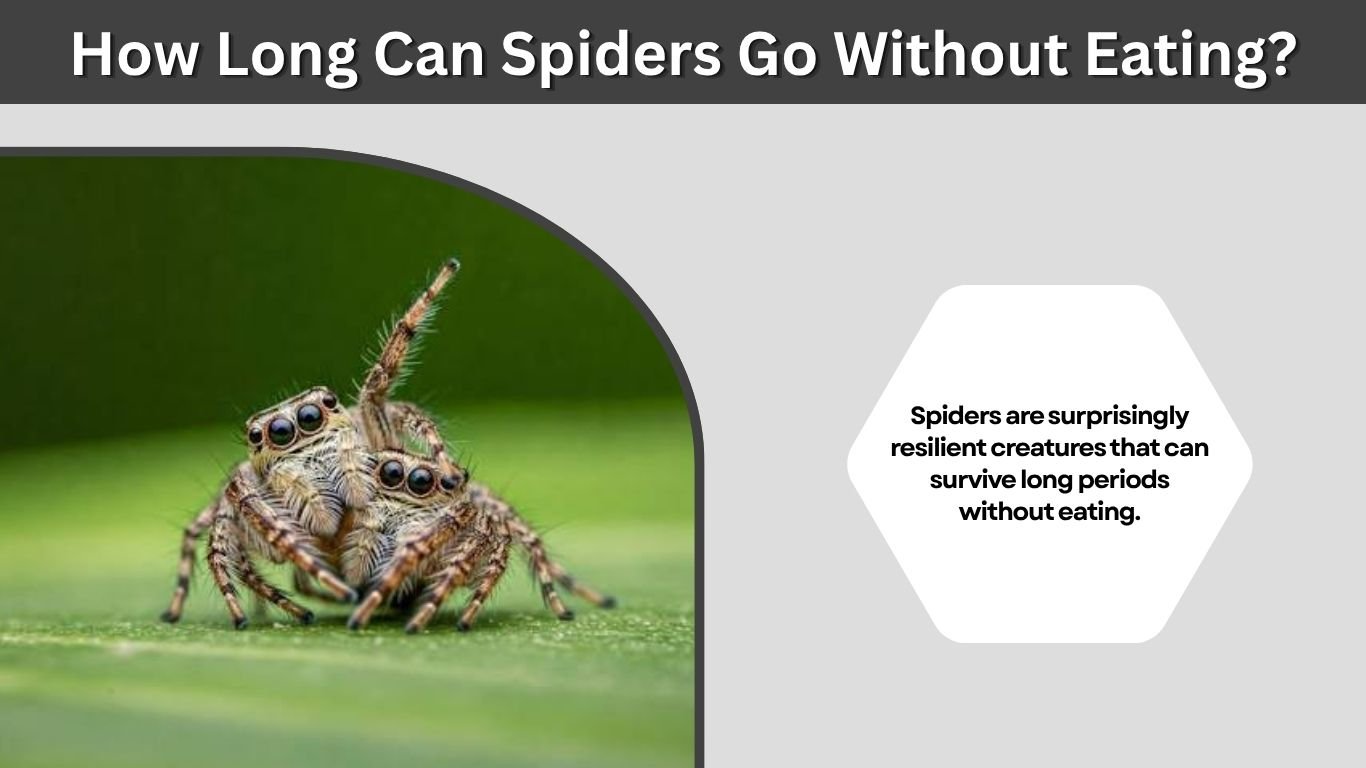
Spiders are surprisingly resilient creatures that can survive long periods without eating. Unlike many insects and other small animals, spiders have relatively slow metabolisms, allowing them to conserve energy when food becomes scarce. However, the exact time a spider can survive without food depends on its species, age, size, temperature, and access to water. Some spiders can survive for several weeks, while certain species endure months without catching prey. Understanding how long spiders can go without eating reveals fascinating details about their survival strategies, feeding habits, and adaptations to changing environments.
How Long Can Spiders Go Without Eating?
Many spiders can survive several weeks without food, while certain adult species can survive for months under favorable conditions. However, there is no universal survival period that applies to every spider. A spider’s ability to tolerate starvation depends on its energy reserves, metabolism, hydration, and environmental conditions.
Some scientific studies have recorded exceptionally long survival times under controlled conditions.
Spider Survival Time by Species
| Spider Type | Survival Without Food |
| Jumping spiders | Some can survive more than one month |
| Wolf spiders | Several months in certain studied species |
| House spiders | Varies considerably by species |
| Cellar spiders | No reliable universal duration established |
| Baby jumping spiders | Generally less tolerant than adults |
| Regal jumping spiders | May fast for extended periods; exact limit varies |
| Brown recluse spiders | Some survive 6–12 months under favorable conditions |
| Tarantulas | Several weeks or longer, depending on species and condition |
These are approximate capabilities rather than recommended feeding intervals. Individual spiders may survive for much shorter periods, particularly when water is unavailable.
How Long Can Jumping Spiders Go Without Eating?

Jumping spiders belong to the family Salticidae and actively hunt insects rather than relying on prey-catching webs. Their excellent eyesight and remarkable jumping abilities allow them to capture flies, moths, and other small arthropods.
Healthy adult jumping spiders can sometimes survive more than a month without food. However, regular feeding is essential for maintaining their health, activity, and normal development.
Why Jumping Spiders Sometimes Stop Eating
Jumping spiders may refuse food for several reasons, including:
- Molting: Juveniles often stop eating before shedding their exoskeleton.
- Low temperature: Cooler conditions can reduce activity and appetite.
- Stress: Changes in their enclosure may temporarily disrupt feeding.
- Recent feeding: A well-fed spider may not need another meal immediately.
- Insufficient lighting: Jumping spiders rely on vision to locate prey.
How Often Should Jumping Spiders Eat?
Adult jumping spiders are commonly fed approximately once or twice per week, although feeding requirements vary.
Younger spiders usually need smaller, more frequent meals because they are growing and molting.
Pet owners should monitor abdomen size, activity, and hydration rather than relying exclusively on a fixed feeding schedule.
How Long Can Wolf Spiders Go Without Eating?
Wolf spiders are active ground hunters belonging to the family Lycosidae. Unlike web-building spiders, they pursue prey using their powerful legs, sensitive eyesight, and quick movements.
Some wolf spiders demonstrate remarkable resistance to starvation. A scientific study recorded an average survival period of approximately 208 days without food in adult Lycosa lenta under experimental conditions.
However, this result does not mean every wolf spider can survive seven months without eating.
Species differences, temperature, humidity, body condition, and energy expenditure significantly influence survival.
Wolf spiders typically feed on insects and other small invertebrates whenever suitable prey becomes available. Their ability to withstand food shortages helps them survive periods when hunting conditions are unfavorable.
How Long Can House Spiders Go Without Eating?

House spiders commonly live in corners, basements, attics, and other sheltered indoor locations. Many build webs to capture flies, mosquitoes, moths, and other insects entering buildings.
The term “house spider” includes numerous species, so their starvation tolerance varies considerably. Some can tolerate prolonged gaps between meals, especially when conditions are cool and relatively humid.
Why House Spiders Survive Without Regular Meals
House spiders often conserve energy by remaining in their webs or shelters instead of actively searching for prey.
Their survival advantages include:
- Low energy expenditure: Remaining stationary reduces energy consumption.
- Slow metabolism: Many spiders require less energy than similarly sized active insects.
- Energy reserves: Previously consumed prey provides stored nutrients.
- Sheltered habitats: Indoor locations may protect spiders from extreme temperatures.
Do House Spiders Need Food Every Day?
No. House spiders generally do not need to eat daily.
Web-building spiders may experience unpredictable feeding opportunities, capturing several insects during one period and none during another.
However, surviving without food should not be confused with remaining healthy indefinitely. Prolonged starvation eventually reduces body condition and survival chances.
How Long Can Cellar Spiders Go Without Eating?
Cellar spiders, commonly called daddy longlegs spiders, belong to the family Pholcidae. They are recognizable by their long, slender legs and small bodies.
These spiders construct irregular webs in quiet indoor locations, including ceilings, garages, and basements.
Cellar spiders can remain relatively inactive while waiting for insects to become trapped in their webs. This behavior helps minimize unnecessary energy expenditure.
Although they can tolerate irregular feeding opportunities, there is insufficient species-specific evidence to establish a dependable maximum number of days they can survive without food.
Their survival depends on age, previous feeding, temperature, and moisture availability.
How Long Can Baby Jumping Spiders Go Without Eating?
Baby jumping spiders, also called spiderlings, are generally more vulnerable to food shortages than healthy adults.
Their small bodies contain limited energy reserves, and they require sufficient nutrients to grow and develop properly.
Some newly emerged spiderlings may survive without insect prey for several days or weeks, depending on the species and circumstances. However, this should not be treated as a safe fasting period for pet jumping spiders.
Why Baby Spiders Need Frequent Feeding
Young spiders require regular nourishment for several important reasons:
- Growth: Nutrients support the development of new body tissues.
- Molting: Energy is needed to produce and replace the exoskeleton.
- Limited reserves: Small bodies store less usable energy.
- Development: Inadequate nutrition can interfere with healthy growth.
What Should Baby Jumping Spiders Eat?
Young jumping spiders generally feed on tiny insects such as flightless fruit flies.
Provide appropriately sized prey and monitor their feeding behavior carefully. Very small spiderlings may need feeding daily or every few days, depending on their developmental stage.
Avoid leaving potentially dangerous feeder insects inside the enclosure during molting.
How Long Can Regal Jumping Spiders Go Without Eating?
Regal jumping spiders (Phidippus regius) are popular pet spiders because of their appearance, curious behavior, and active hunting habits.
Like other jumping spiders, healthy adults can tolerate occasional missed meals. Some may refuse food for extended periods before molting.
However, there is no scientifically established universal starvation limit specifically for regal jumping spiders.
A spider that stops eating but remains hydrated and has a rounded abdomen may simply be preparing to molt.
Continued food refusal accompanied by a severely shrunken abdomen, weakness, or difficulty moving deserves closer attention.
Can Spiders Survive Without Food and Water?

Spiders generally tolerate food shortages better when they have access to adequate moisture. Water is essential for maintaining body functions and supporting normal movement.
Many spiders obtain moisture from captured insects, while others drink droplets from leaves, webs, or surrounding surfaces.
Dehydration can become dangerous even when a spider has sufficient stored energy.
The time a spider survives without drinking depends on species, humidity, temperature, and available moisture in its prey.
For pet spiders, provide an appropriate drinking source and species-specific humidity rather than assuming they can survive without water.
What Factors Affect How Long Spiders Survive Without Food?
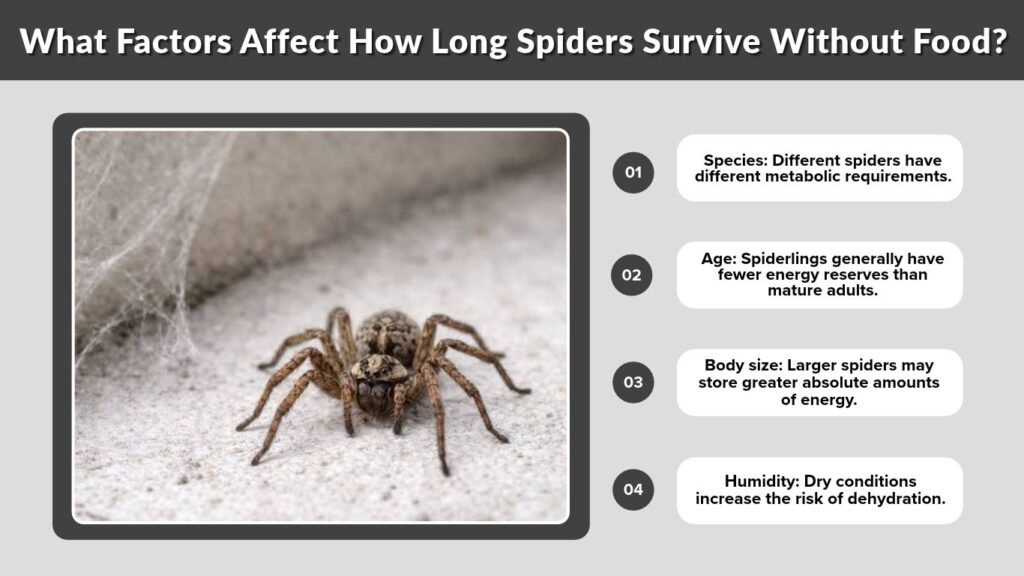
A spider’s starvation tolerance is influenced by several biological and environmental factors. Understanding these differences explains why one spider may survive for months while another struggles after a much shorter period.
Main Factors Affecting Spider Survival
- Species: Different spiders have different metabolic requirements.
- Age: Spiderlings generally have fewer energy reserves than mature adults.
- Body size: Larger spiders may store greater absolute amounts of energy.
- Temperature: Cooler conditions can reduce metabolism, although extreme cold is harmful.
- Humidity: Dry conditions increase the risk of dehydration.
- Activity level: Active hunters may expend more energy than stationary web builders.
- Previous nutrition: Well-fed spiders may tolerate longer periods without prey.
What Happens When Spiders Stop Eating?
Spiders gradually use stored nutrients when food becomes unavailable. Many can reduce their metabolic activity and conserve energy during prolonged starvation.
However, continued food deprivation eventually affects their health.
Signs a Spider May Be Starving
Common warning signs include:
- A noticeably smaller or shriveled abdomen.
- Reduced movement and hunting activity.
- Poor coordination or unusual weakness.
- Difficulty maintaining normal body posture.
- Increasing inactivity outside normal resting or molting periods.
A spider refusing food is not automatically starving. Molting, reproduction, environmental stress, and natural changes in appetite can also influence feeding behavior.
FAQs
1. Can Spiders Go a Month Without Eating?
Yes, some healthy adult spiders can survive a month without eating. Certain species can endure considerably longer under suitable conditions. However, survival depends on the spider’s species, age, hydration, and environment. A month without food is not a recommended feeding schedule.
2. How Long Can a Jumping Spider Go Without Food?
Some adult jumping spiders can survive more than a month without food, but this varies with their health and environmental conditions. Pet jumping spiders should receive appropriately sized prey regularly, and prolonged refusal to eat should prompt a check of hydration and molting behavior.
3. Can a Spider Survive Six Months Without Eating?
Yes, certain species can survive six months without food under favorable conditions. Research has documented such endurance in some wolf spiders and other species. However, many spiders cannot tolerate starvation for that long, especially when exposed to heat or dehydration.
4. Do Spiders Die If They Cannot Find Food?
Eventually, yes. Spiders survive food shortages by conserving energy and using stored nutrients. However, their reserves are limited. If suitable prey remains unavailable for too long, they become weakened and eventually die from starvation or associated dehydration.
5. Do Spiders Need to Eat Every Day?
Most adult spiders do not need daily meals. Their relatively low metabolic rates allow them to survive between successful hunts. Feeding requirements vary by species, age, and reproductive condition. Growing spiderlings generally require more frequent feeding than mature spiders.
