
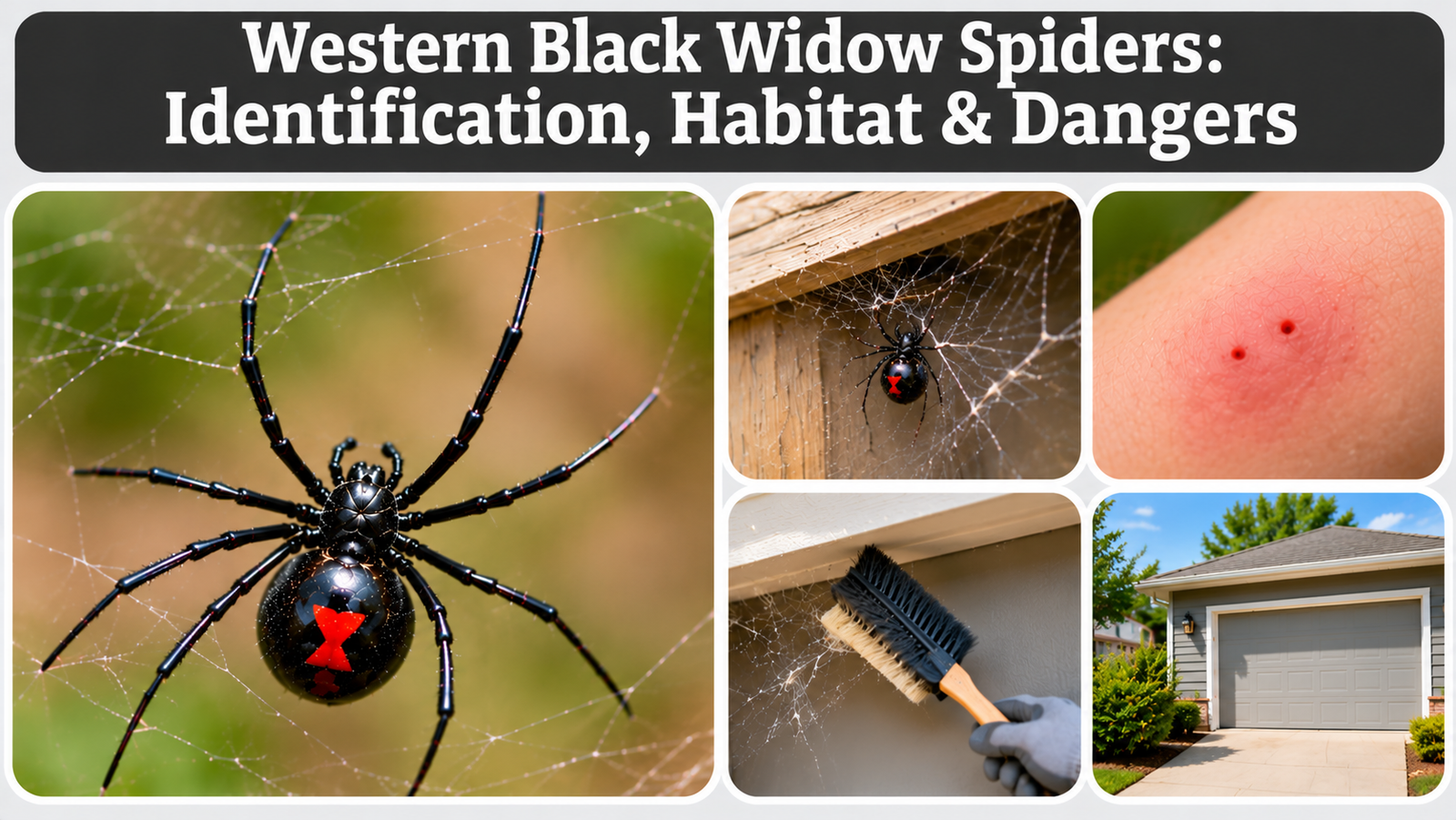
Western black widow spiders (Latrodectus hesperus) are venomous spiders commonly found throughout western North America. Known for their glossy black bodies and distinctive red hourglass markings, these spiders prefer dark, sheltered locations around homes, gardens, and natural habitats. Although their venom can cause serious symptoms, western black widows are generally shy and rarely bite unless disturbed or trapped. Understanding their identification, distribution, behavior, and potential dangers helps homeowners recognize these spiders and avoid unwanted encounters.
What Are Western Black Widow Spiders?
The western black widow spider is a member of the family Theridiidae, commonly known as cobweb spiders. Its scientific name is Latrodectus hesperus, and it is one of several black widow species native to North America. These spiders are particularly common in dry regions but also inhabit cities, mountains, and agricultural environments.
Western Black Widow Spider Identification
Adult female western black widows are recognizable by their distinctive physical characteristics.
- Scientific name: Latrodectus hesperus
- Family: Theridiidae
- Body color: Glossy black or occasionally very dark brown
- Abdomen: Large, rounded, and bulbous
- Body length: Approximately 0.5 inch (13 mm) in mature females
- Markings: Red or reddish-orange hourglass underneath the abdomen
- Web: Irregular, tangled, and strong silk structure
The hourglass marking is an important identification feature, although its shape and brightness vary among individual spiders. Some have two separated red triangles rather than a complete hourglass.
Male vs. Female Western Black Widow Spiders
Female western black widows are considerably larger than males and have darker, more recognizable bodies.
Adult males are typically brownish or grayish with lighter markings and relatively slender abdomens. Their legs may also display alternating dark and light bands.
Young female spiders often resemble males because they have striped or patterned bodies. Their coloration gradually becomes darker as they mature.
Adult females present the greatest medical concern because they can inject enough venom to cause significant symptoms. Male bites are not generally considered medically significant.
Where Do Western Black Widow Spiders Live?
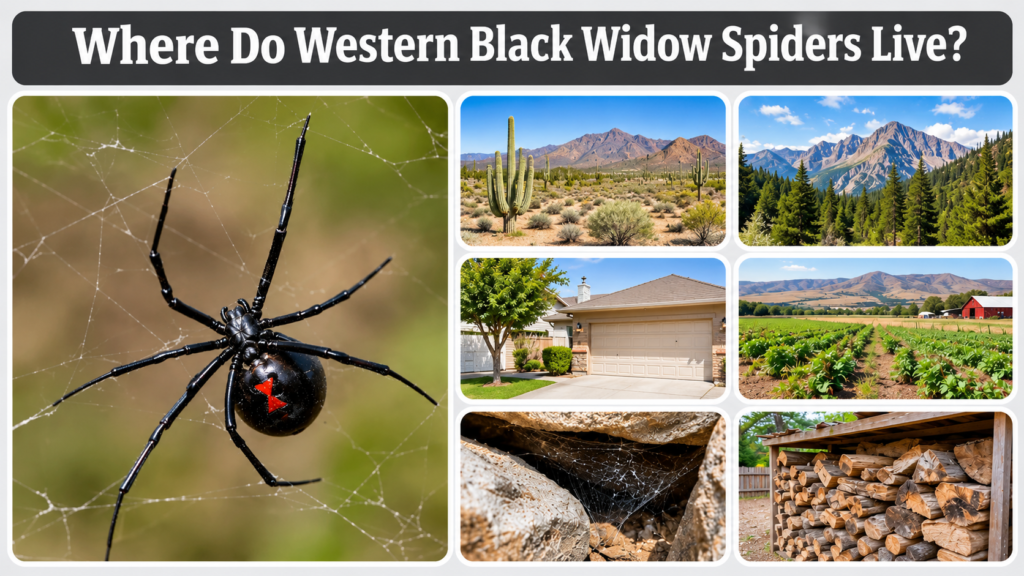
Western black widow spiders inhabit a broad geographic range extending from western Canada through the western United States into Mexico. Their distribution includes deserts, grasslands, mountainous regions, and developed neighborhoods. They frequently establish webs wherever sheltered spaces provide protection from weather and access to insect prey.
Western Black Widow Spiders in Arizona
Arizona provides favorable conditions for western black widows because of its warm climate and abundant sheltered nesting locations.
These spiders are frequently encountered around garages, outdoor storage areas, rock piles, and building foundations.
They usually remain hidden during daylight and become more active at night. Desert environments offer numerous cracks and protected spaces where they can build webs.
Western Black Widow Spiders in Colorado
Western black widow spiders occur throughout suitable habitats in Colorado, including developed areas.
They often construct webs near ground level in basements, window wells, garages, and beneath outdoor structures.
Although Colorado experiences cold winters, these spiders can survive in protected locations.
Western Black Widow Spiders in Oregon
Western black widows are most common in eastern and southwestern Oregon.
They are less frequently encountered in northwestern Oregon, where cooler and wetter conditions limit suitable habitat in many locations.
However, they can occur in warmer microhabitats, including rocky slopes, garages, and sheltered buildings.
Do Black Widow Spiders Live in Western Washington?
Yes, black widow spiders occur in western Washington, but they are much less common there than in eastern Washington.
According to the Washington State Department of Health, a few small populations exist west of the Cascade Mountains.
Western Washington residents may encounter other dark-colored cobweb spiders that resemble black widows. Proper identification is important because appearance alone can be misleading.
Western Black Widow Spiders in British Columbia
Western black widows also occur in southern British Columbia, especially in warmer and drier regions.
They favor sheltered locations such as woodpiles, rocky areas, and structures where they can avoid unfavorable weather.
Their presence becomes more likely where the local environment provides suitable temperatures and protected web-building sites.
Western Black Widow Spider Habitat and Behavior
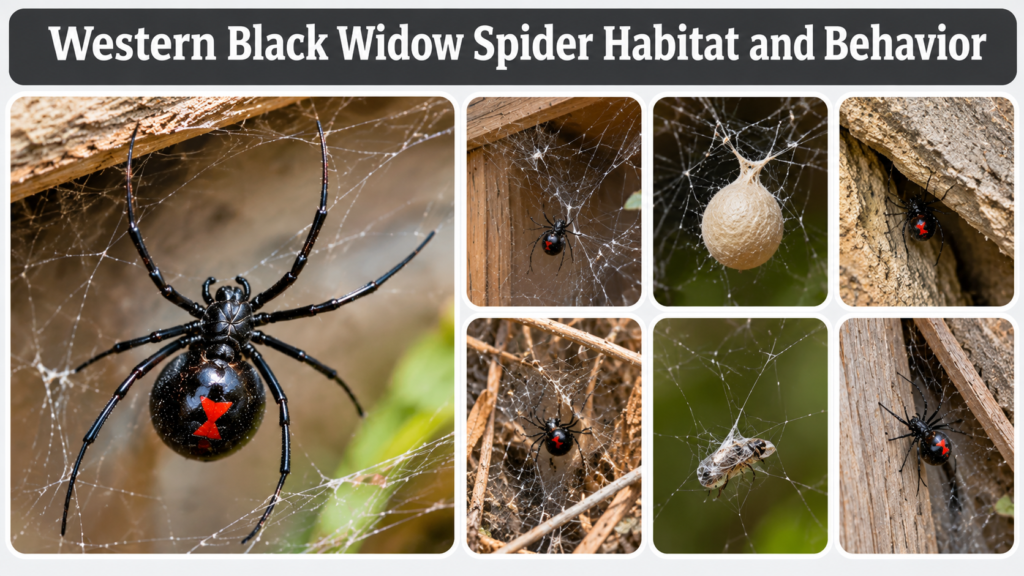
Western black widows spend much of their lives in tangled webs constructed around sheltered spaces. Rather than actively chasing prey, they generally wait for insects to become trapped in their silk. Their reclusive behavior means people may live near these spiders without noticing them.
Common Hiding Places Around Homes
Western black widows frequently establish webs in dark, relatively undisturbed locations.
Common habitats include:
- Woodpiles and stacked lumber
- Garages, sheds, and storage buildings
- Crawl spaces and basements
- Beneath outdoor furniture and flowerpots
- Rock walls and building foundations
- Irrigation boxes and utility enclosures
Their webs are usually positioned near the ground, although some may occur higher around sheltered structures.
What Do Western Black Widow Spiders Eat?
Western black widow spiders primarily eat insects and other small arthropods.
Common prey includes flies, beetles, ants, grasshoppers, and other spiders.
Their strong, irregular webs capture insects moving through the surrounding environment. Once prey becomes trapped, the spider immobilizes it using silk and venom.
By consuming insects, western black widows contribute to the natural regulation of arthropod populations.
Are Western Black Widows Aggressive?
Western black widows are not naturally aggressive toward humans.
They generally remain inside their webs and avoid unnecessary encounters. Bites usually happen when a spider becomes trapped against the skin or when someone accidentally handles or presses against it.
Female spiders protecting egg sacs may respond more defensively to disturbances near their webs.
Western Black Widow Spider Life Cycle
Western black widow spiders develop through several life stages, beginning as eggs and eventually becoming mature adults. Their reproductive behavior and development depend on environmental conditions, food availability, and temperature.
Eggs and Spiderlings
Female western black widows produce silk egg sacs containing numerous developing eggs.
The sacs are generally rounded or somewhat pear-shaped and are suspended within the female’s web.
After hatching, spiderlings eventually disperse and establish themselves in suitable habitats.
Young spiders display lighter markings before developing their mature coloration.
Mating and Reproduction
Males approach females cautiously and may produce courtship vibrations through the web.
Although black widows are famous for sexual cannibalism, females do not always consume their mates.
Well-fed females may allow males to survive after mating.
Female spiders can produce multiple egg sacs when conditions are favorable.
Are Western Black Widow Spiders Dangerous?
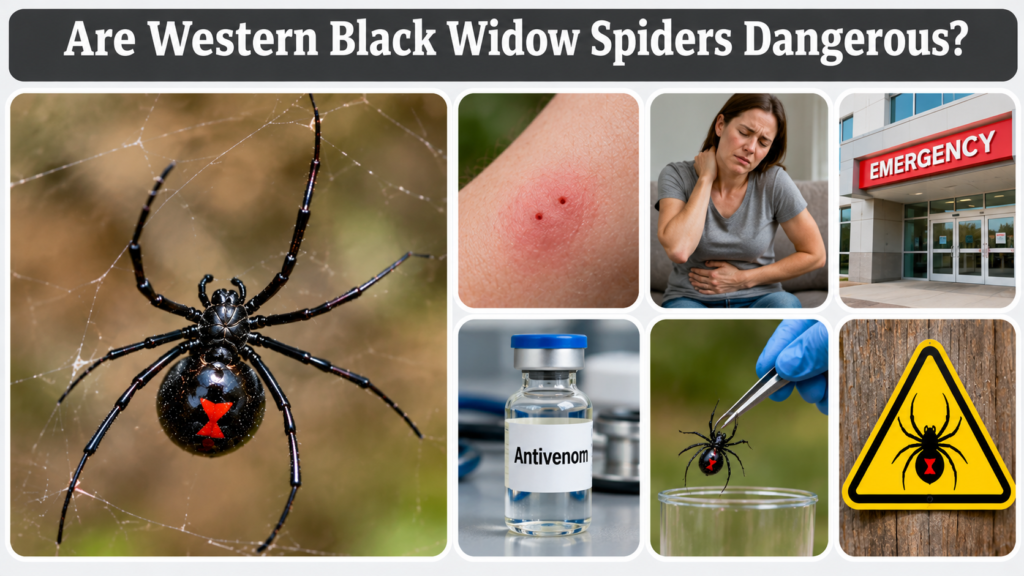
Western black widow spiders possess medically significant venom that affects the nervous system. However, their bites are relatively uncommon because these spiders generally avoid people. Severe reactions are possible, but deaths from black widow bites are exceptionally rare with modern medical care.
Western Black Widow Spider Bite Symptoms
Bite symptoms can vary depending on the amount of venom injected and the individual’s response.
Possible symptoms include:
- Immediate or developing pain around the bite
- Muscle cramping and stiffness
- Abdominal, back, or chest pain
- Sweating and nausea
- Headache or weakness
- Elevated blood pressure
- Difficulty breathing in severe cases
Symptoms may develop within minutes to several hours.
What to Do After a Western Black Widow Bite
If a black widow bite is suspected, seek prompt medical advice or contact Poison Control.
Wash the affected area with soap and water, apply a cool compress, and avoid unnecessary movement.
Do not cut the wound, attempt to suck out venom, or apply a tourniquet.
In the United States, Poison Control can be reached at 1-800-222-1222.
Seek emergency medical care for severe pain, difficulty breathing, significant muscle spasms, or other serious symptoms.
How to Prevent Western Black Widow Spiders Around Your Home
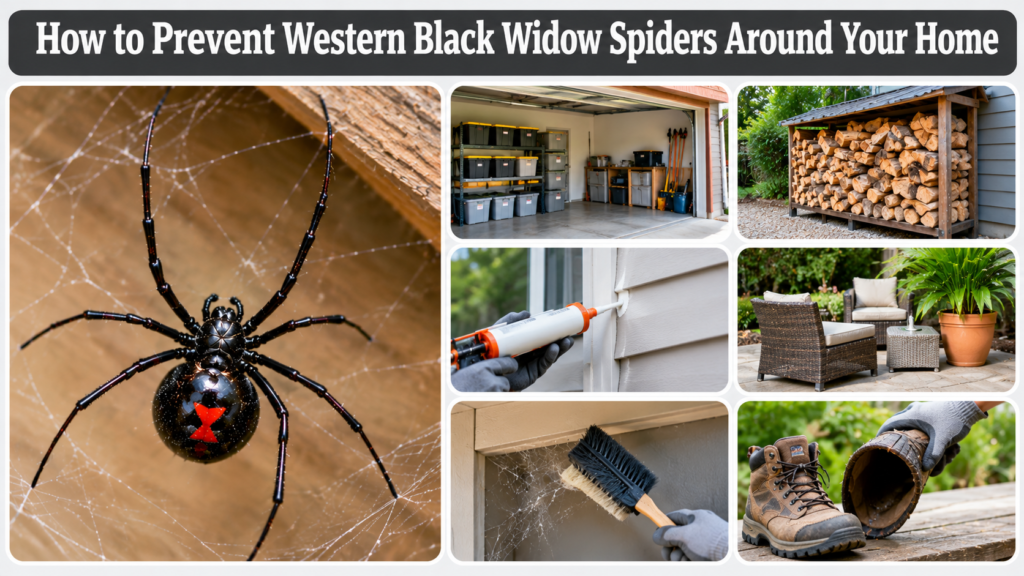
Preventing western black widow encounters involves reducing sheltered hiding places and limiting insect prey around buildings. Because these spiders prefer undisturbed spaces, routine cleaning and property maintenance can reduce opportunities for webs to become established.
Reduce Spider Hiding Places
Remove unnecessary clutter from garages, basements, and outdoor storage areas.
Store firewood away from buildings and inspect gardening equipment before use.
Seal cracks around foundations, windows, and doors to reduce access to indoor spaces.
Wear gloves when handling stored materials, and shake out shoes that have been left in sheds or garages.
Remove Webs Safely
Regularly inspect sheltered corners and outdoor structures for irregular spider webs.
Avoid reaching directly into occupied webs. Use suitable protective equipment and long-handled tools when necessary.
If multiple western black widows are present around frequently used areas, contact a qualified pest control professional.
FAQs
1. Are Western Black Widow Spiders Poisonous?
Western black widow spiders are venomous rather than poisonous. They inject venom through their fangs when biting. Their venom can cause painful muscle spasms and other symptoms, but these spiders rarely bite people unless accidentally trapped or disturbed.
2. Do Western Black Widow Spiders Live in Western Washington?
Yes, but they are relatively uncommon in western Washington. The Washington State Department of Health reports small populations west of the Cascades, while black widows are more common in eastern Washington. Many black spiders encountered around Seattle are other species.
3. How Big Are Western Black Widow Spiders?
Mature female western black widows typically measure about half an inch in body length, excluding their legs. Their rounded abdomens make them appear larger. Males are noticeably smaller and usually have lighter, patterned bodies.
4. Are Western Black Widow Spiders Found in Australia?
The western black widow (Latrodectus hesperus) is native to western North America, not Australia. Australia has related species, including the redback spider (Latrodectus hasselti), which belongs to the same genus but is a different species.
5. How Long Do Western Black Widow Spiders Live?
Western black widow females may survive for more than a year under favorable conditions, while males generally have shorter lifespans. Longevity depends on temperature, food availability, predation, and environmental conditions.
