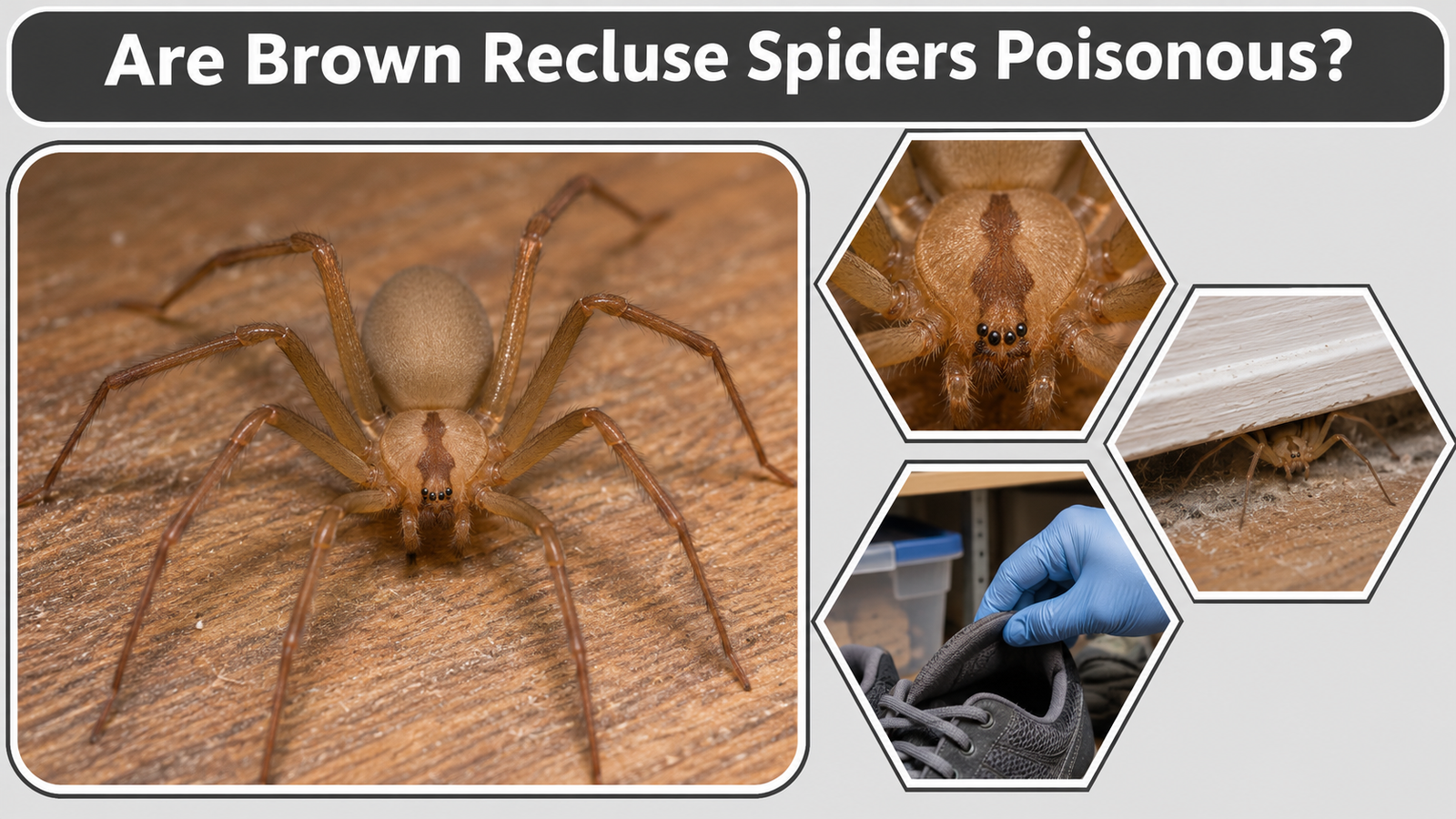
Brown recluse spiders are among the most feared spiders in the United States because of their potentially harmful venom. Although they are not aggressive, their bites can sometimes cause painful wounds, skin damage, and serious medical complications. However, not every brown recluse bite is dangerous, and most heal without severe problems. Understanding their venom, bite symptoms, and potential risks can help you stay safe. This guide explains how poisonous brown recluse spiders are, whether males and babies are dangerous, and how their bites affect humans and pets.
Are Brown Recluse Spiders Poisonous or Venomous?
Brown recluse spiders are venomous, not technically poisonous. They produce venom that can damage human tissue when injected through their fangs. The brown recluse (Loxosceles reclusa) is one of the few North American spiders capable of causing medically significant bites.
Although their venom can be harmful, these spiders generally avoid human contact. Most bites happen when a spider becomes trapped against someone’s skin.
What Is the Difference Between Poisonous and Venomous?
Poisonous animals generally cause harm when their toxins are swallowed, absorbed, or otherwise introduced into the body without a bite or sting.
Venomous animals deliver toxins through specialized structures, such as fangs or stingers. Brown recluse spiders inject venom when they bite, making venomous the scientifically accurate description.
How Does Brown Recluse Venom Work?
Brown recluse venom contains enzymes that can damage skin cells and surrounding tissue. One important component, sphingomyelinase D, contributes to inflammation and tissue destruction.
In some cases, the venom causes skin necrosis, meaning the affected tissue begins to die. Rarely, it can also damage red blood cells and cause complications affecting other organs.
How Poisonous Are Brown Recluse Spiders to Humans?
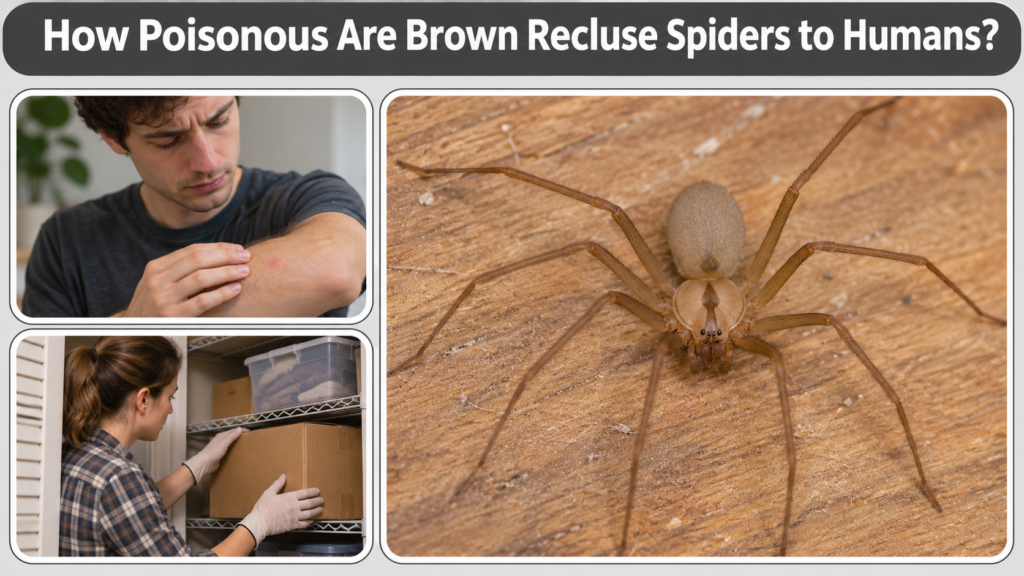
Brown recluse spiders have medically significant venom, but the effects of their bites vary considerably. Some people experience only minor redness and swelling, while others develop painful wounds requiring medical treatment.
The severity depends on factors such as the amount of venom injected, the bite location, and the person’s response.
Common Symptoms of a Brown Recluse Spider Bite
A brown recluse bite may initially go unnoticed because it can be painless. Symptoms sometimes develop several hours later.
Common symptoms include:
- Redness and mild swelling around the bite
- Burning, itching, or increasing pain
- A small blister near the affected area
- Tenderness or discoloration of the skin
- A pale or bluish center surrounded by redness
- A slow-healing wound in more serious cases
Not every bite produces these symptoms. Most remain localized and heal without extensive tissue damage.
Can a Brown Recluse Bite Kill You?
Brown recluse bites are rarely fatal, but severe complications can occasionally occur.
In uncommon cases, the venom causes widespread destruction of red blood cells, known as hemolysis. This can lead to anemia, kidney injury, and other serious problems.
Children and people with significant underlying health conditions may be especially vulnerable to severe reactions. Prompt medical evaluation is important whenever a brown recluse bite is suspected.
Are All Brown Recluse Spiders Venomous?
Yes, brown recluse spiders possess venom as part of their natural hunting system. They use it primarily to immobilize insects and other small prey.
However, the potential danger of a bite can differ according to the spider’s size, maturity, and the circumstances of the encounter.
Are Male Brown Recluse Spiders Poisonous?
Male brown recluse spiders are venomous and capable of biting humans. They should not be considered harmless simply because they are male.
Adult males often wander while searching for mates. This movement can bring them into contact with clothing, bedding, and other household items.
Although females may deliver more venom in some circumstances, a bite from either sex deserves attention.
Are Baby Brown Recluse Spiders Poisonous?
Baby brown recluse spiders, also called spiderlings, possess venom used to capture small prey.
However, their tiny size and developing fangs make them less likely to produce a medically significant human bite.
As juveniles grow, their ability to penetrate skin and deliver venom increases. Older juveniles should therefore be treated with the same caution as adults.
Are Brown Recluse Spiders More Poisonous Than Black Widows?
Both brown recluse and black widow spiders possess medically important venom. However, their venom affects the body differently, making a simple comparison of which is more poisonous misleading.
Brown recluse venom primarily damages tissue, while black widow venom affects the nervous system.
| Feature | Brown Recluse Spider | Black Widow Spider |
| Venom effects | Primarily tissue-damaging | Primarily neurotoxic |
| Common symptoms | Redness, swelling, localized pain | Muscle cramps, pain, sweating |
| Serious complications | Tissue necrosis, rare blood disorders | Severe muscle spasms and systemic symptoms |
| Bite pain | Often initially mild or unnoticed | Pain may develop rapidly |
| Medical concern | Potentially serious | Potentially serious |
Black widow bites are more likely to cause widespread muscle pain and cramping. Brown recluse bites are more strongly associated with slow-healing skin wounds.
Both spiders generally bite defensively rather than actively attacking humans.
Are Brown Recluse Spiders Poisonous to Cats and Dogs?
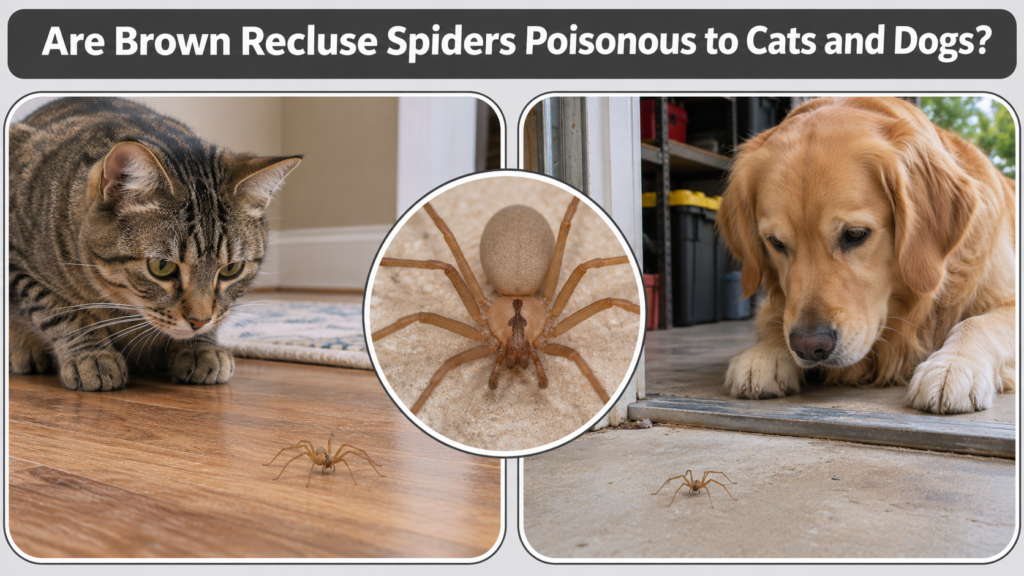
Brown recluse venom can also harm household pets. Although confirmed bites are relatively uncommon, cats and dogs may encounter these spiders while exploring dark storage areas, garages, and other sheltered spaces.
Symptoms can be difficult to identify because pets cannot communicate discomfort directly.
Are Brown Recluse Spiders Poisonous to Cats?
Yes, brown recluse bites can be dangerous to cats.
Cats may encounter spiders while hunting or investigating hidden spaces. A bite can produce localized inflammation, tenderness, or tissue damage.
Possible warning signs include:
- Swelling or redness
- Excessive licking of one area
- Pain when touched
- Unusual tiredness or weakness
- Vomiting or reduced appetite
- Developing skin wounds
If you suspect your cat has been bitten, contact a veterinarian promptly.
Are Brown Recluse Spiders Poisonous to Dogs?
Brown recluse bites can also harm dogs, particularly when venom causes significant tissue damage.
Dogs may be bitten while investigating woodpiles, sheds, or other undisturbed locations. Symptoms can include swelling, painful skin lesions, lethargy, and occasionally more serious illness.
Seek veterinary care if a bite is suspected. Do not give human medications or attempt to treat a worsening wound without professional guidance.
Are Brown Recluse Spiders Poisonous to Chickens?
Brown recluse spiders are venomous, but research specifically documenting their effects on chickens is limited.
A spider bite could potentially injure a chicken, although the severity is difficult to predict.
Chickens sometimes eat spiders and other small arthropods. Eating a spider is different from receiving an injected dose of venom. If a chicken develops swelling, weakness, or unusual behavior after a suspected encounter, consult a veterinarian.
What Should You Do If a Brown Recluse Spider Bites You?

If you suspect a brown recluse bite, take it seriously even if the initial symptoms seem mild. Early medical evaluation can help identify complications and rule out other conditions.
Immediate First Aid
Follow these steps:
- Wash the area: Gently clean the bite with soap and water.
- Apply a cold compress: Use a wrapped cold pack to reduce discomfort and swelling.
- Elevate the affected area: Keep the bitten limb raised when possible.
- Cover the wound: Apply a clean, nonstick dressing if necessary.
- Avoid harmful treatments: Do not cut, squeeze, burn, or attempt to extract venom.
- Seek medical advice: Contact a healthcare professional or poison control service.
If possible, photograph the spider from a safe distance to help with identification.
When Should You Seek Emergency Medical Attention?
Seek immediate medical attention if you develop:
- Difficulty breathing or swallowing
- Severe or rapidly increasing pain
- Fever, chills, or repeated vomiting
- Rapidly spreading discoloration or swelling
- Dark urine, unusual weakness, or fainting
- A worsening blister or open wound
These symptoms may indicate a serious reaction or another medical condition requiring urgent treatment.
How to Identify and Prevent Brown Recluse Spiders
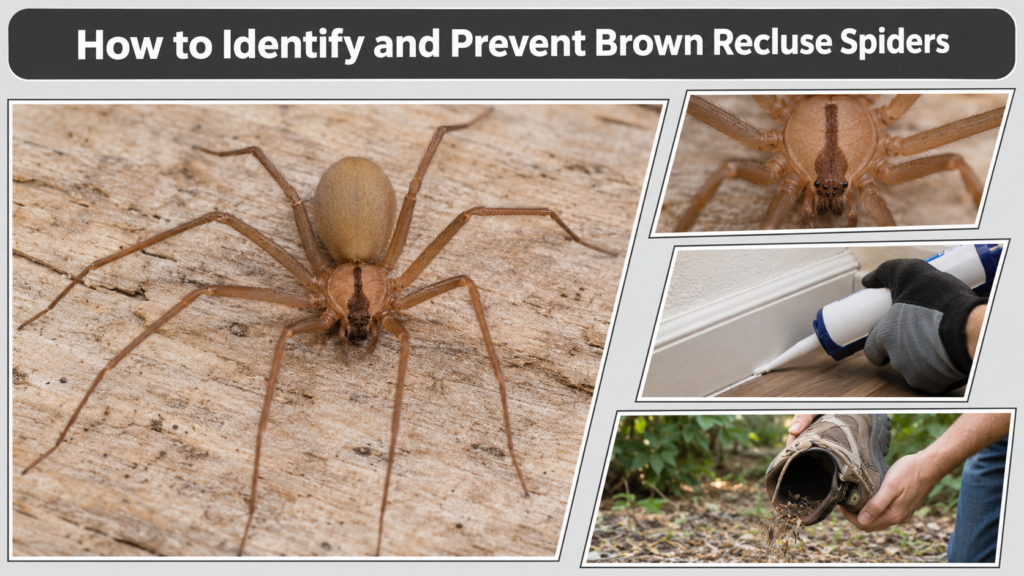
Brown recluse spiders typically live in quiet, dry, undisturbed locations. They are primarily found in the south-central and Midwestern United States.
Recognizing their appearance and preferred hiding places can help reduce accidental encounters.
How to Identify a Brown Recluse Spider
Important identification features include:
- Light tan to medium-brown coloration
- Six eyes arranged in three pairs
- A darker violin-shaped marking on the upper body
- Long, slender legs without obvious bands
- A relatively plain, unpatterned abdomen
However, the violin marking alone is not reliable for identification. Many harmless spiders have similar markings.
Wolf spiders, for example, are different from brown recluse spiders and generally do not cause medically serious bites.
How to Prevent Brown Recluse Bites
Reduce the risk of encounters by following these precautions:
- Shake out stored shoes and clothing before wearing them.
- Wear gloves when handling firewood or stored materials.
- Keep storage spaces organized and reduce clutter.
- Seal cracks and gaps around doors and windows.
- Avoid leaving clothes or towels on the floor.
- Use sticky traps to monitor suspected spider activity.
These precautions can reduce accidental contact without requiring direct handling of spiders.
FAQs
1. Are Brown Recluse Spiders Poisonous to Touch?
Brown recluse spiders are not generally dangerous through ordinary contact with intact skin. Their venom must be injected through a bite to cause envenomation. However, handling them is unsafe because they may bite when trapped or threatened. Avoid touching them directly.
2. Are Brown Recluse Spiders Aggressive Toward Humans?
No, brown recluse spiders are naturally shy and prefer avoiding people. They typically bite only when accidentally pressed against the skin. Common situations include putting on shoes containing a hidden spider or moving stored items without protective gloves.
3. How Long Does Brown Recluse Venom Stay in Your Body?
There is no single established time for how long brown recluse venom remains active in the body. Symptoms may develop over several hours, while tissue damage can progress for days. Mild wounds may heal within weeks, but severe injuries sometimes require months.
4. Can You Survive a Brown Recluse Spider Bite Without Treatment?
Many brown recluse bites heal without serious complications. However, it is impossible to predict which bites will become severe. Suspected bites should receive medical evaluation, particularly if pain, swelling, skin discoloration, or other symptoms develop.
5. Are Brown Recluse Spiders More Dangerous Than Wolf Spiders?
Brown recluse spiders generally pose a greater medical risk because their venom can cause significant tissue damage. Wolf spiders are also venomous, but their bites usually produce mild, localized symptoms. Both spiders generally prefer escaping rather than biting humans.
