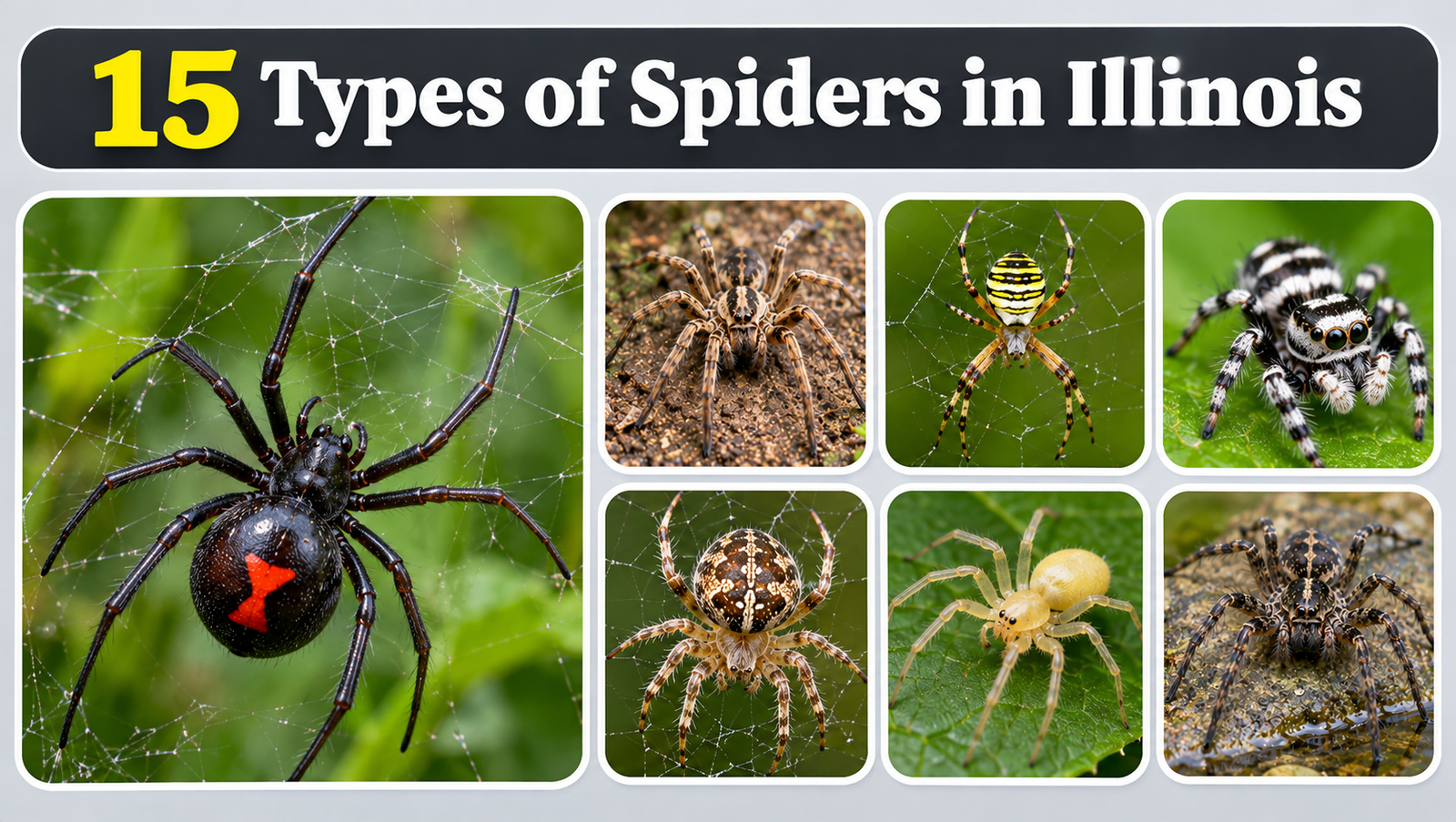
Black spiders in Illinois come in different sizes, colors, and patterns, ranging from tiny jumping spiders to large, hairy wolf spiders. Some species have white spots, while others feature distinctive black and yellow or red markings. Although most are harmless to humans, black widow spiders in Illinois can pose a medical risk. Understanding their appearance, habitats, and behavior can help you identify them correctly. In this guide, we’ll explore 15 types of black spiders found in Illinois, including their identification features and potential dangers.
1. Northern Black Widow (Latrodectus variolus)
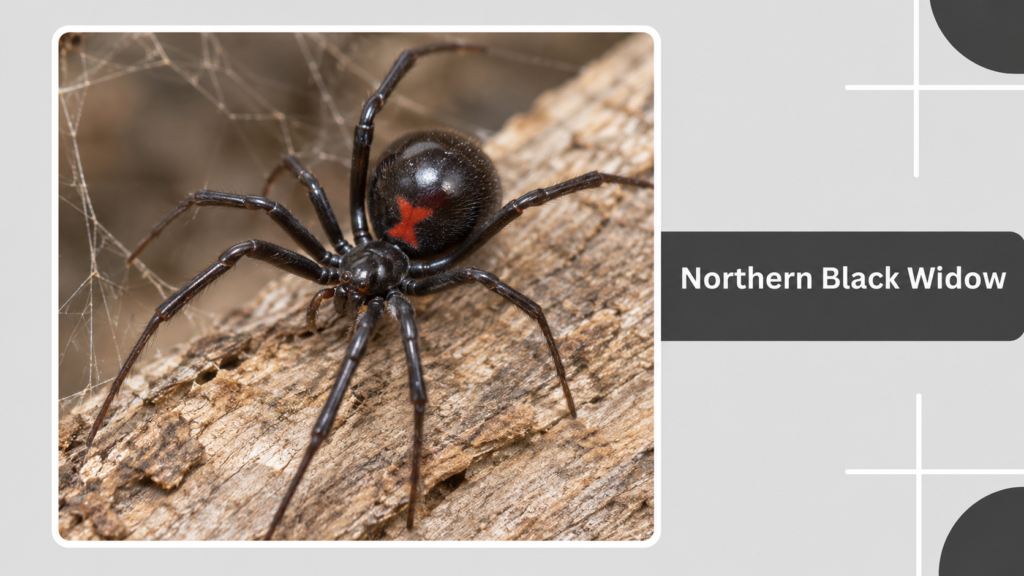
The Northern Black Widow is one of the most medically significant black spiders in Illinois. This species is recognized by its glossy black body and distinctive red markings on the underside of its abdomen. Although relatively uncommon, northern black widows occur in Illinois, particularly in sheltered natural habitats. They prefer quiet, undisturbed locations where they can construct irregular webs and capture insects.
Identification
- Scientific Name: Latrodectus variolus
- Color: Glossy black with red abdominal markings
- Size: Females approximately 9–11 mm long, excluding legs
- Body: Rounded, bulbous abdomen with slender legs
- Markings: Red hourglass underneath, often separated into two distinct sections
- Eyes: Eight small eyes arranged in two rows
- Legs: Long, slender, and usually black
Habitat and Behavior
Northern black widow spiders in Illinois inhabit wooded areas, rock piles, hollow logs, and sheltered outdoor structures. They may also establish webs beneath woodpiles, inside sheds, and around undisturbed building foundations.
These spiders construct irregular, tangled webs and typically remain hidden during daylight. Females generally stay close to their webs, waiting for insects to become trapped.
Are Northern Black Widows Poisonous?
Northern black widows are venomous and medically significant. Although bites are uncommon, their venom can cause severe pain, muscle cramps, sweating, and other symptoms.
These black widow spiders in Illinois are not typically aggressive, but people should avoid handling them. Anyone experiencing symptoms after a suspected bite should seek prompt medical attention.
2. Southern Black Widow (Latrodectus mactans)
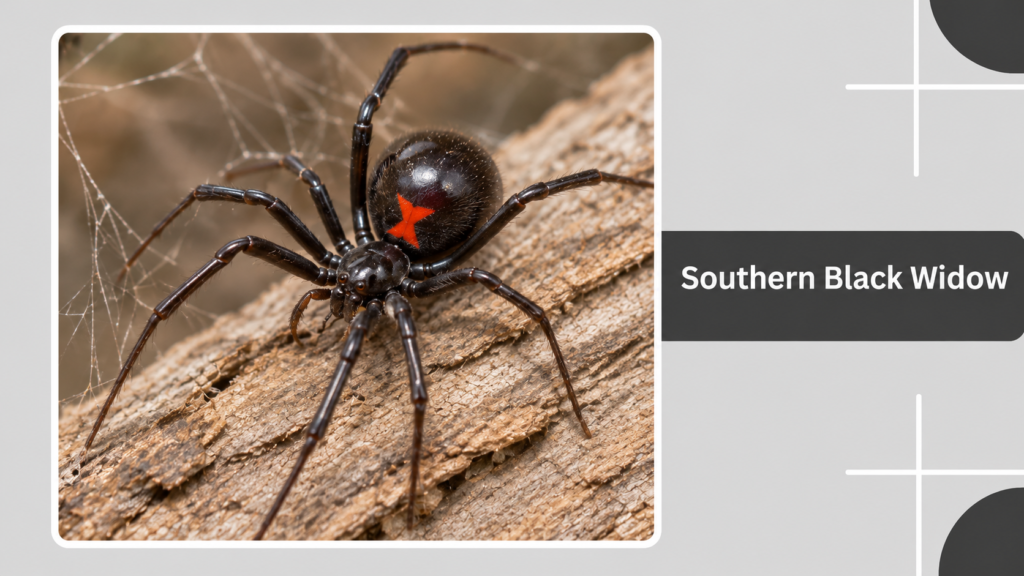
The Southern Black Widow is one of the most recognizable black spiders in Illinois. This species has a shiny black body, a rounded abdomen, and distinctive red markings. Although black widows are more commonly associated with warmer southern states, they are also found in Illinois. These spiders prefer sheltered environments and are particularly important to identify because their venom is medically significant.
Identification
- Scientific Name: Latrodectus mactans
- Color: Glossy black with red markings
- Size: Females approximately 8–13 mm long
- Body: Rounded, bulbous abdomen and small cephalothorax
- Markings: Red hourglass underneath the abdomen
- Eyes: Eight small eyes arranged in two rows
- Legs: Long, slender, and glossy black
Habitat and Behavior
Southern black widow spiders in Illinois inhabit woodpiles, garages, sheds, hollow logs, and sheltered outdoor structures. They construct irregular, tangled webs near the ground.
These spiders are primarily nocturnal and prefer undisturbed environments. Females typically remain near their webs, waiting for insects to become trapped.
Are Southern Black Widows Poisonous?
Southern black widows are venomous and can deliver medically significant bites. Symptoms may include severe pain, muscle cramps, nausea, and sweating.
Although these poisonous black spiders in Illinois rarely bite unless disturbed, people should avoid handling them. A suspected bite requires prompt medical attention.
3. Bold Jumping Spider (Phidippus audax)
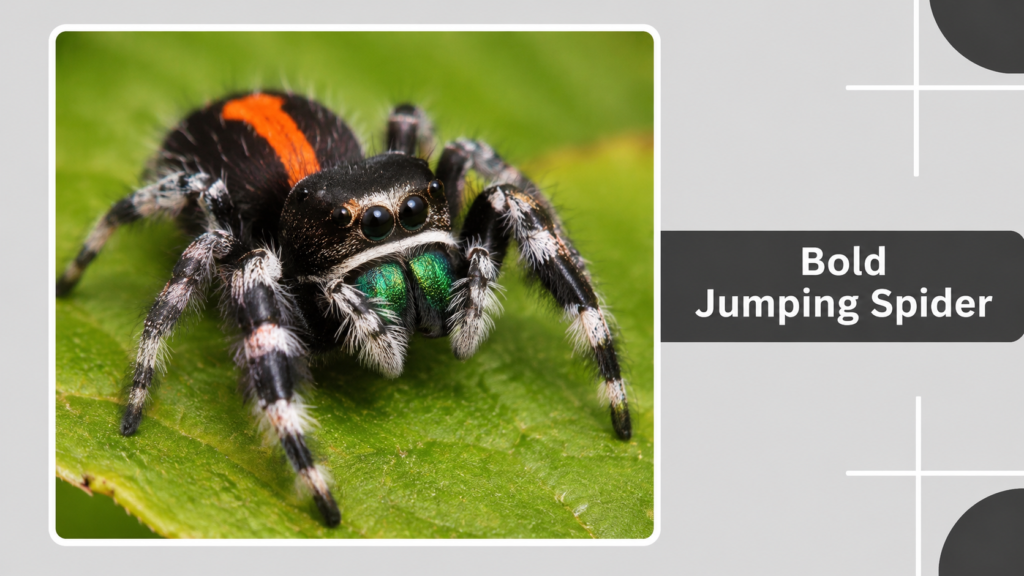
The Bold Jumping Spider is one of the most common small black spiders in Illinois. This species has a compact, fuzzy black body decorated with three noticeable white spots on its abdomen. It is frequently encountered around houses, gardens, fences, and outdoor walls. Its curious behavior and impressive jumping abilities make it one of the easiest jumping spiders to recognize.
Identification
- Scientific Name: Phidippus audax
- Color: Black with white or sometimes orange abdominal spots
- Size: Approximately 8–15 mm long
- Body: Compact, hairy, and muscular
- Markings: Three prominent spots on the abdomen
- Eyes: Eight eyes, including two large front-facing eyes
- Legs: Short, strong, and covered with fine hairs
Habitat and Behavior
Bold jumping spiders inhabit gardens, grasslands, wooded areas, and residential properties throughout Illinois. They prefer sunny locations where insects are abundant.
Unlike web-building spiders, they actively hunt prey using their excellent eyesight. Their powerful legs allow them to jump several times their body length.
Are Bold Jumping Spiders Poisonous?
Bold jumping spiders possess venom for capturing insects but are not considered dangerous to humans. Their bites are uncommon and typically produce mild, temporary discomfort.
These black spiders with white spots in Illinois are beneficial predators that help control flies, mosquitoes, and other small insects.
4. Black Lace-Weaver Spider (Amaurobius ferox)
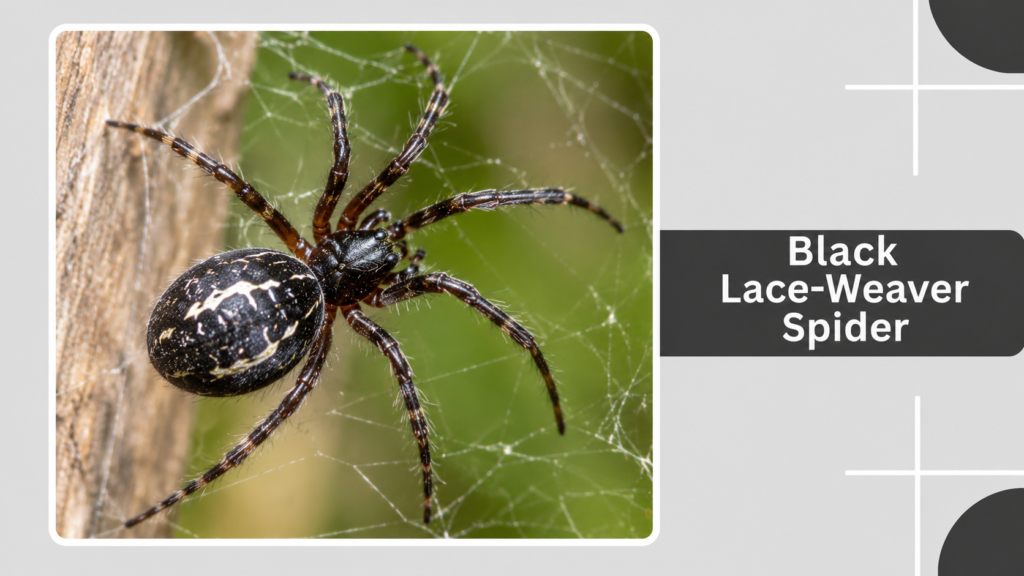
The Black Lace-Weaver Spider is a dark-colored species found in Illinois, often around buildings and sheltered outdoor areas. Its body is usually black, dark brown, or charcoal-colored, with a slightly velvety appearance. This species is sometimes mistaken for other black house spiders in Illinois because it frequently occupies cracks, crevices, and protected spaces near residential structures.
Identification
- Scientific Name: Amaurobius ferox
- Color: Dark brown to nearly black
- Size: Approximately 8–16 mm long
- Body: Sturdy with a slightly elongated abdomen
- Markings: Subtle pale or yellowish abdominal patterns
- Eyes: Eight relatively small eyes
- Legs: Thick, dark legs with fine hairs
Habitat and Behavior
Black lace-weaver spiders inhabit cracks in walls, tree bark, stone structures, basements, and sheltered spaces around buildings. They prefer dark environments with limited disturbance.
These spiders construct distinctive, woolly-looking silk webs around the entrances to their retreats. They primarily hunt at night, capturing insects that move across their webs.
Are Black Lace-Weaver Spiders Poisonous?
Black lace-weaver spiders are venomous but are not considered medically dangerous to humans. However, they may bite when handled or trapped against the skin.
Their bites can cause localized pain, redness, and swelling. These black spiders found in Illinois are generally beneficial because they feed on household insects.
5. Eastern Parson Spider (Herpyllus ecclesiasticus)
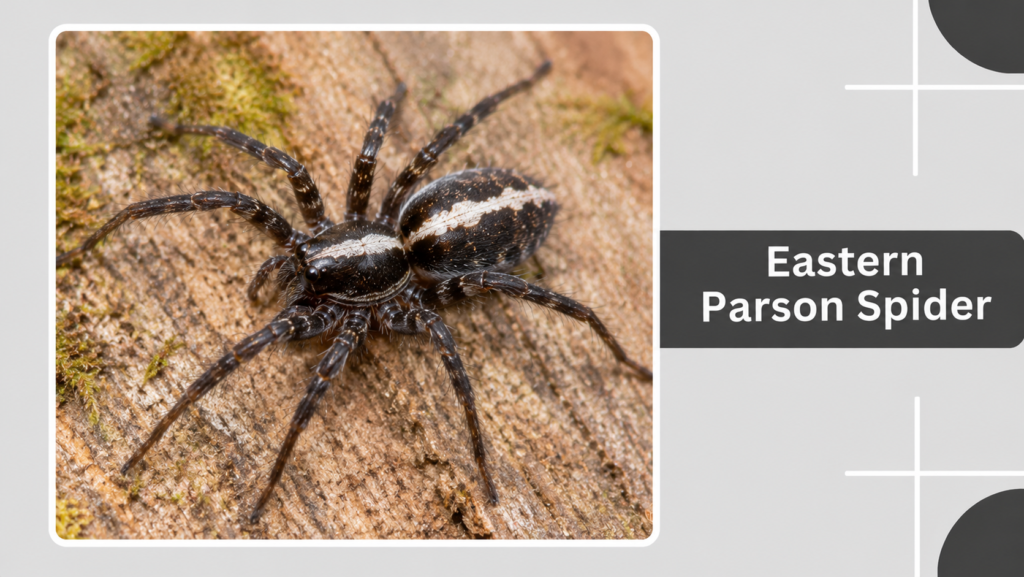
The Eastern Parson Spider is a fast-moving species commonly encountered in the eastern United States, including Illinois. It has a dark brown or nearly black body with a distinctive white marking along its abdomen. These black and white spiders in Illinois are often noticed running across floors, walls, and outdoor surfaces, particularly during nighttime hours.
Identification
- Scientific Name: Herpyllus ecclesiasticus
- Color: Dark brown or black with white markings
- Size: Approximately 5.5–13 mm long
- Body: Elongated, slightly hairy, and streamlined
- Markings: White or pinkish abdominal stripe resembling a clerical collar
- Eyes: Eight small eyes arranged in two rows
- Legs: Long, slender, and adapted for rapid movement
Habitat and Behavior
Eastern parson spiders inhabit leaf litter, wooded areas, tree bark, and sheltered spaces around homes. They occasionally enter basements, bedrooms, and garages.
These spiders are primarily nocturnal hunters. Instead of constructing webs to capture prey, they actively chase insects across surfaces.
Are Eastern Parson Spiders Poisonous?
Eastern parson spiders possess venom and may bite when threatened or accidentally trapped against human skin. Their bites can cause temporary pain, redness, and swelling.
However, serious medical complications are uncommon. These common black spiders in Illinois help reduce populations of small insects in homes and gardens.
6. Black and Yellow Garden Spider (Argiope aurantia)
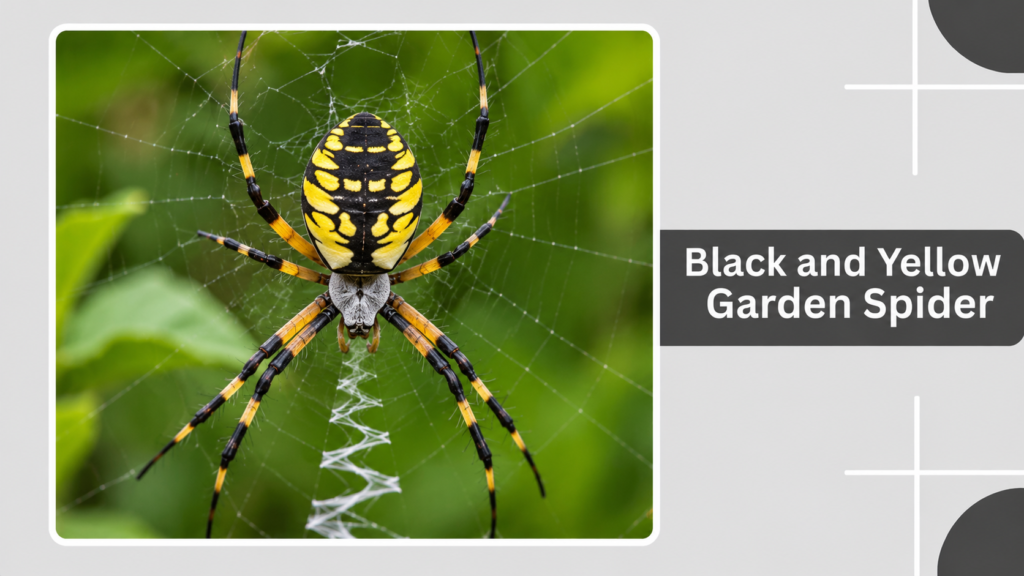
The Black and Yellow Garden Spider is one of the most recognizable large black and yellow spiders in Illinois. Females have striking yellow and black abdominal markings, long legs, and a large body. These spiders are commonly found in gardens, grasslands, and areas with tall vegetation. Their impressive circular webs often make them particularly noticeable during late summer and early fall.
Identification
- Scientific Name: Argiope aurantia
- Color: Bright yellow and black with pale markings
- Size: Females approximately 19–28 mm long
- Body: Large, elongated abdomen with contrasting patterns
- Markings: Bold yellow and black abdominal patches
- Eyes: Eight relatively small eyes
- Legs: Long, slender, and mostly dark with lighter sections
Habitat and Behavior
Black and yellow garden spiders inhabit flower gardens, vegetable gardens, grasslands, and sunny areas throughout Illinois.
They construct large, circular webs between plants and shrubs. These webs often contain a distinctive zigzag silk pattern near the center.
Are Black and Yellow Garden Spiders Poisonous?
Black and yellow garden spiders are venomous but are not considered dangerous to humans. They generally remain in their webs and rarely bite unless directly handled.
These big black spiders in Illinois are valuable garden predators because they capture grasshoppers, flies, and other insects that may damage plants.
7. Banded Garden Spider (Argiope trifasciata)
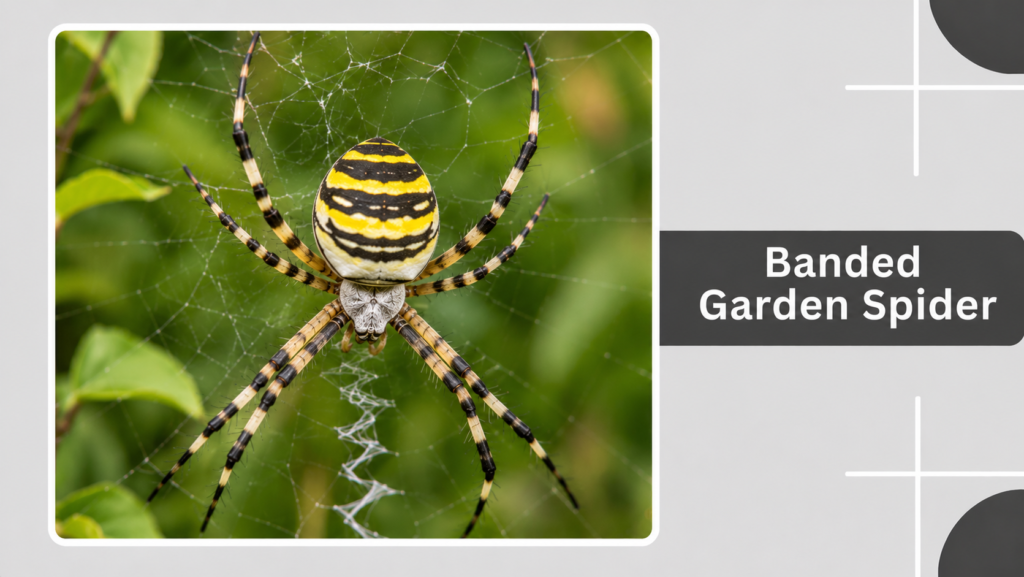
The Banded Garden Spider is one of the most recognizable black and yellow spiders in Illinois. This species has an elongated abdomen covered with alternating dark, yellow, and white bands. Although it is not entirely black, its contrasting markings make it easy to identify. These spiders are commonly found in gardens, grasslands, and open fields throughout Illinois.
Identification
- Scientific Name: Argiope trifasciata
- Color: Black, yellow, and white
- Size: Females approximately 13–25 mm long
- Body: Elongated abdomen with a pointed rear end
- Markings: Narrow black bands across a yellowish or white abdomen
- Eyes: Eight small eyes
- Legs: Long, slender, and covered with dark bands
Habitat and Behavior
Banded garden spiders inhabit prairies, gardens, meadows, and grassy fields throughout Illinois. They prefer sunny locations with tall vegetation where flying insects are abundant.
These spiders construct large, circular webs between plants. Females typically remain near the center of their webs, waiting for insects to become trapped.
Are Banded Garden Spiders Poisonous?
Banded garden spiders are venomous but are not considered dangerous to humans. Their bites are uncommon and generally cause mild, temporary discomfort.
These large black and yellow spiders in Illinois are beneficial predators that help control flies, grasshoppers, and other garden insects.
8. Zebra Jumping Spider (Salticus scenicus)
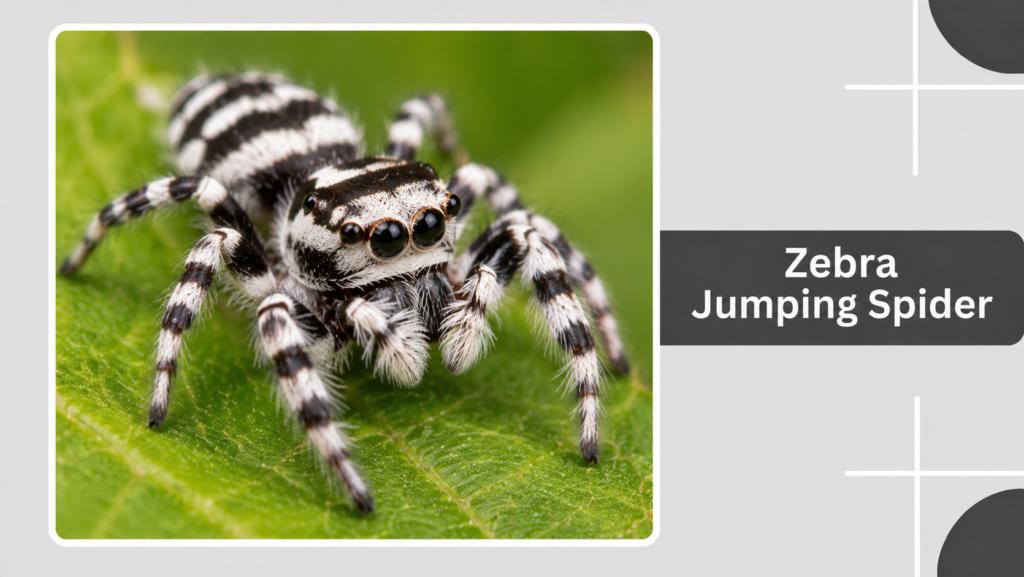
The Zebra Jumping Spider is one of the smallest black and white spiders in Illinois. Its dark body features distinctive white stripes resembling the pattern of a zebra. These tiny spiders frequently appear on exterior walls, windows, fences, and garden structures. Their excellent eyesight and impressive jumping abilities make them easy to recognize among other small spiders.
Identification
- Scientific Name: Salticus scenicus
- Color: Black with white stripes
- Size: Approximately 4–7 mm long
- Body: Small, compact, and slightly flattened
- Markings: Contrasting white bands across the abdomen
- Eyes: Eight eyes, including two large forward-facing eyes
- Legs: Short, strong, and covered with fine hairs
Habitat and Behavior
Zebra jumping spiders commonly inhabit sunny walls, fences, tree trunks, and buildings throughout Illinois. They frequently hunt around windows where small insects gather.
Unlike orb-weavers, these spiders do not construct webs to capture prey. Instead, they use sharp eyesight to stalk insects before making sudden, accurate jumps.
Are Zebra Jumping Spiders Poisonous?
Zebra jumping spiders possess venom for capturing insects but are generally harmless to humans. They rarely bite unless handled or accidentally trapped against the skin.
These little black spiders in Illinois are useful predators that help control flies, mosquitoes, and other small insects around homes.
9. Red and Black Jumping Spider (Phidippus clarus)
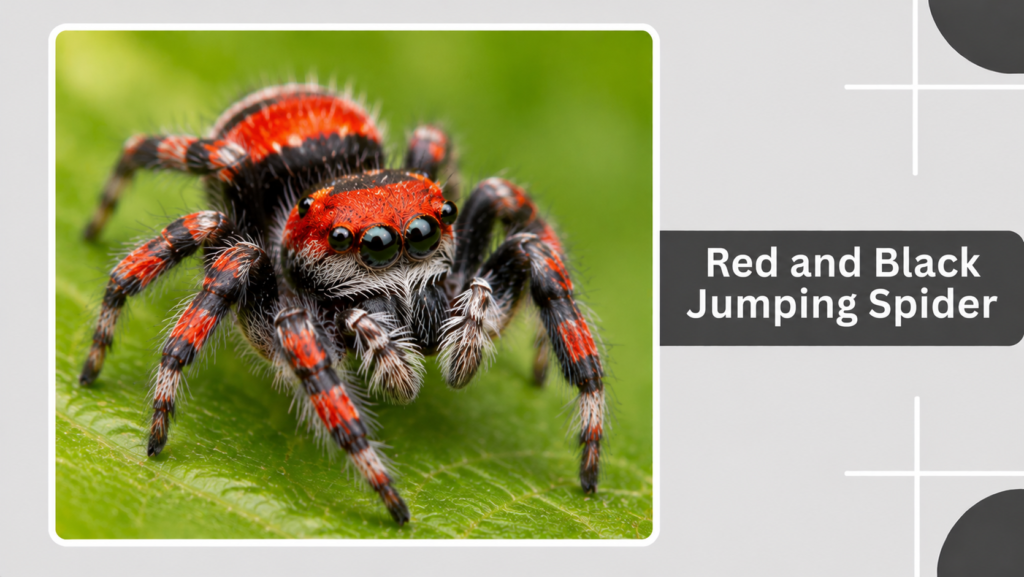
The Red and Black Jumping Spider is a colorful species found throughout Illinois. Males have a predominantly black body with bright red markings along the abdomen, while females are often yellowish or brown with darker patterns. These spiders are particularly noticeable during warmer months and are among the black and red spiders in Illinois commonly encountered in grassy habitats.
Identification
- Scientific Name: Phidippus clarus
- Color: Black and red in males; yellowish-brown in females
- Size: Approximately 6–10 mm long
- Body: Compact, muscular, and hairy
- Markings: Red abdominal stripes and a dark central band in males
- Eyes: Eight eyes with two prominent front eyes
- Legs: Strong, dark legs with lighter markings
Habitat and Behavior
Red and black jumping spiders commonly inhabit tall grass, shrubs, meadows, and woodland edges throughout Illinois. They are especially active during summer and early fall.
These spiders hunt insects using their excellent eyesight and powerful jumping legs. They also construct small silk retreats among vegetation for resting, molting, and protection.
Are Red and Black Jumping Spiders Poisonous?
Red and black jumping spiders are venomous but are not considered medically dangerous to humans. Their bites are uncommon and generally cause temporary discomfort.
These black spiders found in Illinois are beneficial predators that help control small insects in gardens and natural habitats.
10. Emerald Jumping Spider (Paraphidippus aurantius)
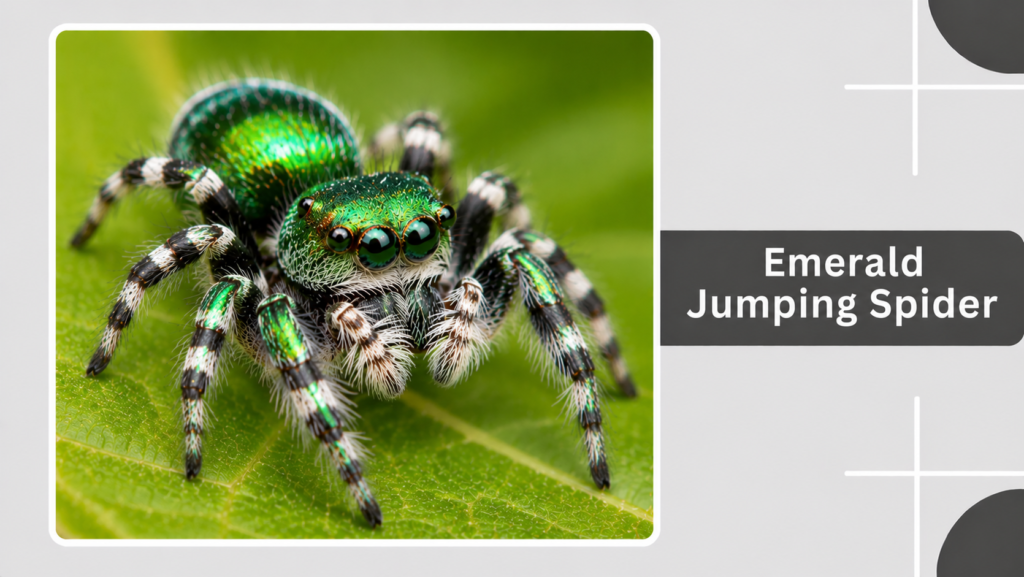
The Emerald Jumping Spider is a beautiful species recognized by its dark body, metallic green scales, and contrasting pale markings. Although it often looks green in sunlight, its body can appear nearly black in shaded environments. These small black spiders in Illinois are frequently found around shrubs, wooded areas, and gardens. Their bright coloration and quick movements make them distinctive among jumping spiders.
Identification
- Scientific Name: Paraphidippus aurantius
- Color: Dark brown or black with metallic green scales
- Size: Approximately 7–12 mm long
- Body: Compact, fuzzy, and slightly elongated
- Markings: Pale abdominal spots and white or golden side stripes
- Eyes: Eight eyes with two large front-facing eyes
- Legs: Strong, hairy legs adapted for jumping
Habitat and Behavior
Emerald jumping spiders inhabit gardens, shrubs, woodland edges, and areas with dense vegetation throughout Illinois. They often rest on leaves while searching for small insects.
These spiders rely on excellent eyesight to locate prey. Instead of building capture webs, they stalk insects and jump toward them with remarkable accuracy.
Are Emerald Jumping Spiders Poisonous?
Emerald jumping spiders possess venom but are not considered dangerous to humans. Bites are rare and usually cause mild, temporary symptoms.
These black spiders with white spots in Illinois are beneficial predators that naturally control flies and other small insects.
11. Carolina Wolf Spider (Hogna carolinensis)
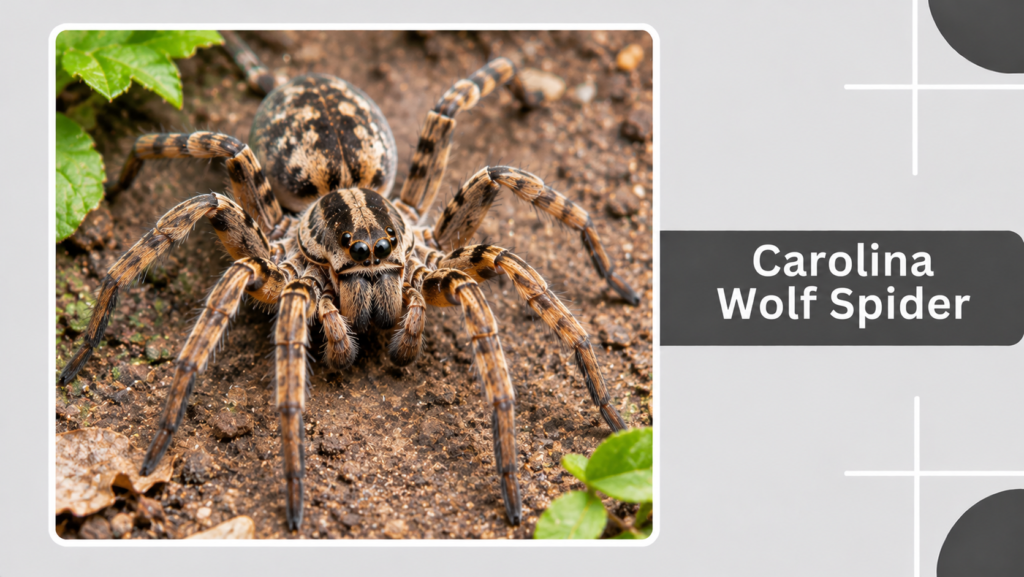
The Carolina Wolf Spider is one of the big black spiders in Illinois that homeowners may encounter, although its body is generally dark brown rather than entirely black. This species has a robust, hairy appearance and long, powerful legs. It is among the largest wolf spiders in North America and is frequently associated with open ground, grasslands, and sheltered outdoor environments.
Identification
- Scientific Name: Hogna carolinensis
- Color: Dark brown, gray, and nearly black
- Size: Females approximately 22–35 mm long
- Body: Large, muscular, and covered with hairs
- Markings: Dark brown body with scattered gray hairs
- Eyes: Eight eyes arranged in three rows
- Legs: Long, thick, and hairy
Habitat and Behavior
Carolina wolf spiders inhabit grasslands, fields, gardens, and open natural areas throughout Illinois. They often shelter in burrows or beneath objects on the ground.
Unlike web-building spiders, they actively hunt insects and other small arthropods. Females carry their egg sacs attached to their spinnerets and later transport newly hatched spiderlings on their backs.
Are Carolina Wolf Spiders Poisonous?
Carolina wolf spiders are venomous but are not considered medically dangerous to most humans. Their bites can cause temporary pain, redness, and swelling.
Despite their intimidating appearance, these large black hairy spiders in Illinois are generally nonaggressive and help control insects around homes and gardens.
12. Dark Fishing Spider (Dolomedes tenebrosus)
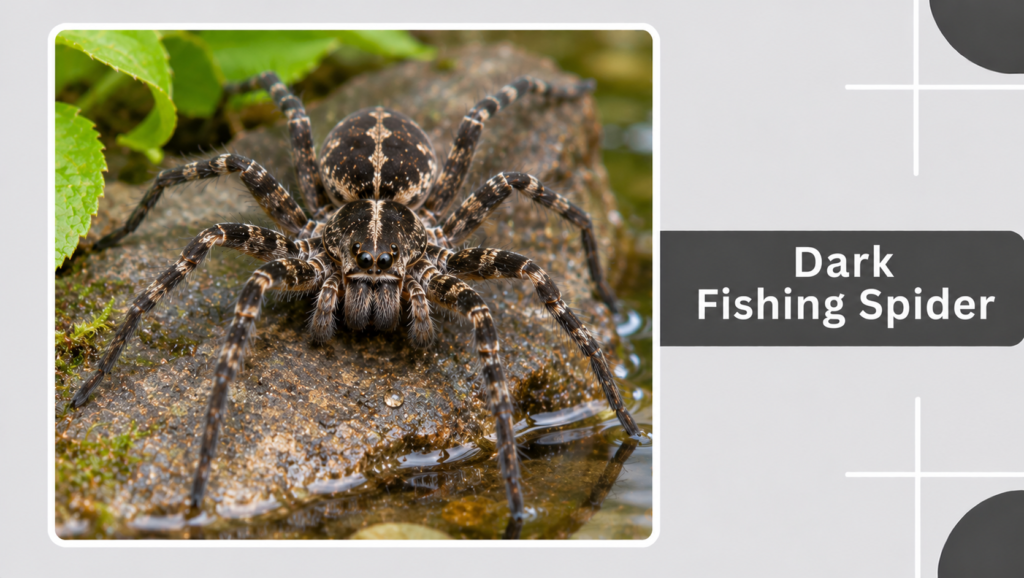
The Dark Fishing Spider is one of the largest black spiders in Illinois, although its body is usually a mixture of dark brown, gray, and black. This impressive species has a broad body, long legs, and distinctive dark markings. Its large size can make it look intimidating, especially when found inside houses. However, dark fishing spiders are generally harmless to humans and play an important role in controlling insects.
Identification
- Scientific Name: Dolomedes tenebrosus
- Color: Dark brown, gray, and black
- Size: Females approximately 15–26 mm long
- Body: Large, flattened, and covered with fine hairs
- Markings: Dark W-shaped abdominal patterns
- Eyes: Eight eyes arranged in three rows
- Legs: Very long, strong, and distinctly banded
Habitat and Behavior
Dark fishing spiders inhabit wooded areas, tree trunks, rocky surfaces, and locations near ponds or streams throughout Illinois. However, they can also live far from water.
These spiders sometimes enter basements, garages, and houses while searching for shelter. Unlike typical web-building spiders, they actively hunt insects and other small prey.
Are Dark Fishing Spiders Poisonous?
Dark fishing spiders are venomous but are not considered medically dangerous to humans. Although they may bite when handled or trapped, their bites rarely cause serious complications.
These big black hairy spiders in Illinois are beneficial predators that help control insects in natural environments and around homes.
13. Spined Micrathena (Micrathena gracilis)
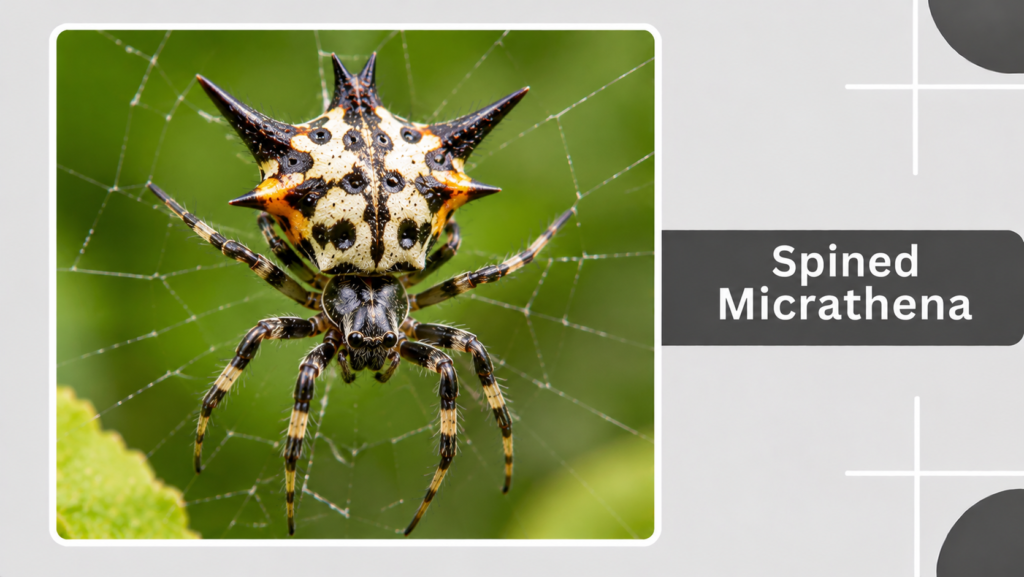
The Spined Micrathena is one of the most unusual black and white spiders in Illinois. Females have a distinctive spiny abdomen covered with contrasting black, white, and sometimes yellowish markings. Their unusual shape makes them easy to distinguish from common house spiders. These small orb-weavers are frequently encountered in forests and wooded areas, where they construct delicate circular webs between branches.
Identification
- Scientific Name: Micrathena gracilis
- Color: Black and white, sometimes with yellowish markings
- Size: Females approximately 6–11 mm long
- Body: Broad, hardened abdomen with prominent spines
- Markings: White patches and irregular dark spots
- Eyes: Eight small eyes
- Legs: Slender, glossy black legs
Habitat and Behavior
Spined micrathenas inhabit deciduous forests, woodland trails, shaded gardens, and wooded areas throughout Illinois. They commonly build circular webs between branches and low vegetation.
Females usually remain in their webs waiting for flying insects. Their abdominal spines may help discourage predators, while their unusual coloration provides camouflage.
Are Spined Micrathena Spiders Poisonous?
Spined micrathenas possess venom for immobilizing insects but are not considered dangerous to humans. They rarely bite and generally remain passive unless directly disturbed.
These black spiders with white spots in Illinois are beneficial woodland predators that capture flies, mosquitoes, and other small insects.
14. Northern False Widow (Steatoda borealis)
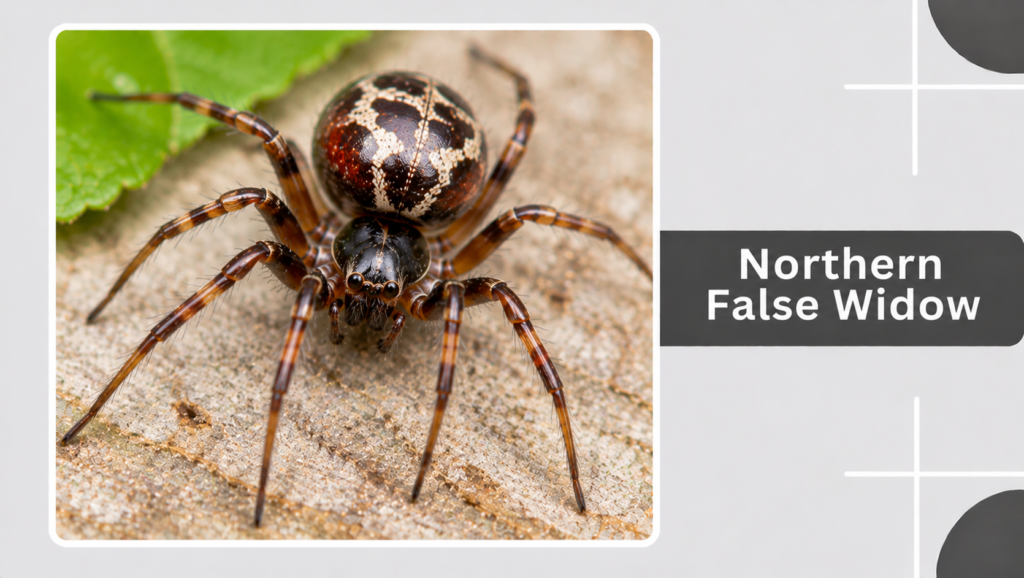
The Northern False Widow is a small, dark-colored spider that closely resembles a true black widow. Its rounded abdomen, shiny appearance, and slender legs can make identification challenging. Although it is typically dark reddish-brown rather than completely black, it is often mistaken for one of the black widow spiders in Illinois. Unlike true black widows, this species lacks the characteristic red hourglass marking underneath its abdomen.
Identification
- Scientific Name: Steatoda borealis
- Color: Dark reddish-brown to nearly black
- Size: Females approximately 6–11 mm long
- Body: Rounded, glossy abdomen with a small cephalothorax
- Markings: Sometimes a pale T-shaped abdominal marking
- Eyes: Eight small eyes
- Legs: Slender, brown or reddish-brown legs
Habitat and Behavior
Northern false widows inhabit garages, sheds, basements, and sheltered areas around buildings. They prefer quiet locations where they can construct irregular cobwebs.
These spiders often hang upside down in their webs, waiting for small insects to become trapped. Their appearance and behavior can resemble those of true black widows.
Are Northern False Widows Poisonous?
Northern false widows are venomous but are not considered medically dangerous to humans. Bites are uncommon and typically cause only mild, temporary symptoms.
These small black house spiders in Illinois are useful predators that help reduce insect populations around residential structures.
15. Ground Spider (Drassyllus lepidus)
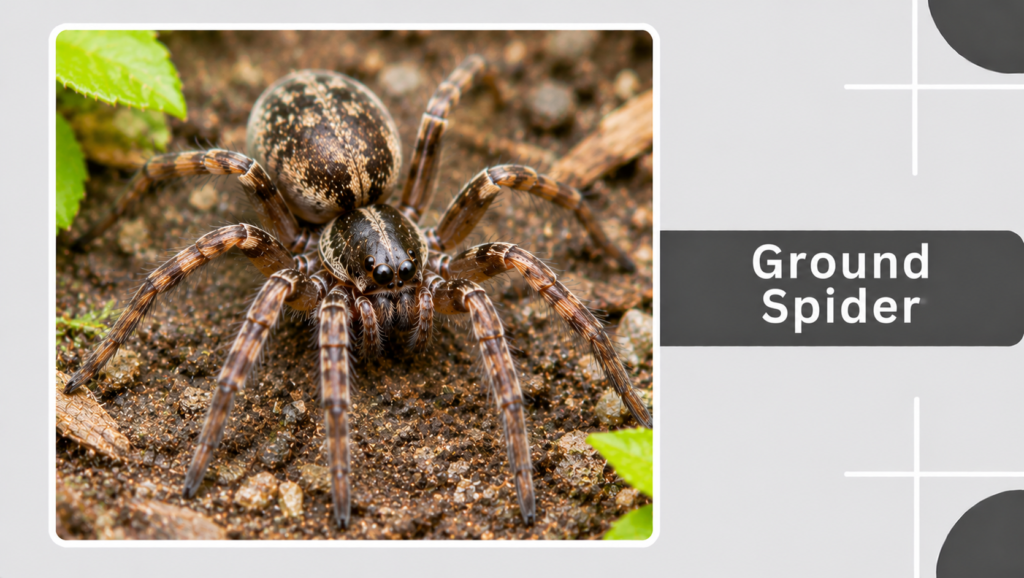
The Ground Spider (Drassyllus lepidus) is a small, dark-colored species native to Illinois. It belongs to the ground spider family, Gnaphosidae, whose members often have dark brown or nearly black bodies. These tiny black spiders in Illinois are less noticeable than jumping spiders or garden orb-weavers because they spend much of their time hiding beneath objects or moving through leaf litter.
Identification
- Scientific Name: Drassyllus lepidus
- Color: Dark brown to nearly black
- Size: Small, generally under 12 mm long
- Body: Elongated with a relatively smooth appearance
- Markings: Usually dark, without prominent colorful patterns
- Eyes: Eight small eyes arranged in two rows
- Legs: Slender, dark-colored legs adapted for running
Habitat and Behavior
Ground spiders inhabit leaf litter, grasslands, wooded areas, and spaces beneath rocks or logs throughout Illinois. They generally prefer sheltered locations close to the ground.
These spiders are primarily nocturnal hunters. Instead of building capture webs, they run across surfaces searching for insects and other small arthropods.
Are Ground Spiders Poisonous?
Ground spiders are venomous but are not generally considered dangerous to humans. Their bites are uncommon and may cause temporary redness or discomfort.
These small black spiders found in Illinois are beneficial predators that help maintain natural insect populations.
FAQs
1. Are There Black Widow Spiders in Illinois?
Yes, black widow spiders live in Illinois. Both the northern black widow (Latrodectus variolus) and southern black widow (Latrodectus mactans) occur in the state. They prefer sheltered, undisturbed environments such as woodpiles, hollow logs, sheds, and rocky areas. Although venomous, they generally avoid human contact.
2. What Are the Most Common Black Spiders in Illinois?
Common dark-colored spiders in Illinois include the Bold Jumping Spider, Eastern Parson Spider, and various ground spiders. These species often inhabit gardens, wooded areas, and residential properties. Some appear completely black, while others display white spots, pale stripes, or dark brown markings.
3. What Are the Big Black Spiders in Illinois?
Large dark-colored spiders in Illinois include the Dark Fishing Spider and Carolina Wolf Spider. Both have robust bodies and long, hairy legs. Dark fishing spiders can have leg spans approaching three inches. Despite their intimidating appearance, neither species is generally considered medically dangerous to humans.
4. Are Black Spiders in Illinois Poisonous?
Most black spiders in Illinois are venomous, but few pose a serious medical threat to humans. Black widows have medically significant venom and require particular caution. Jumping spiders, ground spiders, and fishing spiders generally cause only mild reactions if they bite. Spider identification should not rely on color alone.
5. Are Black Widow Spiders Found in Northern and Southern Illinois?
Yes, black widows occur in Illinois, including northern and southern portions of the state. Northern black widows occupy parts of Illinois and are associated with wooded habitats. Southern black widows also occur in the state, including suitable sheltered habitats farther south. Their presence does not mean they are equally common in every county.
