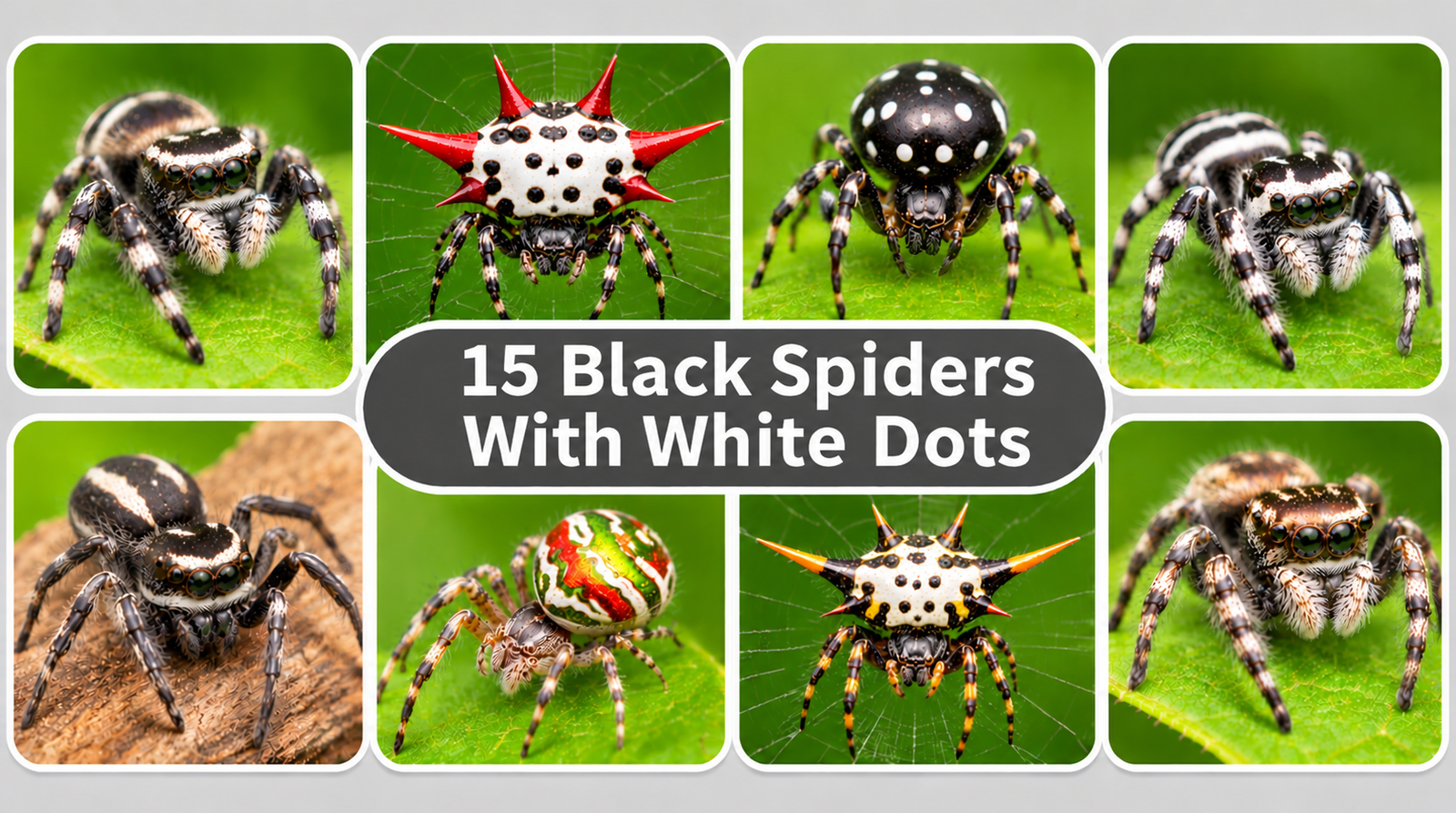
Black spiders with white dots are fascinating creatures commonly found in gardens, forests, and around homes. These spiders vary in size, body shape, and markings, with some featuring three white spots and others displaying distinctive patterns on their backs. Many small black spiders with white dots belong to the jumping spider family, while others are orb-weavers. In this guide, you’ll discover 15 types of black spiders with white dots, including their identification features, habitats, behaviors, and whether they are poisonous or dangerous to humans.
1. Bold Jumping Spider (Phidippus audax)
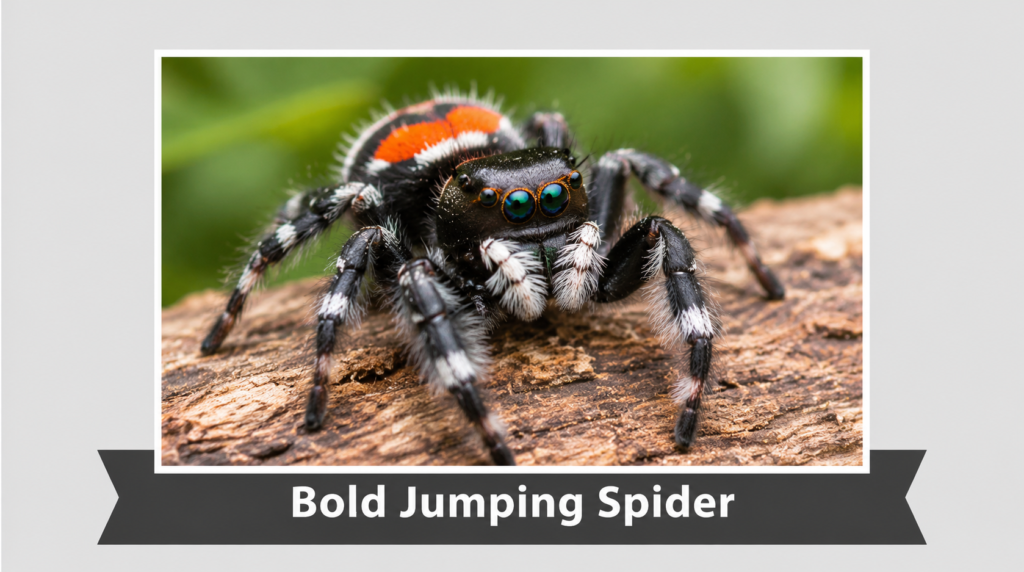
The Bold Jumping Spider is one of the most common black spiders with white dots found in North America. This small, active spider has a fuzzy black body with three noticeable white spots on its abdomen. It is often seen on walls, fences, windows, and garden plants. Despite its intimidating appearance, it is generally harmless to humans.
Identification
- Scientific Name: Phidippus audax
- Color: Black with three white dots on the back
- Size: Approximately 8–15 mm long
- Body: Compact, hairy, and muscular
- Eyes: Eight eyes, including two large forward-facing eyes
- Fangs: Metallic green or blue-green chelicerae
- Legs: Short, strong, and covered with fine hairs
Habitat and Behavior
Bold jumping spiders commonly live in gardens, grasslands, wooded areas, and around houses. These little black spiders with white dots prefer sunny locations where they can actively hunt insects.
Unlike web-building spiders, they use their excellent eyesight and powerful jumping abilities to catch prey. They may also turn toward people when approached.
Are Bold Jumping Spiders Poisonous?
Bold jumping spiders are venomous, but their bites are uncommon and generally cause only mild, temporary symptoms in humans. They are not considered medically dangerous.
These small black spiders with white dots on their backs are beneficial predators that help control flies, mosquitoes, and other household pests.
2. Regal Jumping Spider (Phidippus regius)
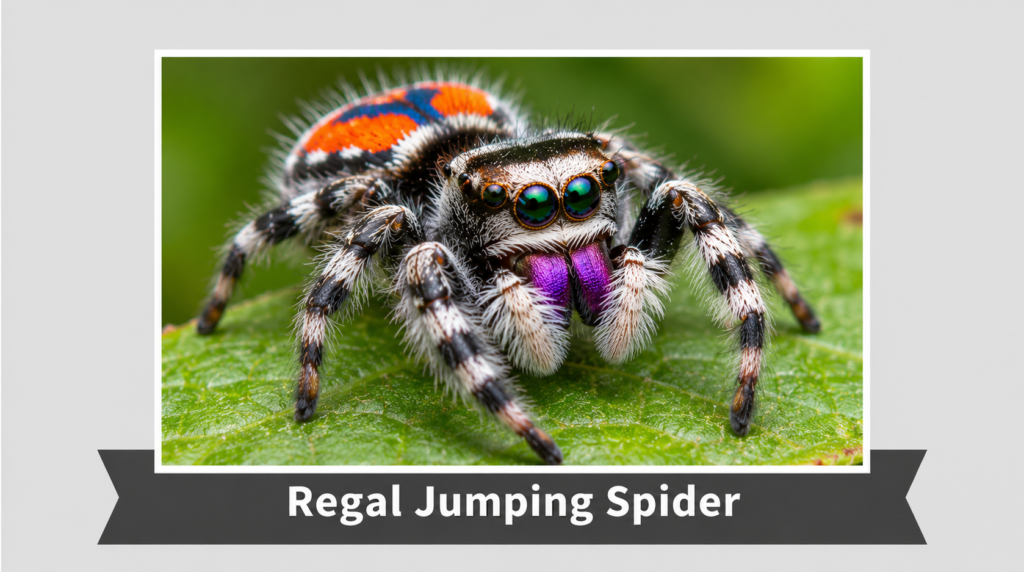
The Regal Jumping Spider is one of the largest black spiders with white dots found in the southeastern United States. Male spiders have a fuzzy black body decorated with distinct white spots on their backs. Females may appear gray, brown, or orange with lighter markings. These spiders are especially common in Florida and are known for their excellent vision and remarkable jumping abilities.
Identification
- Scientific Name: Phidippus regius
- Color: Black with white spots; females vary in color
- Size: Approximately 6–22 mm long
- Body: Large, compact, and hairy
- Eyes: Eight eyes with two prominent front eyes
- Fangs: Metallic green, blue, or violet chelicerae
- Legs: Strong, hairy legs with contrasting markings
Habitat and Behavior
Regal jumping spiders inhabit gardens, shrubs, palm trees, woodland edges, and outdoor walls. They prefer sunny environments where insects are abundant.
These spiders do not construct webs to capture prey. Instead, they stalk insects and jump with impressive accuracy. Their curious behavior often makes them noticeable around houses.
Are Regal Jumping Spiders Poisonous?
Regal jumping spiders are venomous but generally harmless to humans. Although they can bite when threatened or squeezed, bites are uncommon and typically cause temporary discomfort.
These black spiders with white dots on their backs help control small insects naturally.
3. Emerald Jumping Spider (Paraphidippus aurantius)
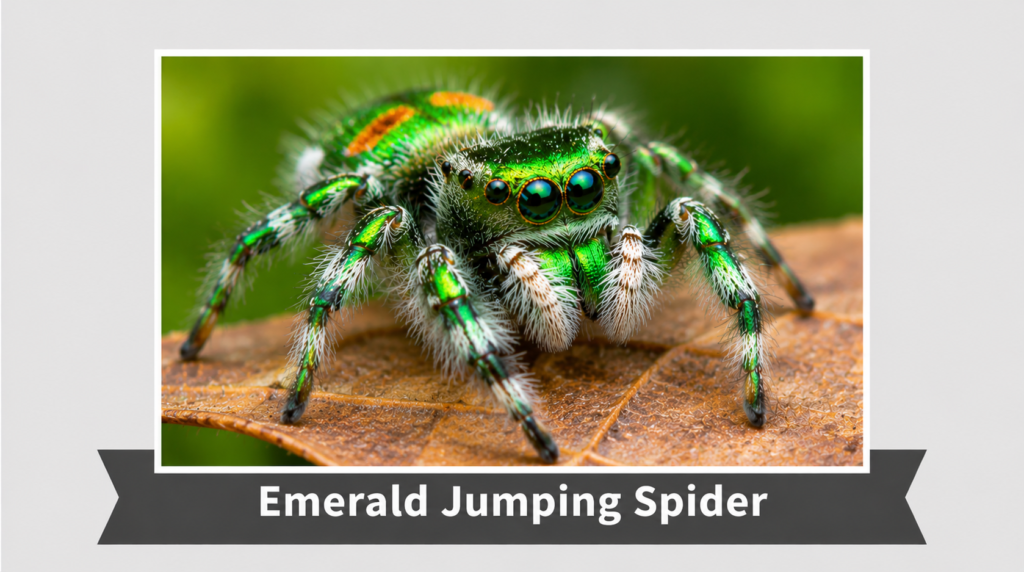
The Emerald Jumping Spider is a colorful species recognized by its dark body, metallic green appearance, and small white markings. Although it may look like a small black spider with white dots, its iridescent scales often reflect green, bronze, or golden colors. This jumping spider is native to North America and frequently appears on plants, shrubs, and garden vegetation.
Identification
- Scientific Name: Paraphidippus aurantius
- Color: Dark brown or black with metallic green scales
- Size: Approximately 5–10 mm long
- Body: Compact and slightly hairy
- Markings: White abdominal spots and pale stripes
- Eyes: Large forward-facing eyes
- Legs: Strong, dark legs adapted for jumping
Habitat and Behavior
Emerald jumping spiders commonly inhabit gardens, shrubs, woodland edges, and areas with dense vegetation. They often rest on leaves while searching for insects.
These spiders rely on sharp eyesight to locate and pursue prey. Unlike orb-weavers, they hunt actively rather than trapping insects in large webs.
Are Emerald Jumping Spiders Poisonous?
Emerald jumping spiders possess venom for capturing insects, but they are not considered dangerous to humans. Bites are uncommon and generally cause only mild, temporary reactions.
Their distinctive white spots and green reflections make them interesting examples of black spiders with white polka dots.
4. Adanson’s House Jumping Spider (Hasarius adansoni)
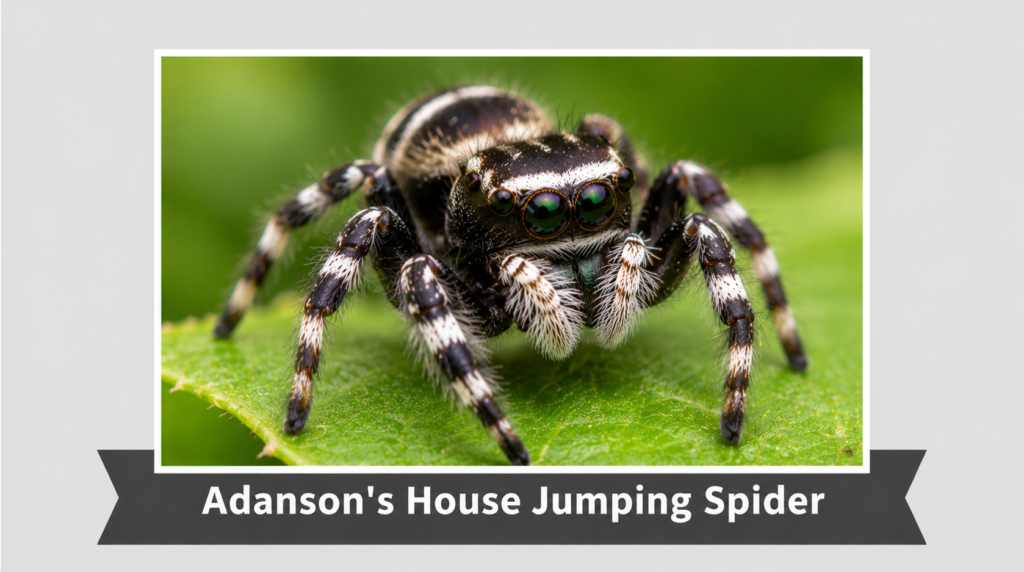
Adanson’s House Jumping Spider is a small species frequently found around houses and buildings in warmer regions. Male spiders have a mostly black body with bright white markings, including spots on the abdomen. These tiny black spiders with white dots are active hunters and commonly appear on walls, windows, and other surfaces where small insects gather.
Identification
- Scientific Name: Hasarius adansoni
- Color: Males are black with white markings
- Size: Approximately 4–8 mm long
- Body: Small, compact, and slightly hairy
- Markings: White abdominal spots and curved white bands
- Eyes: Eight eyes with two large front eyes
- Legs: Short, strong, and adapted for jumping
Habitat and Behavior
Adanson’s house jumping spiders inhabit homes, gardens, walls, fences, and warm sheltered spaces. Females are generally brownish and less boldly patterned than males.
These spiders actively search for flies, mosquitoes, and other small insects. They use quick movements and precise jumps to capture prey rather than relying on capture webs.
Are Adanson’s House Jumping Spiders Poisonous?
Adanson’s house jumping spiders are venomous but are not considered medically dangerous to humans. They usually retreat when disturbed and rarely bite.
Their white abdominal markings make males easy to recognize among little black spiders with white dots.
5. Twin-Flagged Jumping Spider (Anasaitis canosa)
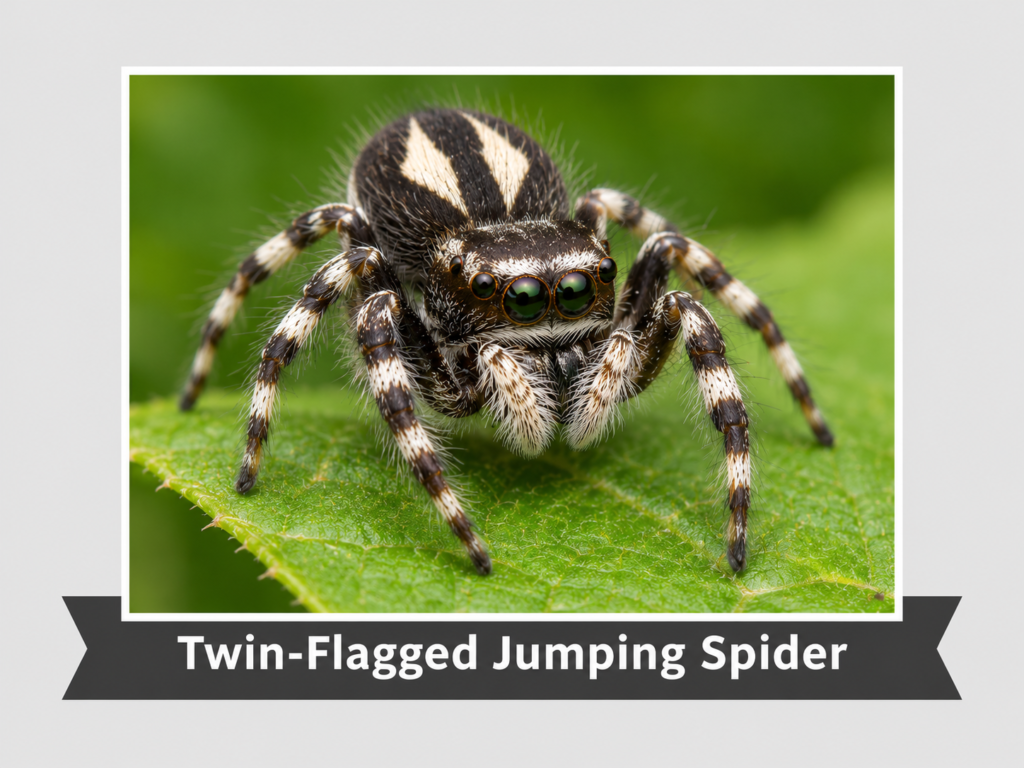
The Twin-Flagged Jumping Spider is a small, dark-colored spider commonly found in the southeastern United States. Its body is usually black or dark brown with several white markings on the head and abdomen. One of its most recognizable features is the movement of its white-tipped pedipalps, which resemble tiny waving flags.
Identification
- Scientific Name: Anasaitis canosa
- Color: Black or dark brown with white markings
- Size: Approximately 4–6 mm long
- Body: Small, rounded, and compact
- Markings: Four pale head markings and white abdominal patterns
- Eyes: Large front-facing eyes
- Legs: Short, dark, and adapted for quick jumping
Habitat and Behavior
Twin-flagged jumping spiders commonly inhabit gardens, wooded areas, fallen leaves, and tree bark. They spend considerable time moving through leaf litter while searching for insects.
These spiders are active during daylight and use excellent vision to detect prey. Their distinctive pedipalp movements also play an important role in communication.
Are Twin-Flagged Jumping Spiders Poisonous?
Twin-flagged jumping spiders have venom but are not considered dangerous to humans. They rarely bite and generally avoid direct contact with people.
These small black spiders with white dots are beneficial predators that naturally reduce populations of tiny insects.
6. Pantropical Jumping Spider (Plexippus paykulli)
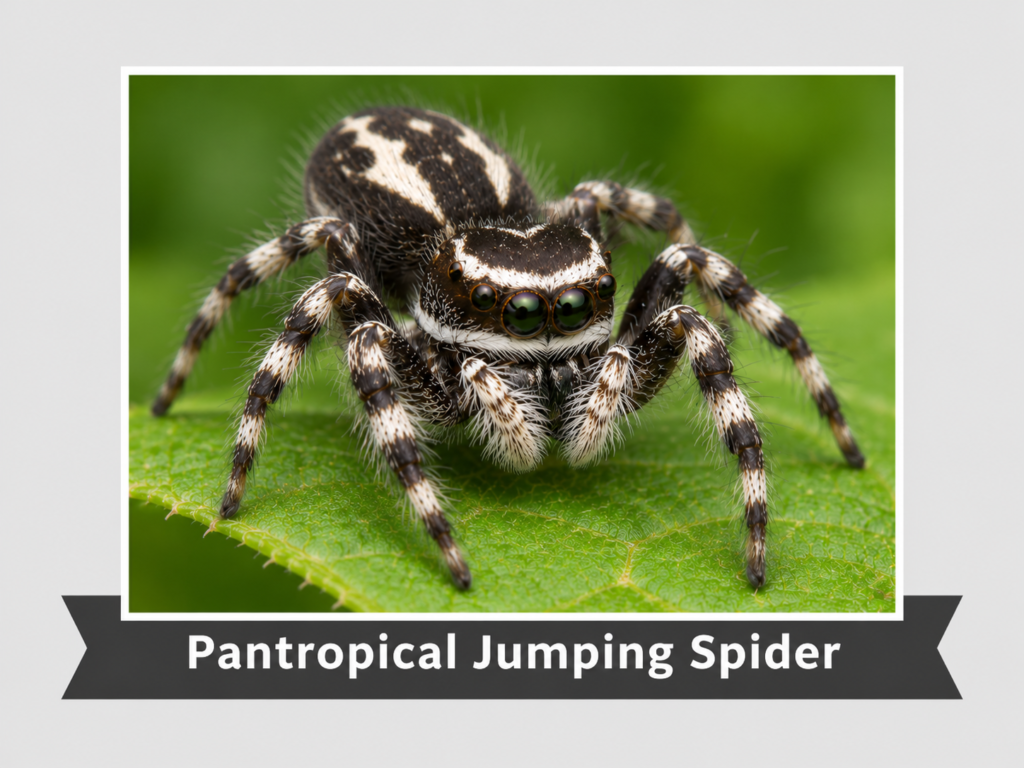
The Pantropical Jumping Spider is a widespread species commonly found in tropical and subtropical regions. Male spiders have a black body decorated with bold white stripes and small white spots near the end of their abdomen. These markings make them recognizable among black spiders with white dots on their backs, particularly around buildings and outdoor walls.
Identification
- Scientific Name: Plexippus paykulli
- Color: Black and white in males; brownish in females
- Size: Approximately 7–12 mm long
- Body: Robust and slightly elongated
- Markings: White longitudinal stripes and paired abdominal spots
- Eyes: Eight eyes with two prominent front eyes
- Legs: Strong, hairy legs adapted for jumping
Habitat and Behavior
Pantropical jumping spiders commonly inhabit buildings, gardens, fences, walls, and sunny outdoor surfaces. They are particularly common in warm climates.
Instead of constructing large capture webs, they actively chase insects using sharp eyesight and powerful jumps. They may also hunt near artificial lights where insects gather.
Are Pantropical Jumping Spiders Poisonous?
Pantropical jumping spiders are venomous but are not considered medically dangerous to humans. They generally avoid confrontation and rarely bite unless threatened.
These black spiders with white dots on the abdomen help control flies, mosquitoes, and other small insects around homes.
7. Bronze Jumping Spider (Eris militaris)
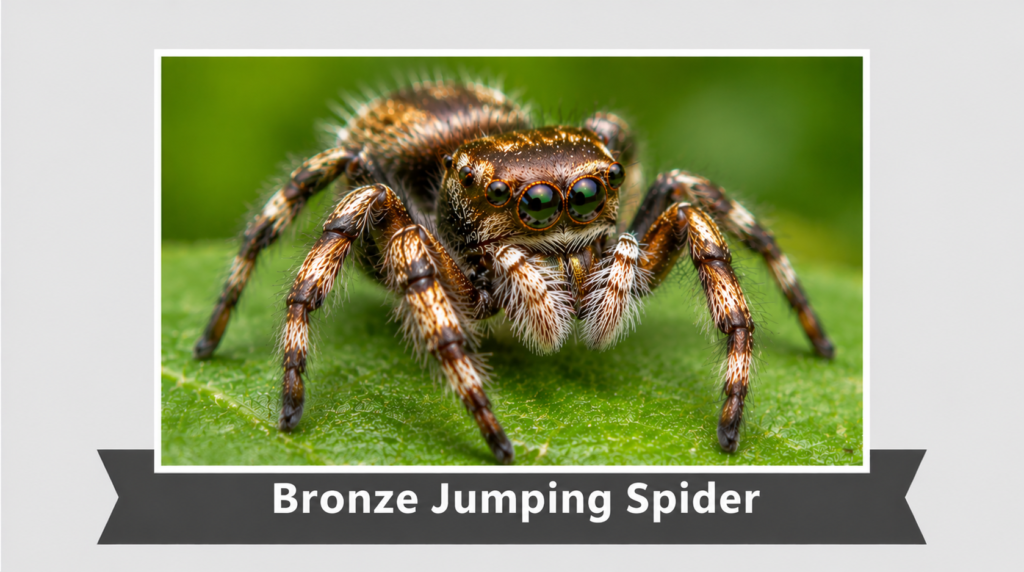
The Bronze Jumping Spider is a small species found throughout much of North America. Although its body is usually bronze-brown or dark brown rather than completely black, females often have distinctive white spots on their abdomens. These small black spiders with white dots may be seen around houses, gardens, and wooded areas. Their compact bodies and quick movements make them easy to recognize as jumping spiders.
Identification
- Scientific Name: Eris militaris
- Color: Bronze-brown or dark brown with white markings
- Size: Approximately 5–8 mm long
- Body: Compact, slightly hairy, and rounded
- Markings: Pale abdominal spots in females and white side bands in males
- Eyes: Eight eyes, including two large front eyes
- Legs: Short, strong legs adapted for jumping
Habitat and Behavior
Bronze jumping spiders commonly inhabit gardens, fields, woodlands, and the exterior walls of buildings. They prefer areas where small insects are available.
These spiders actively hunt their prey rather than using capture webs. Their excellent eyesight allows them to detect insects and jump accurately.
Are Bronze Jumping Spiders Poisonous?
Bronze jumping spiders possess venom for capturing prey but are not considered medically dangerous to humans. Their bites are uncommon and generally cause only brief discomfort.
These tiny black spiders with white dots are beneficial hunters that help control small insects around homes and gardens.
8. Mustached Jumping Spider (Phidippus mystaceus)
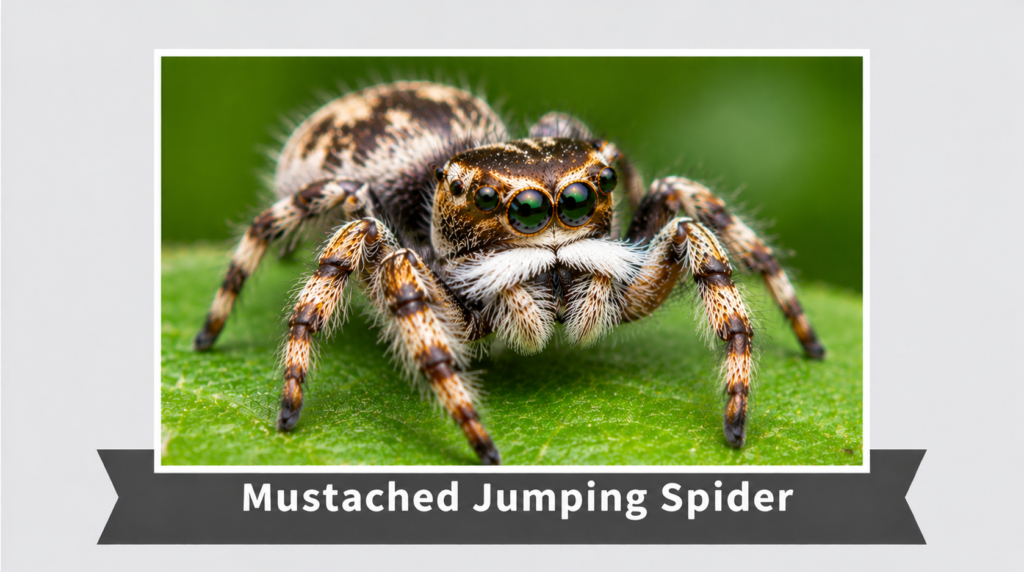
The Mustached Jumping Spider is a distinctive species found in parts of the eastern and southern United States. Its body displays a mixture of black, gray, brown, and white markings. Some individuals resemble black spiders with white dots on their backs, although their patterns can be irregular. The prominent hair tufts near the eyes give this spider its unusual appearance.
Identification
- Scientific Name: Phidippus mystaceus
- Color: Black, gray, brown, and white
- Size: Commonly around 6–10 mm, sometimes larger
- Body: Robust, hairy, and compact
- Markings: Irregular white or pale abdominal patterns
- Eyes: Large forward-facing eyes
- Legs: Thick, hairy legs with contrasting markings
Habitat and Behavior
Mustached jumping spiders commonly live in hardwood forests, woodland edges, shrubs, and wooded backyards. They often occupy vegetation where insects are abundant.
These spiders rely on sharp eyesight and powerful jumps to hunt prey. Their movements are quick, and they may turn toward nearby objects when detecting motion.
Are Mustached Jumping Spiders Poisonous?
Mustached jumping spiders are venomous, but they are not considered dangerous to humans. Bites are rare and usually occur when the spider is handled or trapped against the skin.
Their unusual markings and facial hair make them recognizable among black and white spotted spiders.
9. Zebra Jumping Spider (Salticus scenicus)
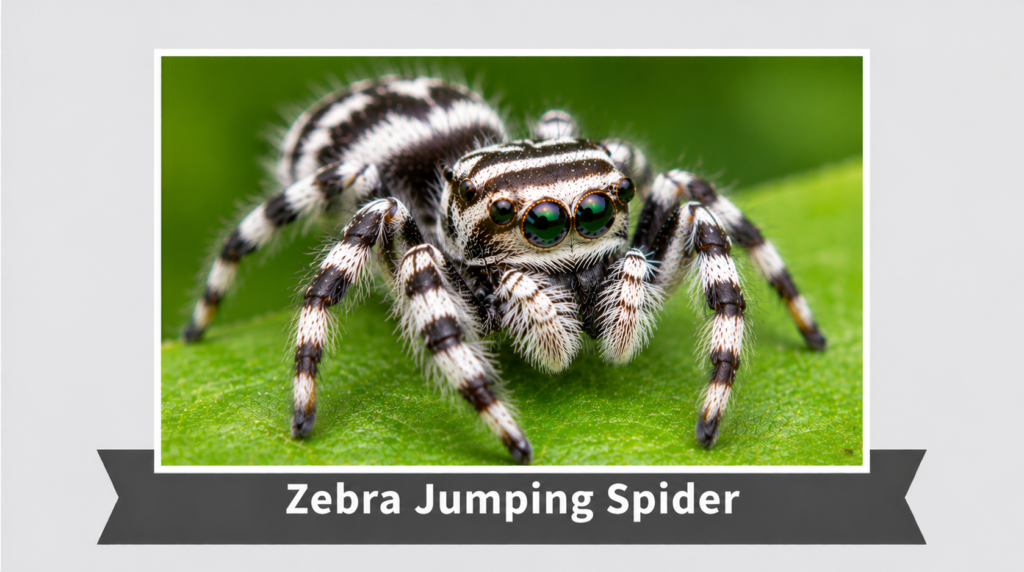
The Zebra Jumping Spider is a tiny black-and-white species commonly found around houses, gardens, and outdoor walls. Unlike spiders with round white dots, this species has contrasting white stripes across its dark body. Some markings appear broken or spot-like, making it a possible match when identifying little black spiders with white dots.
Identification
- Scientific Name: Salticus scenicus
- Color: Black with bright white stripes
- Size: Approximately 4–7 mm long
- Body: Small, compact, and slightly flattened
- Markings: Three or four white abdominal bands, sometimes broken
- Eyes: Eight eyes with two prominent front eyes
- Legs: Short, powerful legs with pale markings
Habitat and Behavior
Zebra jumping spiders commonly inhabit sunny walls, fences, tree trunks, rocks, and garden structures. They occasionally enter homes through open windows and doors.
These spiders do not build large webs to capture insects. Instead, they stalk their prey and leap forward with remarkable accuracy.
Are Zebra Jumping Spiders Poisonous?
Zebra jumping spiders are venomous but generally harmless to humans. Their bites are uncommon and usually result in mild, temporary discomfort.
These small black spiders with white markings are helpful predators that feed on flies and other tiny insects.
10. Eastern Parson Spider (Herpyllus ecclesiasticus)
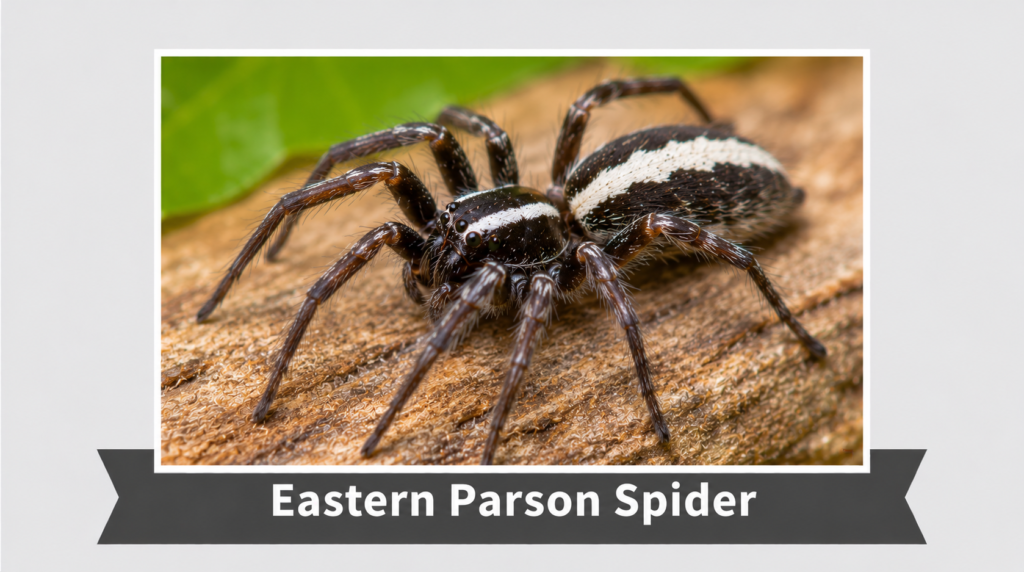
The Eastern Parson Spider is a fast-moving ground spider commonly found in eastern North America. It has a dark brown or nearly black body with a distinctive white marking on its abdomen. Although the marking is usually elongated rather than circular, people searching for black spiders with a white dot on their back may encounter this species.
Identification
- Scientific Name: Herpyllus ecclesiasticus
- Color: Dark brown or black with a pale marking
- Size: Approximately 5.5–13 mm long
- Body: Elongated, smooth-looking, and slightly hairy
- Markings: White or pinkish stripe resembling a clerical collar
- Eyes: Eight small eyes arranged in two rows
- Legs: Long, relatively slender legs adapted for running
Habitat and Behavior
Eastern parson spiders inhabit leaf litter, wood piles, tree bark, and sheltered spaces around homes. They sometimes enter basements, bedrooms, and other indoor areas.
Unlike jumping spiders, they are primarily nocturnal hunters. They move rapidly across floors and walls while searching for insects.
Are Eastern Parson Spiders Poisonous?
Eastern parson spiders possess venom and may bite if trapped against the skin. Bites can cause localized pain, redness, and swelling, but serious reactions are uncommon.
These black spiders with a white marking on the abdomen are useful predators of household insects.
11. Spined Micrathena (Micrathena gracilis)
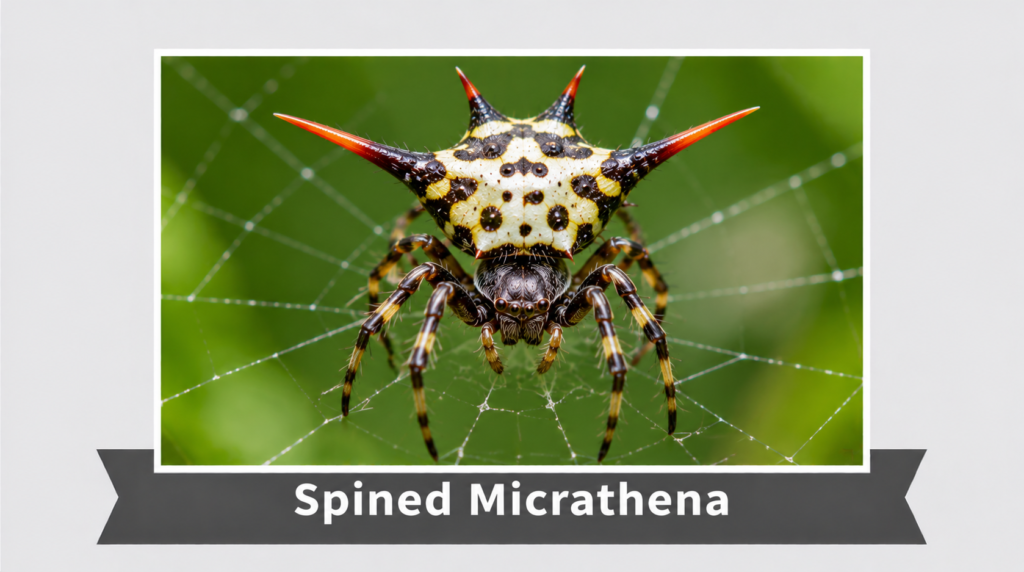
The Spined Micrathena is an unusual orb-weaving spider found in eastern North America. Females have a spiny abdomen decorated with contrasting black, white, or yellowish markings. Although many are predominantly pale with dark spots, some appear mostly black with white patches. Their unusual body shape makes them stand out among black spiders with white dots.
Identification
- Scientific Name: Micrathena gracilis
- Color: Black and white, sometimes yellowish or brown
- Size: Females approximately 8–10 mm; males around 4.5 mm
- Body: Distinctive, broad, and spiny abdomen in females
- Markings: Irregular dark spots and pale abdominal patches
- Eyes: Eight relatively small eyes
- Legs: Long, slender, usually dark legs
Habitat and Behavior
Spined micrathenas commonly inhabit forests, wooded trails, and shaded gardens. Females construct circular orb webs between branches and vegetation.
Unlike jumping spiders, they capture flying insects using sticky silk. Their abdominal spines may help discourage predators from swallowing them.
Are Spined Micrathena Spiders Poisonous?
Spined micrathenas are venomous but are not considered medically dangerous to humans. Bites are uncommon because these spiders generally remain in their webs and avoid confrontation.
These black-and-white spotted garden spiders help control flying insects and contribute to healthy woodland ecosystems.
12. Spinybacked Orb-Weaver (Gasteracantha cancriformis)
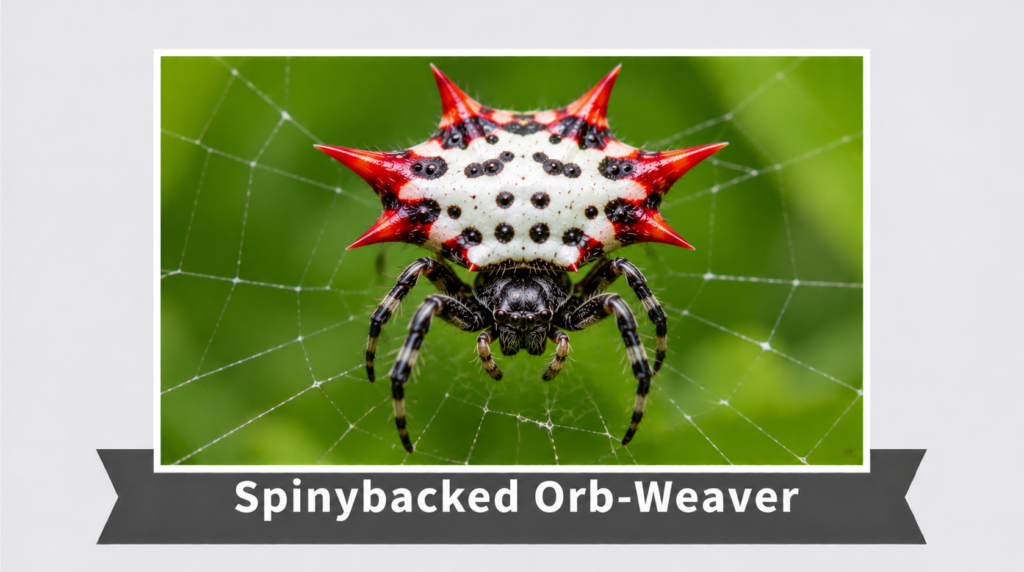
The Spinybacked Orb-Weaver is a small, unusual spider recognized by its crab-like body and six prominent abdominal spines. Its coloration varies considerably, with some individuals appearing nearly black and others displaying white, yellow, or orange abdomens with dark spots. This species is sometimes confused with black spiders with white dots, particularly when viewed from below.
Identification
- Scientific Name: Gasteracantha cancriformis
- Color: Black, white, yellow, or orange, depending on the individual
- Size: Females approximately 5–9 mm long
- Body: Broad, flattened, and crab-like
- Markings: Contrasting abdominal spots and six pointed spines
- Eyes: Eight small eyes
- Legs: Relatively short, dark-colored legs
Habitat and Behavior
Spinybacked orb-weavers commonly inhabit gardens, woodland edges, shrubs, and tropical forests. They are widespread in warmer parts of the Americas, including the southeastern United States.
These spiders construct circular webs between branches and vegetation to capture flying insects. Females usually remain near the center of their webs while waiting for prey.
Are Spinybacked Orb-Weavers Poisonous?
Spinybacked orb-weavers possess venom for immobilizing insects, but they are not considered medically dangerous to humans. They rarely bite and generally remain passive when undisturbed.
Their unusual appearance makes them interesting examples of black and white spotted spiders found in gardens and wooded environments.
13. Black-and-White Spiny Spider (Gasteracantha kuhli)
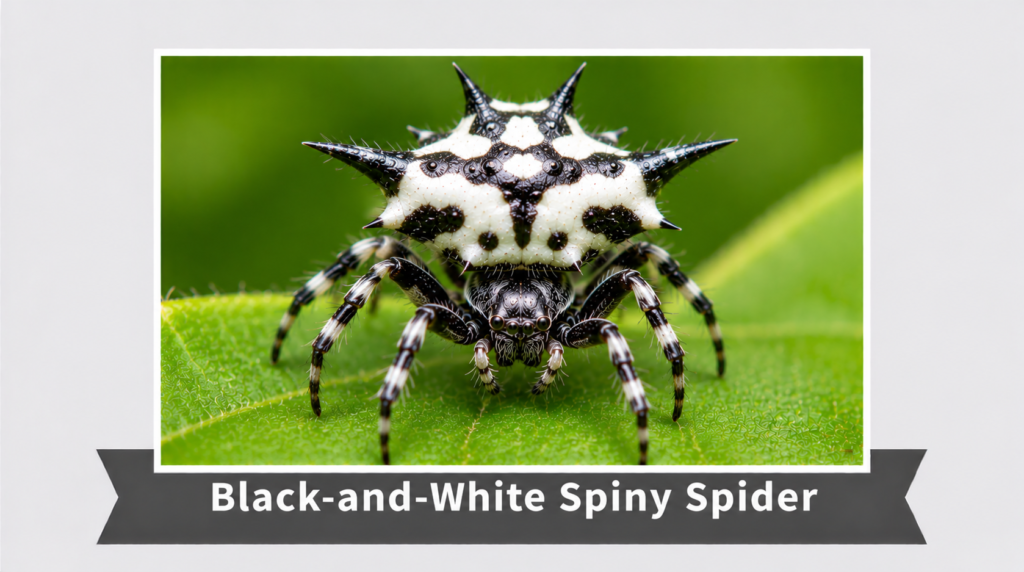
The Black-and-White Spiny Spider is a distinctive orb-weaver native to parts of Asia. Its hardened abdomen features contrasting black-and-white patterns, often including pale patches surrounded by dark markings. Although it does not resemble a typical jumping spider, its coloration makes it relevant to searches for black spiders with white dots on their backs.
Identification
- Scientific Name: Gasteracantha kuhli
- Color: Black and white with variable patterns
- Size: Females approximately 5–8 mm long
- Body: Broad, flattened, and hardened abdomen
- Markings: White patches, black spots, and six abdominal spines
- Eyes: Eight small eyes
- Legs: Short, dark or yellowish-brown legs
Habitat and Behavior
Black-and-white spiny spiders inhabit gardens, forest edges, shrubs, and wooded areas throughout parts of South and Southeast Asia.
These spiders construct circular orb webs between vegetation and wait at the center for flying insects. Their hardened bodies and pointed spines may discourage some predators.
Are Black-and-White Spiny Spiders Poisonous?
Black-and-white spiny spiders are venomous, like most orb-weavers, but they are not considered dangerous to humans. They are generally nonaggressive and rarely bite.
Their contrasting abdominal patterns make them recognizable among spiders with black and white spots, especially in tropical environments.
14. Christmas Jewel Spider (Austracantha minax)
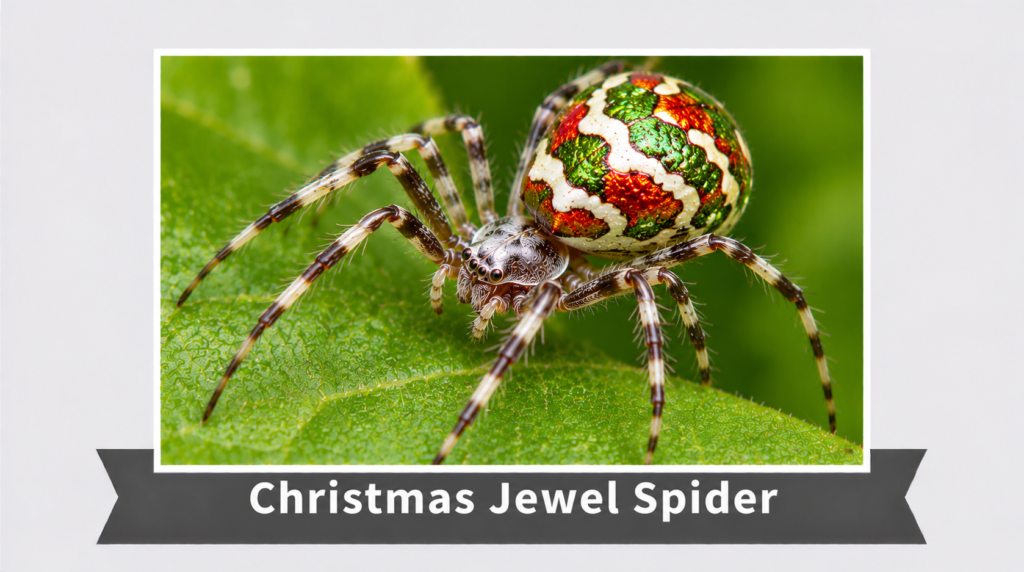
The Christmas Jewel Spider is an eye-catching species native to Australia. It has a glossy black abdomen decorated with bright white, yellow, or orange markings. Some individuals display rounded white spots that resemble polka dots. Its distinctive appearance makes it one of the most recognizable black spiders with white dots and spines.
Identification
- Scientific Name: Austracantha minax
- Color: Glossy black with white, yellow, or orange markings
- Size: Females up to approximately 10 mm long
- Body: Compact with a hardened, spiny abdomen
- Markings: Bright white spots and six prominent black spines
- Eyes: Eight small eyes
- Legs: Orange, reddish-brown, or dark-colored legs
Habitat and Behavior
Christmas jewel spiders inhabit Australian gardens, shrublands, and wooded areas. They are particularly noticeable during warmer months when mature spiders become more active.
Unlike many solitary orb-weavers, these spiders sometimes form groups of interconnected webs. Each spider maintains its own web while capturing small flying insects.
Are Christmas Jewel Spiders Poisonous?
Christmas jewel spiders possess venom but are not considered dangerous to humans. Bites are uncommon and may cause mild, temporary redness or swelling.
These black spiders with white polka dots are beneficial predators that naturally reduce flying insect populations in gardens.
15. Short-Spined Spider (Thelacantha brevispina)
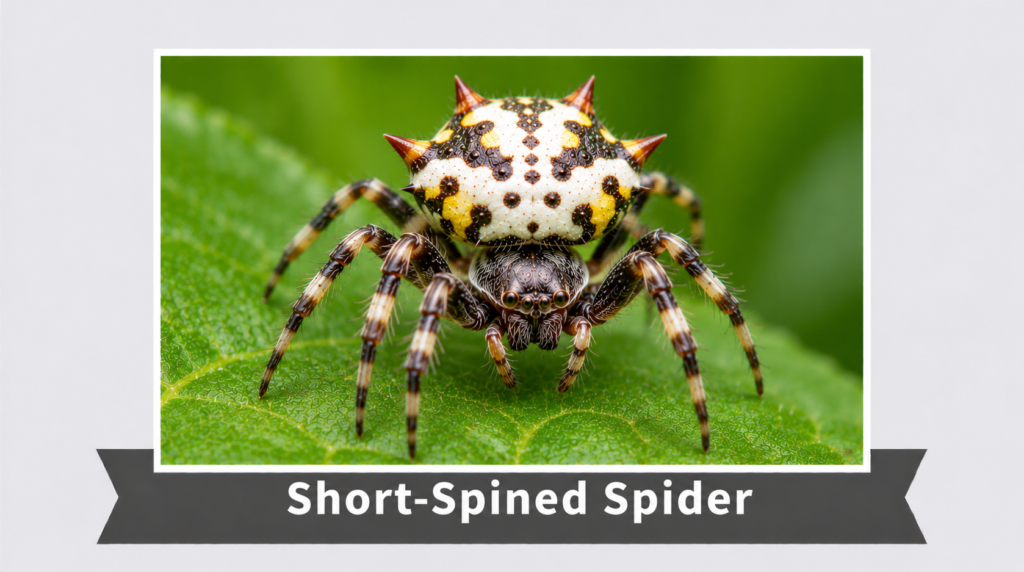
The Short-Spined Spider, also called the Peaked Carapace Spiny Spider, is a small orb-weaver found in tropical regions. Its abdomen is typically black or dark brown with contrasting pale markings. Some individuals have two prominent white spots, making them excellent examples of black spiders with white dots on their abdomens.
Identification
- Scientific Name: Thelacantha brevispina
- Color: Black, brown, and white
- Size: Females approximately 6–10 mm long
- Body: Broad abdomen with a hardened outer surface
- Markings: Two prominent white spots in some individuals
- Eyes: Eight small eyes
- Legs: Short, dark legs with fine hairs
Habitat and Behavior
Short-spined spiders commonly inhabit tropical gardens, shrubs, forest edges, and areas with dense vegetation. They occur in parts of Southeast Asia and the Pacific.
These spiders construct circular webs between branches and leaves, where they capture small flying insects. They usually remain near the center of their webs during the daytime.
Are Short-Spined Spiders Poisonous?
Short-spined spiders possess venom for capturing insects but are not considered medically dangerous to humans. They generally avoid contact and rarely bite.
Their compact bodies, short spines, and contrasting abdominal markings help distinguish them from other small black spiders with white dots.
FAQs
1. What Are the Small Black Spiders With White Dots?
Small black spiders with white dots are often jumping spiders, particularly Bold Jumping Spiders (Phidippus audax) or Regal Jumping Spiders (Phidippus regius). Both can have dark, fuzzy bodies with prominent white abdominal spots. Other species, including spiny orb-weavers, may have similar markings.
2. Are Black Spiders With White Dots Poisonous?
Most black spiders with white dots are venomous rather than poisonous, but many common species are not medically dangerous to humans. Jumping spiders and typical orb-weavers rarely bite unless threatened or trapped. However, color patterns alone cannot determine whether an unidentified spider is dangerous.
3. What Spider Is Black With Three White Dots on Its Back?
The Bold Jumping Spider (Phidippus audax) is one of the most likely matches. It commonly has three white spots arranged in a triangular pattern on its black abdomen. Younger spiders may have orange markings that gradually become white as they mature.
4. What Is a Black Spider With One White Dot on Its Back?
A black spider with one white dot or patch on its back could be an Eastern Parson Spider (Herpyllus ecclesiasticus). This species has a distinctive pale abdominal marking that may resemble a single white spot from certain angles. Accurate identification also requires examining its body shape, size, and location.
5. Are Black Spiders With White Dots Black Widows?
Not necessarily. Adult female black widows are usually recognized by their glossy dark bodies and red hourglass markings underneath. However, juvenile black widows and some males can display pale spots or stripes. White dots alone are insufficient to identify or rule out a black widow.
