
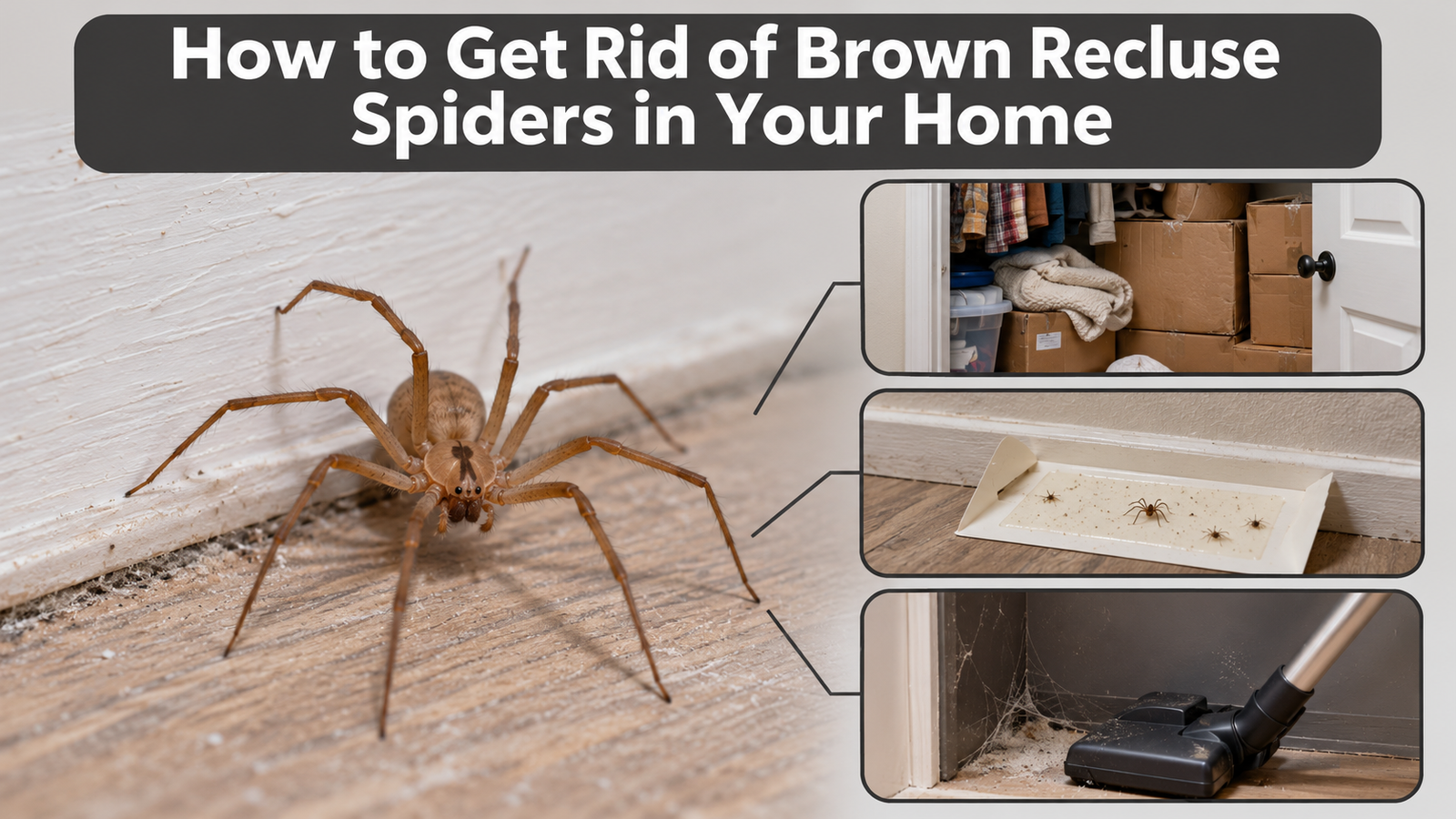
Brown recluse spiders can become a serious concern when they settle inside homes, garages, basements, or other hidden spaces. Although these spiders are generally shy, their venomous bites can sometimes cause painful wounds and medical complications. Fortunately, several effective methods can help reduce their numbers and prevent future infestations. Removing clutter, sealing entry points, vacuuming hiding places, and using sticky traps are among the most useful approaches. This guide explains how to get rid of brown recluse spiders naturally, eliminate established infestations, and keep them away from your property.
How to Get Rid of Brown Recluse Spiders Fast
The fastest practical way to reduce brown recluse spiders is to combine thorough cleaning, sticky traps, and targeted pest control. These spiders hide in dark, undisturbed spaces, so spraying visible areas alone rarely eliminates an established infestation.
Start by locating their hiding places and reducing opportunities for them to survive. For large infestations, professional treatment may be necessary.
1. Find Brown Recluse Spider Hiding Places
Brown recluse spiders prefer quiet areas where they can remain undisturbed during the day. They usually become more active at night while searching for food.
Check these common hiding places:
- Closets and storage rooms
- Behind furniture and appliances
- Inside cardboard boxes
- Under basement stairs
- Garages, attics, and crawl spaces
- Behind baseboards and wall openings
- Around stacked firewood
Use a flashlight during inspections and avoid reaching into hidden spaces with bare hands.
2. Remove Clutter and Unused Items
Clutter provides excellent hiding places for brown recluse spiders. Old cardboard boxes, clothing piles, and stored materials can shelter spiders for long periods.
Remove unnecessary items and organize your belongings in tightly sealed plastic containers.
Keep clothing, shoes, and blankets off the floor whenever possible. Reducing clutter also makes it easier to inspect and treat areas where spiders may be hiding.
3. Use Sticky Spider Traps
Sticky traps are among the most effective nonchemical tools for monitoring and reducing brown recluse populations.
Place traps:
- Along walls and baseboards
- Behind furniture
- Inside closets
- Near basement corners
- Along garage walls
- Around storage areas
Position traps flat against walls where spiders are likely to travel. Keep them away from children and pets.
Check the traps regularly to identify areas with the most spider activity.
4. Vacuum Spiders, Webs, and Egg Sacs
Regular vacuuming helps remove spiders, egg sacs, and insects that provide food for them.
Focus on:
- Floor corners
- Behind furniture
- Beneath storage shelves
- Around baseboards
- Accessible cracks and crevices
Wear gloves and avoid touching collected spiders. Empty the vacuum contents promptly into a sealed bag and dispose of it outdoors.
Vacuuming works best when combined with other control methods.
5. Seal Cracks and Entry Points
Brown recluse spiders can enter buildings through small openings around windows, doors, foundations, and utility lines.
Use appropriate caulk, weatherstripping, or other sealing materials to close gaps.
Pay particular attention to garage doors, basement windows, and gaps around plumbing or cables.
Sealing these areas helps limit spider movement between indoor spaces and reduces future pest entry.
How to Get Rid of Brown Recluse Spiders in Different Areas
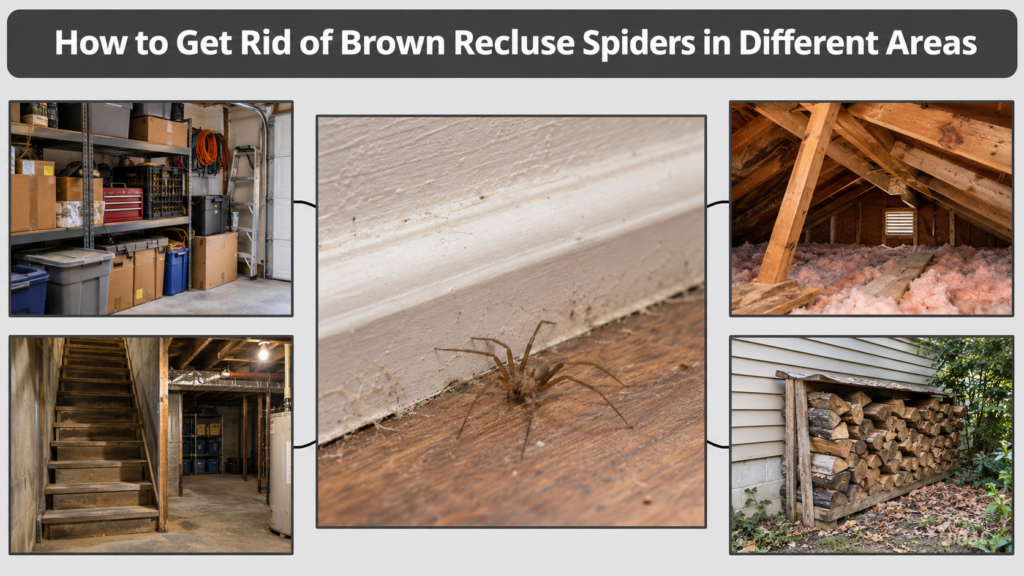
Brown recluse spiders may occupy several parts of a property, including living spaces, garages, basements, attics, and outdoor storage areas. Each location presents different hiding opportunities.
The most effective treatment involves inspecting the specific area, removing unnecessary materials, and reducing available shelter.
How to Get Rid of Brown Recluse Spiders in Your House
Begin by inspecting bedrooms, closets, storage rooms, and areas behind furniture.
Remove clutter, vacuum regularly, and position sticky traps along walls. Store rarely used clothing and bedding in sealed containers.
Keep beds slightly away from walls and avoid allowing blankets or bed skirts to touch the floor.
Always shake out stored shoes and clothing before wearing them.
How to Get Rid of Brown Recluse Spiders in a Garage
Garages often contain cardboard boxes, tools, firewood, and other materials that provide hiding places.
Move stored items away from walls and replace cardboard boxes with sealed plastic containers.
Sweep and vacuum accessible corners, inspect shelves, and install sticky traps along walls.
Check the garage door seal and repair gaps that allow spiders and insects to enter.
How to Get Rid of Brown Recluse Spiders in a Basement
Basements provide dark, undisturbed spaces where brown recluse spiders can remain hidden.
Inspect accessible foundation cracks, storage areas, and spaces beneath stairs.
Remove unused materials, clean corners, and place sticky traps near walls.
Seal openings around pipes and foundation gaps. If spiders are established inside wall voids or inaccessible spaces, professional treatment may be required.
How to Get Rid of Brown Recluse Spiders in an Attic
Attics contain rafters, insulation, stored belongings, and structural gaps that can shelter spiders.
Avoid disturbing insulation or reaching behind stored materials without protective clothing.
Reduce unnecessary storage and inspect accessible areas using a flashlight.
Because attics may contain difficult-to-reach hiding places, a qualified pest control professional is often the safest option for significant infestations.
How to Get Rid of Brown Recluse Spiders in Your Yard
Brown recluse spiders may shelter outdoors beneath logs, stones, woodpiles, and other undisturbed materials within their natural range.
To reduce outdoor hiding places:
- Move firewood away from the house.
- Remove unnecessary debris.
- Keep stored materials off the ground.
- Clear clutter around sheds.
- Seal exterior foundation gaps.
- Reduce insects attracted to outdoor lights.
These measures can reduce suitable shelter near your home.
How to Get Rid of Brown Recluse Spiders Naturally
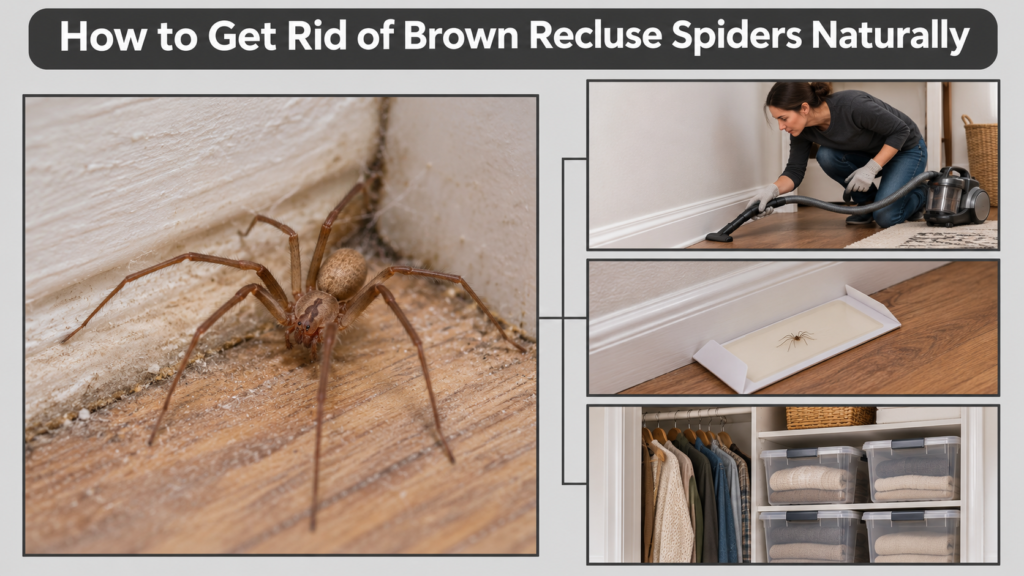
Natural brown recluse control focuses on removing hiding places, reducing prey insects, and physically capturing spiders without relying on chemical pesticides.
These methods can be helpful for small populations, although established infestations often require additional treatment.
Best Natural Methods for Brown Recluse Control
The most practical nonchemical methods include:
- Sticky traps: Capture wandering spiders and identify activity areas.
- Regular vacuuming: Remove accessible spiders, webs, and egg sacs.
- Decluttering: Eliminate protected hiding places.
- Sealing openings: Limit spider entry and movement.
- Reducing insects: Remove food sources that support spider populations.
Using several methods together is more effective than relying on a single technique.
Do Home Remedies Repel Brown Recluse Spiders?
Peppermint oil, vinegar, citrus sprays, and other household remedies are frequently recommended as natural spider repellents.
However, there is insufficient reliable evidence that these treatments can eliminate established brown recluse infestations.
Essential oils may also pose risks to pets, particularly cats, and should not be sprayed indiscriminately around living areas.
Physical removal, sticky traps, and habitat management are more dependable approaches.
What Kills Brown Recluse Spiders Effectively?
Appropriately selected insecticides can help control brown recluse spiders, particularly when they are hiding inside cracks and structural gaps.
However, chemical treatments should be targeted and used according to product labels. Products registered for one location or pest may not be suitable for another.
Do Spider Sprays Work on Brown Recluse Spiders?
Certain insecticides labeled for spiders can kill brown recluses when applied correctly.
However, spiders hiding deep inside walls, insulation, or storage materials may avoid contact with treatments.
Total-release foggers, commonly called bug bombs, are generally ineffective against established infestations.
A professional can identify suitable treatment areas and select products appropriate for the building.
When Should You Hire Pest Control?
Consider professional pest control if:
- You repeatedly find brown recluse spiders indoors.
- Multiple spiders appear on sticky traps.
- Spiders are present in several rooms.
- The infestation extends into walls or attics.
- Home control efforts fail to reduce activity.
Established infestations can take months to control, so follow-up inspections may be necessary.
How to Get Rid of Brown Recluse Spiders Permanently
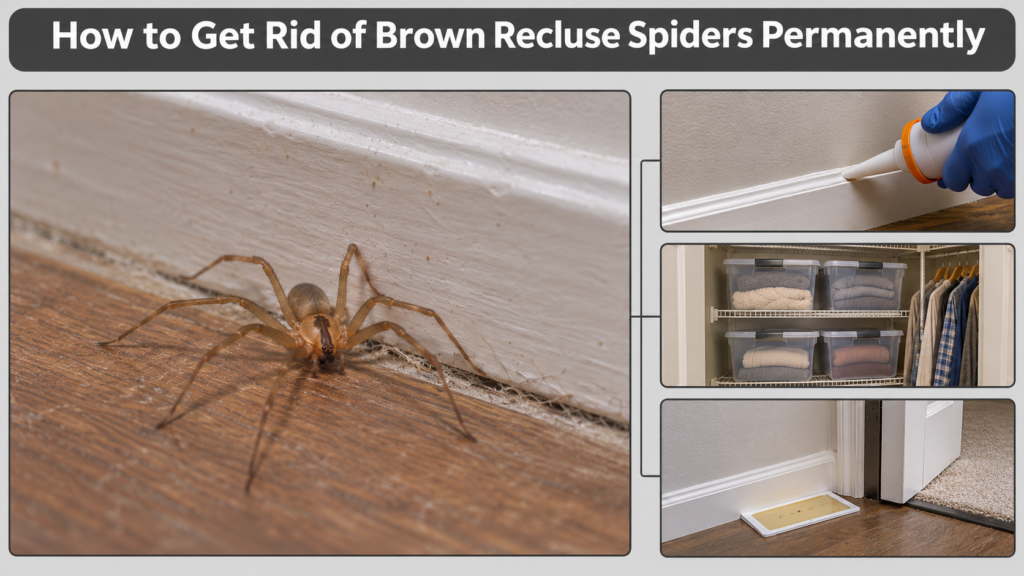
Completely eliminating brown recluse spiders can be difficult because they survive for long periods in secluded spaces.
Long-term control requires reducing hiding places, limiting insect prey, sealing access points, and monitoring activity.
Best Ways to Prevent Brown Recluse Infestations
Follow these preventive measures:
- Keep closets and storage rooms organized.
- Store belongings in sealed plastic containers.
- Vacuum hidden spaces regularly.
- Repair damaged door sweeps and window screens.
- Keep firewood away from exterior walls.
- Inspect stored clothing before wearing it.
- Monitor suspected areas with sticky traps.
- Schedule professional inspections when necessary.
Consistent prevention can substantially reduce spider activity, although no household method guarantees permanent elimination.
FAQs
1. What Is the Fastest Way to Get Rid of Brown Recluse Spiders?
The fastest practical approach combines sticky traps, thorough cleaning, and targeted treatment. Remove clutter, vacuum accessible hiding places, and place traps along walls. Significant infestations may require professional pest control because spiders often remain hidden inside structural gaps.
2. Does Peppermint Oil Keep Brown Recluse Spiders Away?
Peppermint oil is commonly promoted as a natural spider repellent, but reliable evidence supporting its effectiveness against brown recluse spiders is limited. It should not replace proven control methods. Essential oils can also be harmful to pets, especially cats.
3. How Long Does It Take to Get Rid of Brown Recluse Spiders?
Small populations may decline after cleaning and trapping, but established infestations can take several months to control. The timeline depends on population size, available hiding places, and treatment effectiveness. Regular monitoring helps determine whether control efforts are working.
4. Can Brown Recluse Spiders Come Back After Treatment?
Yes, brown recluse spiders may reappear if surviving individuals remain inside the building or suitable hiding places are still available. Continue inspecting storage areas, sealing openings, reducing clutter, and monitoring sticky traps to help prevent another infestation.
5. Should You Kill a Brown Recluse Spider When You Find One?
Avoid handling a suspected brown recluse spider directly. If removal is necessary, use a vacuum or an appropriate trap while maintaining a safe distance. Because many harmless spiders resemble brown recluses, professional identification is helpful before beginning extensive pest treatments.
