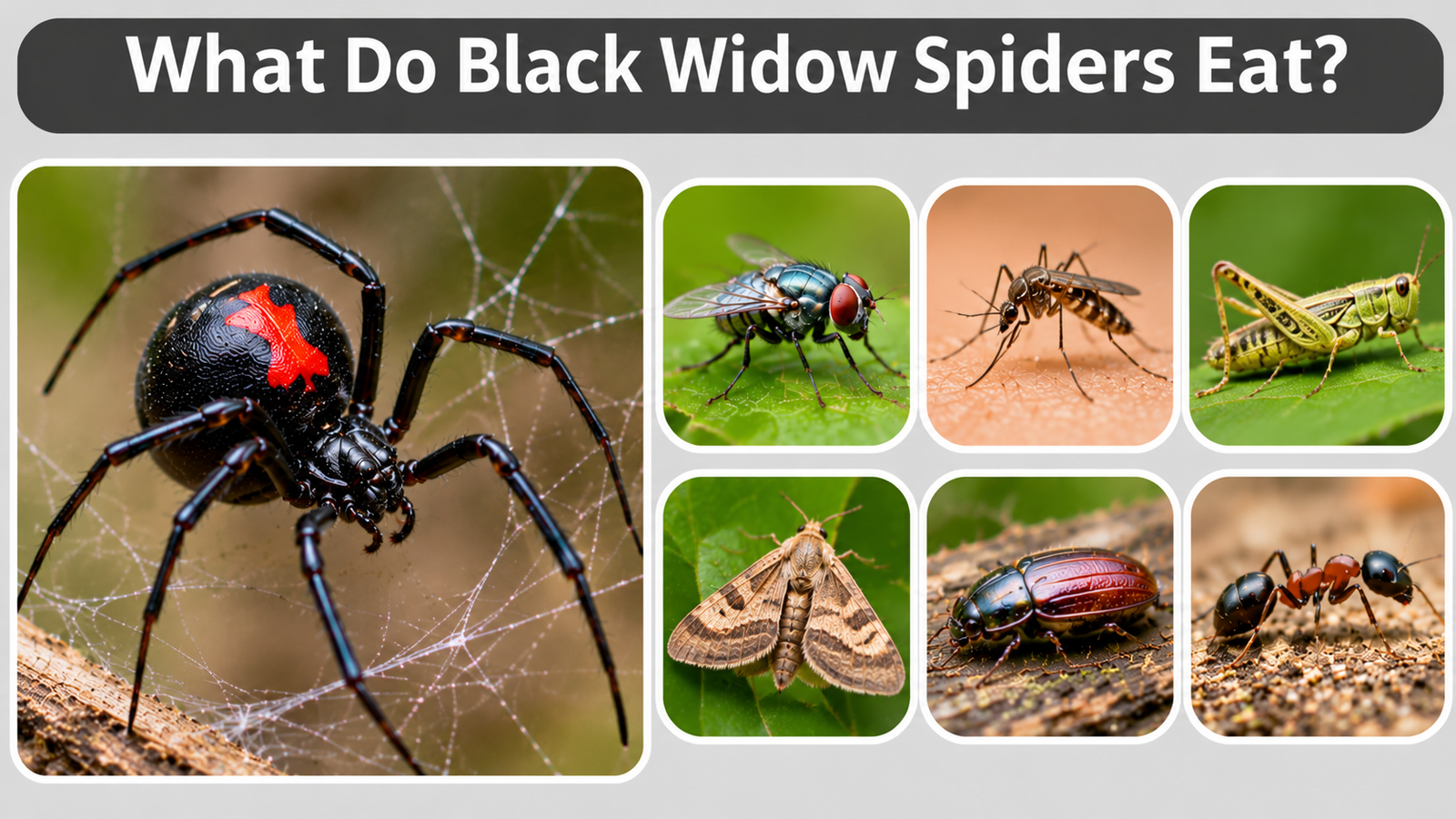
Black widow spiders are fascinating predators known for their shiny black bodies and distinctive red hourglass markings. Despite their dangerous reputation, these spiders play an important role in controlling insect populations. But what do black widow spiders eat in the wild and around homes? Their diet mainly consists of flies, mosquitoes, beetles, crickets, grasshoppers, and other small arthropods caught in their sticky webs. They use venom to immobilize prey and digestive enzymes to turn its tissues into liquid. This guide explores their favorite foods, hunting techniques, feeding habits, and the diets of baby and false black widow spiders.
What Do Black Widow Spiders Eat in the Wild?
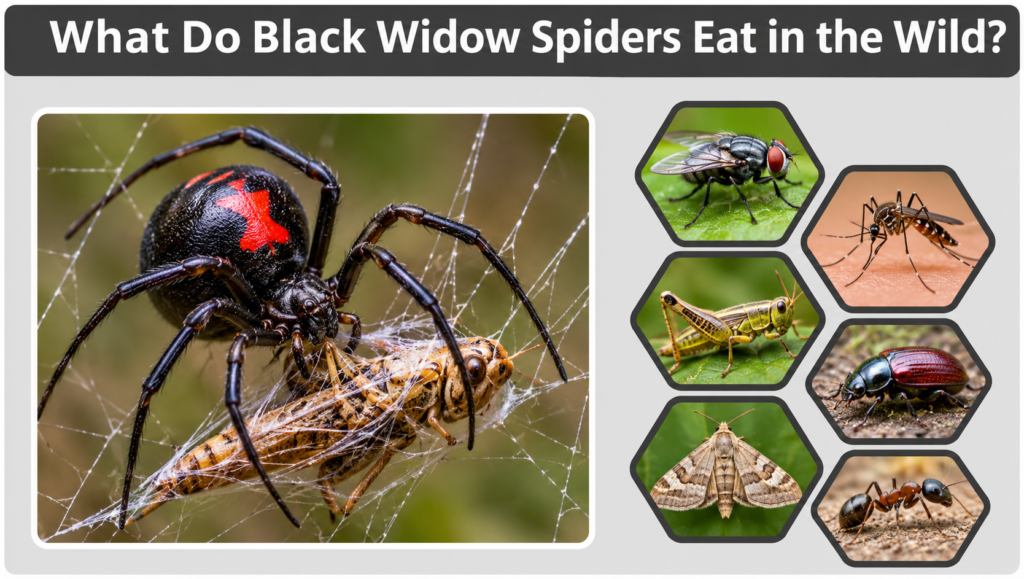
Black widow spiders are carnivorous predators that primarily feed on insects and other small arthropods. They do not actively chase their meals like jumping or wolf spiders. Instead, they construct irregular webs and wait for insects to become entangled. Their diet varies depending on their habitat, seasonal conditions, and prey availability.
Common Insects Black Widow Spiders Eat
Black widow spiders consume many different types of insects.
Their common prey includes:
- Flies: Houseflies and other flying insects frequently become trapped in webs.
- Mosquitoes: Small mosquitoes may become prey when caught in suitable web strands.
- Crickets: These insects provide substantial meals for adult black widows.
- Grasshoppers: Black widows can overpower grasshoppers caught in their silk.
- Beetles: Small and medium-sized beetles are common prey.
- Moths: Flying moths may accidentally enter their webs.
- Ants: Certain ant species, including fire ants, can become prey.
- Cockroaches: Young or appropriately sized cockroaches may be captured.
- Caterpillars: Caterpillars and other soft-bodied insects are occasional food sources.
Black widows are opportunistic feeders, meaning they generally eat suitable prey that becomes trapped rather than selectively hunting one particular species.
Do Black Widow Spiders Eat Other Spiders?
Yes, black widow spiders occasionally consume other spiders.
A smaller spider entering a black widow’s web may become trapped and attacked just like an insect.
Black widows may also display cannibalistic behavior under certain circumstances.
However, their typical diet consists primarily of insects rather than other spiders.
How Do Black Widow Spiders Catch and Eat Their Prey?
Black widow spiders use an effective hunting strategy involving strong silk, venom, and external digestion. Their webs are usually irregular rather than the circular patterns produced by orb-weaving spiders. These structures help them capture insects moving through sheltered spaces near the ground.
Hunting With Sticky Spider Webs
Black widows construct tangled, three-dimensional webs in protected locations.
They commonly build these webs around:
- Woodpiles and fallen logs
- Garages and storage sheds
- Garden rocks and vegetation
- Building foundations
- Dark corners and sheltered spaces
When an insect becomes caught, its movements create vibrations that alert the spider.
The black widow approaches the struggling prey and begins immobilizing it with silk.
Using Venom to Immobilize Prey
Black widow spiders possess venom that affects the nervous systems of their prey.
After securing an insect, the spider bites it and injects venom to help immobilize it.
The spider may wrap the captured insect in additional silk to prevent escape.
Although black widow venom can cause significant symptoms in humans, it primarily serves the spider’s natural predatory needs.
How Black Widow Spiders Digest Food
Black widows cannot chew solid food the way humans do.
Instead, they release digestive fluids that break down the soft tissues of captured prey.
The spider then consumes the liquefied material through its mouth.
This process leaves behind much of the prey’s outer skeleton.
Depending on the prey’s size, the spider may continue feeding for an extended period.
What Do Baby Black Widow Spiders Eat?
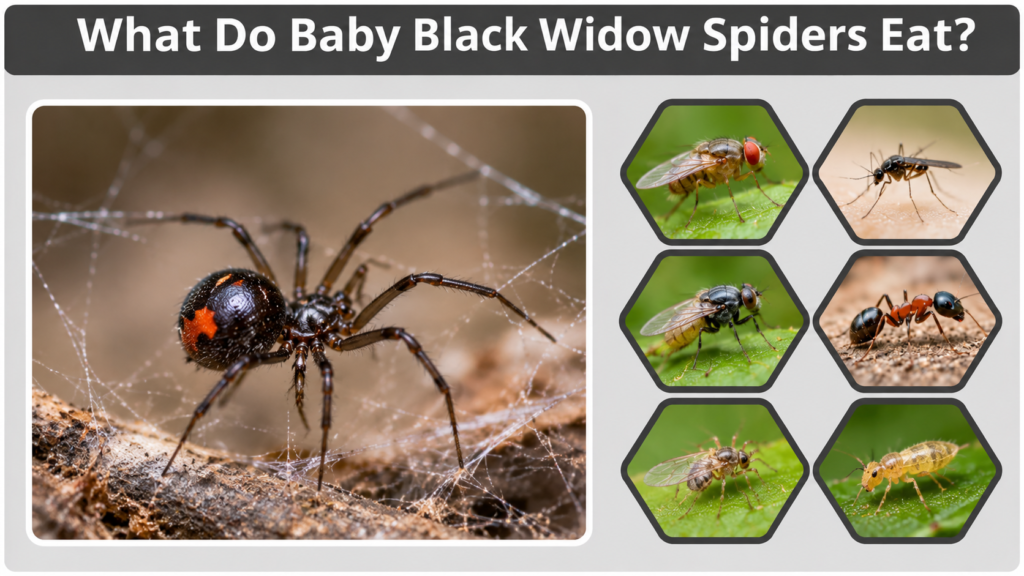
Baby black widow spiders, called spiderlings, have different feeding requirements from mature adults. Their small bodies and developing hunting abilities limit the size of prey they can capture. During their early development, spiderlings rely on stored nutrients before transitioning to small insects and other suitable food sources.
First Foods of Black Widow Spiderlings
Newly hatched spiderlings initially rely on nutrients retained from their eggs.
As they develop, they begin capturing tiny insects and other small arthropods.
Common early prey may include:
- Fruit flies
- Tiny gnats
- Small flies
- Other suitably sized insects
- Small spiders
In laboratory research, western black widow spiderlings have been successfully raised on fruit flies.
As spiderlings grow through successive molts, they become capable of capturing larger prey.
Do Baby Black Widows Eat Each Other?
Yes, cannibalism can occur among black widow spiderlings.
Young spiders sometimes consume their siblings, particularly when food becomes scarce or individuals compete for resources.
However, cannibalism does not necessarily begin immediately after hatching.
Research on western black widows indicates that the behavior tends to develop later in early life.
This behavior can provide nutrients to surviving spiderlings but reduces the number of young that reach maturity.
What Do False Black Widow Spiders Eat?
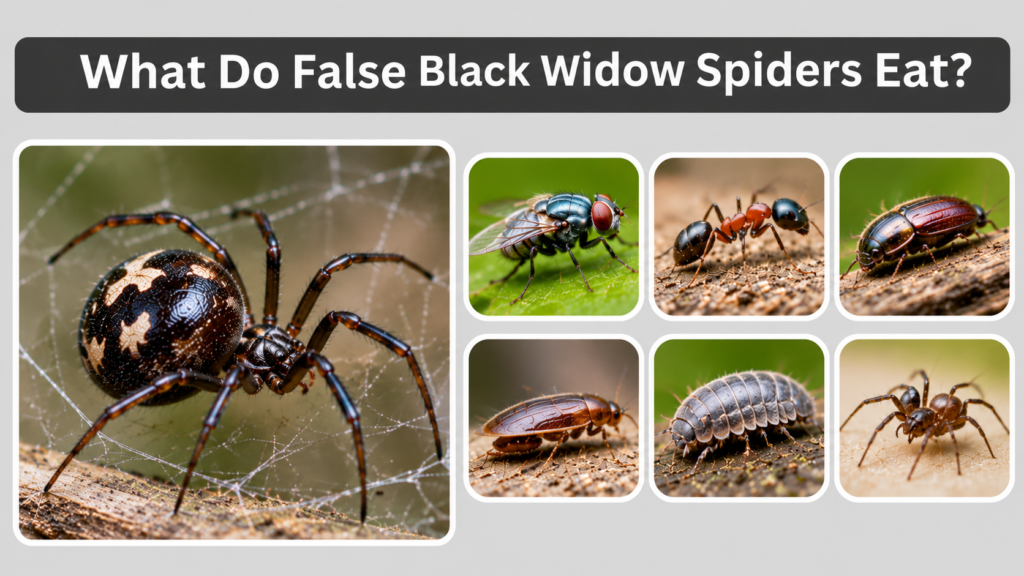
False black widow spiders belong to the genus Steatoda, which is closely related to true black widows. Although they resemble black widows in appearance, they are different spiders. Their feeding behavior is similar because they also construct irregular webs to capture insects and other small invertebrates.
Common Foods of False Black Widows
False black widows feed on a variety of small animals.
Common prey includes:
- Flies and gnats
- Ants
- Small beetles
- Cockroaches
- Woodlice
- Other spiders
The false black widow Steatoda grossa is particularly known for catching crawling insects and woodlice.
Like true black widows, these spiders use venom and digestive enzymes to process captured prey.
Can False Widows Eat True Black Widows?
Interestingly, certain false widow spiders can prey on true black widows.
The species Steatoda grossa has been documented capturing and consuming black widow spiders.
This demonstrates that even venomous spiders can become prey for other spiders.
However, false widow spiders also consume ordinary insects and do not depend exclusively on black widows for food.
How Often Do Black Widow Spiders Eat?
Black widow spiders do not necessarily eat every day. Their feeding frequency depends on prey availability, temperature, body size, and reproductive condition. Because they are sit-and-wait predators, they may experience periods of abundant food followed by long intervals without successful captures.
Do Black Widows Need Food Every Day?
No. Adult black widows can survive without daily meals.
A large captured insect may provide enough nutrients to sustain a spider for an extended period.
During colder weather or periods of low activity, their energy requirements may decrease.
They can adjust their feeding behavior depending on environmental conditions.
How Long Can Black Widows Survive Without Food?
Black widow spiders can survive for weeks and sometimes months without feeding under favorable conditions.
Their ability to endure food shortages depends on age, hydration, temperature, and previous nutritional condition.
However, surviving without food does not mean they remain equally healthy throughout the period.
Juvenile spiders generally require sufficient nutrition to grow and complete their molts.
Do Black Widow Spiders Eat Their Mates?
Black widow spiders are famous for sexual cannibalism, but the behavior is not universal. Some females consume males during or after mating, while others allow their partners to survive. The likelihood varies among widow species and depends on their reproductive behavior and circumstances.
Why Do Female Black Widows Eat Males?
Consuming a male can provide additional nutrients to a female.
In certain widow species, sexual cannibalism may also influence mating success and reproductive outcomes.
However, the behavior is more complicated than simply eating a partner because of hunger.
Many males successfully mate without being consumed.
What Animals Eat Black Widow Spiders?
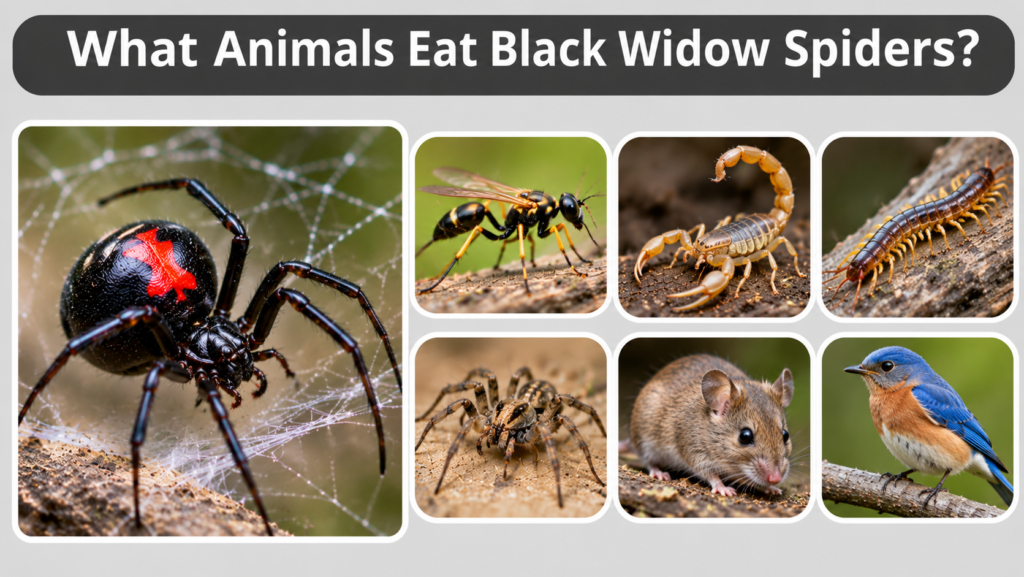
Although black widows are effective predators, they are also part of the food chain. Several animals and other arthropods can prey on them. Their venom does not guarantee protection against natural enemies.
Natural Predators of Black Widow Spiders
Known or potential predators include:
- Mud dauber wasps: Some species capture spiders to provision their nests.
- Spider-hunting wasps: Certain species paralyze spiders for their larvae.
- Scorpions: May prey on black widows in suitable encounters.
- Centipedes: Can attack spiders and other arthropods.
- Other spiders: Some species capture and consume widow spiders.
- Small mammals: Occasionally consume spiders when opportunities arise.
Natural predation helps influence black widow populations.
Do Wolf Spiders Eat Black Widows?
Wolf spiders are active hunters that primarily feed on insects and other small invertebrates.
They sometimes eat other spiders, but black widows are not a typical food source.
An opportunistic encounter could lead to predation, especially involving a vulnerable young spider, but there is limited evidence that wolf spiders regularly hunt adult black widows.
They should not be considered a reliable natural control method for widow infestations.
FAQs
1. What Is a Black Widow Spider’s Favorite Food?
Black widow spiders do not have one universal favorite food. They commonly eat flies, crickets, grasshoppers, beetles, moths, and other arthropods caught in their webs. Their diet largely depends on prey availability and the size of insects entering their hunting area.
2. Do Black Widow Spiders Eat Mosquitoes?
Yes, black widow spiders can eat mosquitoes when the insects become trapped in their webs. However, mosquitoes are only one part of their varied diet. Black widows also consume larger insects such as crickets, beetles, and grasshoppers.
3. What Do Baby Black Widow Spiders Eat?
Baby black widows initially depend on stored nutrients before feeding on tiny insects such as fruit flies and gnats. They may also consume other small spiders. As they grow, their hunting abilities improve, allowing them to capture increasingly larger prey.
4. Do Black Widow Spiders Eat Cockroaches?
Yes, black widow spiders can capture and eat cockroaches. Smaller cockroaches are particularly suitable prey, although larger ones may also become trapped. The spider uses silk and venom to immobilize the insect before digesting its tissues externally.
5. Do Black Widow Spiders Eat Other Black Widows?
Yes, black widow spiders sometimes exhibit cannibalism. Spiderlings may consume siblings, and adult females occasionally eat males during mating. However, cannibalism is not a constant behavior, and black widows primarily depend on insects and other captured arthropods for food.
