Small black spiders are commonly found in homes, gardens, windows, and outdoor spaces throughout the United States. Some have tiny white spots, while others feature red markings, fuzzy bodies, or unusually long legs. Many belong to the jumping spider family and move quickly when hunting insects. Although their appearance sometimes causes concern, most small black spiders are harmless to humans and provide natural pest control. Understanding their identification features, behavior, habitats, and potential bite risks can help you recognize different species and manage unwanted spiders safely.
What Are Small Black Spiders?
Small black spiders are not a single species but a group of spiders that share dark coloring and relatively compact bodies. Their appearance ranges from shiny black to charcoal gray or dark brown. Some have noticeable white or red markings, while others have uniform coloring. They may live indoors or outdoors, depending on their species, preferred habitat, and available prey.
Common Characteristics of Small Black Spiders
Most small black spiders have recognizable physical features that can help distinguish them from other household arthropods.
- Body size: Frequently between 2 and 15 millimeters, although some species grow larger.
- Color: Black, charcoal gray, or very dark brown.
- Legs: Eight legs, ranging from short and sturdy to long and slender.
- Markings: White dots, red patches, stripes, or subtle pale patterns.
- Body texture: Smooth, glossy, hairy, or fuzzy.
- Movement: Walking, running, climbing, or jumping.
- Habitat: Walls, windows, gardens, basements, and sheltered outdoor spaces.
Why Do Small Black Spiders Look Different?
Small black spiders vary because they belong to different families and species. Jumping spiders often have compact, hairy bodies, while cobweb spiders typically have smoother, rounded abdomens.
Age and sex also influence appearance. Some juvenile spiders display brighter markings that change as they mature. Lighting can make dark brown spiders appear completely black.
7 Common Types of Small Black Spiders
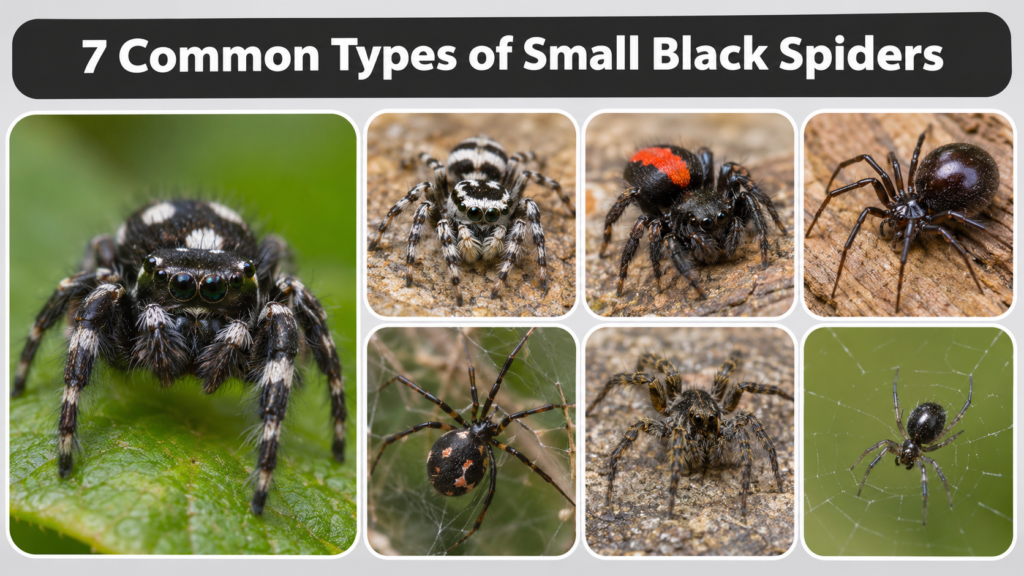
Several spider species have dark bodies and small sizes, making them difficult to distinguish without careful observation. Some actively hunt insects, while others remain inside webs. Identifying their body shape, markings, and movement provides useful clues. The following examples include common house spiders, jumping spiders, and other small species found in different regions.
1. Bold Jumping Spider (Phidippus audax)
The bold jumping spider is one of the most recognizable small black spiders in North America. It has a compact, hairy body with white, yellow, or orange spots on its abdomen.
Adults often have metallic green mouthparts and large forward-facing eyes. These spiders commonly appear on walls, windows, fences, and garden plants. They actively hunt insects instead of constructing webs to capture prey.
2. Zebra Jumping Spider (Salticus scenicus)
Zebra jumping spiders have small black or dark brown bodies decorated with contrasting white stripes. Their striped appearance resembles the markings of a zebra.
They are commonly found around sunny walls, windows, fences, and outdoor structures. These spiders move in short, sudden bursts and jump onto small insects. They occur across parts of North America and Europe.
3. Red-Backed Jumping Spider (Phidippus johnsoni)
Red-backed jumping spiders have dark bodies with noticeable red markings on the abdomen. Their bright coloring makes them easy to distinguish from many other jumping spiders.
They are particularly common in western North America, including California. These spiders hunt small insects in gardens, shrubs, and open sunny spaces. Their bites are usually not medically serious.
4. False Black Widow Spider (Steatoda grossa)
False black widow spiders have glossy, dark brown to purplish-black abdomens and relatively slender legs. Their rounded bodies may resemble those of true black widows.
They construct irregular webs in garages, basements, sheds, and sheltered corners. Although their bites can cause discomfort, they are generally less medically significant than true black widow bites.
5. Juvenile Black Widow Spider (Latrodectus Species)
Young black widow spiders may appear small and dark, with white, red, orange, or yellow markings. Their coloration changes as they develop.
They typically occupy irregular webs in protected spaces. Unlike many harmless household spiders, black widows possess medically significant venom. Unidentified widow-like spiders should not be handled.
6. Small Wolf Spiders (Lycosidae)
Young or naturally small wolf spider species can appear black, gray, or dark brown. Their bodies are usually hairy, with strong legs adapted for running.
Wolf spiders hunt insects across lawns, gardens, and floors rather than using capture webs. They occasionally enter homes through doors or structural openings but generally avoid human contact.
7. Money Spiders (Linyphiidae)
Money spiders are tiny web-building spiders that often have dark, rounded bodies and relatively thin legs. Some species appear almost completely black.
They frequently inhabit grass, soil, low vegetation, and garden spaces. Many build delicate sheet-shaped webs to capture small insects. Money spiders are particularly familiar in the United Kingdom and other temperate regions.
How to Identify Small Black Spiders by Their Markings
Body markings are among the most useful clues when identifying small black spiders. Some have distinctive white spots, while others display red patches or stripes. However, markings alone cannot always confirm a species because juveniles and adults may look different. Body structure, location, and movement should also be considered during identification.
Small Black Spiders With White Dots
Small black spiders with white dots are often bold jumping spiders. Their dark, hairy bodies typically display one prominent pale marking and two smaller spots on the abdomen.
However, juvenile black widows can also have pale markings. A compact spider with large forward-facing eyes and active jumping behavior is more consistent with a jumping spider than a widow.
Small Black Spiders With Red on Their Back
A small black spider with a red patch on its upper abdomen may be a red-backed jumping spider or a juvenile spider of another species.
Black widow spiders can also have red markings, but the characteristic hourglass of adult female North American black widows is generally found underneath the abdomen. Avoid touching unidentified spiders with red markings.
Small Black Fuzzy Spiders That Jump
Small fuzzy black spiders that jump are frequently members of the jumping spider family, Salticidae. Their compact bodies, prominent eyes, and short bursts of movement distinguish them from many web-building spiders.
These spiders rely on excellent vision to detect prey. They use silk safety lines when jumping and commonly hunt during daylight hours.
Where Are Small Black Spiders Commonly Found?
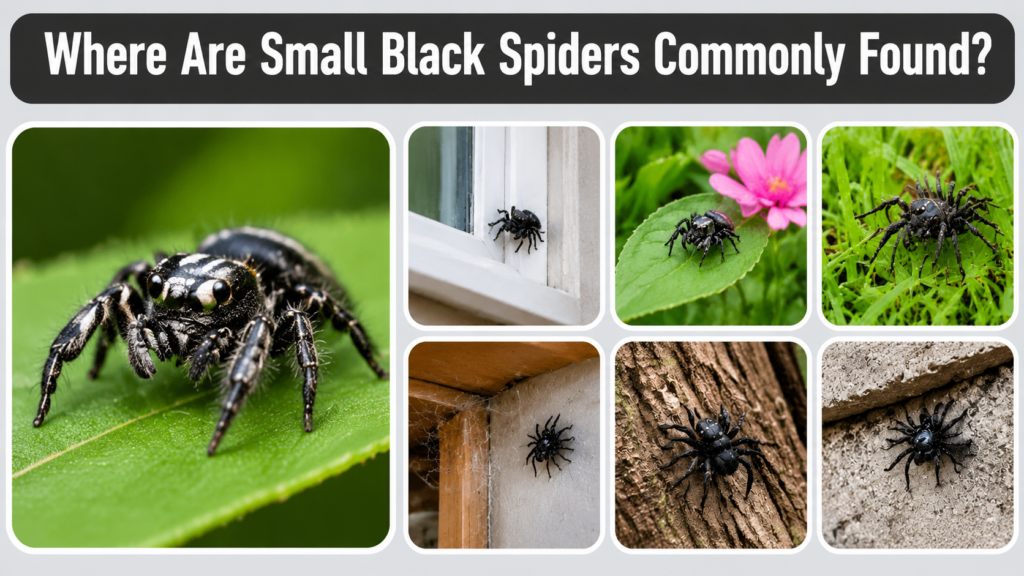
Small black spiders occupy a wide range of environments, from household windows to outdoor vegetation. Their distribution varies according to climate, species, and local habitat conditions. Some prefer sunny surfaces where insects gather, while others remain in dark corners or sheltered webs. Finding a spider indoors does not necessarily mean it has established a breeding population.
Small Black House Spiders
Inside homes, small black spiders commonly appear around windows, doors, ceilings, and storage areas. Jumping spiders are especially noticeable near sunlit windows because these locations attract insects.
Web-building spiders may remain in corners, garages, or basements. The availability of food and suitable hiding places influences how often they occur indoors.
Small Black Spiders in Ohio, Michigan, and Florida
In Ohio and Michigan, homeowners frequently encounter dark jumping spiders, small wolf spiders, and various cobweb-building species. Bold jumping spiders are recognizable by their sturdy bodies and pale abdominal markings.
Florida and Texas support many jumping spider species, along with widow spiders and other dark-colored spiders. California is also home to red-backed jumping spiders.
Small Black Spiders in Gardens and Grass
Gardens and lawns provide excellent habitats because they support abundant insects and offer shelter beneath leaves, stones, and vegetation.
Small wolf spiders actively hunt along the ground, while jumping spiders explore flowers, stems, and fences. Money spiders create delicate webs near grass and low-growing plants.
Are Small Black Spiders Dangerous?
Most small black spiders are not dangerous to humans. Although many species possess venom used to capture insects, their bites rarely cause serious medical problems. Some spiders cannot easily pierce human skin, while others bite only when trapped or disturbed. Nevertheless, identifying potentially dangerous species is important, especially when a spider resembles a black widow.
Do Small Black Spiders Bite?
Small black spiders can bite when handled roughly or pressed against the skin. However, most avoid human contact and attempt to escape when threatened.
A bite from a typical jumping spider may cause temporary discomfort, mild redness, or swelling. Severe symptoms are unusual. Seek medical attention for suspected black widow bites or significant reactions.
Are Small Black Jumping Spiders Poisonous?
Jumping spiders are venomous, but their venom is primarily used to subdue small prey. They are not considered medically dangerous to humans.
They also help reduce populations of flies, mosquitoes, and other small insects. Their presence around gardens and windows can therefore be beneficial.
Why Are Small Black Spiders in My House?
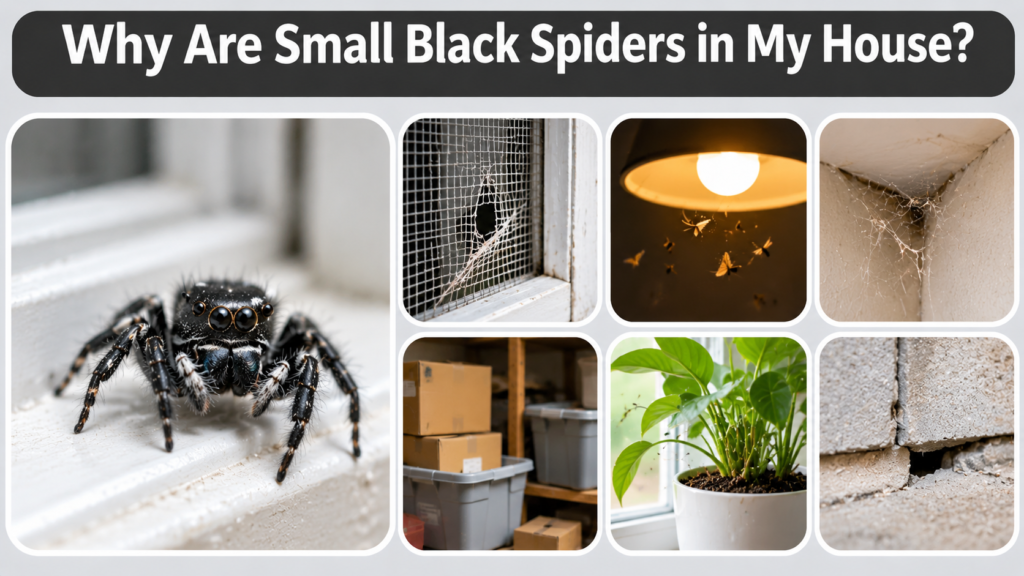
Small black spiders may enter homes while searching for insects, shelter, or mates. Some accidentally wander indoors through open doors and windows, while others establish webs in undisturbed spaces. Increased spider sightings may reflect seasonal changes or the availability of prey rather than an infestation.
What Attracts Small Black Spiders Indoors?
Several household conditions can encourage spider activity.
- Open doors and damaged window screens.
- Cracks around foundations and window frames.
- Flying insects attracted to indoor lighting.
- Cluttered storage rooms and garages.
- Undisturbed corners and sheltered spaces.
- Houseplants that support small insect populations.
Reducing these conditions helps limit unwanted spider encounters.
How to Get Rid of Small Black Spiders Safely
The most effective approach is to prevent entry and reduce the insects that attract spiders. Seal structural gaps, repair screens, and regularly remove unused webs from accessible indoor locations.
Harmless spiders can often be captured gently using a container and stiff paper before being relocated outdoors. Avoid handling unidentified spiders directly. If suspected black widows are repeatedly discovered, consult a qualified pest control professional.
FAQs
1. What Are the Small Black Spiders in My House?
Small black spiders found indoors are often jumping spiders, cobweb spiders, or small wolf spiders. Bold jumping spiders are particularly recognizable because of their black bodies, pale spots, and quick movements. Accurate identification depends on appearance, behavior, and geographic location.
2. Are Small Black Spiders With White Spots Dangerous?
Most small black spiders with white spots, especially bold jumping spiders, are harmless to humans. However, some juvenile black widows also display pale markings. Avoid handling unidentified spiders and examine their overall body shape and behavior for identification.
3. Why Do Small Black Spiders Jump?
Jumping spiders leap to capture insects, escape threats, and move between surfaces. Their excellent vision helps them judge distances, while their specialized leg movements allow accurate jumps. They usually attach a silk safety line before jumping.
4. How Do I Get Rid of Small Black Spiders in My House?
Remove accessible webs, seal entry points, repair damaged screens, and reduce indoor insects. Keep storage areas organized and prevent unnecessary clutter. Harmless spiders can be relocated outdoors without direct handling.
5. Can Small Black Spiders Live on Houseplants?
Yes. Small jumping spiders and other hunting spiders may visit houseplants to feed on insects. They generally do not damage the plants themselves. However, extremely tiny organisms accompanied by fine webbing and leaf damage could be spider mites rather than true spiders.
