
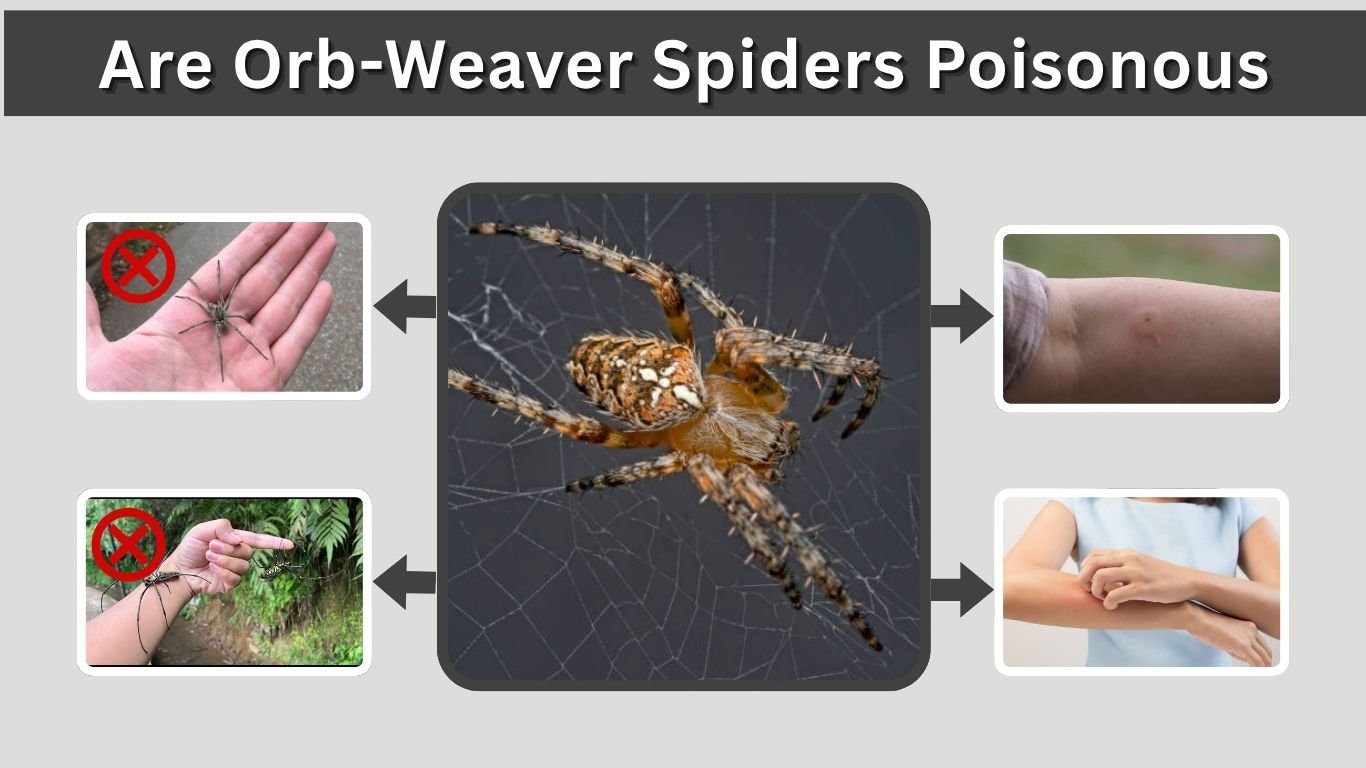
Orb-weaver spiders are not poisonous, but nearly all species are venomous. They use venom to immobilize flies, moths, mosquitoes, and other small prey caught in their circular webs. However, the venom of common orb-weavers is not considered medically significant to humans. These spiders are shy, rarely bite, and usually retreat when disturbed. Even large garden, spotted, marbled, furrow, and golden orb-weavers are generally harmless when left alone.
Are Orb-Weaver Spiders Venomous or Poisonous?
“Venomous” and “poisonous” are not interchangeable terms. A venomous animal injects toxins through a bite or sting, while a poisonous animal causes harm when touched or swallowed. Orb-weavers have fangs and venom glands, so they are technically venomous rather than poisonous.
Their venom is designed for small insects, not people or large animals. Orb-weaver spiders do not have the medically important venom associated with spiders such as widows or recluses.
| Question | Answer |
| Are orb-weavers poisonous? | No |
| Are they venomous? | Yes |
| Is their venom dangerous to humans? | Generally no |
| Can they bite? | Yes, but bites are uncommon |
| Should they be killed? | Usually not; they control insects |
Are Orb-Weaver Spiders Poisonous to Humans?
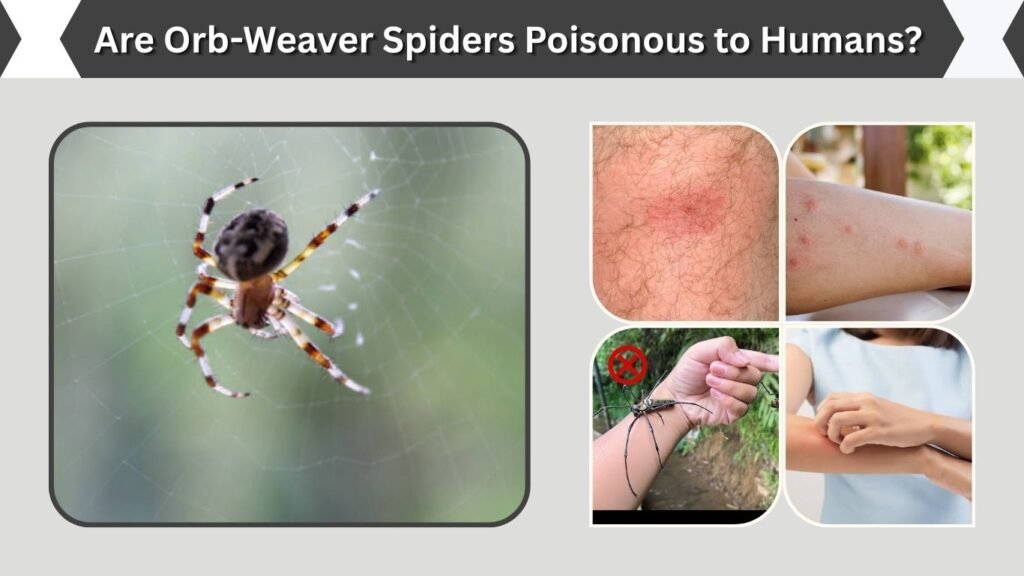
Orb-weavers are not considered dangerous to humans. Although they can inject venom, most species have relatively small fangs and mild venom. They also prefer escaping, dropping from the web, or remaining still rather than confronting people.
A bite usually occurs only when a spider is:
- Trapped against the skin
- Accidentally squeezed
- Caught inside clothing or gloves
- Handled or pressed while defending itself
Garden orb-weavers are described as reluctant to bite. Reported symptoms are generally limited to mild local pain, numbness, redness, or swelling, although occasional nausea or dizziness has been reported.
Orb-Weaver Bite Symptoms
Possible symptoms include pain or a pinching sensation at the bite site, followed by mild redness, itching, tenderness, or swelling. Symptoms are often comparable to a minor insect sting and should improve without serious complications.
A person’s reaction can vary depending on the bite location, the amount of venom injected, skin sensitivity, and whether the wound becomes infected. It is also difficult to confirm a spider bite unless the spider was seen biting, because many skin irritations resemble spider bites.
How to Treat an Orb-Weaver Bite
Wash the affected area with soap and water. Place a cold pack wrapped in a cloth over the area for approximately 10 to 15 minutes at a time. Avoid scratching or squeezing the bite.
Seek medical advice when symptoms become severe, continue worsening, or include spreading redness, intense pain, signs of infection, dizziness, or vomiting. Difficulty breathing, facial swelling, collapse, or another severe allergic reaction requires emergency care.
Are All Types of Orb-Weavers Harmless?
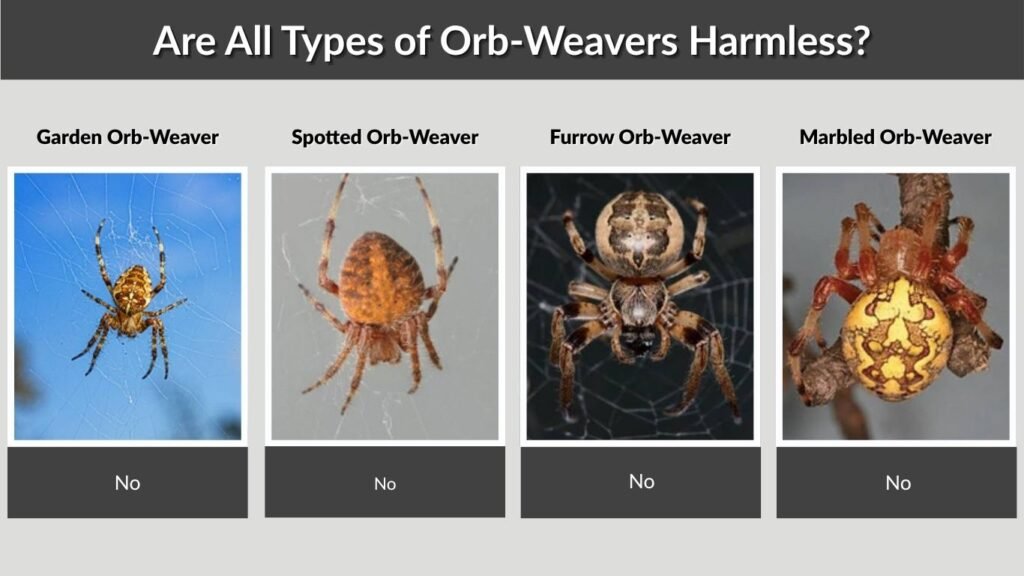
The orb-weaver group includes thousands of species with different sizes, colors, and body shapes. Common garden species are not considered medically important, despite their sometimes intimidating appearance.
Garden Orb-Weaver
Garden orb-weavers build large, wheel-shaped webs between shrubs, trees, fences, and buildings. They possess venom but are reluctant to bite. When bites occur, symptoms are normally negligible or limited to mild localized discomfort.
Spotted Orb-Weaver
Spotted orb-weavers are large, often orange, brown, reddish, or gray spiders. They usually hide during the day and rebuild their webs after sunset. They can bite if trapped or handled but are not considered dangerous to people.
Furrow Orb-Weaver
Furrow orb-weavers commonly build webs near porches, bridges, windows, outdoor lights, and buildings close to water. Their venom subdues insects, but their bites are not known to cause serious effects in healthy humans.
Marbled Orb-Weaver
The marbled orb-weaver may have a bright orange, yellow, white, or intricately patterned abdomen. Its dramatic coloration sometimes causes people to assume it is highly toxic. However, it is a shy orb-weaver whose bite is usually no more serious than that of other common garden species.
Spiny Orb-Weaver
Spiny-backed orb-weavers have broad abdomens covered with prominent spine-like projections. The spines are a defensive body feature and do not inject venom. These small spiders may bite if squeezed, but they pose little risk to humans.
Golden Silk Orb-Weaver
Golden silk orb-weavers are among the largest web-building spiders. Their impressive size and strong golden-colored silk can make them appear threatening. Nevertheless, they are not aggressive, and their venom is not considered medically significant to most people.
Cross Orb-Weaver
The cross orb-weaver, or European garden spider, is identified by the pale cross-shaped markings on its abdomen. The species possesses venom for paralyzing insects but is regarded as harmless to people.
| Orb-weaver type | Dangerous to humans? | Typical defensive behavior |
| Garden orb-weaver | No | Retreats or drops from web |
| Spotted orb-weaver | No | Hides during disturbance |
| Furrow orb-weaver | No | Escapes into a web retreat |
| Marbled orb-weaver | No | Remains hidden or retreats |
| Spiny orb-weaver | No | Relies on body spines |
| Golden orb-weaver | Generally no | Avoids contact |
| Cross orb-weaver | No | Flees when disturbed |
Are Orb-Weaver Spiders Poisonous to Dogs and Cats?
Orb-weavers are not normally considered a serious poisoning threat to dogs or cats. Their venom is delivered through their fangs rather than released from their bodies, so simply touching a spider does not poison a pet.
A pet may still experience localized pain, redness, or swelling after any spider bite. Bites are most likely when a curious cat or dog paws at, mouths, or traps the spider. Veterinary guidance is advisable when a witnessed bite causes significant swelling, weakness, vomiting, breathing difficulty, unusual behavior, or persistent pain. Any bite can also become irritated or infected.
Correct identification matters because a dark or brown spider found near a pet may not actually be an orb-weaver. When possible, take a clear photograph without handling the spider and show it to a veterinarian or qualified identification service.
Why Orb-Weavers Are Beneficial
Orb-weavers provide natural insect control around gardens and homes. Their sticky webs capture mosquitoes, moths, flies, beetles, wasps, and many other flying insects. They do not damage plants, feed on household materials, or establish indoor infestations.
Orb-weavers are also part of the food web. They consume insects while providing food for birds and other predators. Removing them unnecessarily can reduce the number of beneficial predators in a garden.
How to Safely Move an Orb-Weaver
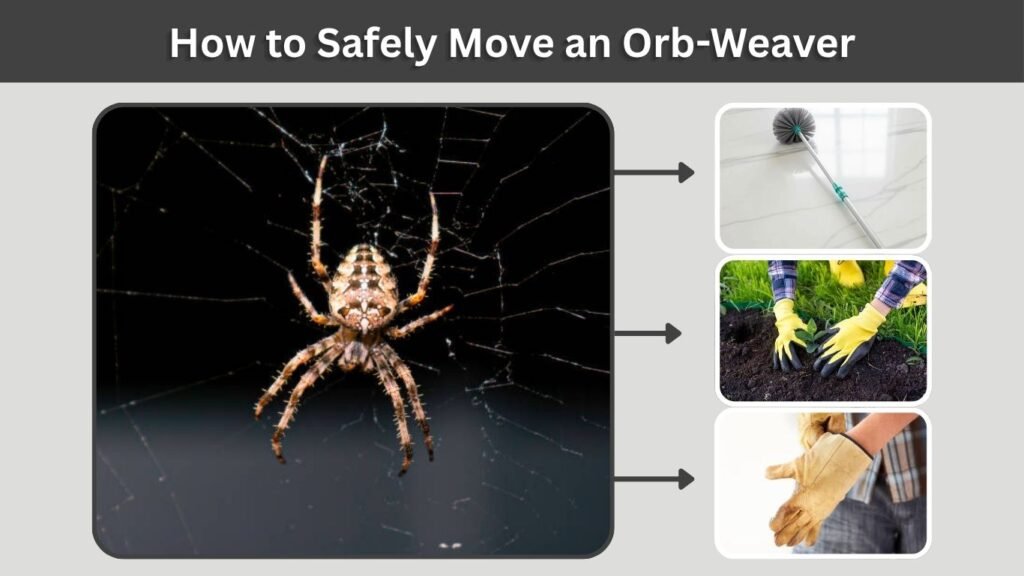
Most orb-weavers can remain outdoors without creating a problem. A spider that builds across a doorway or walkway can often be encouraged to relocate without touching it.
Remove several support strands from one side of the web with a long stick or broom. The spider will usually leave or rebuild in a less disturbed location. Wear gloves when working around dense plants, sheds, furniture, or stored outdoor equipment.
Avoid grabbing the spider, spraying it with chemicals, or crushing it against the skin. Pesticide treatment is rarely necessary for a single outdoor orb-weaver.
FAQs
How poisonous are orb-weaver spiders?
Orb-weaver spiders are not poisonous. They are venomous because they inject venom through their fangs, but their venom is primarily adapted to insects and is not considered medically significant to most humans.
Do orb-weaver spiders bite people?
They can bite, but bites are uncommon. Orb-weavers normally flee or remain motionless when disturbed. Most bites happen when a spider is accidentally trapped against the skin or handled roughly.
Can an orb-weaver bite kill a human?
Common orb-weavers are not known for causing fatal bites in humans. Their bites usually produce mild, temporary symptoms such as localized pain, redness, itching, or swelling. Severe symptoms should still receive medical attention.
Are orange, yellow, or brown orb-weavers poisonous?
Color does not indicate that an orb-weaver is poisonous or dangerously venomous. Orange marbled orb-weavers, yellow garden spiders, and brown spotted orb-weavers may look dramatic, but common species are generally harmless to people.
Should I remove orb-weaver spiders from my garden?
Removal is usually unnecessary. Orb-weavers help control flying insects and do not damage plants. Relocation may be useful when a web blocks a doorway, path, play area, or frequently used outdoor space.
