
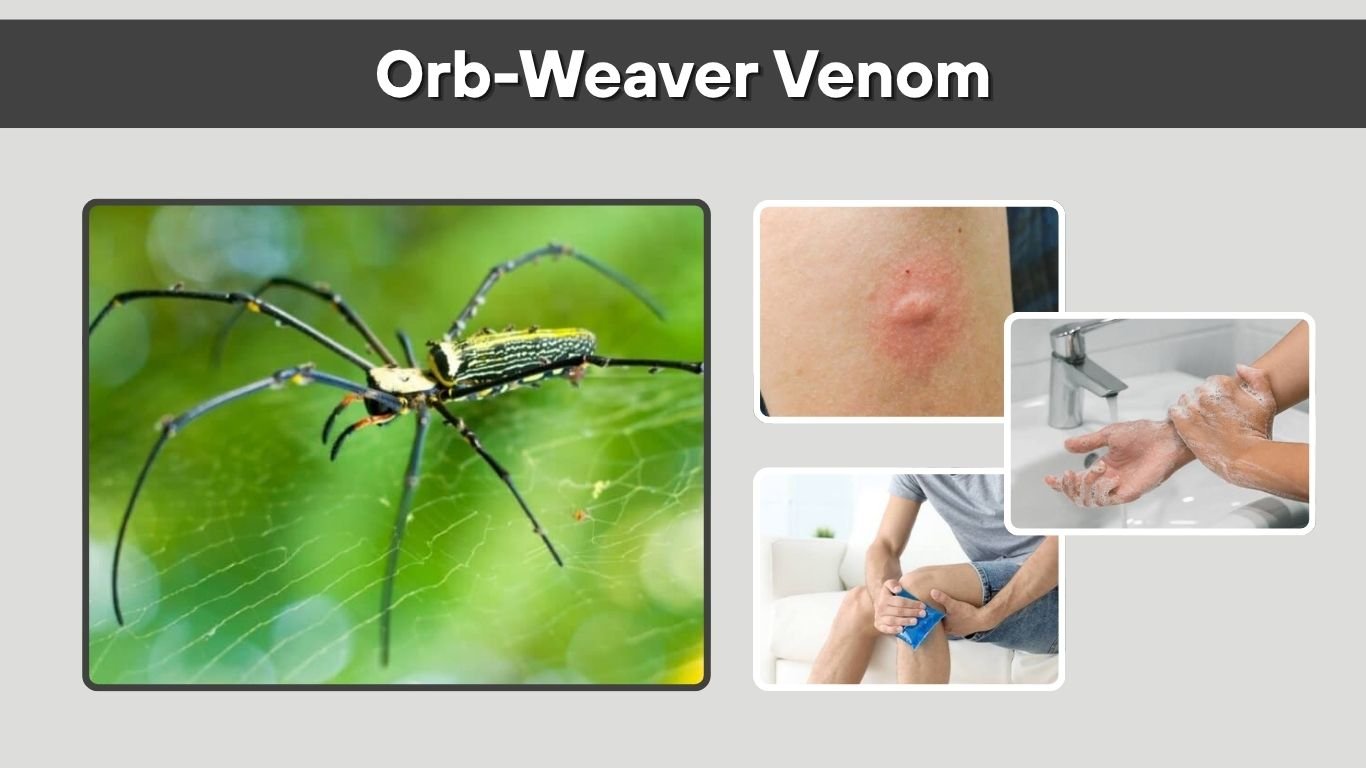
Orb-weaver spiders are venomous, but most are not dangerous to humans. Their venom is adapted to paralyze insects caught in their circular webs, not to defend against people. Garden, golden, marbled, spotted, cross, furrow, tropical, and spiny orb-weavers may bite when trapped or roughly handled, but bites are uncommon. When they occur, symptoms are generally limited to temporary pain, redness, numbness, or swelling.
Are Orb-Weaver Spiders Venomous?
Most orb-weavers have venom glands connected to their fangs. They inject venom into captured insects before wrapping or eating them. Although the terms are often confused, these spiders are venomous rather than poisonous.
Venomous vs. Poisonous
A venomous animal delivers toxins through a bite or sting. A poisonous animal causes harm when touched, eaten, or absorbed. Therefore, an orb-weaver cannot poison someone merely through skin contact.
| Question | Answer |
| Do orb-weavers have venom? | Most species do |
| Is their venom dangerous to humans? | Generally no |
| Can they bite? | Yes, but bites are uncommon |
| Can touching one poison you? | No |
| Do they use venom defensively? | Mainly when trapped or threatened |
Are All Orb-Weavers Venomous?
Nearly all familiar orb-weavers have venom, but there is an important exception. Hackled orb-weavers in the family Uloboridae lack venom glands. They capture prey with specialized fuzzy silk and use silk wrapping rather than venom to overpower it.
What Type of Venom Do Orb-Weavers Have?
Orb-weaver venom is not one single substance. It is a complex biological mixture that may contain peptides, proteins, enzymes, salts, and small organic molecules. Its exact composition differs among species.
How the Venom Affects Prey
Many spider-venom components target the nervous systems of arthropods. They can interfere with ion channels or chemical communication between nerve and muscle cells, rapidly weakening or immobilizing prey. Spider venoms may also contain enzymes that help begin breaking down tissues for digestion.
This insect-focused activity explains why venom that works efficiently against a fly, moth, or beetle may produce only mild effects in a much larger human.
What Type of Venom Does the Golden Orb-Weaver Have?
Golden orb-weaver venom contains several biologically active compounds rather than one universally named venom type. Research on the Joro orb-weaver formerly called Nephila clavata has identified polyamine toxins and insecticidal peptides that affect receptors and sodium or potassium channels in arthropod nerve cells.
These discoveries are scientifically interesting, but they do not mean that golden orb-weavers are medically dangerous. Golden orb-weavers are reluctant to bite, and reported effects are usually mild and localized.
Is Orb-Weaver Venom Dangerous to Humans?
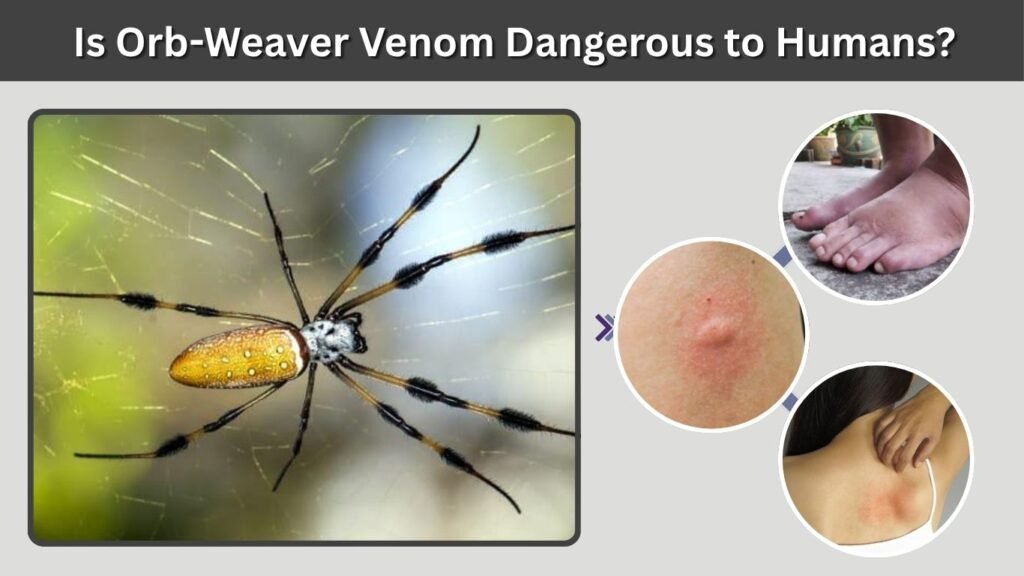
The venom of common orb-weaver species is not considered medically significant for most healthy people. The spider generally relies on its web and escape behavior rather than aggression.
Why Bites Are Uncommon
Orb-weavers spend most of their time in or near their webs. When disturbed, they may:
- Drop to the ground
- Run toward a web retreat
- Remain still
- Vibrate or shake the web
- Rebuild somewhere else
Bites are most likely when a spider is squeezed in clothing, trapped against bare skin, handled, or disturbed while guarding an egg sac. Pennsylvania State University notes that even defensive bites from marbled and banded garden orb-weavers would probably cause no more than mild effects.
Orb-Weaver Bite Symptoms
Possible symptoms include:
- Immediate pinching or mild pain
- Redness around the bite
- Localized swelling
- Temporary numbness or tenderness
- Itching or warmth
Occasional nausea or dizziness has been reported after some garden orb-weaver bites, but serious systemic illness is unusual.
How Venomous Are Different Orb-Weavers?
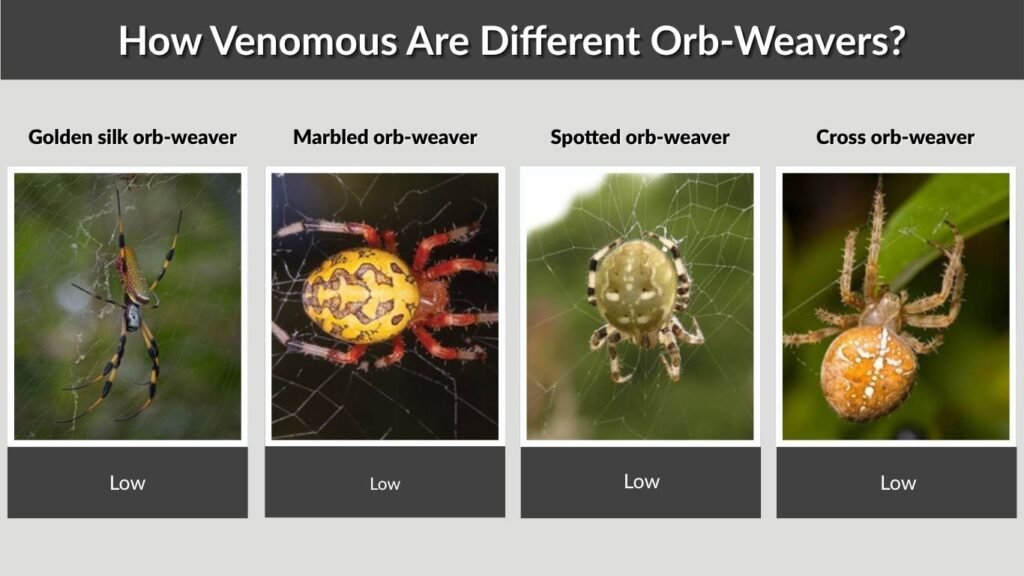
Size, bright coloration, and abdominal spines do not indicate severe venom. Most commonly encountered orb-weavers have similar safety profiles.
| Orb-weaver type | Venomous? | Risk to humans |
| Golden silk orb-weaver | Yes | Low |
| Marbled orb-weaver | Yes | Low |
| Spotted orb-weaver | Yes | Low |
| Cross orb-weaver | Yes | Low |
| Furrow orb-weaver | Yes | Low |
| Spiny-backed orb-weaver | Yes | Low |
| Garden orb-weaver | Yes | Low |
| Hackled orb-weaver | No | Very low |
Golden and Golden Silk Orb-Weavers
Golden orb-weavers are large and build strong webs with yellowish silk. Despite their intimidating size, they are reluctant to bite. A bite may cause temporary localized pain, numbness, or swelling.
Marbled and Spotted Orb-Weavers
Marbled orb-weavers may be bright orange, yellow, white, or brown, while spotted orb-weavers often have reddish or brown bodies. Their coloration does not indicate dangerous venom. Bites normally happen only through accidental trapping or direct handling.
Cross, Furrow, and Garden Orb-Weavers
Cross orb-weaver bites have been associated with pain, redness, and swelling, with systemic effects reported less commonly. Furrow and garden orb-weavers are similarly defensive rather than aggressive and usually avoid human contact.
Spiny Orb-Weavers
The pointed projections on a spiny orb-weaver’s abdomen are defensive structures, not venomous stingers. The spider delivers venom only through its small fangs and poses little risk to people.
What to Do After an Orb-Weaver Bite
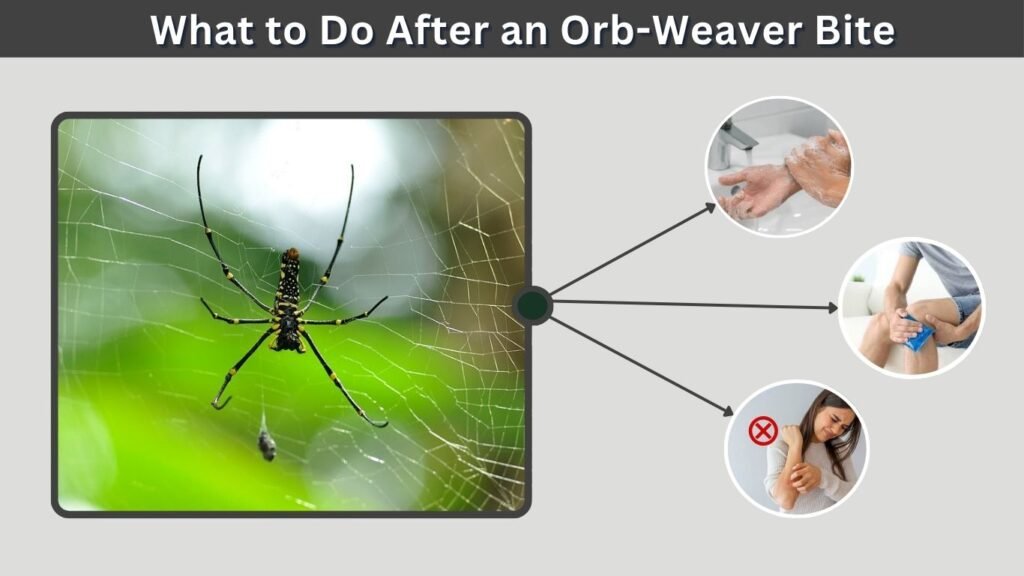
Most suspected orb-weaver bites can be managed with basic wound care. However, many skin lesions blamed on spiders have other causes, especially when no spider was observed biting.
Basic First Aid
Clean the area gently with soap and water. Hold a cool, damp cloth or wrapped cold pack over it for about 15 minutes to reduce pain and swelling. Elevating the affected limb may also help. Avoid cutting, squeezing, or attempting to extract venom from the wound.
When to Seek Medical Care
Obtain medical advice when pain or swelling continues to worsen, redness spreads, the wound begins draining, or symptoms persist. Seek urgent help for difficulty breathing, facial or throat swelling, fainting, extensive skin changes, or another severe reaction.
Extra caution is sensible for young children, people with serious allergies, and anyone bitten by a spider that was not confidently identified.
FAQs
What is the most venomous orb-weaver?
No common orb-weaver is regarded as a major medical threat to humans. Venom potency varies by prey species and laboratory test, so naming one “most venomous” orb-weaver would not accurately predict danger to people.
Is a golden orb-weaver venomous?
Yes. Golden orb-weavers have venom that helps immobilize insects. However, they are reluctant to bite humans, and their venom generally causes only mild, temporary local symptoms.
Is a marbled orb-weaver venomous to humans?
A marbled orb-weaver can inject venom, but it is not considered medically dangerous. A defensive bite would most likely cause localized discomfort similar to a minor bee sting.
Can orb-weaver venom kill a person?
Common orb-weavers are not associated with fatal human envenomation. Severe reactions are still possible after almost any bite because of allergies, infection, or incorrect spider identification.
Do orb-weavers inject venom every time they bite?
Not necessarily. Spiders can sometimes deliver a dry bite with little or no venom. The amount injected may depend on whether the bite is used to capture prey or as a last defensive response.
