
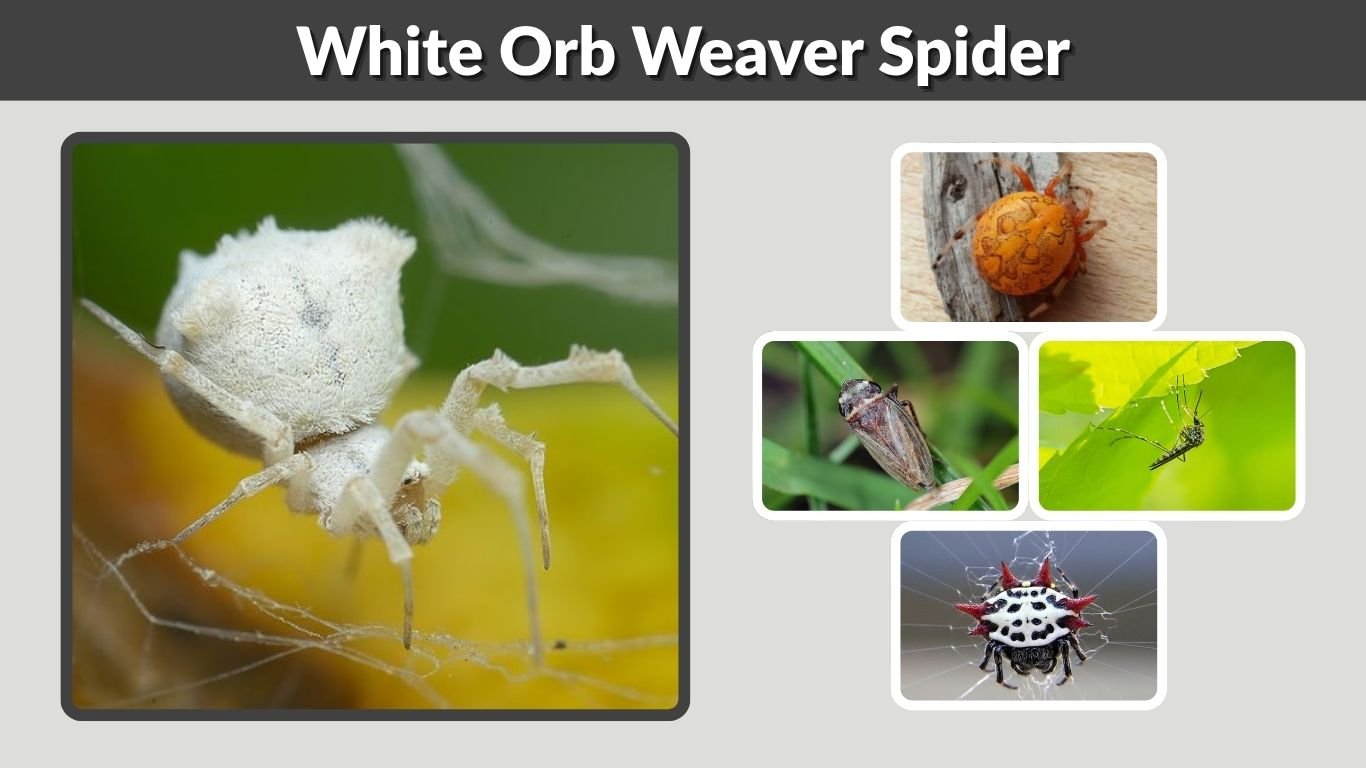
A white orb weaver is not one single spider species. The name is commonly used for several orb-weaving spiders with white, cream, silver, or black-and-white markings. Some have smooth, rounded abdomens, while others possess dramatic spines or cross-shaped patterns.
Despite their unusual appearance, most white orb weaver spiders are harmless garden residents. They build circular webs and help reduce populations of flies, mosquitoes, moths, and other insects. Correct identification depends on the spider’s body shape, markings, web, location, and activity pattern.
What Is a White Orb Weaver?
The term “white orb weaver” generally describes a pale-colored member of the orb-weaver family, Araneidae. Orb weavers are known for creating wheel-shaped webs composed of radiating support threads and circular capture spirals.
These spiders vary considerably in color and form. Orb weavers may be white, yellow, orange, brown, black, green, or combinations of several colors. Their abdomens can be round, oval, triangular, marbled, or covered with projections.
White specimens may belong to several groups, including:
- Spinybacked orb weavers
- Marbled orb weavers
- Cross orb weavers
- Banded garden spiders
- Shamrock orb weavers
- Micrathena orb weavers
Because color varies within many species, a photograph showing the top and underside of the spider is usually more useful than color alone.
How to Identify a White Orb Weaver Spider
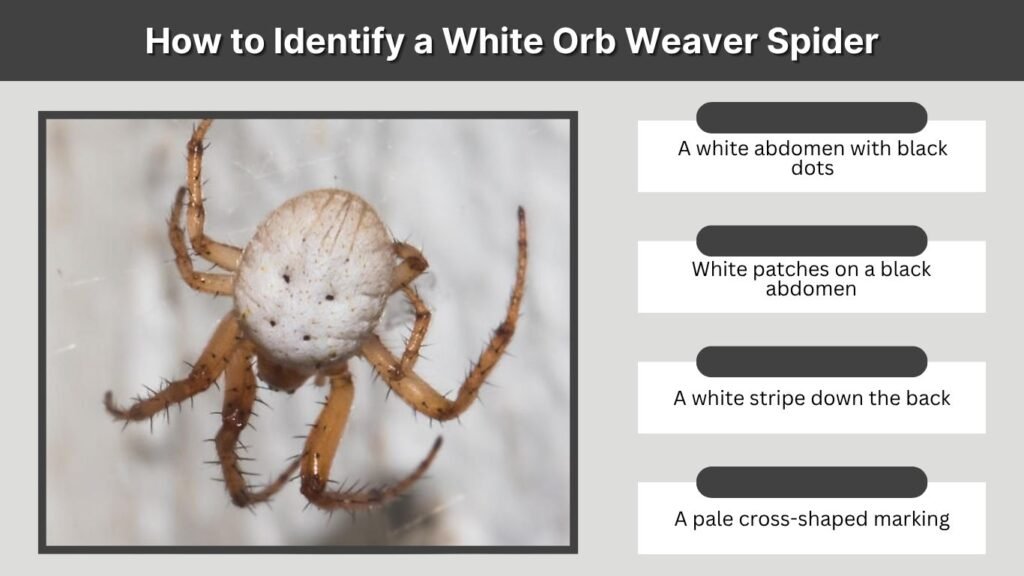
White orb weavers are best identified by combining several physical and behavioral features. A pale abdomen does not automatically confirm that a spider is an orb weaver because crab spiders and other unrelated spiders can also appear white.
Body Shape
Female orb weavers often have a relatively small cephalothorax and a noticeably larger abdomen. The abdomen may resemble a rounded ball, flattened shield, oval, or pointed triangle.
Males are usually much smaller and slimmer than females. They may not display the same dramatic abdominal patterns, making them harder to recognize.
White, Black and Colored Markings
Common markings include:
- A white abdomen with black dots
- White patches on a black abdomen
- A white stripe down the back
- A pale cross-shaped marking
- Black-and-white banded legs
- White combined with red, orange or yellow
- Four or more pale spots on the abdomen
Color can change as the spider matures. Lighting, recent molting, natural variation, and the viewing angle can also make cream or silver areas appear bright white.
Orb-Shaped Web
The web is one of the strongest identification clues. Orb weavers create approximately circular webs with straight threads extending from the hub and spiraling silk connecting them.
Many species sit in the middle of the web with their head facing downward. Others hide beneath leaves or along a supporting thread during the day and enter the web after dark.
Location and Behavior
White orb weavers are frequently found in:
- Gardens and flower beds
- Shrubs and low tree branches
- Forest edges
- Fields and tall grasses
- Porches and exterior lights
- Between fences or buildings
- Areas with abundant flying insects
Most remain outdoors. A spider that appears inside may have wandered in accidentally or arrived on a plant.
Common Types of White Orb Weavers
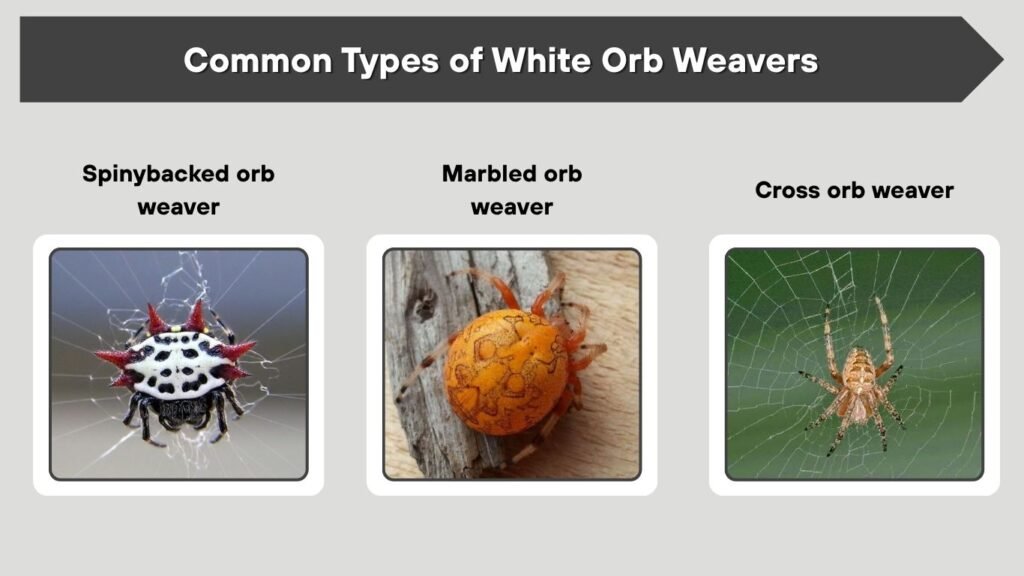
Several species can match searches for white, black-and-white, spotted or striped orb weavers. The following are among the most likely possibilities in North America.
| Possible spider | Main appearance | Helpful identification feature |
|---|---|---|
| Spinybacked orb weaver | White with black spots and spines | Flattened, crab-like abdomen |
| Marbled orb weaver | Cream, white, orange or marbled | Large rounded abdomen |
| Cross orb weaver | Brown, orange or pale with white marks | White cross on the abdomen |
| Shamrock orb weaver | White, cream, brown or reddish | Rounded abdomen with pale spots |
| Banded garden spider | Silver-white, yellow and black | Long legs and horizontal bands |
| Spined Micrathena | White, brown or black with projections | Angled abdomen with short spines |
Black-and-White Spiny Orb Weaver
The spinybacked orb weaver (Gasteracantha cancriformis) is one of the most recognizable white orb weavers. Adult females have a broad, flattened abdomen with six pointed projections. The upper surface may be white with black spots, while the spines can be black or red.
Females are generally wider than they are long, with documented body measurements of about 5–9 millimetres long and 10–13 millimetres across. Their legs, underside, and front body are mainly black.
The unusual abdomen gives this spider a crab-like or armored appearance. It may consequently be called a spiny orb weaver, crab-like orb weaver, jewel spider, or spinybacked orb weaver.
A black-and-white spiny spider in the middle of a circular web is therefore likely to be this species, especially in warmer parts of the Americas.
White Marbled Orb Weaver
The marbled orb weaver (Araneus marmoreus) is highly variable. Although bright orange individuals receive the most attention, the species may also be beige, pale yellow, cream, nearly white, or almost black and white.
It has a large, rounded abdomen decorated with marbling, spots, swirls, or dark patches. The legs are usually banded, and the spider may look surprisingly plump.
Marbled orb weavers often hide in a folded leaf or silk retreat near their web. A signal thread connects the retreat to the web, allowing the spider to detect trapped prey.
White Cross Orb Weaver
The cross orb weaver (Araneus diadematus) is named for the pale dots and streaks that form a cross on its abdomen. Its base color may range from brown and orange to gray or pale cream.
The white cross is usually made from several separate spots rather than one continuous mark. Some individuals show a very obvious cross, while others have faint or incomplete markings.
Cross orb weavers often build large webs near houses, gardens, windows, fences, and vegetation. They may hide during daylight and return to the hub around dusk.
White or Silver Banded Garden Spider
The banded garden spider (Argiope trifasciata) may appear silver-white, yellow, black, or brown. It has a long abdomen and extremely long legs, often held in pairs while the spider rests in the middle of its web.
The abdomen usually displays horizontal bands. Its legs may also have black and white or dark and pale sections.
Some webs contain a thick zigzag strip of silk called a stabilimentum. However, the presence or absence of this decoration should not be used as the only identification feature.
White-Spotted Shamrock Orb Weaver
The shamrock orb weaver (Araneus trifolium) can vary from pale white and cream to brown, orange, or red. Its rounded abdomen commonly has several white spots resembling small beads or a shamrock-like pattern.
White individuals may be mistaken for marbled orb weavers. Look for an evenly rounded abdomen, pale spots, banded legs, and the absence of strong spines.
Understanding Different Color Patterns
A spider’s secondary colors can provide useful identification clues, although considerable variation occurs within orb-weaver species.
Red and White Orb Weaver
A red and white orb weaver may be a color form of the spinybacked orb weaver. Some females have a white abdominal surface, black spots, and red spines. Others have red or orange areas around the abdomen.
Red-and-white coloration may also occur in marbled or shamrock orb weavers. Body shape is therefore more reliable than red coloring alone.
Orange and White Orb Weaver
An orange-and-white orb weaver with a large rounded abdomen may be a marbled orb weaver. The color can range from pumpkin orange to pale cream with orange marbling.
An orange spider with a white abdomen and long banded legs could instead be a garden orb weaver or another regional species. Examining the abdomen’s shape and web position can narrow the possibilities.
Brown and White Orb Weaver
Brown-and-white orb weavers are particularly common because many species use mottled coloration for camouflage. Possible matches include cross orb weavers, spotted orb weavers, tropical orb weavers and several Neoscona species.
A central white stripe or leaf-shaped mark is common among some Neoscona orb weavers. These spiders often rebuild their webs in the evening and hide during daylight.
Green and White Orb Weaver
A small green-and-white spider in an orb web may belong to a green orb-weaving species rather than one of the common white forms. However, a white spider sitting on a flower without an orb web could be a crab spider.
Crab spiders typically hold their front legs outward and hunt without building prey-catching orb webs.
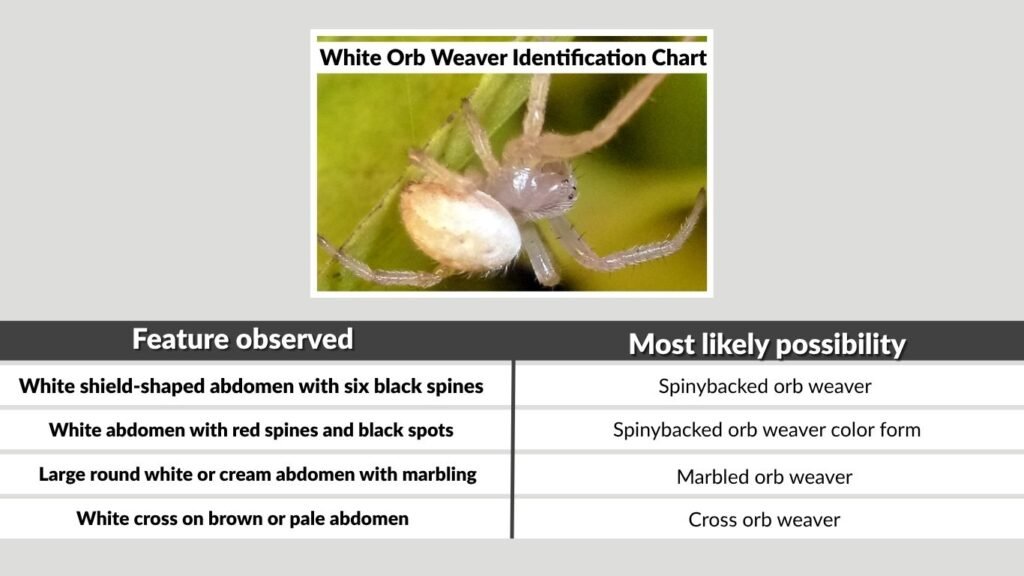
White Orb Weaver Identification Chart
| Feature observed | Most likely possibility |
|---|---|
| White shield-shaped abdomen with six black spines | Spinybacked orb weaver |
| White abdomen with red spines and black spots | Spinybacked orb weaver color form |
| Large round white or cream abdomen with marbling | Marbled orb weaver |
| White cross on brown or pale abdomen | Cross orb weaver |
| Silver-white elongated abdomen with long legs | Banded garden spider |
| Round pale abdomen with multiple white dots | Shamrock orb weaver |
| White stripe on dark rounded abdomen | Neoscona or related garden orb weaver |
| White spider on flowers without a circular web | Possibly a crab spider |
Are White Orb Weaver Spiders Poisonous?
White orb weavers are venomous in the biological sense because they use venom to subdue insect prey. However, they are not considered poisonous, and the commonly encountered orb weavers are generally not dangerous to people.
Orb weavers are reluctant to bite and usually attempt to escape when disturbed. Bites are uncommon and are most likely to occur if a spider is trapped against the skin or handled roughly. University extension guidance describes orb weavers as non-dangerous despite their size and bright colors.
When a bite does occur, possible symptoms include:
- Brief pain or stinging
- Mild redness
- Local swelling
- Temporary itching or tenderness
Wash the area with soap and water and apply a wrapped cold pack. Medical attention is appropriate for severe pain, spreading swelling, breathing difficulty, signs of infection, or uncertainty about the spider’s identity.
Do White Orb Weavers Bite?
A white orb weaver can bite, but biting is a defensive last resort. These spiders do not chase people or deliberately enter beds to attack sleepers.
The spines of a spiny orb weaver may feel sharp if the spider is pressed against the skin, but its threatening shape does not indicate medically significant venom.
Avoid picking up any unidentified spider with bare hands. To move one, place a container over it, slide stiff paper underneath, and release it outdoors near vegetation.
What Do White Orb Weavers Eat?
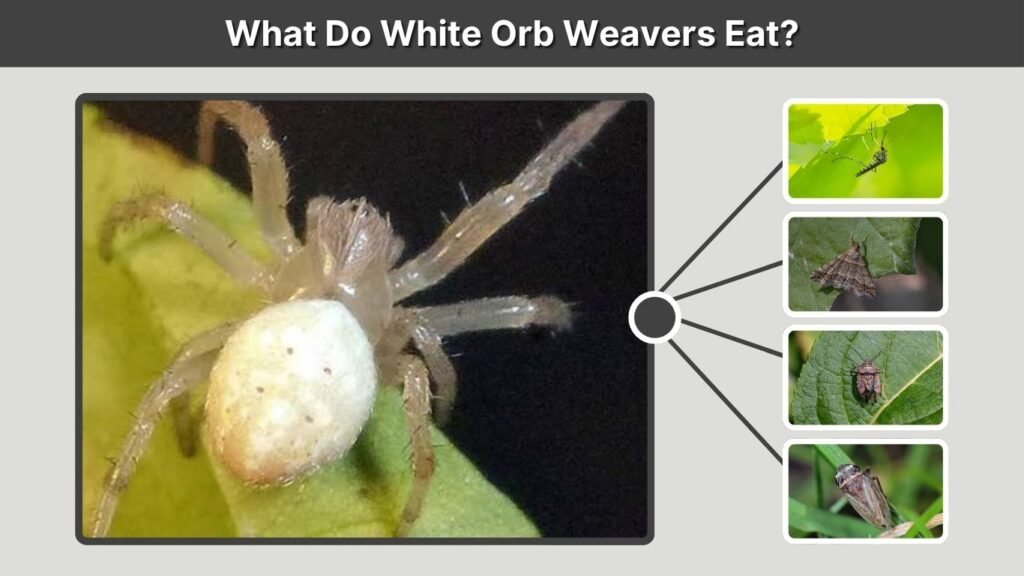
White orb weavers mainly catch flying or jumping insects that strike their sticky webs. Their diet may include:
- Mosquitoes
- Flies
- Moths
- Gnats
- Beetles
- Leafhoppers
- Small wasps
- Other garden insects
After detecting vibrations, the spider approaches the prey, bites it, and may wrap it in silk. Large or potentially dangerous insects can be cut free instead of attacked.
Their insect-hunting behavior makes orb weavers beneficial predators in yards and gardens.
Should You Remove a White Orb Weaver?
Removal is rarely necessary when the web is in a garden, shrub, tree, or quiet corner. The spider is controlling insects and normally disappears as weather conditions or its life cycle changes.
Relocation may be useful when a web blocks:
- A doorway
- A frequently used walkway
- Children’s play equipment
- Outdoor seating
- An animal enclosure
Move the spider carefully and remove the web with a broom. Avoid spraying pesticides, as these products may kill beneficial insects and other harmless predators without preventing new spiders from entering the area.
FAQs
Why did my orb weaver turn white?
The spider may not have changed species. Its appearance can look lighter after molting, under bright lighting, or as its abdomen expands. Some orb-weaver species naturally display substantial color variation, including white, cream, yellow, orange and dark forms.
What is a black orb weaver with white spots?
It could be a spinybacked orb weaver, shamrock orb weaver, cross orb weaver or another garden orb weaver. Check whether the abdomen is spiny, rounded or elongated and determine whether the spots form a cross, rows or a random pattern.
What orb weaver has black-and-white striped legs?
Banded garden spiders, cross orb weavers, marbled orb weavers and several Neoscona species can have banded legs. Leg coloration alone is insufficient for identification, so compare the abdomen’s shape, markings, web structure and geographic location.
Is a white spiny orb weaver dangerous?
A white spinybacked orb weaver is not considered dangerous to humans. Its six projections mainly help protect it from predators. It can defend itself if squeezed, but bites are uncommon and are not generally medically significant.
Why is a white orb weaver in my garden?
Gardens provide strong web supports and abundant insect prey. Outdoor lights, flowers, shrubs and moisture attract flying insects, which in turn attract orb weavers. Leaving the spider undisturbed can provide natural pest control without damaging plants.
