
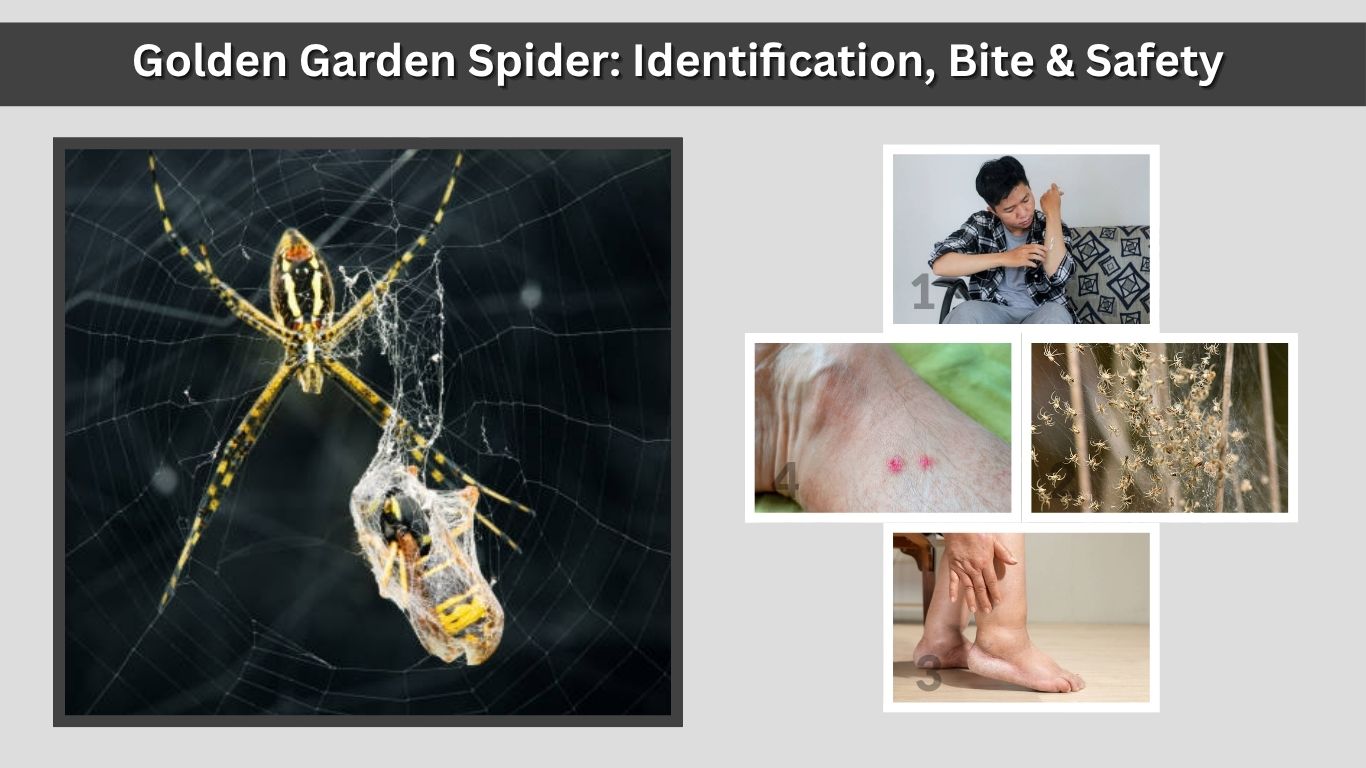
The golden garden spider is one of the most eye-catching spiders you can find in gardens and outdoor spaces. Known for its bold black and yellow coloring and large, intricate web, it often raises questions like “is the golden garden spider poisonous” or “does it bite?”
If you’ve seen a golden garden spider or black and gold garden spider in your yard, this guide will help you identify it, understand its behavior, and learn whether it is dangerous or beneficial.
What Is a Golden Garden Spider
The golden garden spider, commonly known as Argiope aurantia, is a large orb-weaver spider. It belongs to a group of spiders that build circular webs to catch prey.
It is often referred to as the black and gold garden spider due to its striking color pattern. This spider is commonly found in gardens, fields, and areas with tall vegetation where insects are abundant.
Despite its large size and bold appearance, the golden garden spider is generally harmless and plays an important role in controlling insect populations.
How to Identify a Golden Garden Spider
Physical Appearance
The golden garden spider is easy to recognize because of its bright and bold coloring. It typically has a black body with yellow or golden markings, giving it a striped or patterned look.
Its legs are long and often banded, adding to its distinct appearance. Some people may confuse it with other species, but the combination of black and gold coloring makes it stand out clearly.
Key Identification Features
- Black and yellow (golden) patterned abdomen
- Long, slender legs with banded markings
- Large size compared to other garden spiders
- Often found sitting in the center of its web
- Visible zigzag pattern in the web
Female vs Male Golden Garden Spider
Female Golden Garden Spider
Female golden garden spiders are much larger and more noticeable. They are the ones most commonly seen in gardens, usually sitting in the center of their web.
Their bright colors and size make them easy to identify. Females are responsible for building and maintaining the web, as well as producing egg sacs.
Male Golden Garden Spider
Male golden garden spiders are much smaller and less visible. They often stay near the edges of the female’s web and are rarely noticed.
Their primary role is reproduction, and they do not build large webs like females do.
Golden Garden Spider Web
Web Structure
The golden garden spider builds a large, circular orb web that is both strong and well-organized. These webs are often placed between plants, fences, or structures where insects frequently pass.
One of the most unique features is the zigzag pattern, known as stabilimentum, which appears in the center of the web.
Unique Web Behavior
- Builds large orb-shaped webs
- Creates a zigzag stabilimentum pattern
- Uses strong silk to trap insects
- Sits in the center waiting for prey
- Vibrates or “bounces” the web when threatened
Golden Garden Spider Habitat & Range
Natural Habitat
Golden garden spiders prefer open, sunny environments where they can build large webs. They are commonly found in gardens, fields, tall grass, and around outdoor structures.
They tend to choose locations where insect activity is high, ensuring a steady food supply.
Geographic Distribution
These spiders are widely found across North America and are especially common in warmer regions. They can also appear in similar climates around the world.
Their adaptability to different environments makes them one of the most recognizable garden spiders.
Golden Garden Spider Diet

Golden garden spiders feed primarily on insects. Their diet includes flies, mosquitoes, beetles, and grasshoppers.
They rely on their webs to catch prey, trapping insects that fly into the sticky silk. Once caught, the spider immobilizes the prey and begins feeding.
Because of this behavior, golden garden spiders are highly beneficial in gardens, helping reduce pest populations naturally.
Golden Garden Spider Life Cycle

The life cycle of the golden garden spider follows a seasonal pattern. Most of their development happens during warmer months, making them more visible in late summer and early fall.
Life Stages
Golden garden spiders go through several stages as they grow:
- Egg stage inside protective sac
- Spiderlings hatch and disperse
- Juveniles grow through summer
- Adults reach full size in late season
- Reproduction before seasonal decline
Egg Sac and Reproduction
Female golden garden spiders create egg sacs that contain hundreds of eggs. These sacs are usually attached near the web or hidden in nearby plants.
The eggs remain protected during colder months and hatch when conditions become favorable again. After laying eggs, the female typically dies as temperatures drop.
Are Golden Garden Spiders Poisonous
Venom vs Poison
Many people ask if the golden garden spider is poisonous. The correct term is venomous, not poisonous. This means the spider uses venom to subdue prey, but it does not harm humans through touch.
The confusion between these terms is common, but in reality, this spider poses very little risk.
Are They Dangerous
Golden garden spiders are not dangerous to humans. They are non-aggressive and prefer to avoid contact.
Even when disturbed, they are more likely to retreat or shake their web rather than bite. Their venom is mild and designed for insects, not humans.
Golden Garden Spider Bite

Do Golden Garden Spiders Bite
Bites are very rare and usually happen only if the spider is handled or threatened. They do not actively seek out humans or attack without reason.
Bite Symptoms
If a bite does occur, the symptoms are typically mild:
- Slight pain similar to a bee sting
- Minor redness or swelling
- Temporary irritation
Serious reactions are extremely uncommon.
Bite Treatment
Basic first aid is usually enough to treat a bite. Clean the area with soap and water and apply a cold compress to reduce swelling.
If symptoms worsen or an allergic reaction occurs, medical attention should be sought, although this is rare.
Golden Garden Spider vs Other Spiders
Golden Orb Weaver vs Garden Spider
Golden garden spiders are often confused with golden orb weavers. While both build large webs, they are different species. Orb weavers may have different body shapes and web sizes.
Golden garden spiders typically have bold black and yellow patterns, making them easier to identify.
Yellow Garden Spider vs Golden Orb Weaver

Another common comparison is between yellow garden spiders and golden orb weavers. While similar in appearance, their web structure and size may vary.
Understanding these differences helps avoid confusion when identifying spiders in your yard.
Banana Spider vs Golden Garden Spider
The term “banana spider” is often used loosely and can refer to different species. Some people mistakenly call golden garden spiders banana spiders.
However, true banana spiders may belong to different species groups, so proper identification is important.
Benefits of Golden Garden Spiders
Golden garden spiders are highly beneficial and should not be considered pests. They play an important role in maintaining ecological balance.
- Control insect populations naturally
- Reduce pests like mosquitoes and flies
- Help protect plants in gardens
- Support a healthy outdoor ecosystem
Their presence is usually a sign of a healthy environment.
Where You Might See Them
Golden garden spiders are commonly found in outdoor areas where insects are abundant.
They are often seen in gardens, between plants, along fences, and in tall grass. Their large webs make them easy to spot, especially during late summer when they are fully grown.
Common Myths About Golden Garden Spiders
Myth: They Are Dangerous
Despite their size and appearance, golden garden spiders are not dangerous to humans.
Myth: They Attack People
These spiders do not attack humans. They avoid interaction and only bite in rare defensive situations.
Myth: Their Webs Are Harmful
Their webs may look large and intimidating, but they are harmless and beneficial for catching insects.
How to Get Rid of Golden Garden Spiders (If Needed)
Safe Removal Methods
If you prefer not to have these spiders around, you can remove them safely without harm.
- Gently relocate the spider using a container
- Remove webs regularly to discourage rebuilding
- Keep distance while handling
Prevention Tips
Preventing spiders mainly involves reducing their food source.
- Reduce outdoor lighting that attracts insects
- Keep garden areas clean
- Remove webs early before they expand
These methods help manage spider presence without harming the environment.
FAQs
Is the golden garden spider poisonous
Golden garden spiders are not poisonous but venomous. Their venom is used to paralyze insects and is very mild to humans. They are not considered dangerous and rarely cause harm, making them safe to have in gardens and outdoor spaces.
Do golden garden spiders bite
Golden garden spiders rarely bite humans. They are non-aggressive and usually avoid contact. Bites may only occur if the spider is handled or threatened, and even then, the reaction is typically mild and similar to a small insect sting.
Are golden garden spiders dangerous
Golden garden spiders are not dangerous to humans. Although their large size and bold colors may look intimidating, they are harmless and beneficial. They help control pest insects and usually stay in their webs without interacting with people.
What does a golden garden spider look like
A golden garden spider has a black body with bright yellow or golden markings and long, banded legs. Females are larger and more visible, often sitting in the center of a large circular web with a zigzag pattern.
What do golden garden spiders eat
Golden garden spiders feed mainly on insects such as flies, mosquitoes, grasshoppers, and beetles. They catch prey in their large orb-shaped webs and help reduce pest populations naturally, making them beneficial for gardens and outdoor environments.
