
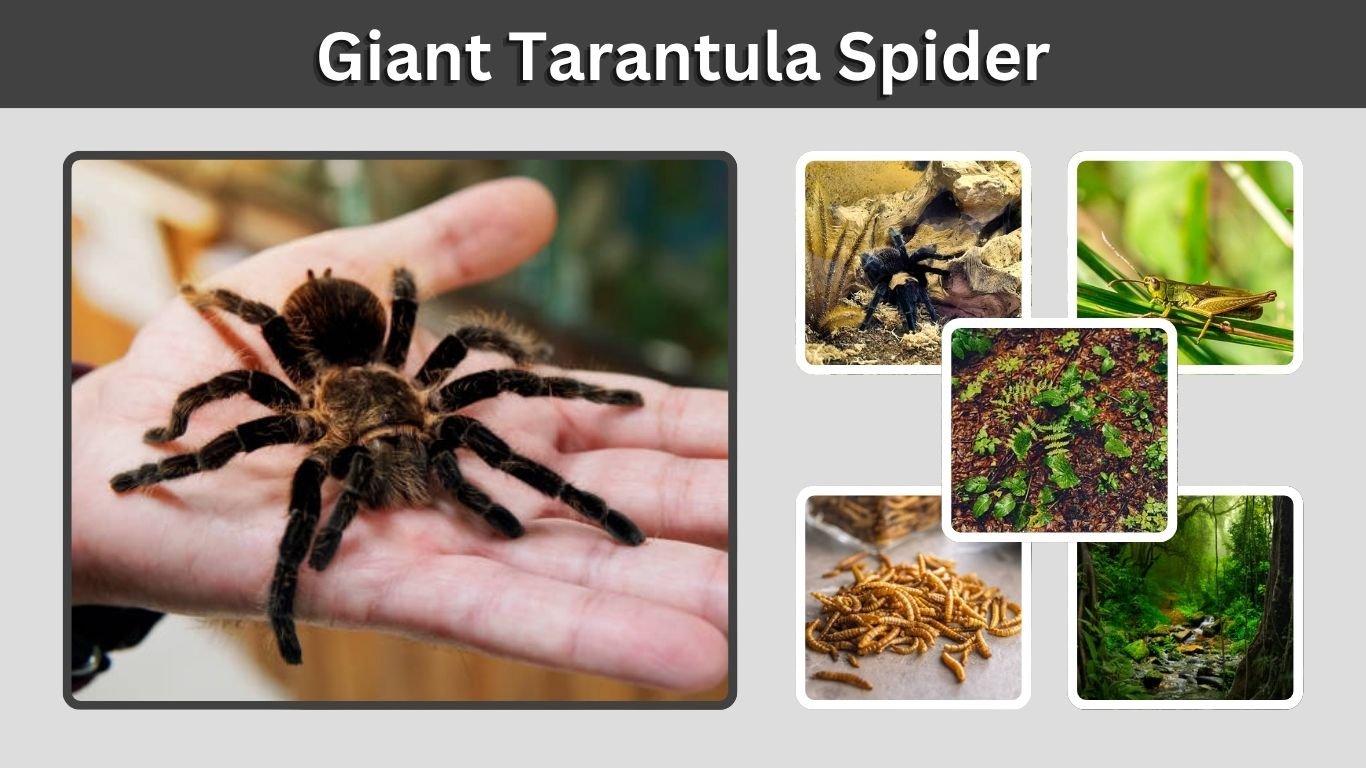
A giant tarantula may look frightening, but these enormous spiders are generally quieter and less dangerous than their appearance suggests. The name does not refer to one particular species. Instead, people use it for several exceptionally large tarantulas, including the Goliath birdeater, Brazilian salmon pink birdeater, Brazilian giant white knee, and Colombian giant redleg. Some can reach the size of a dinner plate when their legs are fully extended. This guide explores their size, appearance, habitat, behavior, diet, venom, and suitability as pets.
What Is a Giant Tarantula?
“Giant tarantula” is an informal term describing unusually large members of the tarantula family, Theraphosidae. These spiders have thick, hairy bodies, powerful fangs, and strong legs. Most of the largest species originate from tropical areas of South America.
Although movies often portray them as aggressive monsters, real giant tarantulas usually avoid humans. They spend much of their time hidden in burrows, beneath logs, or among forest debris. Their impressive size helps them overpower insects and other small animals, but it does not make them natural human hunters.
Giant Tarantula Identification
Common identifying features include:
- A large, heavy body covered with hair
- Eight thick and muscular legs
- Two prominent fangs beneath the mouth
- Small clusters of eyes on the front of the carapace
- Colors ranging from dark brown and black to reddish, golden, or white-banded
- A leg span that may exceed 8 inches in the largest species
Some New World species also possess urticating hairs on the abdomen. They can release these irritating hairs when threatened.
How Big Can Giant Tarantulas Get?
The largest tarantulas can reach a leg span of approximately 10–12 inches. Their bodies may grow to around 4–5 inches long, and especially large individuals can weigh more than 5 ounces.
However, leg span does not tell the entire story. Some species have longer legs but relatively slender bodies, while others are shorter-legged and much heavier. The Goliath birdeater is generally recognized as the heaviest tarantula, while other species may rival it in overall leg span.
Common Giant Tarantula Species
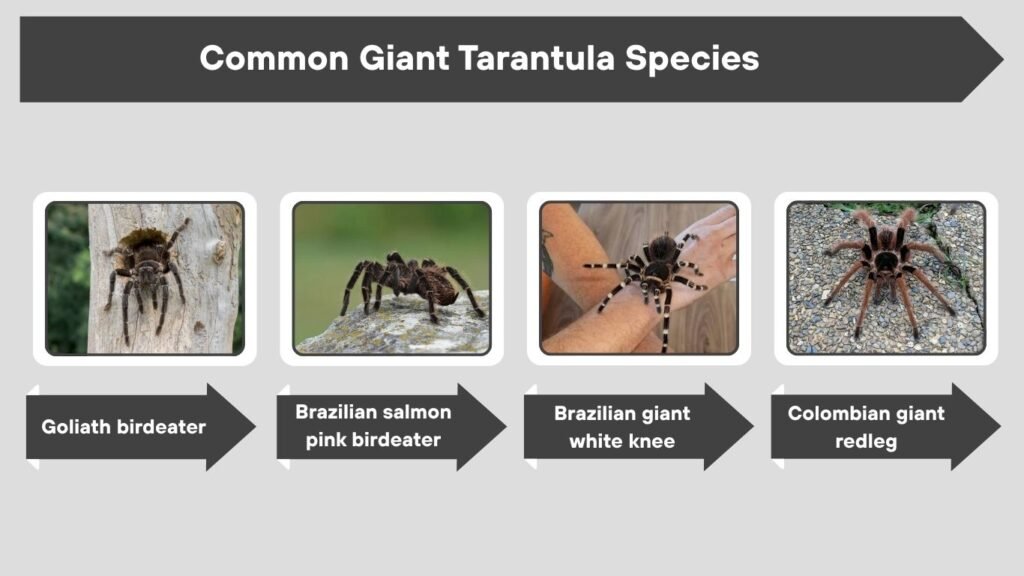
Several species are commonly described as giant tarantulas. They vary in color, temperament, adult size, and care requirements.
| Giant tarantula | Scientific name | Approximate leg span | Notable feature |
|---|---|---|---|
| Goliath birdeater | Theraphosa blondi | 10–12 inches | One of the heaviest spiders |
| Brazilian salmon pink birdeater | Lasiodora parahybana | 8–10 inches | Fast growth and pinkish hairs |
| Brazilian giant white knee | Acanthoscurria geniculata | 7–9 inches | Bold white leg bands |
| Colombian giant redleg | Megaphobema robustum | 7–8 inches | Red-orange leg coloration |
| Brazilian giant tawny red | Grammostola actaeon | 7–8 inches | Heavy body and dark coloration |
| Hispaniolan giant | Phormictopus cancerides | 7–8 inches | Fast and defensive behavior |
Goliath Birdeater Tarantula
The Goliath birdeater is among the world’s largest spiders by mass. It lives in the humid rainforests of northern South America, especially in areas of Venezuela, Guyana, Suriname, French Guiana, and northern Brazil.
Despite its name, it rarely eats birds. Its normal diet consists mainly of insects, worms, frogs, and other small animals. It has a brown, heavily built body and may produce a noticeable hissing sound by rubbing specialized hairs together when disturbed.
Brazilian Giant White Knee Tarantula
The Brazilian giant white knee tarantula is immediately recognizable by the bright white bands around the joints of its dark legs. It is a large, attractive terrestrial species that may grow to a leg span of approximately 8 inches.
This tarantula is a strong feeder and often reacts quickly when prey enters its enclosure. Although popular among keepers, it can be defensive and may release irritating abdominal hairs. Careful, hands-off husbandry is recommended.
Brazilian Giant Blonde Tarantula
The name Brazilian giant blonde is sometimes applied to large, light-colored birdeater tarantulas from Brazil. Depending on the seller or region, common names can refer to different species, so buyers should always verify the scientific name.
These tarantulas usually have golden, tan, or light-brown hairs. Like other large terrestrial species, they need deep substrate, stable humidity, suitable ventilation, and enough room to move without being able to climb dangerously high.
Colombian Giant Redleg Tarantula
The Colombian giant redleg has a dark body combined with reddish or orange coloration on its legs. It is a large burrowing species native to tropical parts of Colombia.
When frightened, it may raise its abdomen, turn around, and use its spiny rear legs defensively. Its unusual threat display makes it fascinating to observe, but it is better suited to experienced keepers than beginners.
Giant Tarantula Habitat and Behavior
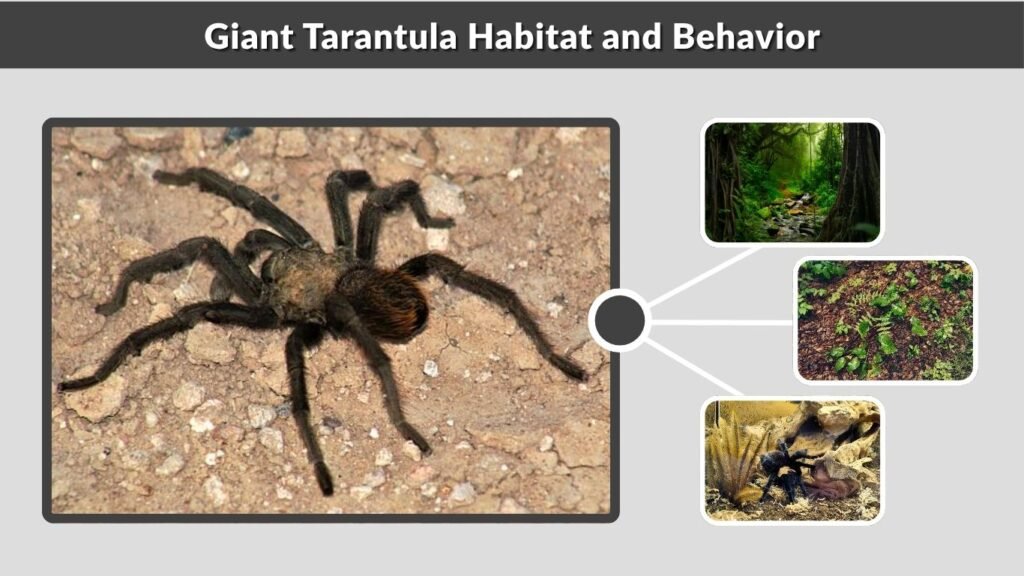
Most giant tarantulas inhabit warm regions with tropical forests, damp forest floors, or seasonally humid environments. Terrestrial species spend much of their lives at ground level, where they shelter inside burrows.
A burrow provides protection from predators and extreme weather. It also helps the spider maintain stable temperature and moisture levels. Many tarantulas line their shelters and surrounding ground with silk, allowing them to detect vibrations caused by approaching prey or danger.
Are Giant Tarantulas Aggressive?
Giant tarantulas are defensive rather than naturally aggressive. They do not normally chase people or attack without provocation. When danger approaches, a tarantula will usually retreat into its shelter.
If escape is impossible, it may raise its front legs, expose its fangs, release urticating hairs, produce a warning sound, or strike. Temperament differs among species and individual spiders. Frequent handling can cause unnecessary stress and increase the possibility of injury to both the spider and the keeper.
Do Giant Tarantulas Make Webs?
Giant tarantulas produce silk, but they do not build aerial prey-catching webs like orb-weaver spiders. They use silk to reinforce burrows, cover the ground around their shelters, create sperm webs, and construct protective mats while molting.
The silk surrounding a burrow also serves as an early-warning system. Vibrations travel through it, helping the tarantula detect prey, predators, or potential mates nearby.
What Do Giant Tarantulas Eat?
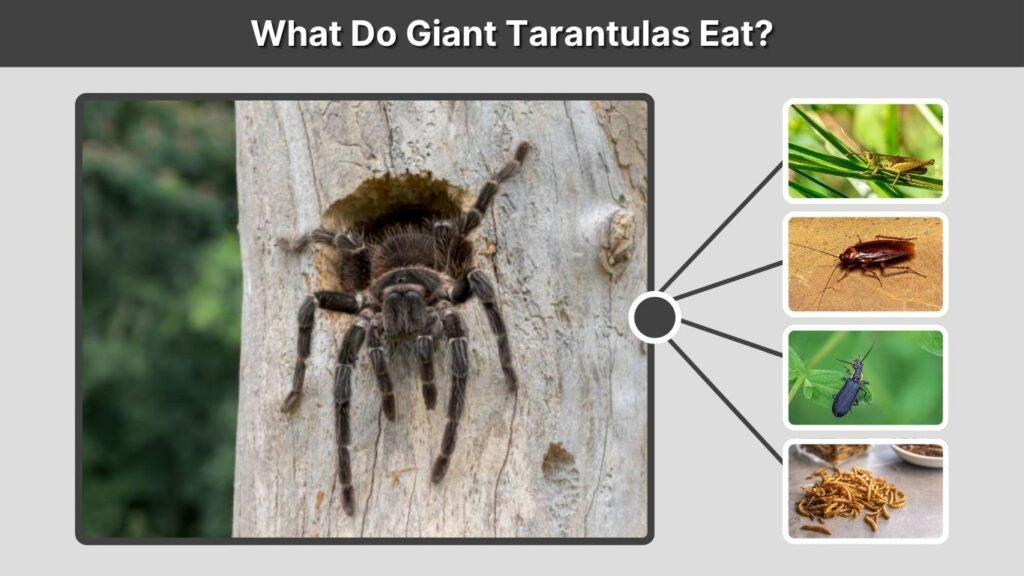
Giant tarantulas are ambush predators. They usually wait near a burrow entrance until vibrations reveal a suitable animal. The spider then rushes forward, captures the prey with its legs, and delivers venom through its fangs.
Their regular diet may include:
- Crickets
- Cockroaches
- Grasshoppers
- Beetles
- Moths
- Worms
- Small frogs
- Lizards
- Occasional small rodents
Despite the “birdeater” name given to certain species, birds are not regular prey. Captive tarantulas should generally receive appropriately sized, captive-bred feeder insects rather than vertebrates.
How Do Giant Tarantulas Eat?
A tarantula cannot chew solid food. After capturing prey, it injects venom and digestive fluids that begin breaking down the internal tissues. The spider then draws in the liquefied material through its mouth.
After feeding, it leaves behind a compact ball containing harder, indigestible remains. Healthy adults do not need to eat every day and may refuse food before molting.
Are Giant Tarantulas Dangerous?
A giant tarantula is venomous because it uses venom to immobilize prey. However, the venom of commonly kept species is not generally considered deadly to healthy humans. A bite can still cause pain, swelling, redness, muscle discomfort, or other reactions.
Their urticating hairs may be a more frequent problem. These fine hairs can irritate the skin, nose, and eyes. Eye exposure may require medical attention. Anyone experiencing breathing trouble, severe swelling, widespread symptoms, or intense pain after contact should seek prompt medical care.
Giant Tarantula Bite Prevention
Avoid placing bare hands inside the enclosure when the spider is nearby. Long feeding tongs, catch cups, and soft tools allow necessary maintenance from a safer distance.
Never handle a tarantula close to your face. Washing your hands after enclosure maintenance can remove loose hairs. Children and pets should also be kept away from unsecured enclosures.
Can You Keep a Giant Tarantula as a Pet?
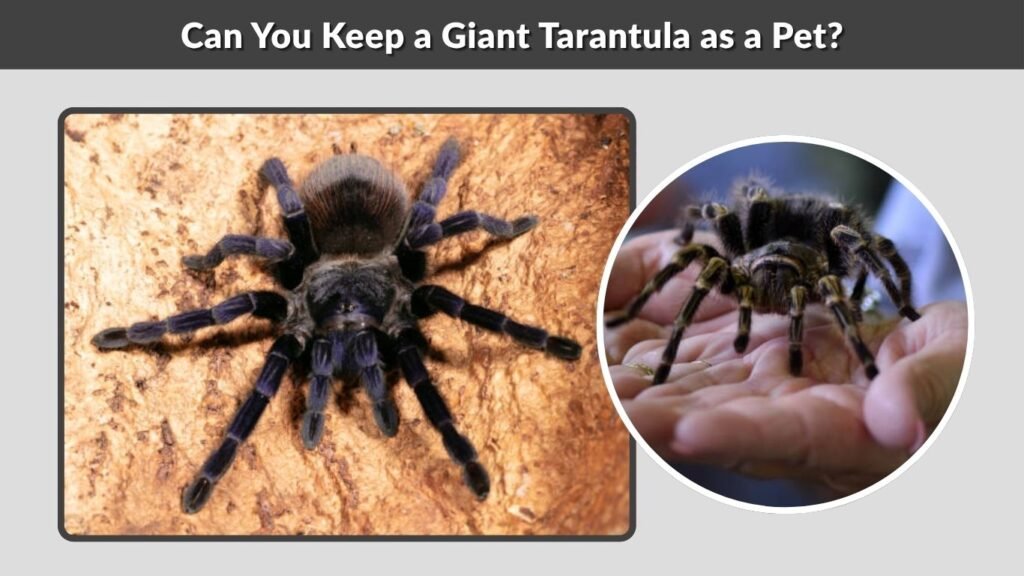
Some giant tarantulas can be kept successfully in captivity, but they require informed and responsible care. Species such as the Brazilian salmon pink birdeater grow relatively quickly and eat readily, while others have more demanding humidity requirements.
Large tarantulas are delicate despite their formidable appearance. A fall from even a modest height can rupture the abdomen and cause a fatal injury. Therefore, terrestrial enclosures should prioritize floor space and deep substrate rather than climbing height.
Giant Tarantula Enclosure Setup
A suitable enclosure should include:
- Secure, escape-resistant ventilation
- More floor space than vertical height
- Several inches of appropriate substrate
- A cork-bark or artificial hide
- A shallow dish containing clean water
- Controlled moisture without stagnant conditions
- No sharp decorations or dangerous climbing points
Exact temperature and humidity requirements depend on the species. An enclosure that is constantly soaked can encourage mold and poor air quality, while one that is excessively dry may be unsuitable for moisture-loving tarantulas.
Feeding and Maintenance
Adult giant tarantulas can usually be offered several appropriately sized insects every week or two, depending on their condition and species. Younger, growing spiders may eat more frequently. Uneaten prey should be removed, especially when the tarantula is preparing to molt.
Fresh water should always be available. The enclosure normally requires spot cleaning rather than frequent complete replacement. Keepers should monitor the spider’s body condition, behavior, enclosure moisture, and ventilation.
Handling a Giant Pet Tarantula
Direct handling is generally unnecessary. Tarantulas do not form the same type of social bond with people as dogs or cats, and handling does not benefit them. It creates a risk of falling, biting, or releasing irritating hairs.
When the spider must be moved, guiding it gently into a secure container is safer than picking it up.
Giant Tarantula Lifespan
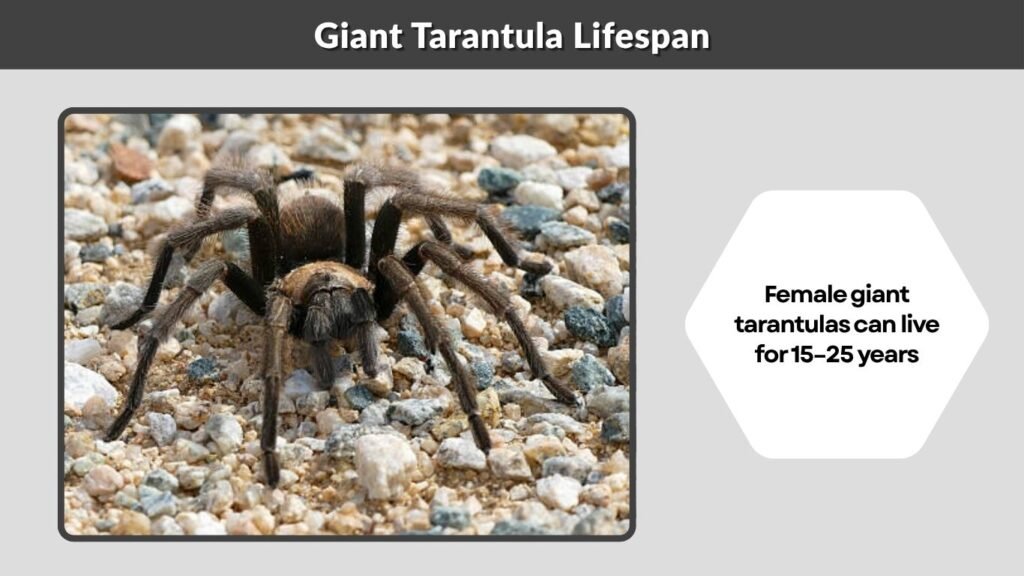
Female giant tarantulas can live for 15–25 years, depending on the species, care, and environmental conditions. Some may survive even longer. Males have considerably shorter lives and commonly survive only a few years after reaching maturity.
The difference occurs because mature males focus primarily on finding females. They often eat less, wander more, and gradually decline after their final molt.
FAQs
What is the largest giant tarantula?
The Goliath birdeater is generally regarded as the world’s largest tarantula by body mass. Large individuals may have a leg span approaching 12 inches. The giant huntsman can have a wider leg span, but it is not a tarantula and has a much lighter body.
Can a giant tarantula kill a human?
A bite from a commonly encountered giant tarantula is not normally fatal to a healthy adult. However, bites can be painful, and allergic or unusually severe reactions are possible. Medical help is advisable if serious swelling, breathing difficulty, or other concerning symptoms develop.
Do giant tarantulas eat birds?
Giant birdeater tarantulas are physically capable of eating very small birds, but this is uncommon. Their natural diets consist mainly of insects, worms, frogs, lizards, and other small ground-dwelling animals that are easier to locate and overpower.
Are giant tarantulas good pets for beginners?
Some large species may suit prepared beginners, but many are fast, defensive, or sensitive to improper conditions. New keepers often benefit from starting with a calm terrestrial species and learning safe feeding, enclosure maintenance, and transfer techniques before keeping a more demanding giant species.
How much does a giant tarantula cost?
The price varies according to species, age, sex, availability, and location. Spiderlings generally cost less than confirmed adult females, which are more valuable because of their long lifespan. Prospective buyers should choose reputable captive breeders and confirm the animal’s scientific name before purchasing.
