
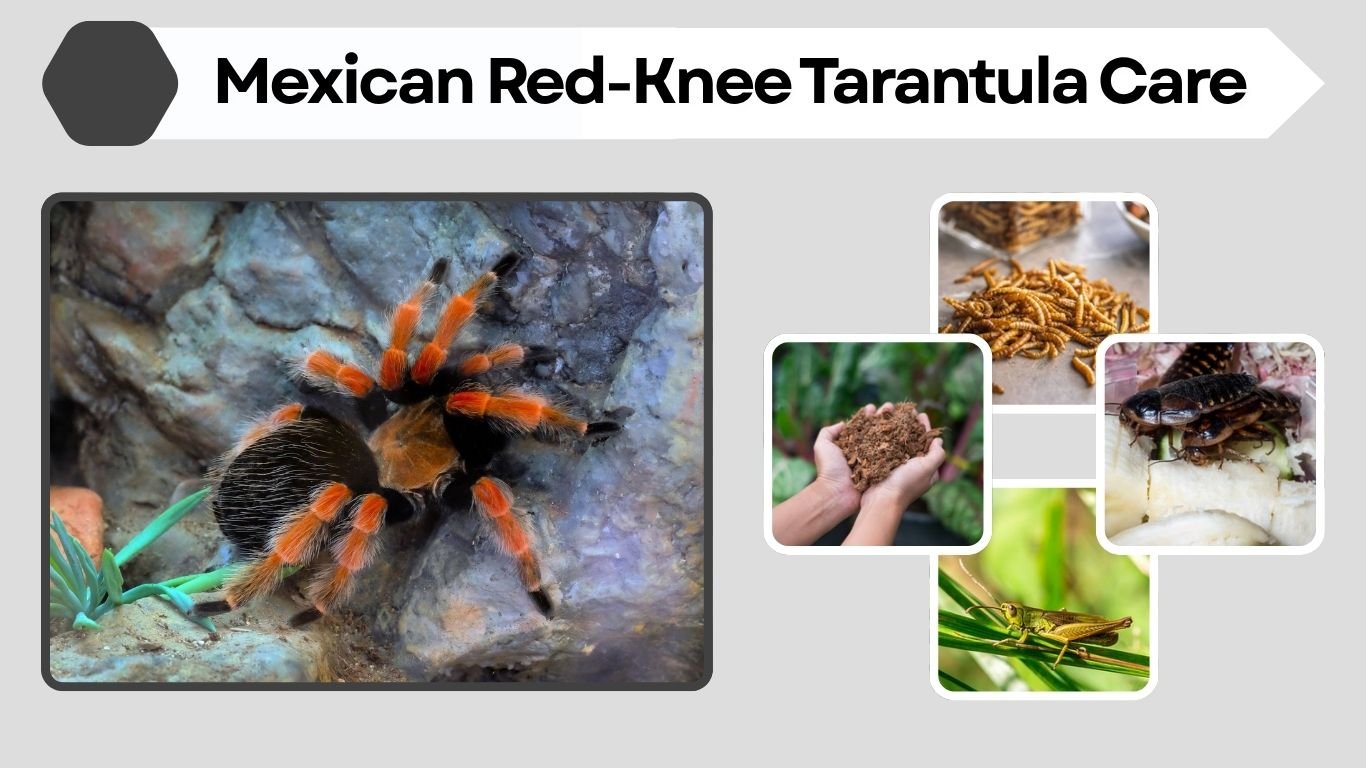
The Mexican red-knee tarantula is one of the most recognizable pet tarantulas because of its calm temperament, striking orange-red leg markings, and relatively simple care requirements. It is often suitable for responsible beginners, but it still needs a secure enclosure, deep substrate, proper ventilation, clean water, and carefully managed feeding. With appropriate care, a female Mexican red knee may live for 20–30 years, making ownership a significant long-term commitment.
Mexican Red-Knee Tarantula Overview
The name “Mexican red-knee tarantula” commonly refers to Brachypelma hamorii, although Brachypelma smithi may also be sold under the same common name. Both are terrestrial tarantulas native to Mexico and have broadly similar care requirements.
These tarantulas are generally slow-moving and less defensive than many Old World species. However, they can release irritating urticating hairs from their abdomen when frightened.
| Characteristic | Information |
|---|---|
| Scientific name | Brachypelma hamorii or Brachypelma smithi |
| Adult leg span | Approximately 5–6 inches |
| Native range | Mexico |
| Lifestyle | Terrestrial and burrowing |
| Temperament | Usually calm but can become defensive |
| Female lifespan | Approximately 20–30 years |
| Male lifespan | Approximately 5–10 years |
| Experience level | Beginner to intermediate |
| Primary diet | Insects |
| Handling | Best avoided |
Choosing the Right Enclosure
Mexican red-knee tarantulas spend most of their time on or beneath the ground. Their enclosure should therefore provide more horizontal floor space than height.
An adult does not need an enormous habitat. An enclosure measuring approximately two to three times the tarantula’s leg span in length is generally sufficient. Excessively large habitats can make it difficult for the spider to locate prey and may create unnecessary falling risks.
Enclosure Size
A secure enclosure of approximately 5–10 gallons can accommodate most adults. The exact volume is less important than providing appropriate floor space, substrate depth, ventilation, and security.
Spiderlings should be kept in smaller containers appropriate to their size. A tiny spiderling placed in a large enclosure may have difficulty finding food and can easily disappear beneath decorations or substrate.
The lid must close securely. Even a heavy-looking terrestrial tarantula may climb the enclosure wall and push against a loose lid.
Ventilation
Good airflow prevents stagnant conditions and limits mold growth. Small ventilation openings should be placed along the sides and, when appropriate, near the top of the enclosure.
Every opening must be smaller than the tarantula’s carapace. If its central body can pass through an opening, the rest of the spider may be able to follow.
Avoid an enclosure made entirely of wire mesh. A tarantula’s claws can become trapped in mesh, potentially causing a dangerous fall or leg injury.
Substrate and Enclosure Setup
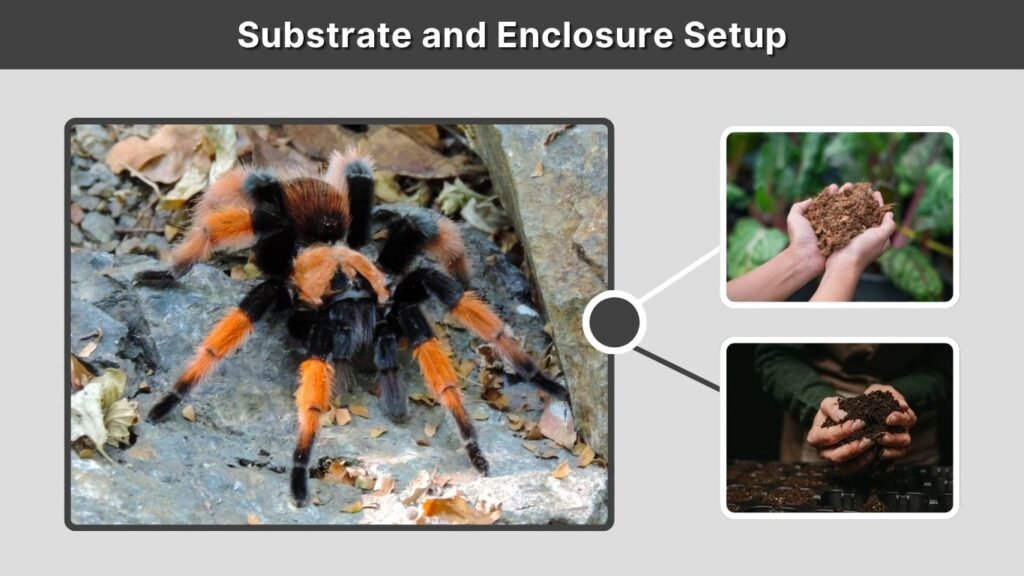
A Mexican red-knee tarantula needs deep, compactable substrate. It may excavate beneath its hide or create a shallow burrow, especially when preparing to molt.
Suitable substrate materials include:
- Chemical-free topsoil
- Coconut fiber
- Peat-based soil
- A mixture of topsoil and coconut fiber
- Commercial tarantula substrate
Avoid gravel, sand-only mixtures, wood chips, cedar, pine, and strongly scented materials. These options do not hold a stable burrow and may cause injuries or other health problems.
Substrate Depth
Provide approximately 4–6 inches of substrate for an adult, depending on the enclosure’s dimensions. More can be added when the tarantula displays strong burrowing behavior.
The substrate should also reduce the distance between the ground and the lid. A terrestrial tarantula has a heavy abdomen that can rupture after a relatively short fall. Ideally, the open space above the substrate should not greatly exceed the spider’s leg span.
Pack the substrate gently so that it can hold the shape of a burrow. Loose, fluffy substrate may collapse whenever the spider attempts to dig.
Hide and Decorations
Every Mexican red knee should have at least one secure hiding place. A curved piece of cork bark, half-buried plant pot, or commercially produced reptile hide can work well.
Place part of the hide beneath the substrate to create the entrance to a burrow. The tarantula may then expand and arrange the space according to its preference.
Artificial plants can provide cover, but they are not necessary. Avoid sharp rocks, heavy decorations, and anything that could collapse on the spider. Decorations should be stable and easy to clean.
Temperature Requirements
Mexican red-knee tarantulas generally do well at normal indoor temperatures. A range of approximately 70–78°F, or 21–26°C, is appropriate for most individuals.
Brief changes within a reasonable range are normally tolerated. However, prolonged extreme heat or cold can cause health problems.
Heating the Enclosure
A dedicated heater is usually unnecessary when the room remains comfortably warm. Never place the enclosure directly on a heating pad because the tarantula may burrow downward to escape heat and become trapped near the hottest area.
Heat lamps can rapidly dry the enclosure and create dangerous hot spots. If additional warmth is necessary, heating the room is usually safer than heating the individual enclosure.
Keep the tarantula away from windows, heating vents, air conditioners, and direct sunlight. A glass or plastic enclosure can overheat quickly when exposed to sunlight.
Humidity and Water
Mexican red knees originate from seasonally dry environments and should not be kept in permanently wet conditions. Excessive moisture combined with inadequate ventilation can encourage mold, mites, and an unhealthy enclosure.
Allow most of the substrate to remain dry. A slightly moist area can be maintained near the water dish, especially for spiderlings or during particularly dry weather.
Exact humidity percentages are less useful than observing substrate condition, ventilation, and the tarantula’s behavior. A clean water dish is the most reliable source of hydration.
Water Dish
Provide a shallow water dish that is large enough for the tarantula to drink from safely. Replace the water regularly and clean the dish whenever it becomes dirty.
Tarantulas do not normally drown in appropriately sized water dishes, so filling the container with stones or sponge is unnecessary. Sponges can collect bacteria and make cleaning more difficult.
The spider may fill its water dish with soil or webbing. This is normal behavior, although the dish should be cleaned and refilled when it happens.
Feeding a Mexican Red-Knee Tarantula
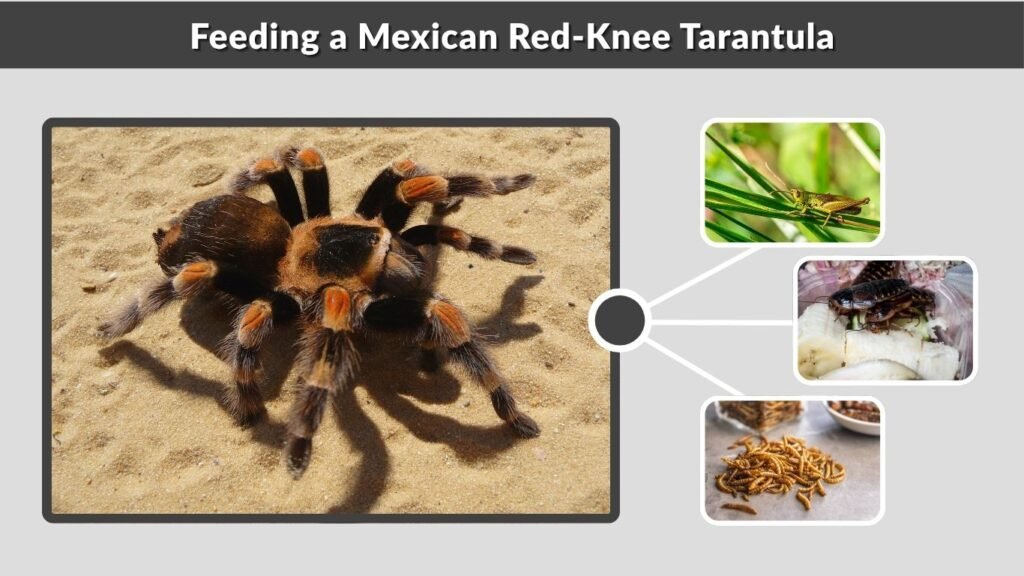
Mexican red-knee tarantulas are carnivorous and primarily eat insects. Their slow growth and metabolism mean they require less food than many traditional pets.
Suitable feeder insects include:
- Crickets
- Dubia roaches
- Mealworms
- Superworms
- Locusts, where available
- Other captive-raised feeder insects
Avoid insects collected outdoors. Wild prey may carry parasites or come into contact with pesticides and other harmful chemicals.
Feeding Schedule
Adult tarantulas can generally be offered one or two appropriately sized prey items every 7–14 days. Juveniles may be fed smaller meals more frequently, depending on their size and growth rate.
The spider’s abdomen provides a useful indication of body condition. It should appear rounded but not excessively swollen. Overfeeding can create an oversized abdomen that is more likely to rupture during a fall.
Remove uneaten prey within approximately 24 hours. Live insects should never remain in the enclosure when the tarantula is molting because they may bite and injure the defenseless spider.
Refusing Food
A Mexican red knee may stop eating for several weeks or even months. This is not automatically a sign of illness.
Common reasons for refusing food include:
- Preparing to molt
- Recent feeding
- Seasonal changes
- Sexual maturity in males
- Stress after rehousing
- An unsuitable enclosure
- A naturally slow metabolism
As long as the abdomen remains reasonably full and the tarantula has access to water, a temporary fast is generally not an emergency.
Molting and Growth
Tarantulas must shed their rigid exoskeleton to grow. Younger Mexican red knees molt more frequently than adults, while mature females may molt only once every year or two.
Before molting, the tarantula may become inactive, refuse food, darken in color, or create a webbed mat. A bald area on its abdomen may turn dark as the new exoskeleton develops underneath.
What to Do During a Molt
A tarantula commonly lies on its back or side while molting. This is normal and should not be mistaken for death.
During the process:
- Do not touch or move the tarantula.
- Remove all live feeder insects.
- Keep fresh water available.
- Avoid changing the enclosure.
- Do not attempt to pull away the old skin.
- Minimize noise and vibrations.
After molting, the tarantula’s body and fangs are soft. Wait until its fangs have turned completely dark before offering food. Spiderlings may be ready sooner, while large adults may require 7–14 days.
Handling and Temperament
Mexican red-knee tarantulas are frequently described as docile, but temperament varies between individuals. Even a calm spider can run, bite, or release urticating hairs when frightened.
Handling is unnecessary and provides no benefit to the tarantula. The greatest danger is often not the bite but an accidental fall that ruptures the spider’s abdomen.
Urticating Hairs
When threatened, a Mexican red knee may use its hind legs to brush microscopic barbed hairs from its abdomen. These hairs can irritate human skin, eyes, and airways.
Common reactions include itching, redness, and a burning sensation. Avoid touching your face during enclosure maintenance, and wash your hands afterward. Seek medical attention if hairs enter the eyes or cause breathing difficulties.
Repeated exposure can sometimes produce increasingly strong reactions.
Does a Mexican Red Knee Bite?
It can bite, although biting is usually a last defensive response. The bite may cause pain, swelling, and irritation. Allergic reactions are possible with any animal bite or venom exposure.
Wash a bite with soap and water and monitor the symptoms. Seek medical help for breathing problems, severe swelling, intense pain, dizziness, or other concerning reactions.
Cleaning the Enclosure
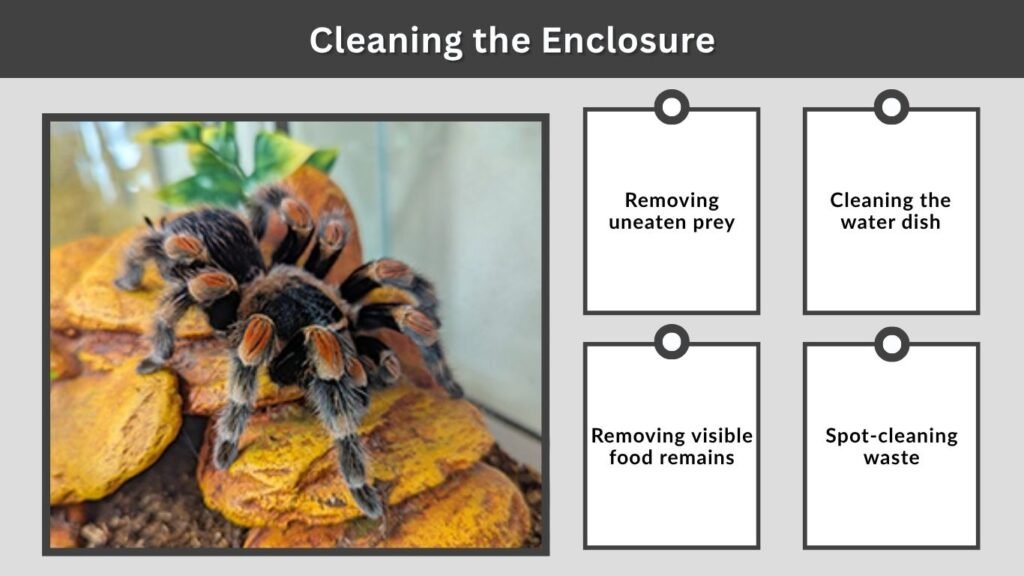
Mexican red-knee tarantulas produce relatively little waste, so complete enclosure cleaning is rarely necessary. Excessive cleaning may destroy the spider’s burrow and cause stress.
Routine maintenance should include:
- Removing uneaten prey
- Cleaning the water dish
- Removing visible food remains
- Spot-cleaning waste
- Checking for mold
- Inspecting the lid and ventilation
A complete substrate replacement may be appropriate if there is a serious mold, pest, or contamination problem. Otherwise, a stable, established enclosure can remain suitable for a long time.
Use long feeding tongs during maintenance, but never use them to touch or restrain the tarantula.
Common Care Mistakes
Although Mexican red knees are relatively hardy, improper husbandry can cause serious problems.
Using Too Little Substrate
Shallow substrate creates a dangerous falling distance and prevents natural digging. Provide several inches of compactable material and minimize unused vertical space.
Keeping the Enclosure Too Wet
Constant spraying and soaked substrate can create stagnant conditions. Keep most of the substrate relatively dry, provide good ventilation, and maintain a clean water dish.
Overfeeding
A severely enlarged abdomen is vulnerable to injury. Feed moderately and adjust the schedule according to the tarantula’s body condition rather than attempting to make it grow quickly.
Handling Frequently
Frequent handling increases stress and the likelihood of falls. A Mexican red knee is best treated as a display animal and observed inside its enclosure.
Disturbing a Molting Tarantula
Turning over or touching a tarantula during a molt can be fatal. Give it privacy, remove prey insects, and wait until its new exoskeleton has hardened before feeding.
Lifespan and Long-Term Commitment
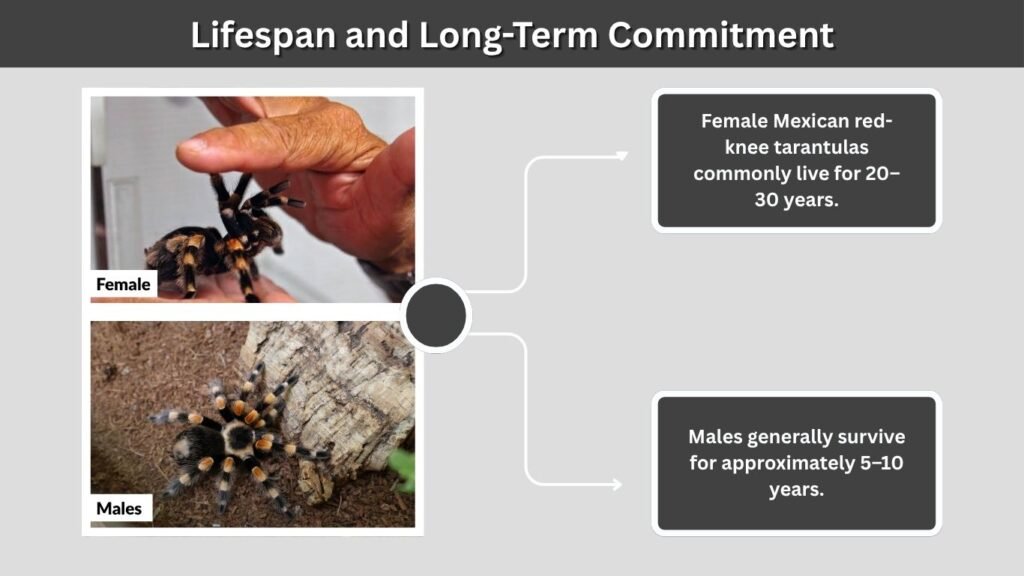
Female Mexican red-knee tarantulas commonly live for 20–30 years when cared for properly. Some may live even longer. Males generally survive for approximately 5–10 years and often live only a short time after reaching sexual maturity.
Before purchasing one, consider whether you can provide stable care for several decades. Because these tarantulas are protected and international trade is regulated, purchase only a legally obtained, captive-bred specimen from a responsible breeder.
FAQs
Are Mexican red-knee tarantulas good for beginners?
Yes, they are often suitable for responsible beginners because they are relatively hardy, slow-moving, and usually calm. However, beginners must understand proper enclosure setup, molting behavior, urticating hairs, and fall prevention before bringing one home.
How often should I feed a Mexican red-knee tarantula?
Most adults can be offered one or two appropriately sized insects every 7–14 days. Juveniles may eat more frequently. Adjust feeding according to abdomen size, and remove uneaten prey—especially when the tarantula appears ready to molt.
Does a Mexican red knee need a heat lamp?
Usually not. Normal indoor temperatures of approximately 70–78°F are generally suitable. Heat lamps can create dangerous hot spots and excessive dryness. If the room is consistently cold, warming the entire room is generally safer than directly heating the enclosure.
How often should I mist the enclosure?
Routine heavy misting is unnecessary and may make the enclosure too wet. Keep a clean water dish available and, when necessary, slightly moisten one small area of substrate. Appropriate ventilation is more important than maintaining an exact humidity percentage.
Can I hold my Mexican red-knee tarantula?
Handling is not recommended. The spider receives no benefit from being held and may release irritating hairs or bite defensively. More importantly, a short fall can rupture its abdomen and cause a fatal injury. Observe it safely inside its enclosure.
