
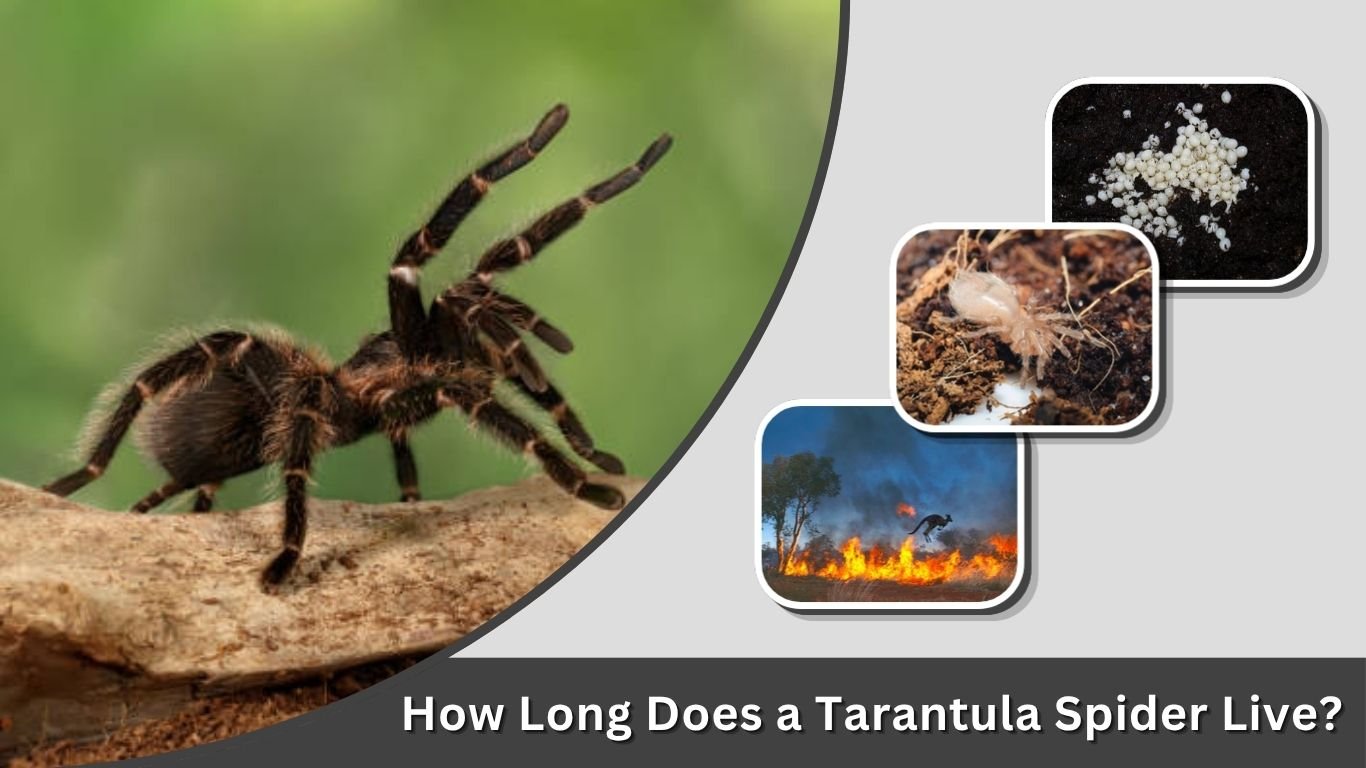
Tarantulas can live much longer than most other spiders, but their exact lifespan depends on species, sex, environment, and quality of care. Female tarantulas commonly live for 10–30 years, while males usually survive for only 3–10 years. Some slow-growing female species may live even longer under ideal conditions. Understanding the tarantula life cycle, growth rate, and care requirements can help explain why their lifespans vary so significantly.
Average Tarantula Lifespan
There is no single lifespan that applies to every tarantula. The tarantula family contains more than 1,000 recognized species living in deserts, forests, grasslands, and tropical environments.
Generally, female tarantulas live much longer than males. A female may survive for several decades, while a male often dies within one or two years after reaching sexual maturity.
| Tarantula category | Typical lifespan |
|---|---|
| Female tarantula | 10–30 years |
| Male tarantula | 3–10 years |
| Mature male after final molt | Several months to 2 years |
| Fast-growing tropical species | Approximately 5–15 years |
| Slow-growing desert species | Approximately 15–30 years |
These figures are general estimates. Genetics, food availability, temperature, injuries, disease, and captive conditions can shorten or extend an individual spider’s life.
Female vs. Male Tarantula Lifespan
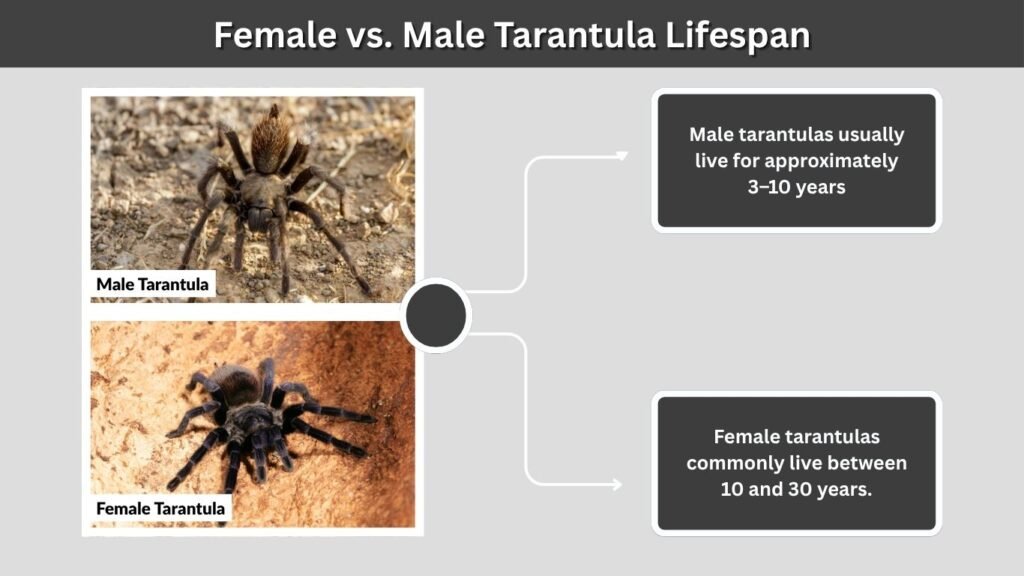
Sex is one of the most important factors affecting how long a tarantula lives. Females invest more of their lives in growing, maintaining a burrow, and producing egg sacs. Males mature more quickly and spend their final life stage searching for mates.
How Long Do Female Tarantulas Live?
Female tarantulas commonly live between 10 and 30 years. Species from dry regions, particularly slow-growing terrestrial tarantulas, often have the longest lifespans.
A female continues molting after reaching maturity. Each successful molt replaces her old exoskeleton, repairs some external damage, and allows limited growth. She may molt once every year or two as an adult, although the frequency depends on her species, age, food intake, and environment.
Because females continue molting, they can remain healthy and functional for many years after becoming mature.
How Long Do Male Tarantulas Live?
Male tarantulas usually live for approximately 3–10 years, depending on the species. Once a male completes his final maturation molt, his behavior changes significantly.
A mature male may develop:
- Enlarged pedipalps used during mating
- Tibial hooks on the front legs in some species
- A smaller abdomen
- Longer and thinner legs
- A strong desire to leave his shelter
After reaching maturity, the male usually stops molting. He spends much of his remaining life searching for a female. His appetite may decrease, and his abdomen can become noticeably smaller.
Many mature males survive for only several months to two years after their final molt. This is why correctly identifying a tarantula’s sex is important when estimating its potential lifespan.
Tarantula Lifespan by Species
Lifespan varies considerably among species. Slow-growing terrestrial tarantulas from dry regions tend to live longer than fast-growing arboreal species from warm tropical environments.
Common Tarantula Lifespan Estimates
| Tarantula species | Female lifespan | Male lifespan |
|---|---|---|
| Mexican red-knee tarantula | 20–30 years | 5–10 years |
| Chilean rose tarantula | 15–25 years | 3–8 years |
| Brazilian black tarantula | 20–30 years | 5–8 years |
| Arizona blonde tarantula | 20–30 years | 5–10 years |
| Curly hair tarantula | 15–25 years | 4–8 years |
| Pink-toe tarantula | 8–12 years | 3–5 years |
| Greenbottle blue tarantula | 10–15 years | 3–5 years |
| Goliath birdeater | 15–25 years | 3–6 years |
| Cobalt blue tarantula | 10–15 years | 3–5 years |
| Gooty sapphire tarantula | 10–15 years | 3–4 years |
These are approximate ranges rather than guaranteed lifespans. Individual spiders can live shorter or longer lives depending on genetics and environmental conditions.
The Tarantula Life Cycle
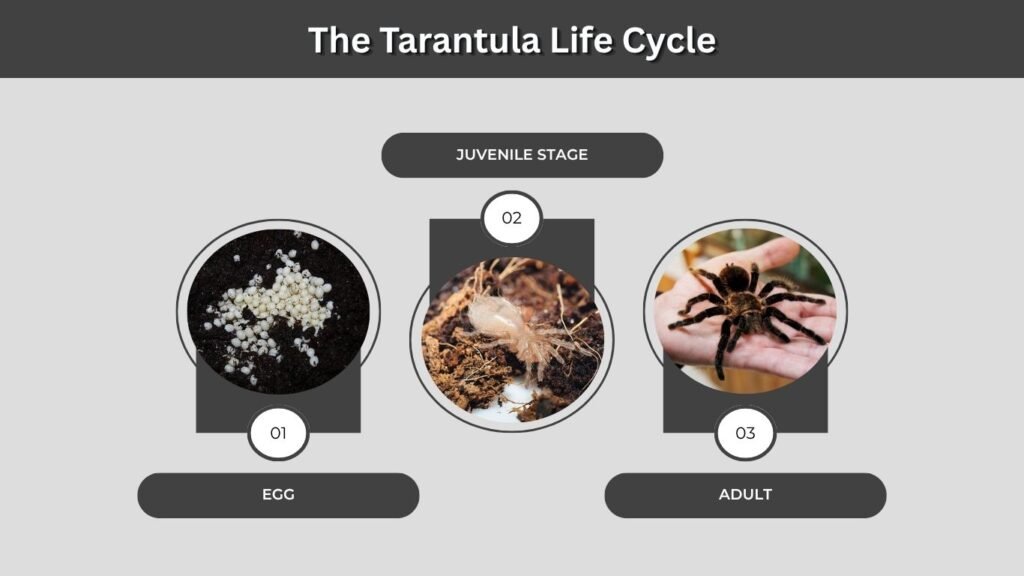
A tarantula passes through several stages before becoming an adult. Growth can take a few years or more than a decade, depending on the species and sex.
Egg and Spiderling Stage
The life cycle begins inside an egg sac created and guarded by the female. A single egg sac may contain dozens or hundreds of eggs.
The developing young first emerge as pale, delicate post-embryos. They eventually molt into mobile spiderlings capable of hunting very small prey. Spiderlings are vulnerable to dehydration, unsuitable temperatures, predators, and feeding problems.
Young tarantulas molt frequently because their rigid exoskeleton cannot expand continuously. A well-fed spiderling from a fast-growing species may molt several times during its first year.
Juvenile Stage
After passing through the earliest molts, the spider enters its juvenile stage. It looks like a smaller version of an adult, although its colors and patterns may change as it develops.
Juvenile females and males can appear very similar. Determining their sex usually requires examining a shed exoskeleton or identifying physical characteristics after the male reaches maturity.
The juvenile period may last a few years in fast-growing tropical species. Slow-growing desert tarantulas can remain immature for considerably longer.
Adult Stage
Female tarantulas continue to molt after becoming adults. They may mate and produce multiple egg sacs over their lifetime.
A male’s final molt marks the beginning of his mature adult stage. He then leaves the security of his burrow or webbed retreat to search for a female. Mating is dangerous because the female may attack or eat him, although this does not occur after every encounter.
Even when mating is successful, the male’s natural life cycle is nearing its end.
How Long Do Tarantulas Live in the Wild?
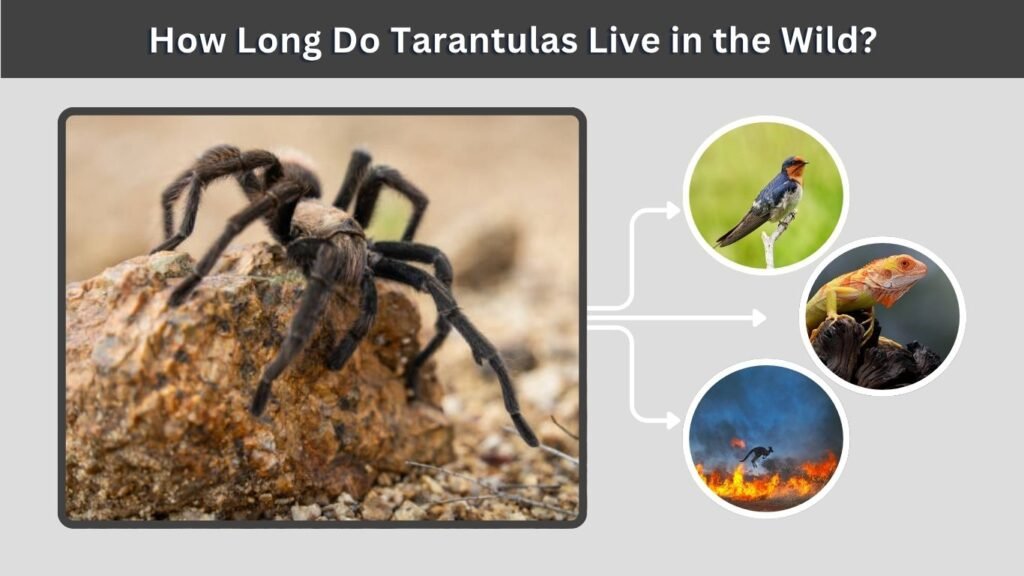
Wild tarantulas may have the genetic potential to live for decades, but they face numerous dangers. Spiderlings are especially vulnerable, and only a small percentage may survive to adulthood.
Natural threats include:
- Birds, reptiles, and small mammals
- Tarantula hawk wasps
- Centipedes and other arthropods
- Wildfires and flooding
- Habitat destruction
- Food and water shortages
- Injuries during mating
- Human persecution
A tarantula’s defensive abilities improve as it grows. Adults can use their fangs, speed, camouflage, threat displays, and, in many American species, irritating urticating hairs to discourage predators.
However, even a large adult tarantula can be killed by a specialized predator. Tarantula hawk wasps, for example, can sting and paralyze a tarantula before using its body as food for a developing larva.
How Long Do Pet Tarantulas Live?
A captive tarantula can potentially live longer than a wild individual because it receives regular food, clean water, and protection from predators. However, poor husbandry can significantly reduce its lifespan.
Pet owners must provide conditions appropriate for the particular species. A desert-dwelling terrestrial tarantula and a tropical arboreal tarantula should not be kept in identical enclosures.
Proper Enclosure
The enclosure should give the tarantula enough room to move without creating a dangerous falling distance. Terrestrial species need more horizontal floor space and sufficient substrate for burrowing.
Arboreal tarantulas require a taller enclosure with cork bark, branches, or other vertical retreats. Openings must be secure because tarantulas can escape through surprisingly small spaces.
Ventilation is essential. Continually wet, stagnant enclosures can encourage mold and other unhealthy conditions.
Food and Water
Pet tarantulas generally eat captive-raised crickets, roaches, mealworms, and similar invertebrates. Prey should be appropriately sized and should not be collected from areas exposed to pesticides.
Overfeeding can cause an excessively large abdomen, increasing the risk of a fatal rupture following a fall. A healthy tarantula does not need to eat every day.
Fresh water should always be available in a shallow dish. Tarantulas obtain some moisture from their prey, but this does not eliminate their need for accessible drinking water.
Temperature and Moisture
Most tarantulas can be kept comfortably within a moderate temperature range suitable for people, but individual species have different requirements. Extreme heat can quickly cause dehydration, while prolonged cold may reduce activity and digestion.
Humidity should not be maintained by constantly spraying the spider. It is better to provide the correct substrate moisture, adequate ventilation, and a clean water dish based on the species’ natural environment.
Factors That Affect a Tarantula’s Lifespan
A tarantula’s maximum potential lifespan is influenced by both biology and living conditions.
Species and Growth Rate
Slow-growing species usually take longer to reach maturity and often live longer. Fast-growing species mature earlier and may complete their natural life cycle within a shorter period.
Warm conditions and heavy feeding can accelerate growth. However, forcing rapid growth does not necessarily create a healthier or longer-lived tarantula.
Successful Molting
Molting is one of the most dangerous events in a tarantula’s life. The spider must remove its entire body from the old exoskeleton, including its legs, fangs, and delicate internal linings.
Dehydration, disturbance, injury, or unsuitable conditions can cause a failed molt. Never touch, move, or feed a tarantula while it is molting. Prey insects should be removed because they can injure the helpless spider.
Falls and Physical Injuries
Terrestrial tarantulas can be seriously injured by short falls. Their heavy abdomen may rupture if they land on a hard object.
An enclosure should not contain sharp decorations, and the distance between the substrate and lid should be limited. Tarantulas should never be handled for entertainment because dropping one can be fatal.
Stress and Handling
Tarantulas do not benefit from regular handling. Handling can expose them to falls, sudden movements, and unnecessary stress.
Some species are also defensive and possess medically significant venom. Observing the spider inside its enclosure is safer for both the keeper and the animal.
Signs of an Aging Tarantula
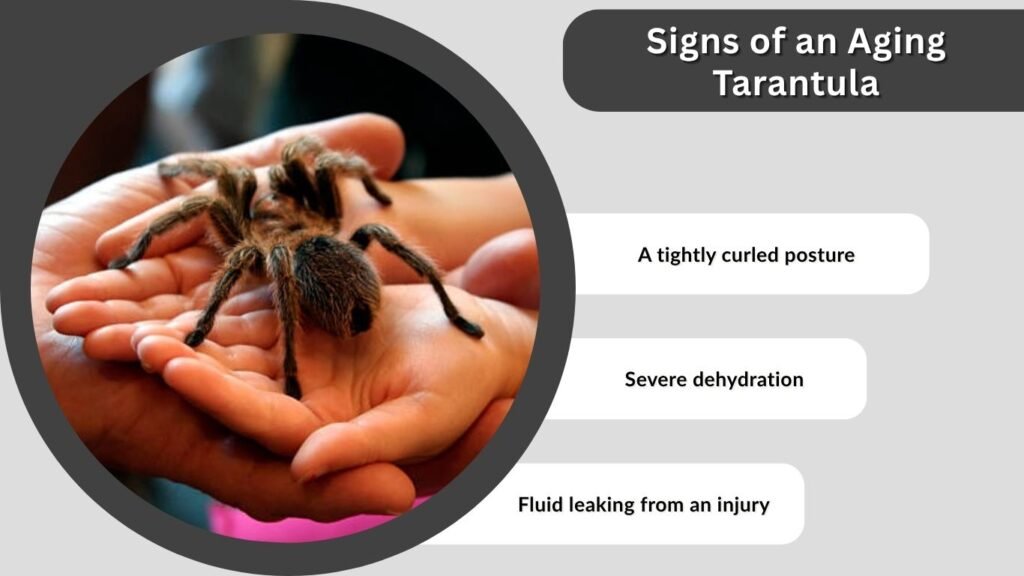
An older female may grow more slowly and take longer between molts. She may also become less active, although reduced activity alone does not necessarily mean that she is unhealthy.
A mature male is easier to recognize. He may wander frequently, refuse food, become thinner, and spend time tapping or attempting to escape. These behaviors usually indicate that he is searching for a mate rather than suffering from poor care.
Possible warning signs that require attention include:
- A tightly curled posture
- Severe dehydration
- Fluid leaking from an injury
- Repeated difficulty climbing
- A failed or incomplete molt
- Persistent exposure in an unusual position
A tarantula resting on its back is often preparing to molt. It should not be turned over or disturbed.
FAQs
What is the longest a tarantula can live?
Some female tarantulas may live for 30 years or longer, especially slow-growing species from dry environments. However, lifespan differs among species, and factors such as genetics, temperature, nutrition, injuries, and enclosure conditions influence how long an individual survives.
Why do female tarantulas live longer than males?
Females continue molting after reaching maturity and may reproduce repeatedly throughout their lives. Mature males usually stop molting and devote their remaining time to finding females. Many males die within several months to two years after their final molt.
How can I tell how old my tarantula is?
A tarantula’s exact age is difficult to determine without a known hatch date. Size alone is unreliable because feeding, temperature, species, and sex affect growth. Molting records and information from the breeder provide the most useful age estimate.
Can a tarantula die during molting?
Yes. Molting is a vulnerable process, and dehydration, injury, disturbance, or unsuitable conditions can cause complications. Keep the enclosure stable, remove live prey, and avoid touching the spider. A tarantula lying on its back during a molt is behaving normally.
Do wild tarantulas live as long as pet tarantulas?
Some wild females may survive for decades, but they face predators, habitat changes, food shortages, weather extremes, and injuries. Captive tarantulas avoid many of these dangers, although they will live longer only when provided with proper species-specific care.
