
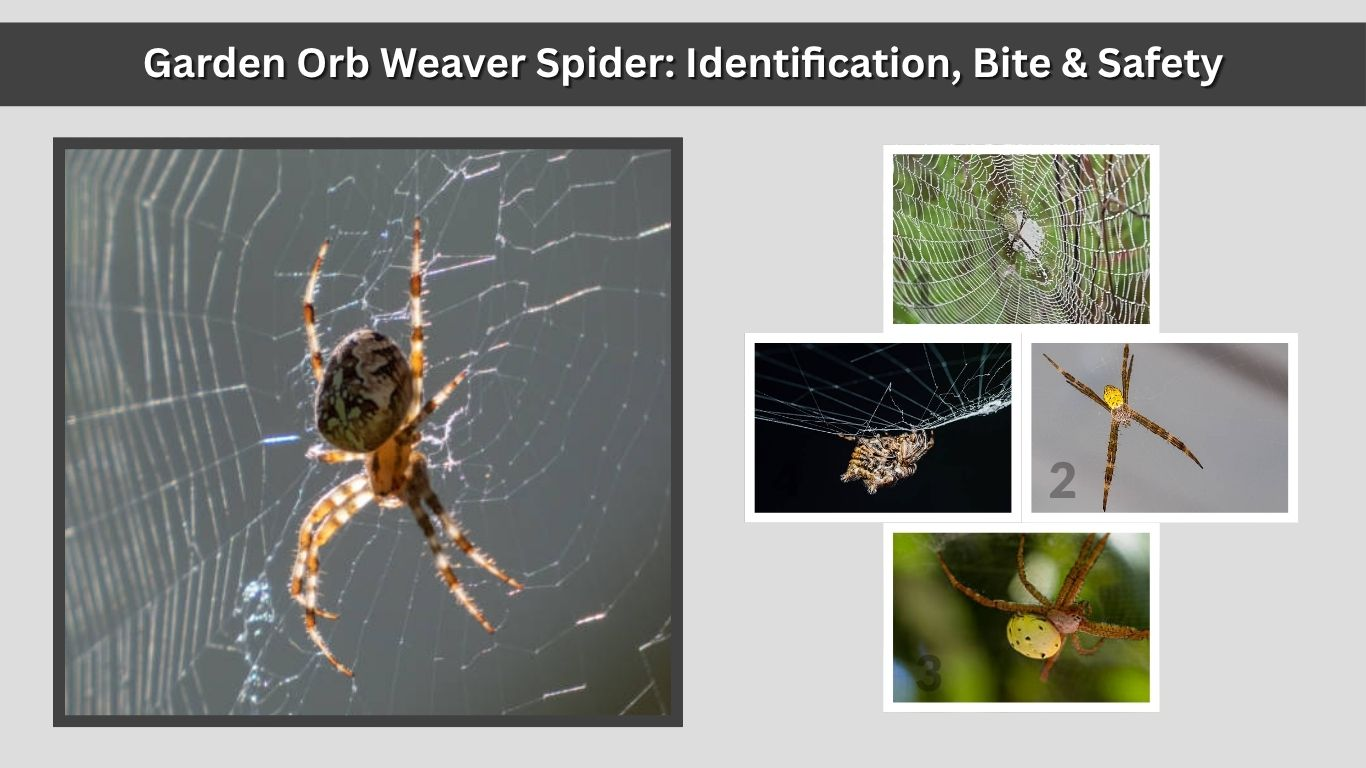
The garden orb weaver spider is one of the most common and recognizable spiders found in outdoor spaces. Known for its large, circular webs and unique body shapes, it often attracts attention in gardens, yards, and around homes. Many people search about it because of its size and questions like “is the garden orb spider poisonous” or “does it bite?”
If you’ve seen a garden orb spider or garden orb weaver spider, this guide will help you identify it, understand its behavior, and learn whether it is dangerous or beneficial.
What Is a Garden Orb Weaver Spider
Garden orb weaver spiders belong to a group of spiders known for building orb-shaped webs. These spiders are part of the orb-weaver family, which includes many species found around the world.
They are called “garden orb” spiders because they are commonly found in gardens, fields, and areas with plenty of vegetation. Their large, circular webs are designed to catch flying insects efficiently.
Despite their sometimes intimidating appearance, these spiders are harmless to humans and play an important role in controlling pest populations.
How to Identify a Garden Orb Spider

Physical Appearance
Garden orb spiders have a distinctive look that makes them easier to identify than many other spiders. They typically have a rounded abdomen and long legs.
Their colors can vary widely depending on the species. Some are yellow and black, while others may be brown, orange, or even darker shades. This variation often leads to confusion when identifying different types.
Key Identification Features
- Rounded or oval-shaped abdomen
- Long, slender legs
- Color variations (yellow, brown, black, or mixed patterns)
- Often found sitting in the center of a web
- Large, circular web structure
Types of Garden Orb Weaver Spiders
Common Species

There are many types of garden orb weaver spiders, but a few are more commonly seen. The yellow garden orb weaver is one of the most recognizable due to its bright coloring.
Another common type is the banded orb weaver, which has striped patterns on its body. The European garden spider, also known as the cross orb weaver, is also widely found in many regions.
Regional Variations

Different regions have their own variations of garden orb weaver spiders. For example, the Australian garden orb weaver spider is known for building large webs at night and removing them during the day.
In places like the United States and the United Kingdom, various species appear depending on the climate and environment. This wide distribution makes them one of the most common garden spiders worldwide.
Garden Orb Weaver Spider Web

Web Structure
The most defining feature of a garden orb weaver spider is its web. These spiders build large, circular webs that are carefully designed to trap flying insects.
The web is made of strong silk and often appears between plants, fences, or structures. Its symmetrical shape is both functional and visually striking.
Web Behavior
- Builds large orb-shaped webs
- Often rebuilds webs regularly
- May create webs at night
- Removes or repairs damaged sections
- Uses vibrations to detect trapped prey
Habitat & Where They Are Found
Common Habitats
Garden orb weaver spiders prefer environments where insects are abundant. They are commonly found in gardens, fields, forests, and around homes.
They often build webs in areas with open space, allowing insects to fly into them easily.
Geographic Distribution
These spiders are found in many parts of the world, including North America, Europe, and Australia. Different species adapt to different climates, making them widely distributed.
They are especially common in warm seasons when insect activity is high, which provides plenty of food.
Garden Orb Weaver Spider Bite
Do Garden Orb Spiders Bite

Garden orb weaver spiders rarely bite humans. They are not aggressive and usually avoid contact. Bites typically occur only if the spider is handled or feels threatened.
Most people will never experience a bite from these spiders, even if they are frequently around them.
Bite Symptoms
If a bite does occur, it is usually mild and not dangerous. Common symptoms include:
- Slight pain or discomfort
- Minor redness or swelling
- Temporary irritation
These symptoms are generally similar to a mild insect sting and go away quickly without serious effects.
Are Garden Orb Weaver Spiders Poisonous
Venom vs Poison
A common question is whether the garden orb weaver spider is poisonous. The correct term is venomous, not poisonous. This means the spider uses venom to subdue its prey but does not harm humans through touch or casual contact.
This distinction is important because many people assume all spiders are dangerous, when in reality, most—including this one—are harmless.
Are They Dangerous
Garden orb weaver spiders are not dangerous to humans. They are non-aggressive and prefer to avoid interaction.
Even when disturbed, they are more likely to retreat or remain still rather than attack. Their venom is mild and designed for insects, not humans, making them low-risk in everyday situations.
Garden Orb Weaver vs Other Spiders
Orb Weaver vs Garden Spider
The terms “orb weaver” and “garden spider” are often used interchangeably, which can cause confusion. In reality, garden spiders are a type of orb weaver.
Orb weavers are a large family of spiders, and garden orb weavers are just one group within that family. This is why their web structures and behaviors are very similar.
Yellow Garden Spider vs Orb Weaver
The yellow garden spider is actually a type of orb weaver. It is one of the most well-known species due to its bright colors and large size.
While all yellow garden spiders are orb weavers, not all orb weavers look the same. Some may be brown or less colorful, depending on the species.
Golden Orb Weaver vs Garden Spider
Golden orb weavers are often confused with garden orb weavers. While both build large webs, they belong to different groups.
Golden orb weavers usually produce golden-colored silk and may have different body shapes. Garden orb weavers, on the other hand, are more commonly found in typical yard environments.
Diet of Garden Orb Weaver Spiders
Garden orb weaver spiders feed mainly on flying insects. Their diet includes flies, mosquitoes, beetles, and other small insects.
They rely on their webs to capture prey. When an insect gets trapped, the spider quickly moves to immobilize it and begin feeding.
Because of this, these spiders play an important role in reducing pest populations naturally.
Life Cycle & Lifespan
Life Stages
The life cycle of a garden orb weaver spider includes several stages. It begins as an egg, which hatches into a spiderling. The spider then grows through multiple stages before reaching adulthood.
Most of this growth happens during warmer months when food is plentiful.
Egg Sac
Female garden orb weavers produce egg sacs that contain many eggs. These sacs are usually hidden in protected areas near the web or in nearby vegetation.
The eggs remain safe inside the sac until they hatch under suitable conditions.
Lifespan
The lifespan of a garden orb weaver spider is typically about one year. They grow during spring and summer, reproduce in late summer, and then die as temperatures drop.
Their life cycle continues through the next generation of spiderlings.
Benefits of Garden Orb Weaver Spiders
Garden orb weaver spiders are highly beneficial and should not be considered pests. They help maintain balance in the environment by controlling insect populations.
- Reduce pests like mosquitoes and flies
- Protect plants from harmful insects
- Support a natural, chemical-free ecosystem
- Indicate a healthy garden environment
Their presence is usually a positive sign for your garden.
Where You Might See Them
Garden orb weaver spiders are commonly found in outdoor areas where insects are abundant.
They are often seen between plants, along fences, near lights, and in open garden spaces. Their large webs make them easy to spot, especially during late summer when they are most active.
Common Myths About Garden Orb Spiders
Myth: They Are Dangerous
Despite their size and appearance, garden orb weavers are harmless to humans and rarely bite.
Myth: They Attack Humans
These spiders do not attack people. They prefer to avoid contact and will only defend themselves if necessary.
Myth: Their Webs Are Harmful
Their webs may look large and intimidating, but they are completely harmless and useful for catching insects.
How to Get Rid of Garden Orb Spiders (If Needed)
Safe Removal Methods
If you prefer not to have these spiders around, they can be removed safely.
- Relocate the spider using a container
- Remove webs regularly
- Avoid direct contact
Prevention Tips
Reducing spider presence involves limiting their food source.
- Reduce outdoor lighting that attracts insects
- Keep outdoor areas clean
- Remove webs early before they grow larger
These steps help manage spiders without harming the environment.
FAQs
Are garden orb weaver spiders dangerous
Garden orb weaver spiders are not dangerous to humans. They are non-aggressive and prefer to stay in their webs. Even if disturbed, they rarely bite, and their venom is mild, causing only minor irritation similar to a small insect sting.
Do garden orb spiders bite
Garden orb spiders can bite, but it is very rare. They usually bite only when handled or threatened. Most bites are mild and result in slight redness or swelling, which typically goes away quickly without medical treatment.
Are garden orb spiders poisonous
Garden orb spiders are not poisonous but venomous. Their venom is used to catch and immobilize insects and is not harmful to humans. They are considered safe and beneficial spiders in gardens and outdoor environments.
What does a garden orb spider look like
Garden orb spiders have a rounded abdomen, long legs, and come in various colors such as yellow, brown, or black. They are best known for their large, circular webs, which are often found in gardens and open outdoor spaces.
What do garden orb weaver spiders eat
They eat insects like flies, mosquitoes, beetles, and other flying pests. By trapping insects in their webs, they help control pest populations naturally, making them beneficial for gardens and reducing the need for chemical insect control.
