
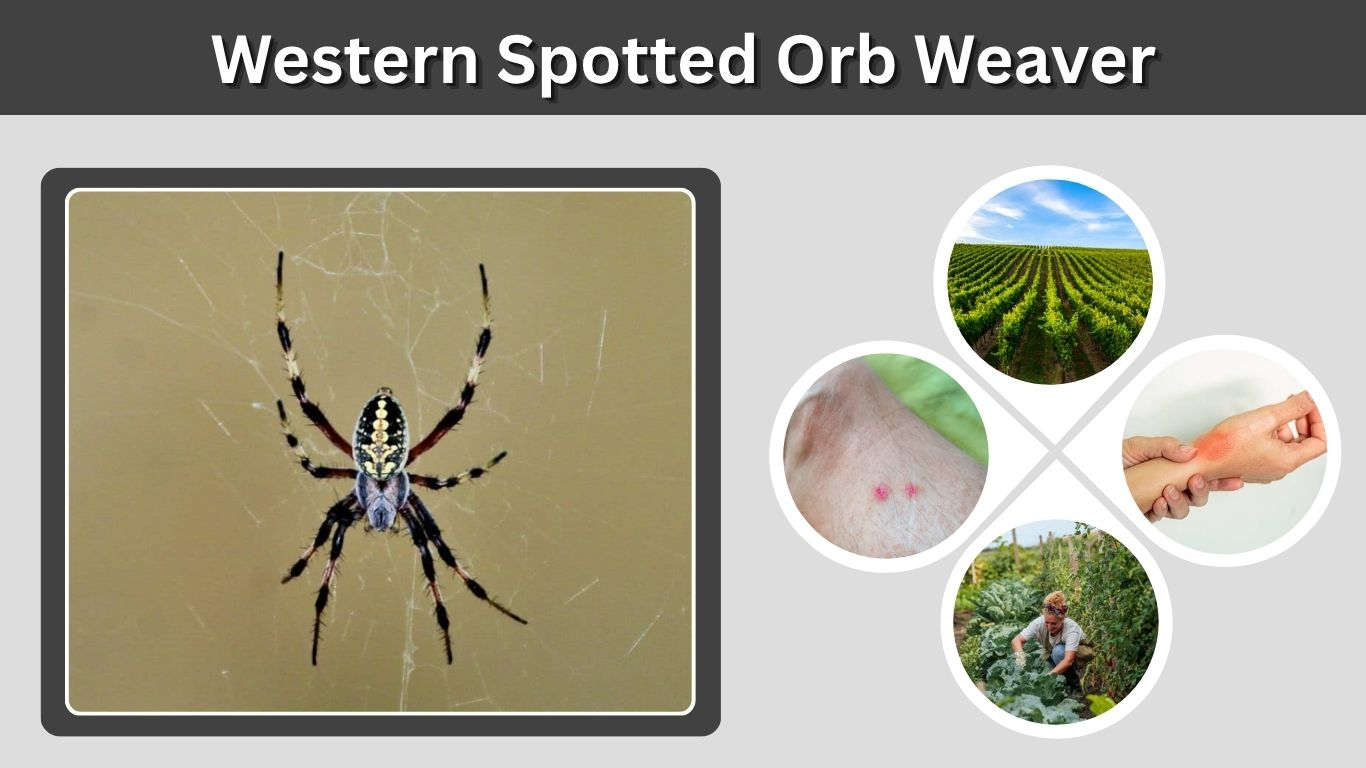
The western spotted orb weaver is a colorful orb-weaving spider known for its rounded abdomen, spotted pattern, and circular web. Its scientific name is Neoscona oaxacensis, and it belongs to the orb weaver family, Araneidae. This spider is often seen in gardens, fields, vineyards, shrubs, desert edges, and outdoor spaces in the western and southwestern United States. Although it may look bold, it is not considered dangerous to humans and is mainly helpful because it catches flying insects.
What Is a Western Spotted Orb Weaver?
The western spotted orb weaver is a medium to large orb-weaving spider that builds round webs to catch prey. It is also sometimes called the western garden orbweaver or zig-zag spider. Like other orb weavers, it does not chase people or infest homes like a pest insect.
Scientific Classification
| Category | Details |
| Common name | Western spotted orb weaver |
| Scientific name | Neoscona oaxacensis |
| Family | Araneidae |
| Group | Orb-weaving spiders |
| Main behavior | Builds large orb webs |
| Activity | Mostly nocturnal |
Western Spotted Orb Weaver Identification
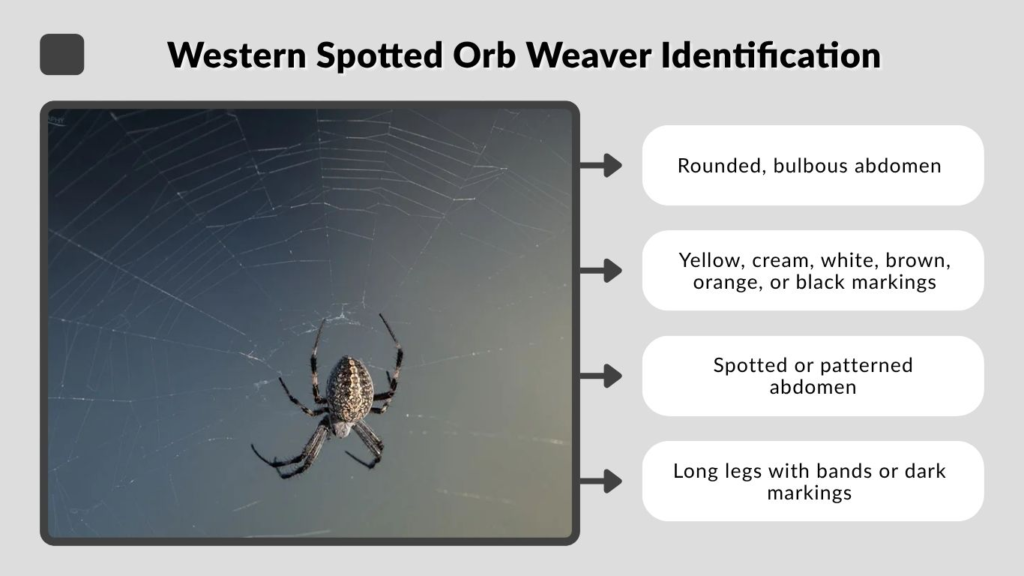
This spider can vary in color, so identification should focus on shape, markings, and web behavior. IDtools notes that the species has a large bulbous abdomen, many leg spines, and strong variation in coloration.
Identification
- Rounded, bulbous abdomen
- Yellow, cream, white, brown, orange, or black markings
- Spotted or patterned abdomen
- Long legs with bands or dark markings
- Many small spines on the legs
- Females are larger and heavier than males
- Builds a large circular orb web
- Often active at night
Western Spotted Orb Weaver Size
The western spotted orb weaver is not a tiny spider, but it is not as large as a tarantula. Females are bigger and easier to notice, while males are smaller and slimmer.
Male vs Female Size
BugGuide lists females at about 11–17 mm and males at about 5–12 mm in body length. IDtools gives a similar mature range, with females up to about 18 mm and males up to about 12.7 mm.
| Type | Approximate Body Length | Appearance |
| Female | 11–18 mm | Larger, rounder abdomen |
| Male | 5–12.7 mm | Smaller, slimmer body |
| Baby spider | Very small | Paler and less patterned |
Where Does the Western Spotted Orb Weaver Live?
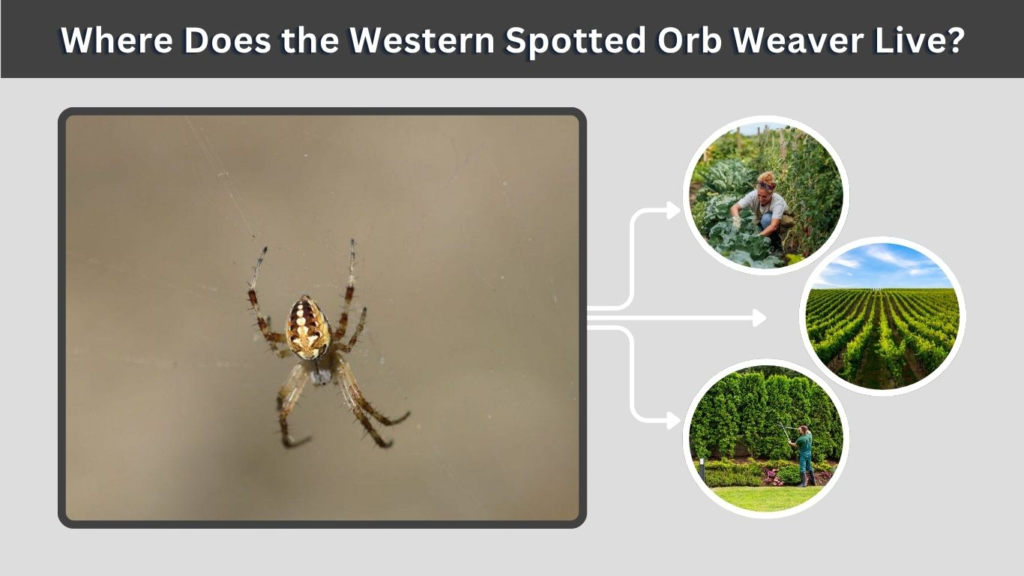
The western spotted orb weaver lives mostly in warm western and southwestern areas. BugGuide lists its U.S. range as western states including California, Texas, Kansas, and Washington, while IDtools notes that it occurs through much of California and from the southwestern United States through Central America into Peru.
Common Habitat
Western spotted orb weavers may live in gardens, vineyards, shrubs, fields, desert edges, orchards, fences, and areas with tall plants. They need open spaces where they can stretch a web between branches, stems, posts, wires, or other supports.
They are often seen in Arizona, Utah, California, Texas, New Mexico, and nearby western states, especially during warm months.
Western Spotted Orb Weaver Web
This spider builds a round orb web, usually in open spaces where flying insects pass through. The web may be placed between plants, rows of crops, fences, shrubs, or outdoor structures. IDtools describes it as a nocturnal orb-weaving spider that may string large webs between rows in grape-growing areas.
Web Behavior
The western spotted orb weaver usually builds or uses its web at night. It waits for insects such as moths, flies, beetles, mosquitoes, and small flying bugs to hit the sticky silk. Once prey is trapped, the spider moves in, bites it, wraps it in silk, and feeds.
Some webs may look messy in the morning after wind, dust, prey, or damage.
Is the Western Spotted Orb Weaver Poisonous?
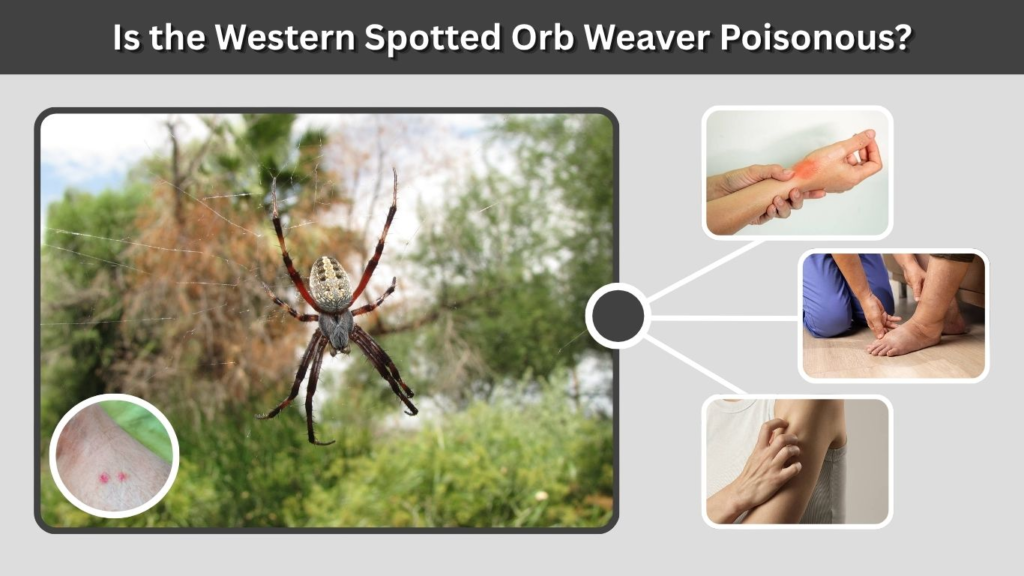
The western spotted orb weaver is venomous, like most spiders, but it is not considered dangerous to humans. “Poisonous” is often used by searchers, but the better word is venomous because the spider uses venom through a bite.
Bite Risk
IDtools lists the species as having minor medical importance and notes that a bite could be painful mainly because it is a larger spider with fangs that can pierce skin.
A bite may cause:
- Mild pain
- Redness
- Slight swelling
- Itching or irritation
- Short-term tenderness
Serious reactions are uncommon, but anyone with strong swelling, trouble breathing, dizziness, or spreading symptoms should seek medical help.
Is the Western Spotted Orb Weaver Dangerous?
The western spotted orb weaver is not considered dangerous. It is shy and usually stays in its web. It may bite only if trapped, squeezed, or handled roughly. In yards and gardens, it is more of a friend than a foe because it catches pest insects naturally.
Around Pets
A western spotted orb weaver is not usually a major danger to dogs or cats. However, pets may get mild irritation if bitten. If a dog or cat shows facial swelling, vomiting, weakness, or unusual behavior after contact with a spider, a veterinarian should be contacted.
Western Spotted Orb Weaver in Arizona, Utah, and Texas
This spider is often reported in dry and warm western habitats. In Arizona, it may appear around desert plants, gardens, washes, yards, and natural areas. In Utah, it can be seen in fields, shrubs, and open vegetation during warm seasons. In Texas, it may occur in western or southwestern parts of the state where suitable habitat is present.
Why It Appears Near Homes
It may build webs near homes because porch lights attract insects. It can also use fences, garden plants, patio rails, and outdoor wires as web supports. Seeing one near a house does not usually mean there is an infestation.
Western Spotted Orb Weaver Lifespan
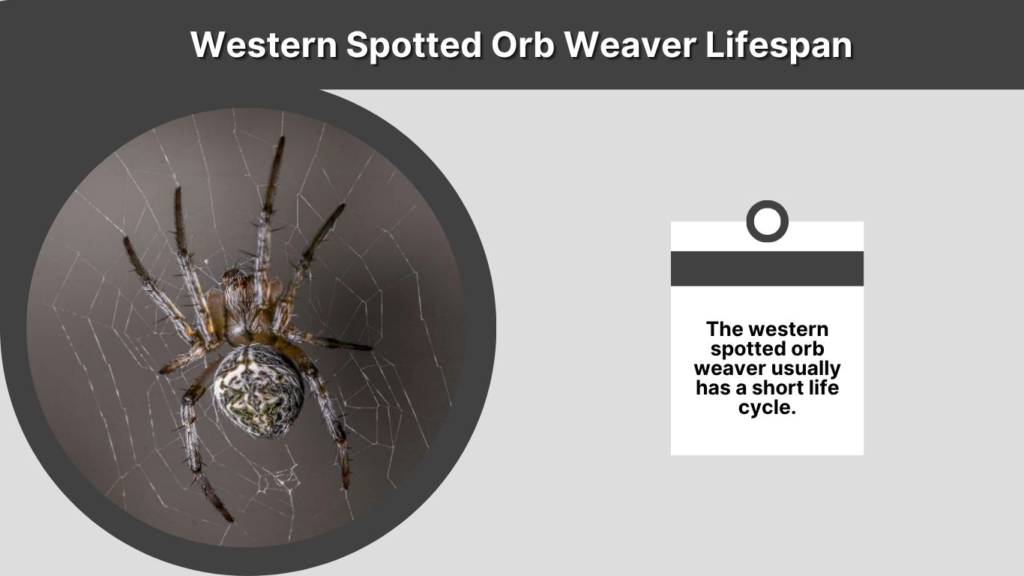
The western spotted orb weaver usually has a short life cycle. IDtools notes that it generally completes its life cycle in about six months and usually dies by winter, though timing can vary by climate and generation.
Eggs and Baby Spiders
Females lay egg sacs, and spiderlings hatch later when conditions are suitable. Young spiders are much smaller than adults and may not show the same strong pattern at first. As they grow, their markings become easier to notice.
Can You Keep a Western Spotted Orb Weaver as a Pet?
Some people may search for western spotted orb weavers as pets, but they are better observed outdoors. They need space to build webs, live prey, correct humidity, and safe handling. Since they are beneficial wild spiders, it is usually best to leave them in the garden or move them gently away from busy doorways.
FAQs
Is a western spotted orb weaver poisonous?
It is venomous, not poisonous in the usual sense. Its venom helps it subdue insects, but it is not considered dangerous to humans. A bite may be painful or irritating, but serious effects are uncommon.
What does a western spotted orb weaver bite feel like?
A bite may feel like a small pinch or mild sting. Some people may notice redness, swelling, itching, or tenderness around the bite area. Most bites are mild unless the person has an unusual reaction.
How big is a western spotted orb weaver?
Females are usually about 11–18 mm in body length, while males are smaller at about 5–12.7 mm. The legs can make the spider look larger than its body measurement.
Does the western spotted orb weaver make a web?
Yes, it makes a classic orb-shaped web. The web is usually built in open spaces between plants, fences, crop rows, shrubs, or outdoor structures where flying insects are likely to pass.
Is the western spotted orb weaver good for gardens?
Yes, it is helpful in gardens because it catches flies, moths, mosquitoes, beetles, and other insects. If its web is not blocking a walkway, leaving it alone can support natural pest control.
