
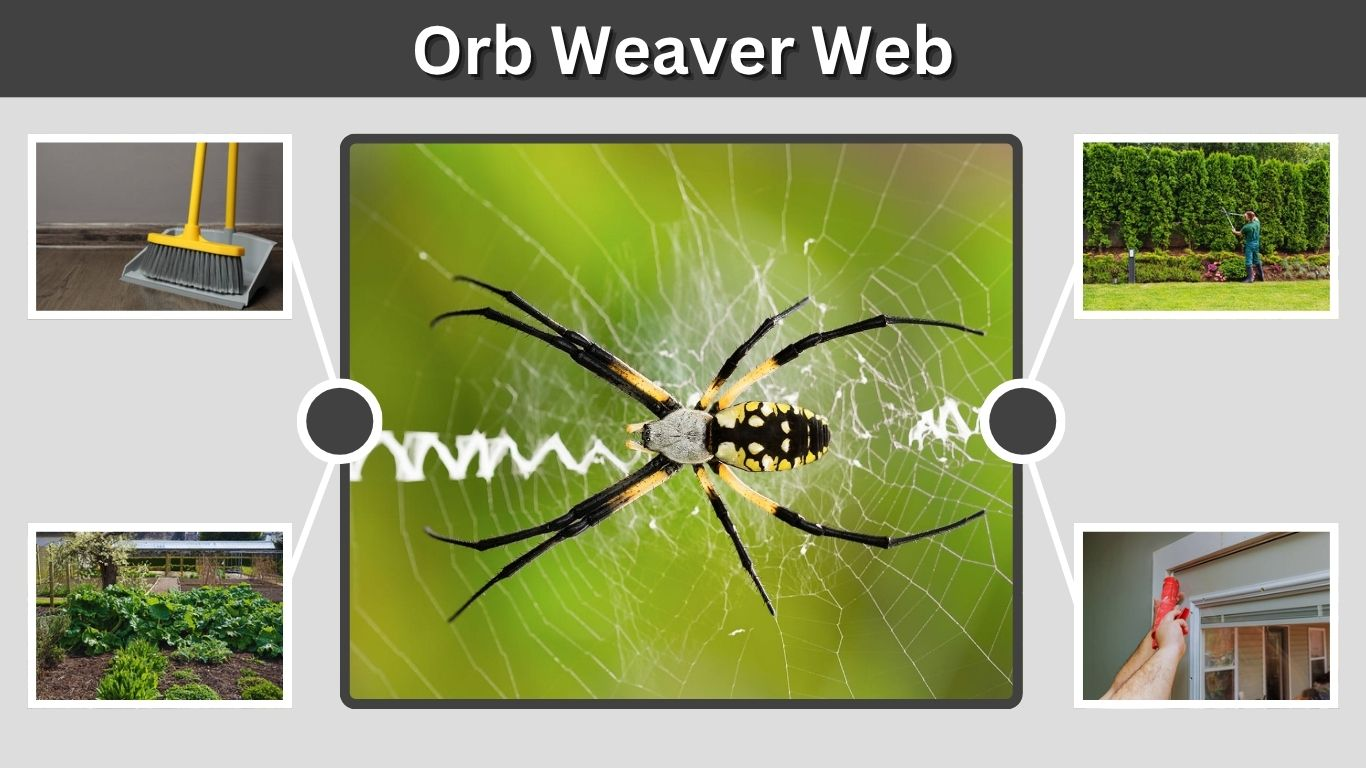
An orb weaver web is the classic round spider web most people picture when they think of spiders. These webs are usually wheel-shaped, with strong frame lines, straight spokes, and sticky spiral silk used to trap flying insects. Orb weaver spiders build webs in gardens, forests, fields, porches, shrubs, and between tree branches. Some webs are small and delicate, while others are large, golden, and very strong. Although these webs may look mysterious, they are carefully built hunting tools designed to catch flies, moths, mosquitoes, beetles, and other insects.
What Is an Orb Weaver Web?
An orb weaver web is a circular or wheel-shaped web made by spiders in the orb-weaver group. These spiders do not chase prey like wolf spiders. Instead, they build sticky webs in places where insects are likely to fly.
Orb Weaver Web Pattern
The web usually has a clear pattern. First, the spider creates anchor lines between plants, branches, fences, or buildings. Then it builds a frame, adds spoke-like lines from the center, and finally lays a sticky spiral around the web.
Common web features include:
- Round or wheel-shaped design
- Strong outer frame
- Straight radial lines like spokes
- Sticky spiral silk for catching prey
- A center hub where the spider may sit
- Support lines attached to plants or structures
This design helps the web absorb impact when flying insects hit it.
Where Do Orb Weavers Build Webs?
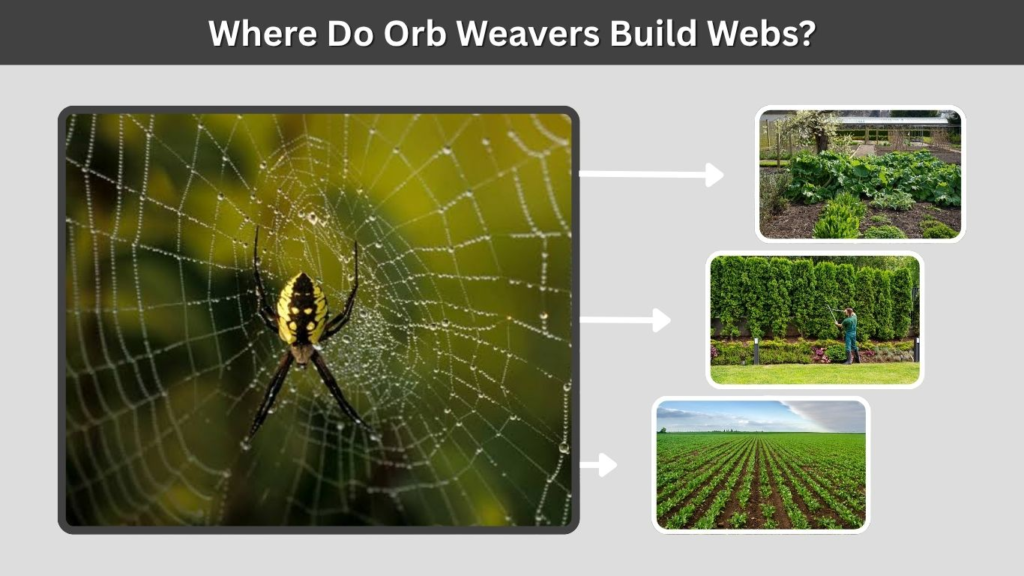
Orb weavers choose places where insects are active and where the web can be safely attached. Their webs are often seen outdoors, especially in warm months.
Common Web Locations
Orb weaver webs are often found in gardens, shrubs, fields, forests, orchards, porches, fences, and near outdoor lights. Lights attract moths and flies, so orb weavers may build webs nearby to catch them.
They may attach webs between tree branches, tall weeds, flower stems, porch rails, window frames, or fence posts. Most orb weaver webs are built in open spaces where flying insects pass through.
Orb Weaver Web Size
Orb weaver web size depends on the species, age, location, and available space. Some small orb weavers build webs only a few inches wide, while larger species can build webs several feet across.
| Orb Weaver Type | Typical Web Style | Common Location |
| Garden Orb Weaver | Medium to large round web | Gardens, shrubs, fences |
| Golden Silk Orb Weaver | Large golden web | Forest edges, trees, warm areas |
| Marbled Orb Weaver | Round web with nearby retreat | Gardens, fields, wooded edges |
| Cross Orb Weaver | Classic circular web | Porches, windows, hedges |
| Furrow Orb Weaver | Web near buildings or water | Bridges, barns, docks, porches |
| Spiny-backed Orb Weaver | Small orb web | Shrubs, trees, gardens |
Golden Orb Weaver Web Size
Golden orb weaver webs can be very large compared with many common garden spider webs. These spiders often stretch their webs between trees, shrubs, or tall plants. Their silk may shine yellow or gold in sunlight, which is why they are often called golden silk orb weavers.
Golden Orb Weaver Web Strength
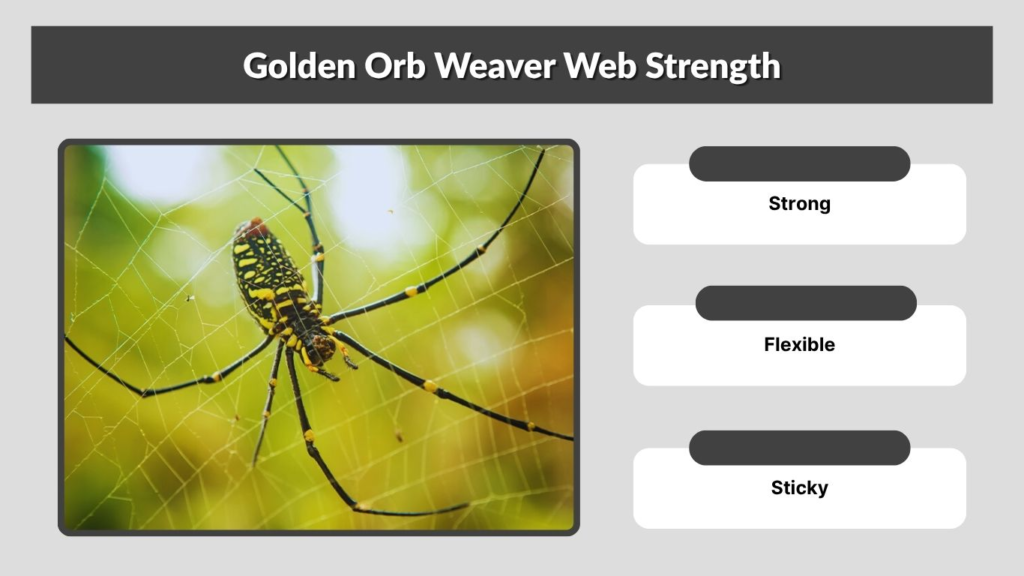
The golden orb weaver web is famous for its strength. Its silk is strong, flexible, and sticky enough to trap large flying insects such as moths, beetles, grasshoppers, and flies.
Why Golden Silk Is Special
Golden silk orb weaver silk can look yellow or golden when light hits it. The color may help make the web less visible in some lighting or more attractive to certain insects. Its strength also helps the spider build large webs that can survive wind, movement, and struggling prey.
Even though the silk is strong for its size, it is not dangerous to people. Walking into a golden orb weaver web may feel unpleasant, but the spider usually tries to escape rather than bite.
Orb Weaver Zigzag Web
Some orb weaver webs have a thick zigzag or zipper-like pattern through the center. This design is called a stabilimentum. It is most commonly seen in spiders such as garden spiders in the genus Argiope.
Why Some Webs Have a Zigzag
Scientists do not agree on one single reason for the zigzag pattern. It may help make the web visible to birds so they do not fly through it. It may also reflect light, attract insects, strengthen the web, or help hide the spider.
Not all orb weavers make zigzag webs. If you see a round web with a bold white zigzag in the middle, it may belong to a garden spider or another related orb-weaving spider.
Do Orb Weaver Spiders Take Down Their Webs?
Yes, many orb weaver spiders take down or rebuild their webs. Some species rebuild their webs daily, often at night or early morning. Others repair damaged sections instead of starting over completely.
Why Orb Weavers Remove Webs
Orb weavers may take down webs when the silk becomes damaged, dirty, dry, or less sticky. Wind, rain, dust, leaves, and struggling insects can weaken the web. A fresh web works better for catching prey.
Some orb weavers eat parts of their old web before building a new one. This allows them to recycle silk proteins instead of wasting energy.
Do Orb Weaver Spiders Eat Their Webs?
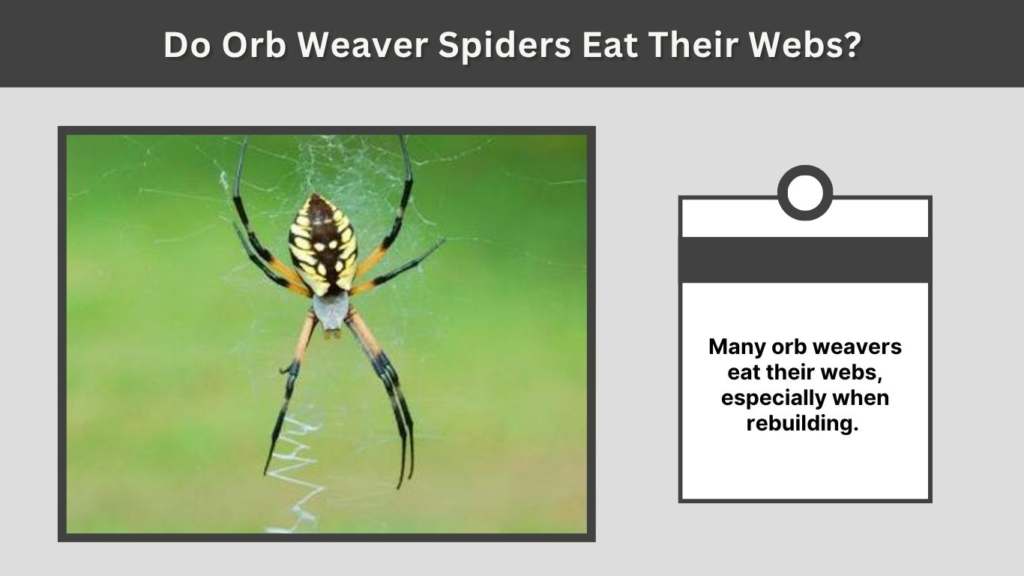
Many orb weavers eat their webs, especially when rebuilding. The spider rolls up old silk and consumes it before making a fresh web. This behavior may look strange, but it helps the spider recover nutrients.
Web Recycling Behavior
Eating the old web is useful because silk takes energy to produce. By recycling silk, the spider can build a new web without losing as much energy. This is one reason orb weavers can rebuild webs so often.
Species-Specific Orb Weaver Webs
Different orb weavers build slightly different webs. Some are large and golden, some are small and neat, and others have decorations or hidden retreats nearby.
Garden Orb Weaver Web
A garden orb weaver web is usually round and built between plants, fences, branches, or porch rails. These webs are common in gardens because flying insects are abundant around flowers, shrubs, and outdoor lights.
Marbled Orb Weaver Web
A marbled orb weaver web is usually built in gardens, tall weeds, fields, or wooded edges. The spider may hide in a curled leaf or silk retreat near the edge of the web and rush out when prey gets trapped.
Spiny-backed Orb Weaver Web
A spiny-backed orb weaver web is usually smaller than many garden orb weaver webs. It is often built between shrubs, trees, or garden plants. Some webs may have small silk tufts that make them easier to notice.
Cross Orb Weaver Web
A cross orb weaver web is a classic round web often found near windows, porches, hedges, fences, and outdoor lights. These spiders may sit in the center or hide nearby with a signal thread connected to the web.
Furrow Orb Weaver Web
A furrow orb weaver web is often found near buildings, barns, bridges, docks, fences, or water. This spider may build its web at night and hide in cracks or sheltered corners during the day.
Is an Orb Weaver Web Dangerous?
An orb weaver web is not dangerous to humans. The web is only meant to trap insects. If you walk into one, it may feel sticky and annoying, but it will not harm you.
Orb weavers themselves are also not considered dangerous. They may bite if handled or squeezed, but bites are rare and usually mild. Most orb weavers are beneficial because they reduce mosquitoes, flies, moths, beetles, and other pests.
How to Remove an Orb Weaver Web
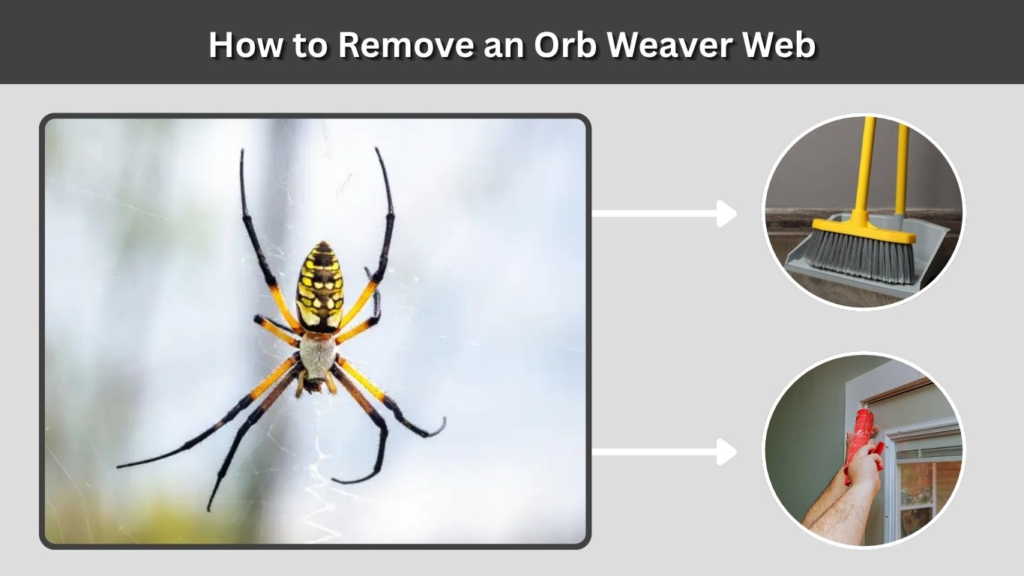
If a web is in a walkway, doorway, or porch area, you can remove it gently with a broom or stick. The spider will usually move away and rebuild somewhere else.
Simple Removal Tips
- Use a broom to clear webs from doorways.
- Turn off outdoor lights when not needed.
- Seal gaps around windows and doors.
- Move the spider outdoors if it enters the house.
- Avoid killing orb weavers when possible.
If the web is not bothering anyone, leaving it in place can help control insects naturally.
FAQs
What shape is an orb weaver’s web?
An orb weaver’s web is usually round or wheel-shaped. It has support lines, spoke-like radial lines, and sticky spiral silk. This classic circular pattern helps catch flying insects such as flies, moths, mosquitoes, and beetles.
How long does it take an orb weaver to make a web?
Many orb weavers can build a web in less than an hour, though the exact time depends on the species, web size, and conditions. Some spiders rebuild their webs daily, especially when old silk becomes damaged or dirty.
Why is there a zigzag in an orb weaver web?
The zigzag pattern may help protect the web, attract insects, reflect light, or warn birds not to fly through it. This pattern is not found in every orb weaver web, but it is common in some garden spiders.
Do orb weavers abandon their webs?
Yes, orb weavers may abandon webs if the location is poor, prey is limited, or the web becomes damaged. Some also rebuild in a new spot if wind, rain, people, or larger animals disturb the web often.
Are golden orb weaver webs really gold?
Golden orb weaver webs can look yellow or golden in sunlight. The silk color is one reason these spiders are called golden silk orb weavers. Their webs are also known for being strong, flexible, and effective at catching insects.
