
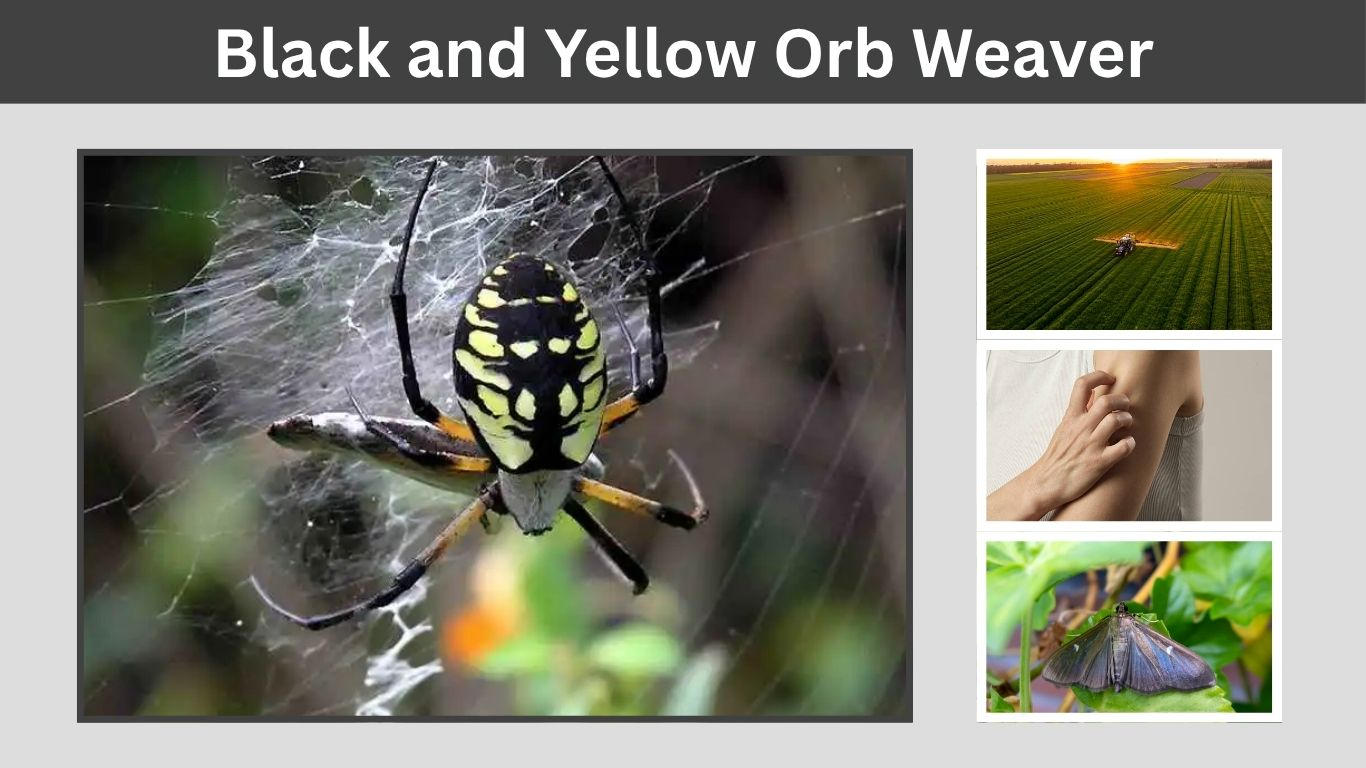
The black and yellow orb weaver usually refers to the black-and-yellow garden spider, also called the yellow garden spider, writing spider, zigzag spider, or black-and-yellow argiope. Its scientific name is Argiope aurantia. This spider is famous for its bright yellow and black abdomen, long banded legs, and large circular web with a white zigzag pattern. It may look scary, but it is not considered dangerous to humans and is helpful in gardens because it catches many pest insects.
What Is a Black and Yellow Orb Weaver?
A black and yellow orb weaver is a large garden spider in the orb-weaver family. It builds a round, wheel-shaped web and waits for insects to become trapped. These spiders are often noticed in late summer and fall because females grow large and sit in visible webs.
Common Names
This spider has several common names, including black-and-yellow garden spider, yellow garden spider, writing spider, zipper spider, zigzag spider, golden garden spider, and black-and-yellow argiope. The “writing spider” name comes from the thick zigzag silk pattern in the middle of the web.
Black and Yellow Orb Weaver Identification
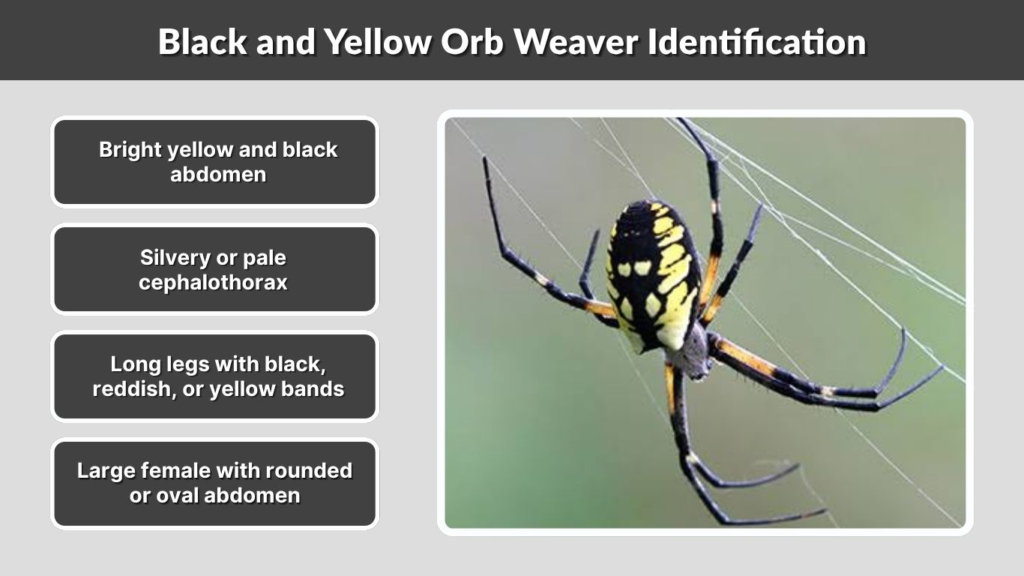
This spider is one of the easier orb weavers to recognize because of its bold color and web pattern. Females are especially noticeable, while males are much smaller and less colorful.
Identification
- Bright yellow and black abdomen
- Silvery or pale cephalothorax
- Long legs with black, reddish, or yellow bands
- Large female with rounded or oval abdomen
- Smaller male with duller markings
- Large circular orb web
- Thick white zigzag pattern in the web
- Often rests head-down in the center of the web
Black and Yellow Orb Weaver Size
Female black and yellow orb weavers are much larger than males. The National Wildlife Federation lists females at about 0.75 to 1.1 inches in body length, or 19 to 28 mm, and notes that females may be up to three times larger than males.
| Type | Approximate Size | Appearance |
| Female | 19–28 mm body length | Large, bright, rounded abdomen |
| Male | Much smaller | Slender, duller, less yellow |
| Baby spider | Tiny | Pale or lightly marked at first |
Where Do Black and Yellow Orb Weavers Live?
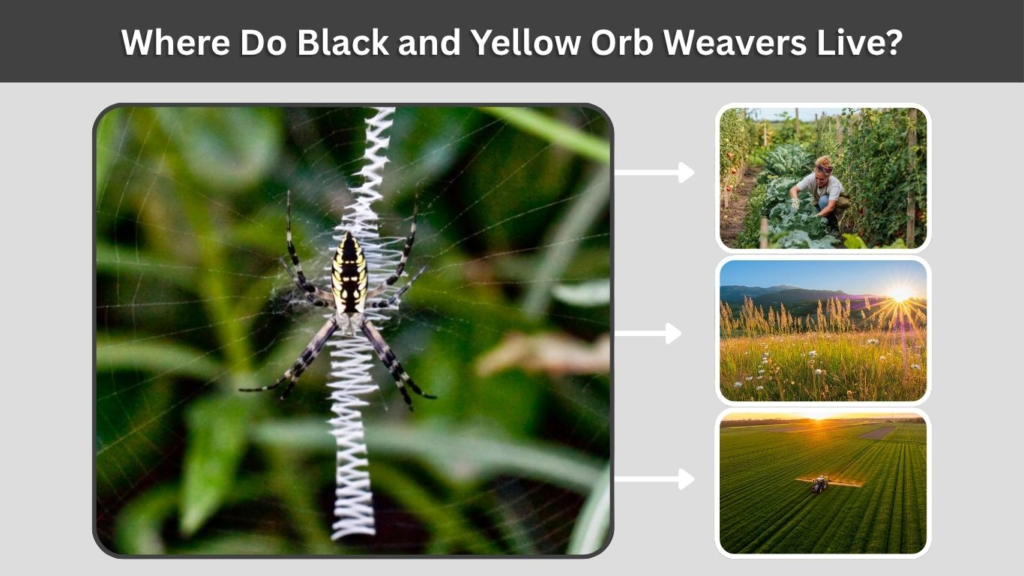
Black and yellow orb weavers live in sunny areas with plants that can support their webs. They are common in gardens, fields, meadows, shrubs, tall grass, farms, and backyard landscapes. They may also build webs near fences, porch rails, flower beds, and outdoor structures.
Range and Habitat
Yellow garden spiders are found across the continental United States and also occur in Canada, Mexico, and Central America. They prefer sunny, low-wind areas with plenty of insects and plant stems or branches for web support.
Black and Yellow Orb Weaver Web
The web is one of the best clues for identification. This spider builds a large circular orb web, often with a bold white zigzag line through the middle. This zigzag is called a stabilimentum.
Web Features
A black and yellow orb weaver web usually has a round frame, spoke-like lines, sticky spiral silk, and a thick zigzag band near the center. Some webs may reach about 2 feet wide or more in good locations. The spider uses web vibrations to detect trapped prey.
Why Does Its Web Have a Zigzag?
The exact purpose of the zigzag pattern is not fully settled. It may help make the web more visible to birds, strengthen the web, reflect light, attract insects, or help hide the spider. The National Wildlife Federation notes that one possible purpose is warning birds so they do not fly through and destroy the web.
Web Shaking Behavior
If disturbed, the spider may bounce or shake the web. This can look alarming, but it is usually a defense behavior. The spider is not preparing to jump at a person; it is trying to scare away a possible threat.
Is a Black and Yellow Orb Weaver Poisonous?
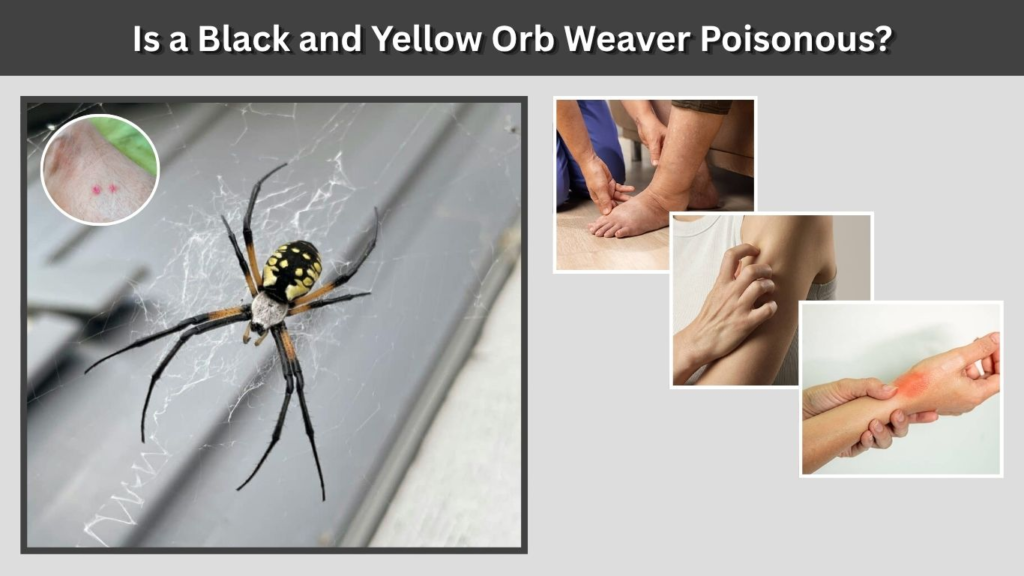
A black and yellow orb weaver is venomous, like most spiders, but it is not considered poisonous or dangerous to people. Its venom is used to paralyze insects caught in the web. For humans, the venom is generally not medically serious.
Black and Yellow Orb Weaver Bite
This spider can bite if handled, squeezed, or trapped against the skin. South Dakota State University Extension explains that the spider is not aggressive and usually retreats when disturbed; bites can be painful because it is a large spider, but they are not considered dangerous.
A bite may cause mild pain, redness, swelling, or itching. Anyone with severe swelling, breathing trouble, dizziness, or spreading symptoms should seek medical help because individual reactions can vary.
Black and Yellow Garden Spider vs Golden Orb Weaver
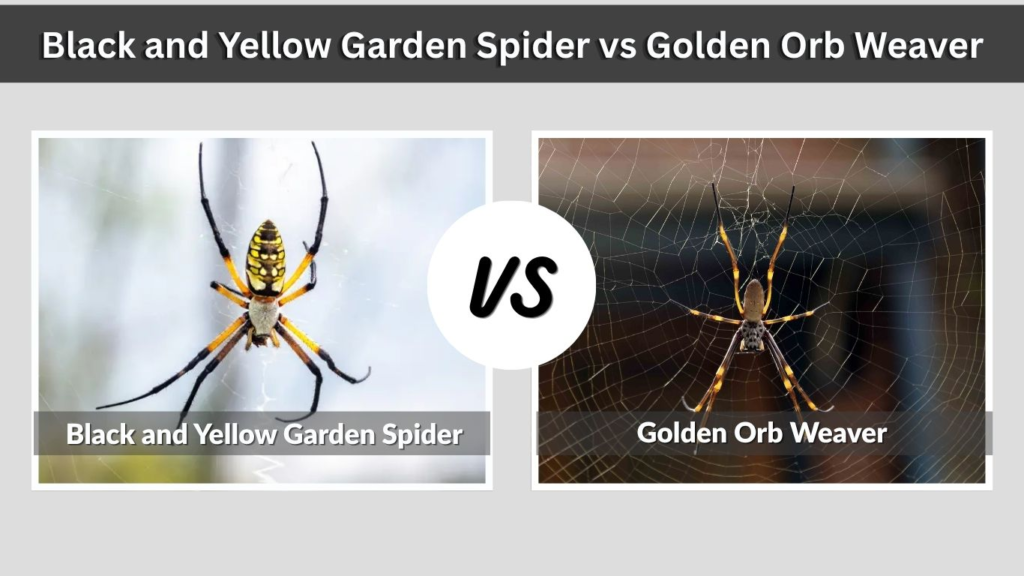
People often confuse the black and yellow garden spider with the golden orb weaver or banana spider. The black-and-yellow argiope has a more rounded, flatter abdomen with strong black and yellow markings. Golden silk orb weavers usually have a longer, more slender body and build large golden-tinted webs.
| Feature | Black and Yellow Garden Spider | Golden Orb Weaver |
| Body shape | Rounder, flatter abdomen | Longer, slimmer abdomen |
| Web | Circular web with zigzag | Large golden silk web |
| Color | Bold black and yellow | Yellow, tan, orange, brown |
| Common name issue | Also called writing spider | Often called banana spider |
What Do Black and Yellow Orb Weavers Eat?
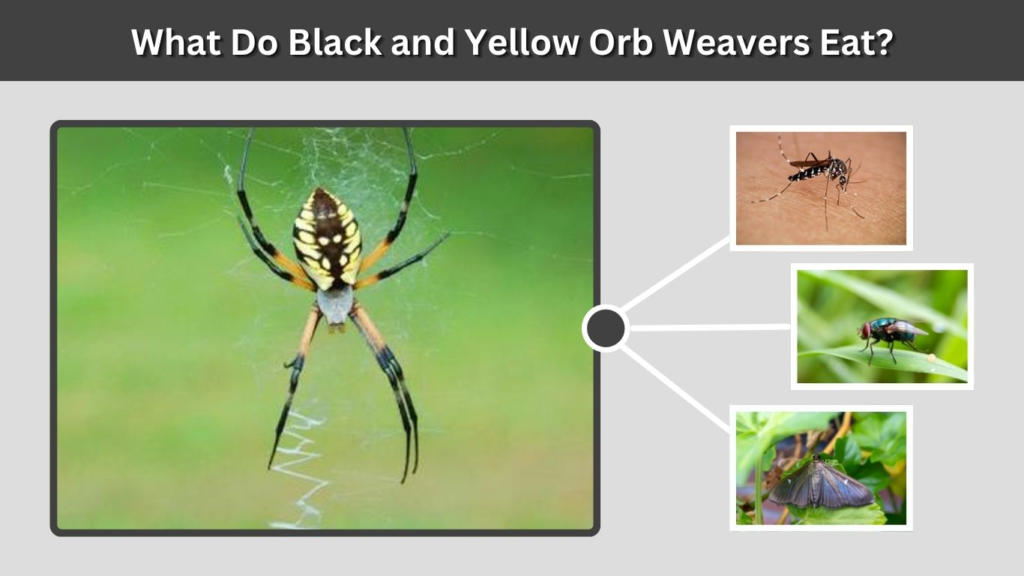
Black and yellow orb weavers eat flying and jumping insects that get trapped in their webs. Their prey can include mosquitoes, flies, gnats, aphids, moths, beetles, wasps, grasshoppers, and other small insects. Clemson Extension describes them as beneficial garden spiders because they prey on bothersome insects.
Egg Sacs and Baby Black and Yellow Orb Weavers
Females produce tan or brown papery egg sacs, usually near the web. Texas Master Gardeners notes that a female may produce one or more egg sacs, often no more than three, and each may contain hundreds to more than a thousand eggs.
Baby Spiders
Baby black and yellow orb weavers are tiny spiderlings. In colder regions, spiderlings may stay protected inside the egg sac through winter and emerge in spring. Adults often die after the first hard frost, while the egg sac helps the next generation survive.
Is a Black and Yellow Orb Weaver Friend or Foe?
A black and yellow orb weaver is a friend in most gardens. It does not damage plants, does not infest homes, and helps reduce pest insects naturally. If its web is in a doorway or walkway, you can gently relocate the spider or remove part of the web so it rebuilds somewhere safer.
FAQs
Are black and yellow orb weaver spiders poisonous?
They are venomous but not considered poisonous or dangerous to humans. Their venom is mainly used to stop insects caught in the web. A bite is rare and usually causes only mild, short-term symptoms.
What happens if a black and yellow orb weaver bites you?
A bite may feel like a small sting and can cause redness, swelling, itching, or mild pain. Most bites happen when the spider is handled or squeezed. Seek medical care if symptoms are severe or spreading.
Do black and yellow orb weavers live in Missouri and Wisconsin?
Yes, they can occur in states such as Missouri and Wisconsin because they are found across much of the continental United States. They are usually seen in gardens, fields, shrubs, and sunny outdoor areas during warm months.
What does a black and yellow orb weaver web look like?
Its web is large, round, and wheel-shaped. A thick white zigzag pattern often runs through the center, giving the spider names like writing spider, zipper spider, and zigzag spider.
Are black and yellow orb weavers good for gardens?
Yes, they are beneficial garden spiders. They catch mosquitoes, flies, aphids, moths, beetles, wasps, and other insects. If their web is not blocking a path, it is usually best to leave them alone.
