
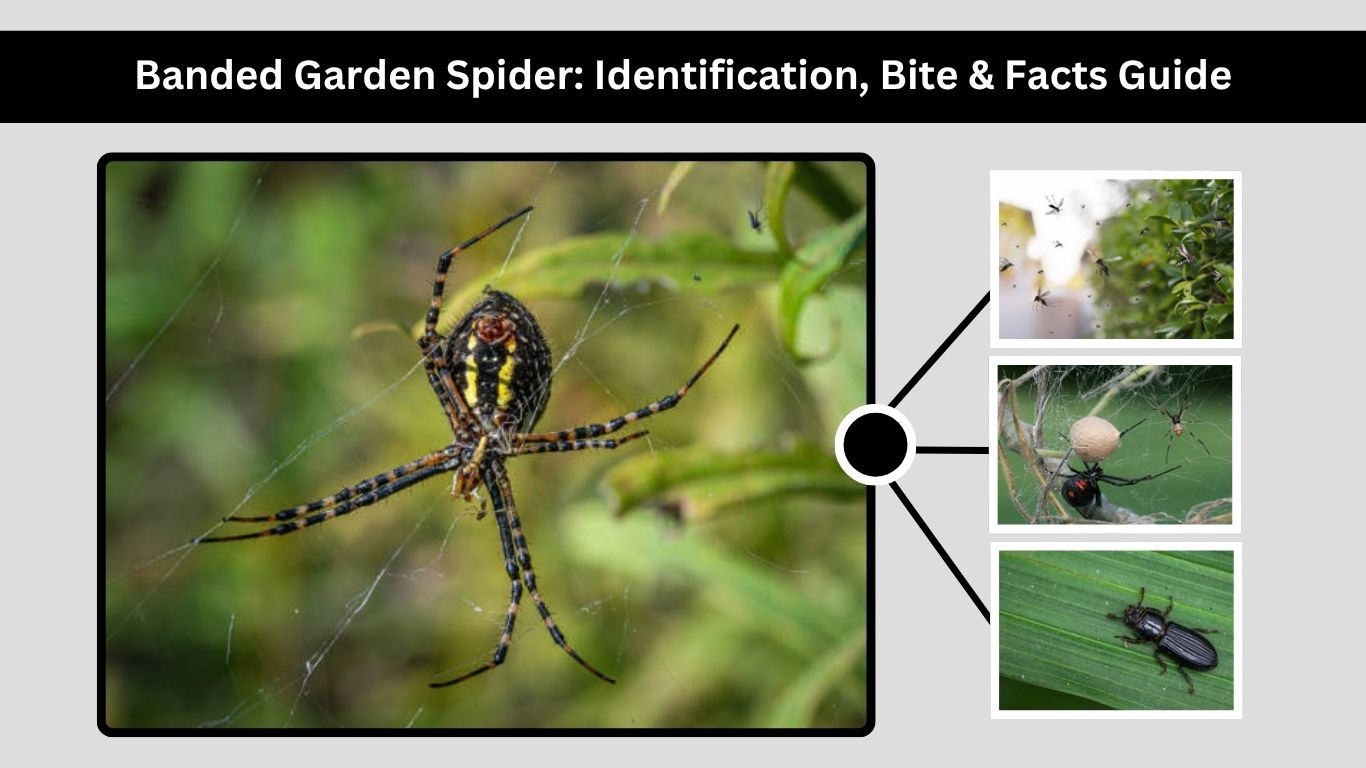
The banded garden spider is a striking and commonly seen spider in gardens and outdoor spaces. Known for its bold black, yellow, and white patterns, this spider often attracts attention due to its large size and unique web design. Many people search about it because of concerns like “is the banded garden spider poisonous” or curiosity about its appearance and behavior.
If you’ve spotted a banded garden spider or garden banded spider in your yard, this guide will help you identify it, understand its habits, and learn whether it poses any risk.
What Is a Banded Garden Spider
The banded garden spider, scientifically known as Argiope trifasciata, is a type of orb-weaver spider. It belongs to a group of spiders that are famous for building large, circular webs.
This species is commonly found in gardens, fields, and grassy areas. It is part of the orb weaver family, which means it spins strong, symmetrical webs to catch prey.
The banded garden spider is beneficial to the environment because it feeds on insects that can damage plants. Despite its intimidating look, it is generally harmless to humans.
How to Identify a Banded Garden Spider
Physical Appearance
The banded garden spider is easy to recognize due to its unique color patterns. Its body features horizontal bands of black, yellow, and white, giving it a striped appearance.
Its legs are long and also show banded markings, which help distinguish it from other spiders. Some variations may appear more yellow or silver, leading to names like yellow banded garden spider or silver banded garden spider.
Size and Growth
Size is another key feature for identification. Female banded garden spiders are much larger than males and are more commonly seen.
Females can grow up to about an inch or more in body length, while males are significantly smaller. This size difference often leads to confusion when identifying male vs female banded garden spiders.
Male vs Female Banded Garden Spider

Female Banded Garden Spider
Female banded garden spiders are larger, more colorful, and easier to spot. They are usually found sitting in the center of their web, waiting for prey.
Their bright banded patterns make them highly visible in gardens. Females are responsible for building and maintaining the web, as well as laying eggs.
Male Banded Garden Spider
Male banded garden spiders are much smaller and less noticeable. They often stay near the edges of the female’s web and are rarely seen.
Their primary role is reproduction, and they do not build large webs like females. Because of their size and behavior, they are often overlooked.
Banded Garden Spider Web
Web Structure
The banded garden spider builds a classic orb-shaped web. These webs are large, circular, and very strong. One of the most distinctive features is the zigzag pattern, known as stabilimenta, found in the center of the web.
This pattern makes the web more visible and may help attract prey or deter predators.
Purpose of the Web
The web serves multiple purposes. It is used to catch flying insects such as flies, mosquitoes, and grasshoppers.
The spider usually sits in the center of the web, waiting for vibrations that signal trapped prey. The web also acts as a safe space for the spider to rest and monitor its surroundings.
Banded Garden Spider Habitat & Range

Natural Habitat
Banded garden spiders prefer open, sunny areas where they can build large webs. They are commonly found in gardens, fields, tall grass, and near fences.
They often choose locations with plenty of insect activity, which provides a steady food source.
Geographic Distribution
This spider is widely found in North America, including regions like Texas, California, and Arizona. It can also be found in other parts of the world with similar climates.
Its wide distribution makes it one of the most recognizable garden spiders.
Diet of Banded Garden Spider

The banded garden spider feeds primarily on insects. Its diet includes flies, mosquitoes, beetles, and even larger insects like grasshoppers.
It captures prey using its web, which traps insects as they fly into it. Once caught, the spider quickly immobilizes the insect and begins feeding.
Because of its diet, the banded garden spider plays an important role in controlling pest populations in gardens and outdoor spaces.
Banded Garden Spider Life Cycle

Life Stages
The life cycle of the banded garden spider begins with eggs. These eggs hatch into tiny spiderlings, which grow and develop into adults over time.
The growth process usually takes place during warmer months, with spiders becoming fully mature by late summer.
Egg Sac and Reproduction
Female banded garden spiders produce egg sacs that contain hundreds of eggs. These sacs are often attached near the web or hidden in nearby vegetation.
The eggs remain protected inside the sac until they hatch. After laying eggs, the female’s life cycle typically comes to an end as the season changes.
Banded Garden Spider Lifespan
The lifespan of a banded garden spider is relatively short. Most individuals live for about one year. They hatch in spring, grow through summer, and reach maturity by late summer or early fall.
After reproduction, many adults die as temperatures drop. However, their eggs survive the winter inside protective sacs and hatch the following season, continuing the cycle.
Are Banded Garden Spiders Poisonous
Venom vs Poison
A common question is whether the banded garden spider is poisonous. Technically, it is venomous, not poisonous. This means it uses venom to subdue prey but does not harm humans through touch or accidental contact.
The confusion comes from the terms, but for practical purposes, this spider is considered safe around people.
Danger to Humans
Banded garden spiders are not dangerous to humans. They are non-aggressive and will usually avoid contact.
Even if disturbed, they are more likely to retreat than attack. Their venom is mild and designed for insects, not humans, making them low-risk compared to other spider species.
Banded Garden Spider Bite
What Happens If Bitten
Bites from a banded garden spider are very rare. When they do occur, the symptoms are usually mild.
A bite may feel similar to a small bee sting, causing slight redness, swelling, or irritation. Serious reactions are extremely uncommon.
Bite Treatment
If a bite happens, basic first aid is usually enough. Clean the area with soap and water and apply a cold compress to reduce swelling.
If symptoms worsen or an allergic reaction occurs, medical attention should be sought. However, this is rarely necessary.
Benefits of Banded Garden Spiders
Banded garden spiders are highly beneficial to gardens and outdoor spaces. They act as natural pest controllers by feeding on insects that can damage plants.
They help reduce populations of flies, mosquitoes, and other pests without the need for chemicals. Their presence is often a sign of a healthy ecosystem.
Instead of being harmful, these spiders are helpful allies in maintaining balance in nature.
Where You Might See Them
Banded garden spiders are commonly found in outdoor environments where insects are abundant.
They are often seen in gardens, along fences, between plants, and in tall grass. Their large webs are usually built in open areas where flying insects are likely to pass through.
They are most visible during late summer and early fall when they are fully grown and most active.
Common Myths About Banded Garden Spiders
Myth: They Are Dangerous
Many people assume that large spiders are dangerous. However, banded garden spiders are harmless and rarely bite.
Myth: They Attack Humans
These spiders do not attack humans. They are passive and prefer to avoid interaction whenever possible.
Myth: Their Webs Are Harmful
Their webs may look large and intimidating, but they are completely harmless and play an important role in catching pests.
How to Get Rid of Banded Garden Spiders (If Needed)
Safe Removal Methods
If you prefer not to have these spiders around, they can be removed safely without harm.
- Gently relocate the spider using a container
- Remove webs regularly to discourage rebuilding
- Keep distance while handling
Prevention Tips
Preventing spiders is mainly about reducing their food source.
- Reduce outdoor lighting that attracts insects
- Keep garden areas clean
- Remove webs early before they grow larger
These steps can help minimize spider presence without harming the environment.
FAQs
Is a banded garden spider poisonous
No, it is not poisonous. It is mildly venomous, but its venom is harmless to humans and used only for catching insects.
What does a banded garden spider look like
It has black, yellow, and white bands across its body and legs. Females are larger and more colorful than males.
Are banded garden spiders dangerous
No, they are not dangerous. They are non-aggressive and rarely bite unless directly handled.
Where do banded garden spiders live
They live in gardens, fields, and outdoor spaces with plenty of insects. They prefer sunny areas where they can build large webs.
What do banded garden spiders eat
They feed on insects such as flies, mosquitoes, beetles, and grasshoppers, helping control pest populations naturally.
