
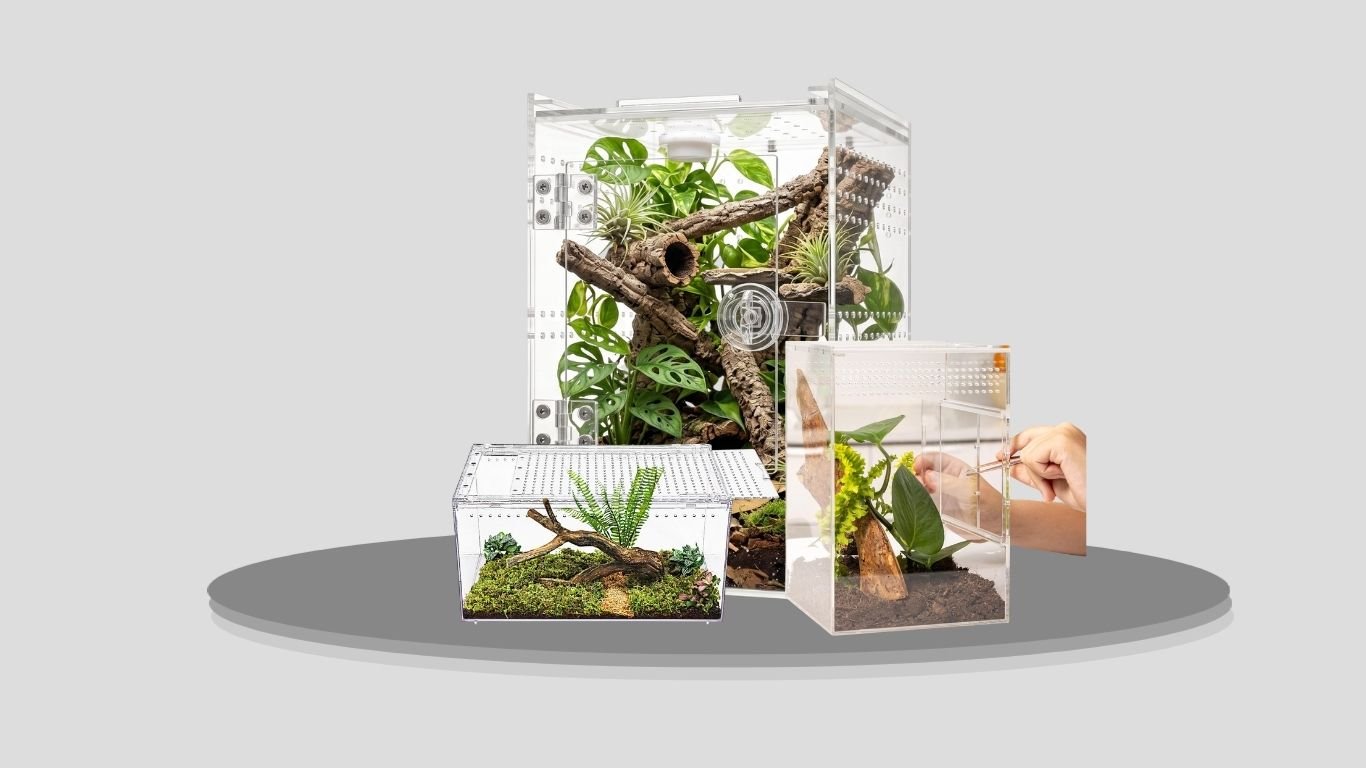
A well-designed tarantula enclosure should provide secure ventilation, enough room for natural behavior, easy access for feeding, and a layout that matches the species’ lifestyle. Terrestrial, fossorial, and arboreal tarantulas all have different space and climbing needs, so enclosure design matters as much as size. The best tarantula enclosures combine escape-resistant construction, clear viewing, durable materials, and practical maintenance features. In this guide, we review 10 useful options for different tarantula sizes, habitat styles, and keeper preferences.
1. Harhana Acrylic Tarantula Enclosure
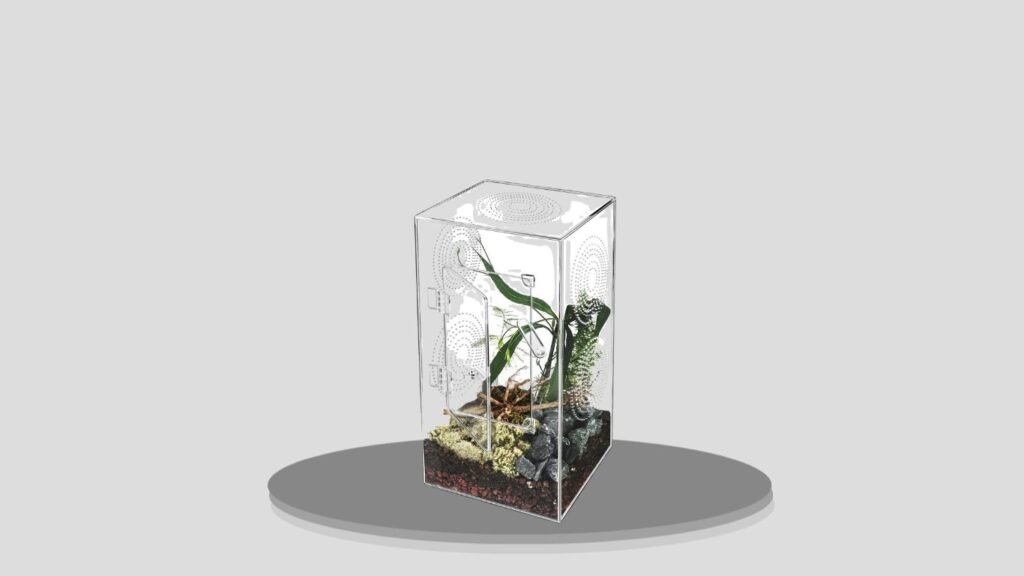
The Harhana enclosure uses a tall 6 x 6 x 11.5-inch acrylic design that provides excellent visibility while keeping the overall footprint compact. Its vertical proportions and front-opening access make it particularly suitable for smaller arboreal tarantulas, slings that have outgrown tiny containers, and other climbing invertebrates. The one-piece body also arrives ready to use rather than requiring complicated panel assembly.
Key Features
- Approximately 6 x 6 x 11.5 inches
- Clear acrylic construction
- Vertical arboreal-oriented design
- Front-opening access
- 360-degree viewing
- Pre-assembled body
- Moisture-resistant surfaces
- Compact footprint
Why It’s Best for Arboreal Setups
The greatest advantage here is usable vertical space. Arboreal tarantulas benefit from height for cork bark, foliage, webbing, and elevated retreats, and the narrow footprint makes this enclosure easy to place on shelves.
Front access is also useful because it allows feeding and maintenance without dismantling decorations near the upper portion of the habitat.
Visibility & Everyday Performance
High-clarity acrylic makes observation easy from several directions. The seamless construction minimizes unnecessary joints while providing a cleaner appearance than many panel-built enclosures.
Its height should be matched carefully to the tarantula’s lifestyle. A tall enclosure is excellent for an arboreal species but generally not the safest configuration for a heavy-bodied terrestrial tarantula because excessive fall distance can increase injury risk.
Overall Verdict
The Harhana enclosure is a strong choice for keepers wanting a clean, display-friendly home for an appropriately sized arboreal tarantula. The combination of front access, clear acrylic, vertical space, and ready-to-use construction makes it convenient while still leaving plenty of freedom to customize the interior.
For keepers who enjoy creating cork-bark climbing structures and elevated hides, this enclosure offers a practical foundation without taking up excessive shelf space.
2. Tall Arboreal Tarantula Enclosure with Front Opening
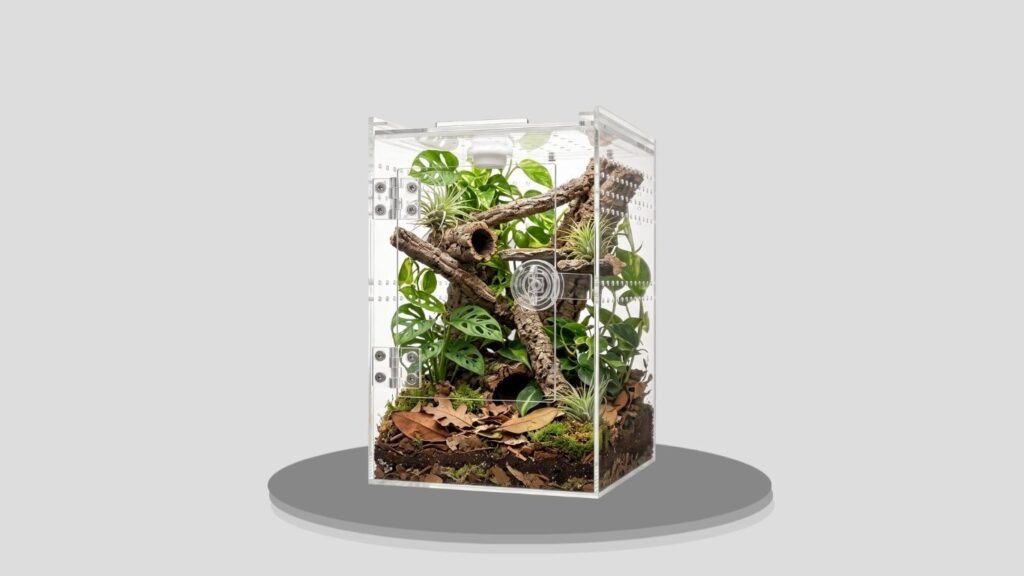
This tall arboreal enclosure focuses specifically on climbing spiders. Its cylindrical transparent construction provides a panoramic view, while the front-opening door makes feeding and decorating easier. Available product information highlights cross ventilation, a waterproof seamless body, and no-assembly construction, making it particularly attractive for keepers who want an enclosure that can be set up quickly.
Key Features
- Tall vertical configuration
- Clear cylindrical acrylic construction
- Front-opening access
- Cross ventilation
- Waterproof seamless base
- No assembly required
- 360-degree visibility
- Suitable for arboreal spiders and similar invertebrates
Why It’s Best for Vertical Habitat Design
The tall shape gives keepers room to install cork bark vertically, add artificial foliage, and create elevated retreats.
The front door is another major advantage. Arboreal tarantulas often establish webbing toward the upper areas of their enclosure, so accessing the habitat from the front can reduce unnecessary disturbance compared with repeatedly removing a top lid.
Ventilation & Build Performance
The ventilation layout is designed to move air through the enclosure rather than relying on a single opening. Good airflow is especially important when substrate and decorations retain moisture.
The one-piece cylindrical construction also reduces assembly points and creates a very clear viewing area. Because the habitat is relatively compact, it should be matched to an appropriately sized tarantula rather than assumed suitable for every arboreal species.
Overall Verdict
This enclosure is particularly compelling for keepers who prioritize vertical space, visibility, and straightforward maintenance.
Its front door and cross-ventilation layout make daily care easier, while the seamless body provides a clean presentation. For a smaller arboreal tarantula that needs height more than floor space, it offers an efficient and visually attractive habitat.
3. TCooSo 12 x 8 x 8 Acrylic Tarantula Enclosure
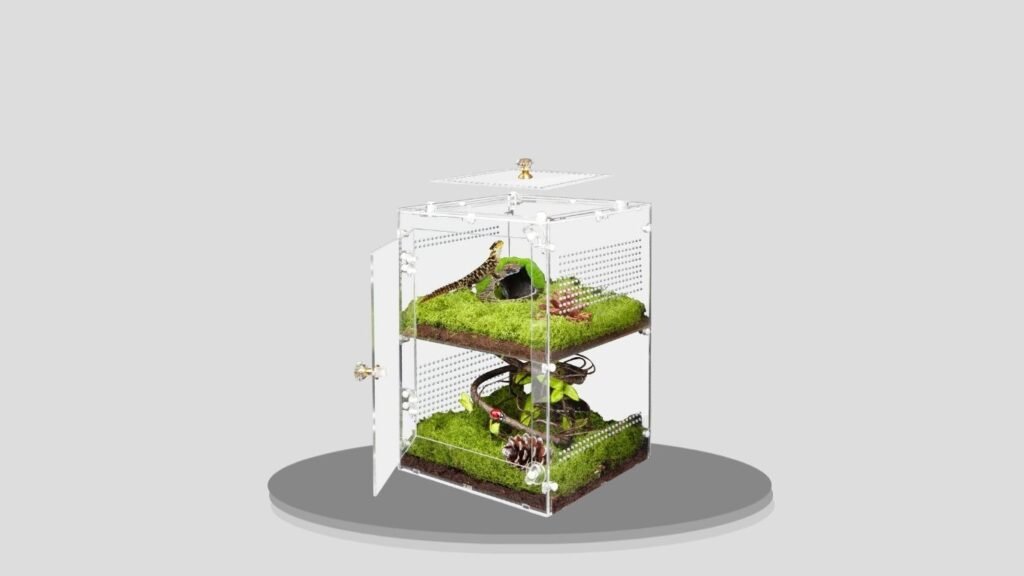
The TCooSo enclosure provides a broader 12 x 8 x 8-inch footprint, making it more suitable for terrestrial-style setups than many tall spider habitats. It uses clear acrylic construction and is marketed specifically for spider housing, with ventilation built into the design. The wider floor area provides room for substrate, a hide, water dish, and basic landscaping without creating excessive height.
Key Features
- Approximately 12 x 8 x 8 inches
- Clear acrylic material
- Wide rectangular floor plan
- Ventilated construction
- Removable divider capability
- Suitable for spider housing
- Good viewing from multiple angles
- Useful for custom substrate layouts
Why It’s Best for Terrestrial Tarantulas
For terrestrial tarantulas, floor space and substrate depth typically matter more than excessive height. The TCooSo’s 12-inch length gives a keeper more room to create distinct areas for a hide, water dish, and open walking space.
Its 8-inch height is also easier to manage than very tall arboreal enclosures when the substrate level is adjusted appropriately.
Setup Flexibility & Performance
The transparent acrylic walls make it easy to monitor feeding, burrowing behavior, and overall condition without constantly opening the enclosure.
Because the interior is relatively open, keepers have considerable freedom to configure it around a particular species. A thicker substrate layer can be used for terrestrial spiders that like to excavate, while cork bark or another secure hide can create a sheltered retreat.
The keeper should always check door and ventilation gaps against smaller juveniles.
Overall Verdict
The TCooSo is a good all-around option for someone building a straightforward terrestrial tarantula setup.
Its wider footprint offers more usable ground area than vertical jumping-spider-style terrariums, while the clear acrylic keeps viewing easy. It is especially attractive for keepers who want to arrange their own substrate and décor rather than receive a heavily accessorized starter kit.
4. EctoTherm Arboreal Tarantula Enclosure
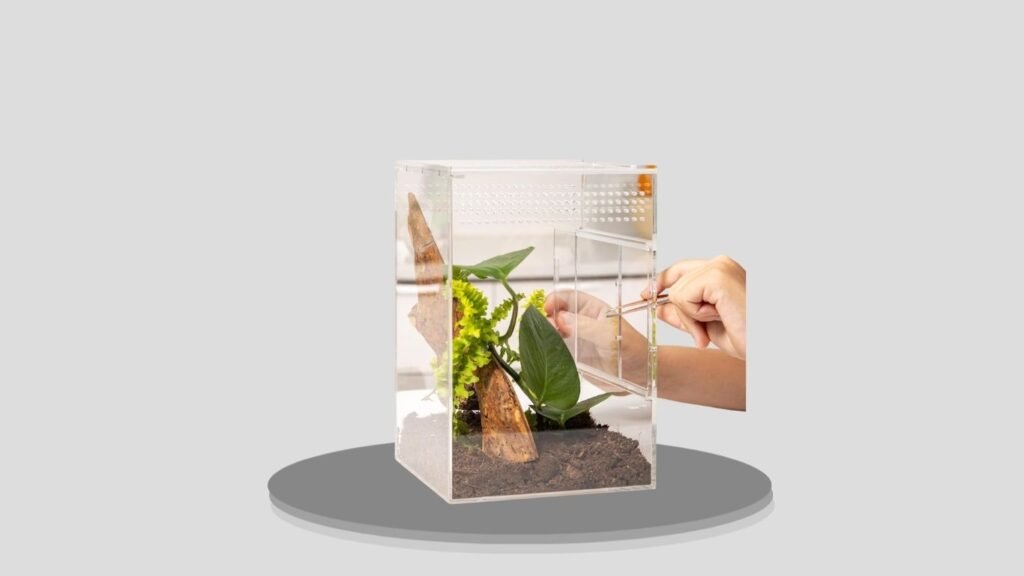
The EctoTherm enclosure is designed around arboreal spiders and arrives pre-assembled for quick setup. It uses high-clarity acrylic for an unobstructed view and includes two access points: a front-facing sliding door and an overhead opening. This dual-door arrangement provides additional flexibility when feeding, cleaning, or positioning décor inside a web-heavy arboreal habitat.
Key Features
- Pre-assembled acrylic body
- Designed for arboreal spiders
- Front sliding access
- Additional upper access
- Clear 360-degree viewing
- Escape-resistant seamless panels
- Suitable for custom décor
- Compact display-oriented design
Why It’s Best for Convenient Access
Two different doors give this enclosure an advantage during routine maintenance.
The front entrance can be used for most feeding and cleaning, while the upper opening is convenient when taller decorations need to be positioned or removed. That flexibility can be useful once an arboreal tarantula begins creating extensive web tunnels around cork and foliage.
Build Quality & Habitat Performance
The clear acrylic creates a clean presentation and allows activity to be observed without disturbing the tarantula.
Pre-assembled construction also removes uncertainty about fitting panels together securely. As with any acrylic enclosure, ventilation and moisture should be balanced according to the specific species rather than maintaining the enclosure constantly wet.
Securely anchor vertical cork and other heavy décor so nothing can shift onto the tarantula.
Overall Verdict
The EctoTherm is one of the more practical choices for keepers who dislike working through a single opening.
Its dual-access design is genuinely useful, particularly in arboreal habitats where webbing may occupy one side of the enclosure. Combined with clear acrylic and pre-assembled construction, it provides a polished platform for smaller climbing tarantulas and similar invertebrates.
5. Clioran Polycarbonate Tarantula Terrarium
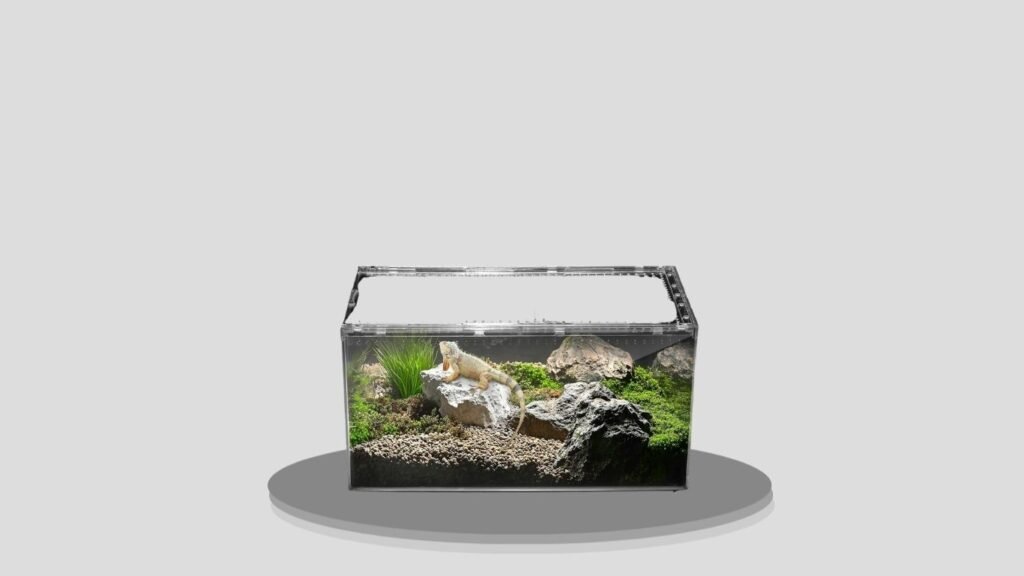
The Clioran enclosure is a larger transparent polycarbonate habitat measuring about 9.84 x 7.87 x 15.74 inches. Its vertical proportions provide substantial room for arboreal landscaping, while the shatter-resistant polycarbonate construction offers an alternative to acrylic or glass. It also uses a secure lid system and a seamless lower body that makes routine cleaning easier.
Key Features
- Approximately 9.84 x 7.87 x 15.74 inches
- 5.27-gallon capacity
- High-clarity polycarbonate
- Tall vertical profile
- Shatter-resistant construction
- Secure lid
- Seamless easy-clean base
- Stackable design
Why It’s Best for Larger Arboreal Displays
The greater height gives keepers room to create more elaborate vertical environments than compact spider enclosures.
Cork bark can extend through much of the enclosure, and additional foliage can create elevated retreats. This makes it particularly appealing for an appropriately sized arboreal tarantula that has outgrown a smaller juvenile habitat.
The transparent body also keeps even heavily decorated setups easy to observe.
Durability & Maintenance
Polycarbonate is valued for impact resistance, and Clioran markets this model as shatter resistant and resistant to yellowing.
The smooth seamless lower section also reduces areas where substrate and debris can become trapped.
Because the enclosure is tall, interior placement should reflect arboreal behavior. It should not automatically be used for a terrestrial tarantula simply because the animal physically fits inside.
Overall Verdict
The Clioran is a strong choice for keepers wanting a larger, durable arboreal enclosure with a polished display appearance.
Its combination of height, clear polycarbonate, easy-clean construction, and substantial interior volume gives it room to grow with an appropriately sized spider.
For an established arboreal setup with cork, foliage, and webbing space, this model offers more flexibility than most compact tarantula boxes.
6. STELPAW 12 x 8 x 6 Tarantula Terrarium
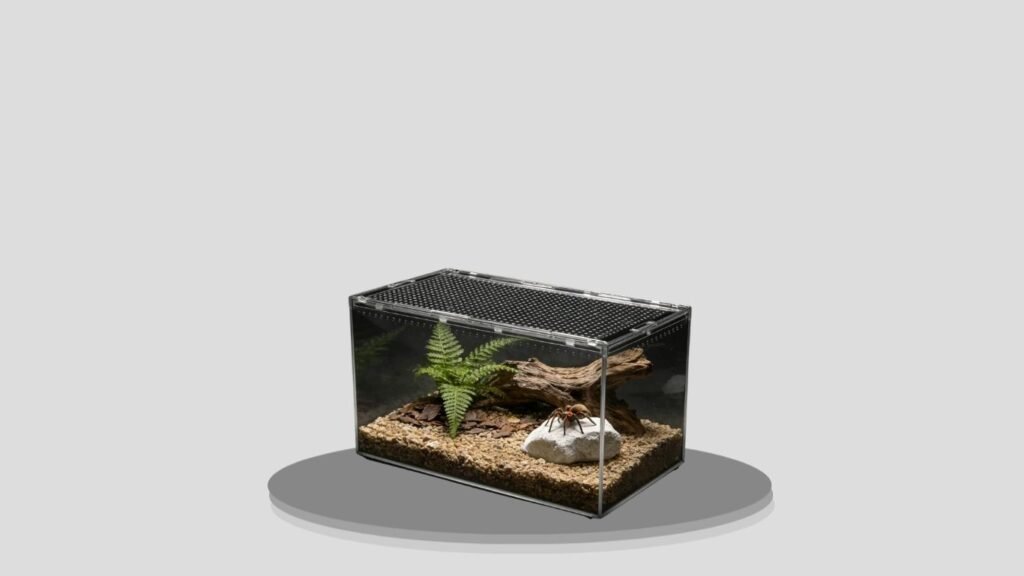
The STELPAW Mini Reptile Terrarium measures approximately 12 x 8 x 6 inches and uses a low, wide format that can work particularly well for smaller terrestrial tarantulas. It has a one-piece waterproof body, top magnetic access, and ventilation holes across the top and sides. Its simple construction makes it easy to convert into a substrate-heavy spider habitat.
Key Features
- Approximately 12 x 8 x 6 inches
- Low horizontal profile
- One-piece waterproof body
- Magnetic top door
- Top and side ventilation
- Clear viewing panels
- No assembly required
- Suitable for smaller terrestrial setups
Why It’s Best for Simple Ground-Dwelling Setups
The six-inch height is useful for terrestrial tarantulas because excessive vertical space is usually unnecessary and can become a fall concern for heavy-bodied species.
Keepers can use much of the interior height for substrate, leaving a relatively short distance between the surface and lid.
The 12 x 8-inch footprint still gives room for a hide and water dish while maintaining an enclosure that is easy to move and clean.
Ventilation & Everyday Use
Ventilation along the top and sides helps create airflow across the enclosure rather than trapping stagnant air.
The magnetic lid provides broad access when replacing substrate or rearranging a hide. However, top access can be less convenient if a particular tarantula repeatedly webs around the lid.
For terrestrial species that remain near the substrate, this is generally less problematic than it would be for an arboreal spider.
Overall Verdict
The STELPAW is a practical, no-frills option for a smaller terrestrial tarantula.
It does not provide the vertical possibilities of an arboreal terrarium, but that is actually an advantage for species that spend their time on or below the ground.
For keepers prioritizing substrate space, straightforward cleaning, and a compact horizontal layout, it provides a sensible foundation.
7. MYGIIKAKA Acrylic Tarantula Enclosure
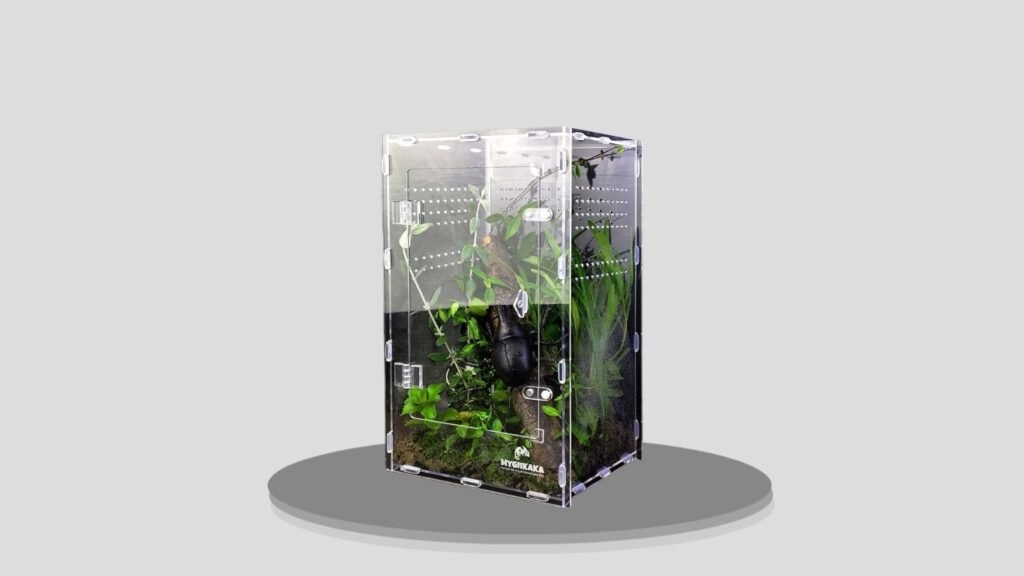
The MYGIIKAKA enclosure measures approximately 13.78 x 7.48 x 7.87 inches and provides a generous horizontal footprint for spiders and other small invertebrates. Its transparent acrylic walls allow observation from all sides, while ventilation holes on two sides support airflow. A clamshell-style top provides wide access for cleaning and habitat changes.
Key Features
- Approximately 13.78 x 7.48 x 7.87 inches
- Transparent acrylic construction
- Broad horizontal layout
- Side ventilation
- Clamshell-style top
- 360-degree viewing
- Disassemblable construction
- Suitable for customized terrestrial setups
Why It’s Best for Flexible Interior Layouts
The generous length makes this enclosure easy to divide visually into a hide area, water area, and open ground space.
Terrestrial tarantula keepers can build up substrate to reduce fall distance while still preserving a useful floor area.
The wide top access is particularly convenient during major maintenance because decorations and substrate can be removed without working through a small door.
Build & Maintenance Performance
Clear acrylic offers excellent viewing and keeps the enclosure lighter than many equivalent glass tanks.
The model does require some simple assembly, with panels secured together rather than being manufactured as one seamless piece.
That makes it easier to disassemble for storage, but keepers should confirm every connection is fully secure before introducing a tarantula.
Ventilation on both sides is another useful feature for maintaining air movement.
Overall Verdict
The MYGIIKAKA offers a useful combination of floor space, visibility, and customization.
It is best suited to keepers who do not mind a little initial assembly and want more freedom than a tiny preconfigured enclosure provides.
For a terrestrial tarantula requiring a moderate footprint and plenty of substrate room, this acrylic model can be arranged into a very functional habitat.
8. Reptile Growth No-Assembly Tarantula Enclosure
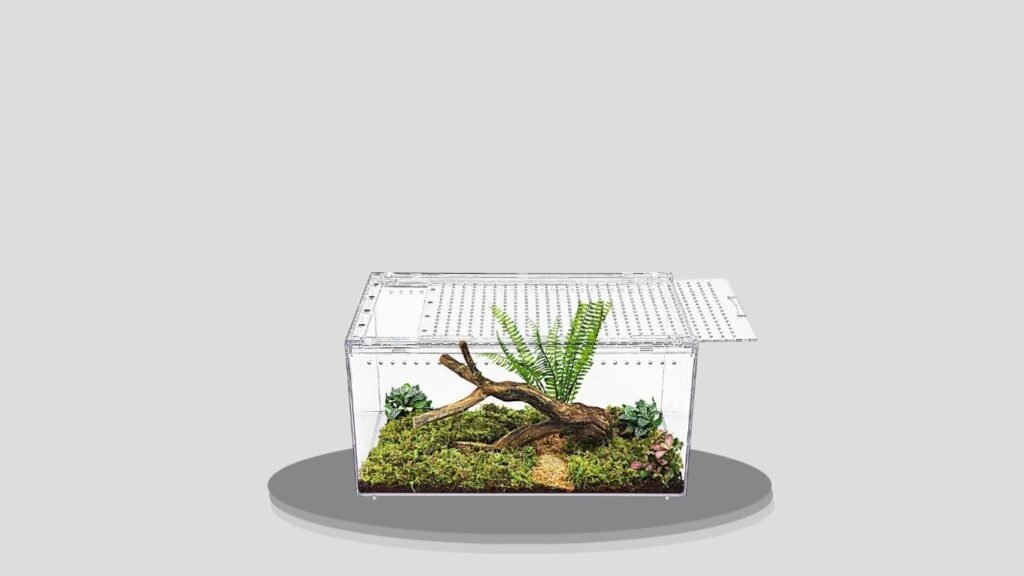
The Reptile Growth enclosure is designed around convenience, using a ready-to-use transparent body with a magnetic sliding lid and cross ventilation. It also supports stacking, which is particularly attractive for keepers maintaining multiple invertebrate enclosures on a rack or shelving system. Accessories such as feeding tools may also be included depending on the listing configuration.
Key Features
- No-assembly construction
- Transparent plastic body
- Magnetic sliding lid
- Cross-ventilation system
- Stackable format
- High-clarity viewing
- Feeding accessories included
- Suitable for rack-style collections
Why It’s Best for Multi-Enclosure Collections
Stackability is the standout feature here.
Tarantula keepers often maintain several animals individually, and traditional glass tanks quickly consume large amounts of shelf space. A lightweight, stackable enclosure makes it easier to organize a growing collection while maintaining clear visibility.
The sliding magnetic access also provides a relatively simple way to feed or service the enclosure.
Durability & Practical Performance
The enclosure uses durable transparent plastic rather than fragile glass. Available product information also highlights cross ventilation and resistance to a wide temperature range.
Because exact dimensions and configurations may differ across variants, the particular model should be matched carefully to the tarantula’s adult size and lifestyle.
For terrestrial species, build the substrate high enough to minimize dangerous falling distance.
Overall Verdict
The Reptile Growth enclosure is most compelling for hobbyists who value organization and convenience.
Its no-assembly body, stackable format, magnetic lid, and ventilation make it easy to integrate into a larger collection.
It may not have the premium display appearance of glass or polished acrylic, but for practical everyday keeping—especially where several individual spiders need separate homes—it offers considerable flexibility.
9. Reptile Growth 20 x 10 x 8 PC Terrarium
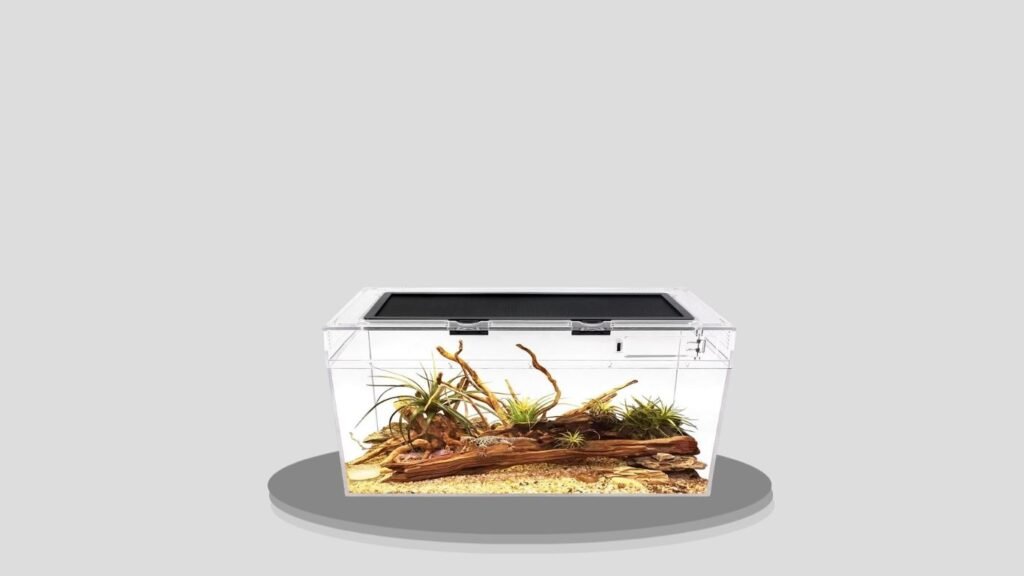
This larger Reptile Growth enclosure measures approximately 20 x 10 x 8 inches and provides around 6.6 gallons of interior volume. The waterproof transparent plastic tank offers significantly more floor area than most compact tarantula habitats and comes with useful accessories such as long tweezers, a feeding bowl, and spray bottle.
Key Features
- Approximately 20 x 10 x 8 inches
- Roughly 6.6-gallon volume
- Large horizontal footprint
- Transparent plastic construction
- Waterproof body
- Long tweezers included
- Feeding bowl included
- Spray bottle included
Why It’s Best for Larger Terrestrial Tarantulas
Floor space is this model’s biggest advantage.
A 20-inch-long enclosure provides much more room for mature terrestrial species that have outgrown smaller boxes. Keepers can create a deep substrate section, substantial hide, water dish, and still maintain enough usable ground area.
The relatively modest eight-inch height can also be managed effectively by adding sufficient substrate.
Space & Maintenance Performance
The waterproof construction allows deeper moisture-retaining substrate to be used when appropriate for the species, while the broad opening makes large-scale cleaning easier.
Included long tweezers are particularly useful for removing prey remains without placing hands unnecessarily close to the spider.
Despite its size, bigger is not automatically better for every tarantula. Smaller slings and juveniles may be easier to monitor and feed in more appropriately sized habitats.
Overall Verdict
This Reptile Growth model is one of the more appealing options in the list for a larger terrestrial tarantula.
Its wide footprint provides room for a more naturalistic ground-level layout, while the relatively low height can be made safer with deep substrate.
For an appropriately sized adult terrestrial species, it provides considerably more usable floor area than compact display enclosures.
10. AZV Escape-Proof Polycarbonate Tarantula Terrarium
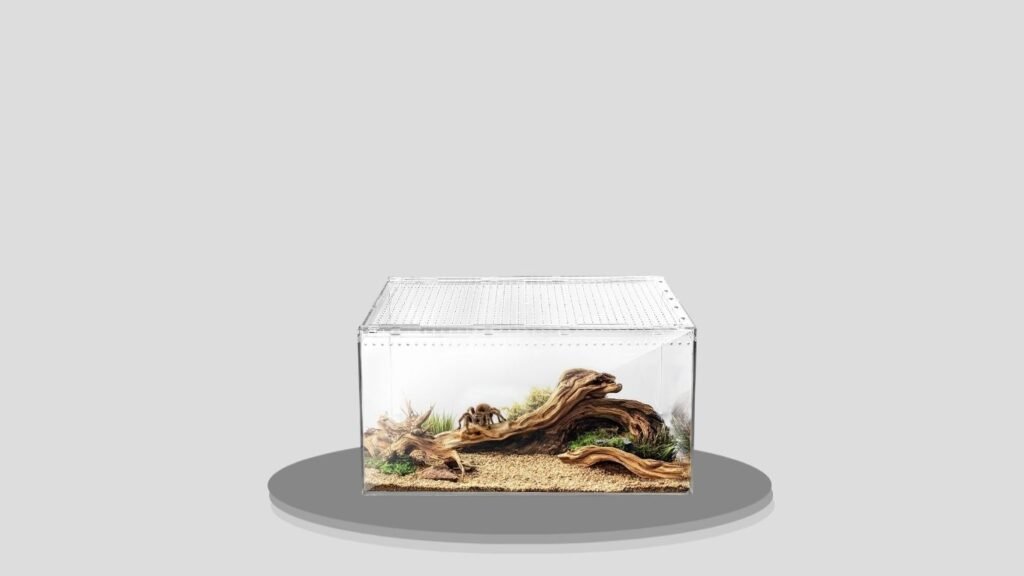
The AZV terrarium uses high-hardness polycarbonate in a transparent vertical enclosure measuring approximately 7.87 x 5.9 x 11.81 inches. It combines a magnetic locking lid with top and side ventilation, a seamless easy-clean body, and a clear 360-degree viewing design. Its shape is particularly useful for smaller arboreal tarantulas and other climbing invertebrates.
Key Features
- Approximately 7.87 x 5.9 x 11.81 inches
- 2.37-gallon capacity
- High-hardness polycarbonate
- Magnetic locking lid
- Top and side ventilation
- Seamless construction
- 360-degree visibility
- Shatter-resistant body
Why It’s Best for Durable Arboreal Housing
Polycarbonate provides a useful balance between clarity and impact resistance. That can be particularly appealing for keepers who want something lighter and less fragile than glass.
The nearly 12-inch height provides useful room for vertical cork and foliage while maintaining a manageable footprint.
Multiple ventilation areas also support airflow around an arboreal setup.
Security & Long-Term Performance
AZV describes the enclosure as using a magnetic locking lid designed to reduce escape gaps and a seamless body that simplifies cleaning.
The polycarbonate material is also marketed as resistant to warping and breakage.
Because the main opening is at the top, keepers of heavy-webbing arboreal species should arrange cork and retreats carefully so routine access does not repeatedly destroy web structures.
Overall Verdict
The AZV is a strong option for keepers who want a durable transparent enclosure without moving to glass.
Its combination of useful height, cross ventilation, secure magnetic access, and polycarbonate construction makes it particularly suitable for smaller arboreal species.
For someone prioritizing impact resistance and easy cleaning while still wanting a clear display, this model offers an appealing balance of practicality and presentation.
FAQs
1. What size enclosure does a tarantula need?
The appropriate size depends on the tarantula’s adult size and whether it is terrestrial, fossorial, or arboreal. Terrestrial species generally benefit from more floor space and deep substrate, while arboreal species need additional height and vertical structures. Avoid unnecessarily huge enclosures for small slings because locating prey and monitoring the animal can become difficult.
2. Are acrylic or plastic enclosures good for tarantulas?
Yes. Acrylic and polycarbonate enclosures can work very well when they provide secure doors, suitable ventilation, and appropriate dimensions. They are lighter than glass and often offer excellent visibility. The enclosure material matters less than correct ventilation, substrate depth, escape prevention, and matching the layout to the species.
3. How much substrate should a terrestrial tarantula enclosure have?
Terrestrial tarantulas generally benefit from a substantial substrate layer that allows digging while reducing the distance between the substrate surface and enclosure roof. This is important because heavy-bodied tarantulas can be injured by falls. Fossorial species require even deeper substrate because burrowing is a major part of their natural behavior.
4. Do tarantula enclosures need ventilation?
Yes. Proper airflow helps prevent stagnant conditions and excessive moisture accumulation. Cross ventilation—openings on more than one side—can be particularly useful. However, exact humidity and ventilation requirements vary by species, so the enclosure should not simply be kept constantly wet because a tarantula comes from a humid region.
5. Is a tall enclosure safe for every tarantula?
No. Tall enclosures are primarily appropriate for arboreal tarantulas that naturally climb and web above ground. Heavy-bodied terrestrial species are generally safer in lower enclosures with plenty of substrate because a fall from excessive height can cause serious injury. Always match the enclosure’s orientation to the natural lifestyle of the species.
