
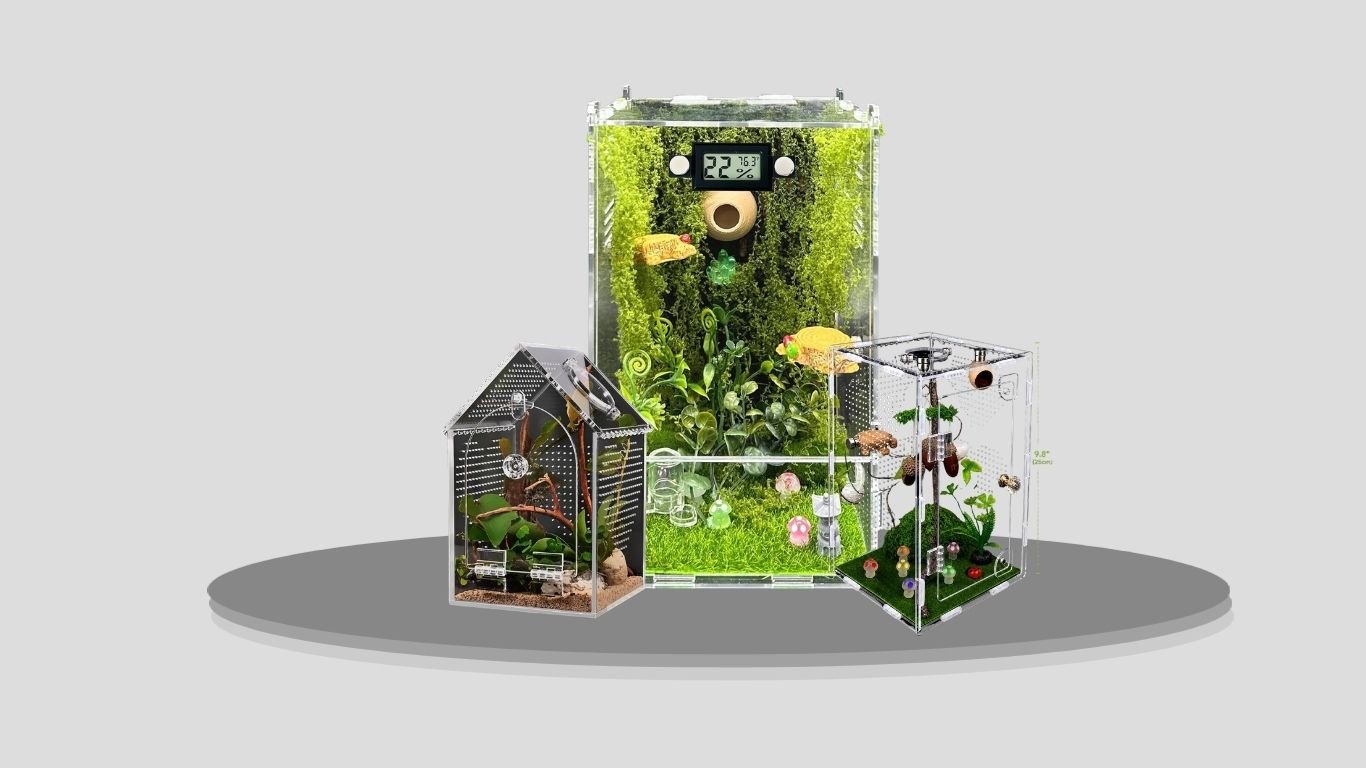
A well-designed spider terrarium helps create a secure, well-ventilated environment while making feeding, cleaning, and observation much easier. The best spider enclosures provide reliable ventilation, escape-resistant doors, clear viewing panels, and enough space for climbing, hiding, or burrowing depending on the species. Whether you keep a jumping spider, arboreal tarantula, or another pet arachnid, choosing the right enclosure is essential for proper care. In this guide, we review nine spider terrariums suited to different sizes, setups, and keeper preferences.
1. CourtyardAid Pre-Assembled Jumping Spider Enclosure
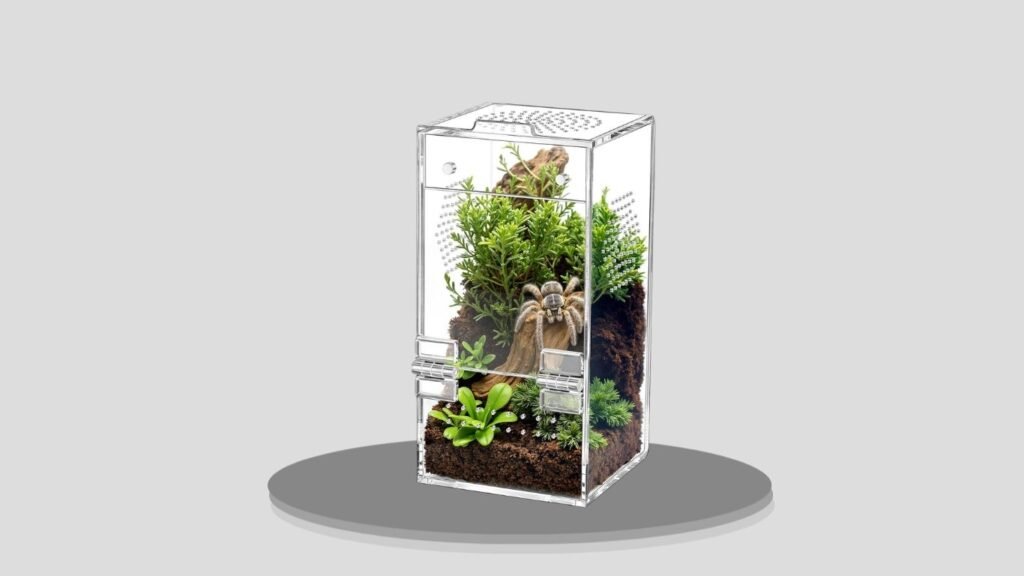
The CourtyardAid Pre-Assembled Jumping Spider Enclosure is a compact vertical habitat designed particularly for jumping spiders and other small invertebrates. Its clear acrylic construction provides excellent visibility, while all-side micro ventilation supports airflow without requiring a bulky screen top. The enclosure measures approximately 3.5 x 3.5 x 7 inches and arrives assembled, making it especially convenient for new keepers.
Key Features
- Approximately 3.5 x 3.5 x 7 inches
- Clear acrylic construction
- Pre-assembled design
- Magnetic side-opening door
- Numerous micro ventilation holes
- Vertical layout for climbing species
- Sealed base
- Compact desktop footprint
Why It’s Best for Small Jumping Spiders
The tall, narrow shape provides more useful vertical climbing room than a similarly sized horizontal container. Jumping spiders regularly explore elevated areas and often create retreats near the top of their enclosure, so the vertical layout makes good use of limited space.
The side-opening magnetic door is another practical feature. Accessing the habitat from the side can reduce disturbance to webbing established near the upper portion of the enclosure.
Its compact footprint also works well for keepers maintaining several individual spiders on a shelf.
Ventilation, Visibility & Everyday Use
The enclosure uses a large number of small ventilation holes distributed around the habitat. Available product information lists 287 micro vents, providing airflow while keeping the openings appropriately small for tiny inhabitants.
Clear acrylic provides nearly unobstructed observation from several directions. The sealed lower section can hold a shallow substrate layer and decorative elements without requiring assembly.
As with any small enclosure, ventilation holes and door gaps should still be checked against the actual size of the spider before use.
Overall Verdict
The CourtyardAid enclosure is particularly appealing for someone who wants a simple, clean jumping-spider setup without building a habitat from separate acrylic panels.
Its combination of vertical space, pre-assembled construction, small vents, magnetic access, and clear viewing makes it one of the most beginner-friendly options in this roundup. It is best matched to appropriately sized jumping spiders rather than large adult tarantulas requiring substantially more room.
2. MaryCarrie Large Jumping Spider Enclosure
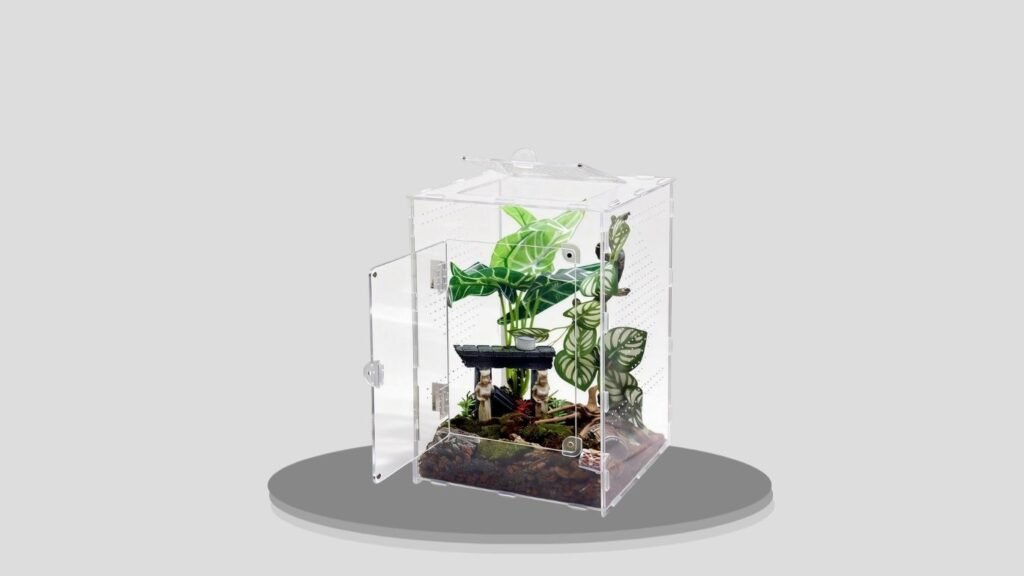
The MaryCarrie Large Jumping Spider Enclosure offers noticeably more interior room than many compact spider habitats. Its transparent acrylic body is designed in an arboreal format and includes both front and top magnetic access points. The listed enclosure is approximately 8.5 inches wide and 12 inches tall, creating enough vertical room for climbing structures, hides, foliage, and elevated retreats.
Key Features
- Large vertical acrylic enclosure
- Approximately 8.5 inches wide and 12 inches tall
- Transparent construction
- Front magnetic door
- Additional top access
- Small ventilation openings
- Lockable design
- Suitable for customized arboreal layouts
Why It’s Best for Spacious Arboreal Setups
Many jumping-spider enclosures are intentionally tiny, which limits how much habitat structure can be added. The MaryCarrie provides considerably more vertical and horizontal room, making it easier to create multiple climbing routes.
Branches, artificial foliage, cork pieces, hides, and platforms can be arranged without immediately overcrowding the spider.
The larger footprint may also be useful for appropriately sized arboreal tarantulas or mantises, provided their specific enclosure requirements are met.
Access & Habitat Flexibility
Front access is particularly convenient in a vertical enclosure because it allows feeding and maintenance without removing the entire roof. The additional top door gives another route when decorations or larger items need to be repositioned.
The transparent walls make monitoring straightforward, while the ventilation pattern is designed to support air exchange throughout the enclosure. Current product descriptions specifically highlight small ventilation holes and dual magnetic access.
Because this is a larger habitat, decorations should provide secure elevated cover rather than leaving the upper area completely empty.
Overall Verdict
The MaryCarrie enclosure is a strong choice for keepers who want more design freedom than a miniature spider box provides.
Its tall profile, dual access points, and broad viewing area make it particularly suitable for elaborate jumping-spider habitats and other arboreal invertebrate displays.
For someone who enjoys creating a visually attractive enclosure with multiple climbing and hiding structures, the additional room is a significant advantage.
3. KFPSHLQE DIY Jumping Spider Enclosure Set
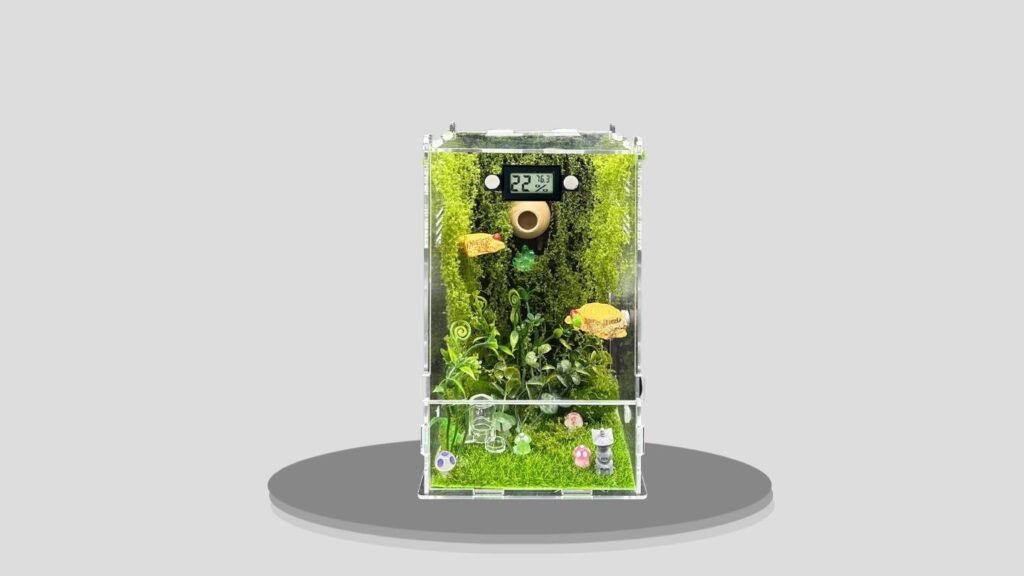
The KFPSHLQE DIY Jumping Spider Enclosure is designed for keepers who want more than an empty terrarium. The set combines a transparent enclosure with decorative and functional accessories, including climbing platforms, a hide, water feeder, artificial scenery, and a temperature-and-humidity monitor. Its approximate 9.5-inch height gives a jumping spider useful vertical exploration space.
Key Features
- Approximately 9.5 inches tall
- Transparent enclosure panels
- DIY assembly design
- Side ventilation
- Temperature and humidity monitor
- Climbing platforms
- Spider hide and water feeder
- Decorative plants, moss, stones, and mushrooms
Why It’s Best for a Complete Starter Setup
The major appeal of this kit is convenience. A first-time jumping-spider keeper may otherwise need to purchase an enclosure, ledges, hiding places, decorative foliage, and monitoring equipment separately.
Here, many of those pieces arrive together.
The included platforms and upper-level decorations are particularly useful because jumping spiders spend considerable time exploring vertical surfaces rather than remaining on the substrate.
Setup & Customization
The panels require assembly, giving the keeper an opportunity to decide where many of the decorative elements should go. Product information lists side ventilation openings and a transparent design for easier observation.
The temperature-and-humidity display can be useful for monitoring the enclosure, although the correct environmental range should always be determined by the spider species rather than by a generic number.
Keep the layout functional. Decorations should create climbing routes and cover without blocking ventilation or making feeding unnecessarily difficult.
Overall Verdict
This DIY kit is one of the most complete options for someone starting without existing spider accessories.
It combines a relatively roomy vertical enclosure with numerous decorative pieces and useful monitoring equipment, allowing a visually engaging setup to be created from one package.
Keepers who prefer a minimalist enclosure may not need all the accessories, but those who enjoy customizing habitats will appreciate the flexibility and included components.
4. ClimPek Pre-Assembled Spider Terrarium Kit
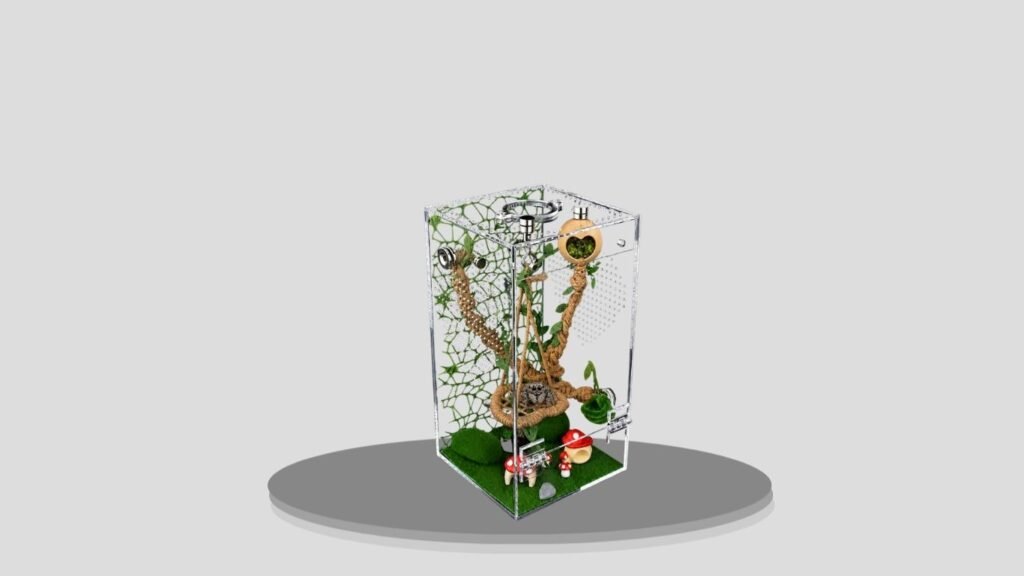
The ClimPek Spider Enclosure Kit combines a pre-assembled acrylic habitat with a substantial accessory package. Its vertical shape is intended for jumping spiders and other small arboreal invertebrates, while a magnetic door provides convenient access. The listing includes 19 habitat and care accessories, making it particularly attractive for someone who wants to avoid sourcing decorations separately.
Key Features
- Pre-assembled acrylic enclosure
- Magnetic front door
- Micro ventilation
- Vertical arboreal layout
- 19-piece accessory package
- Climbing and hiding decorations
- Feeding and maintenance accessories
- Clear viewing panels
Why It’s Best for Beginners
A complete kit removes much of the guesswork involved in preparing a first jumping-spider habitat.
The enclosure arrives assembled, so users can concentrate on arranging climbing surfaces, hides, and visual enrichment rather than connecting acrylic panels.
The included accessory package provides multiple ways to add structure throughout the vertical space. This is useful for jumping spiders, which often prefer exploring and resting above ground level.
Access, Ventilation & Maintenance
ClimPek uses a magnetic front-opening door, which provides direct access to the enclosure while reducing the need to remove the roof during everyday maintenance.
The listing also describes micro ventilation and a clear acrylic body.
A front-opening design can be particularly useful when the spider has established webbing near the top of its habitat. Feeding and spot cleaning can often be performed lower down without disturbing that retreat.
Any loose decorative items should be positioned securely so they cannot shift unexpectedly.
Overall Verdict
The ClimPek enclosure is a convenient all-in-one option for new jumping-spider keepers who want an attractive habitat without collecting every accessory individually.
Its pre-assembled body saves setup time, while the magnetic front access and included decorations provide plenty of room for personalization.
The biggest value is convenience: it provides both the enclosure and many of the small accessories that a keeper would otherwise need to source separately.
5. ClimPek 5.9 x 5.9 x 9.8 Spider Enclosure Kit
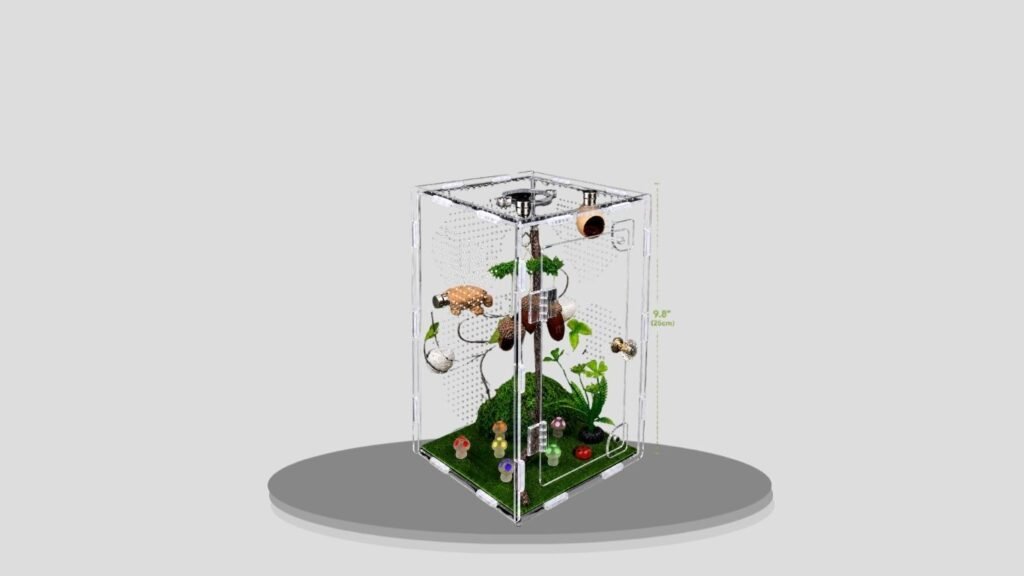
This larger ClimPek Spider Enclosure Kit provides a 5.9 x 5.9 x 9.8-inch acrylic habitat with a magnetic front door, upper feeding access, micro ventilation, and 19 included accessories. The vertical format is designed to provide useful climbing room while maintaining a relatively compact overall footprint.
Key Features
- 5.9 x 5.9 x 9.8-inch enclosure
- Transparent acrylic panels
- Magnetic front door
- Top feeding port
- 1mm micro ventilation holes
- Sealed bottom
- 19 habitat accessories
- Tall arboreal configuration
Why It’s Best for Feature-Rich Jumping Spider Habitats
This model offers more interior room than many tiny starter enclosures while still being designed around smaller arboreal spiders.
That extra volume provides space for layered climbing branches, platforms, foliage, retreats, and feeding areas. The accessory pack includes items such as artificial vegetation, climbing structures, hides, tweezers, and a spray bottle.
This makes it easier to establish a complete habitat immediately rather than gradually adding equipment.
Security & Everyday Performance
The combination of a magnetic front closure and sealed bottom gives the enclosure a simple, secure structure. Tiny laser-cut ventilation openings are designed to promote airflow while reducing escape opportunities for small spiders.
A separate upper feeding opening is another useful detail. Small prey or maintenance tools can sometimes be introduced without opening the larger main door.
The vertical proportions are particularly appropriate for spiders that frequently climb and establish elevated retreats.
Overall Verdict
The larger ClimPek kit is a compelling choice for someone who wants a more complete display habitat rather than a very compact spider cube.
Its useful vertical dimensions, front magnetic access, small vents, and generous accessory package make it easy to create a layered environment.
For keepers who value convenience and a visually decorated habitat, it provides considerably more out-of-the-box functionality than an empty acrylic enclosure.
6. Clioran Transparent Spider & Tarantula Terrarium
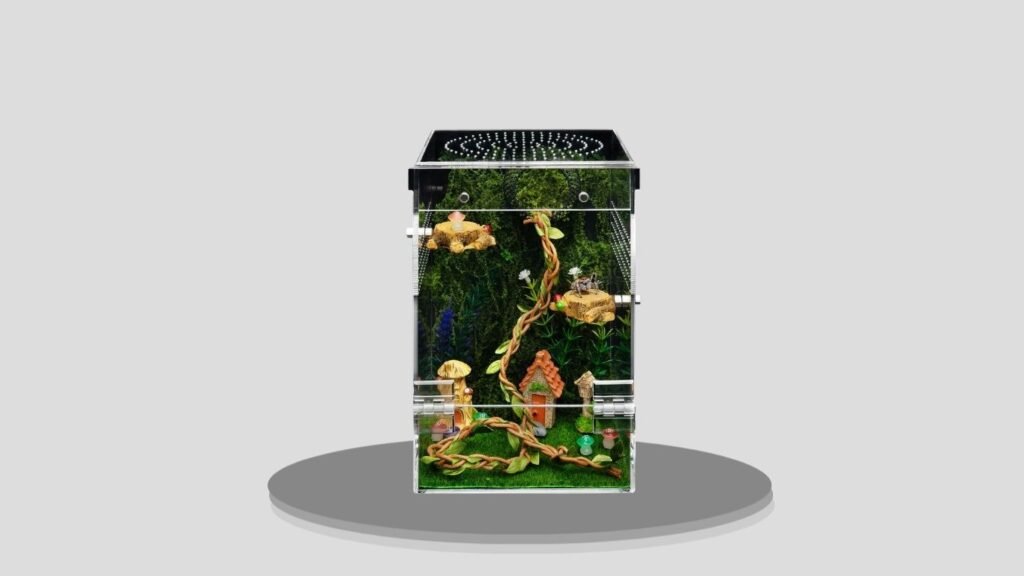
The Clioran Transparent Spider Terrarium is aimed at keepers who prefer a cleaner, more modern enclosure rather than a heavily decorated starter kit. Clioran designs typically emphasize clear viewing, sturdy transparent construction, secure closures, and ventilation suitable for small exotic pets. This makes the style particularly useful when the keeper wants full control over substrate, cork, hides, and interior decoration.
Key Features
- Transparent enclosure design
- Suitable for spiders and small invertebrates
- Ventilation openings
- Secure enclosure format
- Clear multi-angle viewing
- Space for custom substrate and hides
- Easy-to-clean surfaces
- Minimalist habitat style
Why It’s Best for Custom Terrarium Builds
A mostly empty terrarium gives experienced keepers more freedom than a kit filled with fixed decorations.
Instead of adapting a spider to the accessories supplied by the manufacturer, you can choose cork bark, substrate depth, foliage, hides, and water arrangements according to the species being housed.
That flexibility is especially useful with tarantulas because terrestrial, fossorial, and arboreal species can require very different layouts.
Build Quality & Maintenance
Clear enclosure walls make it easier to check the spider without repeatedly opening the habitat. Similar Clioran terrariums use transparent polycarbonate or acrylic-style construction with secure magnetic closures and ventilation, and current versions are designed for straightforward wipe-down cleaning.
The simple interior also means fewer molded accessories are present to trap substrate or uneaten prey.
Before housing any spider, confirm that the specific enclosure size, ventilation pattern, and door gaps suit that species and developmental stage.
Overall Verdict
The Clioran enclosure is a better match for keepers who want to design the habitat themselves rather than receiving a predetermined decoration kit.
Its clear, minimalist approach keeps attention on the spider and makes regular observation simple.
For someone who already owns cork, substrate, hides, and feeding tools, this type of enclosure may provide better flexibility and less unnecessary equipment than an all-inclusive starter package.
7. Cycodo Warp-Proof Acrylic Spider Enclosure
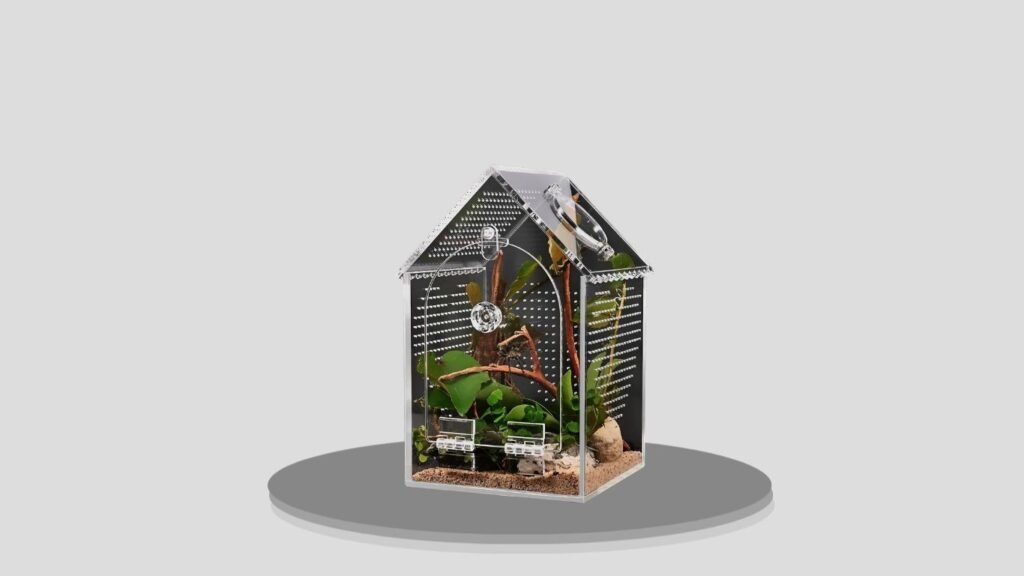
The Cycodo Jumping Spider Enclosure focuses on sturdy construction and practical access. The listed model measures approximately 5 x 5 x 8 inches and uses thick clear acrylic, a front-opening door, top feeding access, micro ventilation, and a knob-style latch rather than relying entirely on magnetic closure.
Key Features
- Approximately 5 x 5 x 8 inches
- Thick clear acrylic
- Front-opening access
- Separate top feeding port
- 1mm micro ventilation holes
- Secure knob-style latch
- Pre-assembled construction
- 360-degree viewing
Why It’s Best for Secure Front Access
The knob latch is the most distinctive element of the Cycodo design. Some keepers prefer a physical latch because the closure is easy to verify visually and does not depend on magnetic attraction.
The front door also makes daily feeding and spot cleaning easier, especially when a jumping spider creates a hammock or web retreat in the upper portion of the enclosure.
A top feeding port provides an additional route for introducing small prey without opening the entire front panel.
Construction & Practical Performance
Cycodo describes the enclosure as using thickened acrylic designed to resist warping. The 1mm ventilation holes promote airflow while remaining small enough for many appropriately sized inhabitants.
Because the habitat arrives ready to use, there is no need to align panels or apply adhesive.
Its 5 x 5-inch base also provides enough room for a modest substrate layer, cork, artificial plants, and other enrichment while keeping the enclosure compact.
Overall Verdict
The Cycodo enclosure is one of the stronger options for keepers who place a high priority on a straightforward mechanical closure.
Its clear walls, small vents, front door, feeding port, and moderate vertical height create a practical habitat for many jumping spiders and similarly sized invertebrates.
For someone who wants security and easy daily access without a large accessory package, the Cycodo design is particularly appealing.
8. NCYP Glass Terrarium for Jumping Spiders
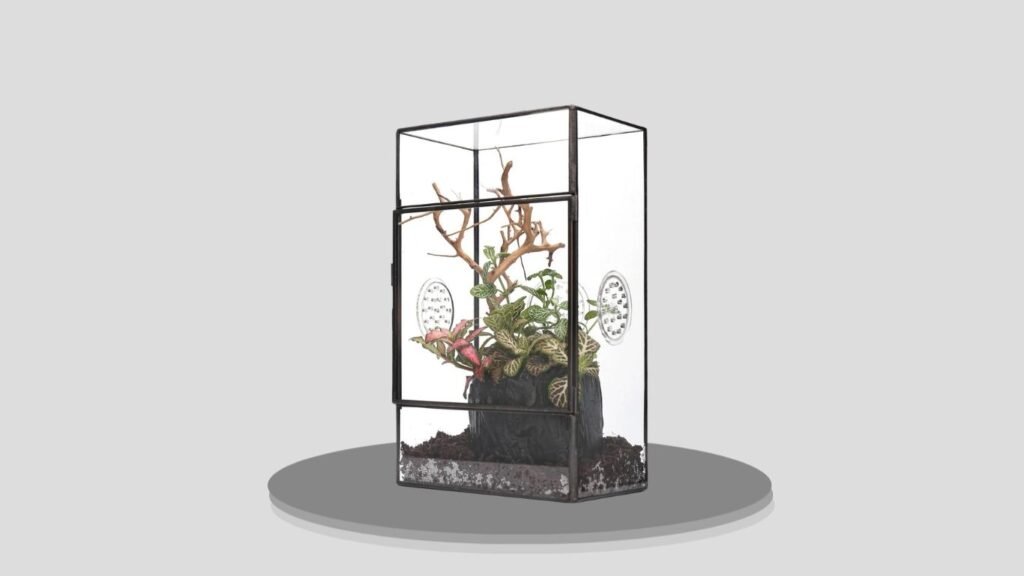
The NCYP Glass Terrarium stands apart from the mostly acrylic enclosures in this roundup. It uses glass construction and measures approximately 5.1 x 3.9 x 9 inches, creating a tall display format particularly suited to adult jumping spiders and other small arboreal invertebrates. A side-positioned door also helps preserve webbing built near the top.
Key Features
- Glass terrarium construction
- Approximately 5.1 x 3.9 x 9 inches
- Tall vertical profile
- Side access door
- Ventilation openings
- Clear display-style appearance
- Suitable for adult jumping spiders
- Stable, solid construction
Why It’s Best for Display Quality
Glass provides a different visual feel from lightweight acrylic. It tends to give the terrarium a more substantial, display-oriented appearance, making this NCYP model attractive for a desk, shelf, or dedicated invertebrate collection.
The side door is particularly important for jumping spiders because they frequently build silk hammocks near the top corners.
Opening from the side can reduce the chance of tearing those retreats apart during feeding or maintenance.
Ventilation & Everyday Use
The enclosure has dedicated ventilation openings rather than an entirely open mesh roof. Existing user feedback specifically highlights the position of the door as useful for adult jumping spiders because it avoids disturbing upper webbing.
One consideration is ventilation-hole size. Very small spiderlings may require a finer enclosure than an adult, so escape risk should always be assessed before use.
Glass is also heavier than acrylic, but that added weight can make the enclosure feel stable on a permanent display surface.
Overall Verdict
The NCYP terrarium is an excellent option for keepers who prioritize appearance and solid glass construction.
Its tall profile and side door fit jumping-spider behavior especially well, while the transparent walls create an attractive display.
It is better suited to appropriately sized subadult or adult spiders than tiny spiderlings. For a mature jumping spider displayed in a carefully decorated enclosure, it offers a premium-looking alternative to standard acrylic boxes.
9. smartang Front-Opening Arboreal Tarantula Enclosure
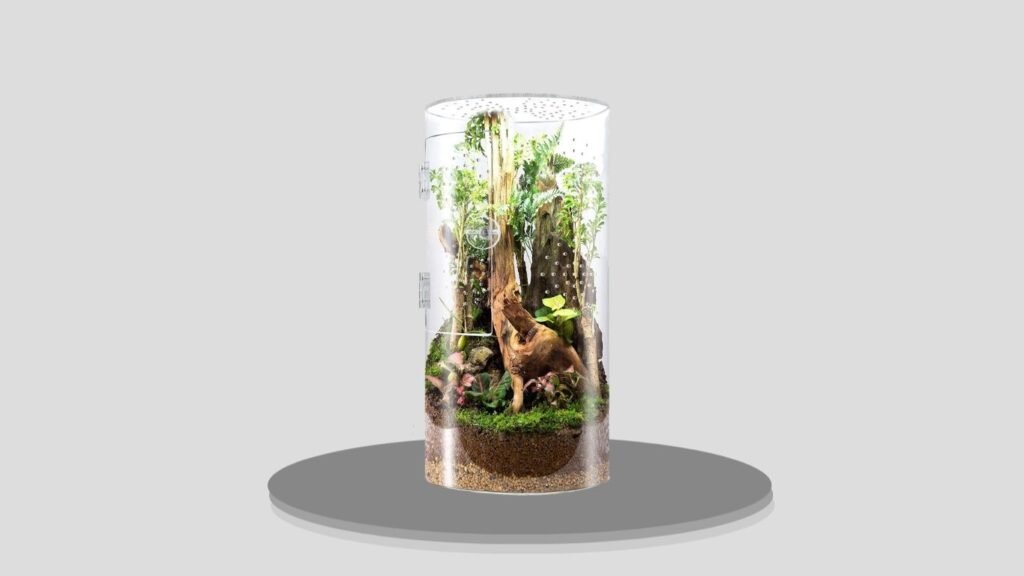
The smartang Front-Opening Terrarium is the most clearly arboreal-focused enclosure in this selection. It measures approximately 6 x 6 x 12 inches and combines a tall cylindrical acrylic body with cross ventilation, a waterproof sealed base, front access, and a traditional latch. The generous vertical space makes it particularly useful for spiders that naturally spend much of their time above ground.
Key Features
- Approximately 6 x 6 x 12 inches
- Tall arboreal layout
- Transparent cylindrical acrylic body
- Front-opening door
- Traditional latch closure
- Cross ventilation on sides and top
- Waterproof sealed bottom
- Pre-assembled construction
Why It’s Best for Arboreal Tarantulas
Arboreal species need useful height for cork bark, vertical retreats, foliage, and webbing. At around 12 inches tall, this enclosure provides more vertical habitat than most of the compact jumping-spider options above.
The front-opening door is particularly useful because accessing an arboreal habitat entirely from the top can disturb webbing or place the keeper’s hand directly into the spider’s primary retreat zone.
The tall shape also creates room for substantial cork or branches.
Ventilation & Habitat Performance
The manufacturer describes ventilation across the sides and top, creating cross airflow through the enclosure. The bottom is sealed and waterproof, allowing a suitable substrate layer to be used without leakage.
Unlike magnetic designs, this model uses a traditional latch. That provides a clearly mechanical closure and avoids the snap associated with magnets.
The cylindrical transparent body also provides nearly uninterrupted viewing, making it easier to observe the animal while leaving it undisturbed.
Overall Verdict
The smartang arboreal enclosure is the strongest option in this roundup for a keeper specifically planning a taller tarantula setup.
Its height, front door, cross ventilation, waterproof base, and secure latch address many of the practical needs of an arboreal enclosure.
It is larger than most jumping spiders require, but for an appropriately sized arboreal tarantula or similar species, the vertical space creates far greater habitat flexibility.
FAQs
1. What size terrarium does a jumping spider need?
The correct size depends on the spider’s species and developmental stage. Small juveniles need tighter enclosures with very small ventilation openings, while larger subadults and adults can use taller habitats with more climbing room. For jumping spiders, usable vertical space and secure ventilation are usually more important than providing a very wide floor area.
2. Is acrylic or glass better for a spider terrarium?
Both can work well. Acrylic is lighter, easier to drill for ventilation, and commonly used in compact jumping-spider enclosures. Glass is heavier and often creates a more premium display appearance. The better option depends on ventilation, door design, enclosure size, and the spider’s needs rather than material alone.
3. Should a jumping spider enclosure open from the front?
Front or side access is often convenient because jumping spiders commonly build silk retreats near the top. A top-opening lid can disturb those retreats each time the enclosure is opened. Front access allows many feeding and cleaning tasks to be completed while leaving upper webbing intact.
4. What should I put inside a spider terrarium?
For jumping spiders, useful additions include climbing branches, cork, artificial or suitable live plants, upper hides, ledges, and substrate appropriate for the setup. Tarantula requirements vary considerably by species. Terrestrial species typically need more substrate and ground-level shelter, while arboreal species require height, vertical cork, and elevated hiding areas.
5. How much ventilation does a spider terrarium need?
Adequate airflow helps prevent overly stagnant conditions and excessive moisture, but the ideal amount depends on species and humidity requirements. Cross ventilation—air openings on more than one side—can be particularly useful in arboreal habitats. Vent holes must also be small enough that the spider, especially a juvenile, cannot escape through them.
