
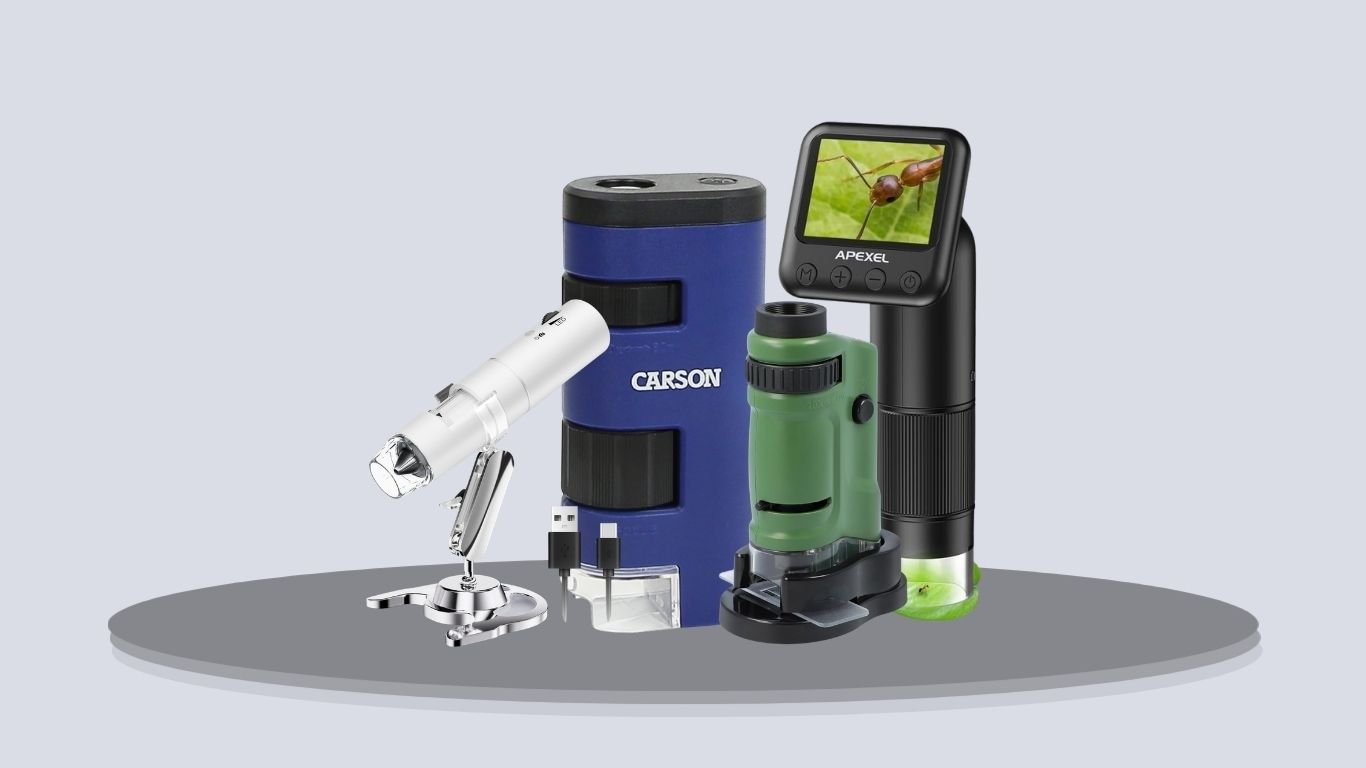
A pocket microscope makes it easier to examine tiny insect details that are difficult to see with a regular magnifying glass, including wing patterns, body hairs, antennae, eggs, mites, and surface textures. Compact models are especially useful for fieldwork, classrooms, gardening, and nature study because they can be carried almost anywhere. In this guide, we review the 6 best pocket microscopes for insects based on magnification, lighting, portability, image clarity, smartphone compatibility, and ease of use for beginners, students, and hobbyists.
1. Carson PocketMicro MM-450 20x–60x Pocket Microscope
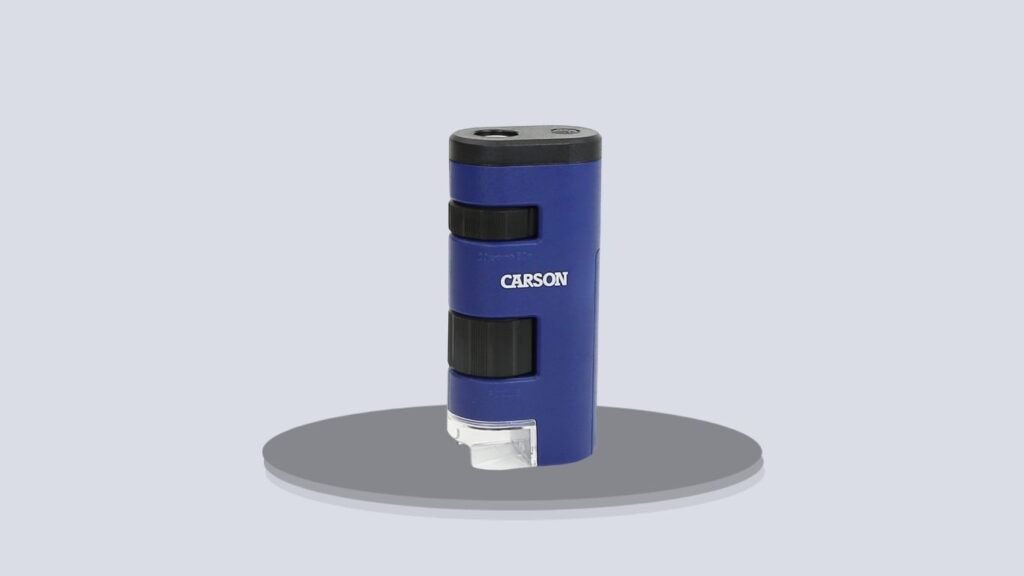
The Carson PocketMicro MM-450 is an excellent entry-level pocket microscope for examining insects, plant pests, wings, eggs, leaf surfaces, and other small natural details. Its adjustable 20x–60x magnification provides noticeably more detail than a standard magnifying glass while remaining easy enough for beginners to use. Built-in LED illumination and an extremely compact body also make it convenient for outdoor insect observation, gardening, classroom activities, and field identification.
Key Features
- Adjustable 20x–60x magnification
- Built-in LED illumination
- Manual focusing ring
- Adjustable zoom control
- Compact pocket-size construction
- Approximately 0.12 lb without battery
- Powered by one AA battery
- Suitable for insects, plants, slides, and small objects
- Lightweight enough for field use
Why It’s Best for Beginner Insect Observation
The 20x–60x range is one of this model’s biggest advantages. Extremely high magnification can actually make insect observation more difficult because the visible area becomes smaller and focusing becomes more sensitive. Carson itself advises that lower useful magnification often provides a better overall image for many applications.
At 20x, you can inspect larger insects and recognize body patterns, wing structure, legs, and antennae. Increasing toward 60x provides a closer look at smaller pests, scales, hairs, or leaf damage.
That makes the MM-450 particularly friendly for beginners who want adjustable magnification rather than a fixed-power lens.
Optical Performance & Field Convenience
The integrated LED provides illumination directly over the specimen, which is particularly useful when examining insects underneath leaves or in poorly lit indoor environments.
Focusing is straightforward: position the microscope over the object, illuminate it, rotate the focus ring, and then adjust the zoom. Because the entire microscope measures only about 3.9 inches long, it can easily stay in a backpack, garden kit, or classroom supply box.
Its main limitation is that it is designed for close observation rather than image capture.
Overall Verdict
The Carson MM-450 is one of the most practical pocket microscopes for beginners, gardeners, students, and casual insect enthusiasts. Its moderate 20x–60x magnification is easier to control than extreme magnification, while the LED and lightweight design make it genuinely useful outdoors. For someone moving beyond a basic magnifying glass, this model provides a strong balance of portability, optical power, and simplicity.
2. Carson MicroFlip MP-250 100x–250x Pocket Microscope
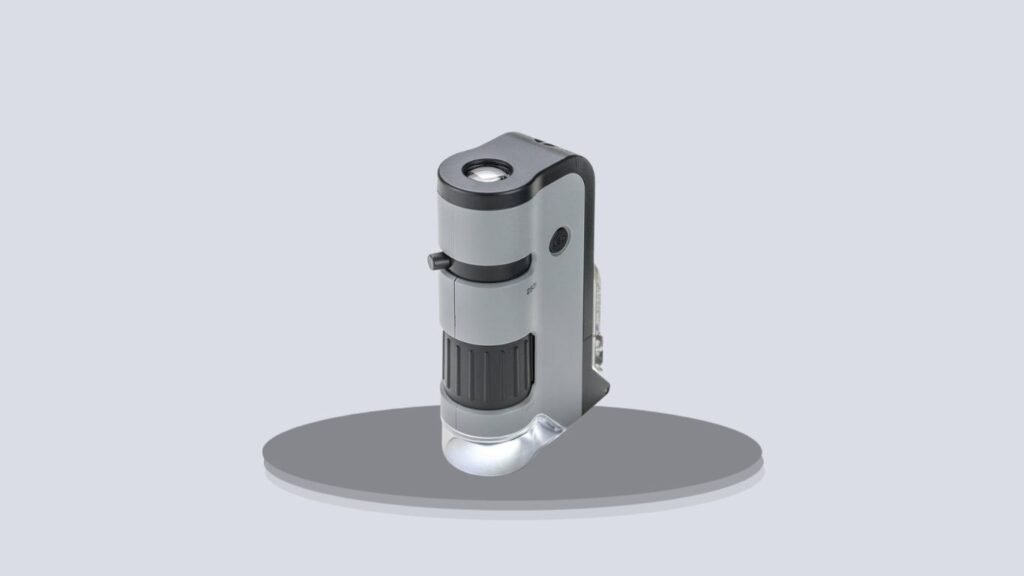
The Carson MicroFlip MP-250 offers considerably stronger magnification than a basic pocket microscope, providing an adjustable 100x–250x range. It also combines LED and UV illumination with a smartphone digiscoping clip, allowing users to view specimens directly through the eyepiece or capture close-up insect images through a compatible phone. Carson includes a blank slide, coverslip, and wrist strap, making this model especially useful for students and insect enthusiasts interested in more detailed specimen study.
Key Features
- Adjustable 100x–250x magnification
- LED illumination
- UV illumination
- Smartphone digiscoping clip included
- Manual focusing ring
- Adjustable zoom dial
- Blank slide and coverslip included
- Wrist strap included
- Powered by one AA battery
- Approximately 0.18 lb
Why It’s Best for Detailed Insect Examination
The MP-250 is particularly useful when a 20x or 60x magnifier no longer reveals enough detail. At 100x–250x, users can examine very small insect structures, wing textures, body hairs, tiny plant pests, insect fragments, and prepared specimens.
Its smartphone adapter adds another dimension. Rather than simply observing an insect and trying to describe what you see, you can align a phone camera with the eyepiece and record the magnified view.
This is especially useful for science projects, documenting pests, comparing specimens, or sharing identification photos.
Magnification, Lighting & Smartphone Use
Carson equips the MicroFlip with both normal LED illumination and UV lighting. The microscope includes front-facing and downward-facing illumination controls, allowing users to adapt lighting to the specimen.
The stronger magnification does require steadier positioning and more careful focusing than lower-power pocket microscopes. Live insects that move quickly can therefore be harder to follow than stationary specimens.
For best results, users can start at the lower magnification, establish focus, and then increase power gradually.
Overall Verdict
The Carson MicroFlip MP-250 is one of the strongest options for users who want true high-power pocket microscopy without carrying a laboratory microscope. The 100x–250x zoom, integrated lighting, UV feature, and smartphone adapter make it particularly attractive for students, hobbyists, gardeners, and amateur entomologists who want both observation and photo-documentation capabilities.
3. SKYBASIC 50x–1000x Wireless Digital Microscope
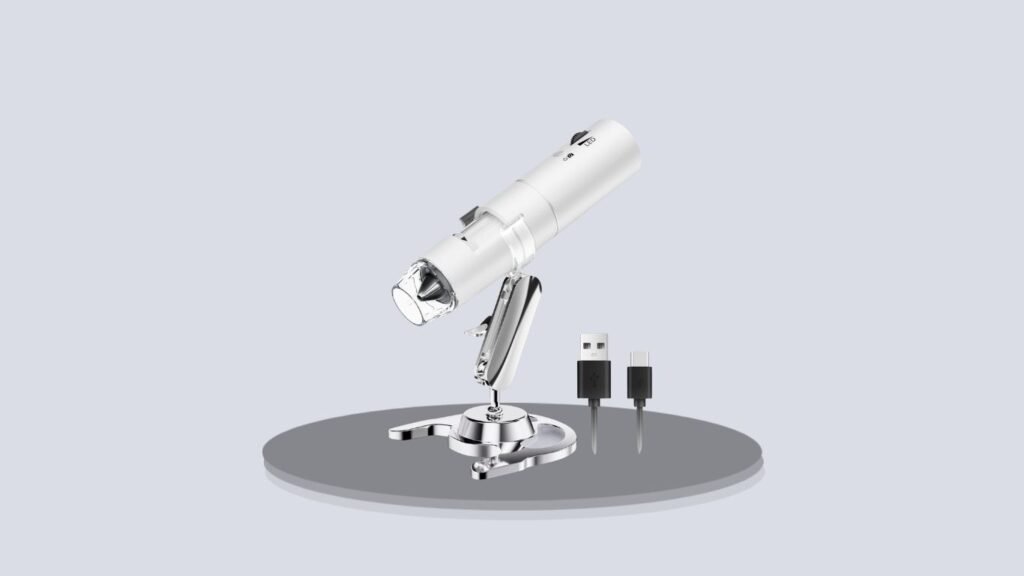
The SKYBASIC Wireless Digital Microscope takes a different approach from traditional eyepiece models. Instead of looking directly through the microscope, you connect it to a smartphone, tablet, Windows PC, or Mac and view the magnified image on a screen. The model is marketed with a 50x–1000x magnification range, eight adjustable LEDs, photo and video capture, Wi-Fi connectivity for mobile devices, and USB operation for computers.
Key Features
- Advertised 50x–1000x magnification
- Wi-Fi connection for Android and iOS
- USB connection for Windows and Mac
- Eight adjustable LED lights
- 2MP camera sensor
- Up to 1920 × 1080 smartphone imaging
- Photo and video recording
- Rechargeable battery
- Approximately three-hour battery life
- Stand included for stable observation
- Compact handheld design
Why It’s Best for Digital Insect Photography
This microscope is especially useful for users who want to photograph and record insects rather than simply observe them through an eyepiece.
A phone or tablet screen provides a much larger viewing area, making insect structures easier to discuss in a classroom or show to multiple people simultaneously. You can also preserve images for later comparison, which is useful when identifying garden pests or documenting changes in specimens.
For butterfly wings, beetle surfaces, insect legs, shed skins, and similar stationary subjects, digital viewing can be particularly engaging.
Image Quality & Connectivity
The unit creates its own Wi-Fi connection for compatible smartphones and tablets and can connect through USB to computers. Eight built-in LEDs allow the user to adjust brightness around reflective or dark specimens.
The manufacturer markets magnification up to 1000x, but digital microscope magnification depends partly on screen size and digital enlargement. Users should therefore focus on practical image detail rather than assuming the advertised maximum behaves exactly like 1000x optical laboratory magnification.
A stand is especially valuable at higher enlargement because even small hand movements can make the image difficult to inspect.
Overall Verdict
The SKYBASIC digital microscope is the most appealing choice here for users who prioritize photography, video, large-screen viewing, and device connectivity. It is less convenient for instant eyepiece observation outdoors, but its wireless functionality and recording capabilities provide much greater flexibility for documenting insects. For classrooms, content creation, pest identification, and hobby microscopy, it offers substantial value.
4. Carson MicroBrite MM-24 20x–40x Pocket Microscope
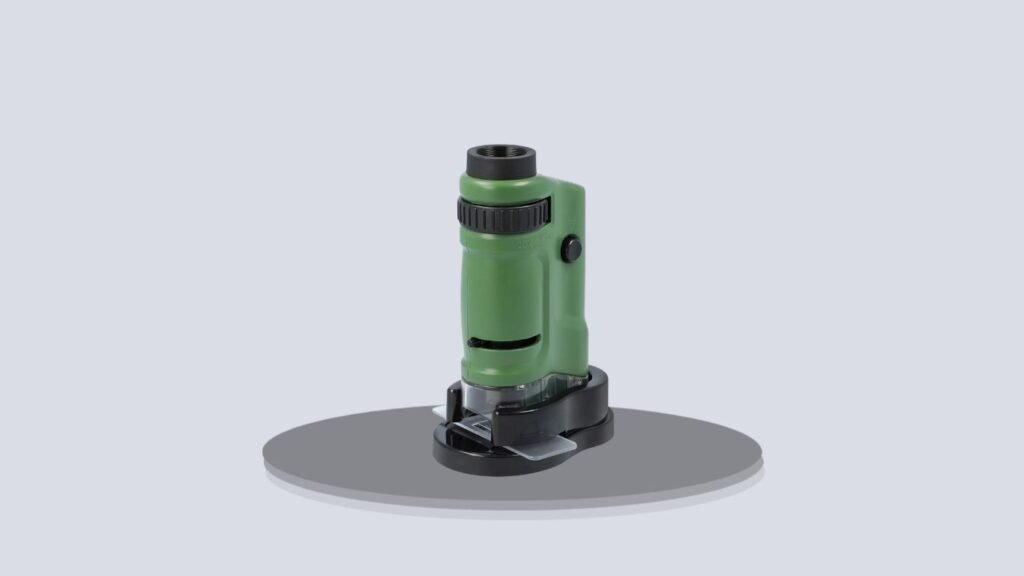
The Carson MicroBrite MM-24 is a compact 20x–40x LED pocket microscope designed for straightforward close-up observation. Its relatively moderate magnification makes it especially well suited to larger insects, plant surfaces, coins, fibers, leaves, and beginner science activities. Carson includes a base and two slides, so the microscope can function either as a handheld observation tool or as a small tabletop microscope for prepared specimens.
Key Features
- Adjustable 20x–40x magnification
- Built-in LED illumination
- Manual focus control
- Adjustable zoom wheel
- Tabletop base included
- Two slides included
- Can be used with or without the base
- Three AG-13 button batteries included
- Compact portable construction
- Suitable for educational use
Why It’s Best for Classroom and Kids’ Exploration
The MM-24’s biggest advantage is accessibility. Twenty to forty times magnification provides a meaningful close-up view without creating the narrow viewing area and demanding focus associated with very high-powered microscopes.
Students can examine insects, wings, leaves, soil particles, fibers, and other specimens while still recognizing the overall structure of what they are viewing.
The included tabletop base is another valuable feature. It allows specimens to remain in a consistent position, which can be easier for children than trying to keep both microscope and specimen steady simultaneously.
Observation Performance & Ease of Use
Carson allows the MM-24 to be used either in its viewing base or directly over an object. With the base, users place a specimen on a slide, insert it, switch on the LED, and adjust magnification and focus. Without the base, the microscope can simply be positioned directly over the object.
That dual-use setup provides more flexibility than many basic pocket microscopes.
The 20x–40x range will not reveal extremely tiny microorganisms, but it is well matched to many insect and plant-observation activities.
Overall Verdict
The Carson MicroBrite MM-24 is an excellent choice for children, classrooms, and beginners who need a microscope that is easy to understand. Its moderate magnification, LED illumination, included base, and slide support make it more educationally versatile than a simple magnifying glass while remaining compact enough for portable use.
5. APEXEL 800x Handheld Digital Pocket Microscope
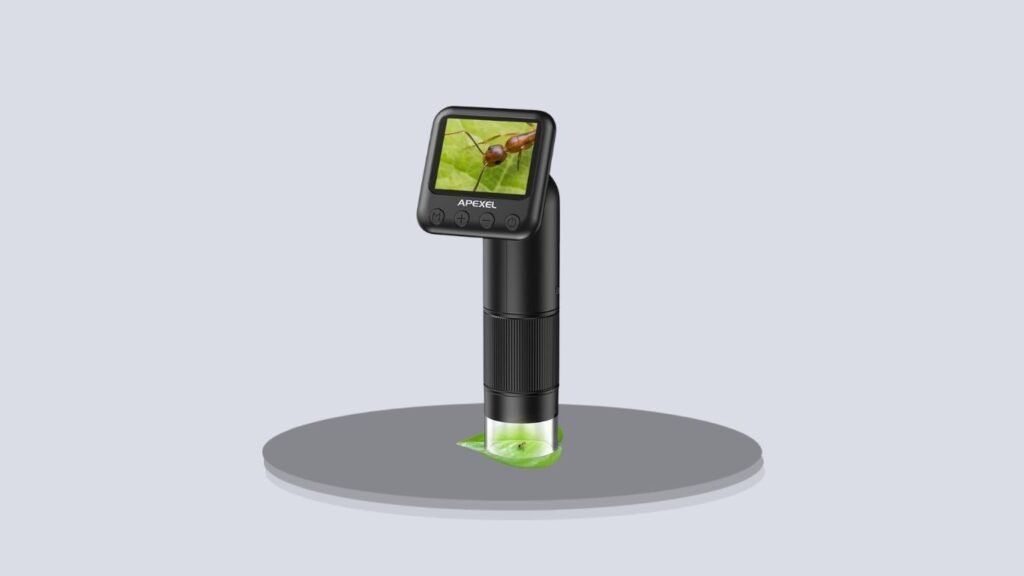
The APEXEL MS008 combines digital microscopy with a self-contained display, eliminating the need to constantly connect a smartphone just to see an image. The model features a built-in 2-inch LCD screen, advertised magnification up to 800x, adjustable LED illumination, photo capability, and USB connectivity for computer viewing. It also includes a 32GB memory card, making it particularly convenient for recording close-up insect observations.
Key Features
- Advertised magnification up to 800x
- Built-in 2-inch LCD display
- Adjustable LED illumination
- Digital image capture
- 32GB memory card included
- Rechargeable lithium-ion battery
- USB connection to a computer
- Compact handheld body
- Approximately 4.8-ounce weight
- Suitable for insects, coins, plants, and educational inspection
Why It’s Best for Standalone Digital Viewing
Many digital microscopes require a phone, tablet, or computer before you can see anything. The APEXEL’s built-in screen makes it more self-contained.
This can be particularly convenient outdoors or in classrooms where connecting every observation to a separate device would slow down the experience.
The screen also makes it easier to show another person what you are observing without forcing them to align their eye with a tiny eyepiece.
For insect enthusiasts, image storage provides another advantage because interesting specimens can be documented for later identification.
Display, Magnification & Portability
The MS008 measures about 6.5 inches long and weighs approximately 4.8 ounces, so despite its digital components it remains reasonably portable.
Adjustable lighting is important at high enlargement because shiny insect exoskeletons can reflect too much illumination while dark surfaces may need additional brightness.
As with most inexpensive digital microscopes, advertised magnification should be understood partly as screen-based enlargement rather than being directly compared with optical magnification from a laboratory microscope.
Overall Verdict
The APEXEL MS008 is an attractive option for anyone who wants digital microscopy without being dependent on a smartphone. Its built-in display, high advertised enlargement, image storage, adjustable lighting, and lightweight construction make it particularly suitable for students, children, field hobbyists, and users who regularly photograph insect details.
6. Carson MicroBrite Pro 60x–120x Pocket Microscope with Smartphone Adapter
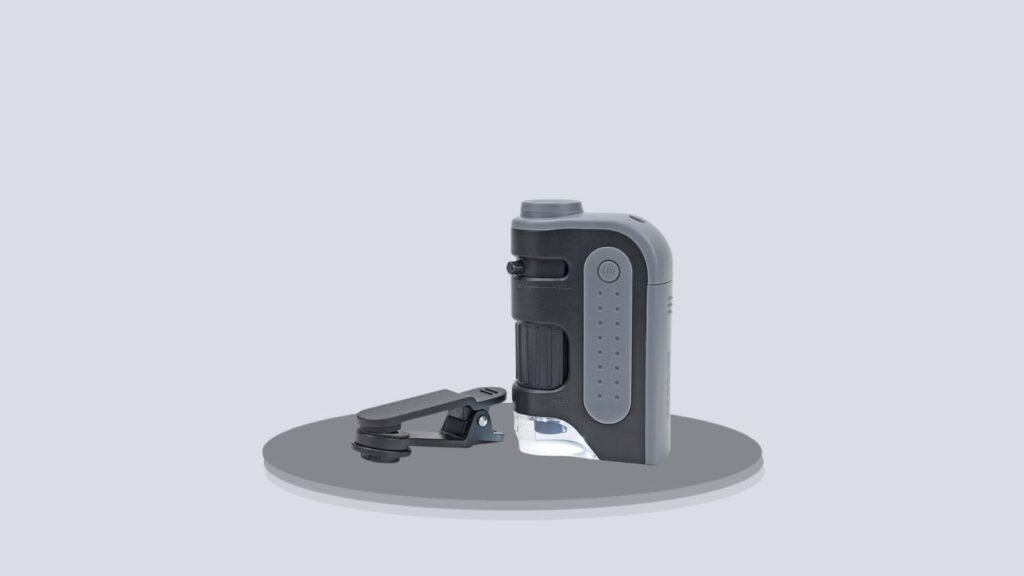
The Carson MicroBrite Pro combines useful 60x–120x optical magnification with LED illumination and smartphone digiscoping capability. The Amazon ASIN provided corresponds to a MicroBrite Pro configuration with a smartphone adapter, allowing users to examine specimens conventionally and capture images through a phone camera. Carson’s microscope catalog lists the MicroBrite Plus platform at 60x–120x, providing a useful middle ground between low-power field magnifiers and the much stronger 100x–250x MicroFlip.
Key Features
- 60x–120x magnification
- LED illumination
- Aspheric lens system
- Compact pocket format
- Smartphone digiscoping clip
- Adjustable zoom
- Manual focusing
- Suitable for insects and plant pests
- Useful for classroom and field observation
- Smartphone photo capability
Why It’s Best for Balanced Magnification and Photography
The 60x–120x range is particularly useful for insect enthusiasts because it provides significantly more detail than basic 20x–40x microscopes without becoming as demanding as very high magnification.
At lower power, you can view body regions and larger structures. Increasing toward 120x can reveal finer patterns, hairs, scales, plant damage, or tiny pests.
The smartphone adapter is also valuable for identification. A photographed specimen can be compared with reference images or shared with other enthusiasts instead of relying only on memory.
Optical Performance & Smartphone Convenience
The MicroBrite Pro uses molded aspheric optics and LED illumination designed to produce a clear close-up view while maintaining the small dimensions expected from a pocket microscope.
Carson also provides its CarsonCam mobile app for compatible digiscoping products. The app can help display a correctly oriented image because traditional pocket microscopes may naturally produce an inverted view.
Users should still expect smartphone alignment to require some initial adjustment, particularly on phones with multiple camera lenses.
Overall Verdict
The Carson MicroBrite Pro is one of the best-balanced choices for insect enthusiasts who want strong optical magnification plus smartphone photography. Its 60x–120x range is versatile enough for many insect and plant-pest observations, while the adapter makes documentation much easier. For field identification, education, and hobby entomology, it combines portability and imaging capability particularly well.
FAQs
1. What Magnification Is Best for Viewing Insects?
For general insect observation, approximately 20x–60x works well for seeing complete body structures, wings, legs, and markings. Around 60x–120x can reveal considerably finer details, while 100x–250x is useful for tiny structures and prepared specimens. Extremely high magnification is not always better because the field of view becomes smaller and focusing becomes more difficult.
2. Can a Pocket Microscope See Spider Mites?
Yes. Pocket microscopes are very useful for inspecting spider mites, especially at 40x or higher magnification. A 60x–120x model can reveal significantly more detail than the naked eye and may also help users observe mite eggs and plant-feeding damage.
3. Is a Digital or Optical Pocket Microscope Better for Insects?
An optical pocket microscope is usually faster for direct field observation because you simply position it over the specimen and look through the eyepiece. A digital microscope is better when you want to take photographs, record videos, display insects on a larger screen, or share observations with other people. The best choice depends on whether portability or documentation is the higher priority.
4. Can I Photograph Insects Through a Pocket Microscope?
Yes, if the microscope includes a smartphone digiscoping adapter or is itself a digital microscope. Models such as the Carson MicroFlip and MicroBrite Pro allow compatible smartphones to capture the eyepiece view, while digital microscopes such as the SKYBASIC and APEXEL can record images directly.
5. What Should I Look for When Choosing a Pocket Microscope for Insects?
Pay attention to useful magnification rather than simply choosing the largest advertised number. Also consider LED illumination, optical clarity, focusing controls, overall size, battery requirements, smartphone compatibility, and whether you need photo or video capture. Lower magnification generally makes moving insects easier to follow, while higher magnification is better for stationary specimens and fine structural details.
