
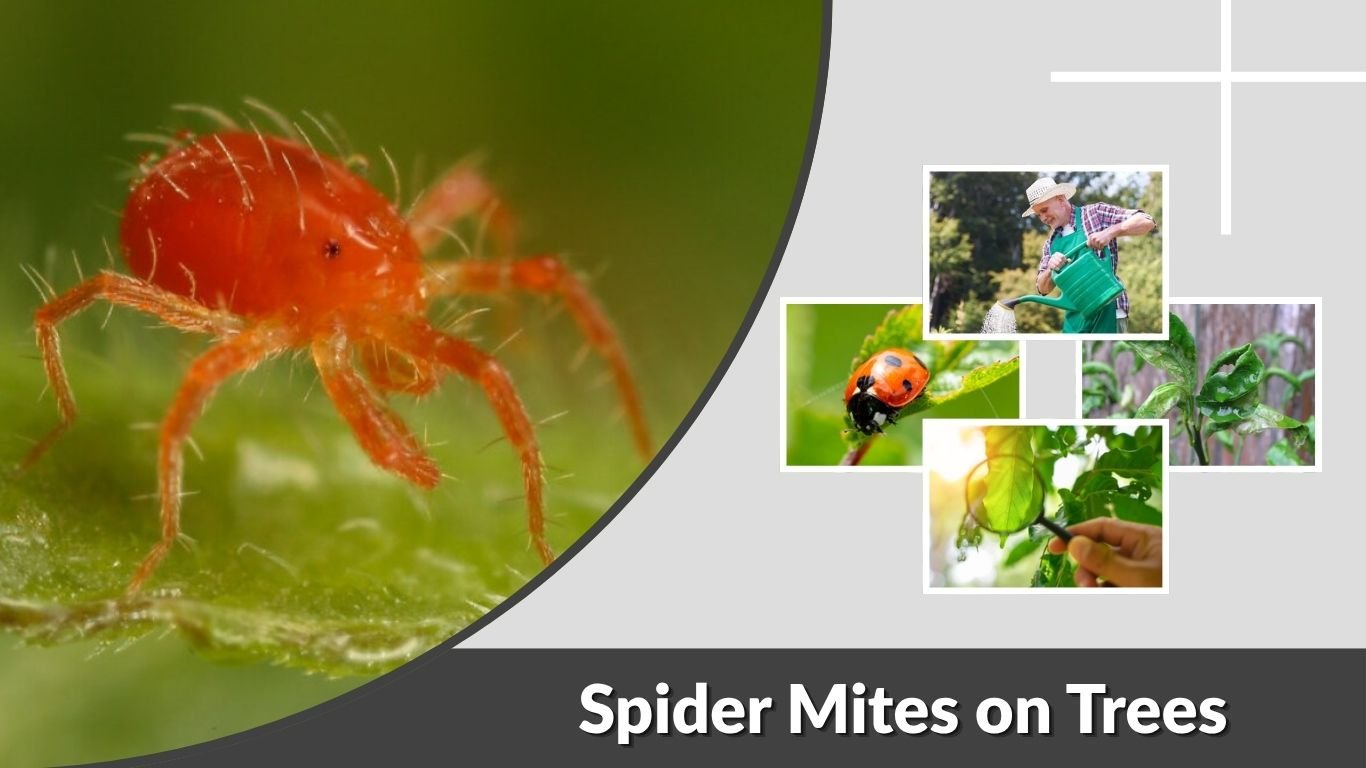
Spider mites on trees can cause yellow-speckled leaves, bronzing, premature leaf drop, and fine webbing when populations become heavy. Lemon and other citrus trees are common targets, but spider mites also attack spruce, pine, cypress, fruit trees, bonsai, money trees, figs, palms, and many ornamentals. Because these tiny pests multiply quickly in favorable conditions, early identification is important. This guide explains how to recognize spider mite damage, treat affected trees, and prevent new infestations without unnecessarily harming beneficial insects.
How to Identify Spider Mites on Trees
Spider mites are extremely small arachnids rather than insects, which makes early infestations easy to overlook. Most people notice the damage before they notice the mites themselves. Different species attack different trees, and their preferred weather can vary, but leaf discoloration and stippling are common warning signs.
Common Signs of Spider Mite Damage
Look for:
- Tiny yellow or pale dots across leaves or needles
- Bronzed, grayish, or faded foliage
- Fine webbing around leaves, stems, or branch tips
- Dry-looking foliage despite adequate watering
- Premature leaf or needle drop
- Reduced vigor during severe infestations
Heavy webbing usually indicates that the population has already become substantial.
How to Check a Tree for Spider Mites
Hold a sheet of white paper beneath a suspicious leaf or branch and tap the foliage firmly. Tiny moving dots on the paper may be spider mites.
You can also examine the undersides of leaves with a hand lens. Mites often remain close to veins or protected surfaces where they feed by piercing plant cells.
Do not rely on webbing alone. Some infestations produce noticeable webbing, while others cause extensive stippling before webs become obvious.
Spider Mites on Lemon and Citrus Trees
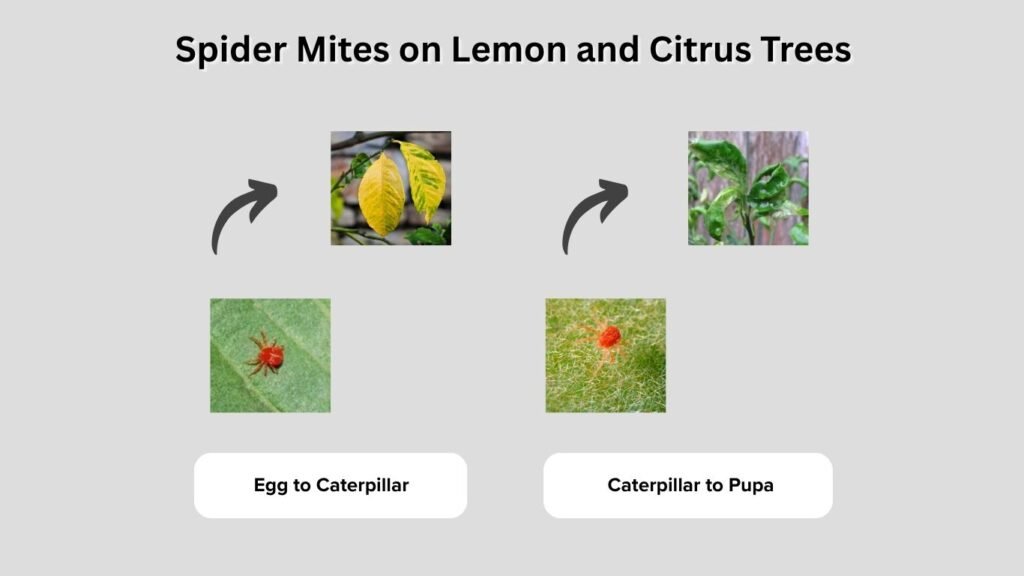
Lemon trees are one of the most searched plants associated with spider mite problems. Citrus foliage can support several mite species, particularly when trees are stressed or growing under warm, dry conditions. Indoor lemon trees may be especially vulnerable because heated rooms and low humidity can favor rapid mite reproduction.
Signs on Lemon Tree Leaves
Spider mites on lemon tree leaves commonly cause pale stippling that gradually spreads across the leaf surface.
As feeding continues, leaves may turn yellowish, bronze, or dull green. Severe infestations can cause curling or premature leaf drop, weakening a young or container-grown tree.
Check both mature and newly affected leaves, especially their undersides.
How to Treat Spider Mites on Lemon Trees
Start with the least disruptive treatment.
Thoroughly rinse the tree with water, concentrating on leaf undersides. This physically removes many mites and can reduce light infestations significantly.
If mites persist, insecticidal soap or horticultural oil labeled for citrus and spider mites can provide more direct control. Good coverage matters because these products primarily work when they contact the mites.
Repeat treatment only according to the product label because eggs and newly hatched mites may survive the first application.
Meyer Lemon and Indoor Citrus
A Meyer lemon growing indoors needs slightly different management. Isolate an infested plant from other houseplants, wash foliage thoroughly, and inspect nearby plants.
Avoid placing indoor citrus directly beside heating vents or in extremely dry conditions. Healthy watering practices and occasional leaf cleaning can make the environment less favorable for severe mite outbreaks.
Spider Mites on Evergreen, Pine, and Spruce Trees
Conifers can suffer from mites just as broadleaf trees do, but the responsible species and seasonal pattern may differ. Spruce spider mites, for example, often become important on spruce, arborvitae, juniper, hemlock, and other evergreens.
Spider Mites on Spruce and Pine
Damage often begins as small pale flecks on individual needles. Eventually the foliage may become yellow, bronze, or brown.
Older interior needles sometimes show injury first, although damage patterns vary with mite species and tree condition.
The paper-tap test is particularly useful on conifers because mites are difficult to see among dense needles.
Cypress, Arborvitae, and Juniper
Cypress, Italian cypress, arborvitae, and juniper can develop dull or bronzed sections when mites become abundant.
Do not immediately assume every brown branch is caused by spider mites. Drought, root problems, fungal diseases, winter injury, and other pests can produce similar symptoms.
Confirm live mites before beginning treatment.
Why Timing Matters on Evergreens
Not every spider mite thrives during the hottest weather. Some mites that attack evergreens are more active during cooler periods.
For that reason, treatment should be based on actual monitoring rather than automatically spraying whenever foliage turns brown.
Regular inspections during spring and fall can help catch conifer mite outbreaks before extensive discoloration develops.
How to Get Rid of Spider Mites on Trees
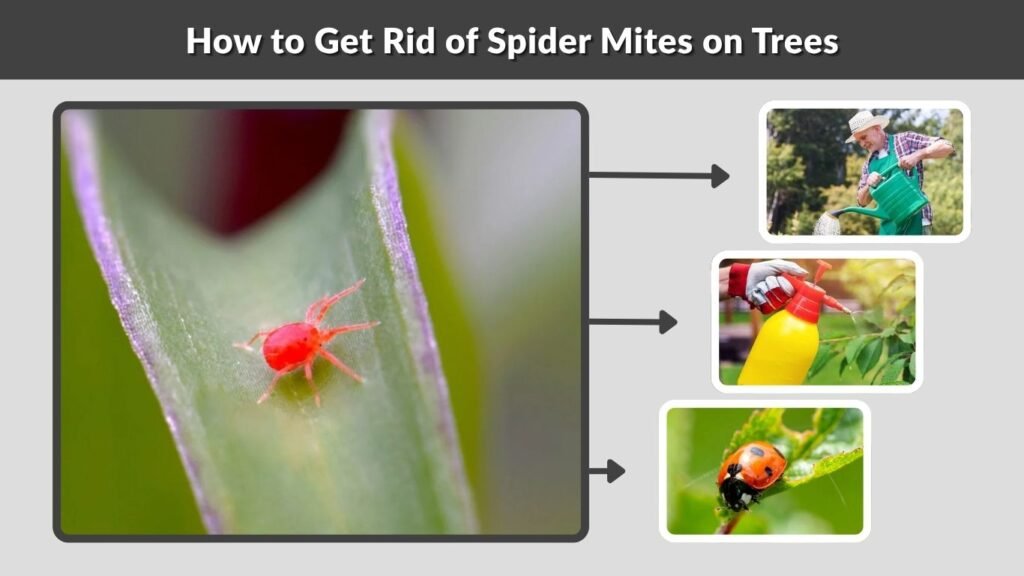
Effective control usually requires combining physical removal, proper tree care, and targeted treatments. One heavy pesticide application is rarely the best first response, particularly because broad-spectrum insecticides can kill natural enemies that normally suppress spider mite populations.
Start With Water
For smaller trees, shrubs, citrus, bonsai, and indoor plants, direct a strong stream of water toward affected foliage.
Pay particular attention to leaf undersides.
Repeating this every few days can reduce mites while washing away dust that may contribute to favorable conditions.
Use Insecticidal Soap or Horticultural Oil
For persistent infestations, consider products specifically labeled for spider mites and the tree species being treated.
Insecticidal soap and horticultural oils work best with thorough coverage. Leaves, needles, stems, and protected surfaces may all need attention.
Avoid applying oils during unsuitable temperatures or to plant species listed as sensitive on the label.
Protect Beneficial Predators
Predatory mites, lady beetles, lacewings, and other natural enemies can help keep spider mites under control.
Unnecessary use of broad-spectrum insecticides may eliminate these beneficial organisms and sometimes allow mites to rebound rapidly.
Use targeted treatment only when monitoring indicates that control is actually needed.
Reduce Tree Stress
Spider mite problems are often worse on stressed plants.
Water trees appropriately during dry weather, avoid excessive nitrogen fertilizer, and keep container plants from becoming chronically dry.
A vigorous tree can tolerate light feeding more successfully than one already weakened by drought, root damage, or poor growing conditions.
Spider Mites on Fruit and Indoor Trees
Spider mites are not limited to citrus and conifers. Apple, peach, cherry, fig, avocado, banana, olive, maple, hibiscus, ficus, and many other trees may develop infestations.
Fruit Trees
On apple, peach, cherry, fig, and similar fruit trees, check foliage regularly during the growing season.
Treatments must be selected carefully because edible crops have specific label restrictions and harvest intervals. Never assume a product labeled for ornamental trees is automatically appropriate for fruit trees.
Money Trees, Bonsai, and Ficus
Indoor trees such as money trees, ficus, bonsai, and small palms can develop spider mites quickly in warm, dry rooms.
Isolate affected plants, wash them thoroughly, and inspect them every few days. Indoor infestations often return when nearby plants remain untreated.
Small plants are especially suitable for repeated water rinses and careful spot treatment.
Can Spider Mites Kill a Tree?
Spider mites can contribute to serious decline, but established trees usually tolerate light infestations without dying. The greatest risk occurs when mite feeding is severe, repeated, or combined with drought, root stress, extreme heat, disease, or other pests.
Young trees, container plants, bonsai, and recently transplanted specimens have less foliage and fewer reserves, so damage can become important more quickly.
The goal is therefore not necessarily to eliminate every mite. Keeping populations below damaging levels while maintaining tree health is usually a more realistic and sustainable approach.
How to Prevent Spider Mites From Returning
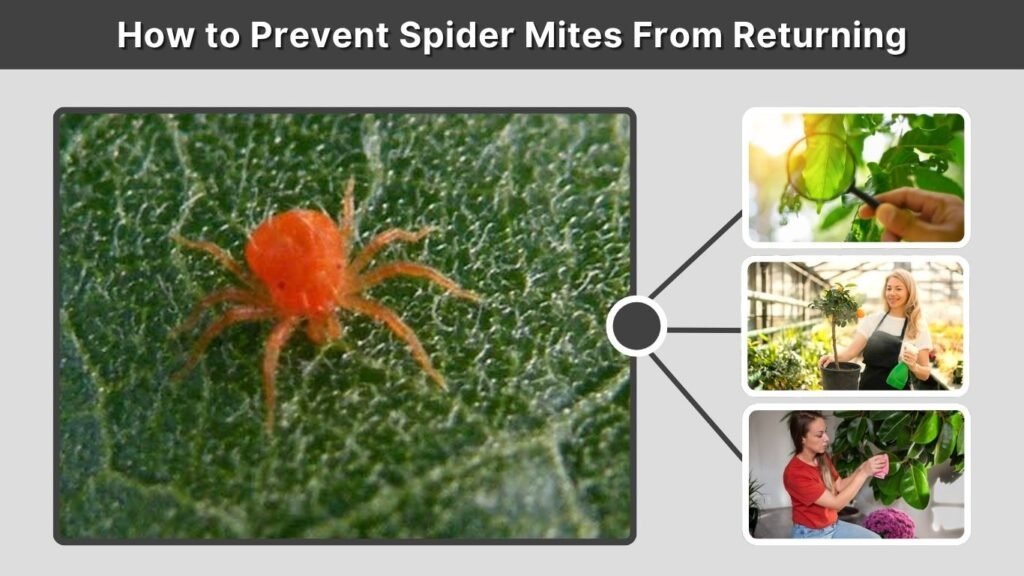
Prevention begins with regular observation rather than routine spraying. Trees checked frequently are much easier to manage because small infestations can be addressed before extensive webbing or foliage loss occurs.
Prevention Tips
- Inspect leaf undersides regularly.
- Check stressed or dusty trees more frequently.
- Water appropriately during prolonged dry periods.
- Avoid excessive nitrogen fertilization.
- Wash indoor tree foliage periodically.
- Quarantine newly purchased houseplants before placing them nearby.
- Preserve predatory insects and mites.
- Remove heavily damaged material when appropriate.
Consistent monitoring is particularly valuable on lemon trees, indoor trees, and conifers with a history of mite problems.
FAQs
1. What kills spider mites on trees?
A strong water spray can reduce light infestations. For persistent problems, insecticidal soap, horticultural oil, or another product specifically labeled for spider mites and the affected tree may be appropriate. Thorough coverage and label-directed repeat applications are usually more important than using an unnecessarily strong pesticide.
2. How do I get rid of spider mites on a lemon tree?
Rinse the entire tree, especially the undersides of leaves, and isolate container-grown trees when possible. If mites remain, use an insecticidal soap or horticultural oil labeled for citrus. Continue checking new foliage because spider mite populations can rebuild quickly.
3. Can spider mites kill lemon or citrus trees?
Heavy infestations can weaken citrus trees and contribute to leaf loss, especially when the tree is young, drought-stressed, or growing in a container. Spider mites are less likely to kill a healthy mature tree by themselves, but severe untreated infestations can cause significant decline.
4. How do I know if my spruce or pine has spider mites?
Look for stippled, faded, bronze, or brown needles and use the white-paper test. Tap an affected branch over white paper and watch for tiny moving specks. Confirming mites is important because drought, disease, and other pests can produce similar browning.
5. Does tea tree oil kill spider mites?
Tea tree oil is sometimes promoted as a home remedy, but concentrated essential oils can damage foliage and are not the most predictable option for tree treatment. Water sprays, insecticidal soap, horticultural oil, or a properly labeled miticide are generally more reliable choices when used correctly.
