
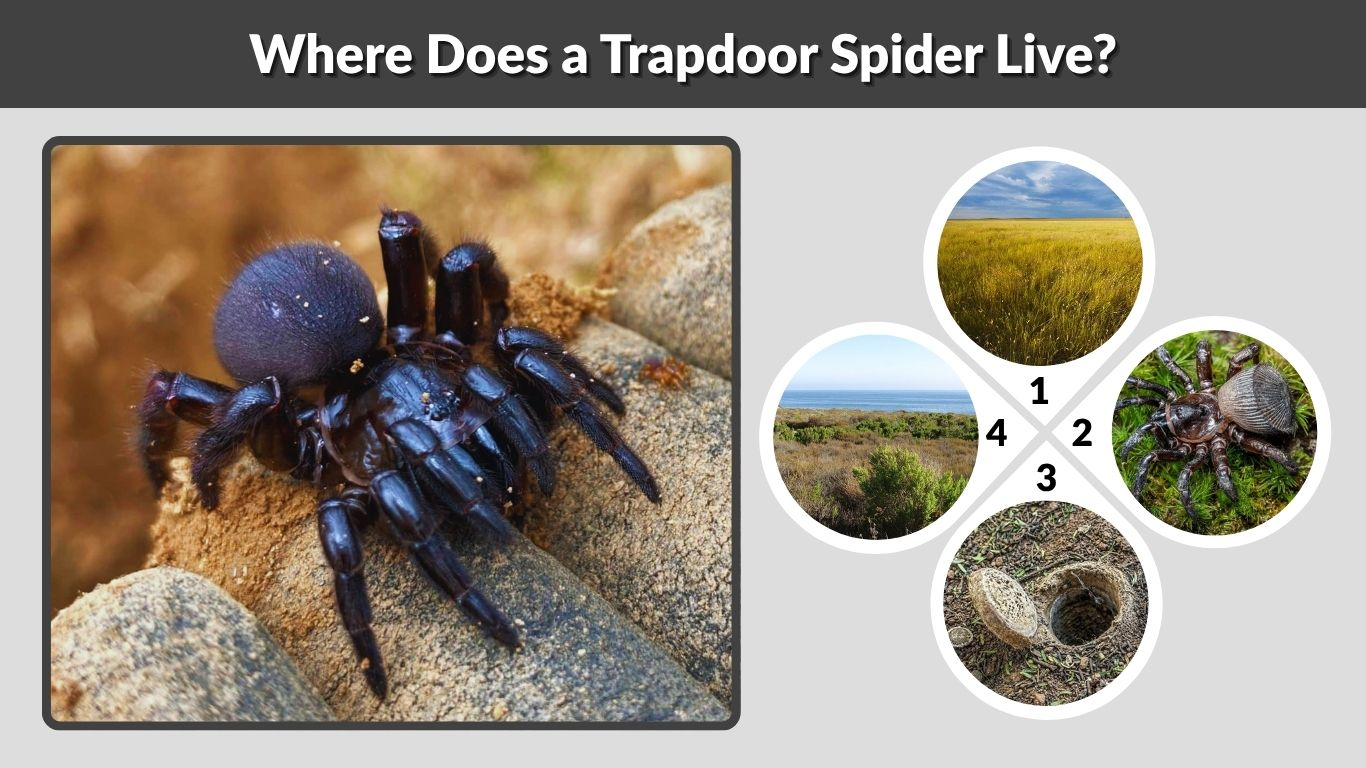
Trapdoor spiders are fascinating arachnids known for their underground burrows and hidden trapdoor entrances. Unlike web-building spiders, these secretive hunters spend most of their lives concealed beneath the soil, waiting for prey to pass by. Their unique behavior, powerful bodies, and remarkable engineering skills have made them one of the most interesting spider groups in the world. Understanding where trapdoor spiders live, what they eat, how large they grow, and whether they are dangerous helps reveal why these spiders are so successful in diverse environments.
What Is a Trapdoor Spider?
Trapdoor spiders belong to a group of spiders that create silk-lined underground burrows covered by a hinged door made from soil, silk, and vegetation. These spiders are ambush predators that rely on stealth rather than speed. Found in many parts of the world, they are closely related to tarantulas but display unique behaviors that distinguish them from other spider species.
Trapdoor Spider Definition
A trapdoor spider is a burrowing spider that constructs a hidden underground tunnel with a camouflaged entrance. The spider remains concealed inside the burrow until prey approaches, then quickly attacks before retreating underground.
Why Is It Called a Trapdoor Spider?
The name comes from the spider’s remarkable door-like structure. Using silk and surrounding materials, the spider creates a lid that blends into the environment. This trapdoor protects the spider from predators, harsh weather, and helps it remain hidden while hunting.
Is a Trapdoor Spider a Tarantula?
Although trapdoor spiders and tarantulas belong to the same mygalomorph group, they are not the same animal. Trapdoor spiders typically spend their lives in burrows, while many tarantulas roam more freely. Their hunting strategies and habitats also differ significantly.
What Does a Trapdoor Spider Look Like?
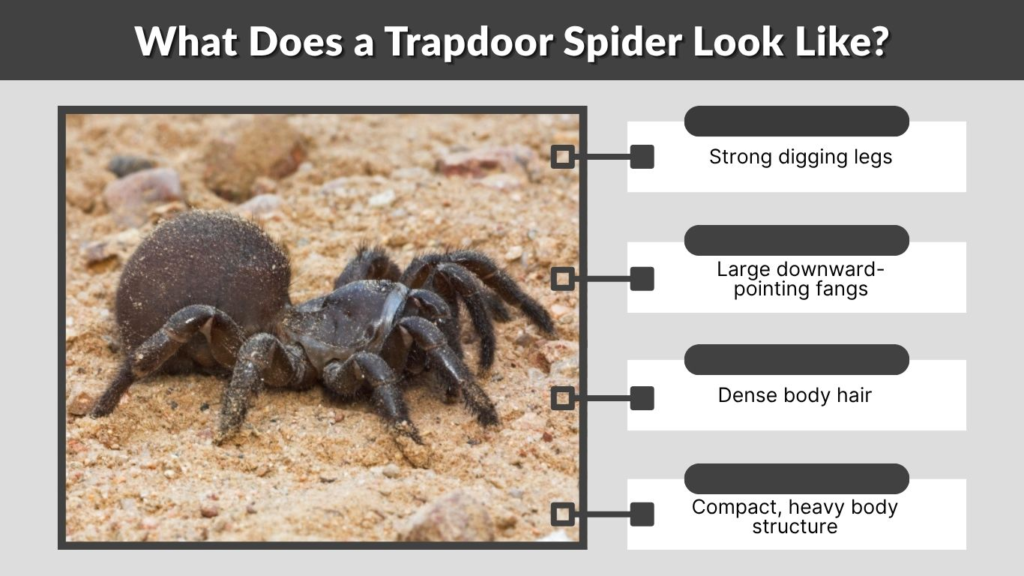
Trapdoor spiders have a sturdy appearance that reflects their underground lifestyle. Their bodies are compact, muscular, and covered with fine hairs. While colors vary by species, most trapdoor spiders display shades of brown, black, gray, or reddish-brown that help them blend into their surroundings.
Body Shape and Color
Most trapdoor spiders possess a broad cephalothorax, thick legs, and a rounded abdomen. Their coloration helps them remain hidden near burrow entrances and provides natural camouflage against soil and leaf litter.
Physical Characteristics
Common physical features include:
- Strong digging legs
- Large downward-pointing fangs
- Dense body hair
- Compact, heavy body structure
- Rounded abdomen
These adaptations make them effective burrow builders and ambush predators.
How Many Eyes and Legs Do They Have?
Like most spiders, trapdoor spiders have eight legs and eight eyes. However, their eyesight is relatively poor. Instead of relying heavily on vision, they detect vibrations and movement around their burrow entrance.
How Big Is a Trapdoor Spider?
Size is one of the most common questions about trapdoor spiders. While dimensions vary among species, most are medium-sized spiders with powerful bodies. Females generally grow larger than males and often live much longer due to their protected underground lifestyle.
Average Trapdoor Spider Size
Adult trapdoor spiders usually measure between one and two inches in body length. Including leg span, some species can appear considerably larger. Environmental conditions, genetics, and food availability influence their final size.
Female vs Male Size
Female trapdoor spiders remain inside their burrows for most of their lives and continue growing over several years. Males mature faster and often leave their burrows to search for mates.
Typical differences include:
- Females are larger
- Females are heavier
- Males have longer legs
- Males mature earlier
- Females live significantly longer
Giant Trapdoor Spider Species
Some species are noticeably larger than average and may have leg spans exceeding several inches. These giant species are often found in regions with favorable climates and abundant prey populations.
Where Do Trapdoor Spiders Live?
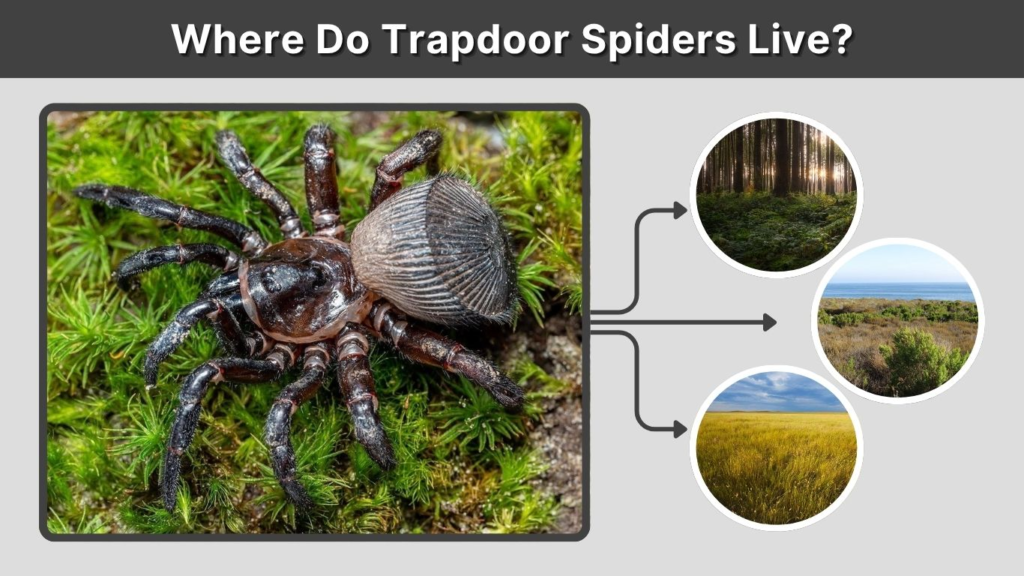
Trapdoor spiders inhabit a variety of environments across the globe. Their success depends largely on soil conditions that allow burrow construction. Because they spend much of their lives underground, they can survive in habitats that provide shelter, moisture, and reliable food sources.
Habitat of a Trapdoor Spider
Most trapdoor spiders prefer areas with loose, well-draining soil. Forests, woodlands, grasslands, and shrub-covered regions often provide ideal conditions for burrow construction and long-term survival.
Geographic Distribution
Trapdoor spiders are found in numerous regions worldwide, including:
- Australia
- North America
- South America
- Africa
- Asia
Different species have adapted to local climates and ecosystems, resulting in a wide range of habitats and behaviors.
Where Does the California Trapdoor Spider Live?
California trapdoor spiders typically inhabit dry hillsides, oak woodlands, and chaparral ecosystems. Their burrows are often hidden beneath leaves, rocks, or vegetation, making them difficult to locate even in areas where they are relatively common.
How Does a Trapdoor Spider Build Its Burrow?
The trapdoor spider’s burrow is one of the most remarkable structures created by any arachnid. These underground homes provide protection, stability, and an effective hunting platform. Construction requires patience, silk production, and careful use of surrounding materials.
Burrow Construction Process
The spider begins by digging into suitable soil using its legs and mouthparts. As the tunnel deepens, silk is added to reinforce the walls and prevent collapse. Over time, the burrow becomes a secure shelter capable of lasting for years.
Building the Trapdoor
Once the burrow is complete, the spider creates a hinged lid that perfectly matches its surroundings. The trapdoor often becomes nearly invisible, helping the spider avoid predators and remain concealed while waiting for prey.
Why the Burrow Is Important
The burrow serves several purposes. It protects the spider from extreme temperatures, provides safety during storms, and acts as a hidden base for ambush hunting. Without this structure, trapdoor spiders would be far more vulnerable to predators and environmental threats.
What Does a Trapdoor Spider Eat?
Trapdoor spiders are carnivorous predators that rely on patience and surprise rather than active hunting. They remain hidden inside their burrows until prey approaches the entrance. Once they detect movement through vibrations in the ground, they launch a rapid attack and drag the prey underground for consumption.
Common Trapdoor Spider Prey
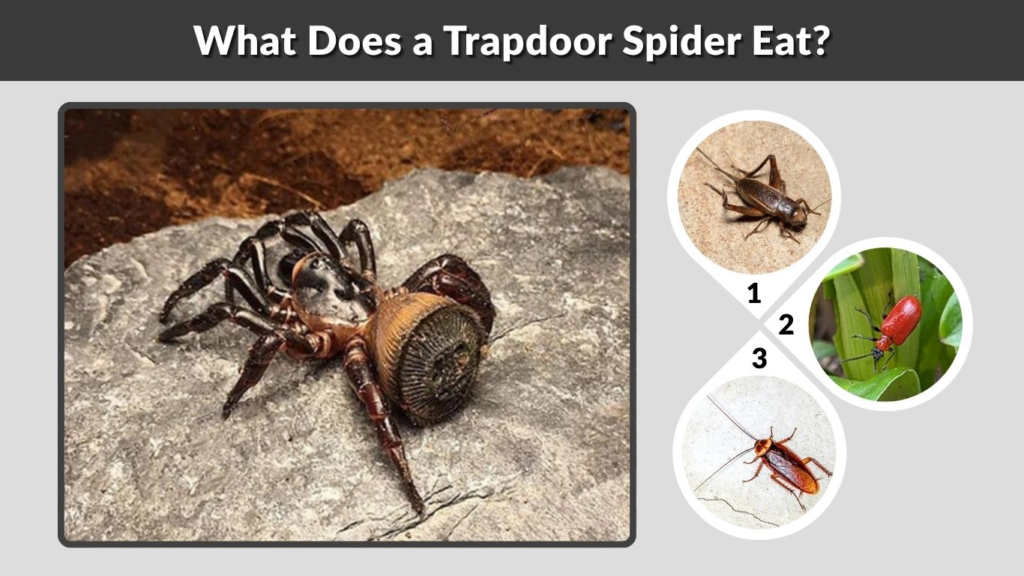
The diet of a trapdoor spider mainly consists of insects and other small invertebrates found near its burrow. Their powerful fangs help them capture and subdue prey quickly.
Common food sources include:
- Crickets
- Beetles
- Cockroaches
- Grasshoppers
- Ants
- Small spiders
The exact diet varies depending on the spider’s size, habitat, and available prey.
How Does a Trapdoor Spider Catch Its Prey?
Trapdoor spiders use an ambush strategy rather than chasing prey. They wait beneath the trapdoor with their front legs positioned near the entrance. When vibrations indicate a nearby insect, they burst from the burrow, grab the prey, and retreat underground within seconds.
Trapdoor Spider Behavior and Habits
Trapdoor spiders spend most of their lives hidden underground. Their behavior is shaped by the need for protection, successful hunting, and conserving energy. Because they rarely leave their burrows, many people never realize these spiders are living nearby.
Daily Activities
Most trapdoor spiders are nocturnal, meaning they become active after sunset. During the day, they remain concealed inside their burrows to avoid predators and extreme temperatures.
Unlike web-building spiders, they do not spend time creating large aerial webs. Their burrow serves as both a home and a hunting platform.
Can Trapdoor Spiders Swim?
Although trapdoor spiders are not aquatic animals, many species can survive brief contact with water. They generally avoid flooded areas and depend on well-drained soil for successful burrow construction.
What Happens During Rain?
Heavy rainfall may temporarily flood shallow burrows. In many cases, the spider seals itself inside the burrow until conditions improve. Well-constructed burrows often provide protection against moderate rainfall and changing weather conditions.
Are Trapdoor Spiders Venomous or Dangerous?
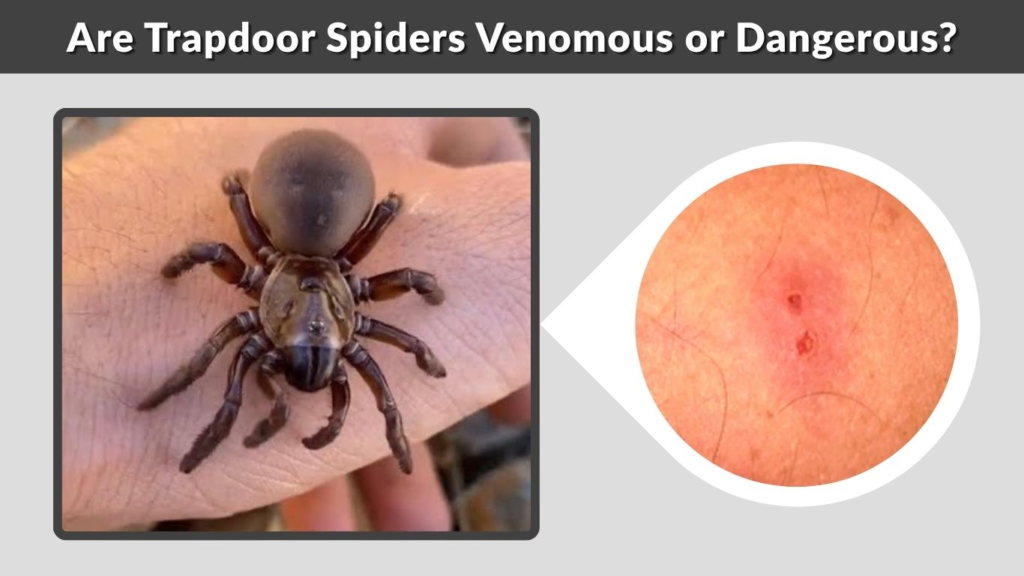
Questions about venom and danger are among the most searched topics regarding trapdoor spiders. While these spiders possess venom and large fangs, they are generally not considered a significant threat to humans. Most prefer avoiding confrontation whenever possible.
Is a Trapdoor Spider Venomous?
Yes, trapdoor spiders are venomous. Their venom helps immobilize prey and assists in digestion. However, the venom is designed for hunting insects rather than causing serious harm to humans.
Is a Trapdoor Spider Poisonous?
A trapdoor spider is venomous, not poisonous. Venomous animals inject toxins through bites or stings, while poisonous animals cause harm when touched or consumed. This distinction is important when discussing spider safety.
Can a Trapdoor Spider Kill You?
There are no widely recognized cases of healthy adults being killed by a typical trapdoor spider bite. Although bites can be painful, they are generally considered medically minor compared to bites from more dangerous spider species.
Trapdoor Spider Bite Guide
Trapdoor spider bites are uncommon because these spiders spend most of their lives hidden underground. Most bites occur when a spider is handled, disturbed, or accidentally trapped against the skin.
What Does a Trapdoor Spider Bite Look Like?
A bite usually appears as two small puncture marks accompanied by localized redness and swelling. Symptoms vary depending on the individual and the spider species involved.
Common bite symptoms include:
- Mild to moderate pain
- Redness around the bite area
- Temporary swelling
- Minor itching
- Localized irritation
Most symptoms resolve without serious complications.
When Should You Seek Medical Care?
Medical attention may be necessary if severe swelling develops, symptoms spread beyond the bite area, or an allergic reaction occurs. Individuals with pre-existing medical conditions should consult a healthcare professional if concerns arise after a bite.
What Eats a Trapdoor Spider?
Despite their impressive defenses and hidden lifestyle, trapdoor spiders are still part of the food chain. Various predators have evolved methods for locating and capturing these secretive arachnids.
Natural Predators
Trapdoor spiders face threats from a variety of animals throughout their lives. Young spiders are especially vulnerable before establishing secure burrows.
Known predators include:
- Birds
- Lizards
- Small mammals
- Larger spiders
- Spider-hunting wasps
Some wasp species are particularly skilled at locating trapdoor spider burrows and using them to provide food for their developing offspring.
How Long Does a Trapdoor Spider Live?
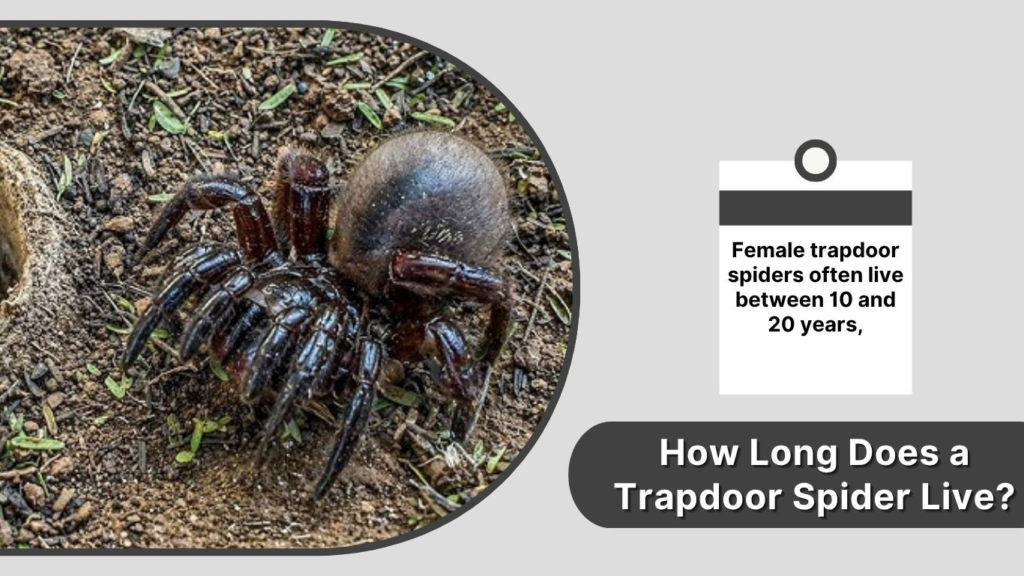
Trapdoor spiders are among the longest-lived spider species. Their protected underground lifestyle reduces exposure to predators and environmental hazards, allowing some individuals to survive for many years.
Average Lifespan
Female trapdoor spiders often live between 10 and 20 years, depending on species and environmental conditions. Some may survive even longer in ideal circumstances.
Males generally have much shorter lifespans. After reaching maturity, they leave their burrows in search of mates and become more vulnerable to predators and environmental risks.
Factors Affecting Longevity
Several factors influence lifespan, including habitat quality, food availability, climate conditions, disease, and predation pressure. Stable environments typically support longer-lived populations.
FAQs
Why Is It Called a Trapdoor Spider?
Trapdoor spiders get their name from the hidden door they build over the entrance of their burrow. The door is made from silk, soil, leaves, and other natural materials, allowing it to blend perfectly into the surroundings and conceal the spider from predators and prey.
Will a Trapdoor Spider Leave Its Burrow?
Yes, but not often. Female trapdoor spiders usually remain inside their burrows for most of their lives. Adult males are more likely to leave their burrows when searching for mates during the breeding season.
Are Trapdoor Spiders Found in the United States?
Yes. Several trapdoor spider species live throughout the United States, particularly in states such as California, Florida, Arizona, and parts of the southeastern region. Their burrows are often difficult to spot because they are carefully camouflaged.
Can You Keep a Trapdoor Spider as a Pet?
Yes, some species are kept by arachnid enthusiasts. However, trapdoor spiders require specialized care, including deep substrate for burrowing, proper humidity levels, and a steady supply of live prey. They are best suited for observation rather than handling.
How Do You Find a Trapdoor Spider in the Wild?
The easiest way to find a trapdoor spider is by locating its burrow entrance. Look for small, circular trapdoors hidden among soil, leaf litter, moss, or vegetation. Early morning or after rainfall may make burrows easier to identify, although finding them often requires patience and careful observation.
