
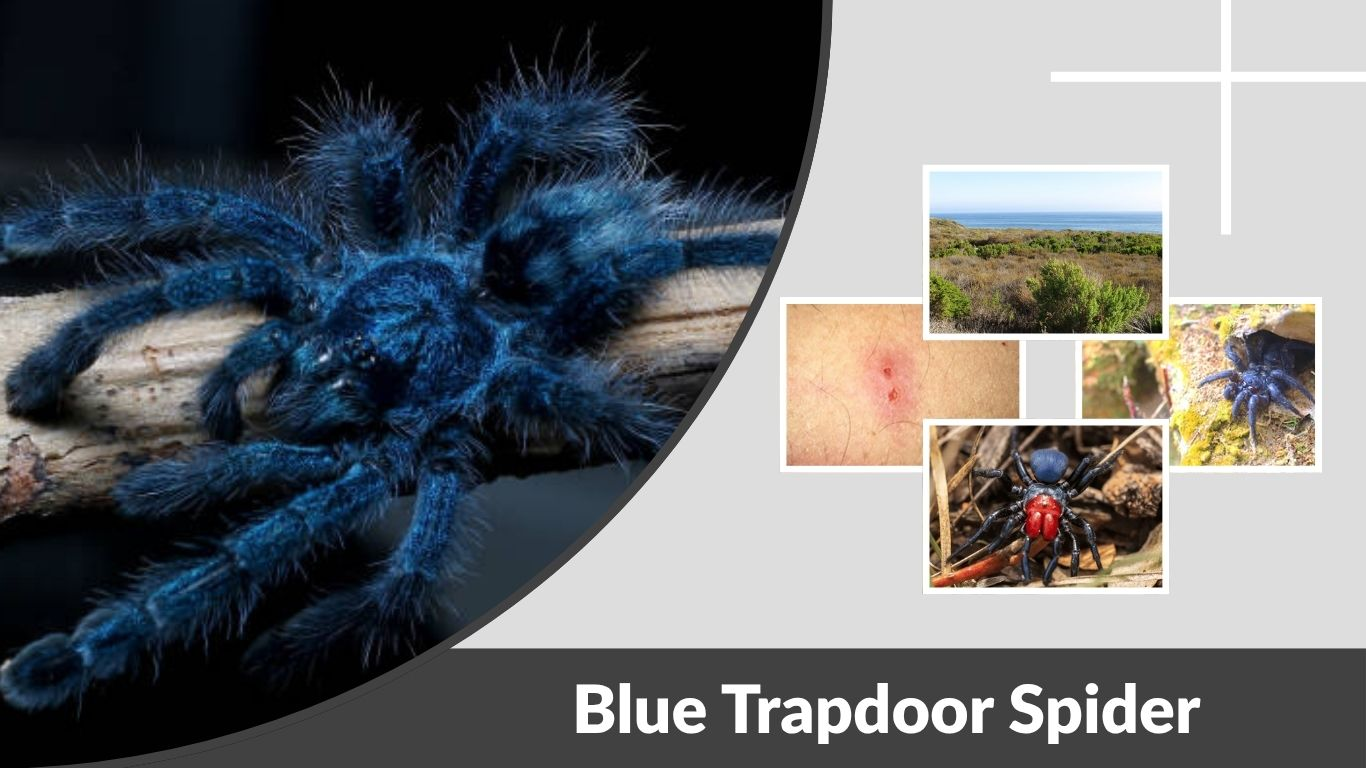
Blue trapdoor spiders are among the most fascinating arachnids found in nature. Their striking blue coloration, secretive lifestyle, and impressive burrowing abilities make them a popular subject for spider enthusiasts and researchers alike. While not all trapdoor spiders display blue hues, certain species exhibit vibrant metallic or bright blue shades that distinguish them from other spiders. Understanding their appearance, habitat, behavior, and size can help enthusiasts identify these remarkable creatures and appreciate their role in local ecosystems.
What Is a Blue Trapdoor Spider?
Blue trapdoor spiders belong to a group of burrowing spiders known for creating hidden underground homes with camouflaged trapdoors. These spiders spend much of their lives concealed beneath the soil, emerging mainly to hunt prey. Their unique appearance and ambush hunting strategy make them one of the most intriguing spider groups worldwide.
Understanding Trapdoor Spiders
Trapdoor spiders are members of the mygalomorph spider group, which also includes tarantulas. They construct silk-lined burrows and create hinged doors made from soil, vegetation, and silk. These doors blend seamlessly with the surrounding environment, providing protection from predators and harsh weather conditions.
Unlike wandering spiders, trapdoor spiders rarely leave their burrows. Instead, they wait patiently near the entrance and strike when unsuspecting prey passes nearby.
Why Some Trapdoor Spiders Appear Blue
The blue coloration seen in some species is often caused by microscopic structures on the spider’s body that reflect light differently. This effect creates metallic, iridescent, or bright blue shades that can vary depending on lighting conditions.
Common reasons for blue coloration include:
- Structural light reflection rather than pigment
- Species-specific genetic traits
- Enhanced visibility during mating displays
- Environmental influences on appearance
These characteristics make blue trapdoor spiders highly sought after by photographers and arachnid enthusiasts.
Blue Trapdoor Spider Identification Guide
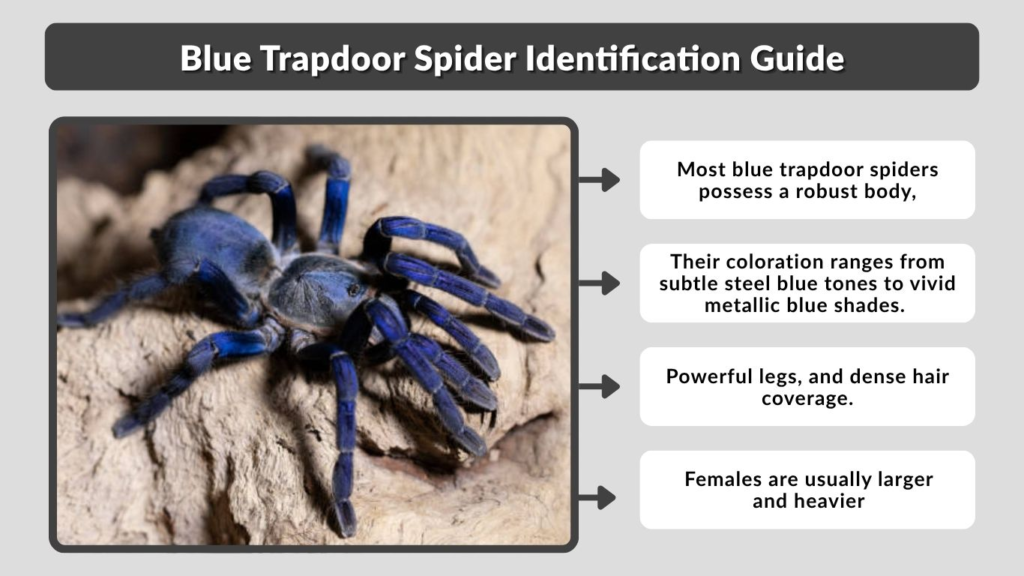
Identifying a blue trapdoor spider can be challenging because several species share similar features. However, understanding their physical traits can help distinguish them from other burrowing spiders.
Physical Characteristics
Most blue trapdoor spiders possess a robust body, powerful legs, and dense hair coverage. Their coloration ranges from subtle steel blue tones to vivid metallic blue shades. The cephalothorax often appears darker than the legs, creating a striking contrast.
Adult spiders typically have strong fangs adapted for capturing insects and defending themselves when threatened. Their sturdy build reflects their lifestyle as underground ambush predators.
Male vs Female Appearance
Male and female trapdoor spiders differ in several ways. Females generally remain inside their burrows for most of their lives, while males wander in search of mates once they reach maturity.
Key differences include:
- Females are usually larger and heavier
- Males have longer legs
- Female coloration often remains more vibrant
- Males have shorter lifespans after maturity
These distinctions become more noticeable during the breeding season.
Bright Blue Trapdoor Spider Traits
Bright blue trapdoor spiders attract attention because of their unusual coloration. Their bodies may display shimmering shades of cobalt, electric blue, or metallic turquoise. Under sunlight, the reflective surfaces can create an almost glowing appearance.
Many observers initially mistake these spiders for exotic tarantulas due to their size and color. However, their burrowing behavior and trapdoor construction clearly separate them from most tarantula species.
Blue Mountain Trapdoor Spider Explained
The Blue Mountain trapdoor spider is one of the most discussed blue-colored trapdoor spider varieties. Known for its distinctive appearance and secretive behavior, this spider has become a popular subject among wildlife enthusiasts.
What Is the Blue Mountain Trapdoor Spider?
This spider refers to species associated with mountainous or forested regions where environmental conditions support underground burrowing. The species is often recognized for its dark body and noticeable blue sheen across its legs and carapace.
Researchers continue studying various populations to better understand their distribution and ecological importance.
Native Habitat
Blue Mountain trapdoor spiders thrive in areas with stable moisture levels and loose soil suitable for burrow construction. Forest floors, woodland environments, and sheltered hillsides provide ideal conditions for their survival.
Their habitat preferences commonly include:
- Moist forest soils
- Leaf-litter-covered ground
- Woodland ecosystems
- Undisturbed natural landscapes
These environments offer protection while supporting abundant insect populations for feeding.
Behavior and Lifestyle
Blue Mountain trapdoor spiders are primarily nocturnal predators. They remain hidden inside their burrows during daylight hours and become active at night. Their hunting strategy relies on patience rather than pursuit.
When vibrations signal nearby prey, the spider rapidly emerges from its concealed entrance, captures the target, and retreats underground. This ambush method conserves energy while maximizing hunting success.
Blue Trapdoor Spider Size and Growth
Size is one of the most frequently searched topics regarding blue trapdoor spiders. Although dimensions vary among species, most individuals follow similar growth patterns throughout their lives.
Average Adult Size
Blue trapdoor spiders are generally medium to large arachnids compared to many common spiders. Mature females tend to reach larger sizes because they remain stationary and continue growing for longer periods.
The average adult may possess a body length ranging from one to two inches, with leg spans extending significantly beyond that measurement. Exact size depends on species, diet, and environmental conditions.
Growth Stages
Like other spiders, blue trapdoor spiders grow through a process known as molting. During each molt, they shed their old exoskeleton and emerge larger than before.
Growth stages include:
- Spiderling stage
- Juvenile development
- Subadult phase
- Fully mature adult
The transition from spiderling to adulthood may take several years, particularly in females, which often live much longer than males.
Blue Trapdoor Spider Habitat and Geographic Distribution
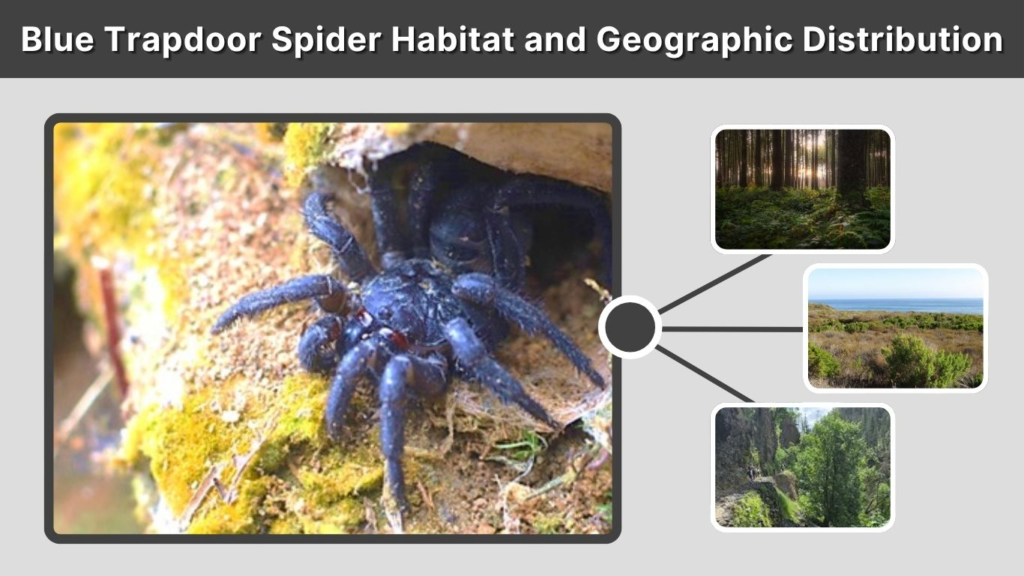
Blue trapdoor spiders occupy diverse habitats across several regions of the world. Their ability to create underground burrows allows them to thrive in environments where many other spider species struggle. Although specific species distributions vary, most prefer areas with stable temperatures and suitable soil conditions.
Where Blue Trapdoor Spiders Live
These spiders are commonly found in forested landscapes, shrublands, and areas with loose, well-draining soil. Their burrows can often be hidden beneath leaves, moss, or low vegetation, making them difficult to spot.
Some species inhabit mountainous regions, while others prefer coastal woodlands or grasslands. Their distribution depends largely on climate, prey availability, and soil composition.
Preferred Environmental Conditions
Blue trapdoor spiders require specific conditions to construct and maintain their burrows successfully. Excessively dry or flooded environments can negatively impact their survival.
Ideal habitat conditions include:
- Moderate to high humidity
- Loose soil for burrowing
- Consistent temperatures
- Adequate insect populations
These factors help support healthy populations and successful reproduction.
Red and Blue Trapdoor Spider Variations
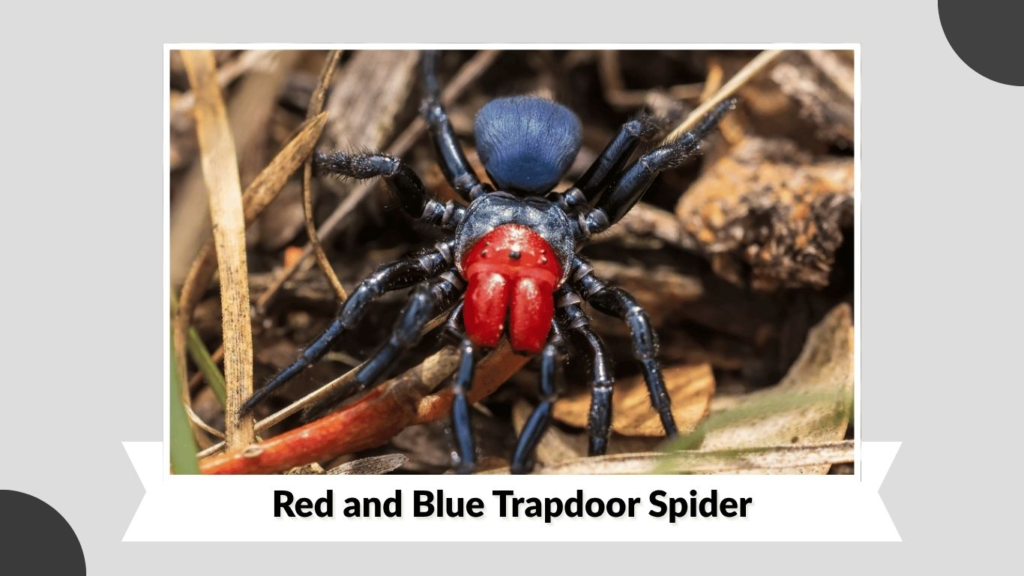
Color variation is one of the most fascinating aspects of trapdoor spider identification. While blue specimens receive significant attention, some individuals display combinations of red, blue, brown, and black coloration.
Why Some Trapdoor Spiders Display Red and Blue Colors
Color differences often result from genetics, age, and structural coloration. In some species, body segments may reflect light differently, creating a combination of red and blue shades that appear especially vivid under natural sunlight.
Young spiders may also display different colors than mature adults. As they molt and develop, their appearance can change considerably.
Common Species with Red and Blue Markings
Several trapdoor spider species exhibit contrasting color patterns. These markings may occur on the legs, abdomen, or cephalothorax and can help distinguish one species from another.
In some cases, bright coloration serves as a warning signal to predators, while in others it simply results from the spider’s natural anatomy and reflective body structures.
Red and Blue Trapdoor Spider in Michigan: Is It Real?
Many people search for information about red and blue trapdoor spiders in Michigan after spotting an unusual spider in their yard or garden. However, identifying spiders based solely on color can be challenging.
Common Spider Species Found in Michigan
Michigan hosts a variety of spider species, including wolf spiders, jumping spiders, fishing spiders, and orb-weavers. Some of these species can appear bluish or reddish depending on lighting and individual variation.
Because of these similarities, unusual sightings are frequently misidentified as exotic trapdoor spiders.
Are Trapdoor Spiders Native to Michigan?
True trapdoor spiders are relatively uncommon in Michigan compared to regions with warmer climates. While some species may occur in parts of the state, brightly colored blue trapdoor spiders are not widely recognized as native residents.
Most reported sightings involve other spider species that share similar body shapes or coloration.
Behavior and Hunting Techniques
Trapdoor spiders are highly specialized predators that rely on stealth rather than speed. Their hunting methods have remained effective for millions of years and contribute significantly to their survival.
How Trapdoor Spiders Build Their Burrows
The construction process begins with excavation. The spider removes soil using its legs and mouthparts, gradually forming a deep tunnel lined with silk.
The entrance is then covered with a carefully crafted door made from:
- Silk
- Soil particles
- Small plant materials
- Leaf fragments
This structure provides camouflage and protection from predators.
Ambush Predation Strategy
Rather than actively searching for prey, trapdoor spiders wait inside their burrows with their front legs positioned near the entrance. When vibrations indicate the presence of an insect, they burst from the trapdoor and seize their target within seconds.
This efficient strategy reduces energy expenditure while maximizing hunting success.
Are Blue Trapdoor Spiders Dangerous?
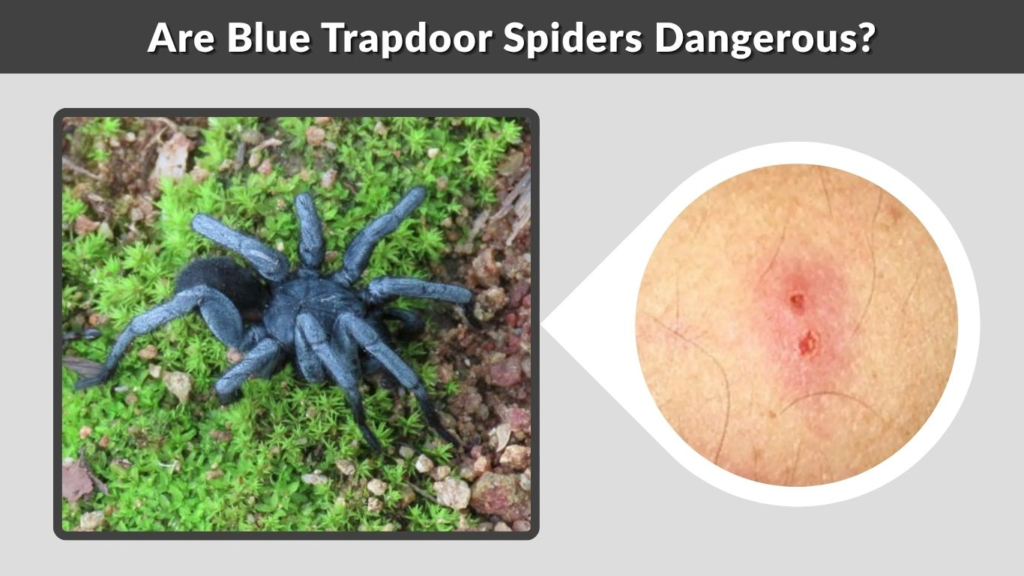
Although their large fangs and intimidating appearance may seem alarming, blue trapdoor spiders are generally not considered dangerous to humans. Like most spiders, they prefer avoiding confrontation whenever possible.
Venom and Bite Effects
Blue trapdoor spiders possess venom used primarily for subduing prey. Human bites are uncommon and usually occur only when a spider is handled or threatened.
Typical symptoms may include:
- Localized pain
- Mild swelling
- Temporary redness
- Minor irritation
Severe reactions are rare, though individuals with allergies should seek medical advice if symptoms worsen.
Blue Trapdoor Spider Lifespan
Trapdoor spiders are known for their impressive longevity, especially when compared to many other spider species. Their protected underground lifestyle contributes significantly to their extended lifespan.
Average Lifespan
Females often live much longer than males. In some species, females may survive for well over a decade, while males generally live only a short period after reaching maturity and reproducing.
Environmental conditions, predator pressure, and food availability all influence longevity.
Blue Trapdoor Spider for Sale: What to Know
The growing popularity of exotic invertebrates has increased interest in blue trapdoor spiders as pets. Prospective owners should carefully research species requirements before making a purchase.
Buying Considerations
Before purchasing a blue trapdoor spider, consider the following factors:
- Local ownership regulations
- Captive-bred availability
- Species-specific care requirements
- Long-term commitment
Captive-bred specimens are generally preferred because they reduce pressure on wild populations and often adapt better to captivity.
Responsible Ownership
Successful care requires a suitable enclosure, proper humidity levels, and opportunities for natural burrowing behavior. Because these spiders spend much of their lives underground, they are best suited for keepers who appreciate observing natural behaviors rather than handling their pets frequently.
FAQs
How big does a blue trapdoor spider get?
The size of a blue trapdoor spider varies depending on the species. Most adults have a body length of 1 to 2 inches (2.5 to 5 cm), while their leg span can reach 3 to 5 inches (7.5 to 12.5 cm). Females are typically larger and heavier than males.
2Are blue trapdoor spiders venomous?
Yes, blue trapdoor spiders possess venom that helps them immobilize prey. However, their venom is not considered dangerous to healthy humans. A bite may cause localized pain, redness, swelling, and mild discomfort, but serious reactions are uncommon.
Why are some trapdoor spiders blue?
The blue coloration often comes from microscopic structures on the spider’s exoskeleton that reflect light, creating an iridescent or metallic appearance. In some species, genetics also contribute to the bright blue or cobalt coloration that makes these spiders so distinctive.
Can blue trapdoor spiders be kept as pets?
Yes, certain species of blue trapdoor spiders are kept by experienced exotic pet enthusiasts. They require a deep enclosure for burrowing, appropriate humidity levels, and a diet of live insects. Because they spend most of their lives underground, they are best suited for observation rather than handling.
Where can I find a blue trapdoor spider in the wild?
Blue trapdoor spiders are most commonly found in forested and mountainous regions with loose, moist soil suitable for burrow construction. Different species occur in various parts of the world, including Australia and other regions with favorable environmental conditions. They are rarely seen because they spend most of their time hidden inside underground burrows.
