
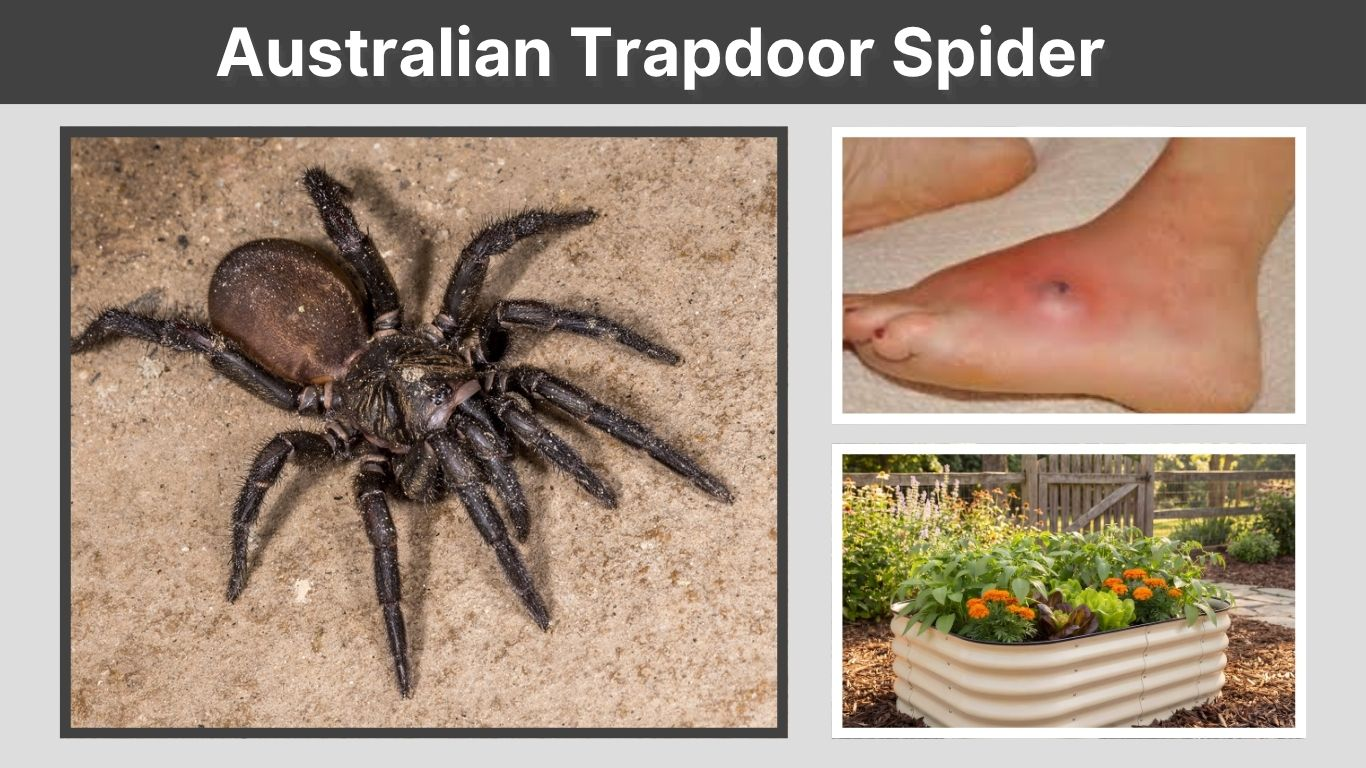
The Australian trapdoor spider is a fascinating underground hunter known for building hidden silk-lined burrows with camouflaged trapdoors. These spiders are found across many parts of Australia and are famous for their stealthy ambush hunting behavior. Many people search for information about their size, venom, lifespan, and bite because they are often confused with more dangerous Australian spiders. Although trapdoor spiders look intimidating with their thick bodies and powerful fangs, most species are shy and pose little danger to humans when left undisturbed in their natural habitat.
What Is an Australian Trapdoor Spider?
Australian trapdoor spiders belong to a group of burrowing spiders that spend most of their lives underground. Instead of building large aerial webs, they create hidden tunnels covered with silk and soil. These spiders wait patiently near the entrance of their burrows for insects and other prey to pass by before launching a quick ambush attack.
Scientific Classification
- Kingdom: Animalia
- Phylum: Arthropoda
- Class: Arachnida
- Order: Araneae
- Infraorder: Mygalomorphae
- Family: Idiopidae and related families
Why Are They Called Trapdoor Spiders?
The name comes from the spider’s unique burrow entrance. Many species build a hinged “trapdoor” made from silk, dirt, and plant material. This hidden door blends perfectly with the surrounding ground and helps protect the spider from predators and harsh weather conditions.
Where Are Australian Trapdoor Spiders Found?
- Forests and woodlands
- Grasslands
- Desert regions
- Coastal environments
- Gardens and suburban areas
Australian Trapdoor Spider Size
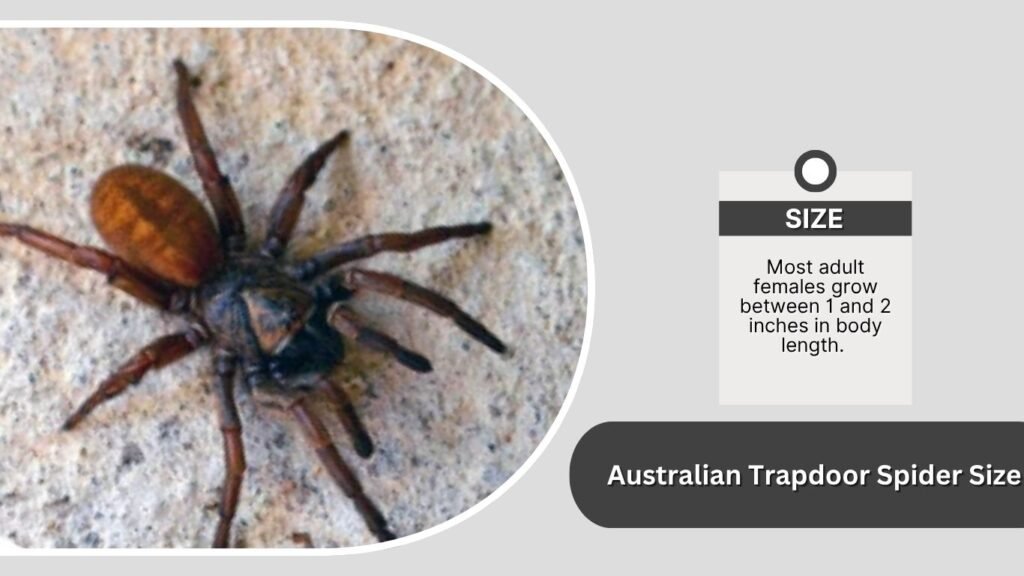
Australian trapdoor spiders vary in size depending on the species, but most have thick heavy bodies and strong legs. Females are usually larger than males and spend most of their lives inside burrows, while males wander during breeding season.
How Big Is an Australian Trapdoor Spider?
Most adult females grow between 1 and 2 inches in body length. Their thick legs and broad bodies make them appear larger than many common garden spiders. Some species can have a leg span that looks impressive when fully extended.
Male vs Female Differences
Female trapdoor spiders are generally heavier and remain close to their burrows throughout life. Males are slimmer and more active during mating season because they travel long distances searching for females.
Are Trapdoor Spiders Large?
Compared to ordinary house spiders, trapdoor spiders are considered large and robust. However, they are usually smaller than tarantulas. Their heavy appearance and powerful jaws often make them seem more dangerous than they actually are.
Australian Trapdoor Spider Appearance
The appearance of Australian trapdoor spiders helps them blend into the soil and forest floor. Their dark coloration and hairy bodies provide excellent camouflage while waiting at the entrance of their burrows.
Body Colors and Features
- Dark brown or black body
- Thick hairy legs
- Large downward-facing fangs
- Heavy rounded abdomen
- Strong body structure
Blue Australian Trapdoor Spider
Some Australian trapdoor spider species display striking blue or metallic shades on parts of their body. These rare blue-colored spiders are highly interesting to researchers and spider enthusiasts because of their unusual appearance.
How to Identify an Australian Trapdoor Spider
The easiest way to identify these spiders is by finding their burrows rather than seeing the spider itself. Many species stay hidden underground during the day and only appear briefly while hunting or during rainy weather.
Australian Trapdoor Spider Habitat and Burrows
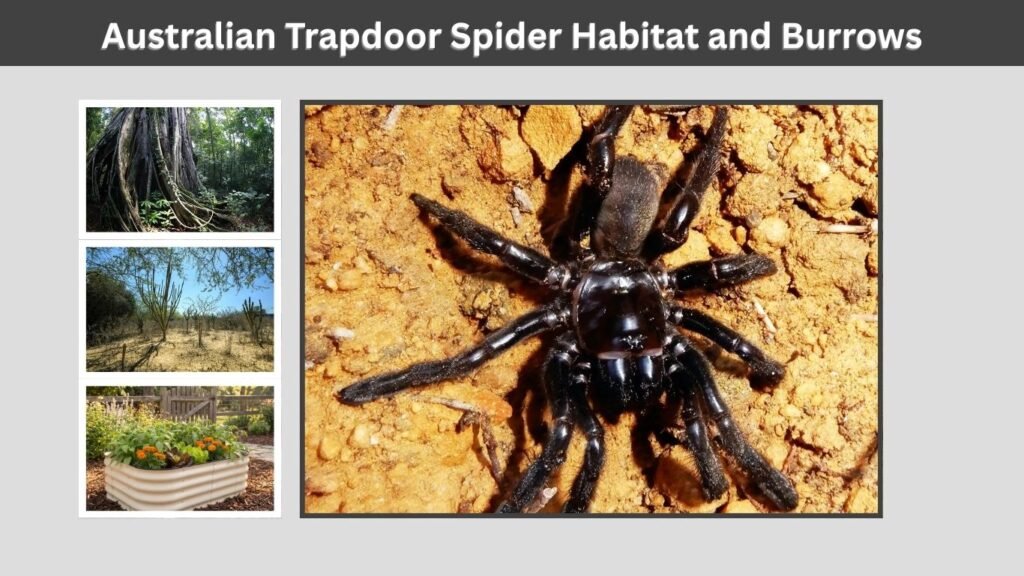
Trapdoor spiders are best known for their underground homes. These burrows provide protection from predators, heat, and dry conditions while also serving as hunting stations. The design of the burrow is one of the most fascinating features of these spiders.
What Kind of Burrows Do They Build?
The spiders dig tunnels into soft soil and line the walls with silk. Some species build perfectly camouflaged trapdoors that seal the entrance when closed. These burrows may remain occupied by the same spider for many years.
Preferred Habitat
- Woodland soil
- Rainforest floors
- Dry scrublands
- Garden beds
- Leaf litter areas
How Deep Can the Burrows Be?
Some burrows extend several inches underground and may include side chambers for resting or storing prey remains. Deep burrows help maintain moisture and stable temperatures during hot Australian summers.
Australian Trapdoor Spider Hunting Behavior
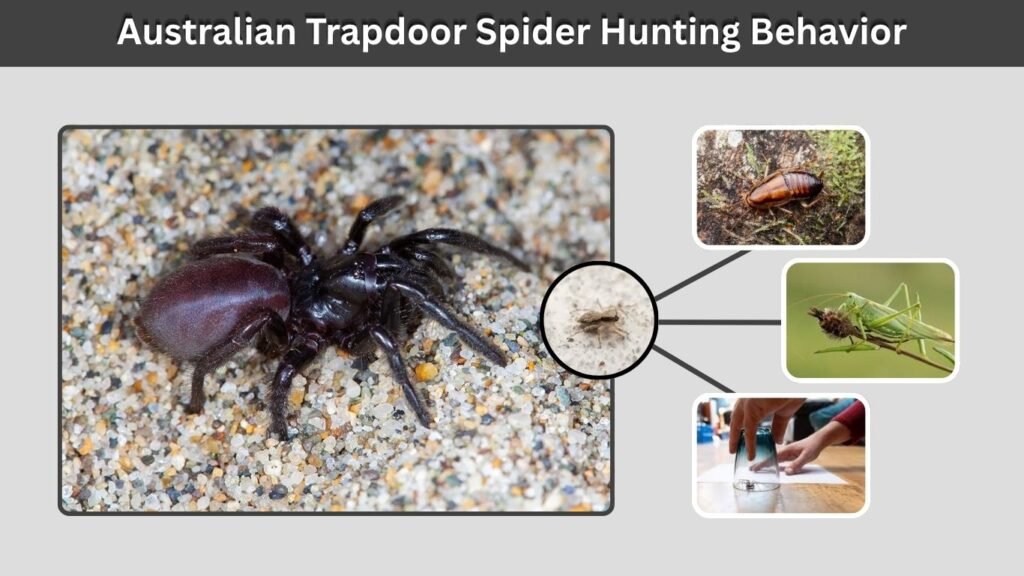
Australian trapdoor spiders are ambush predators that rely on patience rather than speed. They remain hidden inside their burrows while waiting for prey to move nearby. Their hunting strategy is highly effective and allows them to survive without building large capture webs.
How Do Trapdoor Spiders Hunt?
The spider waits near the entrance of its burrow with its front legs touching silk trip lines. Vibrations caused by passing prey alert the spider, which quickly bursts out to capture the animal before dragging it underground.
What Do Australian Trapdoor Spiders Eat?
- Beetles
- Crickets
- Cockroaches
- Small spiders
- Grasshoppers
Are They Active at Night?
Most Australian trapdoor spiders are nocturnal hunters. They become more active after sunset when insects are plentiful and temperatures are cooler.
Australian Trapdoor Spider Venom
Many people become worried when they encounter an Australian trapdoor spider because of its large size and powerful fangs. Although these spiders are venomous, most species are not considered medically dangerous to humans. Their venom is mainly used for subduing insects and other small prey caught near the burrow entrance.
Is the Australian Trapdoor Spider Venomous?
Yes, Australian trapdoor spiders are venomous. Like many spiders, they inject venom into prey to immobilize it before feeding. However, their venom is generally much less dangerous than that of Australia’s notorious funnel-web spiders.
Is the Venom Dangerous to Humans?
- Usually causes localized pain
- Mild swelling may occur
- Nausea is possible in some bites
- Serious reactions are uncommon
- Deaths are extremely rare
Trapdoor Spider vs Funnel-Web Spider
| Feature | Trapdoor Spider | Funnel-Web Spider |
| Aggression | Low | High |
| Venom Strength | Mild to moderate | Highly dangerous |
| Burrow Entrance | Hidden trapdoor | Open funnel |
| Human Risk | Low | High |
Australian Trapdoor Spider Bite

Bites from Australian trapdoor spiders are uncommon because these spiders are shy and spend most of their time underground. Most bites happen when the spider is accidentally handled, disturbed, or trapped against the skin.
Does the Australian Trapdoor Spider Bite?
Trapdoor spiders may bite in self-defense if they feel threatened. Even though they possess large fangs, they usually prefer remaining hidden inside their burrows instead of confronting humans or animals.
What Does the Bite Feel Like?
People often describe the bite as painful because of the spider’s strong jaws. Symptoms are generally temporary and mild compared to bites from medically significant spiders.
Bite Treatment and First Aid
- Wash the area with soap and water
- Apply an ice pack to reduce swelling
- Keep the affected area clean
- Monitor symptoms carefully
- Seek medical attention if severe symptoms appear
Australian Trapdoor Spider Lifespan
Australian trapdoor spiders are among the longest-living spiders in the world. Females can spend decades inside the same burrow, surviving by remaining hidden and conserving energy. Their long lifespan is one of the most fascinating aspects of their biology.
How Long Do Australian Trapdoor Spiders Live?
Female trapdoor spiders often live much longer than males because they remain protected inside their burrows. Males usually survive only a few years after reaching maturity because they wander in search of mates.
The Famous 43-Year-Old Trapdoor Spider
One famous female trapdoor spider in Australia became known for living over 43 years in the same burrow. Researchers monitored the spider for decades, making it one of the oldest known spiders ever recorded scientifically.
What Affects Their Lifespan?
- Predators and parasites
- Habitat destruction
- Climate conditions
- Food availability
- Flooding or fire events
Australian Trapdoor Spider Reproduction
The reproduction process of trapdoor spiders is slow and carefully timed. Males leave their burrows during breeding season and travel across the landscape searching for females hidden underground.
Mating Behavior
Male trapdoor spiders approach female burrows cautiously to avoid being mistaken for prey. Vibrations and tapping signals are often used during courtship before mating takes place.
Egg Sac and Spiderlings
Females produce silk egg sacs inside the safety of their burrows. After hatching, the young spiderlings remain underground for a period before dispersing into nearby habitats.
Growth Stages
Young trapdoor spiders grow slowly and molt multiple times before reaching adulthood. Some females may take many years to mature fully, contributing to their unusually long lifespan.
Is the Australian Trapdoor Spider Dangerous?
Despite their frightening appearance, Australian trapdoor spiders are generally not considered dangerous to humans. They are secretive spiders that avoid contact whenever possible and only bite when provoked.
Are Trapdoor Spiders Aggressive?
These spiders are shy and defensive rather than aggressive. Most individuals remain hidden underground and rely on camouflage instead of attacking threats.
Are They Safe Around Homes?
In many situations, trapdoor spiders can safely remain in gardens because they help control insect populations naturally. Their underground lifestyle means people rarely encounter them directly.
Common Myths About Trapdoor Spiders
Many people mistakenly believe all large Australian spiders are deadly. Trapdoor spiders are often confused with funnel-web spiders, but most species pose only a minor medical risk to humans.
FAQs
Is the Australian trapdoor spider dangerous?
Most Australian trapdoor spiders are not considered dangerous to humans. They are shy spiders that prefer hiding in burrows and rarely bite unless directly disturbed or handled.
How long can an Australian trapdoor spider live?
Female Australian trapdoor spiders can live for decades in the same burrow. One famous spider in Australia survived for over 43 years, making it one of the oldest known spiders ever recorded.
What happens if a trapdoor spider bites you?
A trapdoor spider bite may cause pain, redness, swelling, and mild nausea. Serious medical complications are rare, but medical advice should be sought if symptoms become severe.
Are Australian trapdoor spiders venomous?
Yes, Australian trapdoor spiders are venomous, but their venom is generally mild to moderate in strength and far less dangerous than funnel-web spider venom.
How do trapdoor spiders build their burrows?
Trapdoor spiders dig underground tunnels and line them with silk. Many species create a hidden hinged door made from soil, silk, and plant material to camouflage the entrance.
