
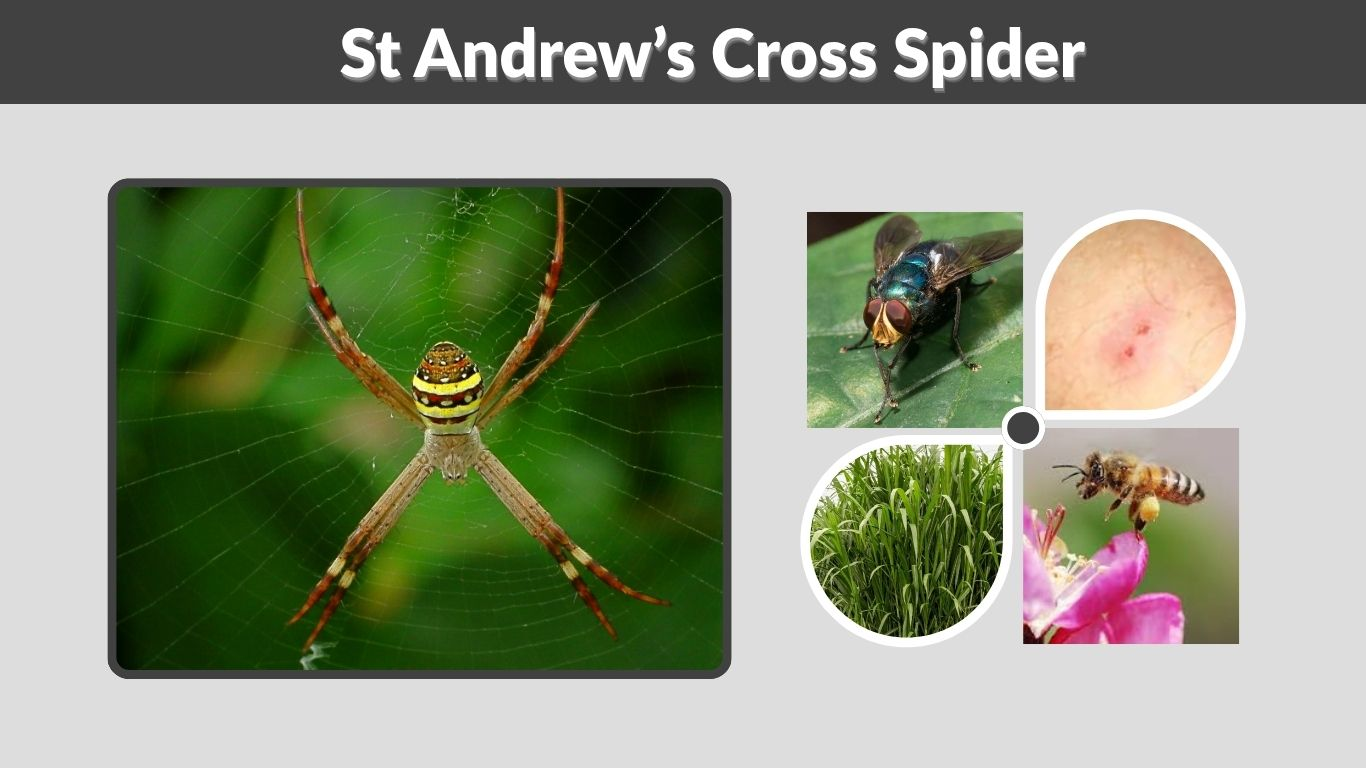
The St Andrew’s Cross spider is a colorful orb-weaving spider famous for the large X-shaped pattern found in its web. Commonly seen in Australia and nearby tropical regions, this spider attracts attention because of its bright yellow and black body markings. Many people search for information about its bite, danger level, web, and habitat after spotting one in gardens or forests. Despite its striking appearance, the St Andrew’s Cross spider is generally harmless to humans and plays an important role in controlling insect populations naturally.
What Is a St Andrew’s Cross Spider?
The St Andrew’s Cross spider belongs to the orb-weaver family and is known for creating beautiful circular webs with a zigzag silk decoration in the center. These spiders are commonly found in warm environments with plenty of vegetation and flying insects. Their unusual web design and colorful appearance make them one of the easiest spiders to recognize outdoors.
Scientific Classification
- Kingdom: Animalia
- Phylum: Arthropoda
- Class: Arachnida
- Order: Araneae
- Family: Araneidae
- Genus: Argiope
Why Is It Called a St Andrew’s Cross Spider?
The spider gets its name from the X-shaped silk pattern placed in the middle of its web. This shape resembles the St Andrew’s Cross symbol. Scientists believe this zigzag structure, called a stabilimentum, may help attract prey or warn birds away from flying into the web.
Where Are St Andrew’s Cross Spiders Found?
- Australia
- Papua New Guinea
- Tropical forests
- Gardens and parks
- Woodland edges
St Andrew’s Cross Spider Size
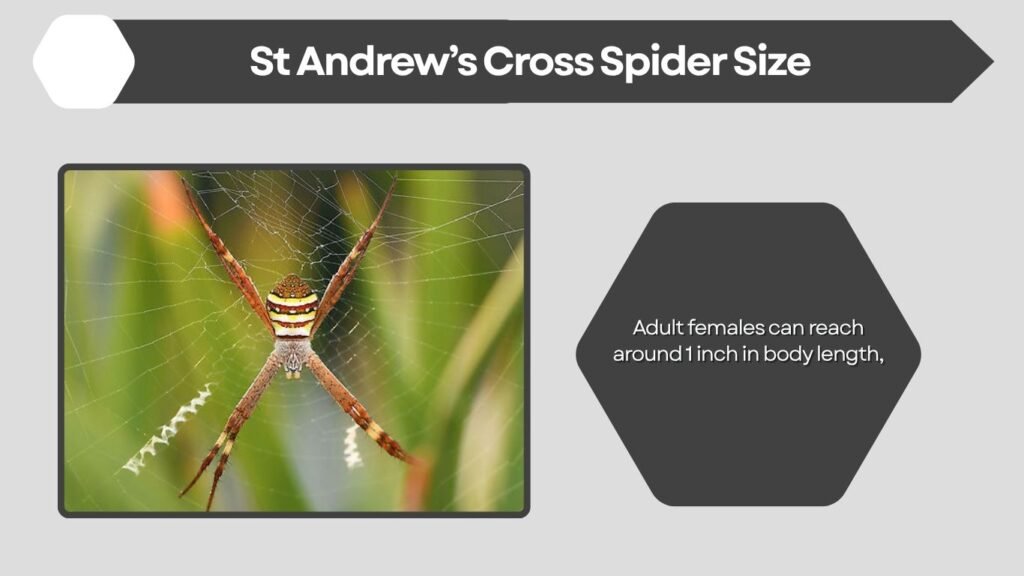
The St Andrew’s Cross spider is considered medium to large among garden orb-weavers. Females are much larger and more colorful than males, making them easier to notice while sitting in the center of their webs.
How Big Is a St Andrew’s Cross Spider?
Adult females can reach around 1 inch in body length, while males are much smaller and slimmer. The long legs make the spider appear larger when hanging in its web. Their overall size often surprises people who encounter them in gardens.
Male vs Female Differences
Female spiders are brightly colored with strong yellow, black, and silver patterns. Males are smaller, duller in color, and usually remain near the edge of the female’s web. This dramatic size difference is common among orb-weaving spiders.
Is It a Large Garden Spider?
Compared to ordinary garden spiders, the St Andrew’s Cross spider is fairly large and highly visible. Its unique body posture and bright coloration make it stand out more than many other orb-weavers found in outdoor spaces.
St Andrew’s Cross Spider Appearance
The appearance of the St Andrew’s Cross spider is one of its most recognizable features. Its bright warning colors and unusual body posture help distinguish it from other spiders commonly found in gardens and forests.
Body Colors and Markings
- Bright yellow and black bands
- Silver or white body sections
- Long striped legs
- Rounded abdomen
- Bold contrasting patterns
How to Identify a St Andrew’s Cross Spider
The easiest way to identify this spider is by its X-shaped web decoration and the way it rests with its legs paired together in the shape of a cross. The bright body markings also make it easy to recognize from a distance.
Common Species Variations
Different species of St Andrew’s Cross spiders may vary slightly in color and size depending on the region. Some species display stronger silver markings, while others have darker yellow or orange tones on the abdomen.
St Andrew’s Cross Spider Web
The web of the St Andrew’s Cross spider is one of the most fascinating structures created by any orb-weaver. These spiders build large circular webs between plants, shrubs, and tree branches where flying insects are common. The zigzag silk decoration is the feature that attracts the most attention.
What Makes the Web Unique?
The stabilimentum, or zigzag silk pattern, forms a large X shape across the center of the web. Scientists have suggested several possible purposes for this unusual structure, including prey attraction, camouflage, and protection from predators.
How Large Can the Web Become?
- Often over 2 feet wide
- Built between branches and shrubs
- Strong enough to trap large insects
- Repaired frequently
- Positioned in sunny open spaces
Why Does the Spider Sit in an X Position?
The spider usually rests in the middle of the web with its legs spread in pairs, creating another cross-like shape. This posture may help camouflage the spider within the stabilimentum and make it harder for predators to recognize.
St Andrew’s Cross Spider Habitat and Distribution
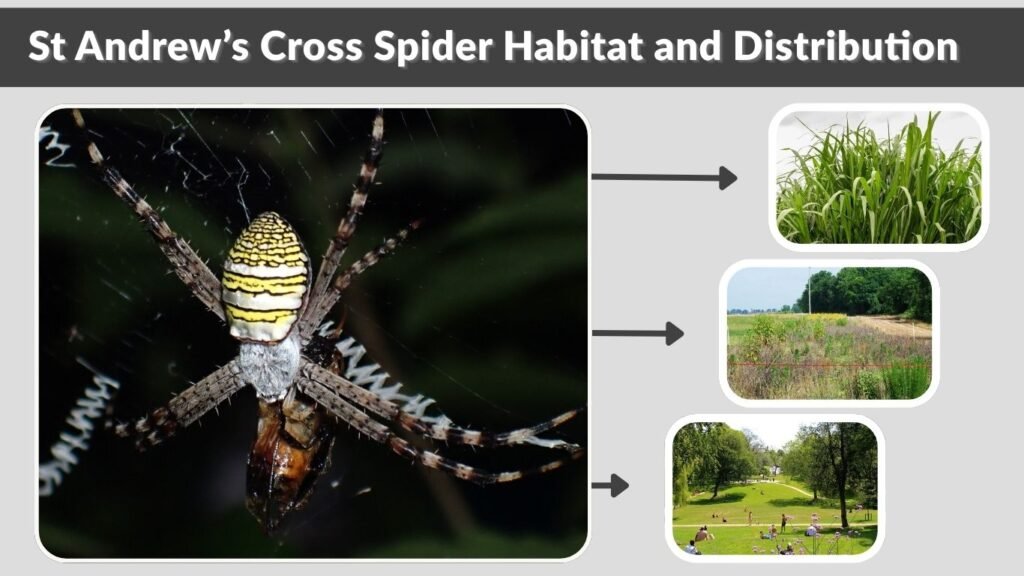
The St Andrew’s Cross spider thrives in warm regions with plenty of sunlight and flying insects. These spiders are commonly found in gardens, forests, parks, and bushland areas where they can stretch their large orb webs between plants and branches. Their colorful appearance often makes them easy to spot during warmer months.
St Andrew’s Cross Spider in Australia
Australia is one of the best-known habitats for the St Andrew’s Cross spider. They are especially common in eastern and coastal regions where humid weather and dense vegetation create ideal living conditions for orb-weaving spiders.
Preferred Habitat
- Bushland and forests
- Garden shrubs
- Tall grasses
- Woodland edges
- Parks and backyards
Seasonal Activity
These spiders are most active during spring and summer when insect populations increase. Females build large webs during warm weather, while males spend time searching for mates near female webs.
St Andrew’s Cross Spider Diet and Hunting
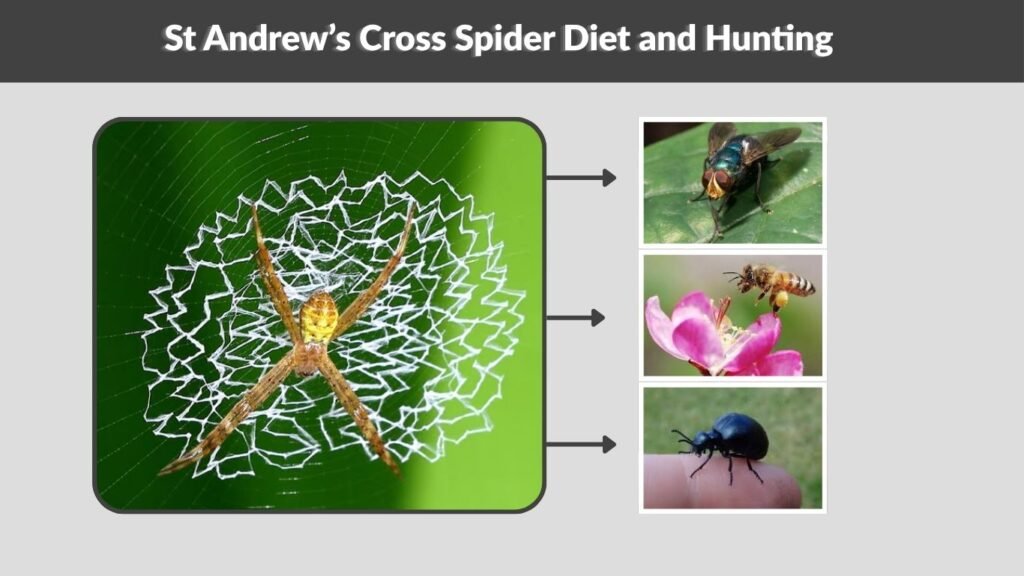
The St Andrew’s Cross spider is an efficient insect hunter that relies entirely on its web for capturing prey. Instead of chasing insects directly, it waits patiently in the center of the web until vibrations signal that prey has become trapped.
What Does the St Andrew’s Cross Spider Eat?
Their diet mainly includes flying insects that accidentally collide with the sticky silk strands. Larger females can capture a variety of insects commonly found in gardens and forest environments.
Common Prey Items
- Flies
- Moths
- Bees
- Grasshoppers
- Mosquitoes
- Small butterflies
How It Catches Prey
Once prey becomes trapped, the spider quickly moves toward it and injects venom to immobilize it. The prey is then wrapped tightly in silk before feeding begins. The web’s design allows the spider to detect even the smallest vibrations with remarkable accuracy.
Is the St Andrew’s Cross Spider Poisonous?
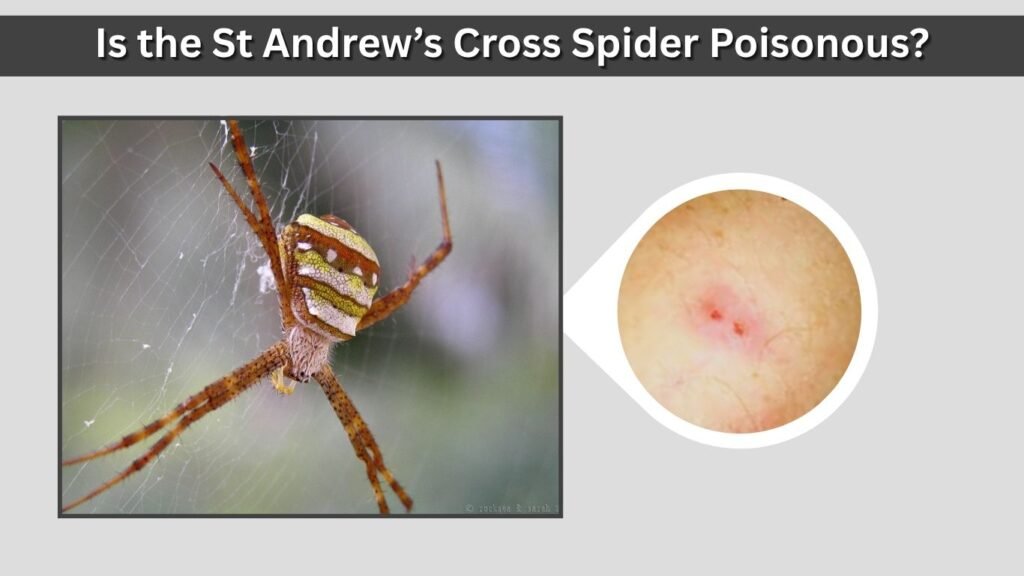
Many people become concerned after seeing the spider’s large size and bright warning colors. Although the St Andrew’s Cross spider is venomous like most spiders, it is not considered medically dangerous to humans.
Is the St Andrew’s Cross Spider Venomous?
Yes, the spider uses mild venom to subdue insects trapped in its web. The venom is designed for hunting small prey rather than defending against humans or large animals.
Is the Venom Dangerous to Humans?
- Usually causes only mild symptoms
- Pain is often minor and temporary
- Redness or swelling may occur
- Serious reactions are rare
- Not considered deadly
Poisonous vs Venomous Difference
| Term | Meaning |
| Poisonous | Harmful when touched or eaten |
| Venomous | Injects venom through bites or stings |
St Andrew’s Cross Spider Bite
Bites from St Andrew’s Cross spiders are uncommon because these spiders are shy and avoid direct contact with humans. Most bites happen only when the spider becomes trapped against skin or feels threatened while being handled.
Does the St Andrew’s Cross Spider Bite?
The spider may bite in self-defense, but it generally prefers escaping whenever possible. Gardeners and hikers sometimes accidentally brush against webs, but bites remain very rare.
What Happens If You Are Bitten?
Most people experience mild symptoms that disappear within a short time. The bite is usually less painful than a bee sting and rarely requires medical attention in healthy adults.
Bite Treatment and First Aid
- Wash the bite area carefully
- Apply an ice pack to reduce swelling
- Avoid scratching the skin
- Use mild pain relief if necessary
- Seek medical help for allergic reactions
Is the St Andrew’s Cross Spider Dangerous?
Despite its intimidating appearance and large web, the St Andrew’s Cross spider is generally harmless to humans. It plays an important ecological role by controlling insect populations naturally and helping maintain balance in gardens and forests.
Are They Aggressive?
These spiders are calm and non-aggressive. They usually remain motionless in their webs or retreat quickly when disturbed rather than attempting to attack.
Are They Safe Around Humans?
In most cases, these spiders are completely safe to leave in gardens because they reduce pest insects naturally. Their presence can actually benefit outdoor environments by limiting flying insect populations.
Common Myths About St Andrew’s Cross Spiders
Many myths exaggerate the danger of these spiders because of their bright colors and unusual webs. Scientific evidence shows they are not deadly and rarely pose any serious threat to humans.
FAQs
Is the St Andrew’s Cross spider dangerous?
No, the St Andrew’s Cross spider is not considered dangerous to humans. It is shy, non-aggressive, and rarely bites unless directly threatened or handled roughly.
What does a St Andrew’s Cross spider bite feel like?
A bite usually causes mild pain, redness, or slight swelling. Most symptoms disappear quickly and rarely require medical treatment in healthy individuals.
Why does the spider make an X in its web?
The X-shaped zigzag pattern, called a stabilimentum, may help attract insects, warn birds away from the web, or camouflage the spider from predators.
Are St Andrew’s Cross spiders found in Australia?
Yes, these spiders are common throughout many parts of Australia, especially in warm coastal and forested regions where insects are plentiful.
How big is a St Andrew’s Cross spider?
Adult females can reach around 1 inch in body length and appear larger because of their long legs and wide orb-shaped webs.
