
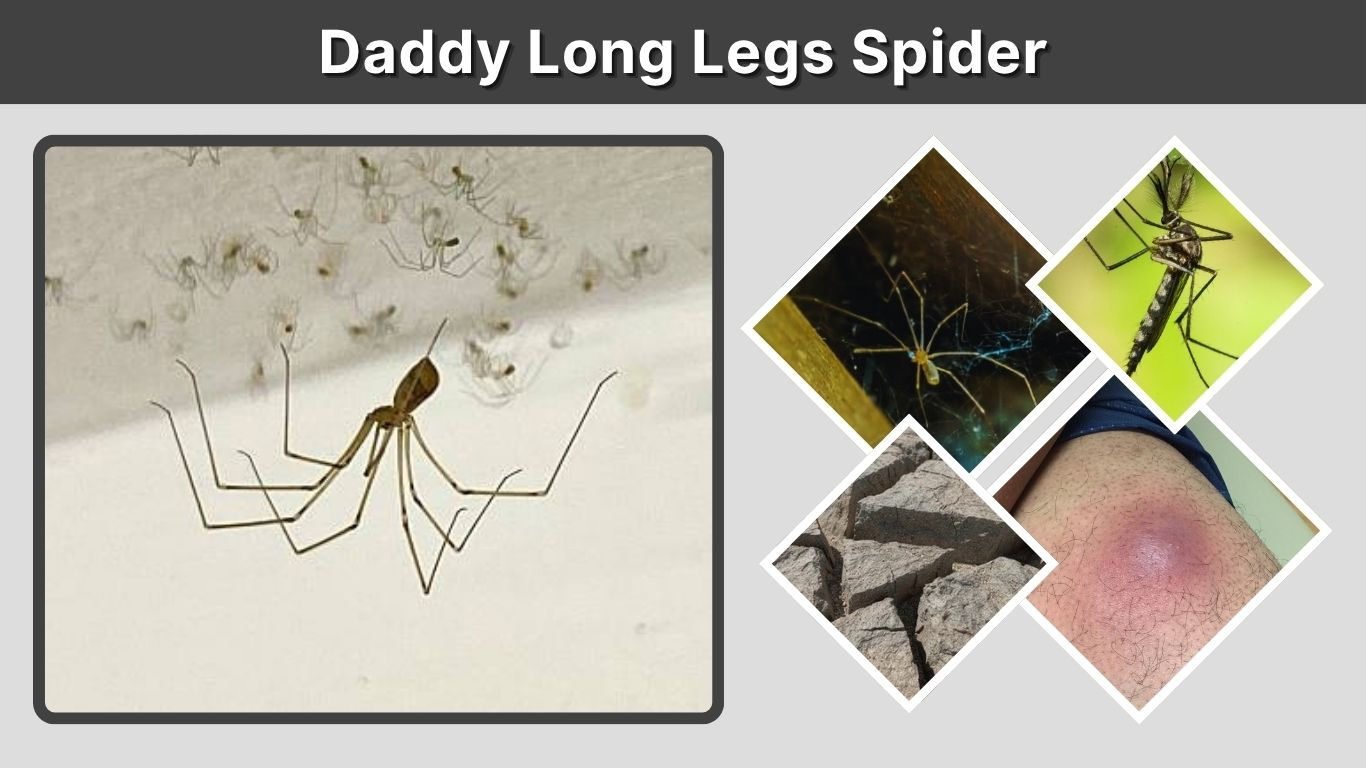
The daddy long legs spider is one of the most recognizable arachnids in the world, yet it is also one of the most misunderstood. Many people wonder whether daddy long legs are actually spiders, if they are poisonous, and whether they can bite humans. Confusion often arises because the name “daddy long legs” refers to different creatures in different regions. Understanding their appearance, habitat, diet, and behavior can help separate fact from fiction and reveal why these long-legged arachnids are common visitors in homes and gardens.
What Is a Daddy Long Legs Spider?
The term “daddy long legs” is commonly used for several different arachnids. In many homes, it refers to cellar spiders, while in other places it may describe harvestmen. This naming confusion has contributed to many myths about their biology, venom, and behavior. Understanding what people mean by daddy long legs is the first step toward identifying these fascinating creatures correctly.
Is a Daddy Long Legs a Spider?
In most cases, the daddy long legs found inside homes is a cellar spider, which belongs to the spider family Pholcidae. However, harvestmen are also called daddy long legs in many regions. Unlike cellar spiders, harvestmen are not true spiders because their body structure differs significantly.
Daddy Long Legs Spider Scientific Name
Cellar spiders belong to the family Pholcidae. One of the most common species found indoors is Pholcus phalangioides. These spiders are famous for their delicate appearance and exceptionally long legs.
Why Are They Often Confused?
Several factors contribute to confusion:
- Similar long-legged appearance
- Different creatures sharing the same name
- Common household sightings
- Popular venom myths
- Regional naming differences
Because of these similarities, many people mistakenly believe all daddy long legs are the same animal.
What Does a Daddy Long Legs Spider Look Like?
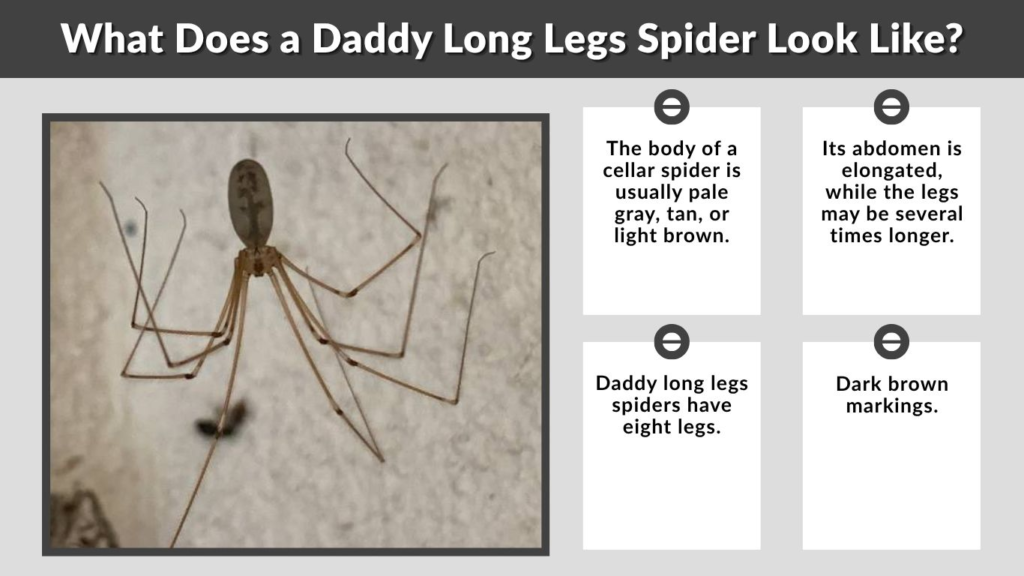
Daddy long legs spiders have a distinctive appearance that makes them easy to recognize. Their tiny bodies and extremely long, thin legs create a delicate look unlike most other household spiders. Although they appear fragile, these spiders are highly successful predators and can thrive in many indoor environments.
Physical Appearance
The body of a cellar spider is usually pale gray, tan, or light brown. Its abdomen is elongated, while the legs may be several times longer than the body itself. This unusual proportion gives the spider its famous appearance.
Common Color Variations
Depending on species and location, daddy long legs may appear in several colors, including:
- Light brown
- Gray
- Cream-colored
- White or pale yellow
- Dark brown markings
Color variation is usually influenced by species and environmental conditions.
How Many Legs Does a Daddy Long Legs Have?
Like all true spiders, daddy long legs spiders have eight legs. Occasionally, individuals are seen with fewer legs because they can lose limbs when escaping predators. Even after losing a leg, many spiders continue functioning normally.
Daddy Long Legs vs Cellar Spider
Many people assume daddy long legs and cellar spiders are different creatures. In reality, the daddy long legs commonly found inside homes is usually a cellar spider. However, confusion arises because harvestmen are also called daddy long legs in many areas.
What Is a Cellar Spider?
Cellar spiders are true spiders that build irregular webs in basements, garages, crawl spaces, and corners of buildings. They belong to the Pholcidae family and are known for their ability to catch insects and even other spiders.
Key Differences Between Cellar Spiders and Harvestmen
Although both have long legs, there are important differences.
- Cellar spiders have two distinct body sections
- Harvestmen have a single fused body section
- Cellar spiders produce silk webs
- Harvestmen do not build webs
- Cellar spiders possess venom
- Harvestmen do not possess venom glands
These differences help distinguish the two groups despite their similar appearance.
Which One Lives in Homes?
Cellar spiders are commonly found indoors because buildings provide stable temperatures and protection from predators. Harvestmen are more frequently encountered outdoors in gardens, forests, and grassy areas.
Where Do Daddy Long Legs Live?
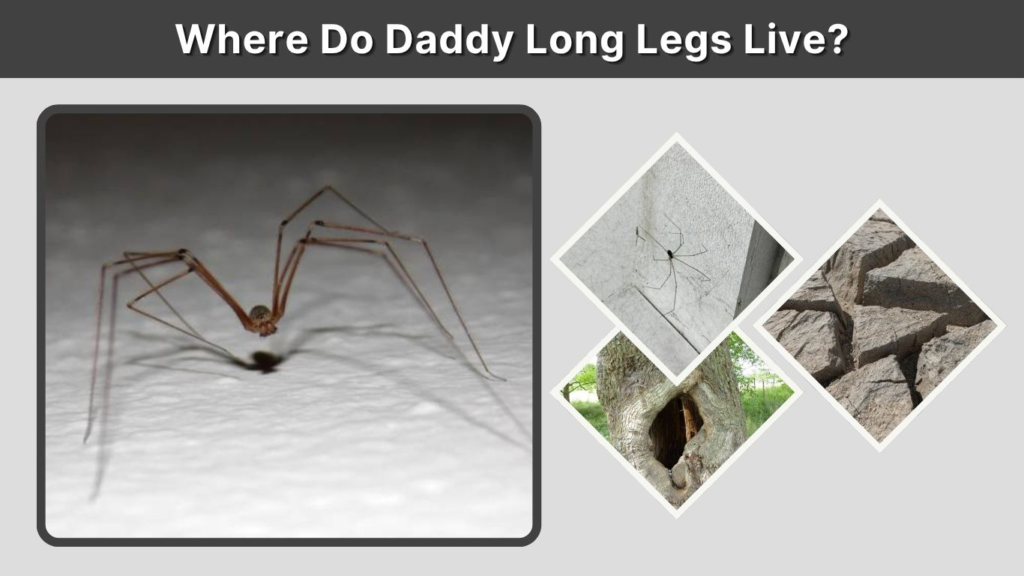
Daddy long legs spiders are highly adaptable and can survive in a variety of environments. Their ability to tolerate different conditions has helped them spread throughout many parts of the world. While they are commonly associated with homes, they also inhabit natural outdoor environments.
Natural Habitat
In the wild, daddy long legs spiders prefer sheltered locations that offer protection from weather and predators. They often hide in caves, rock crevices, tree hollows, and abandoned animal burrows.
Daddy Long Legs Spider in House
Homes provide ideal conditions for cellar spiders. They frequently build webs in quiet areas where they are unlikely to be disturbed. Common indoor locations include ceilings, basements, attics, garages, and storage rooms.
Where Are Daddy Long Legs Most Common?
These spiders can be found in many regions across the globe. Their success is largely due to their adaptability and ability to reproduce in stable environments.
Common locations include:
- Houses and apartments
- Garages and sheds
- Basements and cellars
- Barns and warehouses
- Outdoor structures
Their widespread distribution makes them one of the most familiar household spiders.
What Does a Daddy Long Legs Spider Eat?
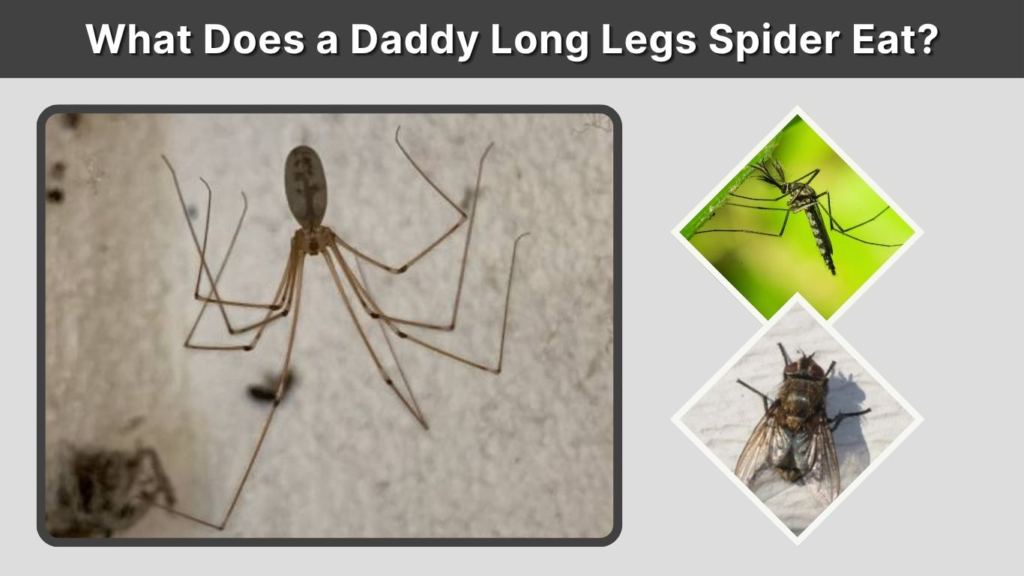
Daddy long legs spiders play an important role in controlling insect populations. They are active predators that consume a variety of pests commonly found in homes and surrounding environments. Their feeding habits make them beneficial arachnids rather than unwanted household pests.
Daddy Long Legs Spider Diet
These spiders feed primarily on insects and other small arthropods. They use their webs to capture prey and then inject digestive enzymes to break down tissues before feeding.
Common Prey
A typical daddy long legs diet includes:
- Mosquitoes
- Flies
- Moths
- Ants
- Small beetles
- Other spiders
Their willingness to eat pest insects is one reason many homeowners choose to leave them undisturbed indoors.
Are Daddy Long Legs Poisonous or Venomous?
One of the most persistent myths about daddy long legs spiders involves their venom. Many people have heard claims that they are the most venomous spiders in the world but cannot bite humans. Scientists have repeatedly tested these claims and found them to be inaccurate. Understanding the difference between poisonous and venomous helps clear up much of the confusion surrounding these harmless arachnids.
Is a Daddy Long Legs Spider Poisonous?
No, daddy long legs spiders are not poisonous. Poisonous animals cause harm when touched or eaten, while daddy long legs do not pose that type of threat to people or pets.
Is a Daddy Long Legs Spider Venomous?
Yes, cellar spiders possess venom that helps them immobilize and digest prey. However, their venom is intended for insects and other small arthropods rather than humans.
Can Daddy Long Legs Bite Humans?
Although daddy long legs spiders can bite, it is extremely rare. These spiders are shy and prefer escaping rather than defending themselves. Most people will never experience a bite from a daddy long legs spider.
Are Daddy Long Legs the Most Venomous Spider?
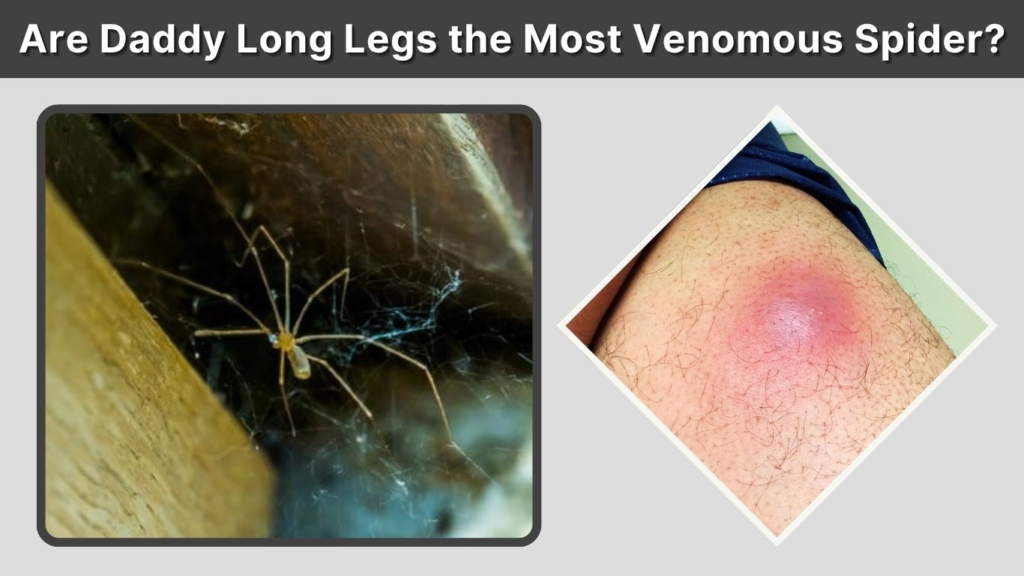
The idea that daddy long legs are the world’s most venomous spider is one of the internet’s oldest spider myths. Despite its popularity, scientific evidence does not support this claim. Researchers have shown that daddy long legs are neither the most venomous spider nor a significant threat to humans.
Where Did the Myth Come From?
The myth likely originated from misunderstandings about cellar spider venom and repeated retelling through media, schools, and online discussions. Over time, the story became widely accepted despite lacking scientific support.
What Does Science Say?
Studies have demonstrated that daddy long legs spiders can bite and possess venom, but their venom is relatively mild. There is no evidence showing they have the most powerful venom among spiders.
Myth vs Reality
The facts are much simpler than the myth:
- Daddy long legs are not the world’s most venomous spider
- They are capable of biting
- Their bites are rarely reported
- Their venom is not considered medically significant
- They pose little danger to humans
Daddy Long Legs Spider Bite Guide
Because bites are uncommon, many people are unsure what happens if a daddy long legs spider bites someone. Fortunately, these spiders are generally harmless and rarely cause serious reactions.
What Does a Daddy Long Legs Bite Look Like?
A bite may leave a small red mark or minor irritation similar to many insect bites. In most cases, symptoms disappear within a short period without medical treatment.
Possible Symptoms
If a bite occurs, symptoms may include:
- Mild redness
- Temporary itching
- Minor swelling
- Slight discomfort
- Local irritation
Severe reactions are extremely uncommon.
When Should You Seek Medical Advice?
Medical attention may be appropriate if unusual symptoms develop, such as severe swelling, allergic reactions, or signs of infection. However, most bites require little or no treatment.
Daddy Long Legs vs Dangerous Spiders
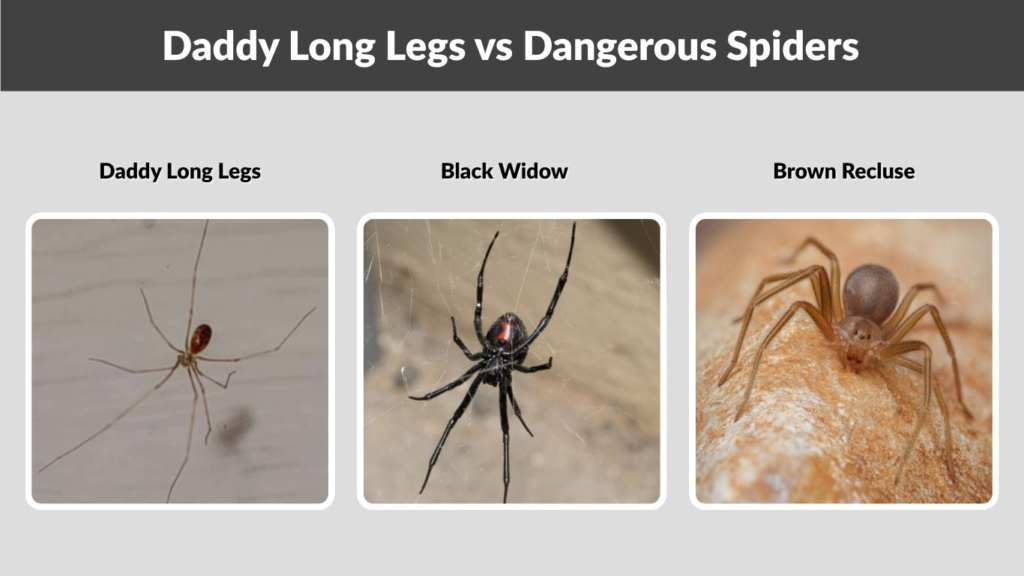
Many homeowners worry that a daddy long legs spider may be a dangerous species such as a black widow or brown recluse. Fortunately, daddy long legs are much less harmful and are often beneficial because they help reduce insect populations indoors.
Daddy Long Legs vs Black Widow
Black widows have a compact body, strong web, and medically significant venom. Daddy long legs have extremely long legs, delicate bodies, and venom that is not considered dangerous to humans.
Daddy Long Legs vs Brown Recluse
Brown recluse spiders have a distinctive violin-shaped marking and can cause medically important bites. Daddy long legs lack these markings and are generally harmless around people.
Which Spider Is More Dangerous?
When comparing medically important spiders to daddy long legs, species such as black widows and brown recluses present significantly greater risks. Daddy long legs are among the least threatening spiders commonly found in homes.
Daddy Long Legs Spider Lifespan
Like many arachnids, daddy long legs spiders pass through several life stages before reaching adulthood. Their lifespan depends on environmental conditions, food availability, and species.
How Long Does a Daddy Long Legs Spider Live?
Most cellar spiders live between one and three years. Some individuals may survive longer under favorable indoor conditions where food is readily available and predators are scarce.
Daddy Long Legs Spider Eggs
Female daddy long legs spiders carry their egg sacs in their mouthparts rather than attaching them to a web. This behavior helps protect developing offspring from predators and environmental hazards.
Life Cycle Stages
The typical life cycle includes:
- Egg stage
- Spiderling stage
- Juvenile growth
- Adult maturity
Young spiders molt several times before becoming fully mature adults.
Daddy Long Legs Spider Webs
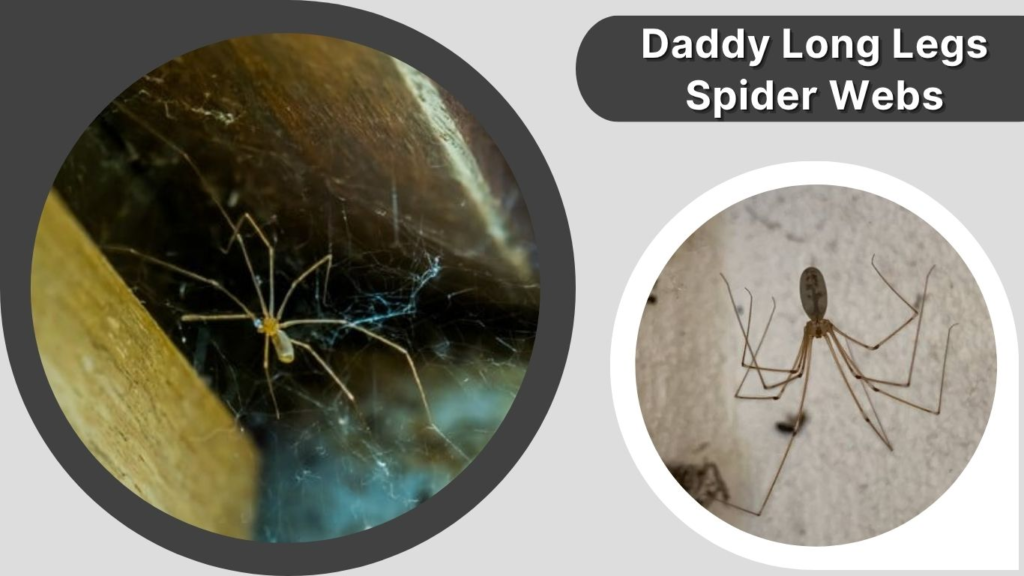
The webs of daddy long legs spiders are easy to recognize once you know what to look for. Unlike the symmetrical webs created by orb-weaving spiders, their webs appear loose, tangled, and irregular.
What Does a Daddy Long Legs Web Look Like?
These webs often occupy corners of ceilings, basements, garages, and storage areas. The structure may appear messy, but it is highly effective at trapping insects and other prey.
Why Do They Shake Their Webs?
When threatened, daddy long legs spiders rapidly vibrate their bodies within the web. This behavior makes them appear blurry and helps confuse predators that may be attempting to attack.
Benefits of Their Webs
Their webs provide several advantages:
- Capture flying insects
- Trap crawling pests
- Offer protection from predators
- Provide a secure feeding area
- Support reproduction
FAQs
Are Daddy Long Legs Really Spiders?
Sometimes. The name “daddy long legs” is commonly used for cellar spiders, which are true spiders, and harvestmen, which are arachnids but not true spiders. The meaning depends on the region and the creature being referenced.
Can Daddy Long Legs Hurt Humans?
Daddy long legs spiders are generally harmless to humans. They are not aggressive and rarely bite. Even if a bite occurs, it usually causes only mild irritation and is not considered medically significant.
What Do Daddy Long Legs Spiders Eat?
Daddy long legs spiders feed on a variety of insects and small arthropods. Their diet commonly includes flies, mosquitoes, moths, ants, beetles, and even other spiders. This makes them beneficial predators in homes and gardens.
Are Daddy Long Legs Good to Have in Your House?
Yes. Daddy long legs spiders help control household pests by feeding on insects and other spiders. Because they are harmless and beneficial, many homeowners choose to leave them undisturbed.
Why Do Daddy Long Legs Shake Their Webs?
When threatened, daddy long legs spiders rapidly vibrate their bodies and webs. This defensive behavior makes them appear blurry to predators, making it more difficult to target and capture them.
