
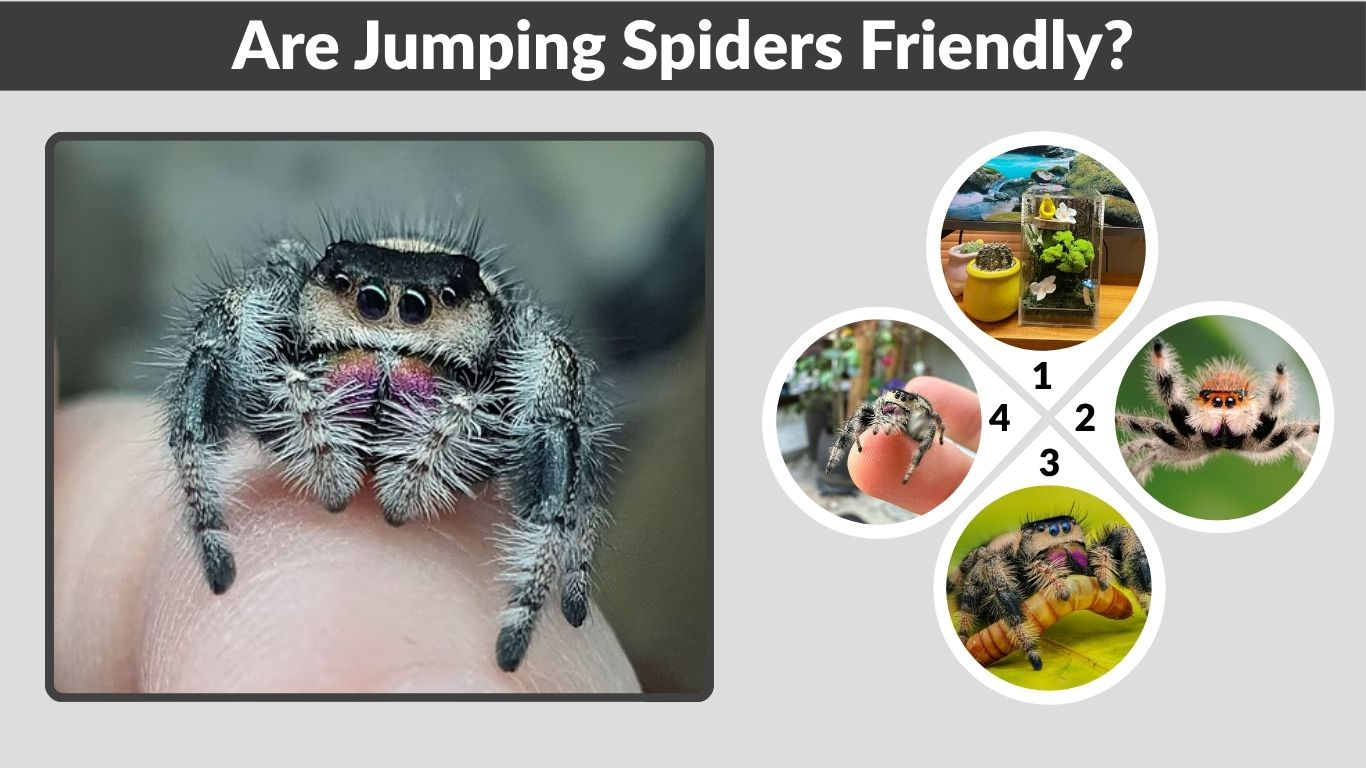
Jumping spiders are often called friendly because they are curious, alert, and less frightening than many other spiders. They may turn to look at people, follow movement, or calmly explore a hand when handled gently. However, “friendly” does not mean they feel affection like a dog or cat. Jumping spiders are small predators with strong eyesight and cautious behavior. They are usually harmless to humans, but they should still be treated with care. Understanding their behavior helps explain why so many people see them as friendly pets.
Are Jumping Spiders Friendly?
Jumping spiders can appear friendly, but it is more accurate to describe them as curious, calm, and tolerant. They do not seek human friendship in the emotional way mammals might, but many are not aggressive toward people. Their bold movements, large front eyes, and habit of watching nearby objects make them seem more interactive than many other spiders.
Are Jumping Spiders Friendly to Humans?
Yes, jumping spiders are generally friendly toward humans in the sense that they are not naturally aggressive and usually do not try to bite. They often prefer to escape, hide, or jump away when disturbed. Their small size also makes them less dangerous than many people imagine.
Jumping spiders belong to the family Salticidae, a group known for excellent eyesight and active hunting behavior. Their large front eyes help them judge distance, recognize movement, and inspect objects around them. This strong vision is one reason they seem to “look at” humans directly.
Are Jumping Spiders Actually Friendly?
Jumping spiders are not friendly in the human sense, but they can be calm and tolerant. A pet jumping spider may become used to gentle handling, regular feeding, and a familiar enclosure. A wild jumping spider may also sit quietly near a person, but that does not mean it wants attention. It is usually observing, deciding whether something is food, danger, or simply part of the environment.
How Friendly Are Jumping Spiders?
Jumping spiders are among the most approachable spiders for many people. They are small, active during the day, visually responsive, and often slow to bite. Many keepers choose them as beginner pet spiders because they are interesting to watch and can tolerate careful handling. Pet care guides commonly describe popular pet species, especially Phidippus jumping spiders, as small, curious, and suitable for simple enclosures when cared for properly.
Why Are Jumping Spiders So Friendly?
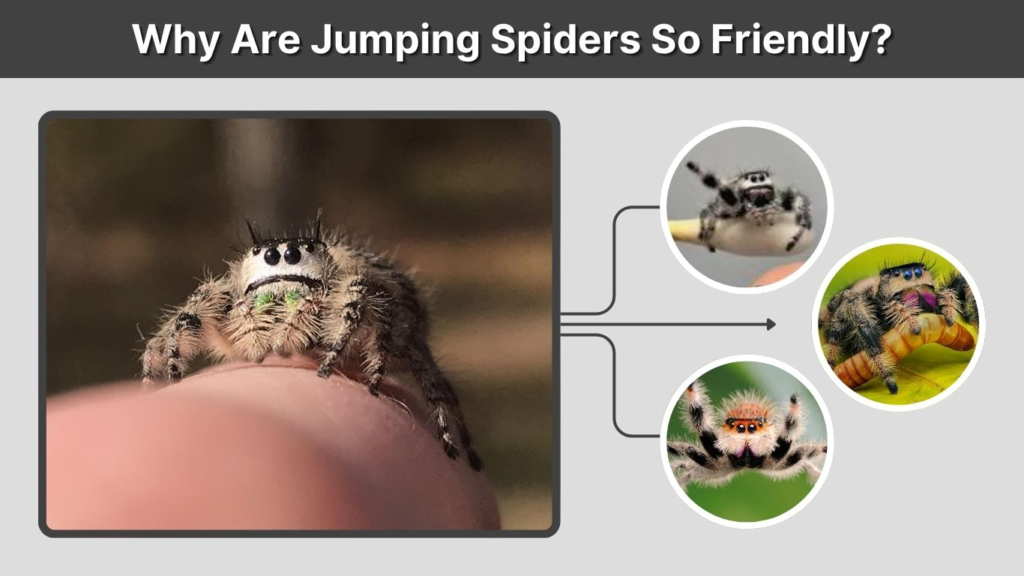
Jumping spiders seem friendly because of their body language and eyesight. Unlike web-building spiders that wait in one place, jumping spiders actively explore and hunt. They move with short, deliberate steps and often pause to look around.
Their Big Eyes Make Them Look Curious
Jumping spiders have large front-facing eyes that give them a more expressive appearance than many spiders. These eyes help with hunting, depth perception, and judging distance before jumping. To humans, this direct gaze can look like curiosity or friendliness. Research and science reporting have shown that jumping spiders use specialized vision to judge depth and track prey.
They Are Active Hunters
Jumping spiders do not rely on sticky webs to catch prey. They stalk insects, watch movement, and leap accurately. Because they are active hunters, they must inspect their surroundings carefully. When a jumping spider turns toward a person, it may simply be studying movement or checking for danger.
They Usually Avoid Conflict
Most jumping spiders do not want to fight humans. A human is far too large to be prey, so biting is usually a last resort. If scared, a jumping spider is more likely to jump away, hide, or use silk as a safety line.
Jumping Spider Friendliness by Type
Different jumping spiders can have different temperaments. Species, age, sex, health, and individual personality can all affect how calm or nervous a spider seems.
Common Jumping Spiders and Friendliness
| Jumping Spider Type | Are They Friendly? | Notes |
| Bold jumping spider | Usually calm and curious | Common in North America and popular with spider watchers |
| Regal jumping spider | Often calm in captivity | One of the most popular pet jumping spiders |
| Zebra jumping spider | Usually harmless but quick | Small, active, and often seen on walls or fences |
| Tan jumping spider | Generally harmless | May be shy but can appear curious |
| Black jumping spider | Usually harmless | “Black jumping spider” may refer to several species |
| Giant jumping spider | Depends on species | Larger species may look scary but are usually not aggressive |
Are Bold Jumping Spiders Friendly?
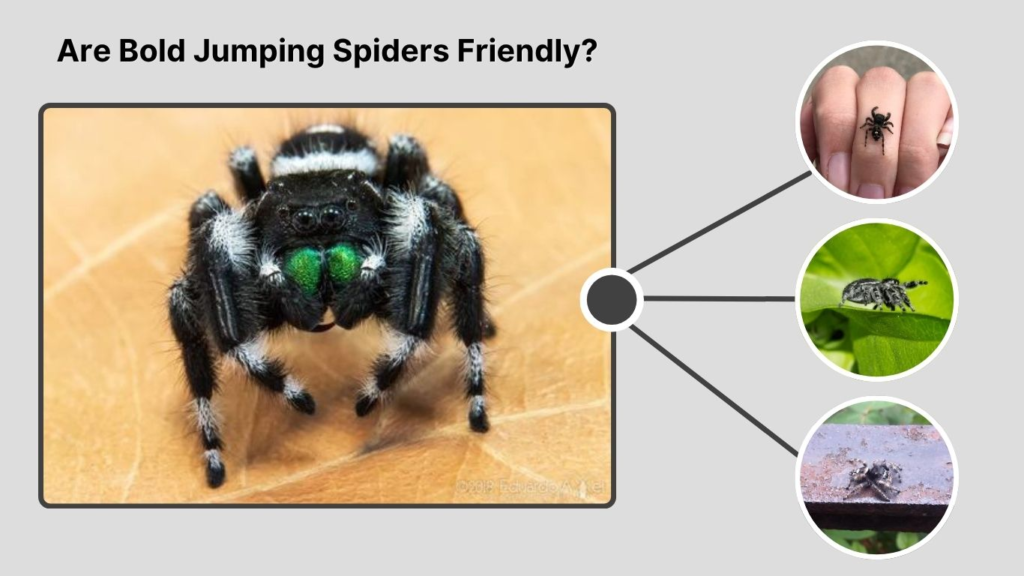
Bold jumping spiders are often considered friendly or at least easy to observe. They are alert, curious, and commonly found around homes, gardens, fences, and walls. Their black body with white markings makes them easy to recognize. Like other jumping spiders, they are not aggressive toward humans unless trapped or handled roughly.
Bold Jumping Spiders as Pets
Bold jumping spiders can be kept as pets by experienced or prepared keepers. They need a small secure enclosure, proper ventilation, climbing surfaces, hiding places, and live insect prey. Handling should be gentle and limited because they are fragile.
Are Black Jumping Spiders Friendly?
Many black jumping spiders are harmless to humans. The term “black jumping spider” may refer to bold jumping spiders or other dark-colored species. Color alone does not decide friendliness. Behavior, species, and stress level matter more.
Are Regal Jumping Spiders Friendly?
Regal jumping spiders are popular in the pet hobby because they are large for jumping spiders, colorful, and often calm when captive-bred. They may watch their keeper, take food from tongs, and explore slowly. Still, they should be treated as delicate animals, not toys.
Why Regal Jumping Spiders Are Popular
Regal jumping spiders are popular because they are attractive, easy to observe, and active during the day. Their size also makes them easier to see than tiny species. Many pet guides list regal and bold jumping spiders among common pet jumping spider choices.
Are Regal Jumping Spiders Safe to Handle?
They can be handled carefully, but handling is never risk-free. A fall can injure or kill a small spider. It is safer to let the spider walk onto a hand near a soft surface rather than picking it up forcefully.
Are Zebra, Tan, and Wild Jumping Spiders Friendly?
Many people notice wild jumping spiders around windows, gardens, walls, and outdoor surfaces. These spiders may seem friendly because they pause and look back when approached.
Are Zebra Jumping Spiders Friendly?
Zebra jumping spiders are small, striped jumping spiders often found around buildings. They are harmless to humans and may seem curious. Because they are small and quick, they are better watched than handled.
Are Tan Jumping Spiders Friendly?
Tan jumping spiders are generally harmless and may be calm if not disturbed. Like other jumping spiders, they may bite only if trapped, squeezed, or threatened. They are useful predators because they eat small insects.
Are Wild Jumping Spiders Friendly?
Wild jumping spiders can be curious but should not be treated like trained pets. A wild spider may tolerate a person nearby, but it may also jump away quickly. If you find one indoors, you can gently move it outside using a cup and paper.
Are Jumping Spiders Friendly Pets?
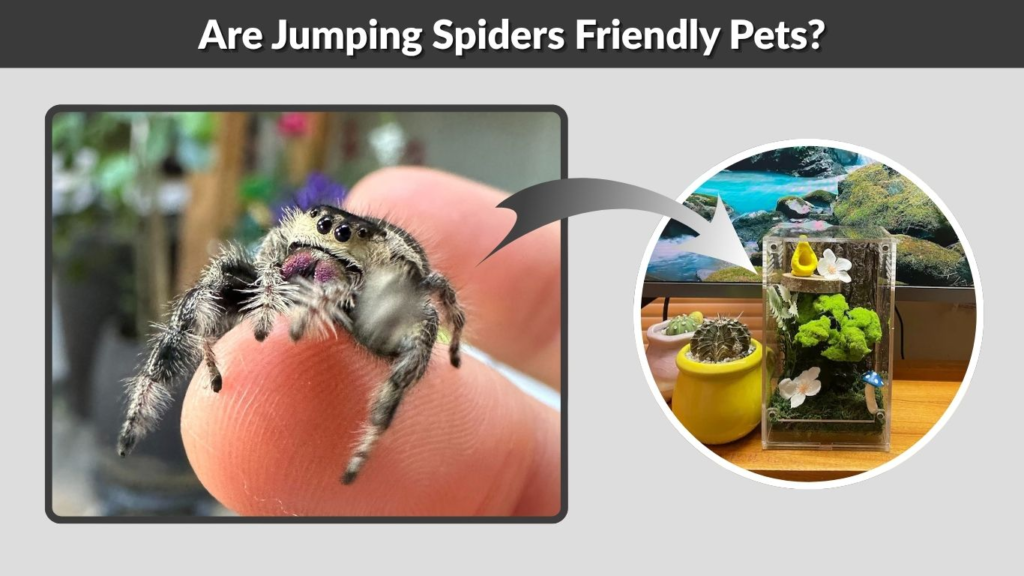
Jumping spiders can be friendly pets for people who enjoy observing small animals. They are quiet, low-space, and fascinating to watch. However, they are not pets for cuddling or frequent handling.
Why People Like Pet Jumping Spiders
People like jumping spiders because they are active during the day, watch movement, and show interesting hunting behavior. Some pet owners enjoy feeding them, decorating small enclosures, and watching them explore. Recent pet care coverage has also noted rising interest in keeping jumping spiders and other invertebrates as small, low-maintenance pets.
Basic Pet Jumping Spider Care
A pet jumping spider needs:
- A small, secure, ventilated enclosure
- Vertical space for climbing
- Twigs, cork bark, or decorations
- A safe place to make a web retreat
- Small live insects for food
- Light misting for water droplets
- Gentle, limited handling
- Protection from extreme heat, cold, and chemicals
Are Jumping Spiders Good for Beginners?
Jumping spiders can be good beginner arachnids, but beginners still need to learn proper care. They need the right prey size, safe ventilation, and careful handling. They are fragile, so rough handling or a fall can be dangerous.
Are Male or Female Jumping Spiders More Friendly?
There is no simple rule that males or females are always friendlier. Individual temperament matters more. However, male and female jumping spiders can behave differently because of size, age, and life stage.
Male Jumping Spiders
Male jumping spiders are often smaller and may be more active. They may roam more because males naturally search for females. Some males may seem bold, while others may be nervous.
Female Jumping Spiders
Female jumping spiders are often larger and may live longer than males in captivity. Some keepers find females calmer because they may spend more time near their web retreat. However, females can also become defensive when guarding eggs.
Which Is Better as a Pet?
Many keepers prefer captive-bred females because they are often larger and may live longer. Males can still make interesting pets, but they may have shorter adult lives and may wander more.
Are Jumping Spiders Friendly to Each Other?
Jumping spiders are not usually social animals. They are friendly-looking toward humans, but they are not friendly to each other in the way social insects or mammals can be.
Do Jumping Spiders Live Together?
Most jumping spiders should be kept alone. If two jumping spiders are placed together, they may fight, stress each other, or one may eat the other. They may interact during mating, but even that can be risky.
Can Baby Jumping Spiders Stay Together?
Very young spiderlings may stay near each other briefly after hatching, but they usually separate as they grow. Once they begin hunting, they should not be crowded together.
Why They Should Be Housed Separately
Jumping spiders are predators. Another spider can look like a rival or prey. Pet jumping spiders should be housed separately to prevent injury or cannibalism.
Can Jumping Spiders Bite Humans?
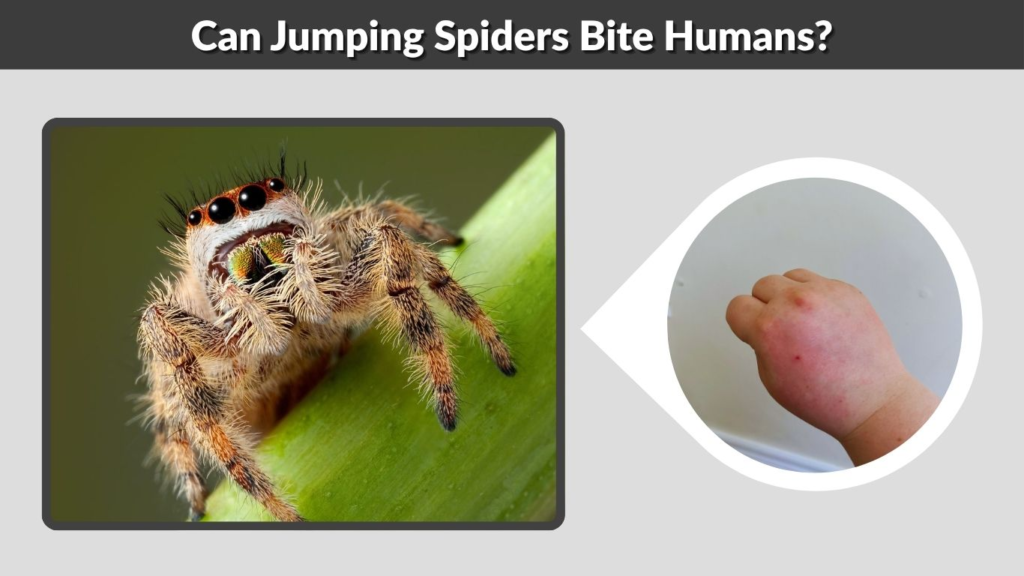
Jumping spiders can bite, but bites are uncommon. Most bites happen when a spider is trapped against skin, squeezed, or handled roughly. Their venom is meant for small prey, not humans.
Are Jumping Spider Bites Dangerous?
For most people, a jumping spider bite is not dangerous and may feel like a small pinch. Some people may experience mild redness, itching, or swelling. Anyone with strong allergic symptoms or a worsening reaction should seek medical advice.
How to Avoid Bites
To avoid bites:
- Do not squeeze or pinch the spider
- Let it walk naturally instead of grabbing it
- Handle over a soft surface
- Avoid handling a stressed or hungry spider
- Do not disturb a spider during molting
- Move wild spiders with a cup instead of bare hands
Do Jumping Spiders Attack People?
Jumping spiders do not attack people in the way many fear. If one jumps toward you, it may be trying to escape, explore, or reach a surface. Their jumping ability is mainly used for hunting insects and moving safely.
Why Do Jumping Spiders Stare at Humans?
A jumping spider may stare because it is using its excellent vision to understand what is nearby. This behavior often makes people feel like the spider is paying attention to them.
They Are Studying Movement
Jumping spiders rely heavily on sight. When a person moves, the spider may turn and focus its front eyes. It may be deciding whether to hide, jump away, or ignore the movement.
They Are Not Showing Love
A jumping spider’s stare is not the same as affection. It is more likely visual inspection. Still, this behavior can make them feel more personal and intelligent than many other spiders.
Their Vision Helps Them Hunt
Jumping spiders use vision to hunt insects without webs. Their eyes help them judge distance before leaping. This is why they often pause, look, and calculate before moving.
How to Safely Interact With a Jumping Spider
Jumping spiders are delicate. If you want to observe or handle one, the goal should be safety for both you and the spider.
Safe Interaction Tips
Use gentle methods when interacting with jumping spiders:
- Let the spider come to you
- Keep your hand still and relaxed
- Handle close to a table, bed, or soft surface
- Avoid sudden shaking or tapping
- Never pull on its legs
- Do not disturb it while molting
- Keep other pets away
- Wash hands before and after handling
When Not to Handle
Do not handle a jumping spider if it is molting, hiding constantly, refusing food, guarding eggs, freshly caught from the wild, or showing stress. A spider that raises its front legs, runs away repeatedly, or curls tightly should be left alone.
Handling Wild Jumping Spiders
Wild jumping spiders are best observed rather than handled. If you need to move one, use a cup and paper. Place it outside in a safe area with plants, walls, or garden shelter.
Common Myths About Friendly Jumping Spiders
Jumping spiders have become popular online, but some ideas about them are exaggerated. They are fascinating animals, but they should still be understood realistically.
Myth: Jumping Spiders Love Humans
Jumping spiders do not love humans like social pets do. They may become used to routine and handling, but their behavior is based on instinct, learning, and curiosity rather than emotional bonding.
Myth: All Jumping Spiders Are Friendly
Not all jumping spiders act the same. Some are calm, some are shy, and some are defensive. Species, age, stress, temperature, hunger, and past handling can affect behavior.
Myth: A Jumping Spider Jumping on You Means It Attacks
A jump does not always mean attack. Jumping spiders jump to move, escape, hunt, or explore. A spider jumping onto your hand may simply be using it as a surface.
FAQs
Are jumping spiders friendly to humans?
Yes, jumping spiders are generally friendly to humans because they are not aggressive and usually avoid biting. They may look at people, follow movement, or calmly explore nearby surfaces. However, they are still wild predators, so they should be handled gently and respectfully.
Why are jumping spiders so friendly?
Jumping spiders seem friendly because they have large eyes, strong vision, and curious hunting behavior. They often turn toward movement and appear to study people. This behavior is more about observation and survival than affection, but it makes them seem interactive.
Are bold jumping spiders friendly?
Bold jumping spiders are usually considered curious and harmless. They may watch humans and move calmly if not disturbed. Like all spiders, they can bite if squeezed or threatened, but they usually prefer to escape instead of defend themselves.
Are jumping spiders friendly pets?
Jumping spiders can be good pets for people who enjoy observing small animals. They are active, interesting, and usually tolerant of gentle handling. They are not cuddly pets, though, and they should be kept in safe enclosures with proper food and care.
Are all jumping spiders friendly?
Not all jumping spiders behave the same way. Some are calm and curious, while others are shy or defensive. Species, age, sex, health, and handling experience can affect behavior. Even friendly-looking jumping spiders should be treated gently.
