
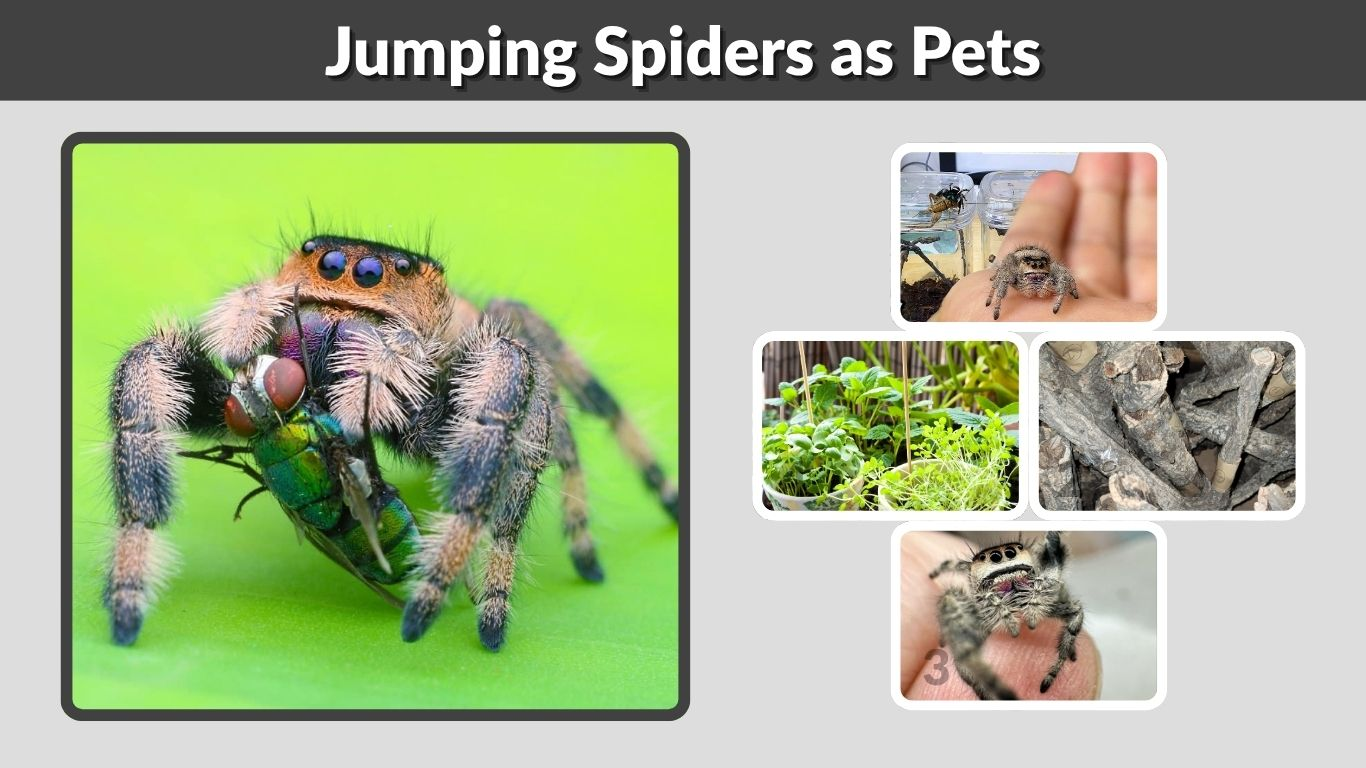
Jumping spiders are becoming popular pets because they are small, curious, quiet, and interesting to watch. Unlike many spiders that hide most of the day, jumping spiders are active hunters with large front-facing eyes and alert behavior. Many owners enjoy watching them climb, stalk prey, build web retreats, and react to movement. They do not need a large enclosure, but they still need proper care, safe feeding, good ventilation, and gentle handling. This guide explains whether jumping spiders can be kept as pets, how long they live, what they eat, and how to care for them properly.
Can You Keep Jumping Spiders as Pets?
Jumping spiders can be kept as pets, and many people choose them because they are small, low-maintenance, and fascinating to observe. They belong to the spider family Salticidae and are known for excellent eyesight, jumping ability, and curious behavior. Pet care sources often describe common pet species such as regal jumping spiders and bold jumping spiders as manageable for beginners when housed and fed correctly.
Are Jumping Spiders Good Pets?
Jumping spiders can be good pets for people who enjoy watching small animals rather than cuddling them. They do not need daily walks, loud toys, or large tanks. However, they are delicate, short-lived, and require live prey. They are best for careful owners who can provide a secure enclosure, correct food size, and safe moisture.
Do People Keep Jumping Spiders as Pets?
Yes, many people keep jumping spiders as pets. Interest in invertebrate pets has grown because they are quiet, space-saving, and educational. Jumping spiders are especially popular because they are active during the day and often appear to “watch” people with their large eyes.
Can Jumping Spiders Be Kept as Pets by Beginners?
Yes, some jumping spiders can be beginner-friendly. Captive-bred regal jumping spiders and bold jumping spiders are often recommended for new keepers because they are larger, easier to observe, and commonly available in the pet hobby. Still, beginners should learn about feeding, molting, humidity, and safe handling before buying one.
Why Do People Keep Jumping Spiders as Pets?
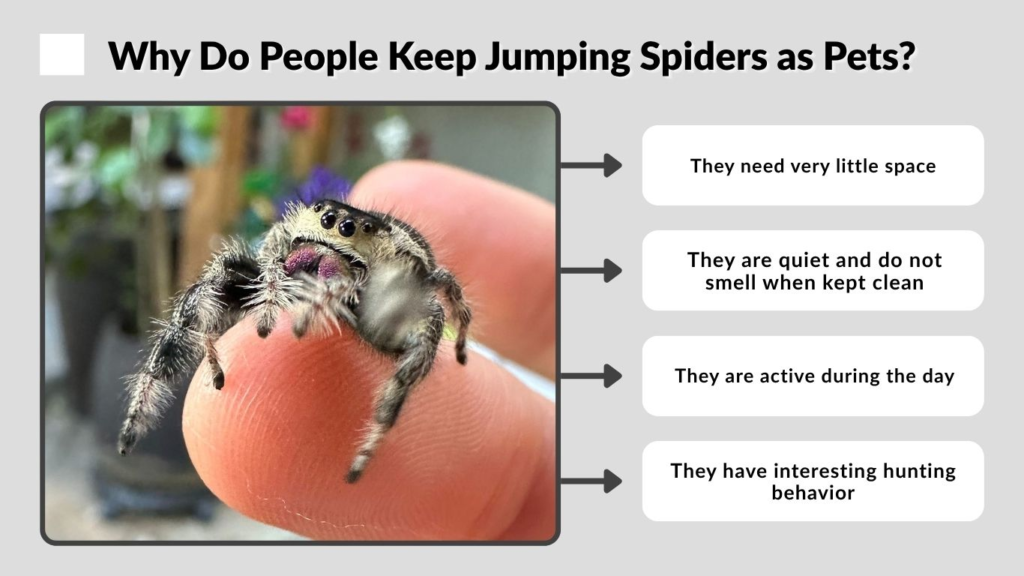
Jumping spiders are different from many traditional pets. They are tiny, quiet, and easy to house, but they show active hunting behavior that makes them exciting to watch.
Main Benefits of Pet Jumping Spiders
People keep jumping spiders because they offer several benefits:
- They need very little space
- They are quiet and do not smell when kept clean
- They are active during the day
- They have interesting hunting behavior
- They are usually not aggressive toward humans
- Their enclosures can be simple or decorative
- They are educational for people interested in nature
- They may help reduce fear of spiders
Why They Seem So Interactive
Jumping spiders have excellent vision and often turn toward movement. This makes them seem more aware of people than many other spiders. They may watch their keeper, follow prey, explore decorations, or pause before jumping. This behavior is one reason people enjoy keeping them.
Are They Low-Maintenance Pets?
Jumping spiders are low-maintenance compared with dogs, cats, birds, or reptiles. However, they are not “no-care” pets. They need regular feeding, misting, enclosure checks, and safe conditions. Their small size also means small mistakes, such as poor ventilation or oversized prey, can harm them.
Jumping Spider Pet Care Overview
Jumping spider care is simple when the basics are understood. They need a secure vertical enclosure, climbing surfaces, small live insects, light moisture, and a place to build a web retreat.
Basic Care Table
| Care Area | Best Practice |
| Enclosure | Small, secure, vertical, and well-ventilated |
| Food | Small live insects such as flies, small crickets, or roaches |
| Water | Light misting or tiny water droplets, not deep water |
| Handling | Gentle and limited, close to a soft surface |
| Lifespan | Usually around 1 to 2 years, depending on species and age |
| Housing | Keep one spider per enclosure |
| Best Species | Regal jumping spider and bold jumping spider are common choices |
How Long Do Jumping Spiders Live as Pets?
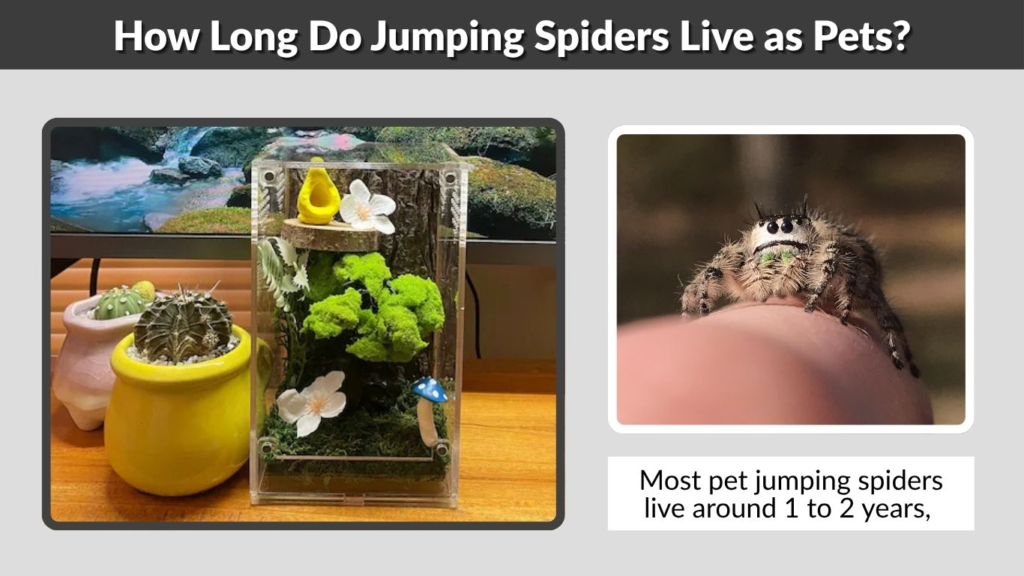
Most pet jumping spiders live around 1 to 2 years, although lifespan depends on species, sex, age at purchase, temperature, feeding, and general care. Some females may live longer than males, especially if they are bought young and kept in stable conditions.
Male vs Female Lifespan
Female jumping spiders often live longer than males. Males usually mature, become more active, and spend more time searching for mates. Females are often larger and may remain calmer in their enclosure. This is one reason many keepers prefer female regal jumping spiders as pets.
Why Lifespan Can Be Short
Jumping spiders naturally have short lives compared with many pets. A spider bought as an adult may only live a few months, while a juvenile may live longer. Molting problems, old age, dehydration, injury, poor feeding, and stress can also shorten lifespan.
How to Help Them Live Longer
You can support a longer, healthier life by giving the spider proper food, safe moisture, good ventilation, and a stress-free enclosure. Avoid falls, rough handling, large prey, and disturbing the spider during molting.
What Do Jumping Spiders Eat as Pets?
Jumping spiders are carnivorous predators. In the wild, they eat small insects and other tiny arthropods. In captivity, they should be fed appropriately sized live prey. Common prey includes fruit flies for spiderlings and small flies, small crickets, roaches, or mealworms for larger spiders.
Best Foods for Pet Jumping Spiders
Good feeder insects include:
- Flightless fruit flies for spiderlings
- Small house flies or bottle flies
- Small crickets
- Small roaches
- Small mealworms
- Small moths from safe sources
- Waxworms as occasional treats
Prey should not be larger than the spider can safely handle. Oversized insects may injure the spider, especially during or near molting.
How Often to Feed a Jumping Spider
Feeding frequency depends on age and size. Young spiders usually eat more often because they are growing. Adults may eat less often, sometimes every few days. A spider with a round abdomen may not need food immediately, while a thin abdomen may mean it is ready to eat.
Foods to Avoid
Do not feed wild insects from areas treated with pesticides. Avoid ants, bees, wasps, large crickets, and hard-bodied insects that can harm the spider. Never feed human food, fruit, meat, or dead insects unless the spider accepts pre-killed prey from tongs.
How to Keep Jumping Spiders as Pets
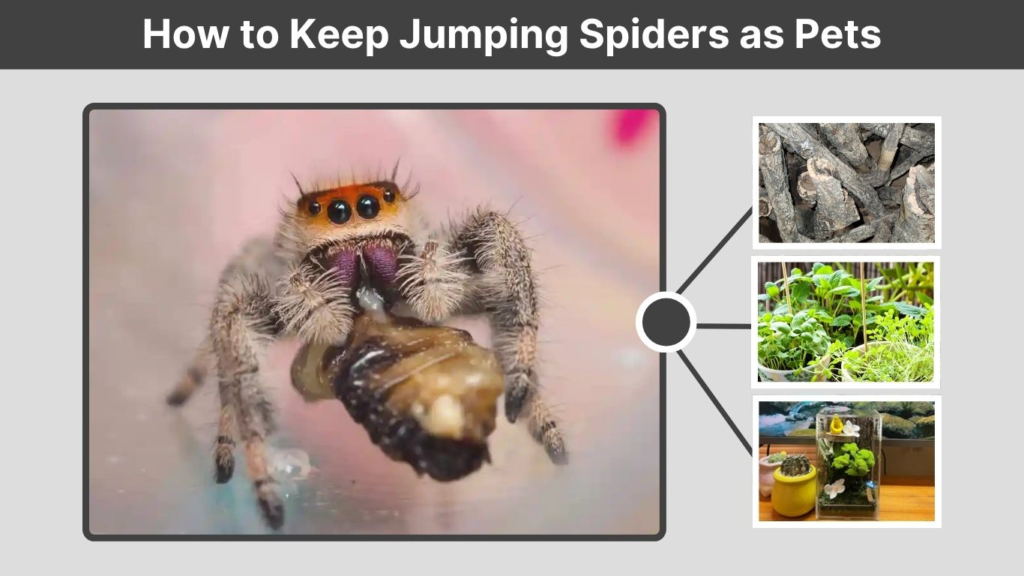
Keeping a jumping spider starts with the enclosure. The setup should match how jumping spiders live: they climb, watch, leap, and build web retreats above ground.
Enclosure Setup
A good jumping spider enclosure should be taller than it is wide because these spiders like vertical space. It should have ventilation, secure openings, and climbing surfaces. Many keepers use acrylic enclosures, small terrariums, or ventilated containers made for arboreal invertebrates.
What to Put Inside the Enclosure
A jumping spider enclosure can include:
- Twigs, cork bark, or small branches
- Fake or live plants from safe sources
- A hide or webbing area near the top
- Soft decorations that allow climbing
- Good ventilation holes
- A front or side-opening door
- Paper towel or simple substrate at the bottom
Avoid sharp decorations, sticky materials, strong chemicals, and large gaps where the spider can escape.
Temperature and Humidity
Most commonly kept jumping spiders do well at normal comfortable room temperatures, but exact needs vary by species. For example, some sources list bold jumping spiders around 68–80°F and tropical species slightly warmer. Humidity also depends on species, with many pet species needing moderate humidity and good airflow.
Best Types of Jumping Spiders as Pets
Not all jumping spiders are equally easy to keep. Some are tiny, fast, or sensitive. Larger captive-bred species are usually better for beginners.
Regal Jumping Spiders as Pets
The regal jumping spider, Phidippus regius, is one of the most popular pet jumping spiders. It is known for its larger size, attractive colors, and curious behavior. Care guides commonly describe it as one of the best species for beginners and experienced keepers because it is easier to see and feed than very small species.
Bold Jumping Spiders as Pets
The bold jumping spider, Phidippus audax, is another common pet choice. It is native to much of North America and is known for its black body, white markings, and bold personality. Captive-bred bold jumping spiders are better than wild-caught ones because they are usually healthier, younger, and more used to enclosure life.
Zebra Jumping Spiders as Pets
Zebra jumping spiders can be kept, but they are very small. Their size can make feeding and handling more difficult. They are better for observation than regular handling. Beginners may find larger species easier.
Best Jumping Spiders for Beginners
The best beginner choices are usually captive-bred regal jumping spiders and bold jumping spiders. They are large enough to observe easily, commonly available, and well covered by care guides.
Can You Keep Wild Jumping Spiders as Pets?
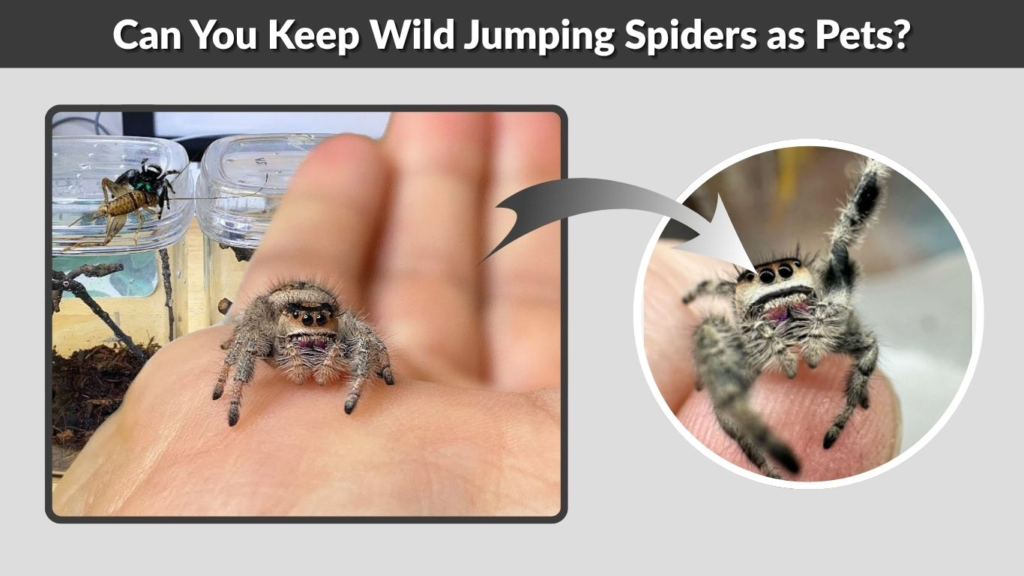
You can keep some wild jumping spiders temporarily, but captive-bred spiders are usually better. Wild spiders may be older, stressed, carrying parasites, or already near the end of their life. Captive-bred spiders are often healthier and more predictable. Some care guides recommend buying captive-bred and avoiding wild-caught spiders for these reasons.
When Wild Spiders Should Be Left Alone
A wild jumping spider should be left alone if it looks injured, is very small, is guarding eggs, or lives in a safe outdoor habitat. It is often better to observe wild spiders and let them continue helping control small insects.
If You Find One Indoors
If you find a jumping spider indoors and do not want to keep it, gently move it outside using a cup and paper. Place it near plants, a wall, or garden shelter.
Jumping Spiders as Pets: Pros and Cons
Jumping spiders are great for some people, but they are not perfect pets for everyone. Before buying one, it helps to understand both sides.
Pros
Jumping spiders are small, quiet, clean, and interesting. They do not need a large enclosure, and they are easier to care for than many exotic pets. They can also be a good educational pet for people who want to learn about arachnids.
Cons
They have short lifespans, need live prey, and are fragile. They are not social animals, and they should not be handled roughly. Some people may also be uncomfortable keeping feeder insects.
Who Should Keep One?
A jumping spider may be right for someone who enjoys observing small animals, can feed live insects, and understands that the spider is delicate. It may not be right for someone who wants a pet to cuddle, train, or handle often.
Buying Jumping Spiders as Pets
Many people search for jumping spiders for sale, including in the UK, Australia, and other countries. Before buying, check local laws, ethical sourcing, and seller reputation.
Where to Buy a Jumping Spider
Look for responsible breeders or reputable exotic pet sellers. Captive-bred spiders are usually preferred. A good seller should provide the spider’s species, age or life stage, sex if known, care requirements, and feeding history.
Jumping Spiders as Pets in the UK
In the UK, many keepers buy captive-bred jumping spiders from breeders or exotic pet shops. Buyers should still check seller reputation, delivery safety, and current rules before purchasing.
Jumping Spiders as Pets in Australia
Australia has strict rules about wildlife and exotic animals. People in Australia should check local laws before keeping or buying jumping spiders. Native species may be regulated, and imported species may not be legal.
Handling Pet Jumping Spiders Safely
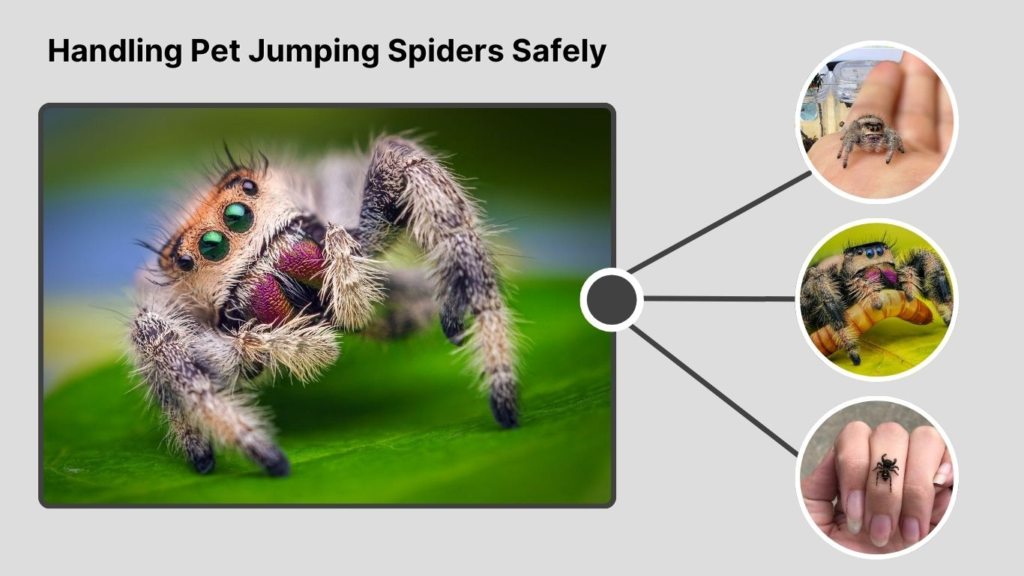
Jumping spiders can be handled, but handling should be gentle and limited. A fall can seriously injure a small spider.
Safe Handling Tips
To handle safely:
- Let the spider walk onto your hand
- Do not grab or pinch it
- Handle over a soft surface
- Keep movements slow
- Avoid handling during molting
- Do not handle if the spider is stressed
- Keep pets and small children away
- Wash hands before and after handling
Do Jumping Spiders Bite?
Jumping spiders can bite, but they usually avoid biting humans. A bite may happen if the spider is squeezed, trapped, or frightened. For most people, bites are mild, but anyone with a strong reaction should seek medical advice.
Can Children Keep Jumping Spiders?
Children can observe jumping spiders, but an adult should manage feeding, enclosure checks, and handling. These spiders are too fragile for rough handling.
Common Pet Jumping Spider Problems
Most problems are caused by poor enclosure conditions, wrong prey size, dehydration, stress, or molting trouble.
Refusing Food
A jumping spider may refuse food before molting, after a large meal, when stressed, or when too cold. Remove uneaten prey so it does not harm the spider.
Molting Problems
Molting is a vulnerable time. The spider may hide in a web retreat and refuse food. Do not disturb it. Keep moisture stable, and avoid leaving live prey inside during molting.
Dehydration
A dehydrated spider may appear weak or inactive. Light misting can provide tiny droplets to drink. Do not use deep water dishes because small spiders can drown.
FAQs
Can you keep jumping spiders as pets?
Yes, jumping spiders can be kept as pets. They are small, quiet, and interesting to observe. They need a secure enclosure, live prey, light misting, and gentle handling. Captive-bred spiders are usually better than wild-caught spiders.
How long do jumping spiders live as pets?
Most jumping spiders live around 1 to 2 years as pets. Females often live longer than males, and juveniles usually live longer after purchase than adults. Lifespan depends on species, age, feeding, molting, and care.
What do jumping spiders eat as pets?
Pet jumping spiders eat small live insects. Common foods include fruit flies, small flies, small crickets, small roaches, mealworms, and waxworms. The prey should be small enough for the spider to catch safely.
Can you keep wild jumping spiders as pets?
You can keep some wild jumping spiders, but captive-bred spiders are usually better. Wild spiders may be old, stressed, or carrying parasites. If you find a wild jumping spider indoors, you can also move it outside gently.
Are jumping spiders good beginner pets?
Jumping spiders can be good beginner pets for careful owners. Regal and bold jumping spiders are popular beginner choices. They are easier than many exotic pets, but they still need proper feeding, enclosure setup, moisture, and safe handling.
