
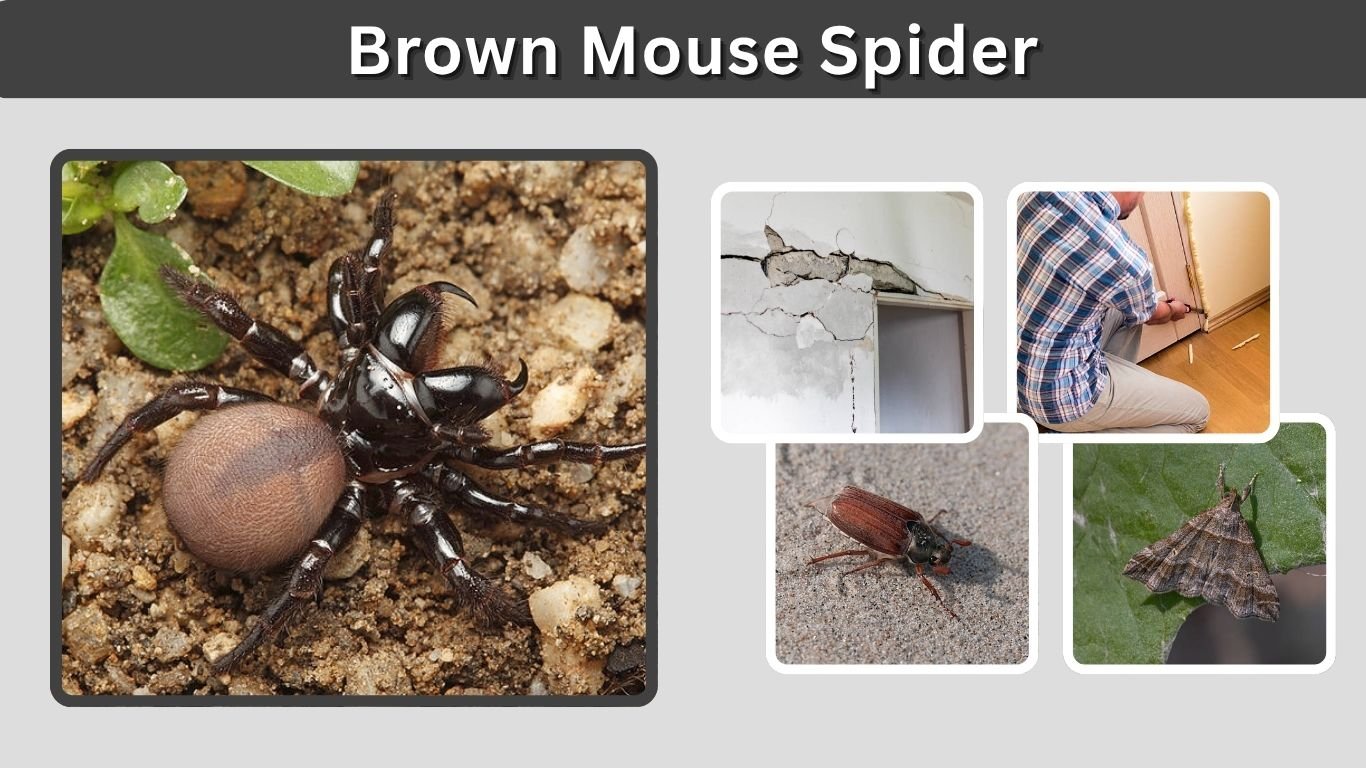
The brown mouse spider, usually referring to Scotophaeus blackwalli, is a small nocturnal hunting spider frequently found around houses. Its brown body, grey abdominal hairs and quick movements give it a mouse-like appearance. Despite sharing its common name with Australia’s medically significant mouse spiders, this species belongs to a completely different family and is not considered dangerous to humans. It does not build a large prey-catching web, making it easy to mistake for a brown recluse, wolf spider or another wandering house spider.
What Is a Brown Mouse Spider?
The brown mouse spider is a ground spider belonging to the family Gnaphosidae. Its scientific name is Scotophaeus blackwalli. It is native to Europe and nearby regions but has been introduced to parts of North America, including the Pacific Coast.
The spider receives its common name from the short grey hairs covering its abdomen. These hairs create a soft, silky appearance resembling mouse fur. Its habit of running close to the ground in short bursts may also have contributed to the name.
| Feature | Description |
| Scientific name | Scotophaeus blackwalli |
| Family | Gnaphosidae |
| Female size | Approximately 9–12 mm |
| Male size | Approximately 7–10 mm |
| Colour | Brown, orange-brown or grey-brown |
| Habitat | Houses, walls, bark and sheltered ground areas |
| Activity | Primarily nocturnal |
| Diet | Insects, spiders and other small invertebrates |
| Web | No prey-catching web |
| Bite risk | Low; not considered medically significant |
Brown Mouse Spider Identification
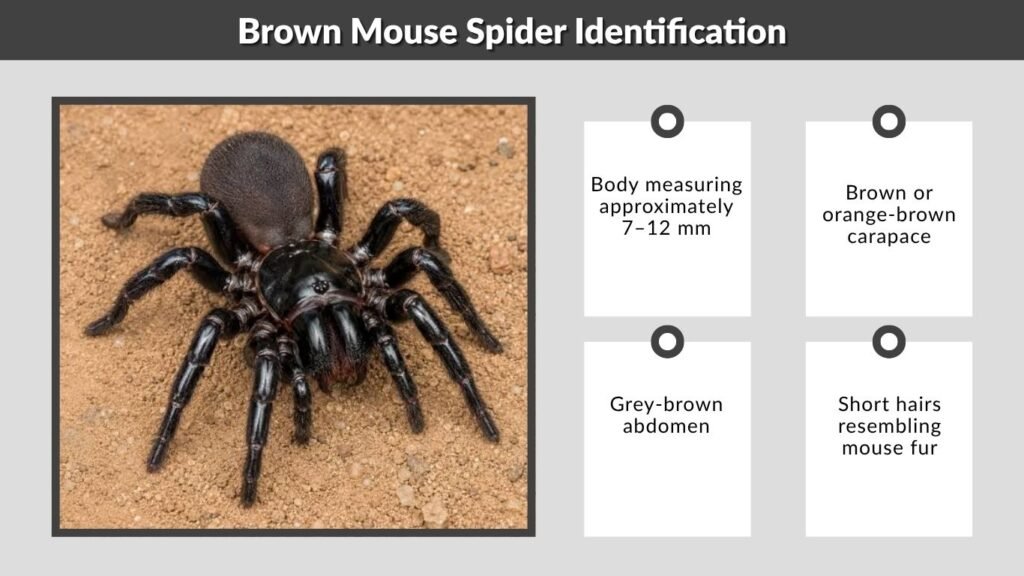
The brown mouse spider has a relatively plain appearance, so identification from a photograph can be difficult. Several species of ground spiders have similar brown bodies, grey hairs and unmarked abdomens.
Size and Body Shape
Adult females normally measure between 9 and 12 mm in body length. Adult males are slightly smaller, measuring approximately 7–10 mm. The spider may appear larger when its legs are included, but it remains considerably smaller than Australia’s heavy-bodied mouse spiders.
Its body is elongated rather than round. The legs are moderately long and built for running across floors, walls and other surfaces. Unlike web-building spiders, it has the compact, mobile form of an active hunter.
Colour and Markings
The carapace is generally orange-brown, reddish-brown or dark brown. Its abdomen is brown or grey-brown and covered with short, fine hairs. Under suitable lighting, these hairs may produce a silky grey or silver appearance.
The legs are brown and may also have fine hairs. Most individuals lack strong patterns, stripes or spots. Colour can vary depending on age, sex, lighting and whether the spider has recently moulted.
Main Identification Features
- Body measuring approximately 7–12 mm
- Brown or orange-brown carapace
- Grey-brown abdomen
- Short hairs resembling mouse fur
- Moderately long brown legs
- Enlarged cylindrical spinnerets
- No obvious violin-shaped marking
- Fast movement close to the surface
- Primarily active at night
- No large prey-catching web
Exact identification may require examination of the spider’s reproductive structures and leg spines. A plain brown spider found inside a house should not automatically be identified as Scotophaeus blackwalli.
Where Do Brown Mouse Spiders Live?
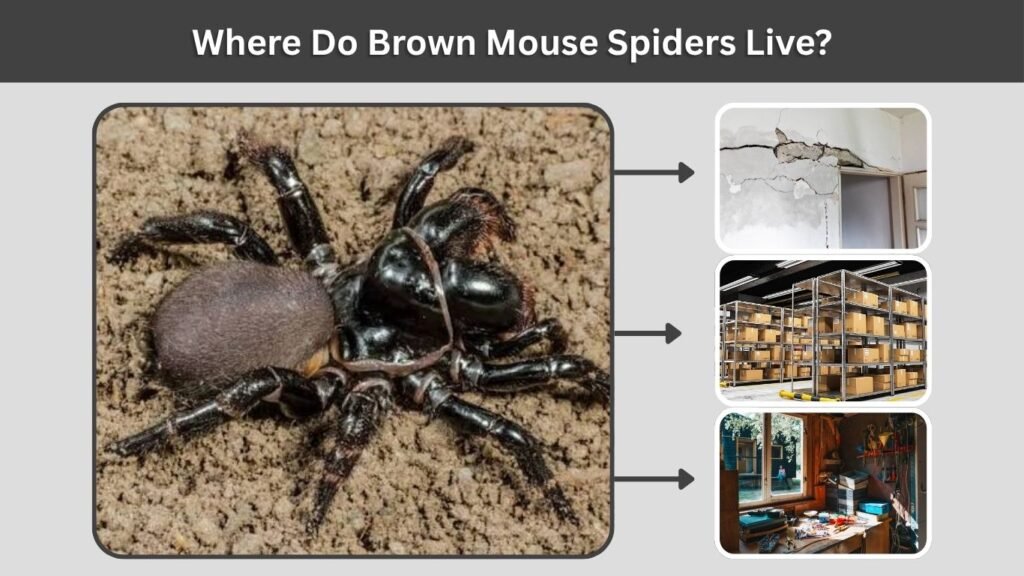
Brown mouse spiders are native to Europe, North Africa and parts of western Asia. They have been introduced to North America, Peru and Hawaii through human activity and the movement of goods.
Brown Mouse Spiders in California
In North America, the species is mainly associated with buildings along the Pacific Coast. Documented records come from California, Oregon and Washington. California observations include locations in Southern California and the San Francisco Bay Area.
The spider is considered synanthropic in North America, meaning it often lives in environments created or modified by people. It may be found in houses, apartments, garages, sheds, warehouses and exterior wall gaps. BugGuide describes it as an introduced species found around Pacific Coast buildings.
A small brown spider running across a Bay Area floor without a visible web could potentially be a brown mouse spider. However, many native ground spiders look similar, so a clear photograph or expert examination would be necessary for confirmation.
Brown Mouse Spiders in Tennessee
The brown mouse spider is not strongly associated with Tennessee, and its best-documented North American populations are on the Pacific Coast. A similar-looking spider found in Tennessee may instead be another member of the ground spider family.
Tennessee has numerous brown house and ground spiders, including species that resemble mouse spiders. The state is also within the general region where brown recluse spiders occur. For this reason, homeowners should avoid identifying a Tennessee spider based only on brown colour or body size.
Habitat Around Homes
Outdoors, brown mouse spiders hide beneath tree bark, stones, logs, leaf litter and other ground-level cover. They may also occupy cracks in walls and sheltered spaces around buildings.
Inside houses, they commonly hide in:
- Gaps along baseboards
- Wall cracks
- Storage rooms
- Garages and sheds
- Behind furniture
- Beneath boxes
- Around doors and windows
- Dark corners near the floor
Finding one inside does not necessarily indicate an infestation. It may have entered accidentally while following insect prey or searching for shelter.
Does the Brown Mouse Spider Make a Web?
The brown mouse spider does not construct a large web to capture flying insects. It is an active hunter that leaves its shelter and searches for prey at night.
During the day, it may rest inside a small silk retreat hidden beneath an object or within a crack. Females also use silk to construct protective nests for their eggs. These retreats are different from the circular webs of orb-weavers or tangled webs made by common house spiders.
Its enlarged spinnerets can produce sticky silk that helps restrain prey. The spider may place silk over an insect before delivering a bite. Therefore, saying that it has “no web” means it does not depend on an exposed prey-catching web—not that it never produces silk.
Diet and Hunting Behaviour
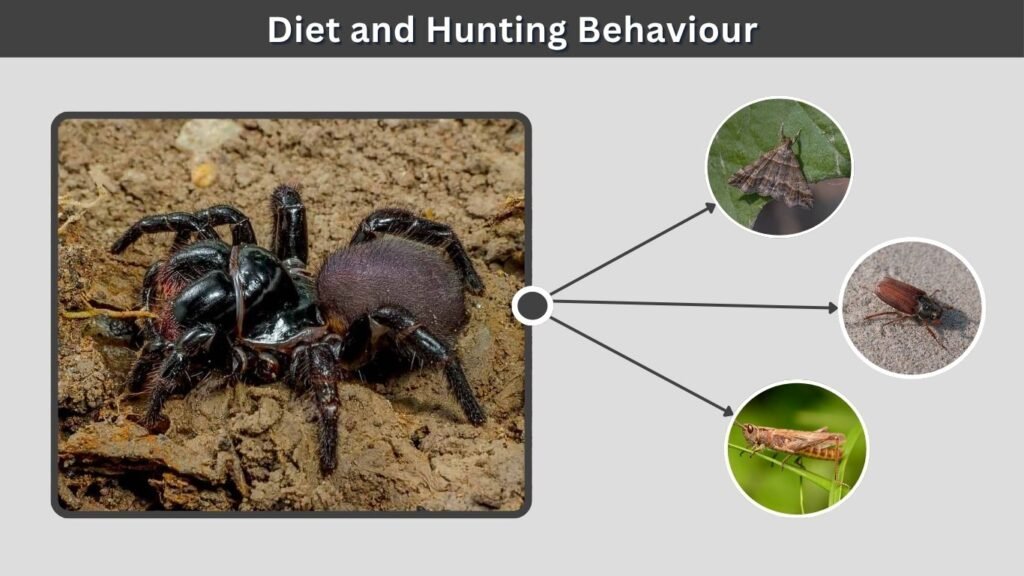
Brown mouse spiders mainly eat small insects and other arthropods found around the ground or inside buildings. Their prey may include flies, moths, beetles, ants, cockroaches and other spiders.
The spider usually hunts after dark. It moves slowly while searching but can accelerate quickly when attacking prey or escaping danger. Its flattened posture allows it to enter narrow gaps under bark, furniture and building materials.
Brown mouse spiders can also feed opportunistically on recently dead insects. Their hunting behaviour may help control small household pests, although a single spider will not eliminate a serious insect infestation.
Brown Mouse Spider Bite
A brown mouse spider can potentially bite if it is pressed against the skin, trapped inside clothing or handled. However, bites appear to be uncommon because the spider generally tries to run away.
Scotophaeus blackwalli is not known to cause medically significant envenomation. A possible bite may cause temporary local symptoms such as:
- Mild pain or stinging
- Redness
- Minor swelling
- Itching or tenderness
There is limited published clinical information about confirmed bites from this species. Consequently, unexplained wounds should not automatically be attributed to a mouse spider, especially when the spider was not captured or professionally identified.
Wash a suspected minor bite with soap and water and apply a wrapped cold pack for short periods. Seek medical advice if pain or swelling worsens, the area shows signs of infection, or symptoms spread beyond the bite site. Difficulty breathing, facial swelling, dizziness or collapse requires emergency assistance.
Brown Mouse Spider vs Australian Mouse Spider
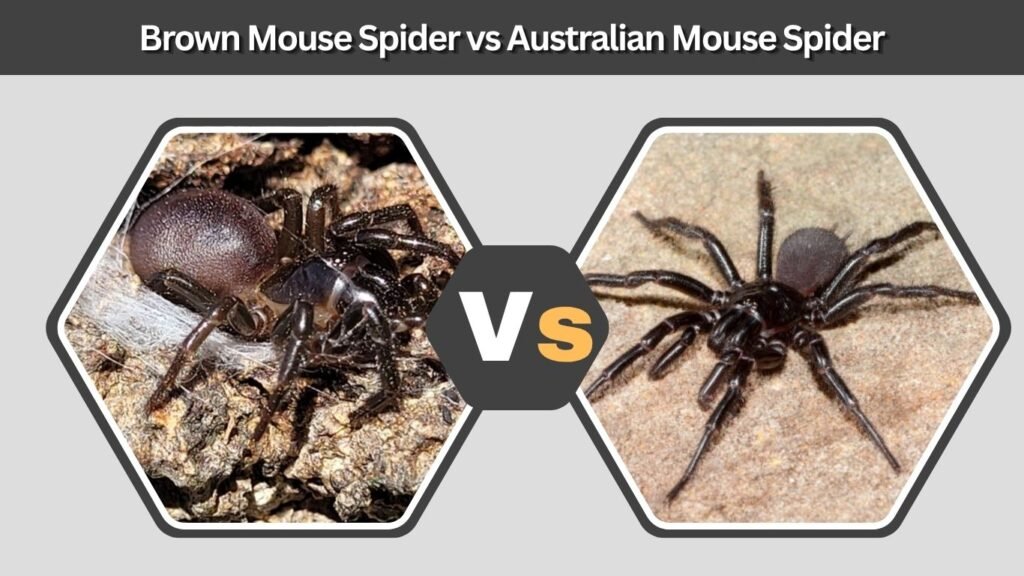
The common name “mouse spider” refers to two very different kinds of spiders. Confusing them can create unnecessary fear or cause someone to underestimate a genuinely dangerous Australian spider.
| Feature | Brown Mouse Spider | Australian Mouse Spider |
| Scientific group | Scotophaeus blackwalli | Missulena species |
| Family | Gnaphosidae | Actinopodidae |
| Body size | About 7–12 mm | About 10–35 mm |
| Build | Small and elongated | Heavy and stocky |
| Colour | Brown or grey-brown | Black, brown, red or blue |
| Habitat | Buildings and surface shelters | Underground burrows |
| Medical importance | Low | Potentially serious |
| Distribution | Europe and introduced regions | Primarily Australia |
Australia’s Missulena spiders have large jaws, thick legs and broad heads. The brown mouse spider is much smaller, lighter and more similar to an ordinary ground spider.
Brown Mouse Spider vs Brown Recluse
Brown mouse spiders and brown recluses can both appear plain brown, hunt at night and hide inside buildings. However, they are unrelated and present different levels of medical concern.
A brown recluse has six eyes arranged in three pairs. Most other spiders, including the brown mouse spider, have eight eyes. Brown recluses may have a violin-shaped marking on the carapace, although this marking alone is not reliable for identification.
The brown mouse spider typically has a hairy, grey-brown abdomen and more noticeable spinnerets. It is not associated with necrotic skin injuries. Brown recluse venom, by comparison, can sometimes damage skin tissue.
Brown recluse spiders do not have established breeding populations in California, according to the University of California’s statewide pest-management program. Therefore, a small brown spider found in a California or Bay Area home is far more likely to be another species.
How to Remove Brown Mouse Spiders
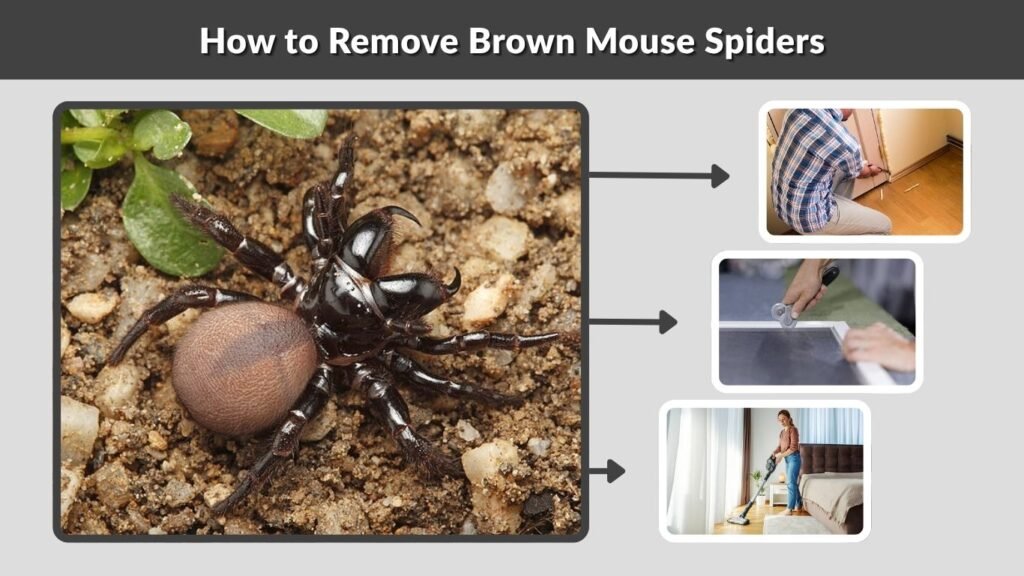
A single spider can be captured using a clear container and stiff card before being released outdoors away from entrances. Avoid picking it up with bare hands.
To reduce future encounters, seal gaps around doors, windows and foundations. Repair screens, vacuum regularly and remove floor-level clutter. Moving boxes, clothing and stored materials away from walls will eliminate hiding places. Reducing indoor insects also makes the building less attractive to hunting spiders.
FAQs
Is the brown mouse spider dangerous?
The brown mouse spider is not considered medically dangerous. It may bite when trapped or handled, but a suspected bite would normally cause only mild local discomfort. Seek medical advice if symptoms become severe, spread rapidly or show signs of infection.
Are brown mouse spiders found in California?
Yes. Scotophaeus blackwalli has been introduced to the Pacific Coast and documented in California, including Southern California and Bay Area locations. It frequently lives around buildings, although several native ground spiders can look almost identical without close professional examination.
Do brown mouse spiders live in Tennessee?
Established populations are mainly documented along the Pacific Coast rather than Tennessee. A brown spider found in Tennessee may be another ground-spider species or possibly a brown recluse. Colour alone cannot provide a dependable identification, so clear photographs should be examined by an expert.
Do brown mouse spiders build webs?
They do not build large webs for catching prey. Instead, they actively hunt insects and spiders at night. They still produce silk for daytime retreats, egg protection and restraining prey, so small patches of silk may be present near their hiding places.
How can I identify a brown mouse spider bite?
A bite cannot be reliably identified from a skin photo alone. Redness, swelling and irritation have many possible causes, including infections and bites from other arthropods. Identification is most dependable when the spider is safely photographed or collected and examined by a qualified expert.
