
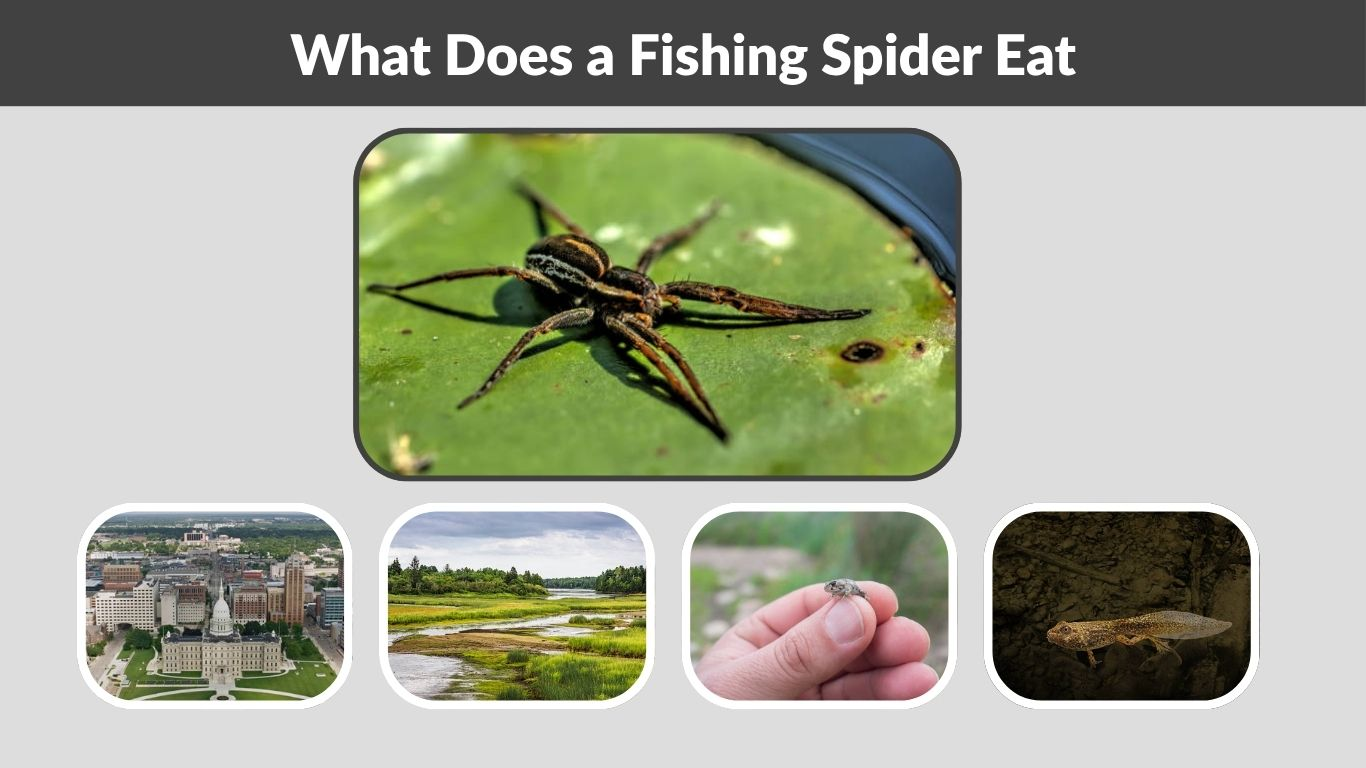
Many people are shocked when they first see a spider eating a fish. Spiders are usually associated with catching insects in webs, not hunting aquatic animals. However, certain spider species are capable of catching small fish, tadpoles, and even frogs near freshwater habitats.
These unusual arachnids are known as fishing spiders or fish-eating spiders. Their incredible hunting skills, fast reflexes, and ability to walk on water have made them one of the most fascinating predators in the animal kingdom.
What Is a Fish-Eating Spider?
Fish-eating spiders are semi-aquatic spiders that live near lakes, ponds, rivers, and marshes. Unlike web-building spiders, these hunters actively stalk prey along the water’s surface. Most belong to the Dolomedes genus, commonly called fishing spiders or dock spiders.
These spiders are known for their ability to detect vibrations in water. When a small fish swims near the surface, the spider reacts instantly and attacks with surprising speed. Although insects remain their main source of food, fish are sometimes part of their diet.
Definition of Fishing Spiders
Fishing spiders are large wandering spiders that rely on ambush hunting instead of webs. They can run across water and remain partially submerged while waiting for prey.
Some important characteristics include:
- Long legs adapted for moving on water
- Water-resistant body hairs
- Excellent vibration sensitivity
- Strong venom for immobilizing prey
- Ability to hunt both on land and in water
These features allow the spider to become an effective predator in wet environments.
Why Are They Called Fish-Eating Spiders?
The term “fish-eating spider” comes from documented observations of these spiders catching and feeding on small fish. Scientists and wildlife photographers have recorded many cases where fishing spiders grabbed minnows or other tiny freshwater fish from shallow water.
The spider usually waits near the shoreline with its front legs touching the water surface. Once vibrations are detected, it quickly attacks and injects venom into the prey. The fish is then dragged onto land before feeding begins.
This behavior may sound rare, but studies suggest it occurs more often than previously believed, especially in warm freshwater habitats.
Are Fish-Eating Spiders Dangerous to Humans?
Despite their intimidating appearance, fishing spiders are generally harmless to humans. They are shy creatures that prefer escaping instead of attacking.
A bite can happen if the spider feels trapped or threatened, but symptoms are usually mild. Most bites cause temporary redness, swelling, or irritation similar to a bee sting.
Fishing spiders are not considered medically dangerous, and they play an important role in controlling insect populations near water sources.
How Does a Spider Catch a Fish?
The idea of a spider catching a fish may seem impossible, but fishing spiders possess several unique adaptations that make this behavior possible. Their hunting method depends heavily on patience, sensitivity, and speed.
Unlike web spiders that trap prey passively, fishing spiders actively monitor the water’s surface for movement.
Hunting Techniques Used by Fishing Spiders
Fishing spiders are ambush predators. They often hide on rocks, floating plants, logs, or docks while stretching their front legs over the water.
Their hunting process usually follows these steps:
- The spider waits quietly near water.
- Sensitive hairs detect vibrations caused by fish movement.
- The spider pinpoints the prey’s location.
- It rushes toward the disturbance.
- Venom is injected almost instantly.
This attack happens in just a fraction of a second.
Fishing spiders can even run across water because of tiny hairs on their legs that trap air and reduce surface tension. This ability helps them chase prey without sinking.
How They Pull Fish From the Water
After capturing the fish, the spider drags it onto a dry surface such as a rock or shoreline vegetation. The venom quickly paralyzes the prey, allowing the spider to feed safely.
Scientists believe the spider’s venom helps break down internal tissues, making the fish easier to consume. Small fish are especially vulnerable because they cannot escape quickly in shallow water.
Although the fish may struggle initially, the spider’s grip is surprisingly powerful for its size.
Can a Spider Eat a Fish Larger Than Itself?
One of the most surprising facts about fish-eating spiders is their ability to capture prey larger than their own bodies. In some documented cases, fishing spiders caught fish weighing several times more than the spider itself.
This is possible because:
- Water supports some of the fish’s weight
- Venom weakens the prey rapidly
- The spider uses strong legs for leverage
However, these events are still relatively uncommon. Most fishing spiders target tiny fish, tadpoles, insects, and other manageable prey.
Types of Spiders That Eat Fish
Several spider species around the world have been observed eating fish. While all belong to similar groups of semi-aquatic hunters, some species are more famous for this behavior than others.
Dark Fishing Spider
The dark fishing spider is one of the best-known fish-eating spiders in North America. It is commonly found near lakes, docks, and wooded streams.
This species has:
- A large brown or gray body
- Long striped legs
- Excellent climbing ability
- Strong hunting instincts
Because of its large size, many people mistake it for a wolf spider. However, the dark fishing spider is much more closely associated with water habitats and aquatic hunting behavior.
Six-Spotted Fishing Spider
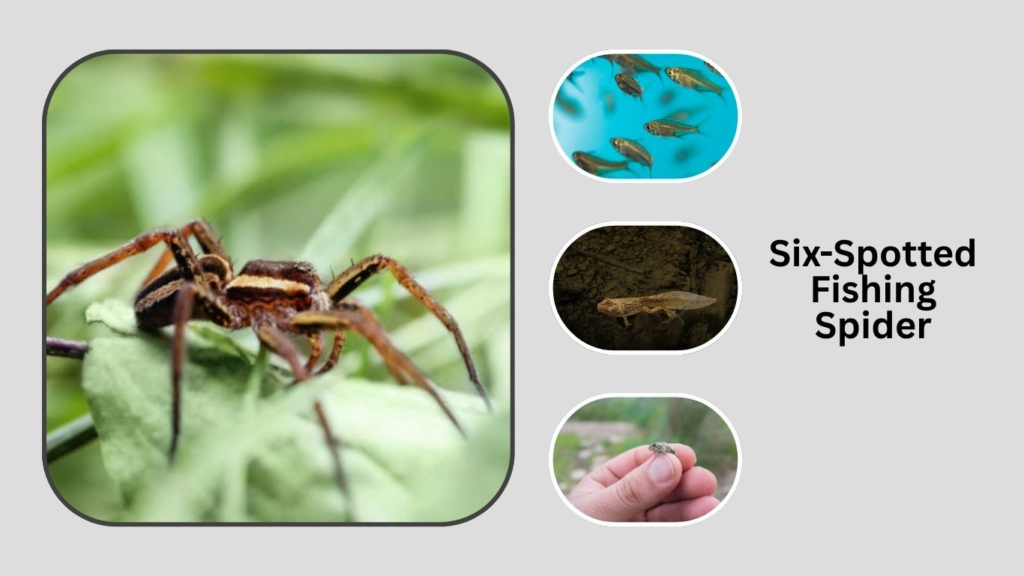
The six-spotted fishing spider is another well-known member of the Dolomedes genus. It is slightly smaller than the dark fishing spider but remains an impressive predator near freshwater habitats.
This spider is easy to recognize because of the pale spots located on its body. It usually lives around ponds, marshes, and slow-moving streams where aquatic prey is abundant.
The six-spotted fishing spider feeds on:
- Small fish
- Tadpoles
- Mosquito larvae
- Aquatic insects
- Tiny frogs
Although fish are not its primary food source, the spider will opportunistically attack weak or slow-moving fish near the surface.
Fen Raft Spider
The fen raft spider is one of Europe’s rarest fishing spiders. It is mainly found in wetlands and marshy habitats in countries such as the United Kingdom and parts of central Europe.
This spider spends much of its life near water and is considered a highly specialized hunter. Like other fishing spiders, it uses sensitive leg hairs to detect vibrations produced by prey.
Conservationists pay close attention to the fen raft spider because habitat destruction threatens many wetland ecosystems where it survives. In some regions, restoration projects have helped increase local populations.
Giant Fish-Eating Spider Species
In tropical areas, some fishing spiders grow significantly larger than those found in cooler climates. These giant fish-eating spiders can have impressive leg spans and stronger hunting abilities.
Large tropical species are often found in:
- Rainforest streams
- Mangrove swamps
- Tropical ponds
- Slow rivers
Because warm climates support greater biodiversity, these spiders may encounter more aquatic prey opportunities. Scientists have documented giant fishing spiders consuming fish, frogs, and even small aquatic reptiles.
What Does a Fishing Spider Eat?
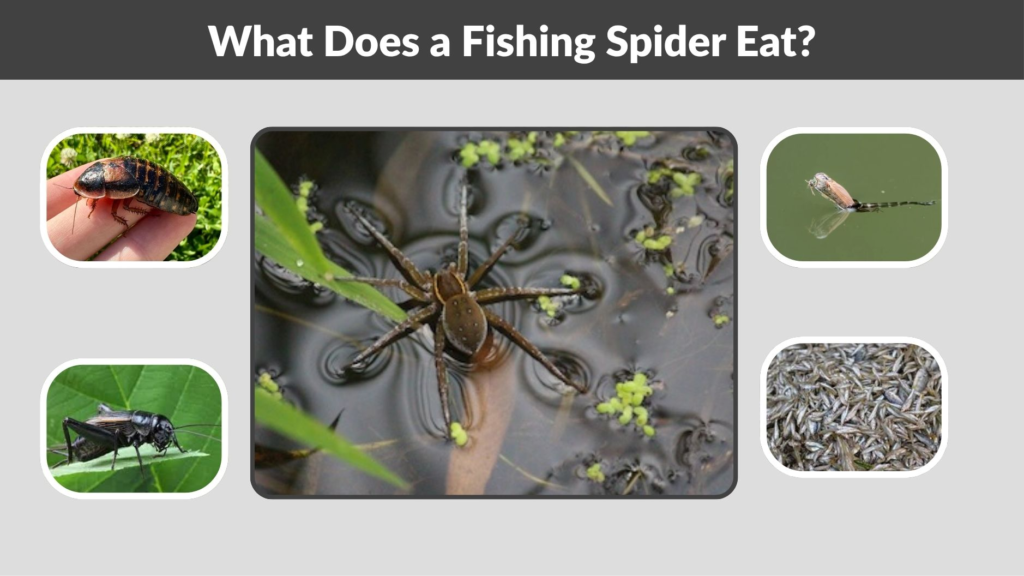
Fishing spiders are opportunistic predators, meaning they eat whatever suitable prey is available in their environment. Fish may attract the most attention, but these spiders consume many different animals.
Their varied diet helps them survive in changing conditions around freshwater habitats.
Common Foods in Their Diet
Fishing spiders commonly feed on:
- Small fish
- Tadpoles
- Aquatic insects
- Water beetles
- Mosquito larvae
- Small frogs
- Flies and moths
This flexible diet allows them to adapt to seasonal changes in prey availability.
Fishing Spider Eating Tadpoles and Frogs
Tadpoles and tiny frogs are easier to catch than fish, so they are often more common prey items. Many wildlife observations show fishing spiders sitting near shallow water waiting for amphibians to swim close enough for an ambush.
Young frogs are particularly vulnerable because they spend time near shorelines where spiders hide. In some cases, fishing spiders have been photographed carrying prey almost equal to their own size.
These feeding behaviors demonstrate how powerful and adaptable these spiders can be despite their relatively small bodies.
Do Fishing Spiders Only Eat Aquatic Animals?
Fishing spiders do not rely entirely on aquatic prey. They also hunt land insects and other small creatures when opportunities arise.
Away from water, they may eat:
- Crickets
- Beetles
- Grasshoppers
- Caterpillars
- Other spiders
This adaptability helps fishing spiders survive in habitats where fish or tadpoles are not always available.
Where Are Fish-Eating Spiders Found?
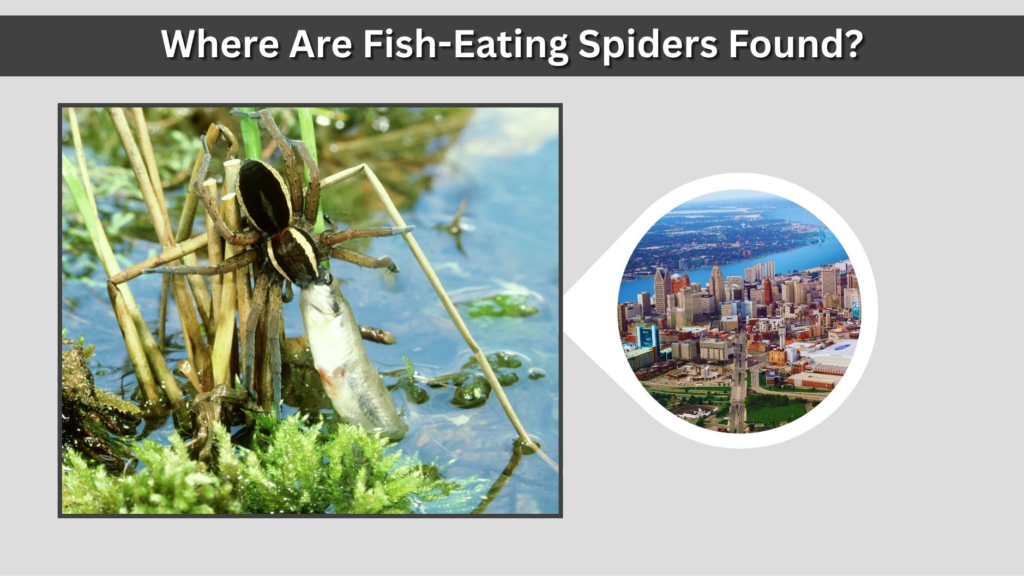
Fish-eating spiders can be found in many parts of the world wherever freshwater habitats exist. They are especially common in areas with ponds, marshes, lakes, and slow-moving streams.
Their distribution depends largely on climate, water availability, and prey abundance.
Fish-Eating Spiders in North America
North America is home to several fishing spider species. Many sightings come from regions with large freshwater systems and humid environments.
Common locations include:
- Wisconsin
- Michigan
- Indiana
- Ohio
- Florida
- Minnesota
In these areas, dock spiders are frequently seen near boathouses, piers, and lakeshores during warmer months.
Fish-Eating Spiders in Europe
Europe’s best-known fish-eating spider is the fen raft spider. It survives mainly in protected wetlands and marshes.
In the United Kingdom, conservation programs focus on preserving the spider’s natural habitat because wetland destruction has reduced its numbers in the wild.
European fishing spiders usually prefer calm freshwater environments with dense vegetation and abundant insect life.
Fish-Eating Spiders in Australia and Asia
Warm climates in Australia and Asia support several large fishing spider species. Sightings have been reported from tropical forests, rice fields, wetlands, and riverbanks.
Countries with reported fishing spider activity include:
- Australia
- South Korea
- Thailand
- Indonesia
Because tropical environments contain rich aquatic ecosystems, spiders in these regions often encounter a wide variety of prey.
Fish-Eating Spider Size and Appearance
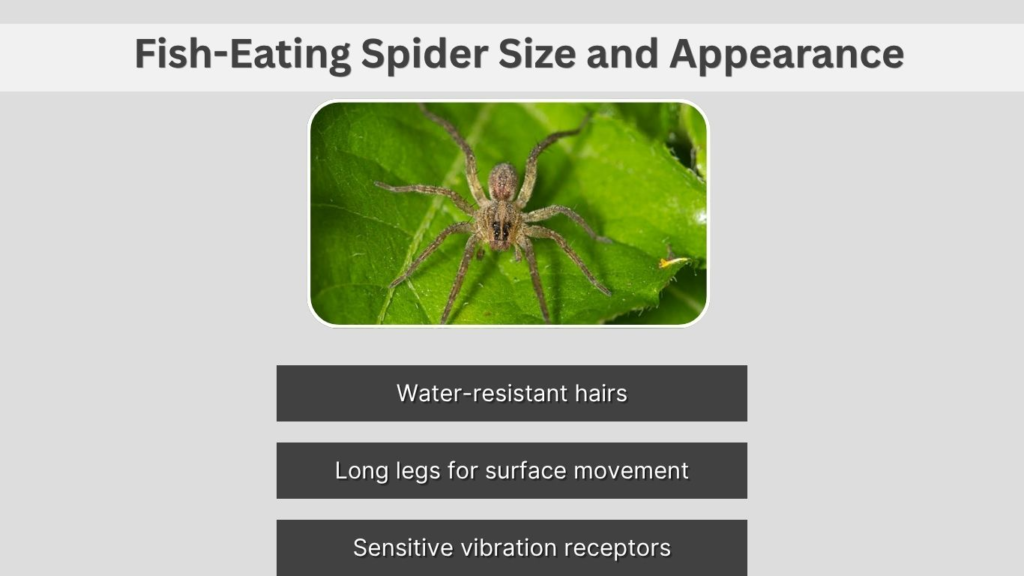
Fishing spiders are much larger than typical household spiders, which is one reason they often frighten people. Some species can appear enormous because of their long leg spans.
Female fishing spiders are usually larger than males and are more commonly observed catching large prey.
How Big Can Fishing Spiders Get?
Depending on the species, fishing spiders can reach leg spans of several inches. Large females may appear almost hand-sized when fully extended.
Their bodies are typically brown, gray, or black with striped patterns that help them blend into rocks, bark, and shoreline vegetation.
Although their size may seem intimidating, these spiders rarely pose any threat to humans.
Physical Features That Help Them Hunt
Fishing spiders possess several adaptations that make aquatic hunting possible:
- Water-resistant hairs
- Long legs for surface movement
- Sensitive vibration receptors
- Strong eyesight
- Fast reflexes
These features allow them to detect and capture prey with impressive accuracy.
FAQs
Can a spider really eat a fish?
Yes, some fishing spiders can catch and eat small fish. These spiders detect vibrations on the water’s surface and strike quickly before injecting venom into the prey. After capturing the fish, they usually drag it onto land or a nearby surface before feeding.
What spider species are known for eating fish?
Fishing spiders from the Dolomedes genus are the most famous fish-eating spiders. Common examples include the dark fishing spider, six-spotted fishing spider, and fen raft spider. These species are specially adapted for hunting near freshwater habitats.
Are fish-eating spiders dangerous to humans?
Fish-eating spiders are generally not dangerous to humans. They are shy and prefer escaping instead of attacking. Although they can bite when threatened, most bites only cause mild irritation, redness, or swelling similar to a bee sting.
Where do fishing spiders usually live?
Fishing spiders live near freshwater environments such as ponds, lakes, marshes, streams, and wetlands. They are commonly found in North America, Europe, Australia, and parts of Asia where aquatic prey and humid habitats are available.
What else do fishing spiders eat besides fish?
Fishing spiders eat a wide variety of prey besides fish. Their diet often includes tadpoles, frogs, aquatic insects, mosquitoes, beetles, flies, and other small animals. They are opportunistic hunters that feed on whatever prey is easiest to catch.
