
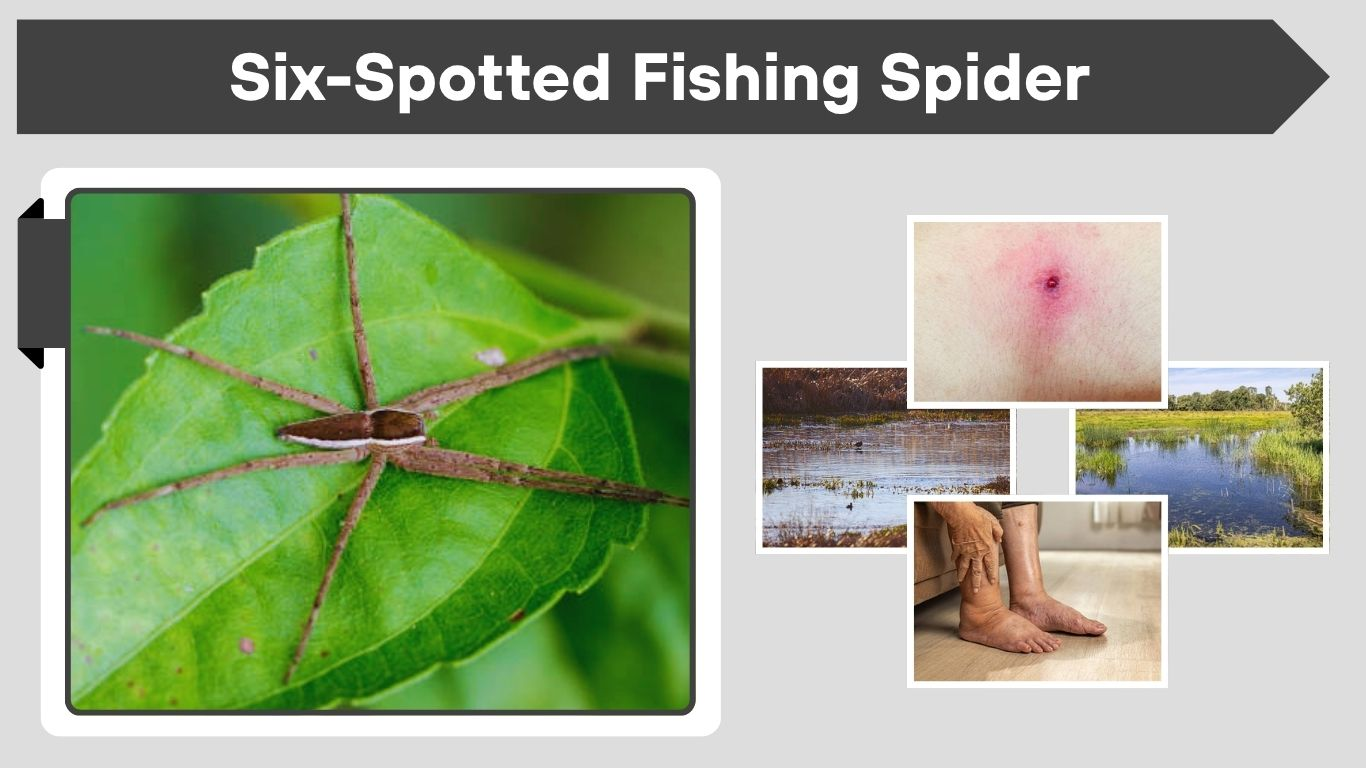
The six-spotted fishing spider is one of the most fascinating semi-aquatic spiders found in North America. Known for its large size and unique hunting abilities, this spider often surprises people because it can move across water and even catch aquatic prey.
Scientifically known as Dolomedes triton, the six-spotted fishing spider lives near ponds, marshes, lakes, and slow-moving streams. Although its appearance may seem intimidating, this spider is usually harmless to humans and plays an important role in freshwater ecosystems.
What Is a Six-Spotted Fishing Spider?
The six-spotted fishing spider belongs to the nursery web spider family and is famous for its ability to hunt near water. Unlike web-building spiders that trap insects, this species actively stalks prey along shorelines and aquatic vegetation.
It is considered a semi-aquatic spider because it spends much of its life around freshwater habitats. The spider uses sensitive hairs on its legs to detect vibrations from insects, tadpoles, or small fish moving across the water surface.
Identification Features
The six-spotted fishing spider has several unique characteristics that make it easier to identify:
- Scientific name: Dolomedes triton
- Long slender legs with dark bands
- Brown, gray, or tan body coloration
- Six small dark spots underneath the body
- Water-resistant hairs on the legs
- Excellent swimmer and climber
Its body pattern helps it blend into shoreline vegetation, rocks, and tree bark near wetlands.
Why Is It Called a Fishing Spider?
This spider earns its name because of its unusual hunting behavior. Fishing spiders can stand on the water’s surface while waiting for prey to approach. When vibrations are detected, the spider reacts quickly and captures the prey using its front legs.
Unlike most spiders, the six-spotted fishing spider does not depend heavily on webs for feeding. Instead, it acts as an ambush predator that hunts insects, tadpoles, and other small aquatic animals.
In some cases, these spiders have even been observed catching tiny fish near shallow water.
Six-Spotted Fishing Spider Size
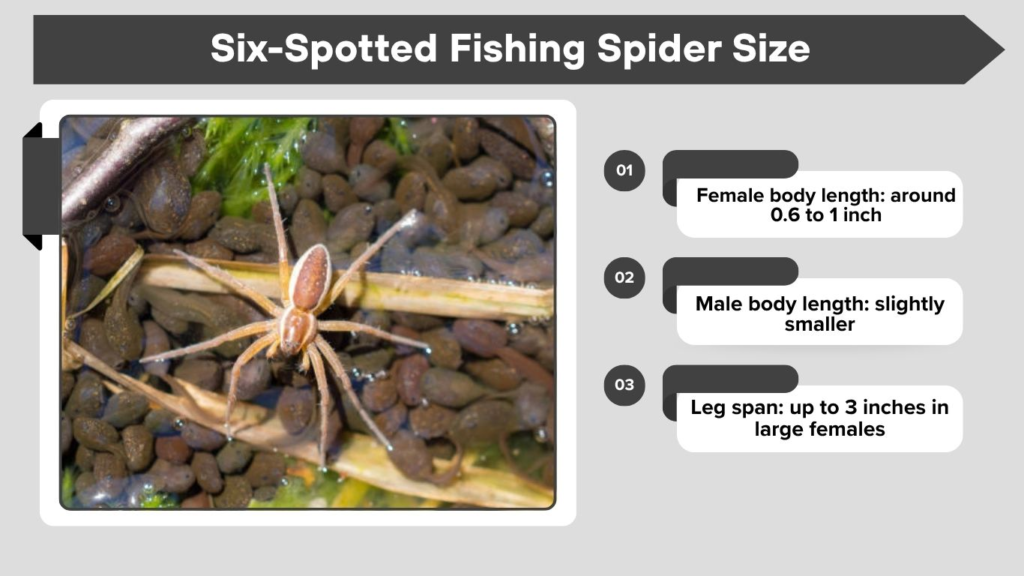
Size is one of the main reasons people search for information about the six-spotted fishing spider. Its long legs and large appearance often make it look more dangerous than it actually is.
Female six-spotted fishing spiders are significantly larger than males and are usually the spiders most commonly noticed by people near water.
How Big Does the Six-Spotted Fishing Spider Get?
The size of this spider can vary depending on age and sex, but mature females can become fairly large.
Typical measurements include:
- Female body length: around 0.6 to 1 inch
- Male body length: slightly smaller
- Leg span: up to 3 inches in large females
- Females are bulkier and heavier than males
Although their appearance may seem frightening, they are not aggressive toward humans.
Female vs Male Six-Spotted Fishing Spider
There are several noticeable differences between male and female six-spotted fishing spiders.
| Feature | Female | Male |
| Size | Larger | Smaller |
| Body Shape | Heavier | Slimmer |
| Color | Darker | Lighter |
| Lifespan | Longer | Shorter |
Females are usually more active hunters because they require more energy for reproduction and egg development.
Juvenile Six-Spotted Fishing Spider
Young six-spotted fishing spiders look similar to adults but are much smaller and lighter in color. Juveniles gradually develop darker markings and stronger body patterns as they mature.
Like adults, juvenile spiders remain near water where food sources are plentiful. Their growth occurs through molting, a process where the spider sheds its outer skeleton several times before reaching adulthood.
Six-Spotted Fishing Spider Habitat
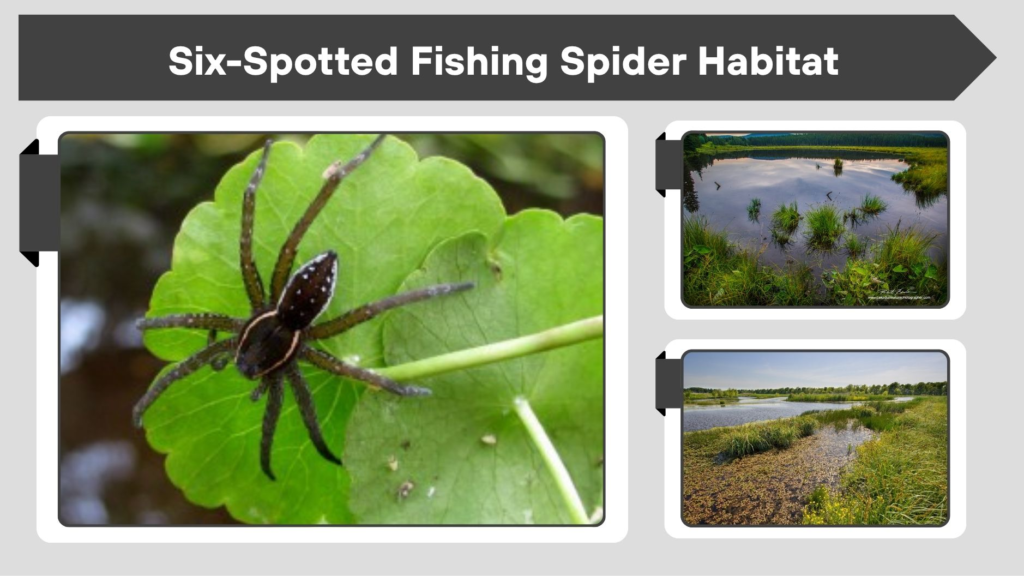
The six-spotted fishing spider thrives in freshwater environments with calm water and dense vegetation. These habitats provide both food and protection from predators.
The spider is commonly found resting on floating plants, tree branches, rocks, or wooden docks close to water.
Where Does the Six-Spotted Fishing Spider Live?
This species prefers moist habitats with easy access to aquatic prey.
Common habitats include:
- Ponds
- Lakes
- Marshes
- Wetlands
- Slow-moving streams
- Swamps
The spider usually stays close to shorelines where insects and tadpoles are abundant.
Geographic Distribution
The six-spotted fishing spider is widely distributed throughout parts of North America. It is especially common in humid regions with freshwater ecosystems.
Sightings are frequently reported in:
- Michigan
- Georgia
- Ohio
- Maine
- North Carolina
- New Mexico
In warmer climates, these spiders may remain active for longer periods throughout the year.
Why They Stay Near Water
Freshwater habitats offer many advantages for fishing spiders. Water attracts insects, amphibians, and other prey species that the spider can hunt efficiently.
Living near water also helps the spider escape predators quickly. If threatened, it may run across the surface or briefly dive underwater to hide among vegetation.
This close relationship with aquatic habitats is what makes the six-spotted fishing spider different from most other spider species.
What Does a Six-Spotted Fishing Spider Eat?
The six-spotted fishing spider is an opportunistic predator that feeds on a wide variety of small animals. While many people associate this spider with catching fish, its diet is much broader and mainly depends on what prey is available near the water.
Because it hunts actively instead of relying on webs, the spider can capture both aquatic and land-based prey with impressive speed.
Six-Spotted Fishing Spider Diet
The diet of the six-spotted fishing spider commonly includes:
- Small fish
- Tadpoles
- Mosquito larvae
- Water insects
- Small frogs
- Flies
- Beetles
- Other small spiders
Tadpoles and aquatic insects are often easier to catch than fish, making them a more common food source in many habitats.
Fishing and Diving Behavior
One of the most fascinating abilities of the six-spotted fishing spider is its hunting technique. The spider often waits quietly along the water’s edge with its front legs touching the surface.
When vibrations are detected, it quickly attacks the prey before it can escape.
Some important hunting behaviors include:
- Detecting movement through water vibrations
- Running across the water surface
- Ambushing prey near shorelines
- Partially diving underwater when threatened
Researchers have observed these spiders trapping small air bubbles around their bodies while underwater, allowing them to remain submerged briefly.
Does the Six-Spotted Fishing Spider Build Webs?
Unlike orb-weaving spiders, the six-spotted fishing spider does not build large webs for catching prey. Instead, it actively hunts and captures prey using speed and stealth.
However, females do produce silk for:
- Creating egg sacs
- Building nursery shelters
- Protecting spiderlings
This hunting style makes fishing spiders more similar to wolf spiders than traditional web-building species.
Six-Spotted Fishing Spider Bite
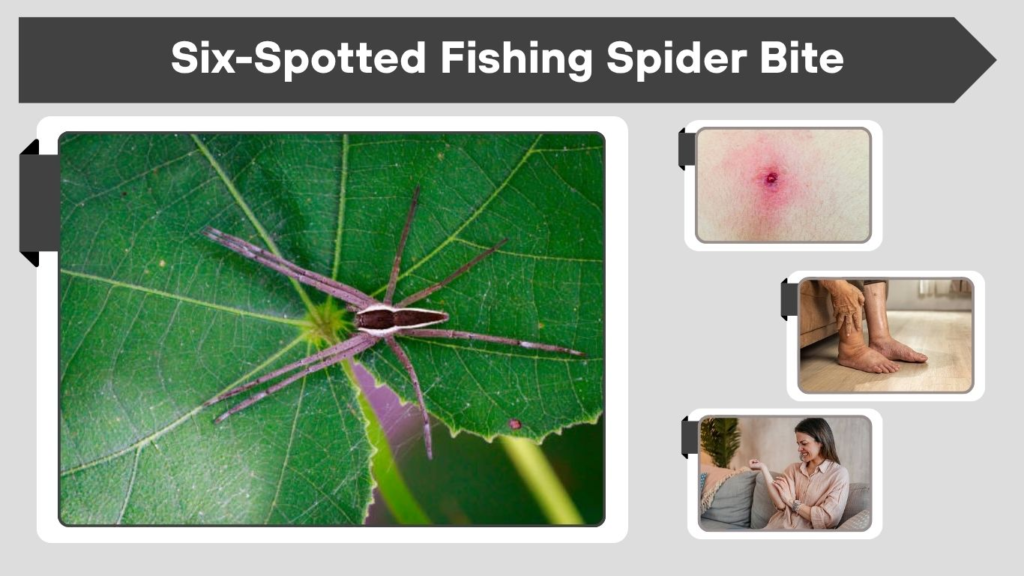
Because of its large size, many people wonder whether the six-spotted fishing spider is dangerous. Although it can bite if threatened, this spider is generally shy and avoids human contact whenever possible.
Most encounters occur when people accidentally disturb the spider near water.
Does the Six-Spotted Fishing Spider Bite?
Yes, the six-spotted fishing spider can bite if it feels trapped or threatened. However, bites are uncommon because the spider usually tries to escape instead of defend itself aggressively.
Fishing spiders are not naturally aggressive toward humans and rarely enter homes compared to many other spider species.
Is the Six-Spotted Fishing Spider Poisonous or Venomous?
The six-spotted fishing spider is venomous, meaning it uses venom to immobilize prey. Its venom helps paralyze insects, tadpoles, and small aquatic animals during hunting.
For humans, the venom is not considered medically dangerous. Most bites cause only mild symptoms that disappear within a short time.
Bite Symptoms
A six-spotted fishing spider bite may cause:
- Mild redness
- Swelling
- Temporary pain
- Itching
- Minor skin irritation
Symptoms are often compared to a bee sting and rarely require medical attention unless an allergic reaction occurs.
Is the Six-Spotted Fishing Spider Dangerous?
Despite its intimidating appearance, the six-spotted fishing spider is not considered dangerous to humans. It plays an important role in controlling insect populations near freshwater habitats.
These spiders help reduce mosquito numbers and maintain balance within wetland ecosystems. Their presence is usually a sign of a healthy aquatic environment.
Six-Spotted Fishing Spider Lifespan and Life Cycle
Like most spiders, the six-spotted fishing spider goes through several growth stages before reaching adulthood. Its lifespan depends on environmental conditions, food availability, and sex.
Females generally live longer than males.
Lifespan of the Six-Spotted Fishing Spider
The average lifespan of this spider is usually around one to two years.
Some important lifespan facts include:
- Females often survive longer than males
- Mature spiders are most active during warm seasons
- Males may die shortly after mating
- Cold weather reduces activity levels
During winter, fishing spiders may hide under rocks, bark, or vegetation for protection.
Egg Sac and Reproduction
Female six-spotted fishing spiders show strong maternal behavior compared to many other spider species.
The female creates a silk egg sac and carries it using her jaws until the eggs are ready to hatch. Before the spiderlings emerge, she builds a protective nursery web among plants near water.
After hatching, young spiderlings remain inside the nursery for a short period before dispersing into nearby habitats.
Predators of the Six-Spotted Fishing Spider
Even though the six-spotted fishing spider is a skilled hunter, it also faces threats from larger predators in wetland ecosystems.
Common predators include:
- Birds
- Frogs
- Fish
- Small reptiles
- Larger spiders
To survive, the spider relies on camouflage, quick movement, and its ability to escape across water surfaces.
Interesting Facts About the Six-Spotted Fishing Spider
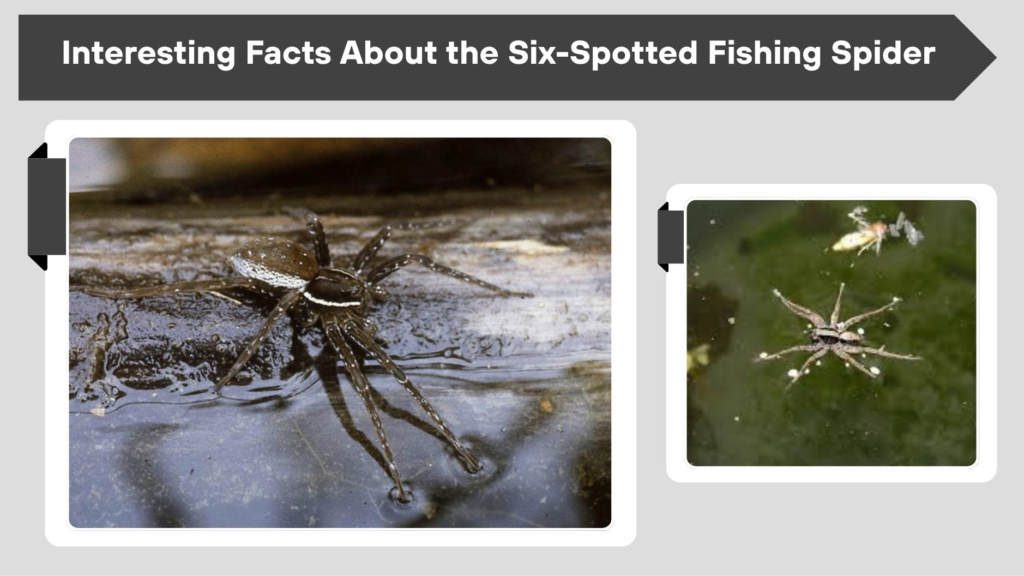
The six-spotted fishing spider has several unique abilities that make it one of the most interesting spiders in North America.
Amazing Facts
- Can walk on water using surface tension
- Hunts without using prey-catching webs
- May catch prey larger than itself
- Can briefly dive underwater
- Uses vibrations to locate prey
- One of the largest fishing spiders in North America
Its unusual behavior and semi-aquatic lifestyle continue to fascinate scientists, photographers, and wildlife enthusiasts around the world.
FAQs
Is the six-spotted fishing spider dangerous to humans?
The six-spotted fishing spider is generally not dangerous to humans. Although it can bite if threatened, bites are rare and usually cause only mild symptoms such as redness, swelling, or slight pain. This spider is shy and prefers escaping instead of attacking people.
What does a six-spotted fishing spider eat?
The six-spotted fishing spider eats a variety of aquatic and land-based prey. Its diet commonly includes tadpoles, small fish, aquatic insects, mosquitoes, flies, beetles, and tiny frogs. It actively hunts prey instead of using large webs to trap food.
Where does the six-spotted fishing spider live?
This spider lives near freshwater habitats such as ponds, marshes, lakes, wetlands, and slow-moving streams. It is commonly found in parts of North America, including Michigan, Georgia, Ohio, Maine, and North Carolina where humid environments support aquatic prey.
How big is the six-spotted fishing spider?
Adult female six-spotted fishing spiders are larger than males and can reach a leg span of up to 3 inches. Their bodies are usually brown or gray with striped legs and distinctive markings that help them blend into shoreline vegetation.
Can the six-spotted fishing spider swim underwater?
Yes, the six-spotted fishing spider can briefly move underwater when hunting or escaping predators. It traps tiny air bubbles around its body using water-resistant hairs, allowing it to remain submerged for short periods before returning to the surface.
