
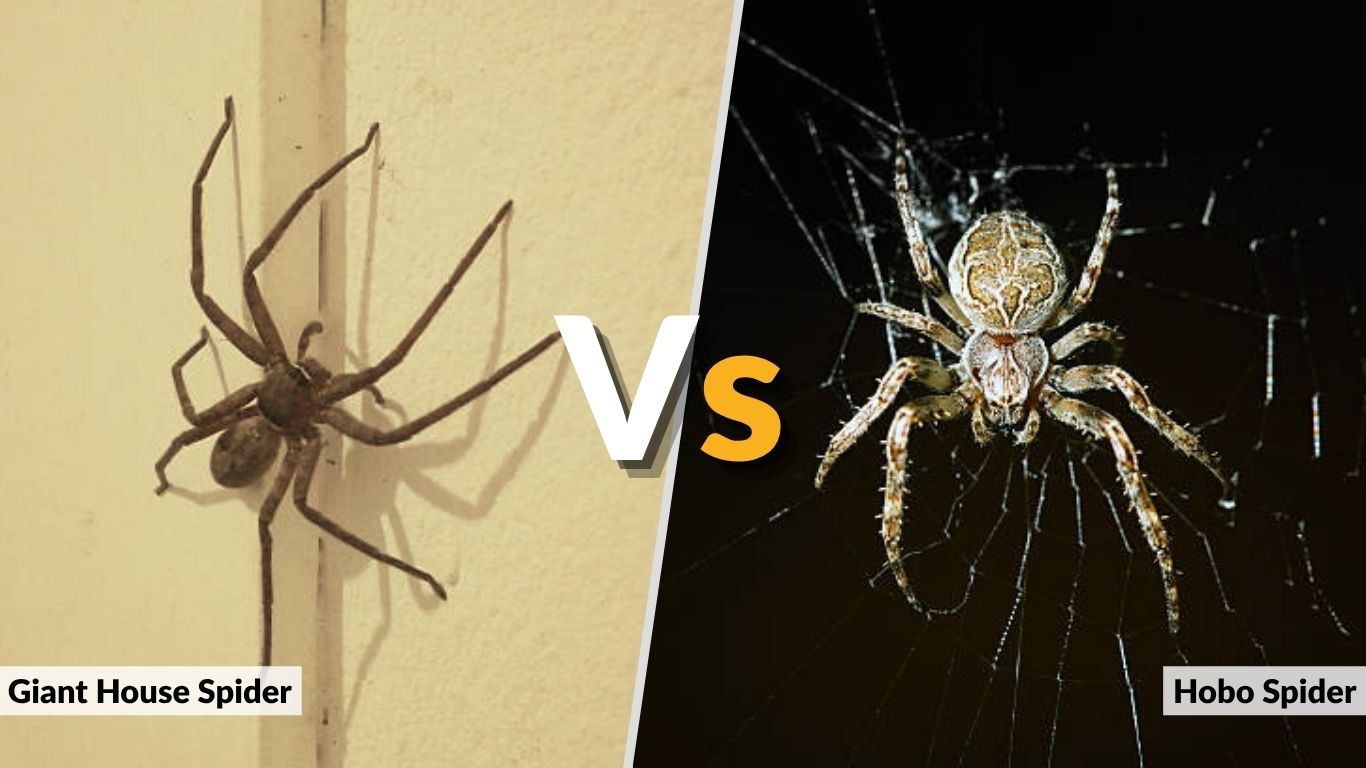
Many people confuse the giant house spider and the hobo spider because they look similar and often live in the same areas. Their brown color, fast movement, and indoor sightings can make identification difficult. This confusion often leads to unnecessary fear, especially when people worry about spider bites. Understanding the differences between these two species is important for accurate identification and peace of mind. In this guide, you’ll learn how to tell them apart based on size, appearance, habitat, and behavior.
What Is a Giant House Spider?
The giant house spider is a large, fast-moving spider commonly found indoors, especially in the Pacific Northwest and Europe. Known for its long legs and funnel-shaped web, it often appears intimidating but is generally harmless and beneficial for controlling household pests.
Key Characteristics
The giant house spider is best known for its long, thin legs, which give it an impressive leg span. In many cases, it can reach up to 3–4 inches across, making it one of the largest spiders found in homes.
Its body is usually brown or dark brown, allowing it to blend easily into indoor environments like corners, basements, and garages. Unlike some spiders, it does not have bold or bright markings, which can make it harder to notice until it moves.
Another defining trait is its speed. Giant house spiders are extremely fast runners, often darting across floors or walls when disturbed. This sudden movement is one of the main reasons people find them alarming.
Typical Habitat
Giant house spiders prefer quiet, dark spaces where they can build their webs undisturbed. Indoors, they are commonly found in basements, garages, closets, and corners of rooms.
They build funnel-shaped webs, usually in hidden areas. These webs are used to trap insects, which make up their primary diet. The spider typically waits inside the funnel and rushes out when prey gets caught.
Although they are often seen indoors, they are not aggressive and usually try to avoid human interaction. Their presence in homes is actually beneficial, as they help control insect populations.
What Is a Hobo Spider?

The hobo spider is another funnel-weaving spider that is often found in the same regions as the giant house spider. It became widely known due to earlier concerns about its bite, although recent research suggests it is not as dangerous as once believed.
Key Characteristics
Hobo spiders are generally smaller than giant house spiders. While they also have a brown coloration, their bodies may show subtle patterns, such as faint chevron markings on the abdomen.
Their legs are shorter and less elongated compared to those of the giant house spider. This difference in leg length is one of the easiest ways to tell them apart.
Hobo spiders are also fast, but their movement is usually less dramatic than that of the giant house spider. They tend to stay closer to their webs rather than roaming widely.
Where They Are Found
Hobo spiders are commonly found in the Pacific Northwest, especially in states like Oregon and Washington. They are often located near ground level, such as in cracks, foundations, and lower parts of buildings.
Unlike giant house spiders, which are frequently seen higher up on walls or ceilings, hobo spiders prefer areas closer to the ground. They may also be found outdoors in similar environments.
Their webs are also funnel-shaped, which adds to the confusion between the two species. However, their placement—usually near ground level—is an important clue for identification.
Giant House Spider vs Hobo Spider (Direct Comparison)

Although these spiders share similarities, several key differences can help distinguish them. Understanding these differences is essential for accurate identification and reducing unnecessary concern.
Side-by-Side Comparison
| Feature | Giant House Spider | Hobo Spider |
| Size | Larger (3–4 inch leg span) | Smaller |
| Legs | Long and thin | Shorter |
| Speed | Extremely fast | Fast but less noticeable |
| Appearance | Plain brown, minimal markings | Subtle patterns on abdomen |
| Bite Risk | Harmless | Low risk |
The most noticeable difference is size. Giant house spiders are significantly larger, especially when considering their leg span. Their long legs create a stretched appearance that makes them easy to distinguish once you know what to look for.
Leg length is another key factor. The giant house spider’s legs are longer and thinner, while the hobo spider’s legs appear shorter and more compact.
In terms of appearance, the giant house spider usually has a more uniform brown color. The hobo spider, on the other hand, may show faint markings, although these can be difficult to see without close inspection.
Biggest Visual Differences
The easiest way to tell these spiders apart is by focusing on their overall shape. Giant house spiders look larger and more spread out due to their long legs. Hobo spiders appear smaller and more compact.
Movement can also help with identification. Giant house spiders tend to move quickly across open spaces, while hobo spiders are more likely to stay near their web.
By paying attention to these details, you can confidently distinguish between the two species.
Identification Tips
Correct identification is essential because these spiders are often confused. Focusing on specific visual and behavioral traits can quickly help tell them apart, even without close inspection.
- Check leg length: giant house spiders have noticeably longer legs
- Compare body size to leg span (giant house spiders look more stretched)
- Look for markings: hobo spiders may show faint patterns
- Observe movement style and speed
- Check where the web is located
One of the most reliable ways to identify these spiders is by looking at the legs. Giant house spiders have long, thin legs that extend far beyond their body, giving them a wide appearance. Hobo spiders, in contrast, appear more compact.
Another useful method is observing behavior. Giant house spiders are more likely to move quickly across open surfaces, while hobo spiders tend to stay closer to their web and remain less visible.
Web placement also provides a strong clue. If the web is located higher up in corners or along walls, it is more likely a giant house spider. If it is near the ground, such as along a foundation or crack, it is more likely a hobo spider.
Bite and Safety Comparison

Fear of spider bites is one of the main reasons people search for this comparison. Understanding the actual risks helps reduce anxiety and prevents misinformation.
- Giant house spider bites are extremely rare and harmless
- Hobo spider bites are not considered dangerous
- Both spiders avoid human contact
- Bites occur only when threatened or trapped
- Neither spider poses serious medical risk
Both spiders are non-aggressive and prefer to escape rather than bite. Most encounters do not result in any physical contact at all. When bites do happen, they are typically defensive responses.
The giant house spider has mild venom that is not harmful to humans. A bite may cause slight redness or irritation but usually resolves quickly without treatment.
The hobo spider was once believed to be dangerous, but more recent research has shown that it is not a serious threat. There is no strong evidence linking it to severe medical symptoms.
Overall, both spiders are far less dangerous than many people assume. Their reputation is often based on myths rather than scientific evidence.
Habitat Differences

Although both spiders can live in similar regions, their preferred habitats show subtle differences. Understanding these patterns can help you identify which spider you are seeing.
- Giant house spiders prefer indoor spaces and higher areas
- Hobo spiders are commonly found near ground level
- Both species are common in Oregon and Washington
- Giant house spiders are often in corners and walls
- Hobo spiders stay near cracks, foundations, and floors
Giant house spiders are more likely to be seen indoors, especially in quiet areas like basements, garages, and upper corners of rooms. They tend to build webs where they can remain hidden while still catching insects.
Hobo spiders, on the other hand, are usually found closer to the ground. They often build webs along foundations, in cracks, or in outdoor areas near buildings.
These differences become especially important in regions like the Pacific Northwest, where both species are common. Paying attention to location can make identification much easier.
Why People Confuse These Spiders
Confusion between these two species is very common due to overlapping environments and similar appearances. Understanding why this happens can help you avoid making the same mistake.
- Similar brown coloration
- Both found in the same geographic regions
- Both build funnel-shaped webs
- Size perception can be misleading
- Lack of awareness about distinguishing features
One of the main reasons for confusion is their color. Both spiders are brown and lack bright markings, which makes them appear nearly identical at a glance.
Their shared habitats also contribute to the problem. Since both are commonly found in the Pacific Northwest, people often assume they are the same species.
Another factor is perception. The giant house spider’s long legs can make it appear larger than it actually is, while the hobo spider may seem similar in size when seen briefly.
Learning the key differences—especially leg length, body shape, and habitat—can greatly reduce misidentification.
Oregon and Pacific Northwest Comparison
In regions like Oregon and Washington, both spiders are frequently encountered. Knowing how they differ locally can help improve identification accuracy.
Giant House Spider in Oregon
Giant house spiders are commonly found indoors in Oregon. They are often seen in basements, garages, and corners of homes. Their larger size and fast movement make them more noticeable.
During certain times of the year, especially in late summer and fall, they may appear more frequently as they move around in search of mates.
Hobo Spider in Oregon
Hobo spiders are also present in Oregon but are more commonly found near ground level. They prefer areas such as foundations, cracks, and outdoor structures.
They are less likely to be seen moving across open indoor spaces, which can help distinguish them from giant house spiders.
Understanding these regional patterns can make it easier to identify which spider you are dealing with in the Pacific Northwest.
FAQs
How can I tell a giant house spider from a hobo spider?
The easiest way is to look at leg length and overall size. Giant house spiders have longer legs and a larger appearance, while hobo spiders are smaller with shorter legs and subtle body markings.
Is the hobo spider more dangerous than the giant house spider?
No, both spiders are considered low risk to humans. Modern research shows that hobo spiders are not dangerous, and giant house spiders are harmless.
Which spider is bigger: giant house spider or hobo spider?
The giant house spider is larger, especially when considering leg span. This makes it appear more intimidating, even though it is not dangerous.
Do both spiders live indoors?
Yes, but giant house spiders are more commonly found indoors, while hobo spiders are usually seen near ground-level areas such as foundations and cracks.
Why are these spiders common in Oregon and Washington?
The cool, damp climate in these regions creates ideal conditions for both species. This increases their population and the chances of encountering them in homes.
