
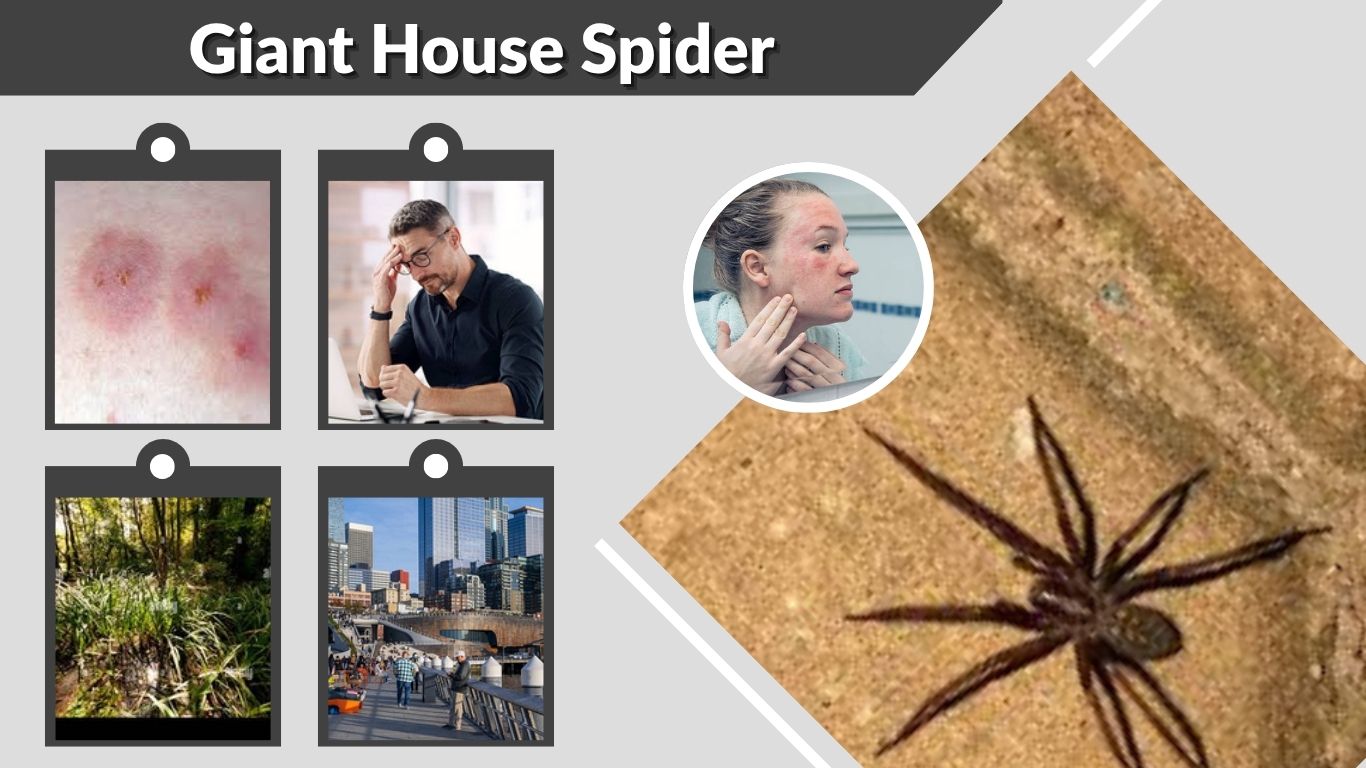
The giant house spider is one of the most commonly feared indoor spiders due to its large size and fast movement. Many people encounter it unexpectedly in basements or corners of their homes. Despite its intimidating appearance, this spider is mostly harmless and even beneficial. In this guide, you’ll learn how to identify it, understand its size, and separate facts from common myths.
What Is a Giant House Spider?
The giant house spider is a large, fast-moving indoor spider commonly found in North America and Europe. Known for its long legs and funnel-shaped webs, it often appears intimidating but is generally harmless and plays a helpful role in controlling household insects.
Scientific Name and Classification
The giant house spider belongs to the Eratigena atrica species group. It is often referred to as the European giant house spider due to its origins in Europe. Over time, it has spread to other regions, particularly in North America.
This spider is part of a complex group of closely related species, which can make identification confusing. Many people mistake it for other house spiders because of its similar shape and size. However, its long legs and fast speed set it apart from most indoor spiders.
Where They Are Commonly Found
Giant house spiders are most commonly found in the Pacific Northwest of the United States, including Oregon and Washington. They are also widespread across the United Kingdom and other parts of Europe.
Indoors, they prefer quiet, dark environments such as basements, garages, crawl spaces, and corners of rooms. These areas provide both shelter and access to insects, which serve as their primary food source.
Giant House Spider Size and Appearance
One of the most searched aspects is the size of the giant house spider. Its long legs and rapid movement make it appear larger than it actually is, but understanding its true size and features helps reduce fear and improves identification accuracy.
How Big Is a Giant House Spider?
Giant house spiders can have a leg span of up to 3 to 4 inches, making them one of the largest house spiders people encounter. However, their body size is much smaller compared to their leg span, which often creates the illusion of a much bigger spider.
Females are typically larger than males, especially in body size. Males, on the other hand, tend to have longer legs relative to their body and are more likely to be seen wandering indoors during mating season.
Despite their size, these spiders are lightweight and agile. Their long legs allow them to move quickly across surfaces, which is why they often startle people when suddenly spotted.
Physical Appearance and Color
The giant house spider usually has a brown to dark brown coloration, which helps it blend into indoor environments. Its body may appear slightly hairy, and its legs are long, thin, and flexible.
The spider’s body is divided into two main parts: the cephalothorax and the abdomen. The abdomen may show subtle patterns or shading, although these are not always easy to see without close observation.
Overall, its appearance is designed for both speed and camouflage. The combination of long legs and muted colors allows it to move quickly while remaining relatively unnoticed in dimly lit areas.
Giant House Spider Bite, Venom, and Safety

Concerns about bites and venom are common when encountering large spiders. The giant house spider is not considered dangerous, and bites are extremely rare. Understanding its behavior helps reduce unnecessary fear and misinformation.
Bite and Safety Overview
| Factor | Details |
| Bite likelihood | Very rare |
| Venom strength | Mild |
| Symptoms | Slight redness or irritation |
| Medical risk | Minimal |
Although the giant house spider is capable of biting, it rarely does so. Most bites occur only when the spider feels threatened or is accidentally pressed against the skin.
Are Giant House Spiders Poisonous?
Giant house spiders are technically venomous, as they use venom to capture and immobilize their prey. However, their venom is not harmful to humans.
There are no widely documented cases of serious reactions from their bites. At most, a bite may cause mild redness, slight swelling, or temporary discomfort, similar to a minor insect bite.
This makes them far less dangerous than other spiders that people often worry about, such as the brown recluse.
When and Why They Bite
These spiders are not aggressive and do not actively seek out humans. Bites usually happen only in defensive situations, such as when the spider is trapped or handled.
In most cases, the spider will attempt to escape rather than bite. Their fast speed is actually a defense mechanism that helps them avoid danger instead of confronting it.
Because of this behavior, human interactions with giant house spiders rarely result in bites.
Giant House Spider vs Other Common Spiders

Many people confuse the giant house spider with other species. Comparing it with similar spiders helps identify key differences in size, behavior, and potential risk.
Spider Comparison Guide
| Spider | Key Traits | Difference |
| Hobo Spider | Smaller, different markings | Less leg span |
| Wolf Spider | Stocky body, hunter | Does not build webs |
| Brown Recluse | Smaller, violin marking | More dangerous |
The giant house spider is often mistaken for the hobo spider because they share similar habitats. However, the giant house spider is typically larger and has longer legs.
Wolf spiders are another common source of confusion. Unlike giant house spiders, wolf spiders do not rely on webs and instead actively hunt their prey. They also have a more compact, muscular appearance.
The brown recluse is sometimes incorrectly identified due to fear. However, it is smaller and has a distinctive violin-shaped marking, making it quite different upon closer inspection.
Behavior, Speed, and Web Structure

The giant house spider is known for its fast movement and unique web-building habits. These behaviors often surprise people and contribute to its intimidating reputation indoors.
- Extremely fast runners, capable of sudden bursts of speed
- Builds funnel-shaped webs in corners and hidden spaces
- Active mostly at night when hunting for insects
- Males wander during mating season, increasing sightings indoors
- Prefers dark, quiet areas away from human activity
One of the most noticeable traits of the giant house spider is its speed. It can move quickly across floors and walls, which often startles people who encounter it unexpectedly. However, this speed is used for hunting and escaping threats rather than attacking.
Their webs are different from the typical circular spider webs. Instead, they create funnel-shaped webs that act as traps. The spider waits inside the narrow end of the funnel and rushes out when prey touches the web.
During mating season, usually in late summer and fall, male giant house spiders leave their webs and wander in search of females. This is the time when people are most likely to see them indoors.
Habitat and Distribution

Understanding where giant house spiders live helps explain why they are often found inside homes. Their distribution is closely tied to climate, environment, and human structures.
- Common in the Pacific Northwest (especially Oregon and Washington)
- Widely found across the United Kingdom and Europe
- Prefer cool, damp environments
- Frequently seen in basements, garages, and crawl spaces
- Enter homes more often during fall
Giant house spiders thrive in areas with moderate temperatures and moisture. This is why they are especially common in regions like the Pacific Northwest and the UK, where the climate suits their needs.
Inside homes, they are drawn to quiet and undisturbed areas. Basements and garages provide the perfect conditions, offering both shelter and access to insects.
Their presence indoors is often seasonal. As temperatures drop or during mating periods, they are more likely to appear in living spaces, leading to increased encounters with humans.
Common Identification Mistakes
Misidentifying spiders is very common, especially when dealing with large species like the giant house spider. Understanding these mistakes can help reduce fear and improve accurate identification.
- Confusing them with hobo spiders due to similar habitats
- Mistaking them for wolf spiders because of their size
- Assuming all large spiders are dangerous
- Ignoring web structure as a key identification clue
- Overestimating size because of long legs
One of the biggest mistakes is confusing the giant house spider with the hobo spider. While they may share similar environments, their size and leg length differ noticeably.
Another common confusion is with wolf spiders. However, wolf spiders do not build webs and have a more compact body shape, which sets them apart.
Many people also assume that a large spider must be dangerous. In reality, size does not determine risk, and the giant house spider is a good example of a large but harmless species.
Visual Identification Tips
Visual recognition is essential when trying to identify a giant house spider. Paying attention to specific physical and environmental clues can help confirm its identity quickly.
- Look for very long, thin legs compared to body size
- Identify brown or dark brown coloration
- Check for funnel-shaped webs in corners
- Compare body size to leg span (legs much longer)
- Observe fast, darting movement
When identifying a giant house spider, the leg span is one of the most noticeable features. The legs are significantly longer than the body, giving it a stretched appearance.
The color is usually consistent, ranging from light brown to dark brown. Unlike some other spiders, it does not have bright or bold markings, which helps it blend into indoor surroundings.
Movement is another key indicator. These spiders move quickly and smoothly, often disappearing before you can get a closer look. This behavior helps distinguish them from slower-moving species.
FAQs
How big is a giant house spider?
Giant house spiders can have a leg span of up to 3–4 inches, which makes them appear quite large indoors. However, their actual body size is much smaller, and it is their long legs that create the impression of a larger spider.
Is the giant house spider poisonous?
Giant house spiders are venomous, but their venom is mild and not dangerous to humans. It is used to subdue prey like insects. Bites are rare and typically result in only minor irritation, if any symptoms occur at all.
What is the difference between a giant house spider and a wolf spider?
The main difference is behavior and body structure. Giant house spiders build funnel webs and have long, thin legs, while wolf spiders are hunters with stockier bodies and do not rely on webs to catch prey.
Why do giant house spiders come inside homes?
They enter homes seeking shelter, food, and mates. Indoor spaces provide protection and a steady supply of insects. Sightings increase during colder months and mating season when males wander in search of females.
Are giant house spiders dangerous?
No, giant house spiders are not dangerous to humans. Despite their large size and fast movement, they are harmless and even beneficial, as they help control insect populations inside homes.
