
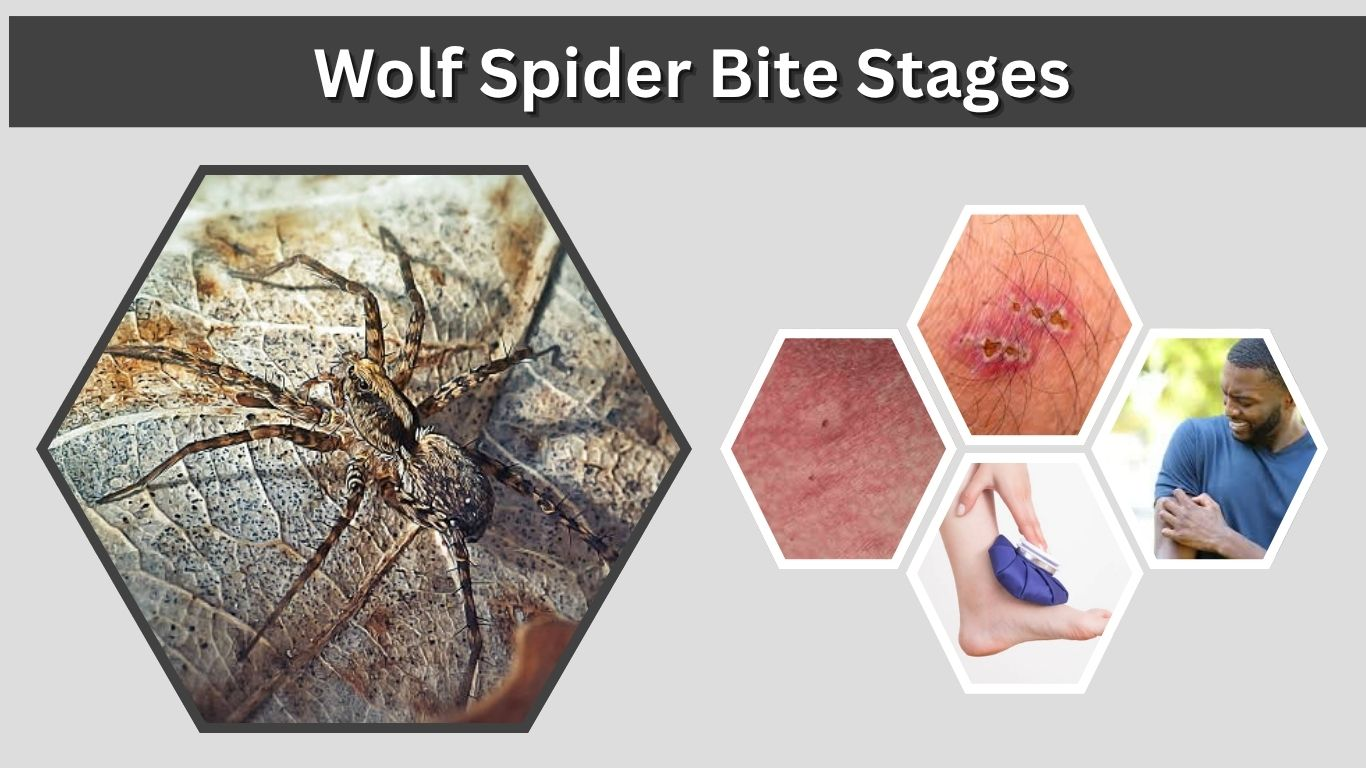
Wolf spider bites can look alarming at first, but they are usually mild and heal on their own within a week. Understanding how symptoms change from day 1 to day 7 helps you stay calm and manage the bite properly. In most cases, the body reacts with redness, swelling, and itching that gradually improve over time. This guide breaks down each stage clearly so you know what to expect and when healing begins.
What Is a Wolf Spider Bite?

A wolf spider bite occurs when the spider feels threatened and injects venom through its fangs. These bites are uncommon and typically not dangerous, but they can cause noticeable symptoms. Knowing how to identify the bite helps avoid confusion with other insect bites and ensures proper care during each stage.
How to Identify a Wolf Spider Bite
- Small red bump at the bite site
- Mild to moderate pain immediately after the bite
- Slight swelling around the area
- Two tiny puncture marks (may not always be visible)
- Localized redness that does not spread quickly
Are Wolf Spider Bites Dangerous?
Wolf spider bites are generally not dangerous to healthy individuals. The venom is mild and mainly affects the skin around the bite area. However, people with sensitive skin or allergies may experience stronger reactions. Serious complications are rare, but monitoring symptoms is important to rule out infection or unusual responses.
Wolf Spider Bite Stages (Day 1 to Day 7)
Wolf spider bite symptoms follow a predictable pattern, starting with immediate discomfort and gradually improving over several days. Each stage has distinct signs that help track healing and ensure the bite is progressing normally without complications.
Day 1 – Immediate Reaction
The first 24 hours after a wolf spider bite involve the body’s initial response to the venom. Symptoms usually appear quickly but remain mild. Most people notice a small localized reaction that does not spread significantly. Early care during this stage can help reduce discomfort and prevent irritation from getting worse.
Early Signs
- Sharp sting or mild pain at the bite site
- Small red bump appears quickly
- Slight swelling around the area
What Happens in the First Hours
- Skin may feel warm or slightly inflamed
- Mild itching or tingling begins
- Area becomes sensitive to touch
Day 2 – Increasing Irritation

By the second day, the body continues reacting, and symptoms may become more noticeable. This stage is still mild but can feel more uncomfortable compared to the first day. The bite area may look slightly worse before it starts improving in the following days.
Visible Changes
- Redness becomes more pronounced
- Swelling may spread slightly
- Bite mark looks clearer and more defined
Sensation and Discomfort
- Itching becomes stronger
- Mild tenderness or throbbing
- Discomfort when touched or pressed
Day 3 – Peak Symptoms
Day three is often when symptoms reach their peak. This does not mean the bite is dangerous, but it is usually the most uncomfortable stage. The body is actively responding, which can make the bite look more inflamed before healing begins.
Skin Condition
- Redness and swelling are most visible
- Possible raised bump or small blister
- Area may feel firm or tight
Physical Feelings
- Itching is at its highest level
- Mild burning or irritation
- Sensitivity increases around the bite
Day 4 – Stabilization Phase
By day four, symptoms usually stop getting worse and begin to stabilize. This stage marks the turning point where the body starts to control the reaction. While the bite may still look inflamed, noticeable improvement begins.
Visible Improvements
The swelling no longer increases, and redness may begin to fade slightly. Any raised bump or blister may start to dry out. The skin looks less irritated compared to the previous day, even though some inflammation remains.
Sensation Changes
Pain and itching gradually reduce during this stage. The area becomes less sensitive, and discomfort is easier to manage. Most people notice a clear shift from worsening symptoms to slow recovery.
Day 5 – Healing Begins

The healing process becomes more visible on day five. The body actively repairs the affected skin, and symptoms continue to decrease. This stage is generally much more comfortable compared to earlier days.
Skin Recovery Signs
- Redness fades gradually
- Swelling reduces significantly
- Skin may start drying or forming a light scab
Comfort Level
- Itching becomes mild
- Pain is minimal or gone
- Area feels calmer and less irritated
Day 6 – Recovery Progress
By the sixth day, the bite is clearly healing. Most symptoms have reduced significantly, and the skin begins returning to normal. Any remaining signs are usually minor and not bothersome.
Physical Appearance
The bite area looks less inflamed, and any scab that formed becomes more defined. Skin color starts returning to normal, although a faint mark may still be visible.
Sensation
Discomfort is almost gone at this stage. There may be slight sensitivity, but itching and pain are usually no longer noticeable. The skin continues to repair itself naturally.
Day 7 – Near Full Recovery
By day seven, most wolf spider bites are almost fully healed. The body has completed most of the repair process, and symptoms are either gone or barely noticeable. At this stage, only minor skin changes may remain, and normal skin function is usually restored.
Final Skin Condition
- Skin appears mostly normal
- Faint mark or slight discoloration may remain
- Any scab may dry and fall off naturally
Overall Condition
- No pain or itching
- No swelling or redness
- Area feels completely normal again
Common Symptoms of a Wolf Spider Bite
Wolf spider bites usually cause mild, localized symptoms that change over time. These reactions are part of the body’s natural defense system. While symptoms can vary slightly between individuals, most follow a predictable pattern and improve within a few days without serious complications.
Mild Symptoms
- Redness at the bite site
- Swelling around the area
- Itching or irritation
- Mild pain or tenderness
Less Common Symptoms
- Slight headache
- Mild fatigue
- Temporary nausea (rare)
How to Treat a Wolf Spider Bite at Home

Proper care can speed up healing and reduce discomfort. Most wolf spider bites can be treated easily at home using simple first aid steps. Keeping the area clean and avoiding irritation are key to preventing complications.
Immediate First Aid
- Wash the bite with soap and water
- Apply a cold compress to reduce swelling
- Keep the area elevated if possible
Home Care Tips
- Use anti-itch cream if needed
- Avoid scratching the bite
- Keep the area clean and dry
When to See a Doctor
Although wolf spider bites are usually harmless, certain symptoms may require medical attention. It is important to monitor the bite and watch for any unusual changes that go beyond normal healing.
Warning Signs
If the redness spreads rapidly, swelling becomes severe, or the pain worsens instead of improving, it may indicate a complication. Other signs like fever, dizziness, or unusual skin changes should not be ignored. In such cases, seeking medical advice is recommended to ensure proper treatment and avoid further issues.
FAQs
How long does a wolf spider bite take to heal?
Most wolf spider bites heal within 5 to 7 days. Mild symptoms like redness and itching usually improve within a few days, while the skin may take a bit longer to fully return to normal. Healing time can vary depending on skin sensitivity and care.
Are wolf spider bites dangerous?
Wolf spider bites are generally not dangerous. They may cause mild pain, redness, and swelling, but serious reactions are rare. Most people recover without any medical treatment, and complications are uncommon when proper care is taken.
Do wolf spider bites itch or hurt more?
Wolf spider bites usually cause both itching and mild pain. The pain is often short-lived, while itching may last longer during the healing process. The intensity can vary, but symptoms are typically mild and manageable.
Can a wolf spider bite cause infection?
Yes, infection is possible if the bite is scratched or not kept clean. Bacteria can enter the skin and cause increased redness, swelling, or pus. Keeping the area clean and avoiding scratching helps reduce the risk of infection.
What does a wolf spider bite look like on day 1?
On day one, a wolf spider bite usually appears as a small red bump with slight swelling. It may feel like a mild sting or insect bite. The area can be slightly tender and may start itching within a few hours.
