
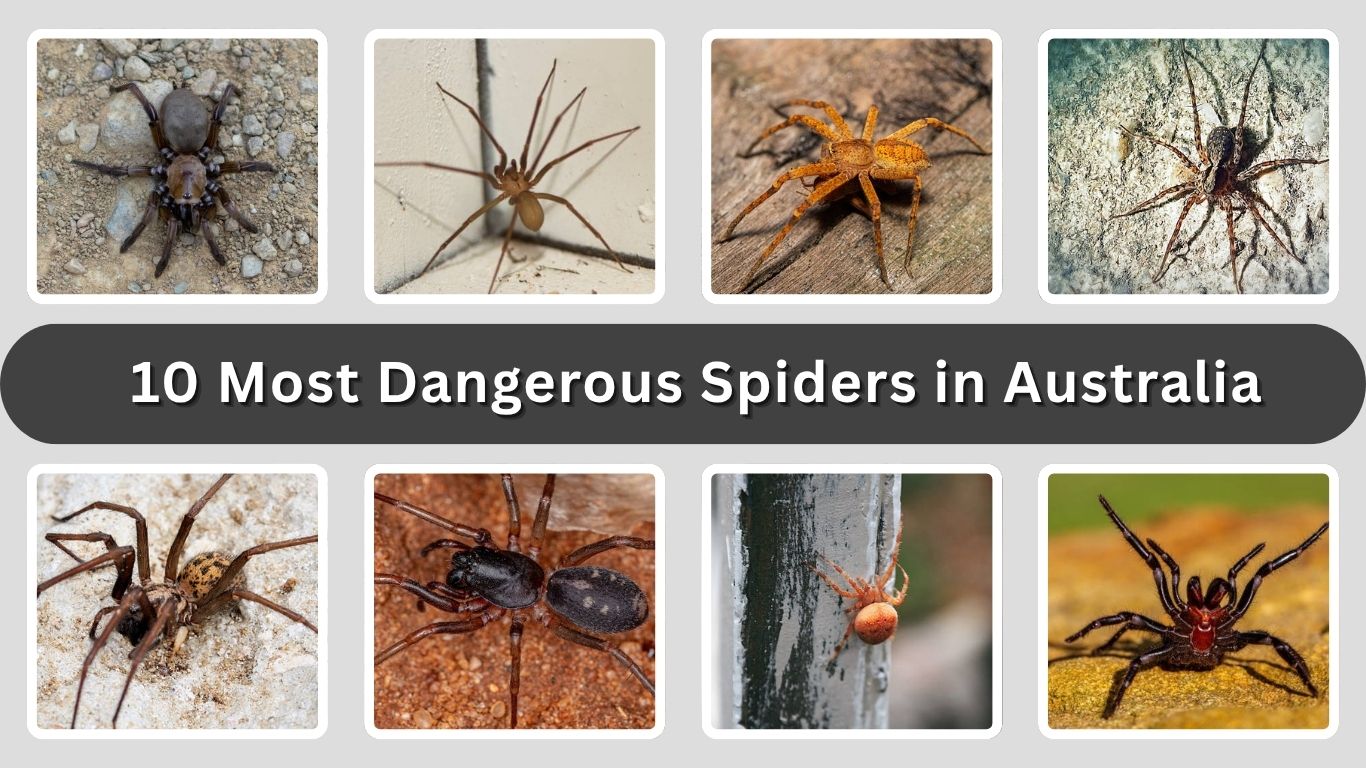
Australia is home to some of the world’s most dangerous spiders, many of which have powerful venom and unique behaviors. While not all are deadly, some can cause serious health risks if provoked. Knowing their names and basic traits can help you stay aware and safe in both outdoor and indoor environments.
1. Sydney Funnel-Web Spider

A highly venomous spider found in Australia, known for its aggressive behavior and medically significant bite. It is considered one of the most dangerous spiders in the world.
Identification
- Large, robust body (1–5 cm long)
- Glossy black or dark brown color
- Powerful fangs pointing downward
- Shiny, hairless carapace
- Long legs with noticeable strength
Habitat
Sydney Funnel-Web Spiders are commonly found in moist, shaded environments. They prefer gardens, forests, and under logs or rocks. They often build funnel-shaped webs in burrows and can sometimes wander into homes, especially during humid conditions.
Bite & Risk
The bite of this spider is extremely dangerous and can be life-threatening if untreated. Its venom affects the nervous system rapidly, causing symptoms like severe pain, sweating, and muscle spasms. Immediate medical attention is critical, but antivenom has made fatalities very rare.
Get Rid
To reduce the risk, keep your surroundings clean and remove potential hiding spots like woodpiles or debris. Seal cracks in walls and doors, and wear gloves when gardening. If found indoors, it’s best to contact pest control rather than handle it yourself.
2. Northern Tree Funnel-Web Spider

A dangerous relative of the Sydney Funnel-Web, this spider is highly venomous and found in northern parts of Australia. It is known for its aggressive defense and potent venom.
Identification
- Medium to large size body
- Dark brown to black coloration
- Long legs with a glossy appearance
- Strong downward-pointing fangs
- Slightly hairy body compared to Sydney Funnel-Web
Habitat
This spider prefers trees, logs, and moist forest areas. Unlike ground-dwelling funnel-webs, it often lives in tree hollows or under bark. It thrives in humid environments and is mostly active at night.
Bite & Risk
Its bite is extremely dangerous and similar in effect to the Sydney Funnel-Web. The venom attacks the nervous system and can cause rapid and severe symptoms. Immediate medical treatment is essential to prevent serious complications.
Get Rid
Keep trees and garden areas well-maintained by removing loose bark and debris. Seal openings in walls and roofs to prevent entry. Reduce outdoor lighting that attracts insects, which in turn attract spiders. For safety, use professional pest control if needed.
3. Mouse Spider

A highly venomous spider often mistaken for funnel-web spiders, but generally less aggressive. Still, it can deliver a serious bite if provoked.
Identification
- Stocky body with short, thick legs
- Shiny black or dark brown color
- Some males may have red-colored jaws
- Large fangs and strong build
- Smooth, glossy appearance
Habitat
Mouse Spiders are found in burrows in soil, often near riverbanks, gardens, or open land. They prefer dry to slightly moist environments and can sometimes wander into homes after rain.
Bite & Risk
Although venomous, bites are less common and usually less severe than funnel-web spiders. However, symptoms can still be serious, so medical attention is recommended. Antivenom used for funnel-web spiders is also effective.
Get Rid
Maintain dry and clean surroundings by reducing excess moisture in soil and fixing water leaks. Fill in burrows around your home and keep lawns trimmed. Use proper drainage and avoid clutter in outdoor areas. Contact pest control for safer removal.
4. Redback Spider

A well-known venomous spider in Australia, easily recognized by its distinctive marking. It is responsible for many spider bites each year but rarely causes death due to effective treatment.
Identification
- Small body with long, thin legs
- Black color with a red stripe on the back
- Round abdomen, especially in females
- Males are smaller and lighter in color
- Glossy appearance
Habitat
Redback Spiders are commonly found in dry, sheltered places such as sheds, garages, and under outdoor furniture. They prefer areas close to human activity and build messy, irregular webs.
Bite & Risk
The bite can cause intense pain, sweating, nausea, and muscle weakness. While rarely fatal, it can be very painful and requires medical attention, especially for children and elderly individuals.
Get Rid
Regularly clean and declutter storage areas like garages and sheds. Shake out shoes, gloves, and clothing before use. Use insect sprays around common hiding spots and ensure good lighting to reduce insect attraction.
5. White-Tailed Spider

A common Australian spider often feared due to myths, but its bite is usually less dangerous than believed.
Identification
- Slender, elongated body
- Dark grey or black color
- Distinct white spot at the tip of the abdomen
- Long legs with a smooth texture
- Medium-sized body
Habitat
These spiders are often found indoors, especially in bedrooms and bathrooms. They hide in clothing, bedding, and cracks during the day and hunt other spiders at night.
Bite & Risk
Bites may cause mild pain, redness, and irritation. Serious reactions are rare, though some people may experience localized swelling. It is not considered highly dangerous compared to other Australian spiders.
Get Rid
Keep indoor spaces clean and reduce clutter where spiders can hide. Wash bedding regularly and seal cracks in walls. Vacuum frequently and remove other insects or spiders that may attract them.
6. Black House Spider

A common spider in Australia, known for building messy webs around homes. While not highly aggressive, it can bite if disturbed.
Identification
- Dark brown to black color
- Medium-sized, sturdy body
- Velvety or slightly hairy appearance
- Long legs adapted for web-building
- Dense, irregular web structure
Habitat
Black House Spiders are often found around windows, door frames, and wall crevices. They prefer dry, sheltered areas and usually stay in one place for long periods.
Bite & Risk
The bite can cause pain, swelling, and nausea, but it is not considered life-threatening. Symptoms are usually mild and go away within a few days.
Get Rid
Remove webs regularly from walls and corners. Seal cracks and gaps around windows and doors. Reduce outdoor lighting near entrances to limit insect attraction and discourage spiders.
7. Wolf Spider

A fast-moving hunting spider that does not rely on webs to catch prey. It is generally not dangerous but can deliver a painful bite.
Identification
- Large, hairy body
- Brown or grey with patterns or stripes
- Strong legs built for running
- Excellent eyesight with noticeable eye arrangement
- Females may carry egg sacs
Habitat
Wolf Spiders live on the ground in gardens, grasslands, and sometimes inside homes. They hide under rocks, leaves, and debris, and are active mostly at night.
Bite & Risk
Their bite may cause pain, redness, and swelling, but it is not dangerous for most people. Serious reactions are rare, and symptoms usually fade quickly.
Get Rid
Keep lawns trimmed and remove leaf litter or debris. Seal entry points around doors and windows. Reduce indoor insects, as they attract these spiders into the home.
8. Huntsman Spider

A large, fast-moving spider commonly found in Australian homes. Despite its size, it is generally harmless to humans.
Identification
- Very large body with long, spread-out legs
- Brown, grey, or mottled coloration
- Flat body shape
- Hairy legs and body
- Crab-like sideways movement
Habitat
Huntsman Spiders live under bark, in tree crevices, and inside homes behind furniture or curtains. They prefer warm environments and often enter houses while searching for food.
Bite & Risk
Bites are rare and usually happen when handled. Symptoms include mild pain and swelling, but they are not dangerous for most people.
Get Rid
Keep your home sealed by fixing gaps in doors and windows. Reduce clutter and check behind furniture regularly. Gently guide the spider outside using a container instead of killing it.
9. Trapdoor Spider

A secretive spider known for living in burrows with a hidden “trapdoor.” It is rarely seen and not aggressive unless provoked.
Identification
- Thick, heavy body
- Dark brown or black color
- Short, strong legs
- Large fangs
- Rough or hairy texture
Habitat
Trapdoor Spiders live underground in burrows, often in gardens, forests, or grassy areas. They build a camouflaged lid to hide the entrance of their home.
Bite & Risk
Bites are uncommon and usually occur only when the spider is disturbed. The bite can be painful but is not considered highly dangerous to humans.
Get Rid
Avoid digging or disturbing soil unnecessarily in your yard. Keep garden areas tidy and wear gloves when working with soil. If burrows are near your home, consult pest control for safe removal.
10. Recluse Spider

A shy and reclusive spider known for hiding in dark places. Though not native to Australia in large numbers, it is sometimes reported.
Identification
- Light to dark brown color
- Small to medium size
- Long, thin legs
- Smooth body with minimal hair
- Violin-shaped marking on the back (in some species)
Habitat
Recluse Spiders prefer dark, undisturbed areas like basements, storage boxes, and closets. They avoid open spaces and are mostly active at night.
Bite & Risk
The bite can cause skin irritation and, in rare cases, tissue damage. Most bites are mild, but medical attention is advised if symptoms worsen.
Get Rid
Keep storage areas clean and well-organized. Avoid leaving clothes or boxes unused for long periods. Seal cracks and reduce hiding spots to prevent infestation.
FAQs
Which spider is the most dangerous in Australia?
The Sydney Funnel-Web Spider is considered the most dangerous spider in Australia. Its venom is highly toxic and can affect the nervous system quickly. Without treatment, it can be life-threatening, but modern antivenom has made deaths extremely rare today.
Are all Australian spiders dangerous to humans?
No, most spiders in Australia are not dangerous to humans. While many look scary, only a few species have venom strong enough to cause serious harm. Most spider bites result in mild symptoms like pain or swelling and do not require major medical treatment.
What should I do if a spider bites me?
If bitten by a spider, stay calm and clean the area with water. Apply a pressure bandage if needed and seek medical help immediately, especially if symptoms worsen. It is important not to ignore signs like severe pain, sweating, or muscle spasms.
How can I prevent spiders from entering my home?
You can prevent spiders by sealing cracks and gaps around doors and windows. Keep your home clean, reduce clutter, and remove webs regularly. Also, limit outdoor lighting near entrances since it attracts insects, which in turn attract spiders.
Do spiders in Australia attack humans?
Spiders generally do not attack humans unless they feel threatened. Most bites happen when a spider is accidentally touched or trapped, such as in clothing or shoes. They prefer to hide or escape rather than confront humans.
