
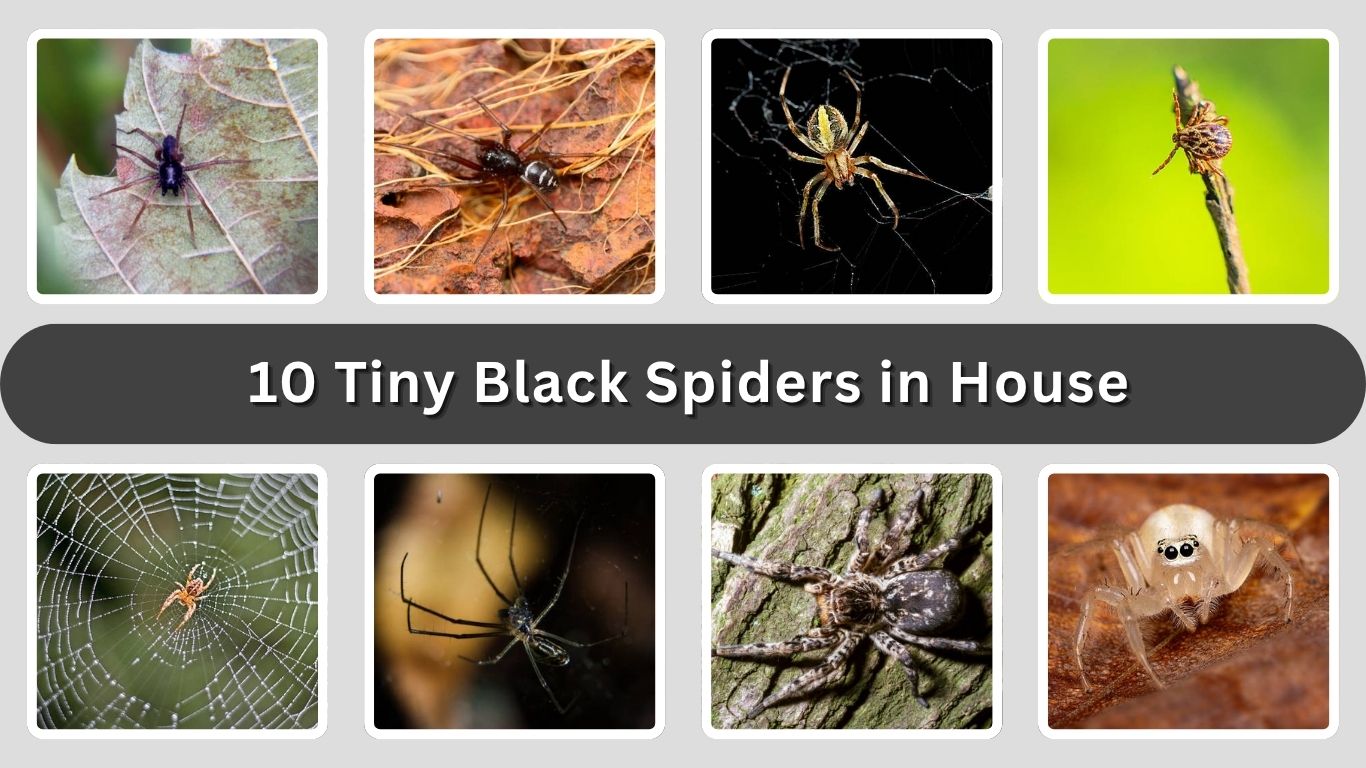
Tiny black spiders in the house are a common sight, especially in corners, ceilings, and quiet indoor spaces. While they may look similar at first glance, different species have unique behaviors, sizes, and levels of risk. Most are harmless and even helpful, as they control insects. This guide helps you identify common types and understand whether they are dangerous or not.
1. Common House Spider

A common house spider is one of the most frequently found tiny black spiders indoors. They usually live in corners, ceilings, and quiet spaces, building messy webs to catch insects. These spiders are generally harmless and help control pests inside the home.
Tiny Black Spider in House Dangerous
Most common house spiders are not dangerous to humans. Their bites are rare and usually happen only when disturbed. Even if a bite occurs, it typically causes mild irritation, similar to a small insect bite, and does not require serious medical attention.
Black House Spider Bite
Although often confused with black house spiders, common house spiders can bite if threatened. However, their bites are uncommon and not medically significant. Symptoms, if any, may include slight redness or itching that fades quickly without treatment.
Black House Spider Size
Common house spiders are usually small in size, often appearing as tiny black or dark brown spiders. Their body length is typically a few millimeters, making them easy to miss unless you notice their webs.
How to Get Rid of Black House Spiders
To reduce common house spiders indoors, keep your home clean and clutter-free. Regularly remove webs, seal cracks, and reduce insects (their food source). Simple steps like vacuuming corners and keeping windows sealed can help prevent them from staying.
2. Black House Spider

The black house spider is a small, dark-colored spider commonly found around windows, walls, and corners of homes. It builds funnel-shaped webs and usually stays hidden. Despite its appearance, it is generally not aggressive and prefers to avoid humans.
Very Tiny Black Spider
Black house spiders can sometimes appear very tiny, especially when young. Juveniles are much smaller and often mistaken for other small indoor spiders due to their dark color and compact size.
Black Jumping Spider
Black house spiders are often confused with black jumping spiders. However, jumping spiders do not build webs and move actively, while black house spiders stay in their webs and wait for prey.
Wolf Spider Black House Spider
People may mix up wolf spiders with black house spiders. Wolf spiders are hunters and roam freely, while black house spiders rely on webs and are usually found in fixed locations.
Black House Spider Dangerous
Black house spiders are not considered dangerous. While they can bite if provoked, their venom is mild and typically causes only minor discomfort, making them harmless to most people.
3. Jumping Spider

Jumping spiders are small, active spiders often seen indoors. They are known for their quick movements and excellent vision. Unlike web-building spiders, they hunt their prey and may appear as tiny black spiders moving on walls or windows.
Very Tiny Black Spider
Jumping spiders are often very tiny, especially when young. Their small size and dark color make them look like tiny black dots that suddenly move or jump when approached.
Black Jumping Spider
Black jumping spiders are one of the most common types found in homes. They are harmless and curious, sometimes even appearing to “look” at humans due to their large front eyes.
Wolf Spider Black House Spider
Jumping spiders are different from wolf spiders and black house spiders. They do not spin webs to catch prey and instead rely on jumping and hunting, making them easy to distinguish.
Tiny Black Spider in House Dangerous
Jumping spiders are not dangerous to humans. They rarely bite, and even if they do, the bite is mild and causes little to no harm.
4. Wolf Spider (Juvenile)

Juvenile wolf spiders are often mistaken for tiny black house spiders due to their small size and dark appearance. Unlike web spiders, they are fast-moving hunters and do not build webs.
Very Tiny Black Spider
Young wolf spiders can appear very tiny and dark, especially when they first hatch. Their size increases quickly as they grow, but early stages can easily be confused with other small spiders.
Black Jumping Spider
Wolf spiders are sometimes confused with black jumping spiders. However, wolf spiders do not jump; they run quickly and hunt on the ground instead.
Wolf Spider Black House Spider
Wolf spiders differ from black house spiders because they do not stay in webs. They roam freely and are often seen on floors rather than in corners or ceilings.
Tiny Black Spider in House Dangerous
Wolf spiders are generally not dangerous. While they can bite if handled, their bite is not harmful and usually results in mild redness or irritation only.
5. Cellar Spider (Young)

Young cellar spiders are small and can sometimes appear as tiny black spiders indoors, although adults are usually pale with long legs. They are commonly found in ceilings, corners, and basements, building loose, irregular webs.
Very Tiny Black Spider
When young, cellar spiders can look like very tiny black spiders before developing their long legs and lighter color. This often causes confusion with other small indoor spiders.
Black Jumping Spider
Cellar spiders are often mistaken for black jumping spiders, but they do not jump. Instead, they stay in their webs and vibrate rapidly when disturbed.
Wolf Spider Black House Spider
Unlike wolf spiders or black house spiders, cellar spiders prefer hanging in loose webs rather than roaming or building funnel-shaped webs.
Tiny Black Spider in House Dangerous
Cellar spiders are not dangerous. They are harmless to humans and actually help by catching other insects and spiders inside the home.
6. Cobweb Spider

Cobweb spiders are small indoor spiders that build messy, tangled webs in corners, furniture edges, and ceilings. Many appear dark or black, especially in low light, making them look like tiny black house spiders.
Very Tiny Black Spider
Cobweb spiders are often very tiny and dark in color, especially younger ones. Their small size makes them easy to overlook unless you notice their irregular webs.
Black Jumping Spider
Cobweb spiders are sometimes confused with black jumping spiders, but they do not move actively. They stay in their webs and wait for prey instead of hunting.
Wolf Spider Black House Spider
Cobweb spiders differ from wolf spiders and black house spiders by building loose, messy webs instead of funnel webs or actively hunting.
Tiny Black Spider in House Dangerous
Most cobweb spiders are not dangerous. While a few species may bite, they are generally harmless and pose no real threat to humans.
7. Ground Spider

Ground spiders are small, dark-colored spiders that may enter homes while searching for food. They do not build webs and are often seen moving along floors, especially at night.
Very Tiny Black Spider
Ground spiders can appear as very tiny black spiders, especially smaller species. Their fast movement and dark color make them noticeable indoors.
Black Jumping Spider
Ground spiders are sometimes confused with black jumping spiders, but they do not jump. Instead, they crawl quickly across surfaces in search of prey.
Wolf Spider Black House Spider
They are often mistaken for wolf spiders or black house spiders, but ground spiders are smaller and do not build webs like black house spiders.
Tiny Black Spider in House Dangerous
Ground spiders are not dangerous. They rarely bite, and even if they do, the effects are mild and not harmful to humans.
8. Sac Spider (Dark Variant)

Sac spiders are small indoor spiders that hide in silken sacs during the day and come out at night to hunt. Some darker variants may appear as tiny black spiders in the house.
Very Tiny Black Spider
Dark sac spiders can look like very tiny black spiders, especially in dim lighting, making them easy to confuse with other small species.
Black Jumping Spider
They are sometimes mistaken for black jumping spiders, but sac spiders do not jump. They move steadily and hunt instead of pouncing.
Wolf Spider Black House Spider
Sac spiders differ from wolf spiders and black house spiders as they create small silk sacs rather than webs and actively hunt at night.
Tiny Black Spider in House Dangerous
Sac spiders can bite if disturbed, but their bites are usually mild. They are not considered dangerous, though slight irritation may occur.
9. Parson Spider

Parson spiders are small, dark spiders often found indoors near floors and baseboards. They move quickly and do not build webs, which can make them look like tiny black hunting spiders.
Very Tiny Black Spider
Parson spiders can appear very tiny and black, especially when seen quickly moving across the floor or walls.
Black Jumping Spider
They are often confused with black jumping spiders, but parson spiders do not jump and instead rely on speed to catch prey.
Wolf Spider Black House Spider
Parson spiders are sometimes mistaken for wolf spiders or black house spiders, but they are smaller and do not rely on webs for hunting.
Tiny Black Spider in House Dangerous
Parson spiders are not dangerous. Although they can bite, it is rare and usually causes only mild irritation without serious effects.
10. False Widow Spider

False widow spiders are small, dark-colored spiders often found indoors in quiet corners, behind furniture, or near windows. They build tangled webs and may look like tiny black house spiders, especially in low light.
Very Tiny Black Spider
Young false widow spiders can appear as very tiny black spiders. Their small size and shiny dark body often make them noticeable when seen in indoor spaces.
Black Jumping Spider
False widows are sometimes confused with black jumping spiders, but they do not jump. Instead, they stay in their webs and wait for prey to get trapped.
Wolf Spider Black House Spider
They are often mistaken for wolf spiders or black house spiders, but false widows build messy webs rather than hunting or using funnel-shaped webs.
Tiny Black Spider in House Dangerous
False widow spiders are mildly venomous, but not dangerous to most people. Bites are rare and usually cause mild pain or irritation, similar to a bee sting in most cases.
FAQs
Are tiny black spiders in the house dangerous?
Most tiny black spiders found indoors are not dangerous. They rarely bite humans and usually avoid contact. Even if a bite happens, it is typically mild and causes minor irritation. These spiders are more beneficial than harmful because they help control insects inside the home.
Why do I keep seeing tiny black spiders in my house?
Tiny black spiders usually enter homes in search of food, shelter, or warmth. If your home has insects, cracks, or cluttered spaces, it becomes an ideal environment for them to stay and build webs or hunt.
How do I identify a tiny black spider in my house?
Identification depends on behavior and appearance. Some spiders build webs, while others hunt. Look at size, movement, and web type. For example, jumping spiders move actively, while house spiders stay in webs in corners.
How can I get rid of tiny black spiders permanently?
To reduce spiders, keep your home clean and seal entry points. Remove webs regularly, reduce insects, and declutter storage areas. Using natural repellents or keeping windows and doors sealed can also help prevent them from returning.
Do tiny black spiders bite at night?
Most tiny black spiders do not bite at night or attack humans. Bites usually happen only if the spider is trapped or threatened. They are not aggressive and prefer to stay hidden rather than interact with people.
