
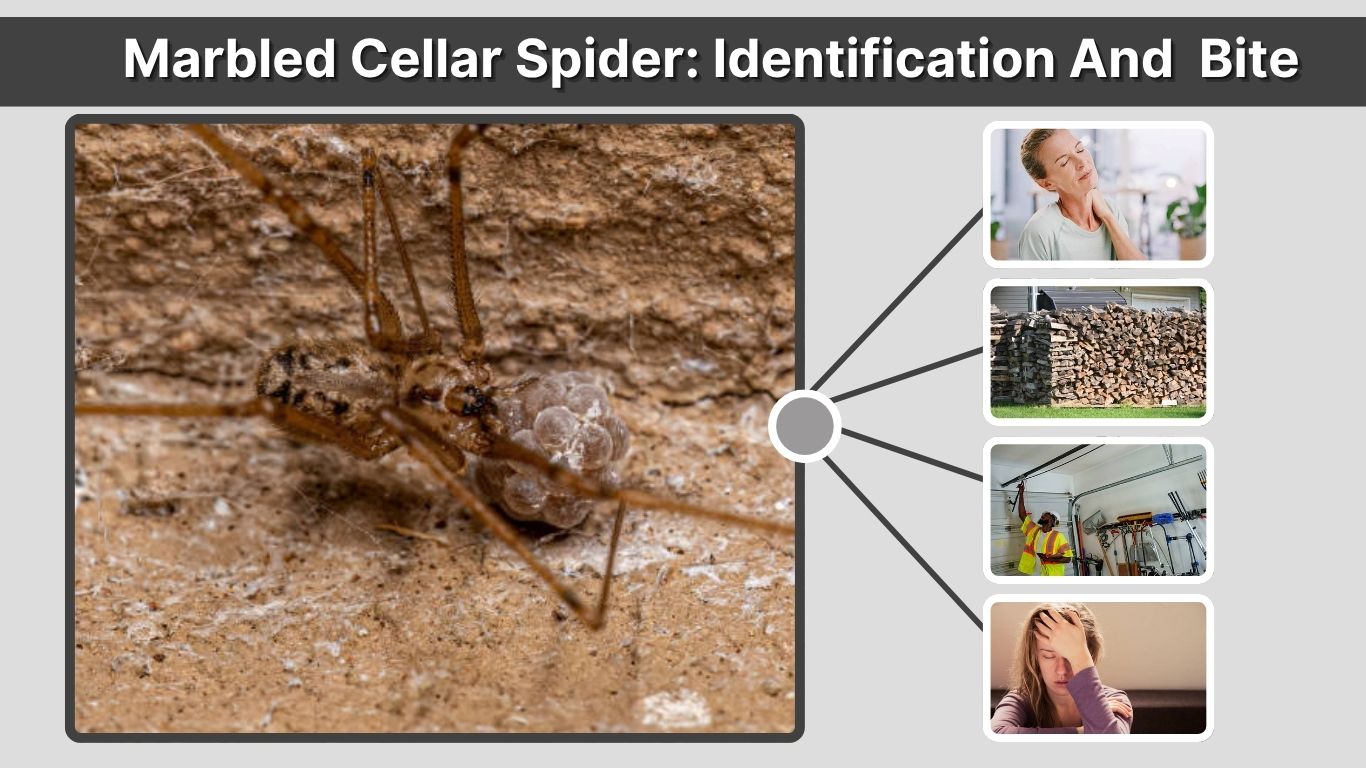
The marbled cellar spider is a common household spider known for its long legs and delicate appearance. Despite often being mistaken for dangerous species, it is harmless and even beneficial. This guide explains how to identify it, where it lives, and whether you should be concerned about bites or venom.
What Is a Marbled Cellar Spider?
The marbled cellar spider (Holocnemus pluchei) belongs to the Pholcidae family, commonly called cellar spiders. These spiders are widely found in homes, especially in warm regions, and are known for their thin legs and patterned bodies.
Unlike more intimidating spiders, the marbled cellar spider has a fragile look. However, it is highly adapted to indoor environments and often builds webs in corners, ceilings, and undisturbed spaces.
Key characteristics include:
- Scientific name: Holocnemus pluchei
- Family: Pholcidae (cellar spiders)
- Appearance: light brown or gray with marbled markings
- Behavior: shy and non-aggressive
These spiders are sometimes confused with “daddy long legs,” although that term can refer to different creatures depending on the region.
How to Identify a Marbled Cellar Spider

Identifying a marbled cellar spider is relatively easy once you know what to look for. Its most noticeable feature is its extremely long, thin legs compared to its small body.
Here are the main identification points:
- Body pattern: marbled or mottled markings in shades of brown, gray, or tan
- Legs: very long, thin, and delicate
- Size: small body but wide leg span
- Web type: irregular, tangled webs (not symmetrical like orb webs)
- Behavior: shakes or vibrates rapidly when disturbed
This vibrating behavior is especially distinctive. When threatened, the spider shakes its body quickly in the web to confuse predators, making it harder to see clearly.
Because of their appearance, many people confuse them with more dangerous spiders. However, their body shape and web style are clear indicators that they are harmless cellar spiders.
Where Are Marbled Cellar Spiders Found?

Marbled cellar spiders thrive in warm climates and are commonly found across various regions, particularly in the United States. They are especially prevalent in dry and warm areas.
They typically live in:
- Basements and cellars
- Garages and storage spaces
- Corners of ceilings and walls
- Under furniture or in quiet indoor areas
They prefer places with little disturbance and stable conditions. Indoors, they can survive year-round due to consistent temperatures and shelter.
Marbled Cellar Spider in Arizona

In Arizona, marbled cellar spiders are very common. The warm climate provides ideal conditions for them to thrive both indoors and outdoors.
You may notice them:
- In homes, especially in corners and ceilings
- In sheds, garages, and shaded outdoor areas
- Around windows and door frames
Because Arizona is also home to more dangerous spiders, such as the brown recluse, people often worry when they see long-legged spiders. Fortunately, the marbled cellar spider is not harmful and should not be a cause for concern.
Are Marbled Cellar Spiders Dangerous?

Marbled cellar spiders are not dangerous to humans. They are shy creatures that avoid contact and prefer to stay hidden in their webs.
They do not:
- Chase or attack humans
- Show aggressive behavior
- Pose any medical risk
In fact, they are considered beneficial because they help control other insect populations inside the home. They may even catch and eat other spiders, including potentially harmful ones.
Marbled Cellar Spider Bite: What Happens?
Bites from marbled cellar spiders are extremely rare. These spiders are not aggressive and will usually retreat rather than defend themselves.
If a bite does occur, the effects are very mild. Most people experience:
- Slight redness
- Minor irritation
- Temporary discomfort
There are no known serious reactions or medical complications from their bites. In most cases, no treatment is needed beyond basic cleaning of the area.
Their small mouthparts also make it difficult for them to pierce human skin, which further reduces the likelihood of a bite.
Are Marbled Cellar Spiders Poisonous or Venomous?
Like most spiders, marbled cellar spiders are technically venomous. However, their venom is very weak and not harmful to humans.
It’s important to understand the difference:
- Venomous: injects venom through a bite
- Poisonous: harmful if touched or eaten
Marbled cellar spiders are not poisonous, and their venom does not pose any real danger. They use it only to subdue small insects.
Because of myths and misinformation, some people believe these spiders are highly toxic. In reality, they are among the least harmful spiders you can encounter in a home.
Marbled Cellar Spider vs Brown Recluse
One of the biggest concerns people have is confusing the marbled cellar spider with the brown recluse, a spider known for its medically significant bite. While they may both be found indoors, they are very different in appearance and risk level.
Here are the key differences:
- Body shape: Brown recluse has a solid color with a violin-shaped marking; marbled cellar spider has a patterned, marbled body
- Legs: Cellar spiders have much longer, thinner legs
- Web: Cellar spiders build messy, irregular webs; recluses do not rely on webs to catch prey
- Behavior: Recluse spiders hide and wander; cellar spiders stay in their webs
- Danger level: Recluse bites can be serious; cellar spider bites are harmless
Understanding these differences can help you avoid unnecessary fear. If the spider has extremely long legs and sits in a loose web, it is almost certainly a cellar spider—not a recluse.
Behavior and Diet
Marbled cellar spiders are passive hunters that rely on their webs to capture prey. Their messy, tangled webs may look unorganized, but they are highly effective.
They typically feed on:
- Small insects like flies and mosquitoes
- Ants and other tiny pests
- Even other spiders
One interesting trait is their ability to capture larger prey than expected. They use their long legs to wrap insects in silk and immobilize them.
Another unique behavior is their defensive vibration. When disturbed, they shake rapidly in their web, making it difficult for predators—or humans—to focus on them.
Because they eat pests, they can actually be helpful in maintaining a cleaner indoor environment.
Should You Remove Marbled Cellar Spiders?
In most cases, there is no need to remove marbled cellar spiders. They are harmless and provide natural pest control.
However, some people may prefer to remove them due to:
- Web buildup in corners
- Personal discomfort with spiders
- Indoor cleanliness concerns
If you decide to remove them, safe methods include:
- Using a vacuum to remove the spider and its web
- Gently relocating the spider outside
- Regular cleaning to prevent web formation
Avoid using harsh chemicals, as they are unnecessary for dealing with these harmless spiders.
Interesting Facts About Marbled Cellar Spiders
Marbled cellar spiders have several fascinating traits that make them unique among common household spiders.
- They are often mistaken for “daddy long legs,” though that term can refer to different species
- Their long legs help them sense vibrations and capture prey effectively
- They can live comfortably alongside humans without causing harm
- Their webs may look messy but are strategically built
Despite their fragile appearance, they are surprisingly effective hunters and well-adapted to indoor life.
FAQ
Is the marbled cellar spider dangerous to humans?
No, the marbled cellar spider is not dangerous. It is a non-aggressive species that prefers to stay hidden. Even if disturbed, it will try to escape rather than bite. It poses no medical risk and is considered harmless.
Can a marbled cellar spider bite you?
Yes, but it is extremely rare. These spiders are shy and avoid human contact. If a bite does occur, it typically causes only mild irritation, similar to a minor insect bite, and does not require medical treatment.
Are marbled cellar spiders poisonous?
No, they are not poisonous. They are technically venomous, like most spiders, but their venom is weak and not harmful to humans. There is no risk of serious effects from contact or bites.
How do I identify a marbled cellar spider?
You can identify it by its long, thin legs and marbled body pattern. It builds messy webs in corners and often vibrates rapidly when disturbed. These features clearly distinguish it from more dangerous spiders.
Are marbled cellar spiders common in Arizona?
Yes, they are very common in Arizona due to the warm climate. They are frequently found in homes, garages, and shaded areas. Their presence is normal and not a cause for concern.
