
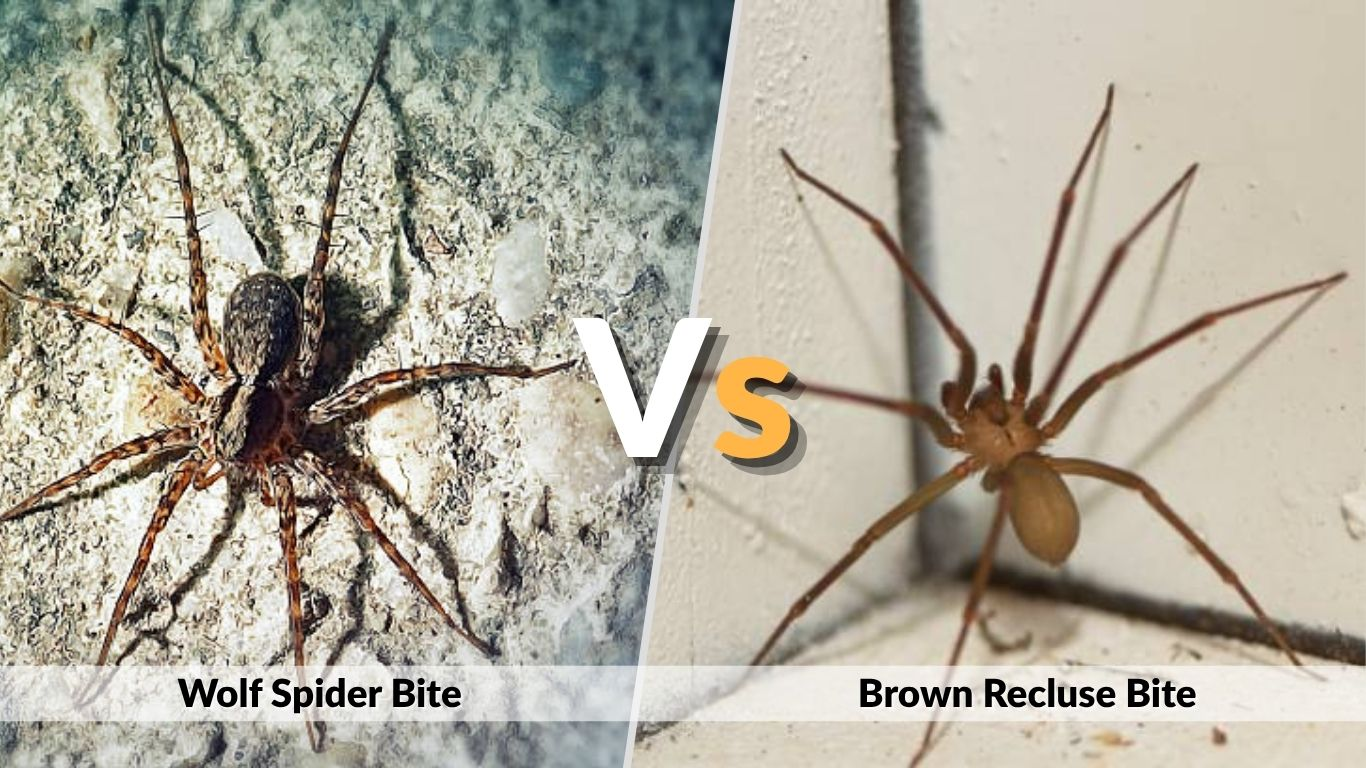
Wolf spider bites and brown recluse spider bites are often confused because both can cause redness, swelling, and pain. Many people search online for pictures and symptom comparisons after noticing an unusual bite and want to know whether the bite is dangerous. Although the early appearance of these bites may sometimes look similar, there are important differences in symptoms, severity, healing time, and long-term effects.
A wolf spider bite is usually mild and heals without major complications, while a brown recluse bite has the potential to cause tissue damage in more serious cases. Understanding how these bites differ can help you recognize warning signs early and determine when medical care may be necessary.
What Is a Wolf Spider Bite?
Wolf spiders are large hunting spiders that do not use webs to catch prey. Their bites can be painful, but they are generally considered medically mild for most healthy adults.
What Is a Wolf Spider?
Wolf spiders are fast-moving ground spiders commonly found in gardens, garages, basements, wood piles, and grassy areas. They are known for their hairy appearance, strong legs, and quick movements.
Unlike web-building spiders, wolf spiders actively hunt insects. They usually avoid humans and bite only when threatened or accidentally trapped against the skin.
Many wolf spiders are brown, gray, or dark-colored, which often causes people to mistake them for brown recluse spiders. However, wolf spiders are typically larger, hairier, and more robust in appearance.
Are Wolf Spider Bites Dangerous?
Wolf spider bites are usually not dangerous, although they can be painful and uncomfortable. Most bites cause temporary symptoms such as:
- Redness around the bite
- Swelling and irritation
- Mild itching
- Localized pain
These symptoms generally improve within several days to a couple of weeks. Severe reactions are uncommon unless the person has an allergy or the bite becomes infected. Unlike brown recluse bites, wolf spider bites rarely cause tissue necrosis or severe skin damage.
What Is a Brown Recluse Spider Bite?

Brown recluse spider bites are more concerning because their venom can damage skin tissue in some cases. While many bites remain mild, severe reactions may lead to blistering, open wounds, and long-term scarring.
What Is a Brown Recluse Spider?
The brown recluse spider is a venomous spider recognized by the violin-shaped marking on its back. It prefers dark, quiet areas such as closets, attics, storage boxes, garages, and basements.
Brown recluse spiders are naturally shy and usually avoid people. Most bites happen when the spider becomes trapped in bedding, clothing, or shoes.
Compared to wolf spiders, brown recluse spiders are smaller, smoother, and less hairy in appearance.
Why Brown Recluse Bites Are More Serious
Brown recluse venom contains toxins that may damage skin tissue and surrounding blood vessels. In mild cases, symptoms remain limited to redness and irritation. In more severe reactions, tissue destruction may occur.
Potential complications include:
- Blister formation
- Dark skin discoloration
- Open wounds
- Long healing times
- Permanent scarring
The severity depends on several factors, including the amount of venom injected, the location of the bite, and the body’s reaction to the venom.
Wolf Spider Bite vs Brown Recluse Bite Appearance

The appearance of these bites can sometimes overlap during the early stage, which is why many people confuse them. However, the progression of symptoms is often very different.
Wolf Spider Bite Symptoms
Wolf spider bites usually cause immediate discomfort shortly after the bite occurs. Common symptoms include:
- Sudden pain or burning
- Red swollen area
- Mild itching
- Local irritation
The bite area generally remains localized and improves gradually over time. Severe discoloration or skin breakdown is uncommon.
Most wolf spider bites heal without leaving scars or permanent damage.
Brown Recluse Bite Symptoms
Brown recluse bites often begin mildly but worsen gradually over the next one to two days. Symptoms may include:
- Delayed increasing pain
- Redness that spreads outward
- Purple or bluish discoloration
- Blister formation
- Possible tissue damage
Unlike wolf spider bites, brown recluse bites may continue worsening instead of improving quickly. The center of the bite may become pale, dark, or blistered as tissue damage develops.
This delayed progression is one of the most important differences between the two bites.
Wolf Spider Bite vs Brown Recluse Bite Pictures
Many people search for bite pictures online to compare symptoms and identify the type of spider involved. While pictures can help show general differences, visual appearance alone cannot confirm which spider caused the bite.
What Wolf Spider Bite Pictures Usually Show
Most wolf spider bite images display symptoms such as:
- Mild redness
- Swelling around the bite
- Local irritation
- Limited skin damage
The surrounding skin usually appears inflamed but does not typically show severe blistering or tissue destruction.
Wolf spider bites often resemble common insect bites more than serious venomous wounds.
What Brown Recluse Bite Pictures Usually Show
Brown recluse bite pictures commonly show more progressive skin changes, including:
- Darkening or purple center
- Blister formation
- Expanding redness
- Open wound development in severe cases
As the reaction progresses, the bite may look increasingly severe over several days. This is one reason why many people search for comparison images between wolf spider and brown recluse bites.
Wolf Spider Bite vs Brown Recluse Bite
The differences between these bites become clearer when comparing symptoms, venom effects, and healing progression side by side.
| Feature | Wolf Spider Bite | Brown Recluse Bite |
| Pain | Immediate pain | Gradually worsening pain |
| Venom Severity | Mild | Potentially serious |
| Tissue Damage | Rare | Possible |
| Healing Time | Days to weeks | Weeks to months |
| Blistering | Uncommon | More common |
| Scarring | Rare | Possible |
| Aggression | Defensive only | Rarely bites unless trapped |
One of the biggest differences is healing progression. Wolf spider bites generally improve steadily after the initial pain, while brown recluse bites may continue worsening during the first several days.
The risk of tissue damage and scarring is also much higher with brown recluse bites, which is why they are considered medically more serious.
Which Bite Is Worse?

Brown recluse bites are generally considered worse because their venom can damage skin tissue and cause longer-lasting complications. While wolf spider bites can be painful, they rarely lead to severe skin injury.
Why Brown Recluse Bites Are More Dangerous
Brown recluse venom may trigger tissue necrosis, which is the breakdown of skin and underlying tissue. This can lead to slow-healing wounds and permanent scars in severe cases.
Possible complications include:
- Open ulcers
- Skin discoloration
- Chronic sensitivity
- Long-term scarring
Severe reactions may require medical treatment and wound care for several weeks or months.
Why Wolf Spider Bites Are Usually Milder
Wolf spider venom is much less harmful to humans. Although the bite may hurt immediately, symptoms usually remain localized and improve naturally over time.
Most people recover fully with basic care such as cleaning the wound and applying cold compresses. Serious complications are rare.
Early Symptoms Comparison
The first symptoms after a spider bite often provide important clues about which spider may be responsible. Although both bites can involve redness and swelling, the timing and progression of symptoms are usually different.
- Wolf spider bites typically hurt immediately
- Brown recluse bites often worsen gradually
- Brown recluse bites may darken over time
- Wolf spider bites usually remain localized
- Brown recluse bites may blister or ulcerate
A wolf spider bite usually causes sudden pain or irritation right after the bite occurs. The affected area may become red and swollen but often begins improving within a short period.
In contrast, brown recluse bites may appear mild initially and become more painful over the next 24 to 48 hours. This delayed worsening is one of the strongest indicators that the bite may involve brown recluse venom.
Long-Term Effects Comparison

Long-term complications differ greatly between wolf spider bites and brown recluse bites. Most wolf spider bites heal fully without leaving permanent damage, while severe brown recluse bites may continue causing symptoms long after the initial injury.
Wolf Spider Bite Long-Term Effects
Long-term effects from wolf spider bites are uncommon. Most people recover completely within days or weeks without complications.
In rare situations, some individuals may experience:
- Mild lingering tenderness
- Temporary discoloration
- Sensitivity during healing
Permanent scarring or tissue damage is very unusual with wolf spider bites.
Brown Recluse Bite Long-Term Effects
Brown recluse bites carry a much greater risk of lasting complications because the venom may damage skin tissue.
Possible long-term effects include:
- Permanent scarring
- Skin discoloration
- Chronic tenderness
- Tissue loss in severe cases
- Prolonged wound healing
Some severe bites leave visible marks for months or years, particularly when deep tissue damage occurs.
Treatment for Wolf Spider and Brown Recluse Bites
Basic first aid is important for both types of bites, although brown recluse bites may require closer monitoring and additional medical care if symptoms worsen.
Wolf Spider Bite Treatment
Most wolf spider bites can be treated at home with basic wound care. Recommended steps include:
- Washing the bite with soap and water
- Applying a cold compress
- Keeping the area clean
- Using pain relief if needed
Symptoms usually improve steadily without serious complications.
Brown Recluse Bite Treatment
Brown recluse bites require more careful observation because symptoms may continue progressing after the initial bite.
Treatment may involve:
- Cleaning and protecting the wound
- Cold compresses to reduce swelling
- Monitoring for worsening symptoms
- Medical evaluation for blistering or darkening skin
- Preventing infection during healing
Severe bites may require professional wound care if tissue damage develops.
When to Seek Medical Attention
Some spider bite symptoms require immediate medical evaluation, especially when the reaction appears severe or continues worsening over time.
Emergency Warning Signs
The following symptoms may indicate a serious reaction:
- Fever or chills
- Severe swelling
- Expanding skin discoloration
- Trouble breathing
- Open wound formation
- Increasing pain
Darkening skin, blistering, or spreading redness may indicate tissue damage associated with brown recluse venom.
Difficulty breathing or severe allergic reactions should always be treated as medical emergencies.
High-Risk Groups
Certain individuals may face a greater risk of complications after spider bites, including:
- Young children
- Elderly adults
- Individuals with weakened immune systems
- People with chronic medical conditions
These groups may require earlier medical attention even if symptoms initially appear mild.
How to Prevent Spider Bites
Preventive steps can reduce the chance of encountering both wolf spiders and brown recluse spiders inside homes or storage spaces.
- Shake out shoes and clothing before wearing them
- Reduce clutter in dark storage areas
- Wear gloves when handling boxes or wood piles
- Seal cracks and gaps around the home
- Avoid handling spiders directly
Brown recluse spiders especially prefer dark and undisturbed areas such as basements, closets, and garages. Keeping these spaces organized can reduce hiding spots.
Wolf spiders are more commonly found outdoors, but they may enter homes while hunting insects.
Common Myths About Spider Bites
Many misconceptions about spider bites create unnecessary fear and confusion. Understanding the facts can help people respond more appropriately after a bite occurs.
- Not every skin sore is caused by a spider bite
- Wolf spiders are usually not medically dangerous
- Brown recluse bites are not always severe
- Pictures alone cannot confirm the type of bite
- Most spiders avoid humans whenever possible
One common myth is that all brown recluse bites become severe or necrotic. In reality, many bites remain mild and heal without major complications.
Another misconception is that wolf spiders are highly dangerous because of their large size. Although their bites can be painful, serious medical complications are uncommon.
FAQs
Can a wolf spider bite look like a brown recluse bite?
Yes, both bites may initially cause redness and swelling. However, brown recluse bites are more likely to worsen over time and develop blistering or tissue damage.
Is a wolf spider bite or brown recluse bite worse?
Brown recluse bites are generally more serious because the venom can damage skin tissue and lead to long-term complications.
Do wolf spider bites cause necrosis?
Wolf spider bites rarely cause tissue necrosis. Severe tissue damage is much more strongly associated with brown recluse bites.
How long does a wolf spider bite last?
Most wolf spider bites improve within several days to a couple of weeks with basic wound care and symptom management.
When should you see a doctor for a spider bite?
Medical attention is recommended if symptoms worsen, severe swelling develops, fever occurs, or the skin begins blistering, darkening, or forming open wounds.
