
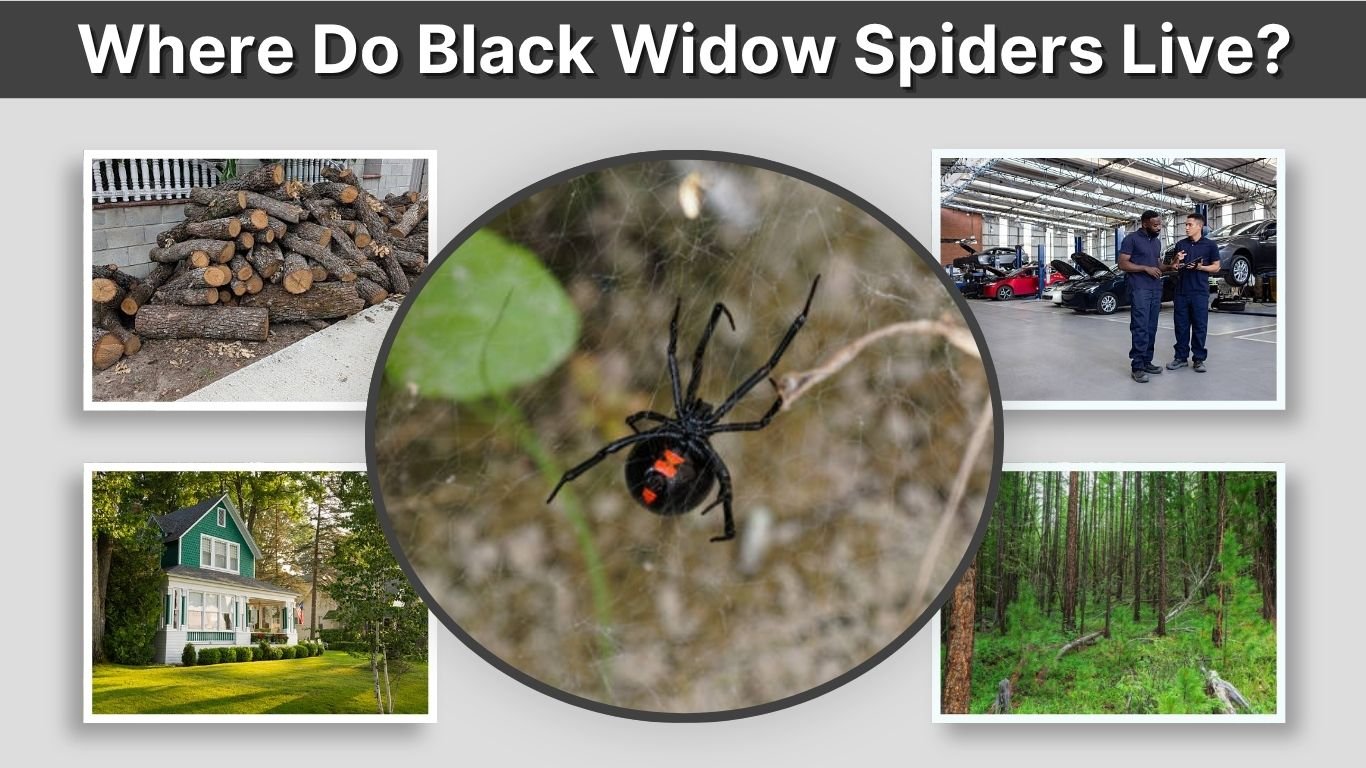
Black widow spiders live throughout much of North America, especially in warm regions of the United States. These venomous spiders prefer dark, sheltered locations where they can build webs and catch insects without disturbance. You can find them beneath rocks, inside woodpiles, around garages, and in outdoor storage areas. However, their distribution depends on the species, climate, and availability of suitable shelter. Understanding where black widow spiders live, including their geographic range and preferred habitats, can help you identify potential hiding places and avoid accidental encounters.
Where Do Black Widow Spiders Live in the United States?
Black widow spiders occur across much of the United States, from the southeastern states to the western deserts and parts of the Northeast and Midwest. Their distribution varies among species, with some thriving in hot, dry environments and others surviving in cooler regions. Three major black widow species account for most sightings across the country.
Southern Black Widow (Latrodectus mactans)
The southern black widow primarily lives in the southeastern and south-central United States. It is especially associated with warm climates and sheltered outdoor environments.
Its distribution includes:
- Florida, Georgia, Alabama, and Mississippi
- Louisiana, Arkansas, and Texas
- North Carolina and South Carolina
- Tennessee, Kentucky, and surrounding regions
- Parts of the Midwest and northeastern United States
Southern black widows commonly inhabit woodpiles, tree stumps, sheds, and protected spaces beneath buildings. They often remain close to ground level, where insects provide a steady food supply.
Western Black Widow (Latrodectus hesperus)
Western black widows inhabit the western United States, including California, Arizona, Nevada, Utah, and Colorado. Their range also extends into other western states and parts of western Canada.
This species adapts particularly well to desert environments, rocky landscapes, and suburban neighborhoods.
Western black widows frequently build webs inside abandoned rodent burrows, beneath stones, and around building foundations. They can survive in both hot desert habitats and colder mountainous regions when suitable shelter is available.
Northern Black Widow (Latrodectus variolus)
Northern black widows primarily inhabit eastern North America, extending from parts of the southeastern United States into the Northeast and southeastern Canada.
They occur in states such as Pennsylvania, New York, Ohio, and Michigan, although their local abundance varies considerably.
Unlike southern black widows, northern black widows can inhabit cooler temperate environments. They often shelter in hollow logs, rock piles, outdoor structures, and undisturbed woodland habitats.
Where Do Black Widow Spiders Like to Live?
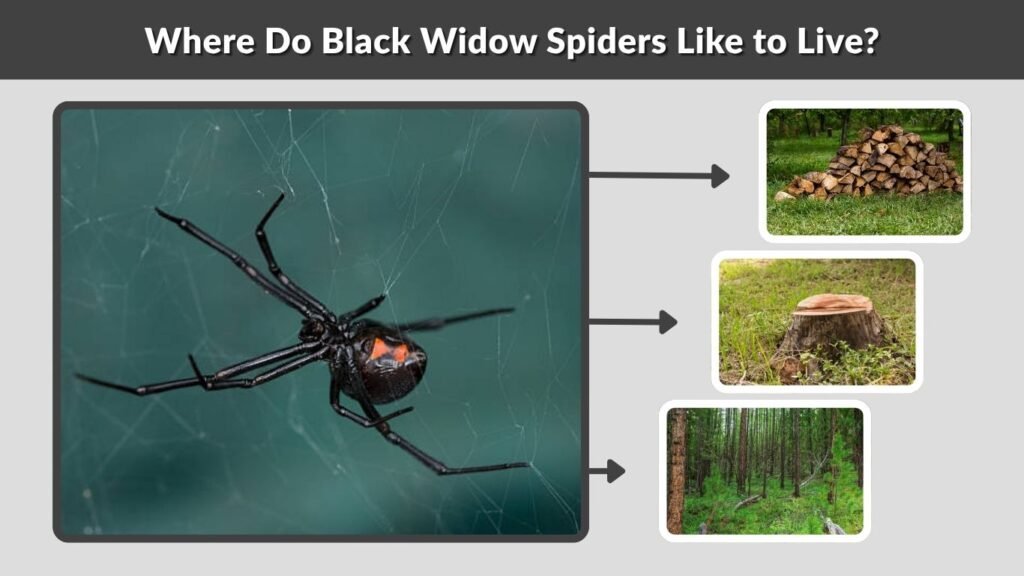
Black widow spiders prefer quiet, protected environments with enough insects to support their survival. Although they are often associated with hot deserts, they can inhabit forests, grasslands, gardens, and residential areas. Their preferred locations provide protection from predators, extreme temperatures, and human disturbance. Most establish irregular webs near the ground rather than building large, circular webs.
Common Outdoor Habitats
Black widows commonly occupy the following outdoor locations:
- Woodpiles: Gaps between stacked logs provide excellent shelter.
- Rock piles: Spaces beneath stones protect spiders from direct sunlight.
- Tree stumps: Hollow wood offers secluded nesting locations.
- Rodent burrows: Abandoned underground tunnels provide protected retreats.
- Garden debris: Fallen branches, leaves, and unused materials create hiding places.
- Dense vegetation: Low shrubs and sheltered plant bases can support webs.
These habitats provide the cover and insect activity black widows need to survive.
Alabama Cooperative Extension System+1
Do Black Widow Spiders Live in Forests?
Black widows can inhabit forests, particularly around fallen trees, woodland edges, and sheltered clearings. However, their abundance depends on local conditions.
They are more likely to establish webs in protected cavities and openings than on exposed branches. Areas with loose bark, decaying logs, and rock formations can provide suitable shelter.
Where Do Black Widow Spiders Live Around Houses?
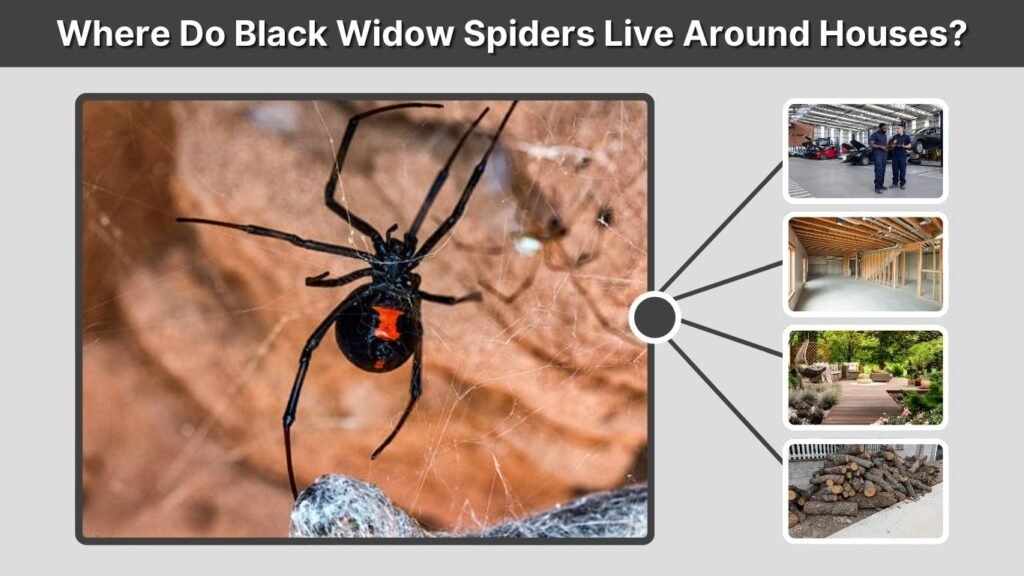
Black widow spiders frequently establish webs around residential buildings because houses provide numerous sheltered spaces. Garages, storage sheds, patios, and foundations create favorable environments, especially when clutter accumulates. They are generally more common outdoors than inside occupied rooms, although they occasionally enter buildings and remain in quiet, undisturbed areas.
Common Hiding Places Around Homes
- Garages: Behind stored boxes, tools, and unused equipment.
- Basements: Around quiet storage areas and structural openings.
- Crawl spaces: Beneath flooring and near building foundations.
- Patio furniture: Beneath chairs, tables, and outdoor storage units.
- Outdoor sheds: Behind gardening tools and stacked materials.
- Utility boxes: Inside protected electrical, water, and meter enclosures.
- Firewood storage: Between logs and beneath protective covers.
Black widows usually remain near their webs unless disturbed or searching for a suitable location.
Do Black Widow Spiders Live Inside Houses?
Black widow spiders can live indoors, but they are not typically found wandering through frequently occupied rooms.
They prefer basements, garages, crawl spaces, and other areas where human activity is limited. Indoor environments may provide protection during unfavorable weather, particularly when outdoor temperatures become cold.
Where Do Black Widow Spiders Live in Canada?
Black widow spiders occur in Canada, but their populations are generally uncommon and concentrated in southern regions. Canada’s colder climate limits their distribution compared with the United States. Northern and western black widows are the principal native species, and suitable habitats are mostly found near the American border, where seasonal conditions support their survival.
Black Widows in Ontario
The northern black widow (Latrodectus variolus) inhabits southern Ontario and parts of southwestern Quebec.
These spiders may occupy sheltered woodlands, rock piles, and undisturbed outdoor structures. They are uncommon compared with many other spiders found in Canadian homes and gardens.
Black Widows in British Columbia and Western Canada
The western black widow (Latrodectus hesperus) lives in southern British Columbia and parts of Alberta and Saskatchewan.
It favors protected habitats, including rocky areas, woodpiles, and dry outdoor structures. Local distribution depends heavily on temperature and suitable shelter.
Where Do Black Widow Spiders Live Around the World?
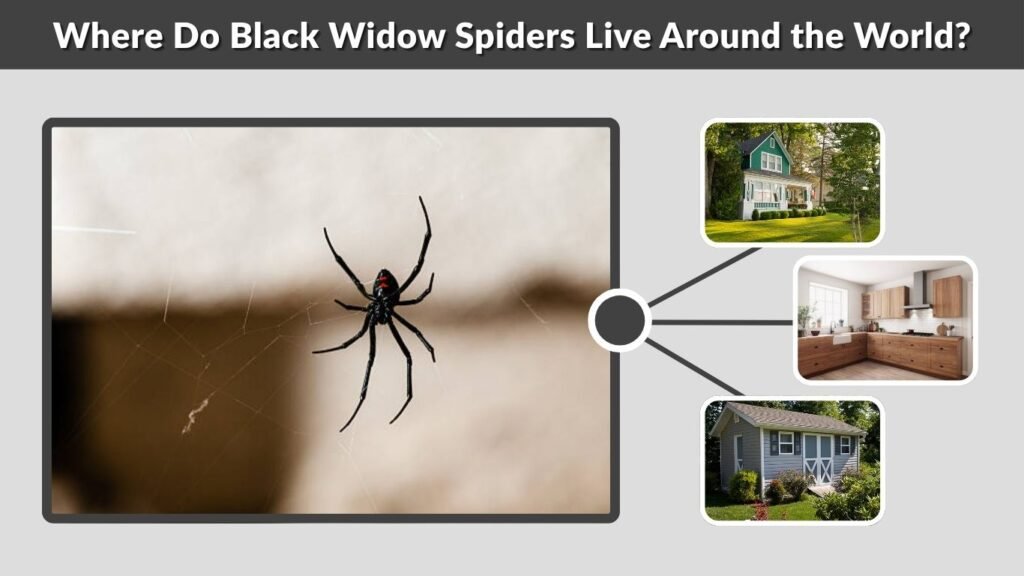
Black widows belong to the genus Latrodectus, a group of widow spiders distributed across many parts of the world. Related species inhabit North America, South America, Europe, Africa, Asia, and Australia. However, not every widow spider is the same species as the familiar American black widow spider. Their names and appearances vary by geographic region.
Are Black Widow Spiders Found in Australia?
Australia is home to the redback spider (Latrodectus hasselti), a close relative of American black widows.
Redback spiders inhabit gardens, sheds, rock piles, and areas surrounding buildings. They are particularly common in urban environments and prefer dry, sheltered locations.
Where Do False Black Widow Spiders Live?
False black widow spiders belong to the genus Steatoda, rather than Latrodectus.
They occur in parts of Europe, North America, and other regions. Some species, including Steatoda grossa, frequently inhabit houses, cupboards, sheds, and storage areas.
Despite their resemblance to black widows, they are different spiders and generally pose a lower medical risk.
Where Do Black Widow Spiders Live in Winter?
Black widow spiders do not necessarily disappear when temperatures fall. Depending on the species and local climate, they survive winter in protected places that reduce exposure to freezing conditions. Their activity usually decreases significantly during cold weather, but some individuals survive as adults or immature spiders and become more active when conditions improve.
Winter Hiding Places
Black widows may overwinter beneath rocks, inside woodpiles, within sheltered cavities, and around building foundations.
In colder regions, outdoor spiders become less active as temperatures drop. Some individuals may also find shelter inside garages, crawl spaces, or other protected structures.
Can Black Widow Spiders Survive Freezing Temperatures?
Black widows can survive cold winters when protected by favorable microhabitats. However, prolonged severe freezing can reduce survival, particularly among vulnerable young spiders.
In warmer southern states, black widows may remain active during mild winter periods. In colder northern regions, their activity becomes strongly seasonal.
Where Do Female Black Widow Spiders Live?
Female black widow spiders generally spend much of their adult lives in established webs. They choose protected locations where they can capture insects, avoid predators, and reproduce. Once a female establishes a suitable web, she often remains there unless the habitat becomes unsuitable or the web is disturbed.
Female Black Widow Nesting Locations
Females commonly establish webs beneath rocks, inside woodpiles, and around sheltered building foundations.
Their webs are irregular, tangled structures with strong silk threads extending toward nearby surfaces. Females also suspend egg sacs within these protected webs.
Male black widows are smaller and may wander while searching for females. Therefore, wandering spiders are not necessarily living permanently in the location where they are observed.
How to Prevent Black Widows Around Your Home
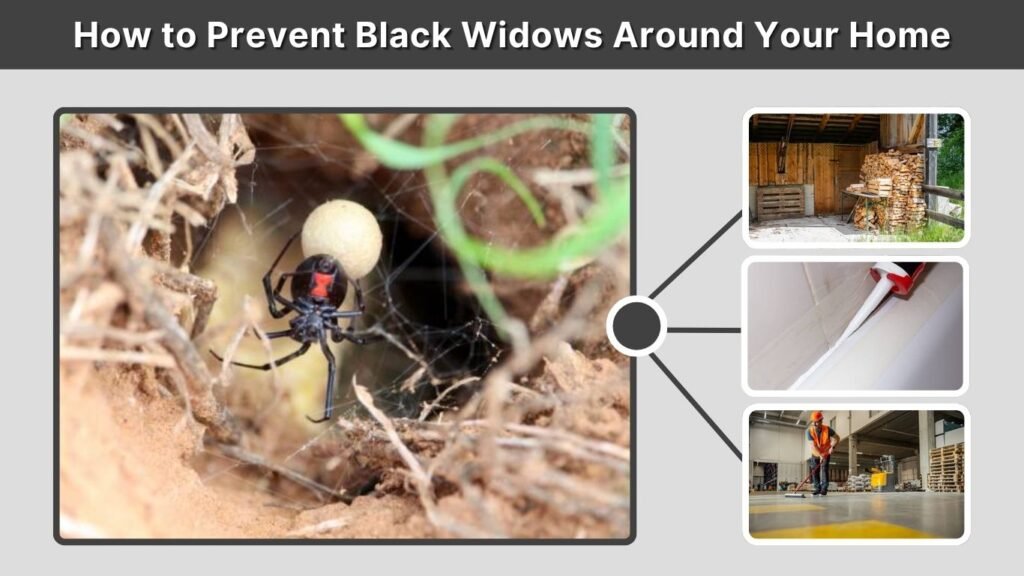
Reducing sheltered hiding places is one of the most effective ways to discourage black widow spiders around residential properties. Although completely eliminating outdoor spiders is unrealistic, regular cleaning and maintenance can reduce suitable nesting habitats. Extra caution is particularly important when handling stored materials or working in dark areas where established webs may be present.
Practical Prevention Tips
- Remove unnecessary clutter: Keep garages, sheds, and outdoor storage areas organized.
- Store firewood properly: Place firewood away from frequently used entrances and inspect logs before carrying them indoors.
- Seal structural gaps: Repair openings around doors, windows, and utility penetrations.
- Clean storage areas: Remove abandoned webs and debris while wearing protective gloves.
- Inspect outdoor furniture: Check beneath patio chairs, tables, and unused equipment.
- Reduce insect activity: Manage exterior lighting and insect attractants where practical.
- Check gardening equipment: Inspect gloves, boots, pots, and tools before use.
Avoid reaching directly into unfamiliar cavities or webs. If numerous black widows occupy an area used regularly by children or pets, consider professional pest management.
FAQs
1. Where Do Most Black Widow Spiders Live?
Black widow spiders are especially common in warmer parts of the United States, including southeastern states and the western Southwest. However, northern species also inhabit parts of the Northeast and Midwest. Their exact distribution depends on the species and suitable local conditions.
2. Do Black Widow Spiders Live in Texas?
Yes, black widow spiders live throughout Texas, particularly in protected outdoor locations. They commonly establish webs in woodpiles, garages, sheds, and other quiet spaces. Texas also supports brown recluse spiders, although the two belong to different spider families and have different behaviors.
3. Do Black Widow Spiders Live in Ohio?
Yes, black widow spiders occur in Ohio, including northern and southern black widow species. They generally occupy protected outdoor habitats, such as woodpiles, rock crevices, and storage structures. Their abundance varies across the state, and encounters are less common than in warmer southern regions.
4. Are Black Widow Spiders Found in Wisconsin?
Yes, northern black widow spiders have been documented in Wisconsin, but they are relatively rare. Confirmed sightings have occurred in areas including Door County and nearby counties. Most Wisconsin residents are unlikely to encounter these spiders during normal daily activities.
5. Where Do Black Widow Spiders Usually Build Their Webs?
Black widow spiders typically build irregular, tangled webs in dark, sheltered locations close to the ground. Common sites include rock crevices, woodpiles, garages, and abandoned rodent burrows. Their webs provide protection and help capture crawling insects that pass through the surrounding area.
