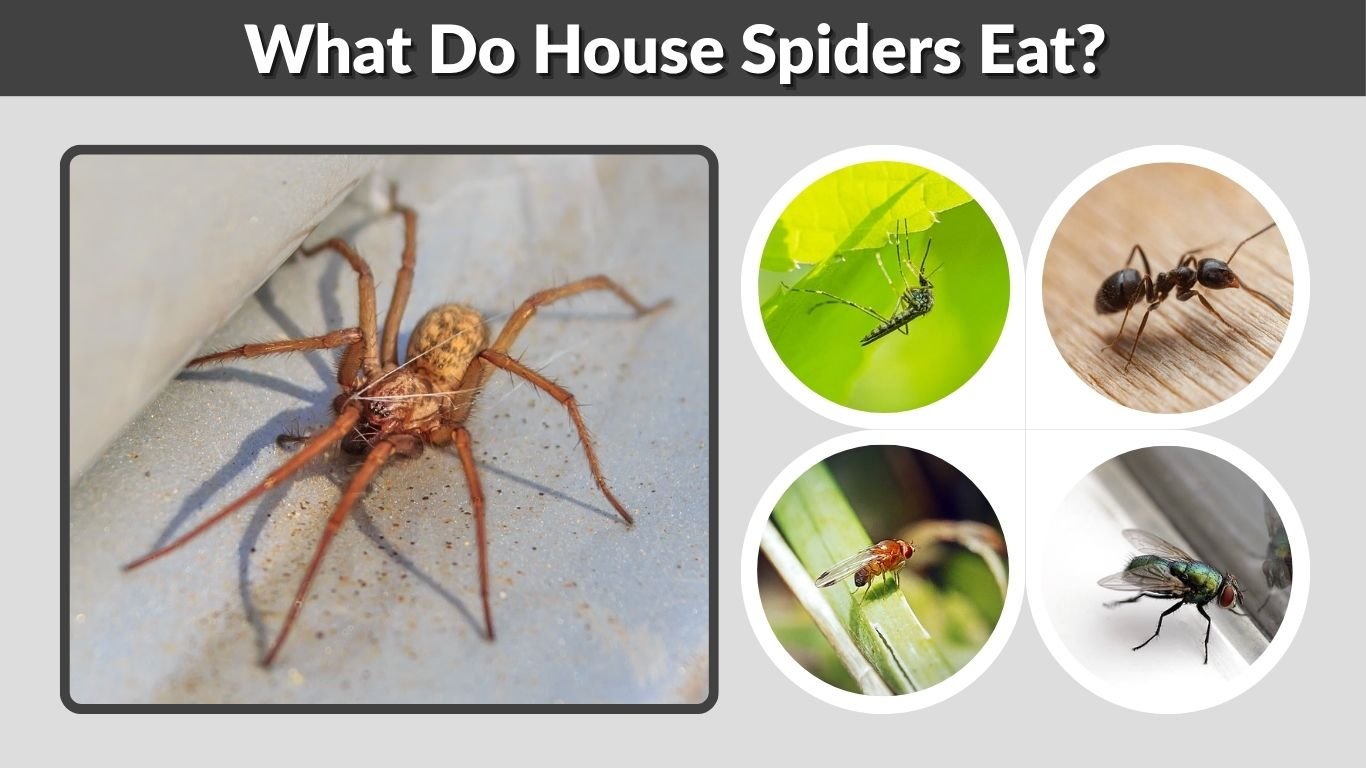
Have you ever wondered what house spiders eat while hiding behind furniture, inside closets, or in ceiling corners? Although spiders may seem mysterious, their diet is surprisingly simple. Most house spiders feed on insects and other small arthropods, including flies, mosquitoes, moths, and beetles. Different species have different hunting techniques, but all rely on suitable prey to survive. Understanding what spiders eat inside a house can help you recognize their feeding habits, discover how they survive without insects, and understand their role in controlling household pests.
What Do House Spiders Eat? 10 Common Foods
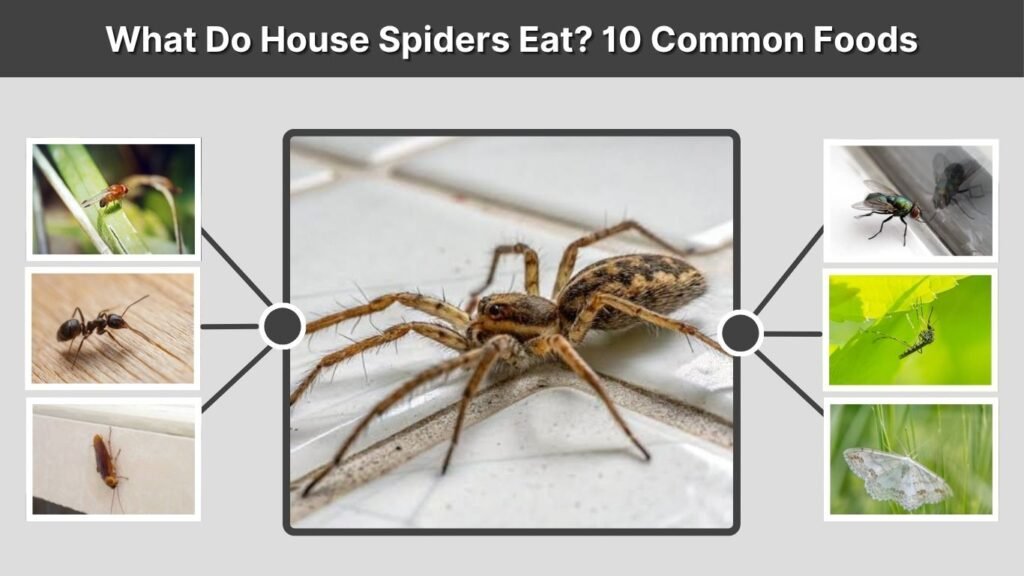
House spiders are primarily carnivorous creatures that hunt or trap living prey. Their diet depends on spider size, species, habitat, and available insects. Web-building spiders capture insects in silk, while hunting spiders actively pursue their prey. Here are ten common foods that house spiders may eat inside homes.
1. Houseflies
Houseflies are among the most common food sources for web-building house spiders. These flying insects frequently become trapped in sticky or tangled webs near windows, doors, and ceiling corners.
Once a fly becomes trapped, the spider immobilizes it using venom and sometimes silk. Digestive fluids break down its tissues, allowing the spider to consume the resulting liquid.
Houseflies can provide substantial nutrition for many household spider species.
2. Mosquitoes
Mosquitoes are another familiar food source for house spiders. Their lightweight bodies make them suitable prey for many web-building species.
Spiders commonly capture mosquitoes around windows, sheltered corners, and other locations where flying insects gather.
Although spiders occasionally eat mosquitoes, they should not be considered a reliable replacement for mosquito prevention measures. Their contribution depends on local spider and mosquito populations.
3. Moths
Moths are frequently attracted to artificial lighting, making them common visitors around windows and entrances.
Small moths may become trapped in spider webs or be captured by larger hunting spiders.
House spiders can consume moths of suitable sizes, including some that enter homes from nearby gardens or stored household materials.
Large moths may escape smaller or weaker spider webs.
4. Fruit Flies
Fruit flies are excellent prey for smaller house spiders because of their tiny bodies and relatively slow movements.
They commonly gather around ripe fruit, food waste, and fermenting organic materials.
Small web-building spiders and jumping spiders may catch fruit flies when opportunities arise. Their size makes them particularly suitable for small spiders that cannot overpower larger insects.
5. Fungus Gnats
Fungus gnats are tiny flying insects commonly associated with moist potting soil and indoor plants.
Adult gnats occasionally become trapped in nearby spider webs or are captured by jumping spiders exploring plant leaves and window frames.
Their small size makes them suitable prey for tiny house spiders and young spiders.
Reducing excessive soil moisture can also help manage fungus gnat populations.
6. Ants
Some house spiders feed on ants that wander indoors while searching for food.
Ants can be challenging prey because many species possess strong jaws, chemical defenses, or aggressive behavior.
Certain spiders specialize in hunting ants, while others avoid them entirely. Therefore, ants are a possible food source rather than a preferred meal for every house spider.
7. Cockroaches
Small cockroaches and young cockroach nymphs can become prey for larger house spiders.
Wolf spiders, huntsman spiders, and some web-building spiders may capture cockroaches when opportunities arise.
However, adult cockroaches can be difficult for small spiders to overpower.
Spider predation may remove occasional cockroaches, but it cannot reliably eliminate a household cockroach infestation.
8. Small Beetles
Small beetles occasionally become trapped in spider webs or encounter hunting spiders while moving around indoor spaces.
Their hard outer coverings provide some protection, but certain spiders can still capture and consume them.
Common house spiders have been documented feeding on various beetles.
The spider’s size, strength, and hunting method influence whether a particular beetle becomes suitable prey.
9. Silverfish and Crickets
Silverfish and small crickets are potential food sources for ground-hunting spiders.
These insects often occupy basements, garages, storage rooms, and other sheltered areas where spiders may also hunt.
Wolf spiders and other wandering hunters may capture appropriately sized individuals.
Large crickets, however, can be difficult for smaller spiders to subdue.
10. Other Spiders
Some house spiders eat other spiders, including individuals of different species or sometimes their own species.
Cellar spiders are particularly well known for capturing other spiders in their webs.
Cannibalism can also occur under certain circumstances, especially when spiders compete for space or interact during reproduction.
However, many house spiders primarily depend on insects rather than other spiders for food.
What Do Different Types of House Spiders Eat?
Not every spider found inside a house eats exactly the same prey. Some species construct webs to capture flying insects, while others actively search for insects crawling across floors or walls. Their hunting behavior and body size strongly influence what they can successfully catch and consume.
What Do Giant and Black House Spiders Eat?
Giant house spiders primarily feed on insects and other small arthropods, including flies, moths, and crawling insects.
Black house spiders also capture various insects in their webs, depending on what enters their hunting area.
Larger spiders can sometimes overpower prey that smaller household species cannot manage.
What Do Jumping and Wolf Spiders Eat?
Jumping spiders actively hunt small flies, mosquitoes, gnats, and other appropriately sized insects. They rely on excellent vision and quick jumping movements to capture prey.
Wolf spiders hunt on the ground and commonly consume small crickets, cockroaches, beetles, and other arthropods.
Neither relies on prey-catching webs.
What Do Baby and Tiny House Spiders Eat?
Baby spiders, also called spiderlings, generally feed on very small arthropods after becoming independent.
Common prey may include:
- Tiny flies and gnats.
- Small springtails.
- Very small insect larvae.
- Other suitably sized arthropods.
Some newly hatched spiderlings initially survive on remaining yolk reserves or nutrients from undeveloped eggs before beginning independent hunting.
What Do House Spiders Eat When There Are No Bugs?
House spiders depend on animal prey for nutrition, but they do not necessarily need to eat every day. Many species can survive extended periods without food, depending on their age, size, condition, and environmental temperature.
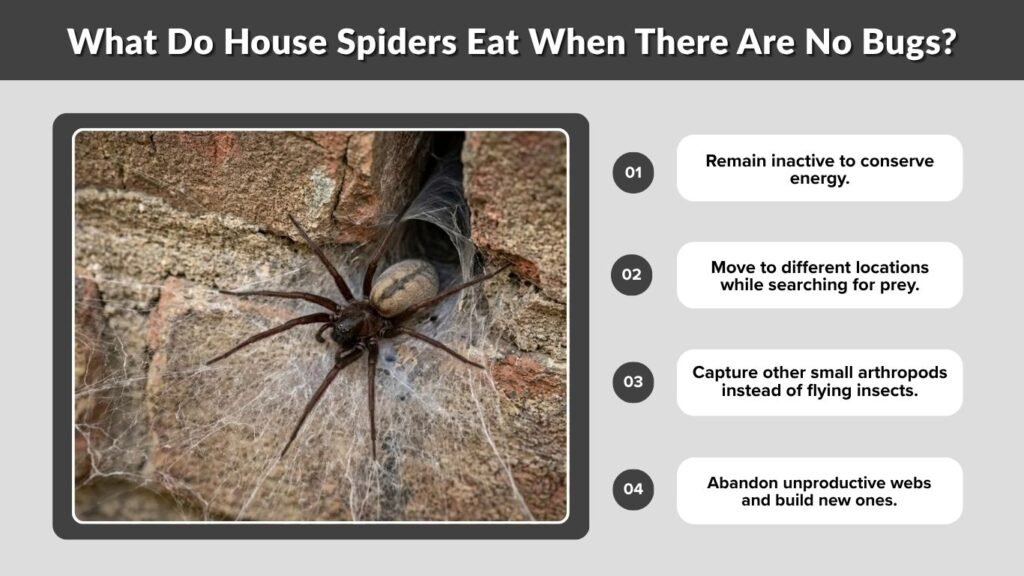
When insects are scarce, spiders may:
- Remain inactive to conserve energy.
- Move to different locations while searching for prey.
- Capture other small arthropods instead of flying insects.
- Abandon unproductive webs and build new ones.
Spiders do not normally survive by eating household dust, furniture, human food scraps, or plants.
If suitable prey remains unavailable for too long, they eventually become weakened and may die.
What Do House Spiders Eat in Winter?
During winter, many house spiders experience reduced feeding opportunities because fewer insects are active.
However, heated buildings can support insects and spiders throughout the colder months.
Some spiders continue hunting indoors, while others become less active and consume less food.
Their winter survival depends on available prey, temperature, moisture, and their physiological condition. Indoor spiders do not necessarily enter true hibernation.
What Do House Spiders Eat and Drink?
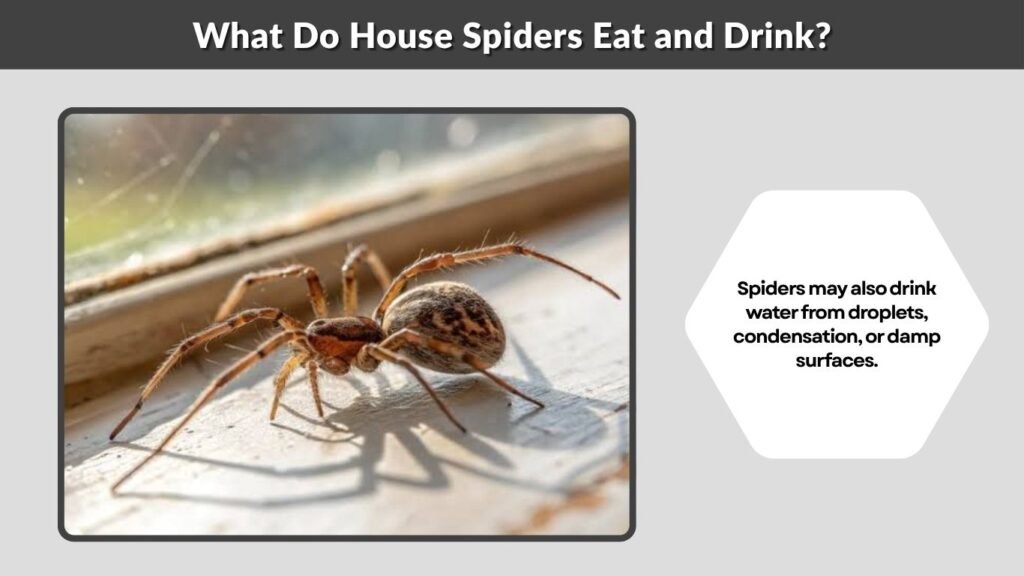
House spiders receive nutrients and some moisture from their prey. They digest food externally or partly externally, then ingest the liquefied material rather than chewing insects like mammals.
Spiders may also drink water from droplets, condensation, or damp surfaces.
They do not normally eat bread, rice, sugar, vegetables, or household food leftovers.
For a captive spider, appropriately sized live prey and access to safe moisture are more suitable than human food.
FAQs
1. What do common house spiders eat most often?
Common house spiders primarily consume insects that become trapped in their webs, especially flies, mosquitoes, moths, and other small arthropods. Their exact diet varies depending on available prey, spider size, and the location of their webs.
2. Can house spiders survive without food?
Yes. Many spiders can survive for weeks without eating, and some species can last longer under favorable conditions. Survival depends on body size, life stage, temperature, hydration, and previous food intake. Eventually, they require suitable prey.
3. Do house spiders eat plants?
Most house spiders do not eat plants. They primarily consume insects and other arthropods. Although a few unusual spider species use plant-based food sources, ordinary household spiders do not normally feed on leaves, flowers, or indoor plants.
4. What do small spiders eat inside a house?
Small house spiders usually consume tiny insects such as fruit flies, fungus gnats, and other small arthropods. Their prey must be manageable for their body size. As young spiders grow, they can gradually capture larger insects.
5. Do house spiders eat dead insects?
Many spiders prefer live prey because movement or web vibrations help trigger their hunting behavior. However, some species occasionally scavenge freshly dead insects. Old, dried insects generally provide little usable nourishment and may be ignored.
